
21st Century Fox in £18.5bln bid for Sky

Low interest rates and the impact on your savings
During the period of record low rates, borrowers have able to secure capital at low a cost and pump it back into the wider economy. This has been central in helping the UK recover from one of the worst recessions in history.
Record low rates have undoubtedly been great for the economy as UK GDP growth has outperformed many developed economies. The lower rates have supported borrowing in the housing market and retail sales have remained resilient, even in the face of Brexit.
However, market theory dictates that where there are winners, there will always be losers. The winners of low interest rates have clearly been borrowers. The losers have been savers.
At the time of writing the Cash ISA interest for major UK banks are as follows; HSBC Advance Standard Rate 0.5%, Lloyds 0.35% and Barclays 18 month flexible 0.8%. Pitiful to say the least.
This is why many investors are turning to companies such as Moneyfarm who operate low-cost and fully-managed Stocks & Shares ISAs.
Moneyfarm allows investors to invest up to £10,000 free of a management charge and choose between a general investment account or an ISA. Clients of Moneyfarm benefit from easy set-up, low fees and full transparency from their funds.
Moneyfarm portfolios are managed around the clock by their investment committee who are striving to provide returns in excess of the pathetic offerings of Cash ISAs currently.
If you invest with Moneyfarm, like with any investing, your capital is at risk and you may get back more or less than your original investment.
Mcdonald’s to move non-tax base to London

McDonald’s has announced its intention to move its non-tax base to London from Luxembourg.
The fast-food giant will create a new holding company in the UK, and will pay UK taxes on any profits earned outside of the U.S. It said it came to the decision after taking into consideration the vast amount of employees it has within the UK.
In a statement, the company said that the new holding would have the “responsibility for the majority of the royalties received from licensing the company’s global intellectual property rights outside the US”.
“This unified structure will be administratively simpler and will reduce expenses and enhance flexibility,” the firm said.
On Brexit
“The reasons for changing the location of the corporate structure to the U.K. were sound before Brexit and remain so beyond it,” the company remarked.
“These strengths are unlikely to change as the U.K. negotiates leaving the European Union.”
The company emphasised that their “significant number of staff based in London working on our international business, language, and connections to other markets.”
The move has attracted speculation that the company were most likely motivated by UK’s corporate tax rate. The UK rate currently rests at 20 percent, with government plans to reduce it further to 17 percent by 2020, which would make it the lowest within the G20.
Under Investigation
Mcdonald’s remains entangled in an EU investigation on the company’s tax activities, centred on whether it utilized Luxembourg to facilitate the taking of large corporation tax breaks.
Amid the criticism, the brand stated that it continues to pay “a significant amount of corporate taxes.” In addition, they noted that from 2011 to 2015, “we paid more than $2.5 billion in corporate taxes in the EU, with an average tax rate approaching 27 percent,”.
The company receives about two-thirds of its income from its operations outside the U.S, with France making up its second largest market.
Russia sells $11 billion stake in Rosneft
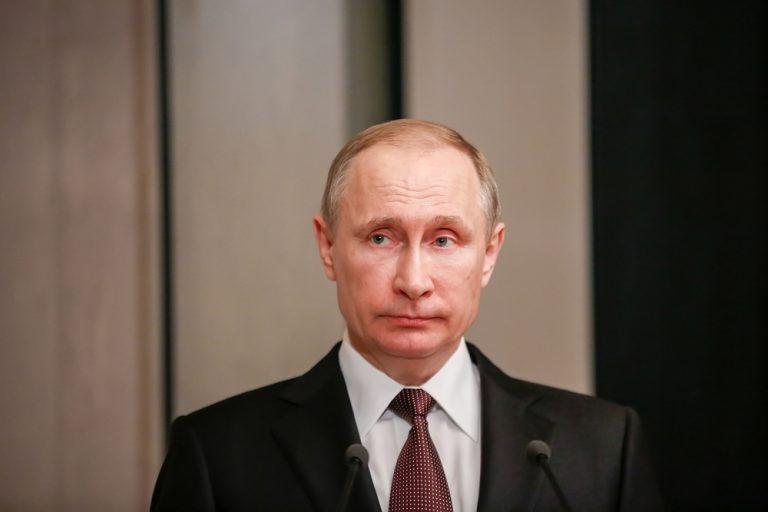
The Russian government has agreed to sell its largest oil stake in Rosneft, in a bid to rescue its ailing economy.
London-listed company Glencore and the Qatar Investment Authority (QIA) have agreed to acquire a 19.5 percent stake in the company for €10.5bn (£8.9bn). According to the deal, Glencore will supply €300 million in funding, with the rest made up by the QIA and through bank financing.
Rosneft been struggling in recent years, as the over-saturation in the oil market has continued to impact oil prices and thus its access to revenue. However, following OPEC’s agreement of their first output cut in 8 years last week, oil prices have since rebounded to $50 a barrel which has since revitalized the sector.
“The transaction was made on an upward trend in oil prices and reflects on the value of the company,” Russia’s president Vladimir Putin commented during a televised meeting with Rosneft boss Igor Sechin. “In that sense this is a good time.” He added.
The deal will mean that investor Glencore will acquire around 20 percent stake in the company in return for receiving 220,000 barrels of oil daily from the producer. It is already the biggest trader in Russian oil, and thus the agreement will prove a boost to its commodity shipping business. Glencore and QIA will join British-held BP to become a shareholder in the oil company. As of 2011, BP has retained an 18.5 percent stake in the Russian oil firm.
This comes amid Glencore made the move towards reinstating dividends just last week, following a challenging few years. In an announcement, Glencore stated that it had completed sales of assets in order to bring in debt targets in line with $17 billion for the end of the year. Glencore had previously racked up a debt that at its peak had reached $30bn (£23.7bn), as it continued to struggle in a depleting commodities market.
Italian Banks show recovery, amid bailout hopes
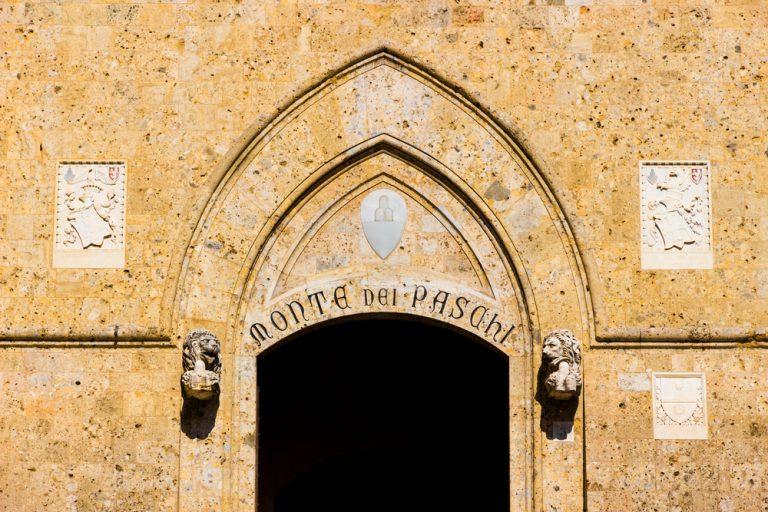
Italian banks have showed signs of recovery on Wednesday, after a heavy referendum defeat led to the resignation of Prime Minister Matteo Renzi.
Following the Italian people’s overwhelming “No” response to proposed constitutional reforms, Italian banking shares plummeted amidst concern over the country’s political instability.
However, shares in the world’s oldest bank – Monte dei Paschi – rose by almost 9 percent as the prospect of a government bailout looked increasingly likely. The bank performed the worst in Europe in stress tests over the summer, as its sizeable amount of debt continues to take its toll.
Both Italian and international newspapers have speculated that a government bailout may be on the horizon, prompting the rise in share value for the troubled banks. A deal with a private investor looks increasingly unlikely, now the country has been left without a leader.
Italian daily La Stampa reported that the Italian government may look to the European Stability Mechanism (ESM) for funds of around €15 billionn (£12.7 billion) to help with the financial rescue.
Additionally, Reuters stated that various unnamed sources anticipate the government taking as much as a €2 billion stake in Monte dei Paschi, following the collapse of a potential private rescue bid from external investors.
Italy however, has already been warned by the EU commission that it may violate rules regarding excessive debts of member countries. The EU Economics Affairs Commissioner, Pierre Moscovici, noted that the strain on Italian finances arose from the recent devastating earthquakes that struck central Italy, and that he expected that the commission would take this factor into consideration.
The ESM, which deals with European bailout funding, has stated that the Italian government has yet to initiate discussions. A spokesperson stated:
“There is no request and there are no discussions with the Italian authorities on an ESM loan.”
Amid the speculation other banks’ shares are rallying, seeing a 3 percent rise for the Italian banking sector.
Markets bracing for Fed rate hike – but is it too soon?
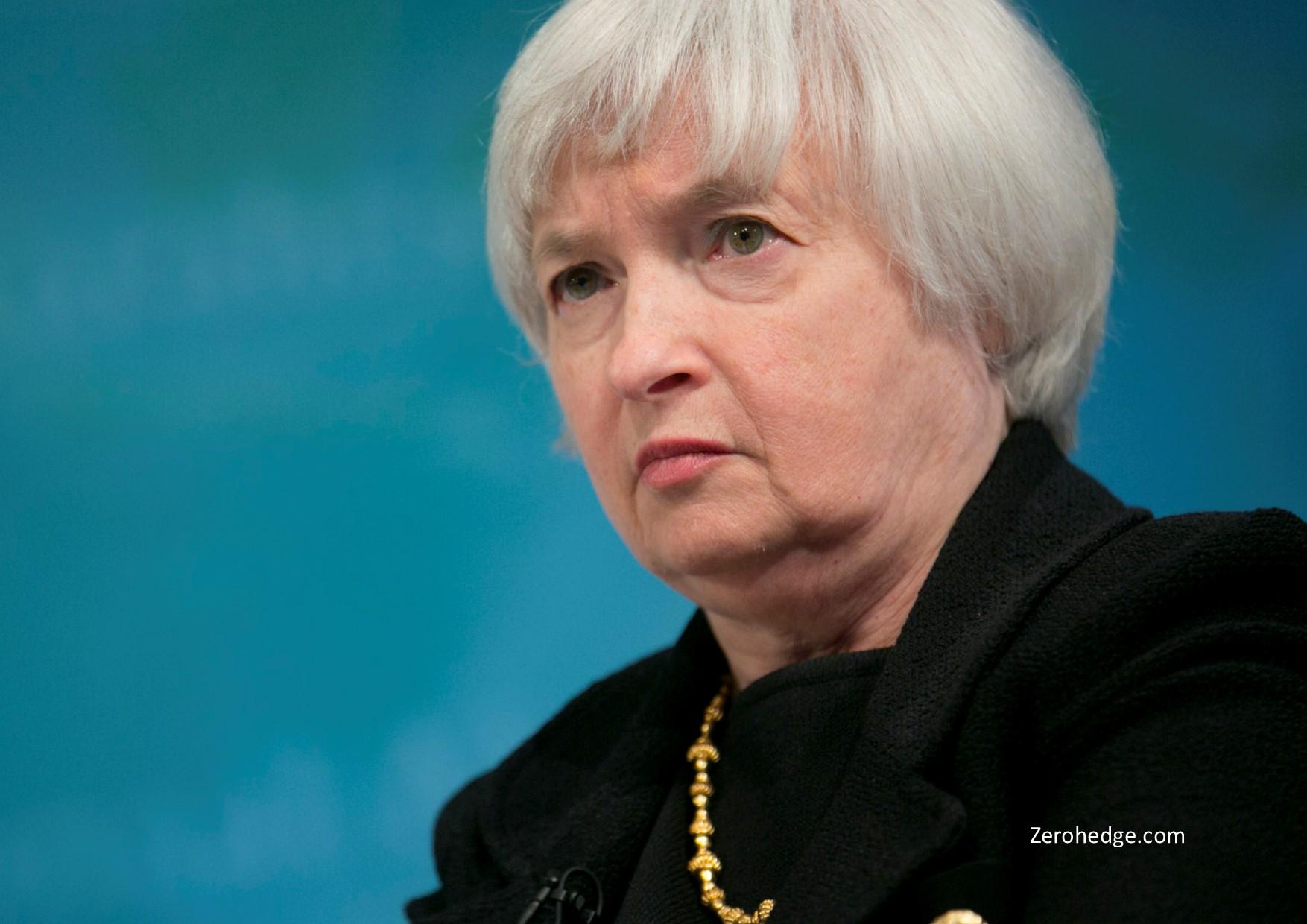
Global financial markets are bracing themselves for the Federal Reserve to hike rates, after Friday’s positive jobs figures left the way clear for a December rate rise.
At last month’s meeting the Federal Reserve gave their strongest hints yet that a rate hike was on the cards. Despite the uncertainty prompted by the resignation of Italian Prime Minister Matteo Renzi, most analysts now believe that the Fed will use their December meeting to make their second policy rate increase in 10 years
The markets are already pricing this in but according to deVere Group international investment strategist Tom Elliott, it may be premature.
“Financial markets are pricing in as a certainty a 25bp rate hike at the forthcoming FOMC meeting. This will take the key Fed funds rate up to a range of 50bp-75bps. Supporting the market’s view is the strength of the U.S. economy, with some strong data emerging last week that suggests inflation pressures are building.
“This data includes that third quarter GDP growth has been revised upwards from 2.9 per cent annualised, to 3.2 per cent; a key housing statistic (the Carelogic Cas Schiller National Price Index) passed its previous July 2006 high; November payroll data was strong at 178,000 new jobs created, while the unemployment rate fell to 4.6 per cent; and CPI inflation is at 1.6 per cent, which is in spitting distance of the Fed’s 2 per cent target.” Mr Elliott continues: “However, the markets’ pricing in of a rate rise at this stage could be premature. Indeed, we have seen similar market certainty of a rate hike several times before this year, notably in May. “The prime cause of uncertainty this time is not fear of a rash of weak economic data, but how the dollar behaves over the coming week. “If it continues to strengthen, in anticipation of higher Fed rates, the Fed may actually hold off. A strong dollar exerts its own form of monetary tightening because exports weaken, import prices fall and so put a downward pressure on domestic competitor prices. “The Fed may prefer to delay a rate hike, than impose a double-dose of higher borrowing costs on corporate America as well as a still- stronger dollar.” The next Federal Reserve meeting takes place on the 13th – 14th December.Drax soars 15% by midday after confirming plans to buy Opus Energy

At the beginning of 2014 Drax shares were trading north of 800p a piece and were trading at lows ot 205 in January of this year, whilst confirming fully tear earnings to be below market forecasts the announcement of the Opus deal has seen the shares rally to 320p up over 15% on the day.
Revenue surge of 159% at online Estate Agency Purplebricks sees shares soar over 20%

Uk service sector defies projections
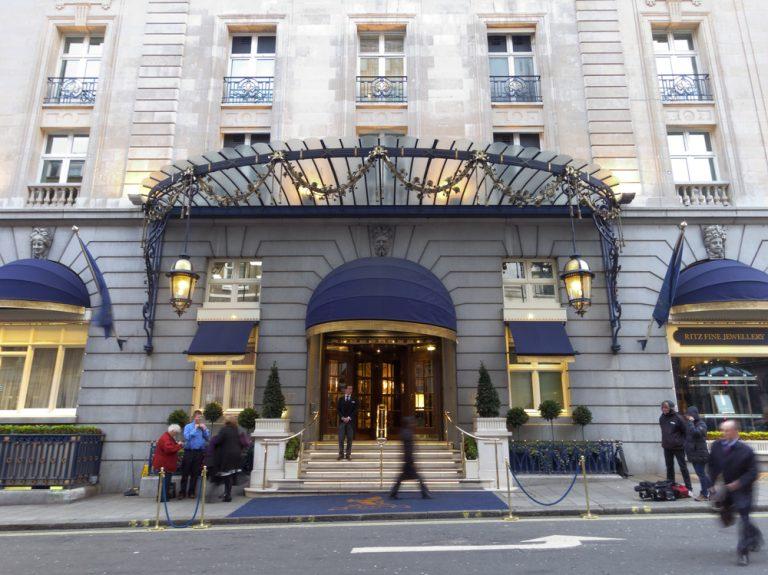
The UK service sector has seen its fastest growth since January, despite continued anxiety over Brexit uncertainties.
Despite an initial slowdown, British hotels and banks look to cap off the year with solid performances suggesting a resilient UK economy.
According to the Markit/CIPS, UK services PMI rose to 55.2 in November up from 54.5 the previous month. This proved a better-than-expected performance, with Reuters forecasts anticipating the sector to experience slowdown to 54.0. The index has now been above the 50-mark which indicates growth, as opposed to contraction for four consecutive months.
Chris Williamson, the chief economist for business at IHS Markit, stated:
“The further upturn in the vast services sector shows that the pace of UK economic growth remains resiliently robust in the fourth quarter, despite ongoing uncertainty caused by Brexit.
“The three PMI surveys collectively indicate that the economy will grow by 0.5% in the fourth quarter.”
The sector has benefited from a weaker pound, pushing up overseas demand and led to growth in employment levels. Nevertheless, sterling weakness also meant higher import costs and greater pressure as a result of higher food and fuel costs for British businesses within the services sector.
In addition, it was noted that the pressure from inflation and as political uncertainty starts to weigh upon business outlook, this may impact performance into the new year. Similar concerned were raised last week in respect to the UK’s manufacturing and construction industry.
“Rising prices – often linked to the weaker pound – are a big concern, however, and suggest that inflation is set to lift higher,” Williamson continued.
“The past two months have seen the steepest rise in businesses’ costs for over five-and-a-half years. These higher costs will inevitably feed through to consumers in the form of higher prices.”
The services sector remains a dominant contributor to the UK economy, making up over 75 percent.
Markets take Italy No vote to referendum in their stride, Renzi resigns
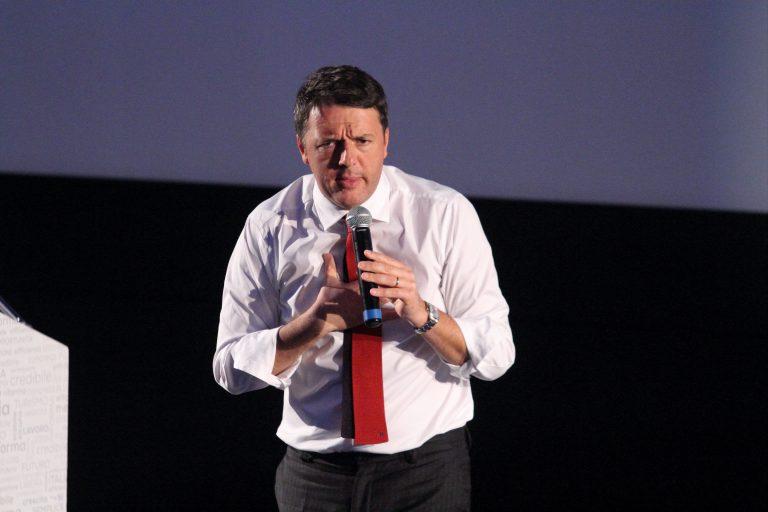
Shares in Banco Monte dei Paschi di Siena, regarded as Europe’s most troubled large bank, recovered to only mild losses by midday. Jeroen Dijsselbloem, Eurogroup President said “If this is the market reaction, it doesn’t seem to require any emergency steps,” in response to a question about whether the European Central Bank should intervene ahead of a eurogroup meeting in Brussels.
“The process of dealing with some of the banks that have problems need to continue and will continue,” he added. “[Italy] is a strong economy, is one of the largest economies in the eurozone, it’s a country with strong institutions.”