
17/05/2016
Morning Round-Up: Oil prices bounce, Premier Foods strong, Apple up on Buffett investment

Oil prices up, boosting Asia
Oil prices have boosted markets globally after hitting six-month highs, after a decline in US production.
Both Canadian and US crude have seen output disruptions, leading to a rise in prices.
US crude rose 1.1 percent to $48.24 on top of a 3.3 percent increase in Monday, with Brent futures rising 0.6 percent to $49.29 per barrel.
The jump in oil boosted shares in Asia, with both the Nikkei 225 and the Hang Seng up 1.13 percent (0830GMT).
Premier Foods see strong sales
British food group Premier Foods saw sales of branded foods rise 1 percent in the fourth quarter, after a disappointing rest of the year.
The brands, which include Mr Kipling cakes, Oxo seasonings and Bisto gravy, saw flat sales across the 12 months to April before picking up markedly over the past three months.
Full-year sales rose 0.6 percent and the company saw a pre-tax profit of £34 million after a significant loss last year.
Chief executive Gavin Darby said in a statement: “Our strategy of investing behind our brands and bringing new innovative products to market continues to deliver very positive results, with six of our major brands growing on average +3.4 percent in the year.”
Apple shares bounce on Buffett investment
Apple shares closed up 3.7 percent in yesterday’s session after Warren Buffett announced a $1 billion stake in the tech firm.
The investment represents a move away from the norm for Buffett’s investment fund, Berkshire Hathaway, who traditionally buy stakes in “value stocks”. Apple’s shares, which had sunk after a fall in demand, were too good an offer for Buffett’s stock-picking team,Todd Combs and Ted Weschler.
The Apple holding makes Berkshire Hathaway the 56th largest shareholder. Apple shares are up a further 0.10 percent in after hours trade.
Church of England sells assets ahead of economic slowdown

The Church of England has sold a significant proportion of its investments, after fearing that the government will not be able to offset an oncoming economic slowdown.
The Church of England’s investment fund, which has seen an average annual return of 9.7 percent over the past 30 years, will sell £250 million worth of assets.
Church commissioner Sir Andreas Whittam Smith looked to the future in a report, saying: “Unfortunately, it may be harder in the future to achieve such a satisfactory performance. My message to the wider church is: don’t count on it.
“The nervousness of investors is explained by the feeling that governments have lost the power to reverse any slowdown in economic activity. In earlier times they would reduce interest rates, but now that rates hover around zero, that remedy is unavailable. And it’s hard to believe that negative interest rates can provide the necessary boost, or that governments would let the supply of money expand.”
However, the Church has maintained its multi-million investment in Google, despite criticism over the company’s tax avoidance. The company reached a controversial £130 million settlement with HMRC earlier this year to end a long-running dispute over back taxes.
16/05/2016
ICAP to become NEX Group; hit by 11% profit fall

Interdealer broker ICAP has announced a change of name following the sale of its voice-broking arm, alongside disappointing financial results.
The group saw full-year trading pretax profit fall 11 percent to £203 million, hit by adverse currency movement. Revenue fell 6 percent to £1.2 billion.
The company is currently undergoing the sale of its voice service unit to Tullett Prebon plc, and will rebrand as NEX Group Plc once the sale completes.
“NEX Group Plc will be a fast moving, entrepreneurial pure electronic and post trade leader, well positioned for growth,” CEO Michael Spencer said in a statement.
“We wanted a name to truly reflect this and which was truly global.”
The group’s shares remain largely unaffected by the news, trading down 0.44 percent at 454.00 (0850GMT).
16/05/2016
Morning Round-Up: Norway fund sues VW, Nissan emissions scandal, H&M hit

Norwegian fund takes action against VW
The world’s largest sovereign wealth fund has planned legal action against Volkswagen over its emissions scandal.
Norges Bank Investment Management, one of VW’s largest shareholders worth $850 billion, will be filing the case in Germany after being advised they had a claim under German law. This lawsuit will be the latest for VW to deal with, after action was announced by the US Department of Justice, the Federal Trade Commission and its own dealers.
“Norges Bank Investment Management intends to join a legal action against Volkswagen arising out of [the fact that] the company provided incorrect emissions data,” the company said in a statement, according to Reuters.
“As an investor, it is our responsibility to safeguard the fund’s holding in Volkswagen.”
Nissan accused of cheating emissions
Carmaker Nissan has been accused of manipulating emissions tests by the South Korean government, following a probe by the environment ministry.
South Korea said it found emissions-cheating devices, similar to those used by Volkswagen, fitted to the Qashqai model. Nissan now face fines of around 30 million won, although have denied the claims. H&M hit by cold weather Swedish retailer Hennes & Mauritz reported a smaller than expected increase in sales in April, hit byan unseasonably cold spring. The company saw a 5 percent increase in April sales on a year earlier, below the 9 percent expected by analysts.16/05/2016
Binary options: be careful who you deal with

Any trader worth his salt will have heard of – and perhaps been intrigued by – binary options trading. Marketed across the Internet as an easy way to trade the markets and make money within minutes, companies often use enticing adverts that, for one site, include the wildly inaccurate claim that this was how Sir Alan Sugar made his millions. Through these sites, you have the chance to ‘trade’ just a range of markets including stocks, commodities and currencies, with a simple ‘yes’ or ‘no’ proposition. Simple, right?
Or not. The problem is, it is very hard to consistently predict what a stock or commodity will do within a short time frame – meaning that the ‘option’ amounts to little more than a bet. Let’s be clear – these ‘investments’ are no more than bets. The FCA do not regulate the binary options industry as they do with other financial markets, meaning that despite being marketed as ‘trading platforms for serious investors’, unsurprisingly, most of these sites are scams. There is no easy way to become a millionaire within month and these sites are no exception.
The most recent example of this is Banc de Binary which, earlier this month, was hit by an $11 million fine by American financial regulators after a three year court battle. Evidence was given to a federal court in Nevada that Banc de Binary lied to its customers, claiming that it had a ‘world headquarters’ on Wall Street when all it had was a maildrop accommodation address. In actual fact, the group is based between Cyprus, Israel and the Seychelles. Its CEO, Oren Laurent – also named in court papers as Oren Shabat and Oren Cohen – gave an address in Israel. And unfortunately, in the world of options trading, this story seems to be the rule, rather than the exception.
A quick scroll through message board comments highlights three main problems with these sites. The company encourage you to deposit money – as much as possible – and then when your account has a higher value, refuse to let you withdraw it. They have also been accused of stacking the odds against the ‘investor’, and rewarding clients with bonuses that have stringent terms and conditions attached – usually to the detriment of the investor.
Whilst next to none are regulated by official authorities in the UK, given their gambling characteristics, nearly all are regulated by Cypriot regulator CySec and governed by Cypriot law. As Cyprus is part of the EU, their regulations are supposedly as stringent as other EU countries, including the UK – giving investors peace of mind. But in practise, they are not. The aforementioned Banc de Binary was registered in this way, and was fined no less than five times by CySec – but were allowed to continue in operation until challenged by US regulators. The biggest scam to come out of the country is Cypriot trading platform IronFX. Its CEO is friends with the President – which always helps in a country run on bribery and corruption – but as ex-BBC presenter Freddie Rostand found during an investigation, the company has “serious cash flow issues.” Clients’ money is not segregated, and has even been confiscated by the company in order to pay its debts. Many trading with the platform were unable to withdraw their funds, often amounting to thousands of pounds.
UK Investor Magazine spoke to a trader with a similar story. After being convinced to place a significant amount of money with the options site, despite the company knowing that the trader had little experience in FX and commodities, the account manager bought 50 lots of gold, whose price then tumbled and led to a loss of $113,000.
The company continued to ask for more money, promising that the next trade would make a significant profit. After this proved untrue, the account holder refused to send any more money to the account. The company then stopped taking his calls and blocked him on Whatsapp. He said:
“I tried to call him or the company unfortunately, no one answered. I even asked some friends based in London to contact the company using their phone numbers, but no one replied”.
This company, like many others, is operated by parent company and registered in the UK, but based offshore. A quick browse of Companies House records show that the same officer – and the same address in London – is given for eight different ‘investment’ companies. Its parent company had also filed accounts in January 2016 for a dormant company – essentially meaning that it has ceased trading – but appears to be very much active from its website. Shady? Yes. Surprising, in that line of business? Not at all.
But what is surprising, given the prominence of these sites, is how few negative comments come up with a Google search of ‘binary options scam’. Aside from this article by Forbes – whose prominence even the SEO geniuses behind options trading platforms couldn’t trump – there are next to no articles by large financial news organisations revealing the extent of the scam. In fact, this Financial Times article even actively endorses them. What appears most are sites purporting to review options sites, offering advice and ‘real reviews’ – most of which are presumably run by the options sites themselves, given the lack of bad review. One such site named an options trading platform as FCA regulated – a blatant lie. When I pointed this out it was removed within days – but how many were led astray by this comment up until that point?
However, it is worth remembering that the binary options themselves are not the scam. Some FCA-registered trading sites do offer the ability to trade options, including IG and ETX. Whilst the options trading is still not regulated by the FCA, the companies themselves are and therefore you can be certain that any money you do win can be withdrawn by you. But the bottom line is this: sites offering binary options alone are bad news. At best, the chances of a good return are on a par with online poker – at worst, they’re a scam that will rinse you of your money. They are not legitimate, and they are certainly not an investment. And if you are okay with gambling away your savings, head to Las Vegas and do it there – your chances of winning are the same, and you’ll have a lot more fun doing it.
Miranda Wadham on 13/05/2016For more information on ETX and how you can trade binary options through an FCA regulated company, you can visit their site here.
Morning Round-Up: MPC vote to leave rates at 0.5%, Apple shares sink, Germany strong in Q1
MPC vote 9-0 against a rate rise; Carney warns on Brexit
Governor of the Bank of England Mark Carney has warned strongly against Britain leaving the EU, saying that it could lead to a “technical recession”.
The statement came as the Monetary Policy Committee made their monthly monetary policy announcement yesterday. The committee voted 9-0 to keep rates at their record low in the face of mounting uncertainty over Brexit.
Mark Carney has come under criticism from the Leave campaign for voicing his opinions, with many calling for him to resign; Conservative MP Jacob Rees Mogg called his actions “unprecedented”, arguing that speculating over the effect on sterling is “not what responsible central bankers do”.
Apple shares sink as demand slows
Apple shares dropped dramatically yesterday to their lowest price in nearly two years, after a report suggested Taiwanese manufacturers should expect fewer orders this quarter.
Stocks were down over 3 percent in late afternoon trading, dropping below $90. They then recovered to close down 2.37 percent.
The company are seeing slowing demand around the globe, particularly in Asia, with product releases slowing.
Germany sees strong growth in Q1
The German economy grew by 0.7 percent between January and March, more than doubling the rate of the previous quarter.
Higher state and household spending combined with increased investment in construction pushed the economy forward, offsetting a slowdown in foreign trade.
Unadjusted data showed the economy expanded by 1.3 percent on the year in early 2016,
TalkTalk profits hit by cyber attack

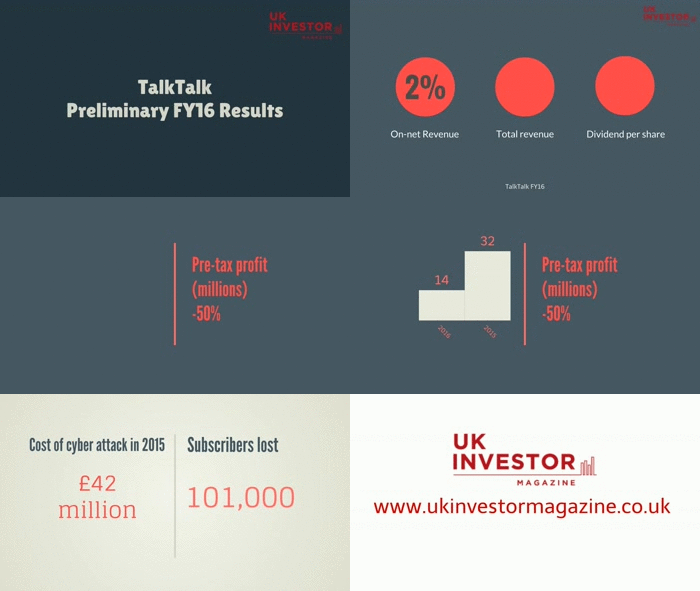
Communications company TalkTalk saw their profits halve after a cyber attack last year, which cost them 101,000 subscribers.
Profits fells from £32 million last year to £14 million for 2016. However, the company reiterated their financial guidance for the 2017 financial year at between £320-£360 million.
Dido Harding, TalkTalk’s CEO, said in a statement:
“There has never been a clearer space for a trusted value champion and our learnings from and experience since the cyber attack have helped to focus our plans for the year ahead. We see strong opportunities for growth across all our products, both for consumers and for businesses, against the backdrop of an increasingly supportive regulatory environment.

12/05/2016
Morning Round-Up: Nissan-Mitsubishi deal, gloomy day for markets, Super Thursday
Nissan-Mitsubishi’s $1.8 billion tie-up
Nissan Motor Co is set to take a third stake in Mitsubishi, becoming its largest shareholder, according to local media reports.
The $1.8 billion tie-up is designed to boost Mitsubishi’s brand name in the wake of an emissions scandal, as well as enlarging the market share of Nissan. Trading in Mitsubishi Motors’ shares was suspended on Thursday before the announcement, jumping 16.6 percent on the news once trading resumed.
Mitsubishi became embroiled in an emissions scandal last month, which caused shares to plunge 40 percent and wiped $3 billion off its value.
Early on Thursday reports suggested that the two companies were discussing “various matters including capital cooperation”, later confirming a joint press conference.
Gloomy day for global markets
Asian markets fell on Thursday after a poor Wall Street session, a trend set to continue into Europe.
Toyota and Nissan shares brought down the market in Tokyo, edging down 0.1 percent before recovering at close. The Shanghai Composite closed up 0.4 percent down, with the Hang Seng down 0.78 percent.
European markets seem to have followed suit, with the FTSE opening down 0.4 percent and the DAX down 0.3 percent.
Bank of England’s Super Thursday
The Bank of England are set to publish its latest assessment of the UK economy today, dubbed ‘Super Thursday’.
After a spate of less-than-positive UK economic figures over the past few weeks, the Bank of England is expected to cut its previous forecasts; from the 2.2 percent expected growth in 2016 to 2 percent. The upcoming EU referendum continues to have an impact of forecasts, making it more unlikely that the bank will vote to raise interest rates from their low of 0.5 percent today.
12/05/2016
EU Commission blocks 02-Three merger
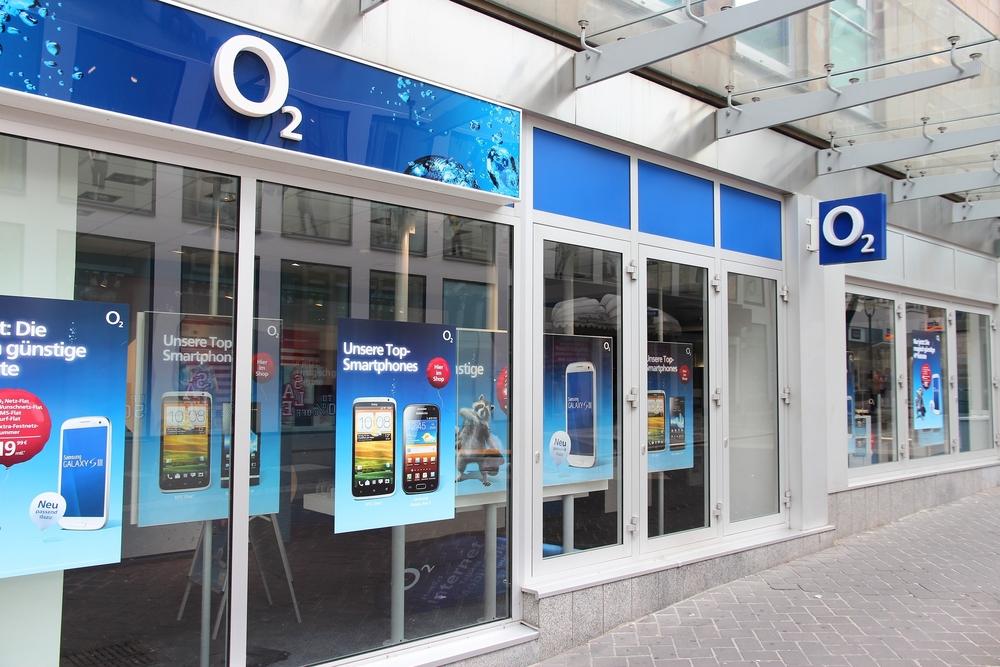
EU anti-trust watchdogs have blocked the tie-up between 02 and Three, after fears that it would lead to higher prices and reduced options for consumers.
Telefonica was planning to sell the O2 network to CK Hutchison, the owner of Three, in a deal worth £10.3 billion. It would have reduced Britain’s major phone networks to just three, prompting the European Commission to veto the deal.
European Competition Commissioner Margrethe Vestager said in a statement: “The goal of EU merger control is to ensure that tie-ups do not weaken competition at the expense of consumers and businesses.” “We want the mobile telecoms sector to be competitive, so that consumers can enjoy innovative mobile services at fair prices and high network quality.” The decision was made despite concessions offered by Hutchinson, including a five year price freeze.11/05/2016
Morning Round-Up: Sterling to fall 20 percent on Brexit, Toyota sees sales drop, hedge fund manager rich list
Sterling to fall 20 percent on Brexit, says think tank
Sterling is likely to drop 20 percent straight after a Brexit vote in June, according to The National Institute of Economic and Social Research (NIESR).
If Britain votes to leave the European Union on the 23rd June, the think tank also forecast soaring prices and a 1 percent drop in economic growth over the next year.
“The longer term impact of leaving the EU could reduce GDP by anything between 1.5% and 3.7% by 2030 depending on the subsequent relationship between the UK and the EU, as well as the rest of the world”, the Institute said in its report.
Toyota forecasts steep sales drop
Japanese automaker Toyota forecast a 35 percent fall in income for the current fiscal year, down to 1.5 trillion yen.
Vehicle sales were also down across most regions. However, operating income increased by 103.4 billion yen.
TMC executive vice president Takahiko Ijichi said: “Operating income increased by 103.4 billion yen compared to the previous fiscal year. The positive factors such as cost reduction efforts and favorable foreign exchange rates more than offset the negative factors such as decreased vehicle sales and increased expenses, particularly labor costs and R&D expenses.”
Shares have remained largely unaffected by the news, with Toyota (TYO:7203) trading down 0.76 percent after hours.
Top 25 hedge fund managers earn more than nations
The world’s top hedge fund managers earned more than the entire economy of Namibia last year, according to a report by Alpha magazine.
Kenneth Griffin, founder and chief executive of Citadel, and James Simons, founder and chairman of Renaissance Technologies, were in first place, earning $1.7 billion each.
Heavily criticised Wall Street salaries pale in comparison to these figures, with the US’s top banker Jamie Dimon taking home just $27 billion.
The list features 25 fund managers, and in its 15 year history has yet to feature a single woman.
11/05/2016