Crowd2Fund launches new Innovative Finance ISA for tax-free crowdfunding investment

Crowd2Fund, one of the UK’s most progressive crowdfunding sites, have today announced the launch of the UK’s first Innovative Finance ISA, enabling investors to take advantage of higher interest rates and maximise tax-free capital returns. At 8.42%* APR, Crowd2Fund’s IF ISA offers one of the highest interest rates since ISAs were introduced in 2011, thus putting more money in investors’ pockets. Crowd2Fund’s ISA offers the potential to earn far higher returns than other ISA products on the market by allowing consumers to lend directly to handpicked growing businesses seeking loans, cutting out the banks and sending money direct from lender to borrower. Crowd2Fund’s peer-to-peer model makes it easier for investors to manage risk and build a more balanced portfolio, all the while gaining access to higher, more competitive interest rates.Investors can activate their IF ISA simply and directly via the Crowd2Fund platform; this can be invested as part of their £15,240 tax-free ISA allowance, with interest earned not eligible to be taxed. With the higher returns achievable through crowdfunding investments, £15,240 invested in a Crowd2Fund IF ISA would earn approximately £1,283.21 per year, tax free.
The IF ISA not only gives investors access to higher returns but also the ability to support the UK economy by investing in credit worthy, growing British businesses; Crowd2Fund works hard to find the country’s fastest growing and most innovative businesses for platform investors. To help improve the experience of investing and make the process even easier for investors, they can access their capital at any stage via Crowd2Fund’s unique Exchange, which facilitates the reselling of loans to other investors – meaning funds invested are not necessarily frozen for long periods.
Chris Hancock, Crowd2Fund’s CEO, added: “The introduction of the IF ISA is a huge step forward for savers and investors. The UK is the only market globally who has implemented a specific government savings scheme for innovation. London is clearly leading the global upgrade of financial services and alternative methods of finance, like peer-to-peer lending, are helping to bring the sector – and the UK economy more broadly – up to date with the needs of people today.”

Crowd2Fund’s Innovative Finance ISA also enables investors to access the benefits of receiving exclusive perks. Crowd2Fund has worked tirelessly to make the application process as simple as possible for investors wishing to invest in this new and rewarding way. To make their new IF ISA as simple, user friendly and easily accessible as possible, Crowd2Fund is launching an iOS app. This will allow investors to manage and grow their IF ISA portfolios easily whilst on the go, simply from the touch of their mobile screen. The native application offers savers and investors a frictionless and pain-free way to create their IF ISA, whilst offering a new and unique experience.

For more information, visit crowd2fund.com.

Crowd2Fund-OFF3R-Logo

*8.42%APR is an estimated return before fees and bad debts and actual return may be higher or lower depending on market demand.

Morning Round-Up: Germany industrial output stronger, Pfizer-Allergen merger breakdown, Euro shares up

0
Germany industry output better than expected German industrial output fell just 0.5 percent in February, well above the 1.8 percent drop expected by analysts, proving a welcome boost for the German economy. The German Economy Ministry said in a statement: “Overall, the industrial sector got off to a relatively good start in 2016 although seasonal factors led to shifts in production and the construction sector benefited from the mild winter.” The manufacturing and construction sectors are expected to post solid gains in the first quarter, the ministry added. Pfizer-Allergen merger stopped by Obama The major merger between US drug company Pfizer and Irish-based Allergen will no longer be going ahead, after a drive by President Obama to prevent tax-dodging corporate mergers. The $160 billion merger would have seen Pfizer redomicile to Ireland, where Allergan is registered, to cut down its tax obligation in the US. Obama has called on congress to prevent deals such as these happening, and the breakdown of the merger will be a great victory for his campaign. Obama said, “while the Treasury Department’s actions will make it more difficult… to exploit this particular corporate inversions loophole, only Congress can close it for good.” According to Reuters, Pfizer and Allergan will announce the termination of their deal later today. European stocks up on stronger oil European markets rose in early trading on Wednesday after a bad session on Tuesday, wth energy firms pushing higher on stronger oil prices. The STOXX Europe Oil and Gas index is the day’s biggest riser so far, with shares in Royal Dutch Shell rising 1 percent. The FTSE is currently up 0.49 percent, with the CAC40 up 0.53 percent and the DAX up 0.15 percent (0909GMT). WIT and Brent Crude are up 0.53 percent and 0.48 percent respectively.
 06/04/2016

Markit PMI points to weaker economic growth for UK

0
The UK’s Purchasing Manager’s Index for services edged up slightly in March, after hitting its lowest figure in three years in February. According to the latest figures released by financial data company Markit, March’s PMI recovered slightly from a weak start to 2016, rising to 53.7. February’s figure was a weaker 52.7, showing a slight increase in positivity for the services sector, which makes up around 40 percent of Britain’s economy. However, a slowdown in the global economy and the upcoming EU referendum have led Markit to point towards a fall in economic growth for the first three months of 2016. Growth fell to 0.4 percent up to March, down from 0.6 percent in the last three months of 2015. Markit’s chief economist, Chris Williamson, commented: “Business confidence remains in the doldrums as concerns about the global economy continue to be exacerbated by … issues such as Brexit and the prospect of further government spending cuts announced in the Budget.”
05/04/2016

Strong quarter for British supermarkets as early Easter boosts sales

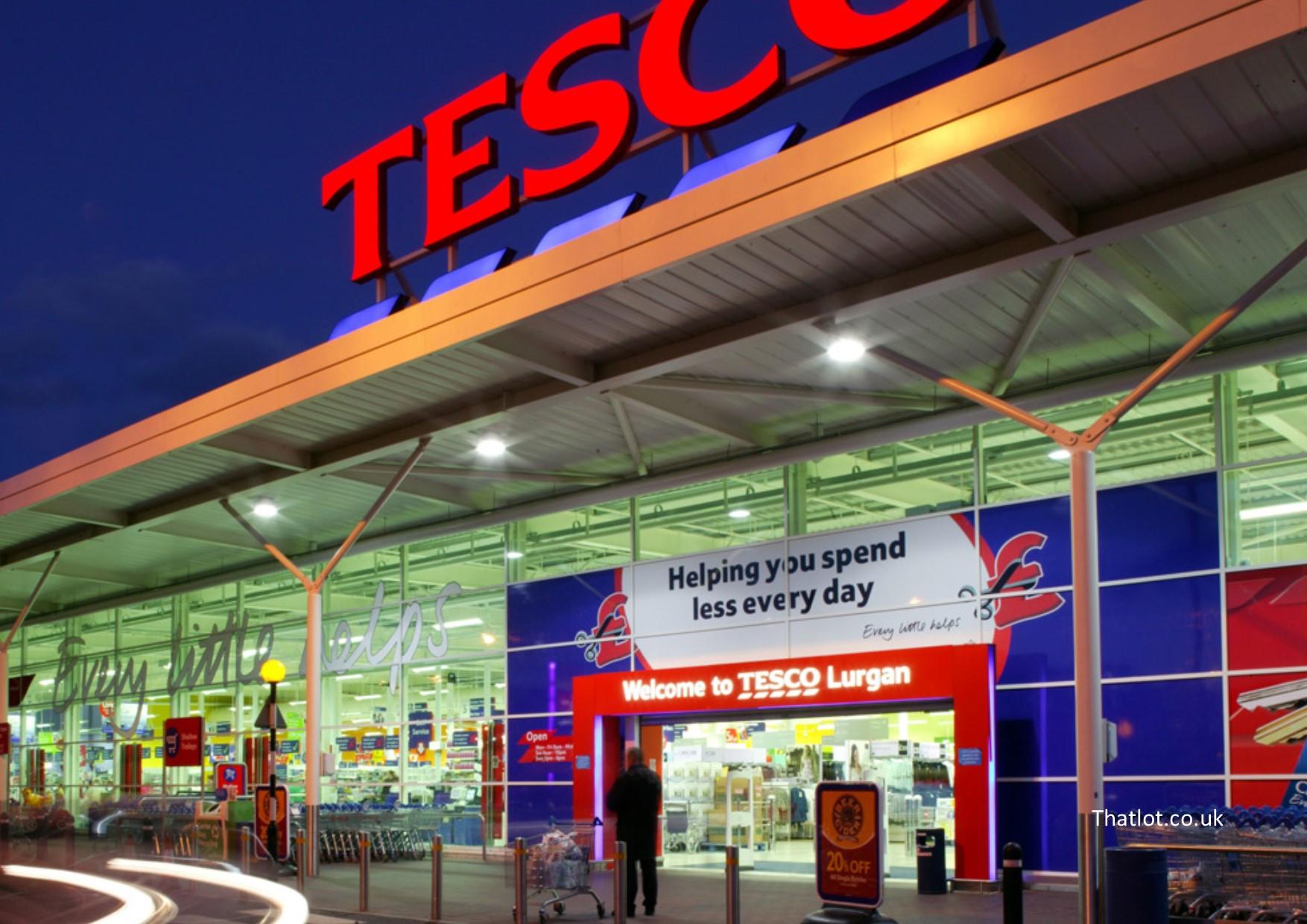
2016’s early Easter gave a much-needed boost to British supermarkets, according to the latest grocery share figures from Kantar Worldpanel. The three months to 27th March showed the fastest growth the sector has seen all year, with supermarket sales growing by 1.1 percent compared with the same period last year. British customers bought early in preparation for Easter Sunday, with very traditional shopping habits; over half of the population bought hot cross buns, and 15 percent buying a leg of lamb. Fraser McKevitt, head of retail and consumer insight at Kantar Worldpanel, continues: “An early Easter gave the market a sales boost of £152 million compared to last year, adding 0.6% to the overall growth rate. Britain’s love of all things sweet was in evidence, with 63% of households buying at least one chocolate egg during March, spending an average of £12 over the month.” Sainsbury’s was one again leading the figures, showing that the end of its multi-buy promotions has had little effect on sales; it led the Big Four with a sales increase of 1.2 percent. The Co-operative also had a strong quarter, reaping the benefits of opening its stores on Easter Sunday, as well as Aldi and Lidl, who saw their premium ranges grow exponentially. Tesco also had a better quarter, with their decline in sales slowing for the fourth month in a row, suggesting that it might be getting back on top of the market. Chief Executive Dave Lewis, who joined in September 2014, has been trying to revive Tesco with a focus on lower prices, improvements to product availability and customer service. According to Kantar Worldpanel data, shoppers have continued to benefit from falling grocery prices, with like-for-like prices 1.5 percent lower than this time last year.
05/03/2016

Morning Round-Up: India drops rates, oil and Asia down, Lagarde warns on economy

0

India revises repo rate down as expected

India’s central bank has cut its key interest rate for the first time this year, moving it downwards by 0.25 basis points to 6.5 percent.

The move came after the first bi-monthly monetary policy review for the 2016-17 fiscal, which began on April 1st, in which Royal Bank of India’s governor Raghuram Rajan said that “a reduction in the policy rate by 0.25 percent will help strengthen growth.”

He also added that, “retail inflation measured by the consumer price index (CPI) dropped sharply in February after rising for six consecutive months.”

Interest rates in the country are now at their lowest for five years. The RBI also retained its GDP growth forecast at 7.6 per cent. Oil lower, bringing down Asia US Crude fell 3 percent in trading on Monday, after hopes of an output curb at a meeting in Qatar later this month begin to fade. Japan’s Nikkei 225 closed down 2.4 percent, marking the sixth negative session in a row, with South Korea’s Kospi also down 0.8 percent. Oil prices also forced down US stocks yesterday. Supply has outstripped demand for months, causing oil prices to plummet 70 percent to record lows. A meeting between OPEC and non-OPEC producers on April 17th had hoped to reach an output agreement, but investors are seeming to be losing hope of a productive outcome. Lagard warns of loss of growth in advanced economies International Monetary Fund director Christine Lagarde has urged governments to prepare for increasing threats to the global economy in a speech at Goethe University in Frankfurt. Lagarde said, “the good news is that the recovery continues. We have growth. We are not in a crisis. The not-so-good news is that the recovery remains too slow, too fragile, and risks to its durability are increasing.” “We are on alert, not alarm. There has been a loss of growth momentum. However, if policymakers can confront the challenges and act together, the positive effects on global confidence, and the global economy, will be substantial.” Lagarde also called for governments to take their own actions to encourage economic growth, rather than relying on central banks to keep interest rates low and print electronic money. Several factors have caused a weak start to the economic year, including a slowdown in China and the continuing rock bottom oil prices. UK Chancellor George Osborne has also given similar warnings, citing January’s turbulence in the markets to encourage investors not to be complacent.  
05/04/2016

National Living Wage: what you need to know

The new National Living Wage comes into force today – but what does it mean for workers and employers? What is it? The National Living Wage is the new mandatory national minimum wage set at £7.20 per hour for everyone 25 and over – 50p higher than the previous minimum wage of £6.70, which will still apply for those aged between 21 and 25. However, it still differs from the voluntary living wage, which stands at £8.25 – or £9.40 an hour within London. Employers can choose to pay this higher level to their employees, but are not required to. What are the benefits? According to research by The Resolution Foundation thinktank, 4.5 million employees will benefit in 2016, rising to 6 million in 2020. It is thought that the positive impact will be most keenly felt in the hospitality and retail industries, which traditionally rely on cheap labour. And the downsides? The new Living Wage excludes those under 25, meaning that anyone between the ages of 21 and 25 will potentially be worse off than their peers in the same job. According to government Minister, Matthew Hancock MP, this was an active choice: “This was an active policy choice… Anybody who has employed people knows that younger people, especially in their first jobs, are not as productive, on average. Now there are some who are very productive under the age of 25 but you have to set policy for the average. It was an active choice not to cover the under 25s.” There is also the likelihood of a decrease in employment in the long run. The Office for Budget Responsibility has estimated that by 2020 there will be 60,000 fewer jobs as a result of the National Living Wage, due to businesses being unable to pay the higher rate to their staff and being forced to cut jobs as a result.
01/04/2016

Morning Round-Up: Anbang withdraw offer for Starwood, Sainsbury’s lead Argos bid, National Living Wage

0

Anbang withdraw offer for Starwood Hotels

Chinese insurance firm Anbang has dropped its takeover offer for Starwood Hotels in a surprise statement this morning, allowing Marriott hotel group to become the leading bidder.

The statement from Starwood said the offer was withdrawn due to “market considerations”, and Anbang “does not intend to make another proposal.” Starwood’s Board of Directors reiterated that it would continue to unanimously support the merger with Marriott International. Bruce Duncan, Chairman of Starwood’s Board, commented: “Throughout this process, we have been focused on maximizing stockholder value now and in the future. Our Board is confident this transaction offers superior value for Starwood’s stockholders, can close quickly, and provides value-creation potential that will enable both sets of stockholders to benefit from future financial performance.” Sainsbury’s bid backed by Argos owner British supermarket Sainsbury’s has become the leading bidder in the battle for Home Retail Group, the owner of Argos and Homebase. Its £1.4 billion pounds offer for Home Retail has been recommended by the Argos board, making the takeover by Sainsbury’s look ever more likely. Their main competitor, South African company Steinhoff International, withdrew last month. National Living Wage comes into force in the UK

The new National Living Wage comes into force today, requiring employers to pay workers aged 25 and over at least £7.20 an hour.

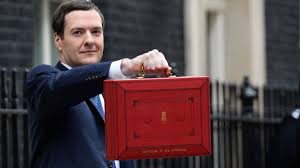
Announced in George Osborne’s budget last summer, it is expected to raise the wages of 1.3 million workers. However, there are fears that jobs will be lost if businesses – especially smaller ones – cannot afford to pay the workers the new wage, making the move counter productive.
01/04/2016

Current account deficit rises to highest ever recorded

0
Britain’s current account deficit has hit a record high, prompting chancellor George Osborne to speak out against Britain leaving the EU. The deficit widened to 32.7 billion pounds in the fourth quarter of 2015, according to the Office for National Stastics, standing at the equivalent of 7.0 percent of gross domestic product. For the third quarter, the deficit was only at 4.3 percent of GDP, pushing the total for 2015 up to £96.2 billion and 5.2 percent of GDP – the highest since records began in 1948. The figures demonstrate Osborne’s gloomy approach to the economy in 2016 he gave during the Budget earlier this month. In a statement today, he said: “Today’s figures expose the real danger of economic uncertainty and shows that now is precisely not the time to put our economic security at risk by leaving the EU.”   However, the ONS figures also showed the UK economy grew 0.6 percent in the fourth quarter of 2015, higher than previous estimates of 0.5 percent.
31/03/2016

Speedy Hire shares drop on trading update

Shares in Speedy Hire, the UK tools and plant hire services company, have fallen nearly 5 percent this morning after the release of a trading update. During a statement, the board confirmed that the full year adjusted profit before tax is anticipated to be in line with market expectations, with net debt broadly in line with the previous year end. Following a review, the Board has also announced that the value of acquired goodwill held on the balance sheet – £45 million – will be written off as a non-cash Exceptional Item in the full year results. The statement also included the announcement that Rob Barclay, Managing Director UK, Ireland and Middle East of SIG plc will be joining the Board as a Non-Executive Director, with effect from 1 April 2016. Speedy Hire (LON:SDY) is currently trading down 4.54 percent at 36.50 (0923GMT).
31/03/2016

Morning Round-Up: Argentina passes repayment deal, South Korea industry up, TUI up

1

Argentina lawmakers pass landmark payback deal

Argentina lawmakers have passed a repayment deal which will see the country’s access to international credit reinstated, after a 15 year battle with creditors.

The deal was central to President Mauricio Macri’s election win in November and should improve business conditions in the country. Argentina defaulted on a $100 billion loan in 2001, which left them unable to borrow at the standard rate of about 5 percent – instead forcing Argentina to pay at least double, restricting the country’s access to financial help.

The deal has been made with creditors in New York, and Argentina now have until the 14th April to pay holdout creditors. South Korea’s industrial output rebounds

South Korea saw industrial output figures rebound in February, according to official figures published today.

Industrial production rose 3.3 percent on a month earlier – the biggest monthly increase since 2014 – after a 2.1 percent fall in January. Weaker demand from China in recent months has impacted on South Korea’s economy, but the latest set of figures are an encouraging sign, beating expectations. Travel group TUI see growing demand, despite terrorism threat

TUI Group, who own travel giants First Choice and Thomson, have reported higher than expected bookings for summer holidays this year.

TUI said the demand was coming especially from Spanish and long-haul destinations, despite reporting a 40 percent slump in bookings to Turkey last month due to events in the Middle East. TUI makes all of its profit from summer bookings, making them a key indicator for the group. Summer holiday bookings have risen 2 percent, with average selling prices up 1 percent. Chief Executive of TUI Group, Friedrich Joussen, commented: “The Group has again demonstrated the flexibility of its business model and the ability to remix destination capacities to match demand and as a result demand and pricing has remained resilient overall despite the impact of geopolitical events. “We therefore remain well positioned to deliver underlying EBITA growth of at least 10% in financial year 2015/16 ,
31/03/2016