Anglo American to sell iron unit after unprecedented yearly loss

Mining giant Anglo American has been hit by falling commodity prices, seeing a pre-tax loss of $5.5 billion for 2015.

This was double the amount reported in 2014, alongside a 55 percent drop in underlying core profit. Anglo American had been expected by analysts to post annual earnings before interest and tax of $1.5 billion.

In a statement, CEO Mark Cutifani acknowledged the effect the economy has had on commodity prices recently, saying that they have presented “significant challenges” to the group. In order to keep its head above water, the company have announced plans to sell its iron ore unit, Kumba Iron Ore, of which it owns 70 percent. “The company has initiated a review to consider options to exit from KIO at the appropriate time, including a potential spin-out,” the company said in statement. Anglo American (LON:AAL) are currently trading down 0.03 percent at 392.30, after a rocky morning (0952GMT).
16/02/2016

All Leisure Group to consider delisting after fall in passengers

Shares in travel company All Leisure Group have dropped nearly 50 percent this morning, after final year results were impacted by a decline in passenger numbers and the temporary loss of two cruise ships. The Group made an overall Profit after Taxation of £0.5m, compared to a loss of £7.5m in the prior year. However, revenue was lower due to dry-dock periods for the Voyager and Minerva vessels, as well as a 6 percent decline in passengers due to the impact of geo-political unrest in the Middle East. Commenting on the results, Chairman Roger Allard said: “The board is actively considering delisting from the AIM market. It is mindful of the on-going costs of remaining as a publicly quoted company and the limited current and potential benefits available to the company. A further announcement will be made in due course.” All Leisure Group (LON:ALLG) are currently trading down 43.18 percent at 3.125 (0948GMT).
15/02/2016

London to remain as HSBC’s headquarters

0
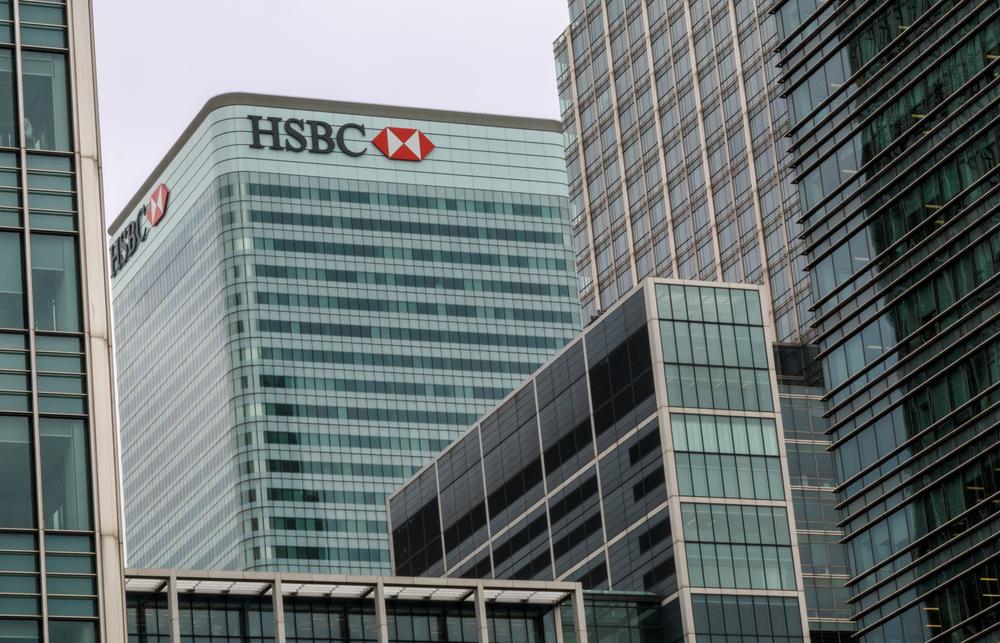
HSBC Holdings have announced their decision to keep its headquarters in the UK, after a ten-month review in which it considered a move to Hong Kong. HSBC investigated the move in order to avoid the cost of remaining in the UK, where a tax imposed post-recession cost the bank $1.1 billion in 2014. Hong Kong is the group’s main revenue-generator, and would avoid the UK government’s stricter regulations. “We had no negotiation with the government,” HSBC Chairman Douglas Flint told BBC radio on Monday. “The government was very well aware of our view, indeed the view of many other people who commented on it, but there certainly was no pressure put on, or no negotiation”. The bank has now confirmed that it will remain in the UK, adding that London “offered the best outcome for our customers and shareholders”. This will be seen as a vote of confidence for the UK during a turbulent time in the run-up to an EU referendum. “We had no negotiation with the government,” HSBC Chairman Douglas Flint told BBC radio on Monday. “The government was very well aware of our view, indeed the view of many other people who commented on it (the bank levy), but there certainly was no pressure put on, or no negotiation”.
15/02/2016

Doubt falls on Abenomics as Japan’s economy shrinks 0.4 percent

0

Japan’s economy shrunk further in the last quarter of 2015, becoming the latest figure to call Prime Minister Abe’s economic policy into question.

Between October and December of last year the economy shrank by 0.4 percent compared with the previous quarter, below expectations of 0.3 percent. A slew of recent economic figures have pointed to a decline in Japanese economy, including weaker domestic demand and slower investment in housing. Furthermore, in the last two weeks the Japanese government lowered their interest rates into negative territory, and saw Japanese stocks enter a bear market after tumbling over 8 percent in two days. Prime Minister Abe has been pursuing an economic policy known as ‘Abenomics’ since coming into power, using the ‘three arrows’ of expanding monetary supply, increasing government spending and implementing government reforms in order to combat Japan’s slowing economy. However, the latest sets of figures are further evidence that this plan may be failing to hit the mark. In Parliament on Monday, Abe made a statement seeking to reassure his country: “As we have agreed at G7 and G20, sudden currency moves are undesirable. I want the finance minister to closely monitor the situation and respond with appropriate measures as needed,” he told parliament on Monday.
15/02/2016
 

Manchester Property Investment – expected 6% returns

Take a look inside one of Greater Manchester’s most sought after residential developments

Sponsored Content

Situated on Woden Street, just off Ordsall Lane, Bridgewater Gate is the latest addition to Greater Manchester’s thriving property market.
This development contains 4 x studios, 22 x 1-beds, 21 x 2-beds and 6 x 3-bed apartments, perfectly appealing to young professionals looking for all the excitement of city living, yet with all the calmness and tranquility offered by ample outdoor space.

£1 billion has been contributed to the local economy by MediaCityUk – Salford Council, 2015

Html code here! Replace this with any non empty text and that's it.

Bridgewater Gate’s location is second to none. Residents are surrounded by a range of amenities such as shops, bars, restaurants and theatres.Right on the property’s doorstep are a number of tram and bus stops connecting tenants directly with the rest of Greater Manchester.Easy access to nearby main roads and motorways.
Residents of Bridgewater Gate will benefit immensely from the apartments’ luxury fixtures and fittings, stylish furniture and light, bright and spacious setting. In addition to a large open-plan living and kitchen area. Furthermore, whilst all apartments have exclusive access to the development’s roof terraces, a selection of these apartments will also feature a beautiful private balcony, only enhancing the feel of Bridgewater Gate as the perfect urban retreat

⇒6% expected returns

⇒Prices from £114,995

Request more information on the investment opportunity now:

Articles are general information and not a recommendation to act. Please seek independent investment advice before entering into any financial transaction. By entering into any financial transaction that involves securities, derivatives or property puts your capital at risk. The UK Investor Magazine is not regulated by the Financial Conduct Authority and will not accept any liability of any action taken after using this website.

Is it time for further regulation of the crowdfunding sector?

Crowdfunding has risen over the last ten years from a relatively new idea to a viable source of funding, seeing figures grow exponentially. But recently the landscape has been blighted by the collapse of several large-scale crowdfunding projects; Rebus, who raised more than £800,000 on equity crowdfunding site Crowdcube, and Welsh company The Zano which crashed to earth in November after initially becoming Europe’s most successful Kickstarter project. And these two projects are not the exception – takeaway company Hokkei and shoe label Upper Street, which raised £320,000 and £243,000 respectively in 2015 on equity crowdfunding platform Seedrs, have both since gone into liquidation and research by AltFi Data and law firm Nabarro recently found that one in five companies that raised money on equity crowdfunding platforms between 2011 and 2013 had gone bankrupt. Thousands of investors have been exposed to risks far higher than may have been anticipated, especially since crowdfunding investments are not covered by the FCA’s Financial Services Compensation Scheme. So, should investors be more aware and should the sector be more regulated? In a statement after the collapse of Rebus, crowdfunding site Crowdcube said: “Whilst the failure of any business is disappointing, not all businesses will succeed and [it] therefore highlights the importance of spreading investment risk with a diversified portfolio… “Investors on Crowdcube can be assured that we are committed to ensuring transparency and have rigorous due diligence processes in place.” As it stands, the FCA do not regulate donation of rewards-based crowdfunding, such as those run by popular site Kickstarter. However, they do regulate loan-based crowdfunding and investment-based. In particular, they say that “we regard investment-based crowdfunding in particular to be a high-risk investment activity”, and advise investors that they are likely to lose 100 percent of their investment. This month, the FCA published the results of a review into the current regulation of the sector – but concluded that nothing will be changed from the “light touch approach” advocated in 2014, whereby the sector was allowed to grow largely on its own. In a statement in the published paper, the FCA said: “We have seen the crowdfunding market continue to grow rapidly. We recognise that it is still early but, at present, we see no need to change our regulatory approach to crowdfunding, either to strengthen consumer protections or to relax the requirements that apply to firms.” So, further regulation is not on its way any time soon – both good and bad news for the industry. Those seeking investment will still be able to attract investors fairly easily – but those investing still stand to be caught out by the attractive – but undeniably high risk – opportunities, with little or no protection. However, with more and more stories of crowdfunding investments failing without offering a return, it is likely that investors are becoming wiser. Undoubtedly, the best advice for those considering investing in crowdfunding projects is that given by the FCA: “You should only invest money you can afford to lose.” Miranda Wadham on 12/02/2016

Revolutionary couriers StreetStream offer crowdfunding opportunity

In a climate where everybody wants things done faster, easier and cheaper, courier start-up Street Stream are determined to meet these expectations. Started just a year ago in February 2015, trading has so far surpassed expectations, revolutionising the on-demand delivery industry. Put simply, StreetStream works through four simple steps: a customer posts job on streetstream.co.uk, whereby couriers are then alerted on their iPhone app. The courier submits a quote, which the customer can then accept and submit payment. The courier then carries out delivery, and StreetStream takes a cut of the transaction – currently set at a flat £2 per job but increasing to 17.5% in 2016. The business also generate revenue from premier options for goods-in-transit and extra services provided by our couriers, such as puncture repair. StreetStream are gaining traction by using a similar method to hugely successful sites Uber and Airbnb – decentralising ownership of assets and focusing on “delivering exceptional customer service via a user-friendly platform connecting customers and couriers directly in a more personal relationship”. Within a year, the business has grown to include 50 active couriers, completing over 2600 jobs so far for around 500 customers. StreetStream’s USP comes from giving both customers and couriers more choice, therefore meaning which couriers can provide a better and more personal service for customers, and allowing customers to choose the appropriate delivery speed or time for their needs. This is what differentiates them from competitors such as Addison Lee and City Sprint, who allocate a courier to a booking without the ability for customers choice – an impersonal service. Having been in business for just over a year, StreetStream are currently crowdfunding for £100,000 on Crowdcube in order to expand. The funds raised will be put towards investment in new product features, including a Public Application Program Interface (API) to offer retailers and on-demand apps the ability to embed the Street Stream delivery network into their e-commerce website or app, and a Mass Job Uploader to allow larger clients to load larger numbers of delivery jobs in one go. The company will also be putting the funds towards recruiting a full-time sales team. For more information on StreetStream’s campaign, visit their Crowdcube page here.

Twitter drops on user growth troubles

Twitter (NYSE:TWTR) shares have fallen in after-hours trading as their latest quarterly results fail to show any improvements for the troubled micro-blogging site. Twitter, whose shares have dropped against its IPO price after trading for just a few years, reported a net loss of $90 million – an improvement on the $125 million loss this time last year. The site also reported a slowdown in user growth, a key indicator as to the site’s health, with the number of average monthly active users remaining at 320 million for the second quarter in a row. However, whilst revenue growth saw a rise of 48 percent on the fourth quarter of 2014, shares fell 10 percent in after hours trading – which has now been somewhat recovered. 11/02/2016

Oil drops again as Goldman Sachs confirm weak future

0
Oil prices dropped again on Thursday due to record amounts in storage, and a confirmation from Goldman Sachs that they expect prices to stay low and volatile for the rest of 2016. Brent crude futures fell 40 cents to $30.44, after rising slightly last week on hope of an OPEC agreement. WTI crude futures were back down almost to the low hit in January, which was its lowest point since 2003. The oil markets are now coming to the end of their peak season, whereby consumers stock up for winter heating, putting further pressure on a market where demand already significantly outstrips supply. Producers have become more and more open to accepting low prices to obtain market share, wit hIran offering discounted oil to Asian markets to undercut rival Saudi Arabia. It is likely that concerns over China will continue to weigh on the market for the rest of this year, with supply still increasing exponentially against demand. 11/02/2016

Dunelm up 6 percent on strong half-yearly growth

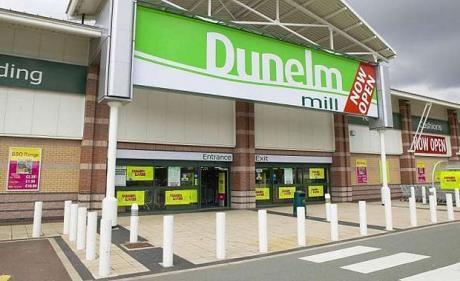
Shares in homeware retailer Dunelm Group are up over 6 percent this morning after releasing a positive report for the first half of the 2016 trading year. Sales were up 10.3 percent to £448.1 million, with profit before tax also up from £68.2 million in the first half of 2015 to £75.5 million this year. Dunelm have recently put a three part growth strategy into operation, with these figures being a solid confirmation that the company are moving in the right direction. In a statement, CEO John Browett said: “Our focus remains on growing the business for the longer term, after making good progress so far. “We had a strong sale at Christmas…it is a really exciting time to be at Dunelm.” Dunelm (LON:DNLM) are trading up 6.61 percent at 880.50 (0951GMT). 10/02/2016