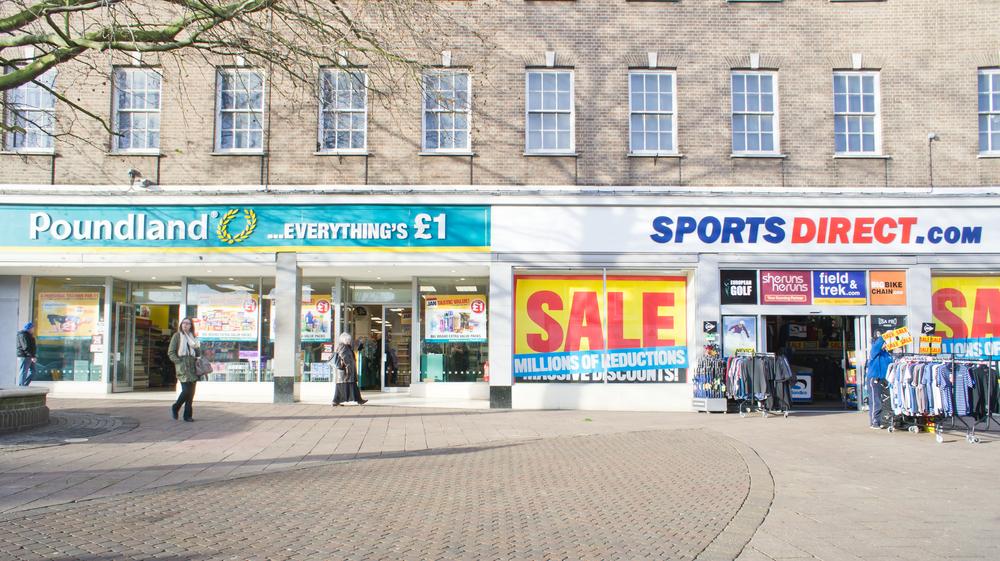
Sports Direct (LON:SPD) have seen shares plummet over 15 percent today, after disappointing sales in the run-up to Christmas led to the issuance of a profit warning.
The company said in a statement that they were unsure whether they would be able to hit their adjusted earnings target of £420 million and lowering the expectation to between £380 and £420 million. They have been the latest in a string of companies to blame the unseasonably warm weather for a decline in sales, with both Next and Marks and Spencer citing the same reason for disappointing Christmas figures.
Arguably, however, Sports Direct are less likely to have seen a decline in sales due to the weather, with their primary offering being sports clothing and footwear. In comparison, rival JD Sports adjusted their profit expectations for 2015 upwards by £10 million in December.
Sports Direct stock has fallen by a quarter in the last month, with over £400 million wiped off today. It is currently trading down 15.49 percent at 432.70 (1401GMT).
The latest US jobs data has just been released, with the non farm payroll figure coming in at 292,000.
This is a huge advance on November’s figure of 211,000 and well above Bloomberg analysts’ expectations, which stood at 200,000. Unemployment rates were unchanged 5 percent.
This is the first non farm payroll figure since the US Federal Reserve raised interest rates at their meeting in December, and such a positive figure may well encourage another rate rise within the next few months.
A week into 2016 and the financial markets are off to a less than prosperous start; two trading suspensions on the Chinese markets, the halting of diplomatic relations between two major oil producers and a spate of negative trading updates have done nothing to elevate investor sentiment. But is this gloomy outlook it for the year, or is there a chance to turn it around?
China is one of the biggest influences on the global economy, and according to Dafydd Davies, partner at Charles Hanover Investments, the forecast isn’t looking good:
“Structural changes in China are likely to be the most detrimental factor for equity markets, although not so much the fundamental changes themselves but negative sentiment they create.”
China have implemented several changes since crises over the summer of last year sent markets plunging – including several devaluations of the yuan and the perhaps ill-advised decision to bring in a ‘circuit-breaker’, designed to suspend the markets should they fall over 7 percent. What is certain is that Beijing’s attempts to control volatility in the markets will continue, with uncertain consequences.
The oil sector’s start to 2016 wasn’t much better than China’s – prices hit 11-year lows at the beginning of the week after Saudi Arabia’s execution of a prominent Shia clerk caused Iran to cut diplomatic ties. Exacerbated tension between the two countries makes a much-needed agreement to curb output look more and more unlikely.
Dafydd Davies comments: “With the $30 mark fast approaching, we expect to see some capitulation over the coming months as Western producers have to keep producing to pay debt, and Middle Eastern producers continue to support government spending.”
Looking towards the UK, the biggest issue on the country’s agenda is the much-anticipated interest rate rise. Now that the Federal Reserve have taken the plunge and raised rates, the pressure is increasing on Bank of England chief Mark Carney to do the same. However he has repeatedly made it clear that the UK is in no hurry to follow suit – and with a strong of disappointing economic data, it seems unlikely rates will be raised until at least early 2017.
Couriers FedEx (NYSE:FDX) and TNT Express (AMS:TNT) have received unconditional approval for a merger from the European Commission, who concluded that the deal would not present any competition concerns.
The companies announced the merger back in April last year, stating that FedEx intended to buy TNT for 4.4 billion euro to expand their business in the European market. With approval from the European Commission to proceed obtained, all that remains is clearance from remaining jurisdictions including Brazil and China. FedEx said in a statement that they expected the offer to complete in the first half of 2016.
“We are extremely pleased to receive the European Commission’s unconditional approval,” said David Binks, Regional President Europe, FedEx Express. “We believe the combination of TNT Express and FedEx will provide significant value to the employees, customers and shareholders of both companies.”
Investors have reacted negatively to the news, with FedEx currently trading down 4.37 percent in after hours trading. (1100GMT). The combined company would become Europe’s second largest courier, coming in just behind Dutch DHL.
Big Four supermarket Tesco (LON:TSCO) is one of the biggest risers on the FTSE 100 this morning, gaining over 5 percent after a positive note from Barclays raised its recommendation.
Whilst giving a nod to the difficulties facing the supermarket sector currently, analyst James Anstead said the near future for Tesco looked positive:
“We think recent share price underperformance has left Tesco’s valuation at attractive levels, although we remain conscious of the numerous headwinds facing the UK food retail market.
“Additionally, we tend to think that the upcoming trading statement (14 January) may be less worrisome than the market’s worst fears. Consequently we upgrade our stock rating to overweight (from equal weight), and our price target (reduced to £1.90 from £2.25, based on an average of discounted cash flow and sum of the parts valuations) still gives a 34% upside potential.”
Britain’s supemarkets have been facing difficulties over the last couple of years, with increased competition from budget chains such as Lidl and Aldi causing a spate of disappointing results.
A positive note from Barclays indicates that 2016 may be a more positive year for Tesco, which is currently trading up 4.67 percent at 145.70 (1026GMT). Their next set of results which covers Christmas trading is due for release on the 14th January, and will shed further light on the overall performance of the company.
Global stocks rose on Friday, regaining the ground lost by the suspension of trading in China yesterday for the second time in a week.
Trading was halted in China yesterday just 30 minutes after market open due to a ‘circuit-breaker’ rule coming into effect, which causes trading to be suspended for the rest of the session if the key index falls by over 7 percent.
This had a knock-on effect on markets globally, with all European indexes falling around 2 percent. China regained ground on Friday, however, ending the day up by nearly 2 percent.
Bejing have now suspended the circuit-breaker rule and European markets have reacted positively. The FTSE is currently up 0.76 percent, with the DAX up by 0.60 percent. However, some volatility is expected later as markets react to key US jobs data, due to be released at 1.30pm.
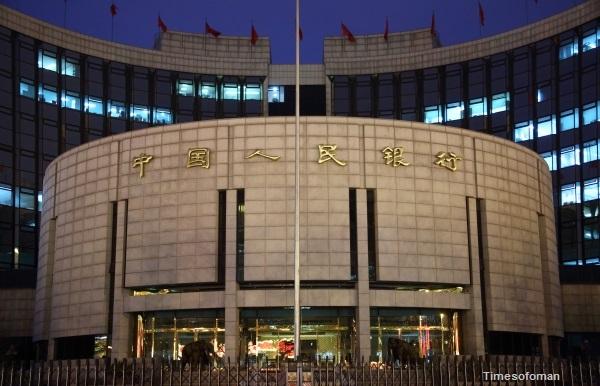
China has once again taken centre-stage in global economics, after a shock devaluation of their currency ended with the suspension of Chinese markets for the second time this week. But when discussing this matter, which currency is correct – the yuan or the renminbi?
The currency of the world’s second largest economy goes by two names, which are often confused and used interchangeably. Technically, both are correct to use, but refer to slightly different things:
‘Renminbi‘ is the official name of the currency introduced by the Communist People’s Republic of China at the time of its foundation in 1949. It means “the people’s currency”.
‘Yuan‘ is the name of a unit of the renminbi currency. It is the Chinese word for dollar – the silver coin, mostly minted in the Spanish empire, used by foreign merchants in China for some four centuries. Just to confuse matters further, Yuan is also referred to as “kuài” in spoken Chinese.
Renminbi is the official name, with yuan being the main unit – for example, in Britain, Pound Sterling is the official name but the main unit is pounds. An item may cost £1 or £10 – but never 1 or 10 sterling.
So, in short, when you’re speaking about the currency as a whole — and not about a particular number of yuan — it’s correct to say renminbi. When speaking about a specific amount, it’s yuan.
China have suspended the circuit-breaker rule that saw trading on the Chinese stock markets halt after just 30 minutes this morning.
The rule – in which trading is automatically suspended if the markets drop by 7 percent or over – was brought in in order to curb volatility on the markets and increase investor sentiment. However, the ‘circuit-breaker’ has already come into play twice this week, cutting short two days worth of trading – leading to the announcement this afternoon that the rule would be suspended.
European markets have also been down today, with the Dax falling over 3 percent and £47 billion wiped off the FTSE.
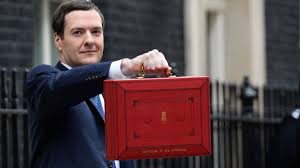
Chancellor George Osborne is will say in a speech later today that this year could be the toughest since the financial crisis, as global economic problems make this January the worst financial start to the year in sixteen years.
Trading suspension on the Chinese markets, as well as oil prices hitting 11-year lows after increased tension between Saudi Arabia and Iran, have sent global markets into chaos. The chancellor told BBC Radio 4’s Today programme:
“It is precisely because we live in an uncertain world. It is precisely because we have not abolished boom and bust as a nation, that you need to take these steps, difficult steps and I need to go explaining to the public, that the difficult times aren’t over, we have got to go on making the difficult decisions, precisely so that Britain can continue to enjoy the low unemployment and the rising wages that we see at the moment.”
He continued, saying that far from “mission accomplished” on the economy, “2016 is the year of mission critical”.
Serviced apartments provider thesqua.re has closed a successful investment round of $2 million from London based Fintech company Crowd2Fund and OakNorth Bank.
thesqua.re offer luxury serviced apartments for corporate clients, providing four-star hotel standard accommodation for a fraction of the cost and with all the comforts of a home. Their serviced apartments are a convenient solution for corporations looking to make business travel ‘easier and more enjoyable.’
Launched in 2008 as House of Modern Living, the company has recently undergone a rebrand and now has properties in the main areas of London and other key business cities. Through crowdfunding, thesqua.re has raised enough to support expansion to 500 apartments in central London, with an aim to open offices in New York.
One of thesqua.re’s apartments in Paris
thesqua.re’s founder, Sid Narang, said: “Crowdfunding gave us an opportunity to reach out to investors who were involved in the latest tech and industry trends. We specifically chose to raise on Crowd2Fund due to them understanding our business and the only crowdfunding platform to allow us to raise a loan this way.”
Their online campaign on Crowd2Fund closed with 17 high profile investors, making thesqua.re the first UK serviced apartments provider to secure investment through crowdfunding.
Chris Hancock, Crowd2Fund’s CEO, commented: “Crowd lending is such an exciting and fast-growing industry. We loved working with Sid and the team at thesqua.re – they are an excellent example of the innovative, British businesses we helped fund on the platform and a fantastic way to provide our investors with a good return on their investments.”
thesqua.re has grown profitability at 80 percent CAGR to cross $10 million revenue in 2015, and in December the company received the highly commended lndustry Breakthrough Award by the Association of Serviced Apartments Providers. For more information on thesqua.re, visit www.thesqua.re.