
Avago cleared to buy Broadcom in $37bn deal
Global manufacturer of semiconductors Avago (NASDAQ:AVGO) has been cleared by the European antitrust regulators to carry out a $37 billion takeover of Broadcom (NASDAQ:BRCM) to create the third-largest chip-maker in the world.
Despite some initial concerns, The European Commission allowed the merger after Avago agreed to let other switch chipmakers have continued access to essential intellectual property on reasonable terms.
Margrethe Vestager from the European Competition Commissioner said;
“Thanks to very good cooperation with the companies the Commission has been able to approve this multi-billion dollar takeover within a very short space of time while preserving effective competition in this crucial high technology sector,”
Following the European Commission’s approval of the company’s acquisition, Broadcom stocks are down by 0.06% to $53.50 in pre-market trading.
China & Africa: a relationship of development or exploitation?

With the sixth Forum on China-Africa Cooperation (FOCAC) to be held early next month, the relationship between Chinese and African governments has come under renewed scrutiny to establish whether it is mutually beneficial for both parties, or if China is simply taking advantage of Africa’s raw materials.
It is undeniable that China invests a large amount into the continent; investing approximately $22 billion to date– going towards investments in natural resource extraction, power generation, finance, textiles and infrastructure throughout Africa.
However, despite these large figures, investments have been considered as detrimental to Africa’s overall competitiveness. One such example is the unfulfilled promise of new employment. Whilst jobs have been created, most of the hired workforce have been Chinese and for those jobs filled by Africans, health and safety regulation has been poor.
As well as high levels of foreign direct investment, China is now Africa’s biggest trading partner. The trade volume currently stands at $166 billion, a 700% increase since 1990, but is predicted to reach an estimated $1.7 trillion by 2030.
This trade however, is arguably a much higher benefit to the Chinese economy than to the African economy, through the exploitation of natural resources. This is due to China’s importing of resources such as minerals and metals, whilst African countries primarily import finished products such as rubber and plastics.
Next months China-Africa forum hopes to respond to these popular criticisms of its “mercantilist” approach.
Safiya Bashir on 23/11/2015
Christmas Shopping Survey – Win a hamper

Terms and Conditions
- This survey is only available to UK residents except employees and agents of UK Investor Magazine
- The draw will take place on the 15th December by a random selection method.
- False email addresses will result in disqualification
- Prizes are subject to availability and suppliers terms and conditions
- If a prize is unavailable we reserve the right offer a substitute
- The winner(s) agree(s) to the use of their name, photograph and disclosure of county of residence and will co-operate with any other reasonable requests by UK Investor Magazine relating to any post-winning publicity
- A list of winners will be available by email and posted on our website
- Only the surname and county of the winners will be disclosed.
- Proof of age may be required to claim prize
- No responsibility can be accepted for entries mislaid, delayed or corrupted, or due to IT error.
- Reasonable efforts will be made to contact winners, if we unable to contact a winner a new winner will be selected.
- The decision of the selection method is final
- The competition may be withdrawn at any time without prior notice
Unexpected growth for Eurozone business activity
The Eurozone’s business activity picked up much faster than predicted, with its fastest pace since mid-2011.
This was unexpected following growth in France’s private sector hitting its lowest level in three months. Chris Williamson, Markits’ chief economist said;
“We think the key reason for the slowing in services growth is due to the attacks. Clearly there’s been a cut in footfall and any sort of feel-good factor amongst consumers in the wake of the horrific events. But history does tell us that these events tend to have a very short-lived impact.”
France’s slow growth was offset by an accelerated growth within Germany’s private sector, setting back worries over the emissions scandal at Volkswagen (VOWG_p.DE).
Bert Colijn at ING, commented on the Eurozone’s growth;
“This upbeat survey about the European economy fell short on one important aspect though: inflation. The survey indicated that despite the strongest output growth and job creation since early 2011, there was still no sign of inflationary pressures.”
Oil prices tumble following strong dollar and oversupply

Oil prices fell on Monday morning following a rise in the US dollar and faltering demand from China.
Analyst at Phillip Futures, Daniel Ang, has said;
“Oil prices and the USD strength have an inverse relationship and if the USD does strengthen more, oil prices should be taking a hit,”
According to data from the U.S. Commodity Futures Trading Commission, big hedge funds have increased their bets that oil will continue to fall.
Since OPEC decided to maintain its production levels, oil prices have halved over the past year
Concerns of oil price have increased since the international sanctions against Tehran are to be lifted in the coming months, with analysts expecting Iran to increase production by up to 500,000 barrels a day.
At 0918 GMT, U.S. West Texas Intermediate (WTI) crude futures fell to $40.64 a barrel from $41.90. Benchmark January Brent futures are down 90 cents at $43.76 a barrel.
Justin Trudeau: Plans and hopes for Canada
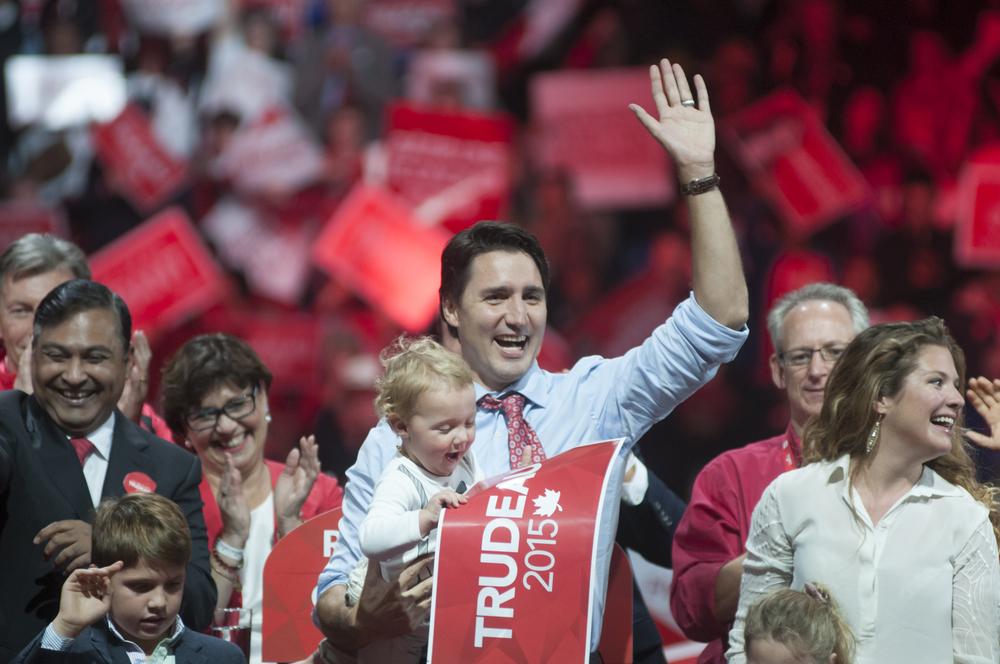
A few months ago, the success of Justin Trudeau in the Canadian elections seemed an unlikely future. Criticized for his age, lack of experience and slightly more left-wing approach to politics, he was an unlikely contender.
The Liberals, who won a decisive majority government with 184 seats, started the campaign with a mere 36 seats in the House of Commons and defied all odds to defeat the Conservatives.
So what changes does he hope to introduce to Canada?
Refugee Crisis
Trudeau recently announced promises to resettle 25,000 refugees in Canada before January 1st. Following the Paris attacks, Trudeau has stood by these plans, despite a wane in support from Canadian public.
Trudeau’s new policy differed from the previous Conservative government, which planned on admitting 10,000 refugees over the next three years.
For those with concerns of security, Canadian Prime minister stated;
“It didn’t take the tragedy in Paris for us to suddenly realize that security’s important. We’ve known for a long time, and we continue to be very much committed to keeping Canadians safe while we do the right thing to engage responsibly on this humanitarian crisis.”
How does Trudeau’s stance on the refugee crisis differ from the UK’s government? David Cameron bucked to pressure in early September, announcing an expanded resettlement programme for Britain, hoping to accept 20,000 Syrian refugees over the next five years. He has since however stated that he wants to put more effort into returning migrants to their country of origin.
Climate Change
Trudeau’s predecessor was a well known sceptic but Time Magazine believes that Canada’s new prime minister is ‘good news’ for the fight against climate change.
In a speech given earlier this year, Trudeau said;
“In 2015, pretending that we have to choose between the economy and the environment is as harmful as it is wrong,”
With plans to introduce a carbon pricing scheme to reduce emissions and attending conferences in Paris later this month, Trudeau is hoping to show support and create higher profile for talks around climate change.
Following recent polls, it is clear Canadians believe Trudeau to be the best person for the job. The question now is, for how long will this political honeymoon last?
Safiya Bashir on 23/11/2015
HSBC’s biggest shareholder shows support for bank’s UK exit
Some of HSBC’s biggest shareholders have announced that they would support the bank’s decision to move its headquarters abroad, should it decide to take the plunge.
One of their biggest shareholders, Standard Life Investments, said that HSBC (LON:HSBA) was put at a “competitive disadvantage” by “ever-increasing capital requirements” in London. Standard Life Investments head of equities David Cummings told Radio 4’s Today programme that “logically, we would be supportive of a move if they chose to do that”, stating that a UK exit could amount to “better growth, earnings and dividend prospects unless the regulator changes tack”. The decision to move away from London will be made by the end of the year, as HSBC struggles to contend with “regulatory and structural reforms” introduced since the financial crisis. Some speculate that the bank will choose to move to Hong Kong – HSBC makes around 80 percent of its profit in Asia, where is has major operations.23/11/2015
Shares in Playtech fall over 10 percent on failed takeover

Online gambling company Playtech (LON:PTEC) saw shares fall over 10 percent this morning following an update from the Financial Conduct Authority on its proposed takeover of Plus500 (LON:PLUS).
Over the weekend the Board of Playtech reevaluated steps that were being taken to satisfy the FCA’s concerns about the tatekover and stated that they were unlikely to obtain the FCA’s approval by the deadline of 31 December. Playtech are now withdrawing its change of control application to the FCA.
Playtech, a company who supply software to the heavily growing online gambling sector, had aimed to acquire Plus500 to grow its financials division. However, they stated that they were “continuing to enjoy double-digit underlying growth with a strong pipeline of opportunities” and had “confidence in maintaining momentum.”
Playtech is currently trading down 10.80 percent at 759.50 pence per share, somewhere in the middle of its 52 week range of between 616.14 and 936 pence per share. (0850GMT)
Pfizer Inc to acquire Allergan in this year’s biggest merger – Reuters

Pharmaceutical giant Pfizer Inc (NYSE:PFE) secured board approval over the weekend for the acquisition of rival company Allergan Plc (NYSE:AGN) in a deal that will create the world’s biggest drug company, Reuters reported this morning.
Its sources stated that the merger will be worth more than $150 billion – the largest deal this year, including that of SABMiller – and would involve Pfizer paying with 11.3 of its shares for each Allergan share. The companies’ boards of directors reportedly approved the deal Sunday, but Reuters’ sources have said that final details will be released later today.
A major bonus of the merger is that Pfizer will be able to redomicile to Ireland, where Allergan is based, and slash its corporate tax rate from the 35 percent it pays in the US to the Irish rate of just 12.5 percent.
The deal would put the merged group well above the competition, with combined annual sales of $60 billion. Pfizer and Allergan declined to comment.
Pfizer is currently trading down 0.34 percent, with Allergan up 3.57 percent on the news. (0837GMT)
2016: Is there hope on the horizon for non-energy commodities?
According to Daniel Yergin, IHS Vice Chairman, non-energy commodity prices have dropped 48% since July 2014. The end of the BRICs era has been one of the key factors behind the drop, but is there hope on the horizon for non-energy commodities in 2016?
Gold’s fall from grace has been making the headlines all year, but it is not the only metal to have suffered over the course of 2015. Silver has followed a similar downward trend, as have platinum and copper. Palladium has fared a little better than its fellow metals when viewed over the last ten years, but again in the last year its value has dropped off considerably.
“It’s been a bad year for precious metals and base metals alike,” comments Nikolas Xenofontos, Director of Risk Management of leading online trading services provider easy-forex, “And I’m far from convinced that prices have bottomed out yet. I think early 2016 will bring further declines, but there may be hope of a rally during the second half of the year, particularly if the global economy picks up again.”
Over the course of 2015, the projected global economic growth rate has been steadily cut by the International Monetary Fund (IMF). While the world economy grew by 3.4% during 2014, the IMF projected growth would slow to 3.3% in 2015. Then in October 2015 it lowered the projection to just 3.1%, with the slowdown of China’s economy and the shrinking of the Russian and Brazilian economies noted as having a major impact on the projection.
Grains have suffered just as much as metals over the course of 2015, with wheat, corn, soybeans and oats all experiencing significant drops in value. Rice showed some signs of recovering in the four months from June, but prices have since dropped off sharply.
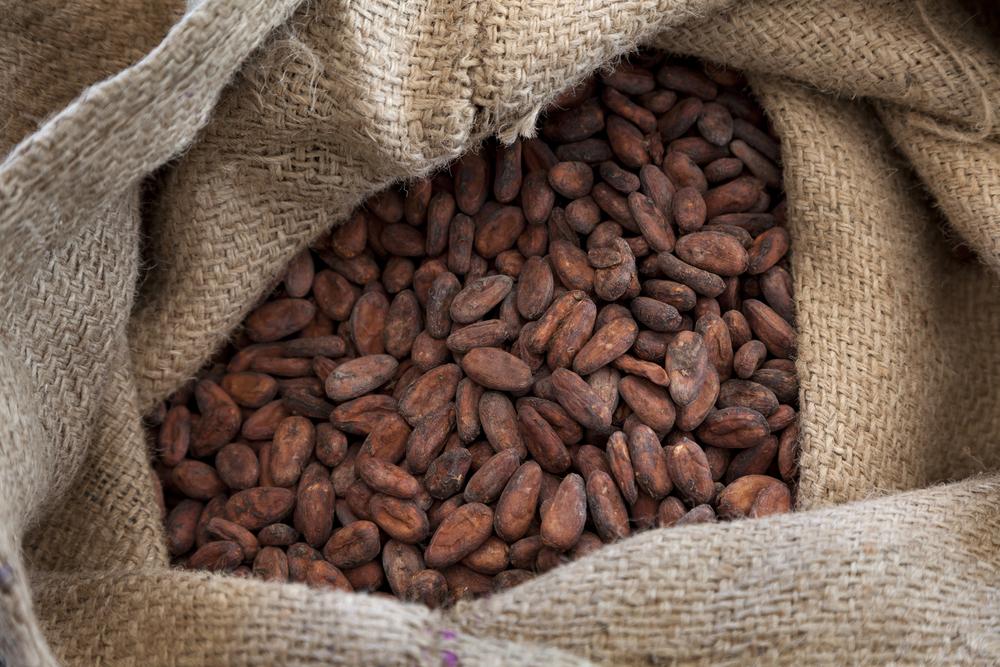
Livestock, lumber, coffee and almost all other non-energy commodities have followed the same pattern, with only sugar and cocoa breaking the mould over the past 12 months. Sugar’s fortunes have been mixed, while cocoa has shown an impressive increase, to US$3,413.84 per tonne as at 17/11/15, up from US$2,871.10 per tonne a year earlier. Over the past two years, cocoa prices have risen by more than 40%, driven by an increase in demand that supply cannot match.
“Cocoa is an interesting one to watch during 2016,” confirms easy-forex’s Nikolas Xenofontos. “With growth restricted to within 20 degrees of the equator, it’s not a crop that can see production scaled up as easily as something like corn can. Global demand is increasing and, despite a good harvest this year, supply is lagging behind that demand. It’s a situation that looks set to continue into 2016. If you’re only going to invest in one commodity next year, cocoa might be the one for you!”
But with the IMF projecting an improved pace of global economic growth during 2016, at 3.8%, might there be light at the end of the tunnel so far as other non-energy commodities are concerned?
It’s certainly not out of the question, explains Xenofontos,“If the world economy rallies then we could see commodity prices begin to pick up once more, perhaps towards the tail end of 2016. I think it would be overly optimistic to think of them reaching their former heights – the end of the BRICs has led to the end of the commodities super-cycle era – but it’s not out of the question that prices might begin to recover as the world economy gets back into shape. There’s definitely at least a glimmer of hope on the horizon!”
For further details visit www.easy-forex.com, email pr@easy-forex.com or call +44 203 1500 748.
Risk warning: Forward Rate Agreements, Options and CFDs (OTC Trading) are leveraged products that carry a substantial risk of loss up to your invested capital and may not be suitable for everyone. Please ensure that you understand fully the risks involved and do not invest money you cannot afford to lose. Our group of companies through its subsidiaries is licensed by the
Cyprus Securities & Exchange Commission (Easy Forex Trading Ltd- CySEC, License Number 079/07), which has been passported in the European Union through the MiFID Directive and in Australia by ASIC (Easy Markets Pty Ltd-AFS license No. 246566).
20/11/2015