
Ryanair up after record August traffic figures

Budget airline Ryanair (LON:RYA) were up nearly 2.5 percent at open this morning after releasing record traffic figures for August.
Ryanair’s August traffic grew 10 percent to 10.4 million customers, with load factor rising to 95 percent.
Ryanair’s Kenny Jacobs said in a statement:
“These record monthly numbers and load factors are due to our lower fares, our stronger forward bookings and the continuing success of our “Always Getting Better” customer experience programme, which continues to deliver stronger than expected traffic and load factors on our biggest ever summer schedule.
Ryanair customers can look forward to more service enhancements in the autumn, as we continue Year 2 of our AGB programme, which include our new car hire service, a new website, new appnew cabin interiors, new crew uniforms, and improved inflight menus, as Ryanair continues to deliver so much more than just the lowest fares in Europe.”
Ryanair are currently up 1.40 percent at 12.29 pence per share.
Halfords shares fall on disappointing bike sales
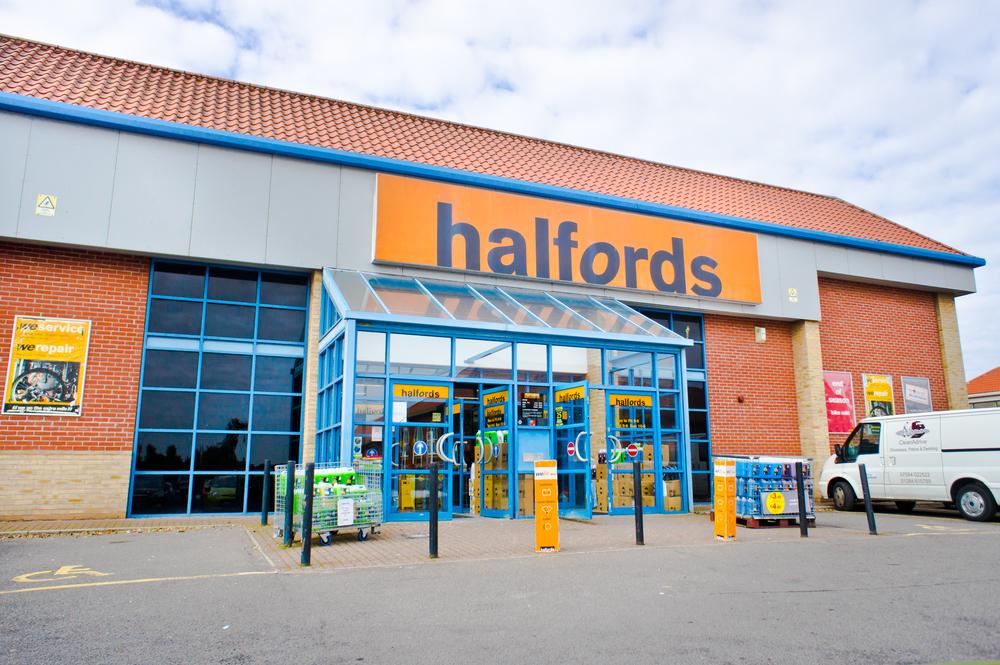
Shares in automotive retailer Halfords (LON:HFD) are down nearly 8 percent this morning after releasing a trading statement showing slower than expected sales.
The slowdown was led by sales of cycling equipment, which were down 11 percent. The company cited greater levels of discounting as well as poor weather deterring casual cyclists for this drop, and are planning “a complete refresh of children’s bikes and accessories alongside a series of compelling offers for customers” to stoke up growth in the long term.
However, management anticipates Retail gross margin to be at the better end of the previous full year guidance range – between -25 to -75 basis points year-on-year decline – and full year Group profit before tax to be broadly in line with prevailing market consensus.
Jill McDonald, Chief Executive, commented:
“In my first three months at Halfords I have reviewed all aspects of the Group and it is clear to me that Halfords is a strong business with a well-balanced portfolio of product and service categories, talented colleagues and considerable growth potential. This recent weakness in our Cycling sales is disappointing, but it comes after two years of very strong growth in the category and has been partly offset by strong growth in both Car Maintenance and Car Enhancement sales, which is a testament to the balanced nature of the business.”
“Looking ahead, we remain confident in the long term growth opportunities in Cycling and I will talk more about our plans for Cycling and across the broader Group at our interim results in November.”
Oil prices drop after three day winning streak

Oil prices fell 2 percent in Asian trade on Wednesday, as a worries in China continue to hit commodities.
Brent and U.S. crude finished around 8 percent lower on Tuesday after finishing up 25 percent in the three days to Monday, the largest three-day gain since 1990.
Ric Spooner, chief market analyst at Sydney’s CMC Markets told Reuters the volatility in oil is likely to continue:
“Any change in sentiment tends to be amplified. Any change in direction in the oil markets has the potential to be risk driven by what’s going on in the equity markets,” he said.
Crude is currently down 8.35 percent at $45.41 a barrel, with Brent at $49.56, down 9.26 percent.
US factory growth slows, auto sales grow

US factory growth is at its slowest for two years, according to figures released by the Institute for Supply Management (ISM) this morning. National factory activity index fell to 51.1 last month, the lowest reading since May 2013, from 52.7 in July.
However, strong auto sales hint that the economy is still on track for growth overall. US auto sales were at their strongest since July 2005, with the annualized selling rate in August well above expectations of 17.3 million, at 17.8 million vehicles.
The sharp slowdown in manufacturing is expected to be caused by the recent volatility in global stock markets, combined with a strong dollar and cutbacks in the energy sector.
Millan Mulraine, deputy chief economist at TD Securities in New York, told Reuters:
“It suggests that the recent eruption in uncertainty toward Chinese and global growth is beginning to affect U.S. business decisions. We look for the Fed to take a pass on raising rates this month as they continue to assess the incoming economic data for any evidence of fallout.”
UK mortgage approvals at 18 month high
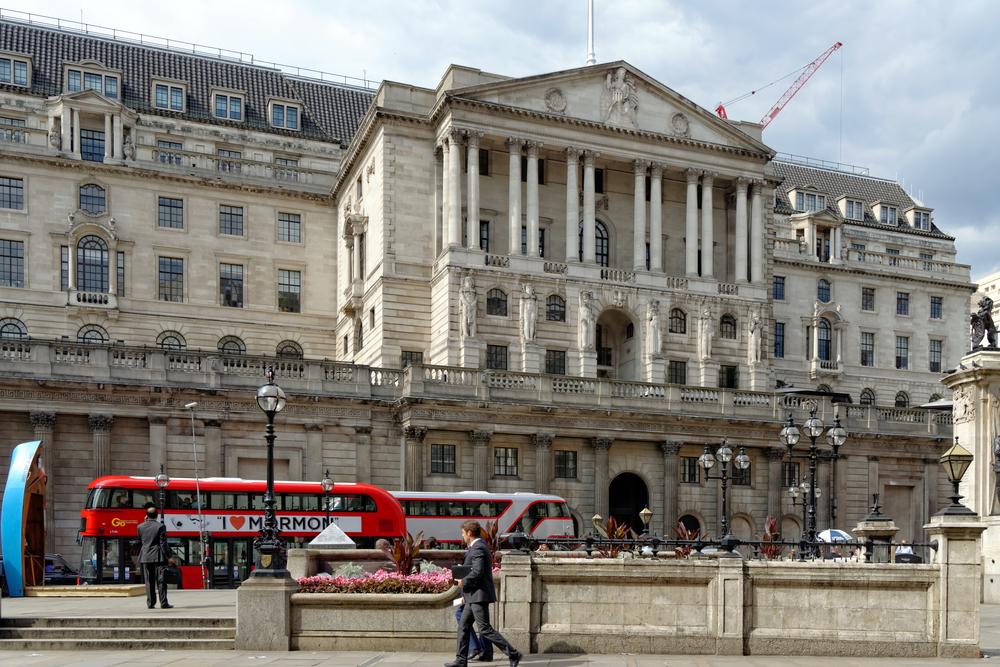
The Bank of England has released data that shows the UK housing market is refreshingly robust as mortgage approvals hit the highest level since March 2014.
The data supports finding from the British banker Association who last week said mortgage approvals were the strongest since April 2014.
Not only were new mortgage approvals, but remortgage activity also strong, research conducted on high street bank lending showed remortgages were made at the highest level in four years.
“This was a 29% surge on 12 months before and the highest figure we’ve seen for four years. Savvy homeowners are snapping up competitive deals before an expected increase in interest rates,” said Richard Woolhouse, Chief Economist at the BBA.
Will the ECB increase their stimulus package?
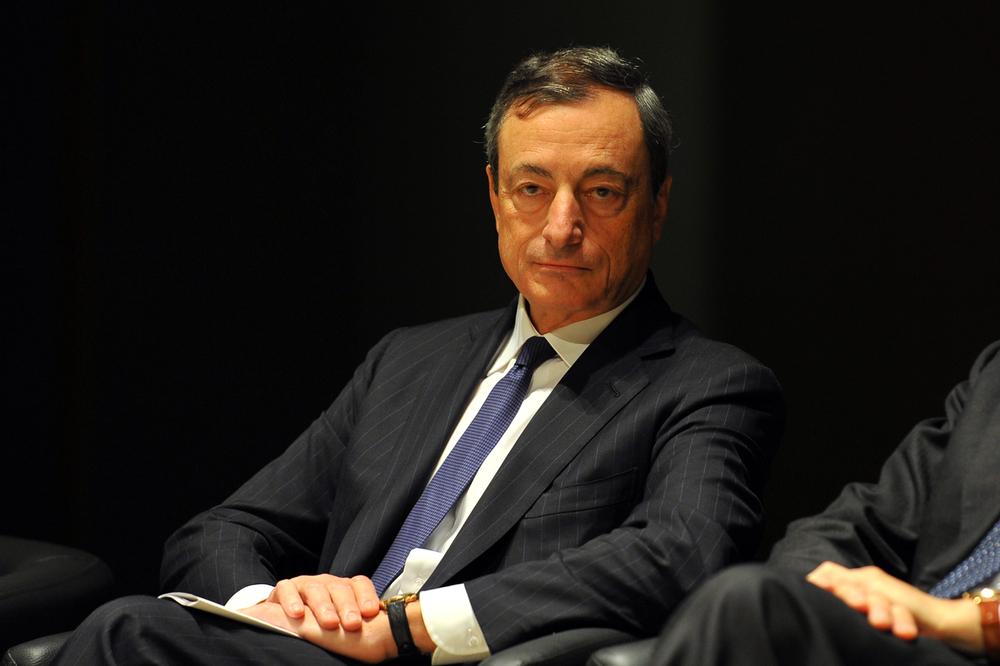
The Governing Council of the European Central Bank will meet this Thursday and Mario Draghi will present his first press conference since the market turmoil which dragged US stocks into correction and the German DAX into a bear market.
Whilst the Bank of England and Federal Reserve are discussing their first move to tighten policy by increasing interest rates, the ECB is the last hope for investors seeking liquidity injections to boost economic activity.
This Thursday’s meeting will be of particular importance for market participants as they attempt to gauge the ECB’s willingness to increase their bond buying program, a move which will likely be cheered by markets who are seeking a continuation of easy monetary stimulus from a major central bank.
The announcement of the European Central Bank’s bond buying program in January led to a significant rally in European shares as investors priced in future economic growth.
This is yet to materialise.
The main subject of discussion for the Governing Council will be the growing possibility of deflation and whether a deflationary environment will be classed as ‘good’ or ‘bad’ deflation.
Measures of inflation are coming under pressure from drops in the price of oil and food – both have a positive impact on households as consumers benefit from lower fuel prices and cheaper everyday food items, some would argue this is ‘good’ deflation. If forthcoming deflation is classed as ‘good’, the impetus to ease further will be reduced.
The sharp drop in oil has driven low inflation levels, however as we move into the last quarter, this factor will diminish and inflation levels are expected to continue their stabilisation and may even rise further around the end of the year.
The Harmonised Index of Consumer Price (HICP), the chief measure of inflation used by the ECB, has increased from -0.6% in January to 0.2% in July. This rise in the headline inflation rate gives justification to the ECB’s program and will support an expansion to the program.
However, the influence of oil may constrain this argument due the cyclical nature of the oil price.
As the ECB’s primary mandate is the control of inflation and meet a 2% target, Mario Draghi will be well aware of oil’s capability to rally sharply, lifting inflation with it – this maybe the reason why he holds back from giving liquidity craving investors what they so badly want.
Mario Draghi will deliver his press conference this Thursday at 1.30 pm London.
UK factory growth slows, minor job losses sustained in August
UK factory growth slowed in August for the first time in two years, according to PMI figures released today.
The Markit/CIPS Uk manufacturing PMI index figure fell from 51.9 in July, to 51.5 in August. Whilst the number is still above the 50 mark that indicates overall growth, a downward trend in manufacturing suggests that the sector will contribute less to the economy this quarter.
The PMI’s jobs index fell below 50 for the first time since April 2013, adding to signs that Britain’s labour market is beginning to slow.
However, more new orders came in in August than the last five months. Rob Dobson, senior economist at Markit, told Reuters:
“The UK manufacturing sector remains in a holding pattern, with production growth hovering around the stagnation mark and marginal jobs losses reported.
“On this basis, the sect looks unlikely to make much of a contribution to the solid gain in broader GDP growth this quarter.”
Aga shares up after US takeover offer

Shares in kitchen appliance company Aga (LON:AGA) rose by nearly 12 percent this morning after an approach from US manufacturer Whirlpool for a cash offer.
In July, Aga accepted an offer from US firm Middleby in a deal valued at £129 million, a bid that Whirlpool has agreed to challenge.
In a statement, Aga made it clear no offer had been accepted:
“The making of a firm offer by Whirlpool remains subject to a number of conditions and there is no certainty that any offer will be forthcoming or as to the terms of any offer.”
The UK company has agreed to a buyout as its funding deficit threatened to overtake its market value. Shares are currently trading up 9.6 percent at 201 pence per share.
Asia drags FTSE to start another week down

The FTSE 100 has started the week on bad footing, down 2.3 percent an hour after the market opened.
Shares are down in Asia for yet another day, with the Shanghai Composite Index closing down 1.2 percent and the CSI300 index down 2.2 percent. China’s manufacturing figures fell on Tuesday with the official Purchasing Managers’ Index (PMI) falling 49.7 in August from the previous month’s reading of 50.0, and the private Caixin/Markit China Manufacturing Purchasing Managers’ Index (PMI) showing a reading of 47.3 in August, the lowest since March 2009.
However, commodities had their biggest surge in price in 25 years as crude oil prices rocketed more than $10 a barrel.
U.S. crude production data was revised downward this morning and OPEC expressed willingness to discuss curbs on output, causing oil prices to jump 8 percent.
UTV Media suffer 90 percent profit drop

Shares in UTV Media (LON:UTV) were trading up nearly 8 percent this morning after the release of their interim results.
The TV company disclosed a sharp drop in profits, from £10 million last year to just over £1 million in the first half of this year.
UTV Chairman Richard Huntingford said in a statement:
“The challenges of establishing a new television channel are evident in these results which reflect the significant losses incurred by UTV Ireland in its first six months on air. Less evident, but not to be lost sight of, is the inherent value created by the establishment of a mainstream television channel in Europe’s fastest growing economy, with long term licesning, programme supple and infrastructure in place.”
Total group revenue rose marginally to £58.3m but group operating profits fell to £2.7m from £11.2m.
The results come six months after UTV launched Ireland, which has struggled to attract both audience and advertisers. The company have had “teething issues”, such as the re-tuning of domestic digital receivers, had further compounded the problem of audience under-delivery.