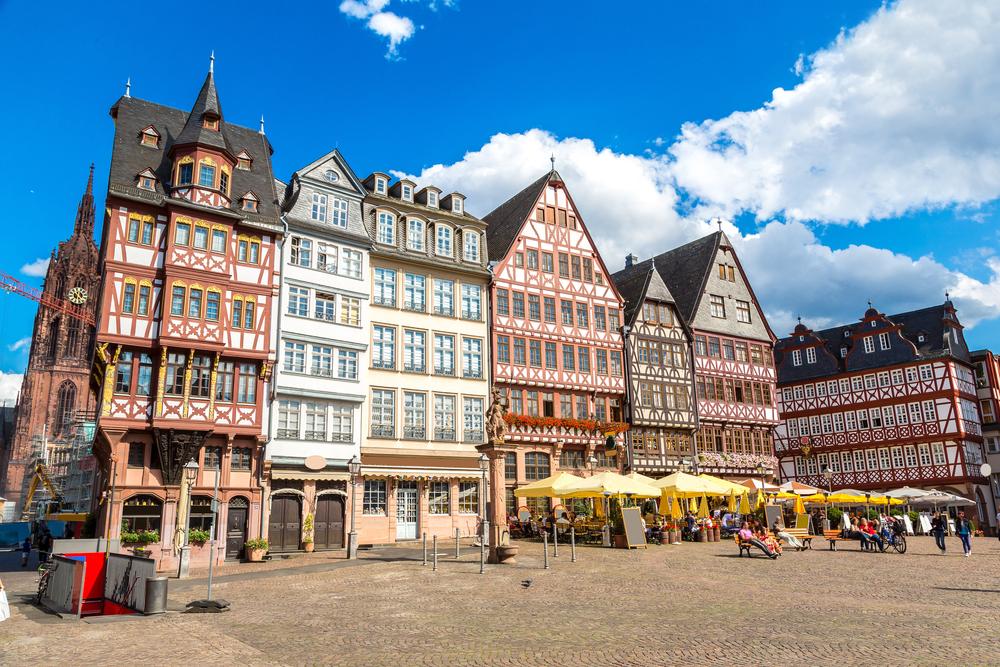
The German economy grew by 1.7 percent in 2015, its strongest rate of expansion in four years, according to the latest data from the Federal Statistics Office.
Private consumption expanded by 1.9 percent, the strongest figure since 2000, and public spending increased by 2.8 percent, adding 0.5 points to GDP and in line with the government’s forecast. However, imports continued to expand at a slightly higher rate than imports.
“Germany has continued to benefit from the weaker euro, and combined with an increase in private and public consumption recovery should continue to be strong”, said Dayfdd Davies, partner at Charles Hanover Investments.
Germany is expecting expansion to continue on into 2016, but a record influx of migrants last year pushed state spending higher, and may have an impact on the year ahead.
Entrepreneur David George has had quite the journey: starting in 2013 with a business idea driven by a passion for cycling, one crowdfunding attempt and subsequent business pivot later he has successfully launched the premier cycling insurance product on the market.
His initial business idea was a different project altogether. Grown from his frustration at the lack of places to compare deals on bikes and cycling equipment, especially in an era where comparison sites are so popular, he and his team of six passionate cyclists created BIKMO Search, a one-stop search engine for cycling products.
Upon launching BIKMO Search, David’s first thought was to turn to crowdfunding to support expansion. With crowdfunding growing massively as an industry, choosing a site to launch your campaign on can be difficult. For David, Seedrs was the right choice:
“At the time with Seedrs, if you were successful with your campaign, then you would receive the funds, less their 7% charge, and you would have just one single point of contact for all those investors – which could have been anything from 10 to 1,000. With other platforms, once you raised your funds, those shareholders would then be your responsibility and I didn’t want to have to manage an additional 10, 100 or 1,000 or so shareholders as it would take my time away from our core business.”
The unfortunate downside to the growth of crowdfunding is that, with so many campaigns out there, it’s not as easy as it once was to hit the funding target. For David, only 60 percent of the money was raised from investors; meaning he couldn’t receive any of the funding. In hindsight, he might have ran his campaign differently:
“When I first chose to run a crowd-funding campaign, it was done hastily as I needed to raise funds, and thought the exposure of a crowd funding campaign would help boost our business.
“Retrospectively, it should have been planned far better, with three to six months of effort put into building relationships with our customer base to make sure those who were interested in investing had enough time to answer questions and would jump on it, on the campaign launch date.
“The best example of this at the time was a campaign run by David Kitchen, who is also the chap who founded and runs the LFGSS (London Fixed Gear and Single Speed) forum. Running the forum and well respected in the London cycling sector, he leveraged forum users to inform them of the campaign before launching it. The result was that he hit 100 percent of his crowd-funding target within two hours – the fastest ever success story for Seedrs at the time.”
CEO David George
But as they say – if at first you don’t succeed, try again. The failure of David’s crowdfunding campaign turned out to be the biggest turning point in his career, changing the course of his business and taking it in an unexpected – but ultimately successful – direction. A fellow cycling enthusiast working in insurance put him in touch with insurance company Hiscox, who wanted to work together on an insurance product for cyclists. Not from an insurance background, David was understandably reluctant to move away from his passion, the BIKMO search business. However, after doing some research he quickly realised the huge gap in the market for such a product – and jumped on board:
“The aim behind Bikmo.com, the bike and cycling equipment price comparison tool and content aggregator, was to make life easier for cyclists. After undertaking some research at the existing insurance providers and products, their archaic websites and user experience, and realising they simply didn’t understand cyclists fully, I immediately saw the huge opportunity in doing it the right way. We then set about creating a policy, web experience, and customer service that eclipsed anything else out there.”
With BIKMO, users can benefit from a simple three step sign-up process which is as super simple to buy, an exceptional user experience, expert knowledge of the cycling industry, an honest approach to insurance, 0% interest on monthly payments, online claims processing and faultless customer service, as testament by a 5* scoring.
David said: “I am delighted to see the reception my business has had since we launched 18 months ago. Our priority has always been, and will always be to simplify the lives of our customers with the use of technology and digital expertise”.
bikmoplus.com
Following a set of disappointing sales results of its cameras, GoPro Inc (GPRO.O) has estimated a fourth-quarter below market expectations and has said it has little choice but to cut 7% of its workforce, which would not only $5m-$10m in restructuring charges but would cause shares into freefall.
Whilst Traders expected to miss the revenue over the holiday quarter, they had not expected to a loss of this magnitude, with shares falling by 28% to $10.50, currently standing at less than half of its 2014 price.
This drop in sales is thought to be a result of cheaper alternatives for example, China’s Xiaomi (XTC.UL).
Ben Wood, analyst at CCS Insight, said;
“It appears that despite being the brand synonymous with action cameras, GoPro has likely to succumbed to the avalanche of copycat products that appeared in time for the holiday season. With similar specifications but significantly lower prices they were always likely to be a dangerous competitive threat”
Ambarella Inc (AMBA.O), which provides chips used in GoPro’s cameras, also fell after-market trading by 8.5%
JD Sports have increased its profits forecast for 2016 by 10% following a growth in sales over Christmas.
Contrast to rival Sports Direct, which blamed the mild weather over worse-than-expected sales, the increased profit within JD Sports prompted analysts to raise their price on stocks, with shares rising to £11.03 by 4%
Shares have not just increase over the Christmas period, but have been doing well over the course of 2015, with shares rising 125% over the past 12 months.
Peter Cowgill, the executive chairman has said;
“This performance particularly reflects the increasing strength of the JD Fascia and our continuing commitment to delivering a unique and often exclusive sports and fashion premium brand offer which enthuses and excites both customers and suppliers.”
The yacht industry might be niche, but it certainly is lucrative – the market has recovered from a difficult post-recession period and now has an annual revenue of around £905 million per year. For the super-rich, yachts never go out of style – something that bespoke yacht makers Legacy Motor Yachts hope to capitalize on, seeking a £100,000 crowdfunding investment on Crowd2Fund.
Moonraker Engineering Ltd, trading as Legacy Motor Yachts are aiming to raise growth funds in order to allow the company to take at least two new products to market. The Cheshire-based company was founded in 2012 by Paul McDermott, who was inspired to start the business after locating the original tooling used to build the “Moonraker 36” classic motor yacht, after which their business is named. This craft was developed by Colin Chapman of Lotus, which was was advertised as the fastest production motor yacht in the world when it first entered the market in 1969.
McDermott is now in the process of introducing a number of new boats to market, all of which are inspired by classic British design and engineering. The company aims to carry on the tradition of excellence in British boatbuilding.
McDermott’s son Chris, who also works for the business, recently captained the Great Britain handball team to their most successful tournament in their history. Legacy Motor Yachts are now a kit sponsor of the GB squad, increasing awareness of the company across Europe, where handball has a massive TV following – second only to football in most European countries.
The £100,000 that the company is seeking to raise will be used to complete the development and marketing of two new boats, the Legacy Esprit 43 and the smaller 34 foot model, alongside the flagship Legacy Esprit 50.
McDermott chose to raise the funds through crowdfunding, as opposed to a typical lender due to Crowd2Fund offering a revenue loan product, which will allow for Moonraker Engineering to pay off the funds when they first start selling their products.
McDermott says, “We chose Crowd2Fund’s revenue loan, rather than giving up equity as once boat sales begin, we expect to generate revenue quickly which will allow us to pay off the liability. Typically our crafts sell in excess of £300,000 so we expect to generate a cash pile relatively quickly.”
Investment in the business comes with a range of investor perks, including a Self-Drive Charter week on one of the yauchts and a Moonraker discount. Legacy are looking for £100k investment – for more information, visit their campaign page here.
The Bank of England has confirmed that the UK will not follow The Fed and hike interest rates, voting 8-1 to keep rates on hold.
Ian McCafferty remains the only hawk on the Monetary Policy Committee, the only one voting to raise rates.
Bank of England governor Mark Carney said that, looking to the year ahead, “rates are expected to rise gradually to a lower level than previous cycles.”
UK interest rates will remain at record lows of 0.5 percent for the foreseeable future.
As the legalization of cannabis is becoming more common across US states, Wall Street investors are deciding that this decision could bring them money-making opportunities.
This decision comes following data from Washington, which just after a year of legalizing cannabis, has sales topping US$1.4 million per day and soaring tax revenues. As well as this, a budget forecast published by the Office of Financial Management stated that it expects cannabis sales taxes to bring in more than $1 billion over the next four years.
Scott Greiper, the Viridian Chief Executive said;
“This industry, which has a DNA and a culture of Deadheads and pot heads, is actually undergoing an industrial revolution and it’s not just state legalization, it’s the type of people who are coming into the industry.”
The chief executive officer of ArcView Group. linking investors to cannabis businesses has agreed that investors with Wall Street Backgrounds are looking to invest in cannabis, where publicly traded stocks are already growing and becoming profitable;
“It certainly legitimizes cannabis in the financial capital of the world and that will get investors interested in the market most of all,”
Investor interest in cannabis has grown since 2012 when Colorado and Washington legalized the recreational use of marijuana. Since then, they are joined by Alaska, Oregon and the District of Columbia.
Shares in French car maker Renault (EPA:RNO) have dropped nearly 20 percent this morning after its offices were raided by a fraud team earlier today.
French anti-fraud police have reportedly entered several production sites, with the intention of analysing the cars inside. Rumours are abound that engines are being tested for software that cheats emissions tests, in a link to the Volkswagen emissions scandal.
Local unions also claim that several of the directors’ computers have been seized. Shares have fallen 19.54 percent on the news, currently trading at 69.70 pence per share. (1147GMT)
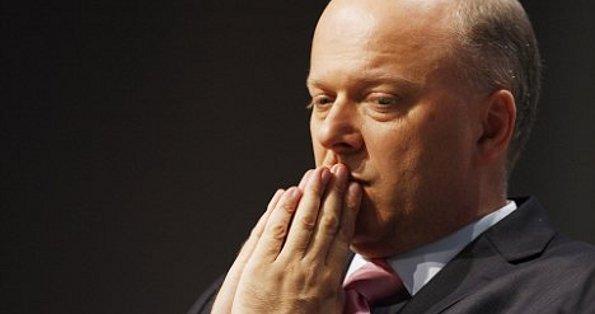
Following an article in the Telegraph the leader of the House of Commons lower chamber of parliament, Chris Grayling, has suggested that members of his team are currently preparing a campaign to leave the EU.
Describing himself as someone with “strong Eurosceptic views”, Grayling argued he does not believe the UK should stay within the EU under the current terms of membership, warning that Brussels is heading down “a path that the UK will not and should not follow”.
Despite government sources claiming to expect John Whittingdale, Priti Patel Iain Duncan Smith and Theresa Villiers to join the Leave Campaign, Chris Grayling is currently the only member of David Cameron’s cabinet to openly suggest the UK’s withdrawal from the EU, if the prime minister’s demands aren’t met.
The senior British minister wrote in the Telegraph newspaper;
“I am someone who believes that simply staying in the EU with our current terms of membership unchanged would be disastrous for Britain. That’s why I have always believed that it is imperative that his renegotiation takes place and delivers as much potential change as possible. It is in the interests of all Eurosceptics and of our country. I want Britain to choose between a changed relationship and leaving, and not between the current situation and leaving.”
With a referendum expected to be held before the end of 2017, David Cameron has been confident he is able to secure the changes he seeks to redefine Britain’s membership terms.
Shares in the Restaurant Group (LON:RTN) have tumbled 15 percent after a trading update insinuated that the year ahead may be tough for the company.
Financial results up until the 27th December were solid, with total turnover up 7.9 percent on the prior year, and like-for-like sales increasing by 1.5 percent. However, the company stated that the next 12 months may be tough, citing the implementation of the National Living Wage and the uncertainty of the UK’s future within the EU as causes for volatility:
“It has become apparent from much of the recent data from the retail sector and the wider economy that the trading environment for many consumer facing businesses has been tougher in recent months than it was earlier in 2015. This has caused like-for-like sales growth to trend lower and accordingly we are more cautious than previously on the outlook for 2016.”
The company, who own chains such as Chiquitos, Frankie & Benny’s and Garfunkels opened 44 new restaurants in 2015, and expect to do the same in 2016. However investors were not calmed by the company’s upbeat message, and the Group are currently trading down 15.05 percent at 542 pence per share. (1105GMT)