AIM movers: Positive drilling news from Xtract Resources and Jet2 forecasts upgraded

0

Xtract Resources (LON: XTR) has received results for the first three drillholes on the Silverking copper project in Zambia, where it can earn a stake of up to 70%. There are high grade copper and silver intercepts. Follow-on drilling will define the limits of mineralisation. Other targets have been identified. The share price increased by one-quarter to 1p.

Litigation finance provider Manolete Partners (LON: MANO) generated £7.5m in cash from completed cases in the year to March 2025, which was a 51% increase. Gross cash receipts were 44% higher at £25.6m. Realised revenues, an indicator of future cash flow, was better than expected at £29.5m and Manolete Partners moved from loss to a pre-tax profit of £300,000. The focus is legal cases relating to insolvencies and the number of insolvencies is increasing. The share price is one-sixth higher at 94.5p.  

Airline and tour operator Jet2 (LON: JET2) announced a £250m share buyback alongside its year end trading statement. The pre-tax profit guidance of £565m-£570m includes £10m gain on disposal of assets. Own cash was £1.1bn at the end of March 2025. Canaccord Genuity has raised its 2025-26 pre-tax profit estimate from £574.6m to £578.2m and the buyback helps to increase earnings per share from 208.5p to 223.9p. The share price improved 14% to 1539.5p.

Automotive connection systems supplier Strip Tinning (LON: STG) has received a £698,000 R&D tax credit for 2022, which was more than expected. A further £122,000 claim is outstanding for 2022. The 2023 R&D tax credit should be paid in the second half of this year. The share price rose 8.82% to 18.5p.

Gaming, medical and broadcast equipment supplier Nexteq (LON: NXQ) has made a positive start to the year and net ash has increased to $30.2m at the end of the first quarter of 2025. That is before the payment of the 3.7p/share dividend. Forecasts are unchanged with a decline in pre-tax profit to £3.6m expected in what should be a transitional year in an overall three-year plan for growth. The share price recovered 7.63% to 63.5p.

FALLERS

Oil and gas producer Prospex Energy (LON: PXEN) says that there has been a temporary halt to production at Viura in Spain due to a leak in the completion tubing at the Viura 1-B well. This will reduce income. Production should resume in mid-June. Follow-on drilling has been paused. The share price dipped 9.92% to 5.45p.

Buy-to-rent and student accommodation developer Watkin Jones (LON: WJG) reports that it was profitable in the first half and the second half should be stronger. Net cash improved by two-thirds to £73m by the end of March 2025. Short0term economic uncertainty continues to affect investor sentiment. The share price slipped 6.44% to 30.875p.

Oil and gas producer Arrow Exploration (LON: AXP) reported growth in full year sales from $50.6m to $81.6m, while EBITDA improved from $26m to $47.4m, which was lower than expected because of higher operating costs. Free cash flow was $6.8m. The share price is down 4.62% to 15.5p.

Cosmetics supplier Warpaint London (LON: W7L) continued to grow strongly despite weakness in the UK market late in the year. Pre-tax profit improved from £18.4m to £24.6m. The integration of Brand Architekts is going well with duplicate costs ending. The acquired brands can be sold through existing customers, particularly outside of the UK and sourcing can be improved. The 2025 pre-tax profit is expected to be £29m. The share price fell 3.7% to 390p.
A highly differentiated and diversified approach to securing inflation-beating returns with Majedie Investments

The UK Investor Magazine was thrilled to welcome Dan Higgins, Founding Partner and Chief Investment Officer of Marylebone Partners, the manager of Majedie Investments, to the podcast for an in-depth exploration of the investment trust and its strategy.

This Podcast is essential listening for all individual equity and investment trust investors.

Dan starts by explaining their ‘liquid endowment’ approach to managing Majedie Investments, outlining their objective to deliver returns in excess of inflation through a deeply diversified and unique portfolio of equity-based investments.

Explore Majedie Investments here.

The Majedie Investments portfolio is constructed through allocations to three clear strategies: external managers, special investments and direct investments. Dan’s explanation of each strategy is truly fascinating, and the combination of the strategies creates a unique proposition for investment trust investors.

Dan explains why the trust should be considered by investors seeking an alternative to the US tech trade and why portfolios like Majedie’s could outperform over the next decade.

We address the current market volatility. Dan shares his views on navigating Trump-induced trade tensions and their implications for Majedie Investments.

TinniSoothe: Disrupting the Tinnitus Market with New Wearable Tech 

Tinnitus affects 740 million people worldwide, yet sufferers still face a critical lack of practical, 24/7 relief options.  

British health tech company TinniSoothe has developed the world’s first wearable sound therapy device to provide round the clock relief, without the need for anything in or around the ears. They are currently doing their first equity raise on CrowdCube, where it is now overfunding, following strong early interest. 

Founded by tinnitus sufferer Howard Presland, TinniSoothe was created to solve a problem existing technologies have long overlooked. Traditional solutions such as hearing aids, earbuds, and external devices are either intrusive, impractical for all-day use, or ineffective at night when tinnitus can be most acute. 

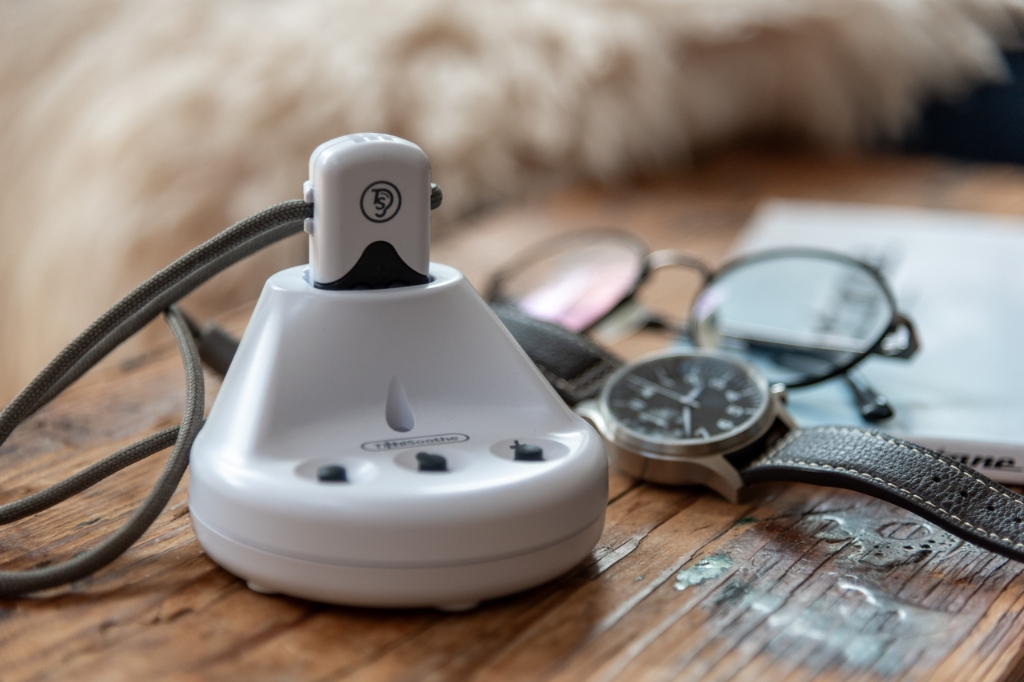
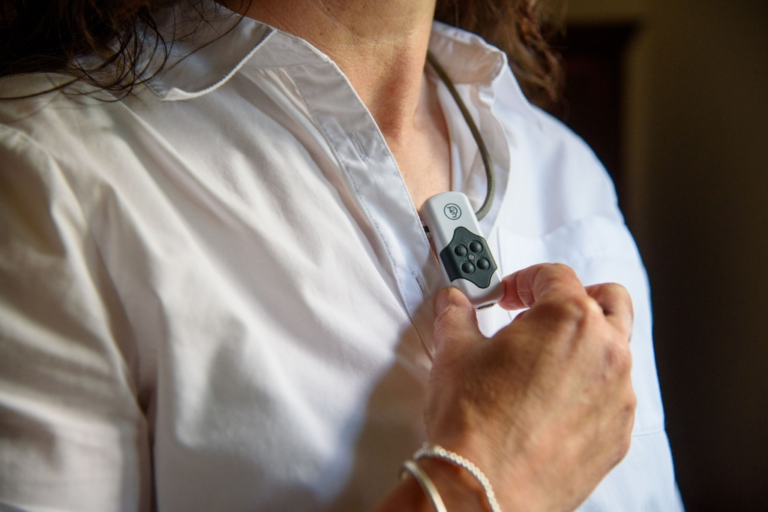
TinniSoothe’s patented, neck-worn device emits a continuous stream of subtle white noise towards the ears, designed to distract the brain and accelerate habituation, the process of reclassifying tinnitus as an unimportant background sound. Users can easily personalise volume and frequency settings, and the device automatically switches to night-time mode when docked, offering seamless day-to-night support. The docking cradle also recharges the battery so that the wearable module is ready for the next day. 

Registered as a Class 1 Medical Device and proudly Made in Britain, TinniSoothe represents a scalable, consumer-friendly solution in a rapidly growing market. The tinnitus devices market is forecast to exceed $3.5 billion by 2030, driven by rising noise pollution, ageing populations and over-use of noise-cancelling headphones.  

TinniSoothe has just completed its first full year of trading with statutory accounts currently pending for March 31, 2025. Provisional numbers show Income already approaching six figures, largely from initial eCommerce sales from tinnisoothe.com.  

With excellent user reviews and the concept now proved, the team is accelerating its Go-To-Market strategy in other channels, under the experienced leadership of B2B revenue growth expert, Jez Lawson

TinniSoothe addresses a major gap: the need for discreet, continuous relief without compromising user lifestyle. Its simple, wearable design and potential as a broader platform play, position the company for channel growth in direct-to-consumer, retail hearingcare and national health system markets. 

With its protected IP, a compelling founder story, and first-mover advantage in a largely untapped segment, TinniSoothe offers investors a unique opportunity to back a visionary team and a product with significant clinical need, high consumer demand, and strong potential for global scalability. 


Share Tip: Warpaint London – the 2024 results showed strength, 2025 will see further growth

This morning’s results from Warpaint London (LON:W7L), the affordable colour cosmetics group, reported a strong showing for the company’s year to end-December 2024. 
They revealed that revenues were up 13% at £101.6m (£89.6m), while adjusted pre-tax profits were 33% better at £24.6m (£18.4m), generating earnings up 29% at 23.5p (18.1p) per share, easily covering a dividend of 11.0p (9.0p). 
Management Comment 
Chairman Clive Garston stated that: 
"I am very pleased with the Group's record 2024 financial performance. in 2024 which has continued into 2025, despite the challen...

FTSE 100 flat amid HSBC, BP and AstraZeneca earnings updates

The FTSE 100 crept into positive territory in early trade on Tuesday before turning marginally negative as investors digested a raft of corporate earnings from several FTSE 100 heavyweights, including BP, HSBC, AstraZeneca and AB Foods.

The lull in damaging trade policy announcements and conflicting messaging from the White House has created a welcome opportunity for investors to refocus on company earnings.

Although the FTSE 100 rose in early trade, there was a note of caution evident in corporate updates on Tuesday, with HSBC increasing provisions for bad debts and BP reducing share buybacks.

In many respects, the soft results and evasive action by FTSE 100 companies announced on Tuesday are a reflection of the economic uncertainty the world faces as a result of Donald Trump’s trade policies.

HSBC’s increase in provision for bad debts indicates that it expects its customers to default at a significantly higher rate, while BP’s reduction in share buybacks demonstrates a degree of conservatism amid depressed oil prices and economic uncertainty.

FTSE 100 heavyweights: HSBC

Despite the rise in provision for bad debts, HSBC shares rose as the bank beat expectations and announced a fresh round of share buybacks.

“HSBC has kicked off the year with a bang, smashing past first-quarter expectations,” said Matt Britzman, senior equity analyst, Hargreaves Lansdown

“A big part of that outperformance came from strong fee income in areas like currency trading and wealth management – two bright spots that helped support a solid showing from its more traditional banking operations. The numbers are a bit noisy thanks to the sales of its Canadian and Argentinian businesses, which makes year-on-year comparisons a little tricky. But strip out the noise, and the underlying performance looks strong.”

HSBC said it would kick off a fresh round of share buybacks totalling up to $3bn.

While the all-important share buyback helped HSBC share shake off any concerns about their loan book, BP shares suffered after the oil major slashed its buybacks amid ongoing questions about its strategy.

“BP’s making the best it can of a sticky situation,” explained Derren Nathan, head of equity research, Hargreaves Lansdown.

“Improved performance in it’s troubled refineries as well as action taken on central costs has helped eke out an improvement in profitability over the fourth quarter.

“But the difficult backdrop means the bottom line is still a far cry from where it was a year previously. Cash flow is under pressure too and that’s allowed net debt to creep up further. This is a key consideration for activist shareholder Elliott Investment Management and there could be further calls to cut costs and offload non-core parts of the business. This year’s disposals target has been upped slightly, from around $3bn to a range of $3-4bn, but that’s not really going to move the dial.”

AB Foods was the FTSE 100’s top faller, sinking over 8%, as sugar prices rocked their food business and Primark showed further signs of a slowdown.

“There is not much to celebrate in these results from AB Foods,” said Wealth Club’s Charlie Huggins.

The outlook in the Sugar business has worsened, primarily due to lower European sugar prices and an operating loss in Vivergo, the UK bioethanol business. Actions are being taken to turn these businesses around. However, the group warns that a return to profitability is likely to take longer than expected.

“Primark’s sales performance in the UK and Ireland also continues to disappoint. Like-for-like sales fell by 6%, worse than competitors, meaning Primark lost market share in the period. The recent resignation of Primark’s CEO Paul Marchant due to inappropriate behaviour casts further uncertainty and raises question marks around Primark’s culture.”

AstraZeneca

AstraZeneca shares fell over 3% after releasing fairly strong earnings and profit growth in the first quarter of 2025. However, the update served as a reminder that the group was at risk of Trump’s trade policies which have cloudied Astra’s outlook.

“Overall AstraZeneca has demonstrated it’s a calm port in a storm, despite concerns about the impact on business going forward, if the pharma sector is hit by US tariffs,” explained Susannah Streeter, head of money and markets, Hargreaves Lansdown

“The company has recommitted to its expansion plans in the US, which includes increasing the company’s research and manufacturing footprint by the end of 2026.”

Howden Joinery was the FTSE 100 top rising with a 6% gain, helping to offset losses elsewhere in the index.

Conducting an Investment MOT amid market volatility: interactive investor outlines six top tips

Ask most professional investors, and they will tell you that they see volatility as an opportunity.

While volatile periods such as the one we’re currently in due to Trump’s can be unnerving and some retail investors may not be entirely comfortable wading into fresh investments, it does provide all investors the opportunity to reconsider and perform an ‘MOT’ on your investment portfolio.

“In such times, doing an investment MOT becomes even more crucial, not less. Rather than reacting emotionally or making knee-jerk decisions, use the opportunity to recentre,” explained Myron Jobson, Senior Personal Finance Analyst, interactive investor.

For those minded to use the current market gyrations to evaluate their portfolio, Jobson outlines six top tips for carrying out your own investment MOT amid the heightened volatility:

  1. Check your financial goals

“Before you even look at your portfolio, take a step back. Have your financial goals changed? Are you still investing for retirement or a house deposit?

“Knowing what you’re investing for, and when you’ll need the money, helps you decide whether your current approach is still fit for purpose.”

  1. Assess your asset allocation

“This is the engine room of your portfolio. Are you still happy with the balance between equities, bonds, cash and other investments? The recent bout of heightened market volatility has laid bare the perils of being overly exposed to a particular region or sector. The ‘Magnificent 7’ tech stocks (Apple, Microsoft, Amazon, Alphabet, Meta, Nvidia, and Tesla) account for around 18% of the FTSE All World index. The fortunes of these stocks will deliver a greater effect on funds tracking the index than the entire allocation to the UK, which is just 3.52% of the FTSE All World index.

“Diversification is critical to good investing theory, so if you already hold a lot of US tech stocks, you need to think about how including an investment in your portfolio will affect your overall diversification and exposure to economic shocks that could affect the US’s performance.

“If you’re nearer your goal, you might want to shift to a more cautious stance to protect what you’ve built. If you’ve got time on your side, you might lean into growth.”

  1. Consider rebalancing your portfolio

“Portfolio rebalancing is akin to tuning an instrument, where every component plays a crucial role in achieving harmonious results. Sometimes rebalancing can happen of its own accord because of market movements. 

“By rebalancing your portfolio, you will avoid the drift and align to your original asset mix. There is not a hard-and-fast rule on when it comes to rebalancing, but investors could benefit from making a habit to revisit their investment allocations annually or bi-annually.”

  1. Review performance – but don’t obsess

“It’s tempting to focus on recent winners or losers, but don’t get too caught up in short-term noise. Look at performance over a meaningful timeframe – five plus years and compare it to an appropriate benchmark or peer group.

“Underperformance doesn’t always mean something is broken – but it’s worth digging into the ‘why’.”

  1. Check fees and charges

“Platform and investing fees matter. When it comes to platform fees, percentage-based charging means the more you invest, the higher your fees. In contrast, a flat fee remains constant and predictable. For larger portfolios, the difference between flat fees and percentage-based charges can be striking.

“A lot of column inches are dedicated to the impact of compounding over time on investments and how it helps stimulate growth, which is important for investors to make the most of, but the opposite is also true when it comes to fees dragging the portfolio back. 

“While investors can’t control the returns they achieve, they can control how much they pay for investment platforms.”

  1. Tax-efficiency tune-up

“Are your investments held in the most tax-efficient way? Using your ISA and pension allowances can shield your returns from the taxman. And with changes to capital gains and dividends tax thresholds, it’s more important than ever to make use of these wrappers.

“It’s worth ensuring that you are making the most out of the tax wrappers – especially if you’ve had a pay rise, changed jobs or inherited money.”

Nearly Two-Thirds of Premium Bond holders have never won a prize

A Freedom of Information request obtained by AJ Bell’s Dodl investing app has revealed that just under 14.4 million current Premium Bond holders—almost two-thirds (63%) of all holders—have never won a prize.

Despite the lacklustre returns, Premium Bonds remain one of the UK’s most popular savings products, held by approximately 22.7 million people with a total of £127.7 billion invested in these accounts as of the end of 2024.

While the total number of Premium Bond prizes worth more than the lowest £25 denomination has increased significantly since 2022, the vast majority of prizes won in 2024 were still worth £100 or less. This means the chance of winning substantial prizes remains extremely small.

The data shows that 5.1 million Premium Bond holders won a prize between March 2024 and February 2025, with 80% of those winners claiming more than one prize during that period. It is notable that the average holding for those who won was £23,397, substantially higher than the average holding across all Premium Bond holders, which stands at £5,406.

NS&I currently quotes a variable prize fund rate of 3.8%, though there is no guarantee of any return on investments.

“There’s a chance even the average holding won’t win a prize, meaning savers might be better off considering other options with their cash rather than leaving it to chance in a Premium Bonds account, particularly over the long term,” said Charlene Young, senior pensions and savings expert at AJ Bell.

The stats certainly suggest savers seeking to beat inflation would be better placed elsewhere.

AJ Bell highlighted their AJ Bell Dodl ISA and Lifetime ISA, which offer 4.58% AER variable on cash with additional options to invest for long-term returns.

For comparison, investing the average holding of £5,406 in the Fidelity Index World global tracker fund ten years ago would now be worth £14,794.

There’s a clear case for investing in equities or using high-interest rate savings accounts over premium bonds.

AIM movers: Petro Matad generating cash from Heron-1 and CyanConnode sales shortfall

0

Mongolia-focused oil and gas producer Petro Matad (LON: MATD) has signed an oil sales agreement with PetroChina for Block XX output. First revenues from Heron-1 will be in May and this will cover production from October 2024. This will provide more than $1m for further development, plus ongoing monthly payments. Shore estimates that Petro Matad has a fair value of 6.8p/share. The share price   increased 26.6% to 2.025p.  

European Metals Holdings (LON: EMH) says that the Czech panel has approved a CZK800m ($36m) grant to the 49%-owned Cinovec lithium deposit in the Czech Republic from the EU Just Transition Fund. This is dependent on the Environmental Impact Assessment being published by the end of 2025 and the Czech authorities, approval of the EIA by June 2026. The grant could fast-track elements of the project. The share price improved 23.8% to 13p.

Professional and valuation services company Christie Group (LON: CTG) reported 2024 pre-tax profit of £1m, which was triple the forecast. The professional services business sold more businesses, and the stocktaking business reduced its loss. The total dividend of 2.25p/share is also higher than forecast. A further pre-tax profit improvement to £1.8m is forecast for 2025. The share price rose 17.7% to 100p.

Autoimmune disease and cancer treatments developer Sareum (LON: SAR) and it has conducted preclinical studies to evaluate the TYK2/JAK1 compounds in central nervous system indications. This involves six compounds from the Sareum Kinase Inhibitor Library (SKIL) platform being assessed on whether they cross the blood-brain barrier. These all show meaningful penetration, and this supports the potential for the TYK2/JAK1 chemistry. SRA737 is a clinical stage oral, selective Checkpoint kinase 1 inhibitor targeting cancer cell replication and DNA repair mechanisms. Sareum has received the dataset from its former partner and the programme’s potential will be reviewed. The development of the SDC-1801 and SDC-1802 programmes is continuing. The share price is 9.38% to 17.5p.

FALLERS

Artemis Resources (LON: ARV) says laboratory results from the drilling campaign around Carlow Castle. Three of the five holes show significant gold intersections. This will help to expand the existing 704,000 ounces gold equivalent resource. Zeus has a set a fair value of 4.3p/share. The share price declined 27% to 0.365p.

Smart meter communications technology developer CyanConnode (LON: CYAN) has not achieved the anticipated jump in revenues in the year to March 2025. Elections in India delayed shipments and there has been resistance from consumers about prepaid smart metering. The orders remain the same, but CyanConnode is reassessing expectations of the roll out. Cash was £5.8m at the end of March 2025, following receipt of a £5m loan. The share price dipped 22.3% to 7.85p.

Bleepa medical communications technology developer Feedback (LON: FDBK) continues to suffer from delays in decision-making at the NHS. The company was focusing on the Elective Recovery Fund, which is no longer in the NHS budget. The focus is reducing wating lists so Bleepa is still in a good position to gain contracts. Panmure Liberum has slashed its forecast 2024-25 revenues from £1.6m to £880,000 and the 2025-26 revenues from £4.14m to £2.84m. The loss for this year is expected to be £4.25m and it will be similar next year. On that basis, net cash would be down to £1.35m at the end of May 2026 and the company would move into net debt within 12 months. The share price slid 21.4% to 13.75p.

Shares in software training services provider Northcoders (LON: CODE) continue to decline after it revealed that the 18-month Department for Education contract, worth £10m, will not be renewed. There will be a move to a regional model. Management is ready for this and believes it will win business, but it creates uncertainty. A pre-tax profit of £700,000 is currently forecast for 2025. Management believes this can be achieved even with the loss of the overall training contract. The share price slipped a further 18.6% to 50.5p.

Oil and gas producer Empyrean Energy (LON: EME) is raising £600,000 at 0.09p/share and a retail offer could raise up to £150,000. The retail offer will close at 4pm on 30 April. The cash will fund the testing of the potential oil zone in the Wilson River-1 well. The share price fell 18.6% to 0.0875p.

FTSE 100 gains as bargain hunting continues, Marks & Spencer shares fall

The FTSE 100 gained again on Monday with bargain hunters out in force picking up those shares heavily hit by Trump’s tariff announcement.

Further evidence that we may have passed the peak of tariff uncertainty encouraged investors to buy into names such as Melrose, Diageo, and JD Sports, among others, that were perceived to be negatively impacted by Trump’s trade policies.

London’s leading index was trading 0.3% higher at the time of writing.

“A weekend light on drama was just what the doctor ordered for financial markets and the FTSE 100 made a strong start on Monday to move closer to recovering all of its post-Liberation Day losses,” said AJ Bell investment director Russ Mould.

“Domestic focused names, including housebuilders and retailers, were among the gainers in London.

“Recent developments have been helpful from a market perspective as US President Donald Trump dialled down the rhetoric around replacing current Federal Reserve chair Jerome Powell and hinted at progress on trade talks. Suggestions of a de-escalation in the tariff stand-off with China were also well received.”

However, the apparent easing in tensions between the US and China failed to inspire any meaningful bid in China-focused stocks on Monday. Miners Glencore, Anglo American and Antofagasta were all trading negatively.

Falling miners suggest the market is taking the optics of reconciliation between China and US with a pinch of salt.

“Quite a lot to unpack, there, and quite a lot of political spin to get round,” said Michael Brown Senior Research Strategist at Pepperstone.

“Again, in short, China continue to refute claims of talks between the two nations.”

Marks & Spencer was the top faller after a cyber attack over the weekend brought its online shopping service to a standstill and forced them to refund shoppers for failed delivery.

Although the actual order refunds are unlikely to have a material impact on the group, the long-term damage to its reputation will be a greater concern.

“While other retailers have not been immune to IT breaches, the depth of Marks and Spencer’s problems in resolving the issue are worrying, and it may take some time to win back some more warier shoppers,” said Susannah Streeter, head of money and markets, Hargreaves Lansdown.

Marks & Spencer shares were down 2.5% at the time of writing.

Tekcapital shares rise after Innovative Eyewear launches Reebok smart eyewear

Tekcapital shares rose on Monday after its portfolio company, Innovative Eyewear, launched Reebok-branded smart eyewear targeting a market that’s expected to be worth $13 billion worldwide by 2030.

The launch expands Innovative Eyewear’s Chatgpt-enabled smart eyewear brand collaborations, which include Nautica, Eddie Bauer and now Reebok.

Tekcapital shares were 3.4% higher at the time of writing.

“We believe this launch represents a watershed moment for the entire smart eyewear category,” said Harrison Gross, CEO of Innovative Eyewear.

“We’re pioneering the smart sport eyewear segment with AI-integrated eyewear that enhances athletic performance, while fulfilling our longstanding mission to deliver smart upgrades to every major type of eyewear: sunglasses, optical, sport, and safety.”

Reebok smart eyewear features bespoke high-fidelity speakers paired with robust amplifiers and equalisers.

These components have been specifically calibrated for outdoor pursuits and sporting environments, delivering exceptional audio clarity while maintaining the wearer’s awareness of their surroundings—something Innovative Eyewear says is a crucial safety consideration for athletes and urban pedestrians alike.

Innovative Eyewear has set an ambitious global distribution strategy. The company has established its first major partnership with MTB Mexico, a leading technology distributor throughout Latin America, marking the initial phase of its planned global distribution network, which will encompass a broad range of distributors.

“We are extremely proud to partner with Innovative Eyewear to bring Reebok Smart Eyewear to the Latin American market,” said Mauricio Avelar, Director General at MTB Mexico.

“This innovative product perfectly complements our portfolio and meets growing consumer demand for smart, lifestyle-integrated technology across our distribution network, including major retailers in Mexico.”

The launch is being supported by football star and Lucyd brand ambassador Micah Richards.

“In my career, both on the pitch and now as a broadcaster, I’ve always prioritised performance and style,” said Mr. Richards.

“What impressed me most about Reebok Smart Eyewear isn’t just how good they look – it’s that I can stay connected without losing awareness of what’s happening around me. Whether I’m cycling through the city, hitting the gym, or calling a match, these glasses keep me in tune with both my surroundings and my digital life in a way that traditional headphones never could.”

London-listed Tekcapital holds a 10% stake in Innovative Eyewear, which is listed on the US NASDAQ.