
Valirx PLC up 20%

Valirx PLC are up 19.7% this morning after releasing an update on an ongoing clinical trial for a cancer fighting drug.
The compound, VAL201, is in its Phase l/ll dose escalation clinical trial, which is approved to include patients with locally advanced or metastatic prostate cancer and other advanced solid tumours. VAL201 is designed to selectively prevent tumour growth.
The company report that the drug has continued to demonstrate safety and tolerability, with no significant adverse effects recorded. The compound continues to show positive results in terms of delaying disease progression in the patients currently on trial. In light of this, the next dose escalation has been approved and the clinical trial is reported to be on track.
Dr Satu Vainikka, CEO of ValiRx, commented: “Again it is good to be reporting that the VAL201 trial continues to proceed well and as planned. I am pleased to say that, at this stage, a good safety profile has been seen and potential efficacy continues to be noticed.
“We are now nearing dose levels that we originally projected would be therapeutically significant and as such, I enthusiastically look forward to VAL201’s continued clinical trial progress and to updating investors accordingly.”
ValiRx Plc is a bio pharmaceutical company developing new technologies and products in oncology therapeutics and diagnostics.
Blur Group up 20%

Blur Group plc is up 20.41% this morning after a trading update for the second quarter. The Group has seen a 30% increase in Buyers and Service Providers, and the number of projects listed on their platform increased by 20% in 2015 compared to 2014.
Growth in enterprise buyers using the platform, service providers joining the marketplace, expansion of premium services to grow gross margin. To this end, the company reports that over 700 new Enterprise Service Providers joined blur’s Platform in Q2 – 10% of all new Service Providers. The leading marketing agency Ogilvy, the USA’s largest employment related law firm Littler Mendelson, a USA cloud contact centre named Five9, and engineering consultancy Mott MacDonald, were amongst those who joined blur’s marketplace. In the third quarter, the company will launch blur Data, a unique stand alone subscription based intelligence product developed by blur Group that enables organisations to gain invaluable insight into global business services trends and market pricing information.
Philip Letts, blur Group CEO commented:
“The Platform is attracting more Enterprise level Buyers and Service Providers than before. Whilst our transition to the Enterprise became more evident in 2014, we have seen increasing momentum in H1 2015 in both the USA and Europe. Added to this, with the introduction of our Premium Services in early 2015, the new Buyer and Service Provider subscriptions in Q2, and soon, blur Data in Q3, we are driving up our gross margin. Our Platform is, more than ever, ready to service the business needs of the larger Enterprise organisation. We are focused on our goal of having hundreds of large Enterprise customers broadly adopting the platform serviced by an increasing number of Enterprise suppliers.”
Blue Group operates the the world’s leading Enterprise Services Platform and Marketplace.
Government borrowing falls – but not far enough
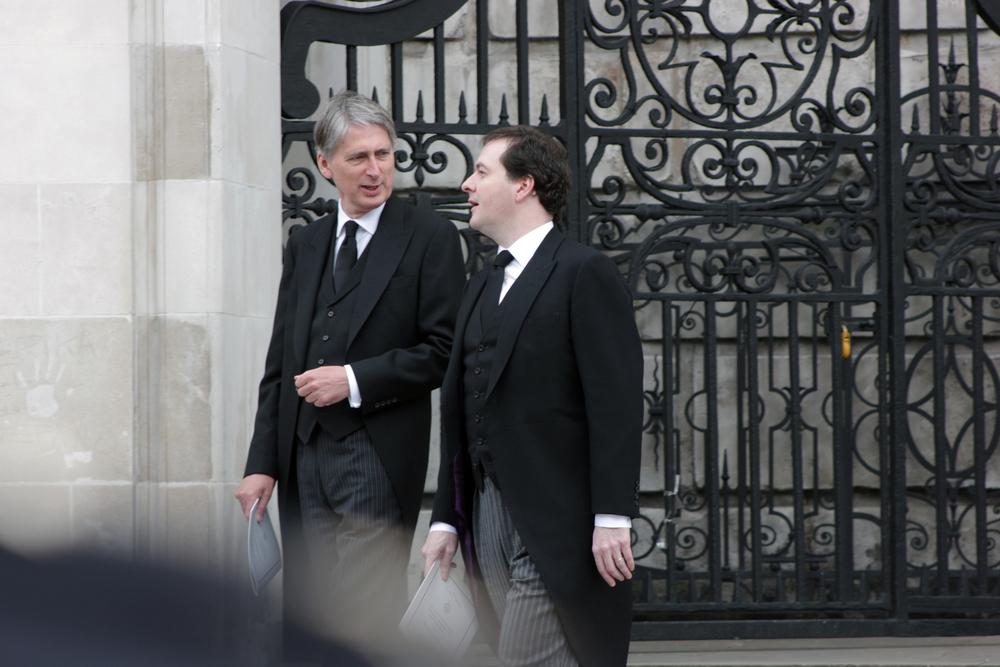
British government borrowing in June fell to its lowest point in seven years, but failed to beat analysts’ upbeat predictions.
According to the Office of National Statistics Britain’s headline public borrowing fell to 9.4 billion pounds in June, compared to 10.2 billion pounds a year earlier. However these results came as a disappointment to economists, who predicted a fall to £8.5 billion. This data weighed on investors, with the FTSE 100 failing to break out of the red, trading five points down at 6,784.
‘With June’s improvement being less than expected, the chancellor is now slightly off track to meet the reduced fiscal targets for 2015/16 contained in July’s summer budget,’ Howard Archer, chief European and UK economist at IHS Global Insight, told Citywire.
‘However, this is nothing for George Osborne to worry about at this stage given that he is still very close to target – and public finances can be volatile from month to month and subject to appreciable revisions.’
The report continued, revealing public sector net debt excluding state-controlled banks totalling 1.513 trillion pounds in June – equivalent to 81.5 percent of GDP. George Osborne took the opportunity to push back the date that Britain is scheduled to wipe out the deficit altogether until 2019/20.
Earnings season beats expectations

Earnings season is well underway, with many companies performing above analysts’ expectations. This morning, European shares headed for a flat to slightly higher open, with investors focusing on company results as the second-quarter earnings season gathers pace.
So far, 70% of reporting companies in the S&P have exceeded predicted figures – although the predictions were relatively low. In general, earnings reports begin to come out one or two weeks after the last month of each quarter. Earnings expectations for this round are modest, but the two major US banks, JP Morgan and Wells Fargo, both beat projections. Bank of America reported its biggest quarterly profit in nearly four years and Citigroup, eBay, and Netflix all followed with strong quarterly results.
In the UK yesterday, British Land Co reported a first quarter dividend of 7.9 pence. Chief Exec Chris Grigg said: “We’ve taken advantage of favourable market conditions to raise £350 million of convertible bonds at a zero coupon, continuing our strong track record in accessing funding on competitive terms from a range of sources.”
Yesterday in the US, Morgan Stanley became the last major bank to report its quarterly earnings, also beating expectations. Revenue rose to $9.6 billion from $8.52 billion a year ago.
Reporting in Europe today, German business software maker SAP’s revenues topped expectations due to a surge in internet-based cloud software. Sweden’s Handelsbanken reported quarterly operating profit slightly above market expectations as influx of business and lower costs helped offset the impact of negative interest rates imposed by the central bank.
On the other hand, in the UK, Royal Mail fared less well; it announced that its revenue for the first quarter remained the same from the previous year. The group’s core UK parcel, international and letters business division reported a 2% drop in revenue. This division accounts for 80% of revenue and 60% of operating profits. Royal Mail were hit hard in June by the announcement that the government would be selling off more of its stake in the company, when their shares dropped more than 4%.
The UK-based IG Group also reported today, with shares falling 6 percent after a blow to full-year earnings from the Swiss franc’s fluctuations in January. However, online domestic appliances retailer AO World jumped 9.7 percent after reporting a strong start to second-quarter trading.
In the US, Apple, Harley Davidson, Verixon Communications are also set to release results later today. According to a report by Factset.com, Apple is expected to be propping up the Information Technology sector for Q2 2015. The blended earnings growth rate – which combines actual results for companies that have reported and estimated results for companies yet to report – for the Information Technology sector is 0.2%; however, excluding Apple, the sector would be reporting a year-over-year decline in earnings of 6.0%.
Paypal jumps as eBay falls

PayPal Holdings Inc (PYPL.O) shares jumped as much as 11 percent, after returning to the Nasdaq this morning.
Today marks the day that Paypal splits from eBay, who bought the payments company 12 years ago in order to provide a reliable payment service for the young online marketplace. Paypal began began trading separately again this morning, with shares soaring to $42.55 in early trading. eBay’s stock fell 4.7 percent, valuing the company at about $32 billion.
eBay CEO John Donahoe said the decision was best for both businesses, as well as their shareholders. He added that the two companies will continue to work closely together.
Paypal CEO Dan Shulman opes to use Paypal to enable more people to transfer and manage money more easily. He told Reuters: “It’s clear that the potential for mobile technology to transform money extends beyond commerce. The vast majority of the world’s 7 billion people lack access to even basic financial services.”
Summer impacts on UK alcohol sales

Sales of UK-made sparkling wine have risen, according to new data from the Office of National Statistics.
There are almost 500 vineyards operating in England and Wales, yet English wine accounts for just a small percentage of total wine sales in the UK. However, it seems the summer sun has impacted on consumer behaviour, with sales of UK-produced sparkling wine more than doubling from £2.9 million in 2010 to £6 million in 2014.
In the same report, it was found that consumers’ drinking habits in the hot weather had also shifted towards craft beers and fruit ciders, many of which are also brewed in the UK. Sales of UK-made cider, perry and mead grew by 59% from 2010 to 2014.
Crowdfunding is good news for women in business

A new study offers some good news for female entrepreneurs; women outperform men on crowdfunding sites like Kickstarter. In 2014, two PhDs discovered that women who launch technology-related crowdfunding projects are more successful than every other demographic and category, even fashion and publishing.
An astonishing 65% of all women-led tech startups reached their funding goal on Kickstarter, compared to just 30 percent of men-led tech startups. Interestingly, though, it’s not just tech that female entrepreneurs are succeeding in; in all industries reviewed by the study, women-founded ventures prevailed.
According to Julia Elliott-Brown, CEO of Upper Street, crowdfunding could be just the thing that democratises investment for women. In her article for the Telegraph, she details how easy it is for women to be intimidated by traditional financing routes: “It feels significantly less intimidating to create and run your pitch online than having to present at a testosterone fuelled pitching event, or walk into the fancy offices of a venture capital firm for an in-person grilling from the guys in suits.”
Her own company crowdfunded for a small investment earlier this year. She said she was encouraged to see that 36 per cent of our new investors were women, who actually put in on average almost four-times as much money as the men. In a male dominated industry, online crowdfunding offers women an easy in-road into the world of business financing; and on top of that, it offers an audience of investors who are actively looking to support ventures started by women like them.
Online crowdfunding seems to have led to the creation of a group of female “activist” investors, who seek out investment opportunities offered by women in order to offer their financial support. In the US, crowdfunding platform PlumAlley launched last year, a site designed to showcase investments by women for other women to back. Started by Deborah Jackson, it is a site ‘designed to help women succeed.’
She says: “Women-led projects are more successful on the whole than men’s projects, across all sites. Research shows women to support women. You can see that as a bias, but we choose to see that as actually a really empowering thing. There’s so much about when taking one another other down or the competition between women in the workplace, and it’s really good to see that when it comes something as tangible and economic as crowdfunding, women really do want to support other women.”
There have been plenty of suggestions that crowdfunding has democratised business as a whole; it’s not just about knowing some wealthy backers anymore – anyone can find funding, with a good business plan and access to the internet. However, it’s interesting to see these statistics in the light of women entering the business world, especially that of technology. It is increasingly clear that women are under-represented in business, and the technology sector in particular – perhaps crowdfunding will pave the way for this to change.
The Great British Sauce Company releases more equity

The Croydon based sauce company has released more equity following discussions with key investors.
The details of the 40% increase in the equity offered were detailed in a note on the Crowdcube platform. The equity release shows that potential investors felt the Great British Sauce Company were overvaluing themselves in the initial valuation.
The recent change in equity now values the business at £1 million with a price-to-earnings ratio of 13.47 using 2018 estimates from their financial snapshot.
This valuation may still seem a little rich for some investors given that Premier Foods, who own a number of established household brands, are valued at only PEe 5.12 based on next year’s earnings.
That said, the potential for growth is significant and their revenue projections are strong. There is little debt in the business which is comprised of a £18,000 loan from the directors.
The background of the directors bodes well for the company, a solid mix of food production and marketing provides strength in the key areas this company needs to be successful.
www.gbsauce.com
Greek banks open after three weeks of closure

Banks in Greece are reopening today after three weeks of closure, as the government initiates repayment of its loans to the ECB and IMF.
Capital controls are still in place however, with the daily withdrawal limit of 60 euros being raised to a weekly one of 420 euros. Foreign transfers are still banned, and cheques still cannot be cashed. Security has been stepped up at branches and opening hours extended to accommodate for the large numbers of customers trying to use services.
Greece has begun making a €4.2bn payment due to the European Central Bank today, as well as €2.05bn due to the International Monetary Fund.
Mina Andreeva, a spokeswoman at the European Commission, confirmed Monday that the 7.16 billion-euro three-month loan has been sent to Athens so it can repay the ECB and also to clear arrears with the International Monetary Fund.
Andreeva said she was confident Greece will make the payments “in the course of today.”
The stock market in Greece will remain closed. Cash is something the Greeks will be needing from Monday, as new taxes come into effect; VAT is set to rise from by 10%, from 13% to 23%.Is the era of banker bashing over?

The Tory government were instrumental in the creation of ‘banker bashing’, mainly as a political instrument to attack the opposition Labour party who were in charge during the global economic meltdown.
Although the financial crisis wasn’t directly the fault of the Labour government – it was more the creative US bankers who were responsible, failing to keep a lid on the CDS market – the concept of banker bashing took hold and became a popular subject used by the main stream media, who played on the public’s lack of understanding of why they were in a recession.
Banker bashing began shortly after the 2007-2008 financial crisis and reached its peak when the former boss of RBS, Fred ‘The Shred’ Goodwin, was stripped of his knighthood on the recommendation of the government.
Fred the Shred oversaw RBS during the financial crisis that led to the bank having to be bailed after it purchased Dutch firm ABN Amro in the midst of the turmoil.
Increased regulations and watchdog investigations threw up various scandals and poor practise by the banks such as PPI, LIBOR manipulation and FX rigging, which led to years of banker bashing by the government and media.
As these cases drew to close the media diverted their attention; but after recent revelations of HSBC’s Swiss banking activities and the facilitation of tax avoidance by high profile individuals, banker bashing has become a popular pastime of politicians and journalists once more.
After the scandal was uncovered HSBC bore the brunt of the media’s attack; they hadn’t had the chance to publish a good old banker bashing story for a while. The timing of the scandal was also to the detriment of HSBC, as the UK was preparing for a general election and political point scoring was rife.
Since then, the central point of banker bashing has been not so much the rhetoric of politicians or journalists tapping into the public’s disgust of the rich, but more the policies of George Osborne and the Tory government who have begun to soften their stance on the UK’s banking giants.
UK listed banks, growing weary of constant changes to levies, new regulations and political pressure, were in danger of losing their competitiveness and some were considering quitting the UK altogether.
Both HSBC and Standard Chartered had threatened to shift their headquarters from London if bank levies stayed their course.
If they were to exit London, it would be a major dent to the City of London and its reputation as a major global financial centre, so in the emergency summer budget, George Osborne took the opportunity to announce a gradual cut to the banking levy to be replaced by an 8% surcharge on banking profits.
The move was interpreted as a retraction of previous attempts at punishing the banks for their misbehaviour, as well as an effort to show the banks that they really were a valued component of the economy.
The loss of major banks from the City of London would be catastrophic to the UK economy, and that realisation by the government is likely to be the foundation for a new approach towards the UK’s main channel of business lending.
As George Osborne tiptoes away from the punitive engagement with banks, the banks are taking his retreat as a signal to begin shifting attention back to making money as opposed to fretting over regulations.
Barclays are showing signs of turning their backs on the utility banking concept that focusses on retail banking and again returning to businesses that yield a higher profit.The recent sacking of CEO Anthony Jenkins was partly down to his failed cost cutting campaign, but mainly due to his lack of investment banking expertise, an area of traditionally higher profits.
Barclays and the rest of London’s listed banks are likely to adopt revenue generation activities at a higher rate, without the level of attention they may have received two years ago.
Many will argue that the recent removal of FCA Boss Martin Wheatley further demonstrates that George Osborne wants the banks back in business.
Martin Wheatley was brought in as an ‘enforcer’ of banker bashing; his job was to tear out the darker areas of the financial services industry, including overseeing the consumer focused PPI scandal and the LIBOR rigging investigation which highlighted serious misgivings in major banks. He did so successfully, however, in the process he reduced the risk taking capabilities of the banks; something that is integral to future economic growth.
As the banks lick their wounds from heavy fines and plan for future profit generation, banker bashing is beginning to fade; giving the UK’s major financial institutions space to focus on revenue generation and lending once more.