
Will Chinese efforts to stimulate the market continue to produce results?
China’s key share indexes ended lower for the day yesterday, following three days of rebound, as a substantial correction in blue chips offset gains in small caps.
This follows efforts by the Chinese authorities to curb the slide of key Chinese markets after they crashed by more than a third in mid-June. The “Beijing Put” – whereby policy makers act to keep a floor under share prices, providing similar protection against losses as the derivatives contracts that give the right to sell a security – was introduced a few months ago in order to prevent further drops; however, the Shanghai Stock Exchange Composite Index has fallen 25% over the past four weeks and the Shenzhen Stock Exchange Composite Index has pulled back by around 28%. The Chinese government have since taken more aggressive measures to support the market by cutting interest rates, suspending initial public offerings, relaxing margin lending and collateral rules and enlisting brokerages to buy stocks, backed by cash from the central bank.
The Chinese government’s efforts to support the market has parallels with the U.S., where traders came to rely on the so-called “Greenspan Put”, initiated by former Federal Reserve Chairman Alan Greenspan. He often stimulated the market by lowering interest rates in the late 1990s and early 2000s.
However, not everyone has as much faith in the Beijing Put method. “I do not believe in the ‘Beijing Put’,” says Lim Say Boon, the Singapore-based chief investment officer of DBS Group, Southeast Asia’s largest lender by market value, in an interview with Bloomberg. “Chinese policy makers face a dilemma. If they stimulate the economy, particularly through monetary and credit easing, they risk reigniting the credit explosion of 2009-2012.”
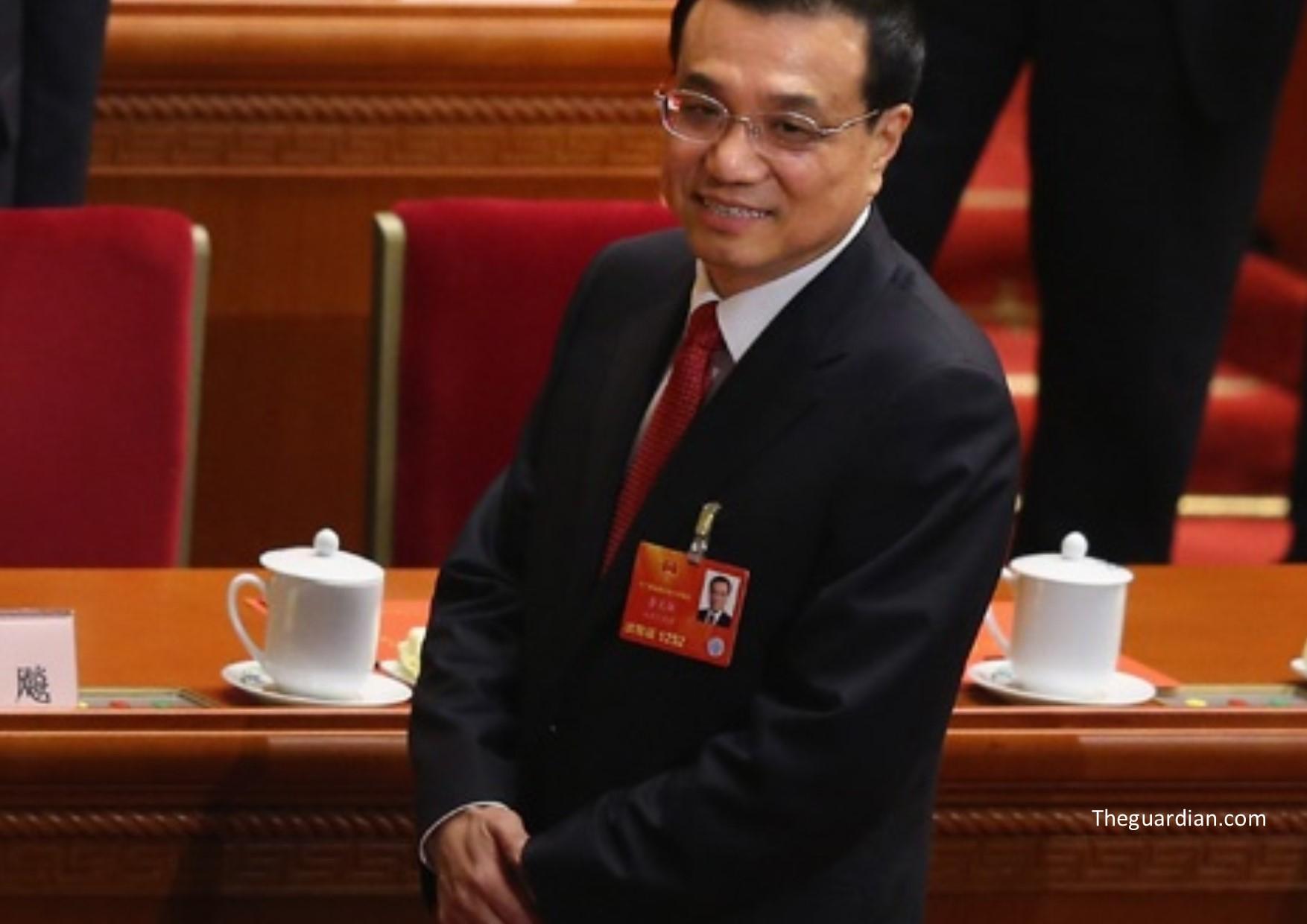
The plunge in China’s previously booming stock markets has created a major problem for the Chinese premier and other top leaders. “They created this monster,” a senior trader at a major international trading firm said of China’s leadership. “Only they can figure it out,”
Premier Li Keqiang commented: “We do not take the risks and challenges to growth lightly. We have the ability and confidence to prevent regional systemic risks and keep the economy growing within a reasonable range.”
Michael Page reports 10% gross profit

Michael Page International Plc reports 10% gross profit and continued growth in all four areas, after a Q2 trading update released this morning.
Commenting, Steve Ingham, Chief Executive Officer said:
“The 10.6% increase in the Group’s gross profit reflects continued year-on-year growth in all four regions with the UK and Americas showing improved growth rates from Q1. Our five high potential markets of Germany, Greater China, South East Asia, the US and Latin America are now performing at a record level.
“In reported rates, Q2 gross profit was up 6.0% to GBP145.3m. As previously highlighted, foreign exchange movements continued in Q2 lowering our reported figure by 4.6 percentage points, equivalent to GBP6.2m of gross profit. This has also impacted our first half reported operating profit by GBP2m.
“We are pleased with our performance in Q2 and the outlook is positive for all our regions in the second half. We remain focused on productivity and ensuring that our conversion continues to improve at a steady rate. Excluding the effects of foreign exchange movements during the second quarter, forecast to reduce full year operating profit by an additional GBP4m (GBP2m in Q1, GBP6m in total), the Board’s expectations for the full year results remain unchanged.”
Michael Page are currently trading down 2.35%, at 542.50 pence per share.
Regenersis PLC down 18%

Regenersis PLC (LON:RGS) is one of this morning’s biggest movers, down 18% after issuing a trading update ahead of its end of year results.
The company report that, after a competitive tender process, one of its larger clients will be moving to another supplier; which is likely the reason behind the fall in share price. The company anticipate that this is likely to adversely impact on the performance of one arm of the group, Depot Solutions, over the next financial year.
However, Depot Solutions achieved in reported Sterling and in constant currency, growth in revenue and headline operating profit in the year just ended. Given that, the Board believes the outlook for FY2016 is modest growth in headline operating profit, with strong growth in the Advanced Solutions and Software activities offset by a reduced contribution from Depot activities.
Regenersis provides a suite of product life cycle support services designed to help companies and their customers successfully deploy, protect, sustain, retire and re-use digital technology. The Depot Solutions Division operates client oriented electronic repair and refurbishment facilities around the world.
Iran reaches deal with six world powers

Iran and six major world powers have reached an agreement after more than ten years of negotiations, after round-the-clock talks in Vienna.
Under the deal, sanctions imposed by the P5+1 – the US, UK, France, China and Russia plus Germany – will be lifted in return for Iran agreeing long-term curbs on a nuclear programme that the West fear was aimed at creating a nuclear bomb.
The deal is hailed as major victory for both U.S. President Barack Obama and Iran’s President Hassan Rouhani, who was elected two years ago after a vow to reduce the diplomatic isolation of Iran.
Although the deal has not yet been formally released, ccording to Reuters key parts of the deal include:
- Iran has accepted that sanctions could be restored in 65 days if it violates the deal
- UN arms embargo and missile sanctions would remain in place for five and eight years respectively
- UN inspectors allowed to monitor Iranian military sites – however, they will be allowed to challenge access
UK inflation falls to 0%

The rate of UK Consumer Price Index inflation fell to 0% in June, from 0.1% in May, according to official figures released today.
A drop in clothing and food prices were the main contributors to the change, the Office for National Statistics said. However, low oil prices have also contributed to a consistently low rate of inflation over the past few months.
Bank of England governor Mark Carney has said he expects inflation to remain low in the short term. Usually, the rate of inflation is kept between 1% – 2%.
Chris Taylor grows Neptune Japan Opportunities Fund

Led by fund manager Chris Taylor, Neptune Japan Opportunities Fund’s objective is to generate consistent capital growth by investing predominantly in a concentrated portfolio of Japanese securities. Monetary easing, increased public spending and reforms to increase competitiveness are three initiatives that are helping Japanese PM Shinzo Abe get Japan’s economy back on track. The so-called ‘Abenomics’ consists of monetary policy, fiscal policy, and economic growth strategies to encourage private investment; and is working to create a much more positive environment for Japanese companies to thrive.
The fund is managed by Chris Taylor, who utilises global industry sector research from the entire Neptune investment team. Before managing this fund, he moved from Head of Scandinavian Equities at Enskilda Securities to Global Equity Fund Manager for Swiss American Asset Management in New York.
The fund’s largest holding is Toyota Motor, making up 4.33%, followed by Fanuc and Nintendo. By sector, the fund is made up of largely industrials, at 32%, followed by basic materials and technology.
Morningstar rates the fund as high risk, with the returns being relatively hard to predict over the last few years; in 2013 the annual return on the fund was 50%, but in 2014 it dropped to 4.39%. However, the value of the fund has risen steadily since November and could well be set to continue.
East London pie shop Square Pie offers investment opportunity

Ever been so frustrated that you can’t find a decent pie that you decided to start selling your own? That’s what Martin Dewey did, the creator of East London-based Square Pie, and it seems to have paid off.
His business started from a small stall in Spitalfields Market, which opened in November 2001 and sold a grand total of seven pies on their first day of trading. Now, Square Pie has six London outlets, with a seventh opening in Birmingham later this year, has won several food awards, and supplies to Twickenham Stadium, Glastonbury and Ocado.
Dewey is now hoping to raise £750,000 for Square Pie on crowdfunding platform Crowdcube in order to open further restaurants, and invest in PR and marketing to grow awareness of the brand.
The Square Pie Bond offers an 8% interest rate for an initial investment of £500 or more, over the course of four years. The original investment will be returned when the bond matures.
The company is still run by Dewey and his wife, Lucy. The husband and wife team is backed up by Chief Executive Nabil Subuh, who joined in January 2015 after 25 years in hospitality, and Finance Director Robert Scott, who was formerly CFO at Thomson’s Online.
In 2014, Square Pie’s turnover was £2.6 million, with company sales up 34% this financial year. Whilst profits have been impacted recently due to the initial costs of opening several venues, the financial projections look solid. If this opportunity is something that interests you, head over to Crowdcube.com for further information on how to get involved.
Metlife muscles in on crowdfunding trend

Metlife UK, the insurance and investment giant, has announced that it is working with non-profit crowdfunding platform Kiva.
Their new initiative, which is open to employees across Europe, Middle East and Africa, allows Metlife staff to direct a loan as small as £16 to a range of projects including businesses and entrepreneurs, and people funding education. It has been pioneered by Metlife’s charity, the Metlife Foundation, which is committed to building financial inclusion.
Kiva is a microfinance crowdfunding platform that aims to tackle poverty and create opportunities for those in countries where the necessary loans are hard to come by. Kiva arranges loans for those in need, which are then distributed through microfinance institutions in the borrower’s country with a repayment rate of 98 per cent.
Premal Shah, Kiva’s president and co-founder said: “Metlife was founded on a simple and powerful insight, that everyone needs access to the right financial tools to pursue more from life.
“We are proud to be a part of Metlife’s efforts toward that vision. Through this partnership, they are backing the dreams of thousands of entrepreneurs around the world, expanding financial access and empowering their employees to take part directly in that mission.”
Many financial institutions have similar charitable schemes, such as Deutsche Bank’s Small Grants Fund, however Metlife is the first to undertake one through crowdfunding.Small breweries turn to crowdfunding

When Hertfordshire based Red Squirrel Brewery decided to look for further investment in its craft beer brewing company, there was one clear way to go; like many other small businesses, crowdfunding was the most viable option.
They are forecasted to grow by over 111% this financial year, hitting revenues of around £1 million. With a bit of investment from the public, they are hoping to further expand their Brewery Shop & Tasting Bar concept targeting in the main provincial towns in the South East as well opening its first Microbrew Bar in Europe.
However, Red Squirrel are not the first brewing company to see crowdfunding as a viable alternative form of finance. They are following in the footsteps of successful crowdfunders BrewDog, who launched Britain’s biggest crowdfunding project ever in April, hoping to raise £25m.
James Watt, BrewDog’s co-founder, said: “We are not the Rockefellers. We are Guy Fawkes. This is about changing small business finance for ever.
“By making profit king, the financial institutions of the City gave rise to the bastardisation and commoditisation of beer. We are burning the established system down to the ground and forging a new future for business from the flames.”
However interestingly, instead of using a traditional crowdfunding platform such as Crowdcube, they chose to launch their own site, “Equity for Punks”.
Similarly, the UK’s fastest growing craft beer club, Beer52, has raised £100k from the crowd to grow their online community to 10,000 members in 2014. Beer52 is an early stage startup, launched just three months ago, and is already the UK’s largest and fastest growing craft beer club with more than 2,500 paying subscribers – for £24 a month they send you a mixed case of eight craft beers.
According to the Campaign for Real Ale, the number of breweries in Britain in 2014 hit a 70-year high of 1,147 as growth in micro-breweries continues apace. Living in London, it’s increasingly clear that independent breweries are on the rise; in South London, I live opposite two small breweries who have opened in the last few years. It appears that, instead of loans from banks, crowdfunding from their existing customer base, who like their product and would like a part in seeing them thrive, is the best form of finance.
If investing in independent breweries is something that interests you, Scottish brewery Innis & Gunn have launched a beer bond that is available to invest in until the 16th July. They offer 1.5% interest pa. in cash, or 9% interest in store credit to spend on their beer.
Over in the US, crowdfunding playform CrowdBrewed has been created purely for small breweries to ascertain funding; it’s surely only a matter of time before the same happens here.
Changes to climate change levy hits renewable investment funds

George Osborne’s recent decision to force renewable energy generators to pay the climate change levy has been a strong blow to wind and solar power investment funds.
Last week shares in Drax Group, who operate Britain’s largest power station are are leading the way in using sustainable biomass as a form of renewable power, fell 25% after the announcement. Previously, renewable energy generators had levy exemption certificates, meaning they did not have to pay the climate change levy. Introduced in 2001, the tax on energy delivered to non-domestic users was an incentive to increase energy efficiency and reduce carbon emissions. Renewables have never had to pay this tax; however, after last week’s Budget, they are no longer exempt. It is calculated this will raise around £450 million for the government.
Unsurprisingly, funds investing in renewable energy have also been hit by this change. The £353 million Renewables Infrastructure Group, which invests in both wind and solar plants, is the worst affected, revealing its net asset value per share would fall 4p to 97.9p. Similarly, the £287m Foresight Solar Fund, revealed a 3% reduction in NAV but maintained its dividend target of 6.08p per share for this year, which supports a 5.9% yield.
However, the £662m GCP Infrastructure Investments fund, which invests in the subordinated bonds of renewable operators rather than their equity, reassured investors that its projects’ were ‘wholly unaffected’ by the government’s move.
The abolition of the exemption shows the risks associated with investing in a relatively new and turbulent sector; however, the industry is supported by the fact that the UK still has a long way to go in tackling climate change before it meets its 2020 climate change targets.