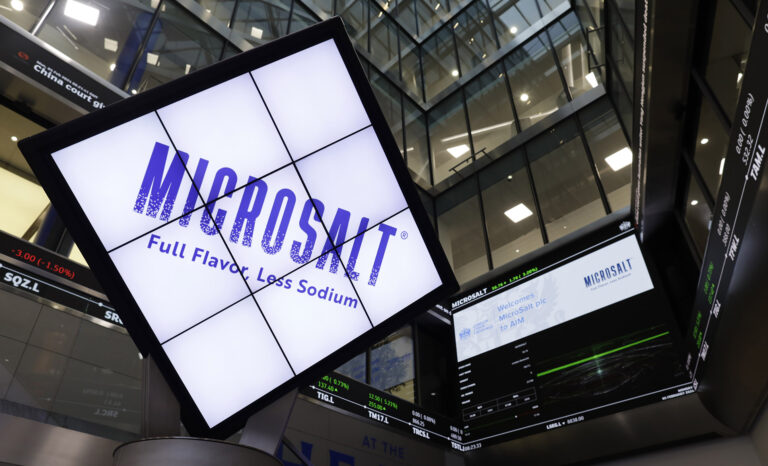
Belluscura shares soar on new manufacturing funding package

Belluscura shares surged in afternoon trading on Tuesday as the portable oxygen concentrator company released a flurry of announcements related to bolstering its manufacturing capabilities.

Belluscura has recently unveiled two substantial developments in the distribution and sales of their portable oxygen concentrators which could add up to $70m in revenue for Belluscura.

This was increased to $85m today after Belluscura announced further orders for their DISCOV-R™ portable oxygen concentrators. The company said orders now sat around $30m.

Belluscura has inked a royalty agreement with Chinese partners that could be worth around $55m over ten years.

Today’s series of announcements revealed a funding package totalling in the region of £8m to be allocated to scaling up the company’s manufacturing and sales operations in light of a step change in order demand.

The £8m funding package will be beneficial for shareholders as it avoids a large discounted placing that would erode shareholder value through dilution.

The package is comprised of three elements; the acquisition of TMT Acquisitions PLC satisfied by new shares in Belluscura, a £0.6m equity placing at 32p, and the issuing of £2.7m in 10% convertible loan notes.

TMT Acquisitions has £4.7m in cash which Belluscura will receive through the acquisition of the company in return for newly issued Belluscura shares. The price paid by Belluscura represents a 24.7% premium to TMT’s most recent closing price. TMT has no trading activities and the board will step down on the completion of the deal.

Nigel Wray, an existing Belluscura shareholder, will participate in the convertible loan note issue.

Belluscura shares jumped 20% to 36p as of 2.41pm in London.

Tekcapital, a major Belluscura shareholder, saw their shares tick higher in the immediate reaction to the news.

FTSE 100 falls with global equities as US 10-year yield hits 4.75%

The FTSE 100 was feeling the pressure of higher bond yields on Tuesday as US 10-year treasury yields touched 4.75% amid concerns about the trajectory of interest rates.

The latest bout of concern was sparked by a raft of strong US economic data suggesting the world’s largest economy is taking higher rates in its stride.

“The hangover from strong economic data out in the US is still being felt, with the headache increasing about the likelihood of high interest rates setting in rattling nerves. Better than expected manufacturing indicating a more buoyant US economy is not being taken as good news, but a sign that the bitter central bank medicine will have to keep being administered to bring down inflation to target,” said Susannah Streeter, head of money and markets, Hargreaves Lansdown.

Those hoping interest rates had peaked may be disappointed if this trend continues and inflation remains elevated. The ongoing concerns about interest rates are weighing on markets that are starting to show signs of monetary policy fatigue.

“Stubbornly high US government bond yields are making life harder for equities to press ahead. The US Treasury yield exceeded 4.7% overnight as investors took the view that the US economy is in a decent and resilient shape,” said Russ Mould, investment director at AJ Bell.

“While a robust economy would be positive, it theoretically lowers the chances of the Federal Reserve making interest rate cuts in the near-term or at least fewer cuts than previously expected.”

The FTSE 100 was down 0.3% to 7,488 at the time of writing.

“A risk-off sentiment is growing, and the FTSE 100 is finding it hard to regain its mojo,” Streeter concluded.

In terms of FTSE 100 movers, consumer-facing and highly cyclical sectors received the brunt of the selling on Tuesday. Miners were weaker and were Burberry and JD Sports.

Ocado’s free fall continued as hopes of a bid from Amazon becomes a distant memory. Ocado shares were down 4.5% and were the biggest loser on Tuesday.

There was a distinct risk-off rotation in FTSE 100 stocks with defensive names including GSK, Unilever and Pearson in favour.

AIM movers: Tintra returns from suspension and Safestyle slumps on fundraising concerns

0

Trading has resumed in the shares of Tintra (LON: TNT) following publication of the accounts to January 2023. The financial technology business made a higher loss last year. The shares had been suspended since the end of July and since then it has received a bid approach at 150p/share. The share price jumped 63% to 110p.

Oxford BioDynamics (LON: OBD) has received a reimbursement code for its EpiSwitch 3D genomics platform. This covers Medicare, Medicaid and other payers in the US. This will come into effect on 1 January. The share price continued its upward momentum rising 47.2% to 50.5p – the highest level for nearly two years.

Autonomous vehicle developer Aurrigo International (LON: AURR) has signed a deal with International Airlines Group to deploy its vehicles at a major UK airport. A small number of vehicles should be deployed in early 2025. The share price increased 13.6% to 167.5p.

MBD Partners has become a strategic investor in Ascent Resources (LON: AST) and bought its stake at a premium to the market price. MBD is owned by natural resources investor Ibrahim Diab and £1.5m has been injected into the oil and gas company at 3.5p/share. The MBD stake will be 20.5%. The share price improved 15.1% to 3.05p.

FALLERS

Safestyle (LON: SFE) is still talking with interested parties about a fundraising to provide working capital. It is a tough market for the windows manufacturer, but the directors believe that they will be able to obtain the finance required. It is uncertain what the terms will be and how dilutive it could be for shareholders. The share price slumped a further 58% to 1.85p and it has fallen 93% this year.   

Horizonte Minerals (LON: HZM) shares continue to fall after yesterday’s announcement that it is changing the design of the Araguia nickel project in Brazil, which will increase capital investment and delay production until the third quarter of 2024. Management is in talks about additional financing. The share price fell a further 36% to 32p.

Secure payments technology developer PCI-Pal (LON: PCIP) is seeking maximum recovery of costs from the company that filed the UK patent dispute that was resolved in PCI-Pal’s favour last week. In the first quarter of the new financial year, 57 new contracts have been signed. However, Cavendish has reduced its expectations for growth in 2023-24 revenues from 34% to 28% following the latest guidance from the company. PCI-Pal is still expected to move into profit this year, but it is a more modest £100,000. The share price declined 13.6% to 47.5p and it is back around the level prior to the announcement of the UK patent litigation result last week.

Online retailer boohoo (LON: BOO) shares have fallen 10.3% to 28.315p – the lowest level for around eight years – after it fell into loss in the first half. They are down 10.3% to 28.33p. Interim revenues fell 17% to £729.1m, with lower sales in all the international regions. The fastest rate of decline was outside the core brands, but they still fell by 10%. Net debt is £35m.

Aurrigo International shares rise after partnership announcement with International Airlines Group

0


On Tuesday, Aurrigo International, a leading international provider of transport technology, announced a partnership with IAG for the deployment and demonstration of Aurrigo’s autonomous aviation transportation solutions within the UK. 

Aurrigo International PLC shares were up 14% to 169p at the time of writing.

David Keene, the CEO of Aurrigo, commented on the partnership:

“This Partnership with one of the world’s largest airline groups is a great endorsement of the capabilities of our technology and the potential of automation to improve efficiencies and solve the challenges facing modern aviation”

In the statement released on Tuesday, Aurrigo states that after the simulation and evaluation phases, the company’s Board expects to deploy the following autonomous service at UK’s airports: Auto-DollyTug, which is a zero-emission vehicle used for baggage and cargo transportation, Auto-Cargo freight vehicle, and Auto-Sim aviation operations simulation software, which is a 3D tool used to visualise and optimize airports-based operations. 

“IAG is dedicated to supporting innovation which can transform aviation efficiencies and improve ground operations. Automation at airports is a key focus for us and having assessed our options we are pleased to be working with Aurrigo,” said Jorge Saco, Chief Information, Procurement, Services, and Innovation Officer at IAG.

“We first trialed the prototype Auto-Dolly in 2019 and after revisiting it post-Covid, we were impressed by how far their vehicle capabilities have progressed. We look forward to this technology helping to build our leadership position in aviation automation”.

Aurrigo’s new partnership is expected to follow a similar phasing plan to Aurrigo’s ongoing partnership with Singapore-based Changi Airport Group (CAG).

RWS Holdings announces expansion into Africa with acquisition of ST Communications

0


On Tuesday, RWS Holdings, a language-focused technology company, announced the acquisition of South Africa-based language services provider STC Comms Language Specialists Proprietary Limited.

ST Communications provides language services in 40+ African languages- some of which are rare tribal languages – allowing RWS to expand its services and enable clients to reach new African markets. 

RWS Holdings shares were flat at 242p at the time of writing.

The acquisition was made from RWS existing cash resources and compliments its long-term plan to grow through acquisitions.

According to the Chief Executive Officer of RWS, Ian El-Mokadem: 

“Africa is a continent that is of long-term strategic importance to our clients and, as one of the most linguistically diverse regions in the world, it presents a significant challenge for language services. We have partnered with ST Communications for many years and this acquisition supports our long-term strategy to continually invest and pioneer in new capabilities and will enable our clients to deepen their relationships in fast-growing African markets.”

UK non-renewable resource extraction in the North Sea: an overview

0


Ongoing energy shortages and net zero targets loom over the UK. Yet, the UK government’s approach to fossil fuels and carbon emissions is becoming increasingly unclear.

The government is exploring carbon capture projects while also handing out new UK oil and gas licenses in the North Sea.  

Rishi Sunak’s government is balancing the pressure to push forward with net zero targets with the need to secure the UK’s energy supply and support struggling families.

Sunak has made the bold decision to open up North Sea fossil fuel exploration to help bolster future supply of UK oil and gas.

As one would expect, many of the companies working in the North Sea on oil and gas extraction, as well as U.K. government officials, have received multiple complaints over its reluctance to reduce high-emission projects. 

PM Rishi Sunak has made his concern over low domestic oil and gas production known and has been supportive of North Sea fossil fuel projects.

Last week, the PM commented on Rosebank – a 24 billion GBP North Sea oil project that was approved earlier this week- by saying that it will create jobs and pump billions into the U.K. economy. He also pitched the idea it would make the UK less reliant on foreign powers.

Some often seem to agree with Sunak on the point that international import of oil and gas from countries such as Russia, is extremely unreliable.

Rosebank is to produce 69,000 barrels of oil and 44 million cubic feet of gas daily, according to Equinor, the Norwegian firm in charge of the Rosebank project.

Sunak also argued that domestic fossil fuel extraction sites -such as Rosebank- are better for the environment, as imports generate a higher carbon footprint. 

There was a significant international backlash after the Rosebank launch announcement. However, Rosebank is just one of many new potential oil fields in the North Sea.

At the end of July, over a hundred oil and gas licenses were granted to companies drilling in the North Sea.

Commenting on the reopening of the North Sea for exploration, Himani Pant Pandey, Oil and Gas Analyst at GlobalData, said::

“A number of oil and gas projects are slated for development in shallow waters of the North Sea during 2023–2027. The shallow waters of the North Sea still have an important role to play in promoting UK energy security, especially in the context of weaning away from the Russian oil and gas supplies.”

The measures implemented by Saudi Arabia and Russia recently to reduce exports support the case for the UK bolstering domestic supply.

Stefano Grasso, the senior portfolio manager at 8VantEdge, Singapore, further commented on Britain´s overall energy situation by saying that:

“The oil market is quickly coming to terms with the fact that the OPEC+ cuts announced in the summer are having a deep effect on crude availability.”

“Stocks are drawing while demand keeps growing. We are still far away from a price level causing demand destruction,” he added.

ExxonMobil is currently partnering with Shell in the North Sea in their efforts of rolling out more Carbon Capturing and Storage platforms (CCS). CCSs are a proven way to capture carbon produced by the industry sector. It is then stored underground in the North Sea. 

Although CCSs are costly projects and there are currently none operating in the North Sea, the U.K. government has previously announced its plans to capture more than 50 million metric tons of carbon annually by 2050. 

ExxonMobil is planning to invest 17 billion USD in the years of 2022-2027 into its lower emission initiatives, such as CCSs. On their website, the company writes of its hopes to help capture not only carbon produced by their drilling stations, but also by others. 

Not surprisingly, a growing narrative of the need to invest in more Carbon Capturing units in the North Sea contrasts the PM Sunak’s recent announcement of his plan to water down on UK’s sustainability policies.

It has been estimated that more than 100 CCS will be needed in order to capture all of the U.K.´s greenhouse gas emissions (given the current rate of oil and gas production).

Although Rishi Sunak´s exact position on investing into carbon capturing in the North Sea remains unclear, the PM has previously said that he expects a quarter of Britain’s energy to come from the non-renewable energy sector in 2050.

Boohoo shares sink as full-year sales guidance revised down

Boohoo’s sales declined more than expected in the last six months due to targeting more profitable business, the online fashion retailer said on Tuesday.

Revenues fell 17% in the six months to August and the company made sweeping downward revisions to their full-year projections.

The company now expects full-year sales to drop 12% to 17%, down from previous guidance of a 10% to 15% decline.

Boohoo shares were down around 9% after releasing their interim results on Thursday.

Boohoo said it successfully targeted more profitable sales in its budget labels, leading to steeper revenue drops there. Sales at its core brands fell 10%, in line with expectations.

The strategy boosted profitability, with adjusted EBITDA margin up 30 basis points to 4.3%. Boohoo reiterated guidance for full-year margins of 4% to 4.5%.

“The group’s focus remains on executing its back to growth strategy through disciplined investments across product, price and proposition,” it said.

Boohoo is rebuilding after a supply chain scandal in 2020 dented its reputation. It has invested in automation, refreshed ranges and cut costs.

The board remains confident in getting back to growth in the medium term and generating a 6-8% adjusted EBITDA margin.

John Lyttle, Group CEO, commented:

“Over the first half we have made substantial progress across key projects and initiatives, including the launch of our US distribution centre. We have seen significant improvements in sourcing lead times and invested in pricing to reinforce our value credentials. We have identified more than £125 million of annualised cost savings that support our investment programme. Our confidence in the medium-term prospects for the Group remains unchanged as we execute on our key priorities where we see a clear path to improved profitability and getting back to growth.”

The Vietnam Holding Investment Trust still offers great value despite the recent rally

The Vietnam Holding Investment Trust has had a tremendous 2023 as Asian markets recovered from the pandemic and Vietnam continued to grow as an economy.

Despite this year’s rally, Vietnam Holding still presents a solid opportunity for investors seeking to gain exposure to one of South-East Asia’s fastest-growing economies.

Trading at 308p Vietnam Holding has a discount of 14% and represents great value for investors seeking to buy into Vietnam’s future growth story.

The Vietnam Holding Trust invests in high-growth Vietnamese-listed equities and the portfolio is weighted towards companies that both benefit and facilitate Vietnamese growth.

Banks make up around 29% of the portfolio while Telecommunications accounts for 15%. These two sectors naturally enjoy enhanced economic activity and are crucial for ensuring the wider Vietnam growth story. 

One of the big themes for the trust is the digitisation of Vietnam. Banks and Telecoms are at the forefront of the drive to boost Vietnam’s adoption of technologies and improve efficiencies.

In addition to technological adoption, manufacturing is a major factor in Vietnam’s growth trajectory and is attracting overseas interest and capital.

Manufacturing and exports are integral to wider economic expansion and are making an attractive investment destination. Vietnam’s government is targeting GDP growth of 6% this year as exports start to pick up after a period of decline.

There is a significant opportunity in the Vietnamese manufacturing sector as multinationals increasingly choose Vietnam over China. Indeed, some Chinese companies are even choosing Vietnam for major plants and facilities to avoid the tension between the United States and China.

Although this foreign investment is targeted at manufacturing, the benefits will ripple through the economy and play into Vietnam Holding’s investment thesis.

Myn: Pioneering the Future of Employment Services

As the World of Work is changing, innovative companies like Myn are shaping the future of employment landscape. Myn, an AI-driven source-to-pay platform, is currently concluding a highly successful crowdfunding campaign on Seedrs, where they’ve established a strong investors’ community of over 160 individuals who share their vision of revolutionising the temporary workforce market. In this article, we’ll explore why Myn is not just a game-changer but also a promising investment opportunity.

The UK’s temporary workforce market is on an upward trajectory, with a remarkable 12% increase in 2023, and the momentum shows no signs of slowing down. Several factors contribute to this remarkable growth:

  • Flexibility in Workforce: Businesses are turning to flexible workers to adapt to changing demands, and Myn provides the ideal solution.
  • Streamlining the Recruitment Process: Finding the right talent is no longer a straightforward task. Myn simplifies this complexity by seamlessly connecting businesses with the perfect candidates.
  • Cost-Efficiency: Escalating costs associated with permanent employment have made temporary workers an attractive option, and Myn’s mission is to reduce transactional costs to zero.
  • Changing Workforce Dynamics: With a rising number of individuals seeking part-time or freelance opportunities, Myn is uniquely positioned to cater to these evolving needs.

Myn is ideally positioned to harness the growing temp workforce market in the UK, offering an innovative platform that benefits both businesses and workers.

In this digital age, companies are continuously seeking innovative ways to attract, engage, and retain the best talent. Here enters Myn, a disruptive force transforming the way talent acquisition is done. From its AI-powered sourcing and matching capabilities to a comprehensive suite of services, including self-service talent acquisition, fully funded payrolling, digital compliance solutions, job boards, and enticing employee benefits, Myn is leaving an indelible mark on the employment sector.

At the core of Myn’s revolution is its cutting-edge AI technology. It’s no secret that sourcing the right talent is a monumental task for businesses of all sizes. Myn leverages the power of AI to streamline the process, ensuring companies connect with their ideal candidates faster and more efficiently.

Myn’s proprietary AI embedding models are trained on a vast repository of more than 4 billion words extracted from over 100 million job descriptions and candidate profiles. This deep learning technology means Myn can analyse and match candidates with remarkable precision.

Myn’s success is underpinned by an exceptional team with a track record of multiple successful exits, totaling over £1 billion. The expertise and vision of this team drive Myn’s workforce revolution.

They’ve also established strong partnerships with renowned brands like Coupa, Fieldglass, and Bullhorn and have garnered the trust of global clients, including Tapfin|Manpower, GSK, HSBC, and Absa Bank. They have also recently successfully completed trial phases with major UK councils in the South of the UK, and are now gearing up for the full end-to-end solution launch with them in the near future. This game-changing deal propels them towards smashing their forecasts and sets the stage for the next phases of growth.

During their crowdfunding campaign, Myn has already raised over an impressive £900,000. Myn’s investment opportunity on Seedrs is soon coming to a close. Interested investors can find more information on the campaign page. Don’t miss this unique opportunity to invest in a company that’s revolutionizing the employment sector.

“We’re excited to offer this investment opportunity to our community as we continue to grow and enhance Myn,” said Adam Shaw, Founder and CEO of Myn. “We’re committed to revolutionising the temporary workforce industry with our innovative app and expanding our services to meet the growing demand for flexible solutions in the employment sector.”

FTSE 100 falls as interest rate concerns roll into new month

The FTSE 100 was weaker on Monday as the first trading session of October reflected nagging concerns about interest rates remaining higher for longer.

The FTSE 100 was down 0.79% to 7,547 at the time of writing.

“It’s been a testing time for markets as investors weigh up the likelihood of sticky inflation and interest rates remaining higher for longer. There is a balancing act for central banks – they want to fight inflation but equally they want to avoid being too aggressive with rate hikes and putting their economy into recession,” said AJ Bell’s Russ Mould.

Mould continued to explain that although central banks have suggested rates may stay at elevated levels for a prolonged period, policymakers will continue to base their decisions on economic data and upcoming interest rate decisions will be dictated by the health of the underlying economy.

“Data has been central to their decision-making and this week will see the release of some important figures shedding light on the state of one key economy.”

Persistent interest rate fears have hit some sectors more than others in 2023 and the most interest rate-sensitive sectors were again leading the declines on Monday. Housebuilders and construction companies were among the heaviest hit.

There were few FTSE 100 gainers on Monday and the selling was broad and indiscriminate. Diploma was the FTSE 100’s top faller, down 3.6%, while Beazley shed 3.2%.

There were gains for United Utilities as the company joined Severn Trent and Pennon Group in unveiling five-years plans to improve their infrastructure.