AIM movers: Polar Capital upgraded

2

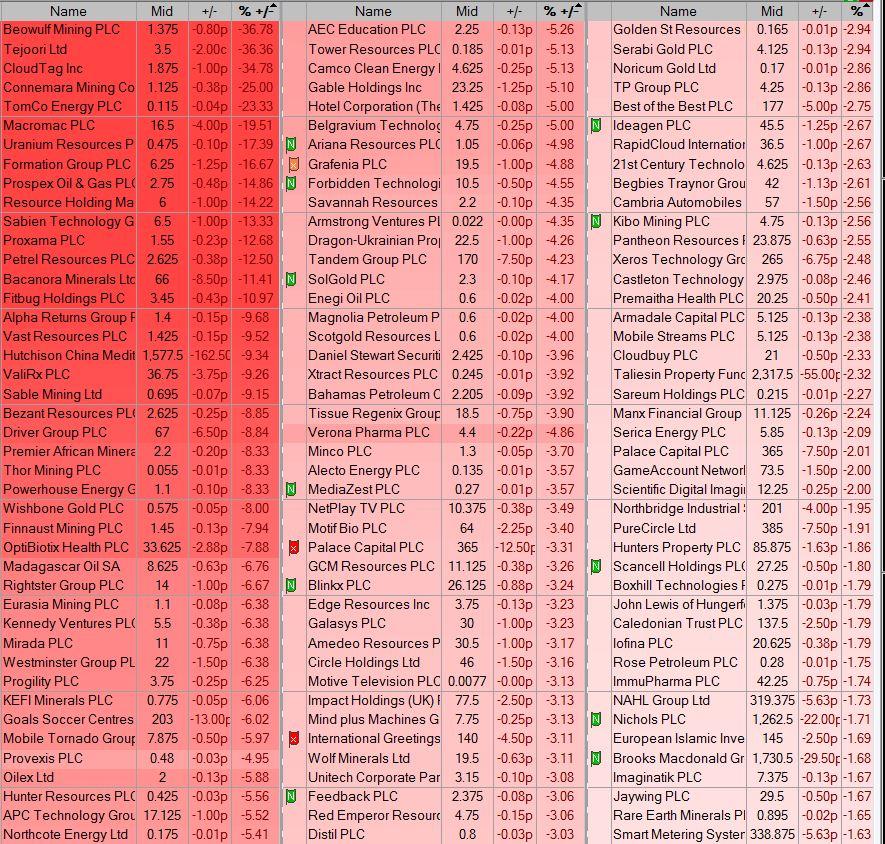
Shares in Bezant Resources (LON: BZT) continue to rise following the sale of 53.4 million Blackstone Minerals shares that raised A$3.75m (£1.84m). The remaining shareholding in the ASX-listed company is 80.6 million shares. The share price added a further 14.3% to 0.08p.

Deutsche Bank has upgraded its Polar Capital (LON: POLR) recommendation from hold to buy and raised the share price target from 550p to 600p. RBC raised its target price from 560p to 640p, and the recommendation is outperform. The share price increased 4.85% to 529.5p.

Orosur Mining Inc (LON: OMI) has raised C$20m at C$0.34/share (188p). The cash will finance exploration at the Anza project in Colombia. The share price improved 4.44% to 23.5p.

Pulsar Helium Inc (LON: PLSR) says 100,000 stock options were exercised at C$0.45 each, raising C$45,000. Earlier in the week, the company made a helium-3 discovery at the Topaz project in Minnesota. There are sustained concentrations of up to 14.5 parts per billion in produced gas. The share price rose 1.41% to 36p.

FALLERS

Yesterday, it was announced that the estate of William Black has cut its stake in Tertiary Minerals (LON: TYM) from 3.4% to 1.23%. This follows drilling results at Target A1 at the Mushima North project in Zambia that revealed the highest-grade silver and copper intersection. The share price lost 16.7% to 0.05p but is 17.6% higher on the week.

Artemis Investment Management has raised its stake in social entertainment firm LBG Media (LON: LBG) from 3.3% to 4.06%. The share price dipped 3.8% to 98.6p.

Clive Whiley, a non-executive director of capital equipment supplier Mpac (LON: MPAC), bough 25,000 shares at 320p each. The share price fell 3.23% to 300p.

Following interims earlier in the week, Berenberg has cut its share price target for Strix (LON: KETL) from 90p to 85p but retains its buy recommendation. Interim revenues fell 8.5% to £60.5m, while pre-tax profit was more than one-fifth lower at £6.1m. Net debt was £68.8m. The kettle controls revenues fell, but water filtration products supplier Billi and consumer goods revenues rose. The share price slipped 1.58% to 37.4p.

Princes Group fires starting gun on London IPO

Princes Group, a major UK and European food and beverage company, has announced plans to float on the London Stock Exchange’s Main Market.

The group owns and distributes well-known brands such as Princes, Napolina, Branston, Batchelors, Flora and Crisp ‘N Dry.

Princes is a group of significant scale. The firm generated £2.1 billion in revenue for the year ending 31 December 2024 and is on track to match or beat this in 2025.

It holds leading positions in both branded and own-label products across five business units: Foods, Fish, Italian, Oils and Drinks. The group operates 23 production facilities across the UK, continental Europe and Mauritius, employing approximately 7,800 staff.

Princes should be well received by London’s equity markets. Its portfolio of brands will help build affinity with retail investors, and the reliability of its cash flows could make it an interesting dividend play in the future.

“Our position as a category champion is grounded in well-invested manufacturing, deep and long-standing relationships throughout our supply chain, and a highly skilled and motivated workforce,” said Simon Harrison, CEO of Princes Group.

“These strengths have established Princes as a trusted partner to our customers, driving sustained, profitable growth and a first choice for consumers.

“Whilst we are renowned for our iconic Princes tuna, through a combination of organic growth and focused M&A, we have built an international £2 billion food and drink portfolio, leading across five complementary categories, food, fish, Italian, oils and drinks, with operations spanning seven countries.”

The announcement of Princes Group’s intention to list comes alongside the successful listing of The Beauty Tech Group, which got off to a strong start as a London-listed firm on Friday.

Everyone connected to London’s equity markets will hope today’s activity is a sign of the long-awaited pick-up in London’s IPO activity.

Wetherspoon shares slip despite profit and margin improvement

Wetherspoon shares slipped on Friday as investors fretted about costs despite the pub group reporting very respectable profits and margin expansion during the 52 weeks to 27th July.

JD Wetherspoon has reported a 4.5% increase in revenue to £2.13bn for the year ended July 2025, with pre-tax profit climbing 10.1% to £81.4m before exceptional items.

Like-for-like sales grew 5.1%. Bar sales rose 5.1%, food by 5%, and fruit machines surged 11%. However, hotel room sales fell 11.9% after the chain ditched third-party online booking agents charging high commission rates.

Operating profit increased marginally to £146.4m from £139.5m, with the operating margin edging up to 6.88% from 6.85% the previous year.

The pub operator, which now runs 85 fewer sites than before the pandemic, said sales per pub were 29% higher than in 2019—outpacing consumer price inflation.

Yet profits remain below pre-pandemic levels as energy costs have jumped 57.8% and wages 34.5% since then. Costs were the driving force in the group’s share price decline on Friday on concerns about lower profitability in the next year.

“Wetherspoons’ mention of rising labour costs and higher energy levies cast a pall over the rise in profits and improved sales figures. As a result, more of the bounce in shares from earlier in the year continues to drain away,” said Chris Beauchamp, Chief Market Analyst at IG.

“The market was clearly in the mood for something more, and today’s update provides little reason for a change in the current share price direction.”

Wetherspoon warned that new electricity levies starting this month will add £7m annually to its bills. Non-commodity charges—effectively taxes—now account for roughly 62% of total electricity costs.

“As previously indicated, increases in national insurance and labour rates will result in cost increases of approximately £60 million per annum, and non-commodity energy costs will add £7 million,” said Tim Martin, the Chairman of J D Wetherspoon.

“The recently introduced ‘Extended Producer Responsibility’ tax, a levy on packaging, referred to in the table on page 9, will cost £2.4 million in the current year, an increase of £1.6 million. Cost increases such as these will undoubtedly add to underlying inflation in the UK economy, although Wetherspoon, as always, will endeavour to keep price increases to a minimum.”

Beauty Tech Group prices IPO at 271p with £300m valuation

Beauty Tech Group has wrapped up its IPO funding round, securing a £300m valuation as it embarks on the next chapter of growth in the at-home beauty devices market.

Beauty Tech Group shares were priced at 271p per share for its IPO, with a total offer of £106.5 million comprising freshly issued shares and the sale of existing shares by current shareholders.

The company has raised £29 million through the issue of newly issued shares to ensure it is debt-free and has ample working capital to pursue its growth objectives. Existing shareholders will receive over £77m.

The company was well received by the market with shares trading at 282p at the time of writing.

Beauty Tech Group is targeting rapid growth in at-home beauty device market, which is estimated to be worth between £9 billion to £12 billion globally in 2024. The UK market is thought to be around £1.6 billion – £1.8 billion.

At-home beauty devices utilise technologies such as Radio Frequency, Laser Therapy, and LED Lights to enable users to undergo beauty treatments from the comfort of their own homes and save money on sometimes expensive treatments.

The group generated £101 million in revenue in 2024 and reported a profit of £1.7 million. Profits, needless to say, will need to accelerate quickly to justify the £300m price tag.

“I am incredibly proud of everything The Beauty Tech Group has achieved since we launched CurrentBody in 2009,” said Laurence Newman, Founder and CEO of The Beauty Tech Group.

“From establishing ourselves as a global leader in the fast growing at-home beauty technology market to successfully completing this milestone listing on the London Stock Exchange, the Group continues to go from strength to strength.

“As we enter the next stage of our growth journey, this IPO provides the perfect platform to increase awareness of our three distinct, premium brands and take the Group to the next level, while delivering sustained and profitable growth. The continued momentum within the business and strong support from investors during our roadshow, gives us the confidence and financial firepower to fully capitalise on the significant opportunities that lie before us.

“Most importantly, I would like to thank everyone at The Beauty Tech Group. The business would not be where it is today without their dedication and hard work and I am excited to embark on this next chapter together.”

Targeting 100x growth through ride-hailing AI optimisation with Odysse

The UK Investor Magazine was delighted to welcome Anant Prakash, CEO of Odysse, to discuss the company’s vision, milestones, and live crowdfunding campaign.

Odysse is building the UK’s first all-electric, AI-powered ride-hailing fleet, already achieving ~£1M annual revenue and a five year contract with Bolt. In this episode, Anant explains the inspiration behind Odysse, the problems it is solving for drivers and riders, and how its model improves the service of incumbents like Uber and Bolt.

The conversation also covers Odysse’s rapid growth plans, scaling from 30 vehicles today to 3,000 by 2030, targeting £100M in revenue, and how funds from the crowdfunding campaign will accelerate this expansion. For listeners inspired by Odysse’s mission, this episode shows how to experience the service and get involved in the investment opportunity.

Visit their Republic page.

FTSE 100 rebounds from early losses as Tesco gains

The FTSE 100 rebounded from early losses on Thursday as strong results from Tesco and a broker upgrade for 3i helped offset weakness in Experian.

London’s leading index was 7 points at the time of writing and was tiptoeing towards another all-time record closing high.

Thursday’s trading was dominated by stock-specific stories as investors waited for the next economic data point to move the dial for stocks. This will likely come tomorrow in the form of the Non-Farm Payrolls, providing the latest insight into slowing US job creation.

Weakness in utility and tobacco stocks led to a softer start for the FTSE 100 index on Thursday, as Experian sank amid concerns about competition.

“Experian’s shares tumbled after the emergence of a new competitive threat.” said Russ Mould, investment director at AJ Bell.

“Analytics software group FICO launched a new service that it believes could make US mortgage brokers and lenders less reliant on credit agencies such as Experian to calculate consumer credit risk.”

Investors baulked at the news, and Experian shares were down 5% at the time of writing.

SSE shares fell 2% after the renewable energy group said unfavourable weather conditions weighed on output.

By lunchtime, the FTSE 100 index had turned positive, driven by gains from 3i and Tesco. UBS analysts bumped their price target on UBS up to 4,700p, helping shares rise by 3.7%.

Tesco was the standout corporate update story on Thursday as the supermarket released interim results revealing a 5.1% increase in sales. Strong sales gave Tesco the confidence to upgrade its profit guidance for the year, and investors cheered the news, with Tesco shares higher by 3%.

“Tesco’s interim results demonstrate impressive market leadership in what remains an exceptionally competitive UK grocery sector,” said Adam Vettese, market analyst for eToro.

“Sales showed notable momentum driven in part by an unusually hot summer which spurred volume growth across fresh foods and summer ranges, helping Tesco capture the fastest market share gains among major grocers. The emphasis on value through price matching and promotional Clubcard discounts proved effective with customers which in turn has supported continued share buybacks and a healthy dividend uplift.”

AIM movers: Boku is AIM company of the year and ex-dividends

0

Bezant Resources (LON: BZT) has sold 53.4 million Blackstone Minerals shares and raised A$3.75m (£1.84m). The remaining shareholding in the ASX-listed company is 80.6 million shares. Johnathan Swann has increased his shareholding from 5.19% to 6.57%. The share price increased 27.3% to 0.07p.

Local payments technology services provider Boku (LON: BOKU) won the company of the year award at the AIM Awards dinner on Wednesday evening. Boku published its interims on Tuesday. Revenues increased by one-third to $63.3m, while underlying EBITDA rose 53% to $21.8m. EBITDA margins were boosted by a one-off deal, but they should remain above 30%. Total payment volumes were 28% ahead at $7.4bn, while monthly active users reached 95.5 million in June 2025. The share price rose 11.2% to 228p.

Subsea technology services provider Ashtead Technology (LON: AT.) has published a prospectus for the move to the Main Market on 6 October. The shares will be removed from the FTSE AIM index series on 6 October. The shares should go into the FTSE All Share index when there are the next quarterly changes. The share price improved 7% to 379.75p.

Berenberg has initiated research on Asia Pacific-focused oil and gas producer Jadestone Energy (LON: JSE) with a buy recommendation and a share price target of 68p. On Tuesday, interim results showed a swing from loss to profit. There was record production of 20,368 barrels of oil equivalent/day and revenues improved from £185.1m to $228.3m, while operating costs fell. There is production in Australia, Malaysia and Indonesia. Before working capital adjustments, operating cash flow jumped from $27.9m to $92.8m and the sale of Thailand assets raised a further $39.4m. Net debt was $107.7m at the end of June 2025, although $62.5m was received in July. Jadestone Energy is commercialising its Vietnam gas asset and hopes to achieve a gas sales deal and full government approvals in the near future. The share price is 5.26% higher at 22p.

Mobile games developer Gaming Realms (LON: GMR) has extended its licensing deal with Light & Wonder Inc, which will involve the development of Slingo versions of the latter’s games 88 FORTUNES and HUF N’ MORE PUFF. These games are popular in North America. There is an option for a third game. The previous licence deal was for GOLD FISH. The games will be supplied to all Gaming Realms international partners. The share price rebounded 4.75% to 45.25p.

FALLERS

UK Oil and Gas (LON: UKOG) shares lost 33.7% to 0.0325p following a placing raising £3m at 0.03p/share, but it is still treble the level prior to the return from suspension on Wednesday. The cash will provide funding for hydrogen projects, as well as ongoing oil commitments. A subsidiary has executed a memorandum of understanding with National Gas Transmission, which is developing a 100% hydrogen pipeline system. The plan is to connect the company’s planned onshore salt cavern hydrogen storage facilities in Yorkshire and Dorset.

Cadence Minerals (LON: KDNC) has launched a WRAP retail offer to raise up to £200,000 at 3p/share. This follows the recent placing that raised £2.34m. The cash will fund the restart of the Azteca plant in Brazil. This could produce 380,000 tpa of 65% Fe. The share price fell 8.14% to 3.95p.

Tavistock Investments (LON: TAVI) has updated investors on its litigation with Titan, who acquired Tavistock’s asset management business and funds branded ACUMEN. This was part of a 10-year strategic partnership. Tavistock says that there were many breaches of the agreement. The performances of five funds were at or near to the bottom of the rankings for similar funds. A court hearing is listed for December 2025 to determine both parties’ claims. Titan has not agreed to mediation. The share price declined 2.02% to 4.85p.

Ex-dividends

Arcontech (LON: ARC) is paying a final dividend of 4p/share and the share price decrease 2p to 105p.

Andrews Sykes (LON: ASY) is paying an interim dividend of 11.9p/share and the share price is unchanged at 532.5p.

Braime Group (LON: BMT) is paying an interim dividend of 6p/share and the share price is unchanged at 950p.

Frenkel Topping (LON: FEN) is paying a final dividend of 1.38p/share and the share price fell 0.1p to 49.5p.

Keystone Law (LON: KEYS) is paying an interim dividend of 7.5p/share and the share price declined 10p to 690p.

Mortgage Advice Bureau (LON: MAB1) is paying an interim dividend of 7.2p/share and the share price dipped 5p to 725p.

Mercia Asset Management (LON: MERC) is paying a final dividend of 0.58p/share and the share price is unchanged at 33p.

Real Estate Investors (LON: RLE) is paying a dividend of 0.4p/share and the share price is unchanged at 31.7p.

Skillcast (LON: SKL) is paying an interim dividend of 0.2p/share and the share price is unchanged at 61p.

Van Elle (LON: VANL) is paying a final dividend of 0.8p/share and the share price is unchanged at 34p.

The top 10 best performing UK All Companies funds of 2025

UK stocks have had a remarkably strong year. After living in the shadow of US growth-focused indices during the AI boom, the defensive attributes of UK stocks led to outperformance of the FTSE 100 in the early stages of 2025.

Trade tariffs and geopolitical concerns drove investors into safe-haven shares, which London has in abundance.

“Fund managers have enjoyed a favourable environment in 2025, with a decent showing across UK stocks in general. The FTSE 100 has just hit another new record high and some of the biggest stocks have delivered supersized rewards for investors,” said Dan Coatsworth, head of markets at AJ Bell.

“Ten stocks in the FTSE 100 have generated total returns above 50% year-to-date, half of which have more than doubled investors’ money since 1 January, including miner Fresnillo and defence group Babcock.”

UK-focused fund managers have, of course, benefited from the buoyant conditions for London-listed stocks, and many have taken the opportunity to demonstrate the value of an active approach to fund management by outperforming the benchmark.

Here are the top ten performing UK All companies of 2025 so far.

Top 10 best performing UK All Companies funds year-to-date
FundTypeTotal return
SVS Zeus Dynamic OpportunitiesActive28.4%
Artemis SmartGARP UK EquityActive27.7%
Ninety One UK Special SituationsActive23.4%
Dimensional UK ValueActive22.6%
Artemis UK SelectActive22.1%
Brompton UK RecoveryActive20.6%
First Trust United Kingdom AlphaDEX ETFPassive20.5%
Invesco FTSE RAFI UK 100 ETFPassive19.8%
Redwheel UK Climate EngagementActive19.5%
Invesco UK Enhanced IndexActive19.1%
FTSE All-Share (benchmark for UK stock market)16.6%
Source: AJ Bell, FE Fund Analytics. Total return data 1 January to 30 September 2025.

What to Look for When Choosing a Crypto Platform as a UK Investor

As cryptocurrencies gain broader acceptance in the UK, more investors are seeking trustworthy platforms to trade digital assets effectively. The rise in popularity of Bitcoin, Ethereum, and other altcoins has led to a surge in trading activity, prompting a need for platforms that combine regulatory compliance, security, and ease of use. With the market offering numerous options, selecting the right platform requires a strategic approach rooted in careful evaluation of key features and services.

Navigating the UK Crypto Market Landscape

The UK’s crypto ecosystem has matured significantly, offering a diverse range of platforms that cater to various levels of investor experience. From seasoned traders to first-time buyers, the market supports a wide spectrum of participants. This growth is driven by both technological advancements and increasing mainstream interest in blockchain-based assets.

Understanding the broader market landscape is essential for making a well-informed decision. Investors should pay attention to current market trends, fluctuations in popular cryptocurrencies, and how UK regulation is shaping platform offerings. A helpful starting point is researching a reliable UK crypto exchange that operates under transparent and secure frameworks, ensuring both compliance and performance.

Regulatory Standards and Platform Security

Regulation is a cornerstone of trust in the crypto space. UK-based platforms are required to register with the Financial Conduct Authority (FCA), providing an added layer of consumer protection and ensuring adherence to anti-money laundering protocols. When evaluating a platform, investors should confirm FCA registration and look for clearly stated compliance policies.

Equally important is platform security. Strong security measures such as two-factor authentication, cold storage for digital assets, and end-to-end encryption protect users from potential breaches and cyberattacks. Platforms that undergo regular audits and maintain high levels of transparency in their operations typically offer greater confidence and safety for users.

User Interface and Trading Experience

The overall user experience plays a crucial role, especially for new investors who may find cryptocurrency trading complex at first. A clean, intuitive interface can simplify the onboarding process and make day-to-day trading more efficient. Factors such as platform responsiveness, mobile app functionality, and execution speed contribute to a seamless experience.

Platforms that invest in user education—offering tutorials, guides, and market insights—also help traders make better decisions. Whether through demo accounts or step-by-step walkthroughs, educational support enhances the investor journey and fosters confidence in trading.

Variety of Cryptocurrencies and Trading Pairs

A platform’s selection of digital assets is another important consideration. Investors should look for exchanges that support a wide range of cryptocurrencies, from major coins like Bitcoin and Ethereum to newer altcoins that offer unique investment opportunities. A broad portfolio allows for diversification and better risk management.

In addition to coin variety, the availability of trading pairs is equally critical. Platforms that offer multiple fiat and crypto pairs provide flexibility and help traders react swiftly to market changes. Assessing which assets and pairs align with your trading goals can streamline the selection process.

Evaluating Fees and Transaction Costs

Fee structures can significantly impact trading profitability. Most platforms charge a combination of trading fees, deposit fees, and withdrawal fees, which vary based on transaction type and volume. Some may offer attractive trading rates but compensate with higher withdrawal costs, which can erode earnings over time.

It’s important for investors to carefully analyze these costs and prioritize platforms with transparent, competitive pricing. Platforms that clearly outline their fee policies and avoid hidden charges make it easier to manage investments and maximize returns.

Here is a simple comparison of potential fees across platforms:

Fee TypeTypical RangeKey Consideration
Trading Fee0.1% – 1.0% per tradeLower fees benefit active traders
Withdrawal FeeVaries by coinImportant for frequent asset transfers
Deposit FeeOften free, sometimes 1%Check for fiat vs crypto deposit terms

Customer Support and Educational Resources

Reliable customer support can be a major differentiator when choosing a crypto platform. Access to timely help through live chat, phone, or email becomes essential during technical issues or security concerns. Platforms that offer 24/7 support often deliver a better user experience, especially for traders operating outside regular hours. For investors looking to stay updated on broader financial developments, resources like UK Investor Magazine News provide timely insights into market trends and opportunities.

In addition to responsive support, educational materials such as blog posts, webinars, FAQs, and video tutorials are valuable. They not only improve user knowledge but also build trust by showing a platform’s commitment to user success. Educational content empowers investors to navigate the market with greater skill and confidence.

Final Thoughts: Making the Right Platform Choice

Choosing the ideal crypto platform as a UK investor requires a holistic evaluation of several key factors. Regulatory compliance, robust security, intuitive design, a wide selection of digital assets, and fair fee structures all contribute to a platform’s overall value. Investors should consider creating a checklist based on personal trading needs and compare platforms accordingly.

Engaging with reviews, forums, and peer insights can also offer practical perspectives. Ultimately, the right platform should align with your investment strategy, provide confidence through compliance and security, and deliver a user experience that supports long-term trading success.

OpenAI becomes world’s most valuable private company after $6.6bn share sale

OpenAI has overtaken SpaceX as the world’s most valuable private company after a $6.6 billion share sale at a $500 billion valuation.

OpenAI’s new $500 billion valuation significantly surpasses its previous valuation of $300 billion and leapfrogs SpaceX’s $400 billion valuation.

Bloomberg reported that existing employees were given the opportunity to cash in some of their shares to meet strong investor demand.

Thrive Capital, Softbank, Dragoneer, MGX and T.Rowe Price were reported to have participated in the round.

Interestingly, OpenAI had reportedly set a limit of $10 billion in employee sales, and the fact that this wasn’t met suggests that OpenAI’s employees are confident in the longer-term valuation of the company.

OpenAI has been hit by competitors poaching their top staff with the lure of pay packages exceeding $100 million. The share sale will serve as an opportunity for those employees motivated by cash to realise their holdings and reduce the attraction of jumping ship to competitors such as Meta.

The $6.6bn employee share sale was the second by OpenAI in less than a year.

The share sale follows Nvidia’s commitment to invest up to $100 billion in OpenAI as part of a deeper strategic partnership to develop AI infrastructure.

OpenAI’s ChatGPT has reached 700 million weekly users and is by far the most popular AI chatbot.