
JD Wetherspoon’s, McDonald’s and TGI Fridays’ staff will strike
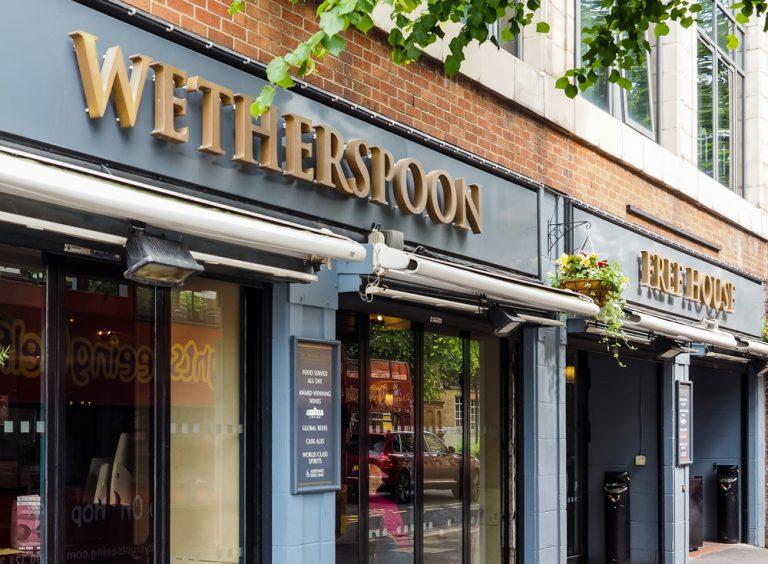
Staff at JD Wetherspoon, McDonald’s and TGI Fridays will partake in an unprecedented strike in the hospitality sector next month. In fact, more and more workers – who were not traditionally unionised – have joined a trade union after a campaign was launched to drive recruitment.
On 4 October 2018, unionised workers will strike for £10 an hour and union recognition. The co-ordination between staff from different franchises is the first of its kind.
A spokesperson for the Food and Allied Workers Union (BFAWU) confirmed the Guardian’s report. Workers at two Wetherspoon’s in Brighton are in fact preparing to join the strike.
Additionally, the protest is expected to be joined by workers from three TGI Fridays outlets and four McDonald’s restaurants.
Last year, McDonald’s workers held their first UK strike. This was in protest of zero-hours contracts and working conditions.
A team Leader from one of the Brighton’s Wetherspoons, Chris Heppell, felt inspired by the McDonald’s strike. As a result, Chris and many other workers, joined the BFAWU.
Chris Heppell is a 29-year-old graduate who has said that the majority of his monthly earnings go towards rent.
He said:
Hurricane Energy plc announces half year results

Hurricane Energy plc (LON:HUR) has announced its 2018 interim report and half-year results for the period ended 30 June 2018.
The results offer some noteworthy financial highlights. First, the company’s loss after tax in this period was $75.1m. In H1 of 2017, this figure was at $4.2m. Next, operating expenses for the period were $4.7m, lower than the $6m in H1 of 2017. Additionally, by the end of the period the company had cash, cash equivalents and liquid investments of $210.1 million.
Previously, we reported the increase of Hurricane’s shares after a farm-in with Spirit Energy. Later in the morning, Hurricane Energy’s shares saw an 11% increase after the deal.
Dr Robert Trice, Chief Executive of Hurricane, said:
“At 30 June 2018, the Company had $210.1 million in cash and liquid investments, of which $178.6 million was unrestricted. With the well completion, TMS installation and SURF installation phases complete, we remain confident in becoming cash generative based on existing funds.”
“As we noted in our 2017 Annual Report, the task in front of us is to de-risk and monetise the substantial contingent and prospective resources across all of our assets.”
“The recently announced farm-in by Spirit Energy (post period-end) to the Greater Warwick Area (GWA) is a first step on this path. The transaction accelerates the appraisal and initial development of the GWA and frees up cash flow from the Lancaster EPS to further appraise and develop the Greater Lancaster Area (GLA) and Whirlwind.”
“We are delighted to have agreed a development strategy with a like-minded company which brings significant operating and financial capacity, together with experience in fractured basement reservoirs.”
At 12:44 BST today, Hurricane Energy plc shares were trading at +2.61%.
Crimson Tide contract wins and recruitment announcements

Crimson Tide (LON:TIDE) has announced various contract wins. Furthermore, it has made additional recruitment announcements.
Crimson Tide is the provider of the award-winning mpro5. Mpro5 is an industry leading mobile workflow management solution. The system allows users to manage remote workforces, automate management reporting and complete workflows on any mobile device. This is all achieved through a cloud-based platform.
Today, Crimson Tide has announced it has signed its first subscription agreements with two clients in the Middle East. Both of these clients are set to complete maintenance, engineering and health and safety workflows on mpro5. As a result, Crimson Tide has appointed Zyldxian Pereira as Middle East Sales Executive. This appointment hopes to drive further opportunities in the Middle East.
Additionally, Crimson Tide has announced the win of a contract with a $20bn revenue US Pharma Company. The pharmaceutical company seeks to provide a patient portal for one of its ground-breaking anti-cholesterol drugs.
Finally, Crimson Tide has announced that Sam Roberts will re-join the company as Director of Enterprise Sales. This is following his period of Samsung where he headed the sales relationship with O2.
Executive Chairman, Barrie Whipp, said:
“It is very encouraging to win these new contracts, which demonstrate mpro5’s capabilities in exciting areas.”
“We are also happy to add to our sales team and I am extremely pleased to welcome Sam back to Crimson Tide. ”
At 11:33 BST today, shares in Crimson Tide plc were trading at +25.49%.
Jet Airways pilots forget to regulate cabin pressure
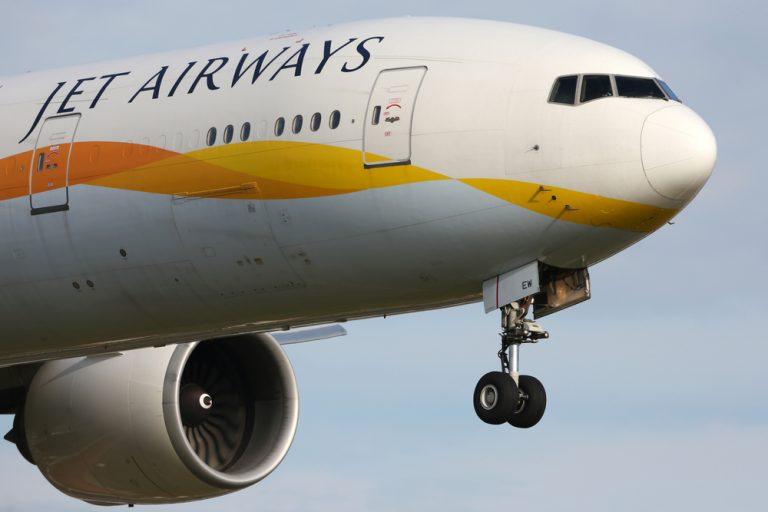
A Jet Airways flight has injured over 30 passengers after the pilots forget to regulate the cabin pressure. Additionally, some passengers experienced bleeding from their noses and ears.
The Jet Airways flight was set to travel from Mumbai to Jaipur. However, it was forced to turn back soon after take off. The 166 passengers on board landed safely.
Consequently, the major Indian airline has released a statement:
“The B737 aircraft, with 166 guests and 5 crew, landed normally in Mumbai.”
“All guests were deplaned safely and taken to the terminal.”
“First aid was administered to few guests who complained of ear pain, bleeding nose etc.”
Furthermore, it admitted that it “regretted” any inconvenience caused.
However, Lalit Gupta, the Directorate General of Civil Aviation said the crew had forgotten to regulate cabin pressure.
As a result, passengers took to twitter to share the experience. One passanger wrote:
@jetairways Flight 9W 697 made an emergency landing back in Mumbai. Airplane lost pressure immediately after taking off…scores of passengers including me bleeding from nose….no staff to help…no announcement on board to wear the oxygen mask. passenger safety completely ignored pic.twitter.com/vO9O95aMCP
— Satish Nair (@satishnairk) September 20, 2018
Shares in Jet Airways (NSE:JETAIRWAYS) finished trading yesterday at 15:55 GMT at -4.98%.
Rail chaos is “unacceptable”, transport secretary says
The Transport Secretary, Chris Grayling, has announced that the entire rail chaos is “unacceptable”.
Since 20 May, UK rail passengers faced severe delays and cancellations. This was as a result of the rail industry’s attempt to implement the biggest timetable change in a generation.
The changes mainly affected Northern Trains and GTR routes into London. In fact, the upgrade expected to change up to 46% of train times.
Moreover, over several weeks GTR cancelled 470 scheduled trains each weekday. Likewise, Northern Trains cancelled 310 each weekday.
Earlier in June, the Office of Rail and Road launched an inquiry into the disruption following the timetable changes.
Today, the Transport Secretary has announced a review designed to transform the rail industry.
This review follows the official report that blames lack of leadership in the rail industry.
Sky reports that Grayling said:
“The whole situation was entirely unacceptable,”
“We were clearly wrong to trust what the industry said to us, that it was going to be ready for the changes due in May.”
“My conclusion is that we’ve got an industry today where decision-making is too fragmented,”
“We need a more joined up industry, we need an industry that moves on from the model set up at the time of privatisation.”
“I believe that the divide between running the track and running the trains no longer works on our railway.”
Chris Grayling previously insisted “I don’t run the railways”. However, he now accepts that it is his job to prevent the same happening again.
Interestingly, a former commuter expressed his extreme frustration with his commute by creating an app. His ‘Northern Fail’ is designed to mock Northern Rail, it also lists the network’s delays and cancellations.
Rio Tinto announces new share buy-back programme
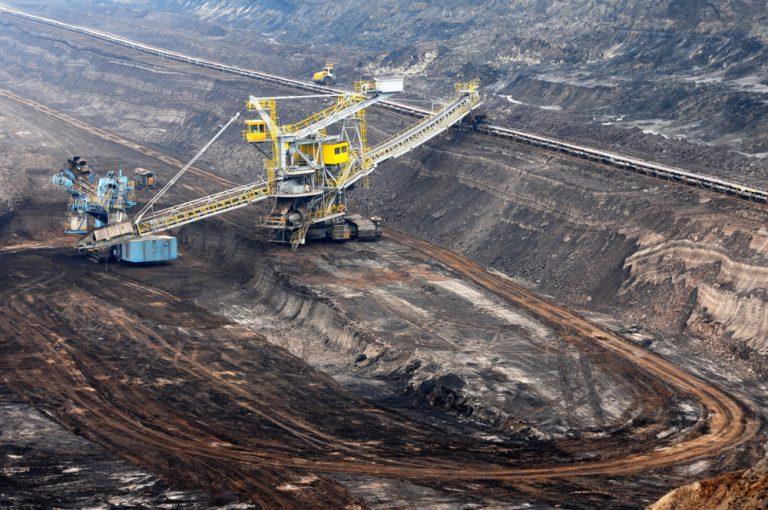
Rio Tinto (LON:RIO) has released the details of its new share buy-back programme. It intends to return roughly $3.2 billion of post-tax coal disposal proceeds to its shareholders.
The proceeds will be returned through a $3.2 billion share buy-back initiative. Moreover, the programme will combine an off-market buy-back tender targeting up to 41.2 million Rio Tinto Limited shares ($1.9 billion). Additionally, it will also include further on-market purchases of Rio Tinto shares. However, the programme remains subject to market conditions and compliance with all laws and regulations.
J-S Jacques, Rio Tinto’s Chief Executive, has commented:
“Returning $3.2 billion of coal disposal proceeds demonstrates our commitment to capital discipline and providing sector leading shareholder returns.”
“We continue to focus our portfolio on those assets which provide the highest returns and growth”
Moreover, this “will ensure that we continue to deliver superior value to our shareholders in the short, medium and long term”.
Founded almost 150 years ago, Rio Tinto remains one of the world’s largest producers of essential materials. Today, the company is one of the world’s largest metals and mining corporations.
At 10:11 BST today, shares in Rio Tinto plc were trading at +1.96%.
Earlier this July, we reported that Rio Tinto was ahead of targets for iron ore exports.
Equifax fined £500,000 for data breach

After 15 million people in the UK had their private details lost, Equifax (NYSE:EFX) has been fined £500,000.
Equifax is a US based consumer credit reporting agency. It collects the information of over 800 million individuals and over 88 million businesses globally.
Between 13 May and 30 July 2017, Equifax lost the personal information of roughly 145.5 million during a cyber attack. 15 million of these people were British.
Equifax’s systems used to handle the personal information were inadequate and ineffective, the Information Commissioner’s Office (ICO) found.
Additionally, the investigation also showed that the company’s systems had previously been warned of their “critical vulnerability”. The US Department of Homeland Security issued this warning just two months before the cyber attack.
A £500,000 fine has been issued to Equifax’s UK operation. This figure is the highest possible under the Data Protection Act 1998. But, had the data breach taken place under the new GDPR, the fine could have reached up to £17.7 million.
A spokesperson for Equifax has commented:
“Equifax has co-operated fully with the ICO throughout its investigation, and we are disappointed in the findings and the penalty.”
“Equifax has successfully implemented a broad range of measures to prevent the recurrence of such criminal incidents.”
“The criminal cyber attack against our US parent company last year was a pivotal moment for our company. We apologise again to any consumers who were put at risk.”
Ryanair to face backlash at AGM

Ryanair is set to face a backlash from investors at the annual shareholder meeting on Thursday.
Royal London Asset Management is an investor in the group that has announced plans to vote against the re-election of the airline’s chairman.
As well as the group’s chairman, the RLAM also plans to vote against the senior independent director and the chairman of the audit committee.
Ashley Hamilton Claxton, head of responsible investment at RLAM, said: “We are also concerned with Ryanair’s corporate governance and poor stakeholder management, which could have an impact on the long-term future of the company.”
“We have had long-standing issues with the independence of Ryanair’s board and with the extent to which the board can provide effective challenge to management decisions.”
“While we recognise that Ryanair has taken some steps towards improving the level of independence in its boardroom in the last year, this has not sufficiently mitigated our overall negative view of governance and oversight at the company.”
Shareholder advisory firms Glass Lewis and ISS are also advising investors to vote against the chairman, David Bonderman.
The budget airline has said it is confident that shareholders will back the airline at the meeting on Thursday.
“Ryanair shareholders will pass all AGM resolutions by a large majority this year, including the nomination of directors and chairman, as they have done in all previous years,” said a spokesperson for the group.
“They appreciate how fortunate we are to have an outstanding chairman like David Bonderman guide the board and the airline.”
The airline has faced several strikes over the summer, forcing the group to cancel flights to major holiday destinations including Italy, Portugal and Spain.
The group has agreed to a deal with Irish pilots but yet to agree with pilots based in other destinations.
Shares in Ryanair (LON: RYA) are trading down 1.45 percent at 13,55 (0935GMT).
Aston Martin reveals details for IPO

Aston Martin has revealed further details of its stock market flotation.
The luxury carmaker plans to value itself at between £4.02 billion and £5.07 billion on the London Stock Exchange.
“By becoming the only automotive company listed on the London Stock Exchange, Aston Martin Lagonda will provide investors with a fitting opportunity to participate in our future success,” said Andy Palmer, the chief executive.
“Our Second Century Plan gives prospective investors deep insight into how we have executed our turnaround and how we are positioned for growth.”
“Over the past four years the benefits of the Aston Martin turnaround to the UK economy have been profound. We have secured and created thousands of jobs in the West Midlands and South Wales, boosted our investments in manufacturing and engineering and increased our spend with local suppliers.”
“This track record has created significant interest in the Aston Martin Lagonda offer, and we are pleased to offer shares not only to institutional investors but also to our eligible UK resident employees, customers and members of the Aston Martin Owners Club,” he added.
Shares will be sold between £17.50 to £22.50 and approximately 56,775,792 shares will be floated, equating to a 25 percent stake in the business.
Trading will start on or around October 8.
The IPO is a significant step for a business that has gone bankrupt a total of seven times.
Unlike many other car manufacturers, Aston Martin has said it is not concerned about Brexit and trade wars but has said that it does not want tariffs following the UK’s departure from the EU.
The group appointed Penny Hughes, a former Coca-Cola executive, as its chair last week.
French Connection report 7pc fall in sales, shares slide
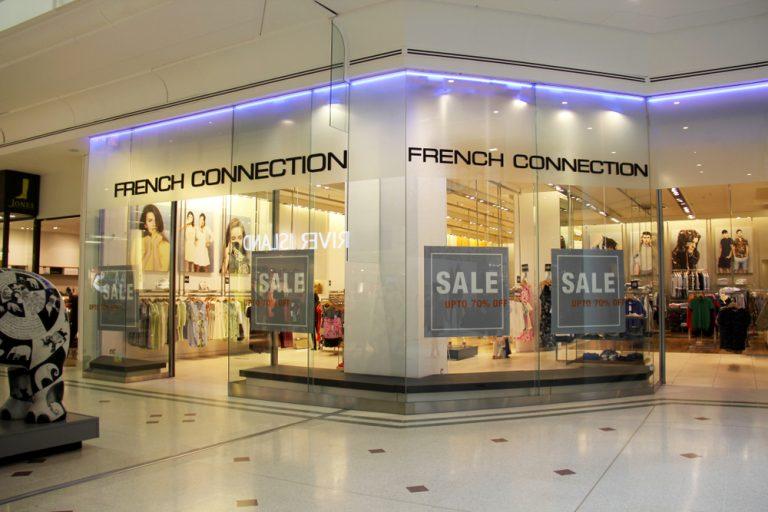
French Connection has announced a seven percent fall in sales for the six months to 31 July.
Overall revenue for the group fell 10.5 percent to £27.3 million and the fashion retailer is planning to close eight stores this year.
Chief Executive Stephen Marks said: “There is no doubt that progress has not been helped by the trading conditions in which we operate in the UK.”
“Given the continued deterioration of trading conditions on the UK high street, we have reviewed the underlying lease contracts of a number of loss-making stores that we are actively looking to exit but are currently unable to and have made a one-off provision for the onerous nature of those contracts,” he added.
“The retail business benefitted from the reduction in stores we have seen over the last year, however our remaining stores saw a seven percent reduction in like for like sales across the period reflecting the difficult trading conditions in the UK.”
“We continue to actively review our retail portfolio and expect eight stores to close this year, with two having already closed in the first half. In addition given the continued deterioration of trading conditions on the UK high street, we have reviewed the underlying lease contracts of a number of loss-making stores that we are actively looking to exit but are currently unable to and have made a one-off provision for the onerous nature of those contracts.”
French Connection has hired new management and design teams as the retailer hopes to compete with rivals such as Asos (LON: ASC) and Zara (BME: ITX).
The group maintains that it remains on track to be profitable by the end of the year and would consider restarting dividend payments.
In April, French Connection sold its 75 percent stake in clothing brand Toast to the Dutch firm Bestseller United A/S.
Shares in the group (LON: FCCN) are currently trading 6.19 percent at 47,00 (0846GMT).