


Ocado takeover: Davy Research ‘sceptical that a deal will happen now’
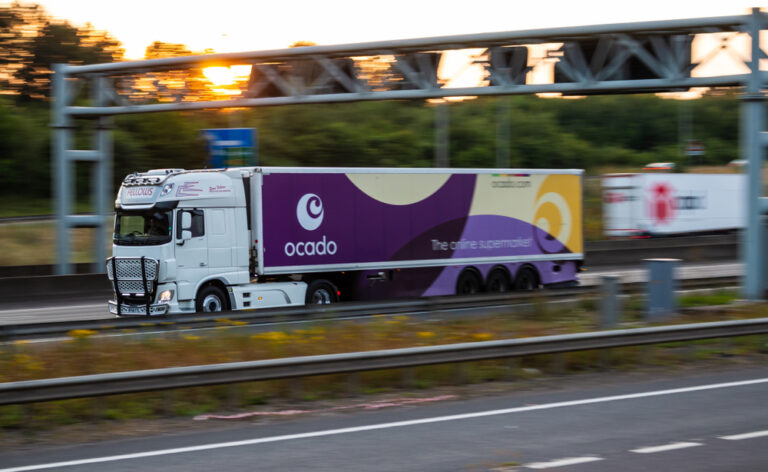
Ocado shares soared yesterday after reports by the Times suggested Amazon could be lining up a bid for the embattled food retailer and technology company.
An approach from Amazon would make sense as Ocado’s technology would bolster its distribution efficiencies as it ramps up grocery deliveries. Amazon is reportedly considering an 800p per share offer with Goldman Sachs and JP Morgan working on the deal.
Ocado’s tech solution business is expected to achieve 25% market penetration, and its warehouses provide attractive returns.
However, in the absence of any announcement from Ocado and Reuters reporting Amazon declined their approach for comment, the headlines yesterday may be no more than speculation.
Davy Research analyst James Musker has noted the conditions in which other UK tech companies have been acquired this year, and the difference with Ocado’s current situation.
Made.com, InTheStyle and Purplebricks were all acquired when they had run out of cash and were nearing administration.
Ocado will need cash to scale its solutions business, but Musker highlights the crunch point will not be reached until 2025. Musker suggests Ocado could indeed raise further funds without a buyer stepping in.
Amazon or any other acquirer may wait for Ocado to become cash-strapped and secure a better valuation.
For this reason, Davy Research says they are “sceptical that a deal will happen now.”
After a 30% rally yesterday, Ocado shares were down around 8% at the time of writing on Friday.
AIM movers: Pelatro contract success and weak advertising at Audioboom

Pelatro (LON: PTRO) says in its AGM statement that it has won new customers taking its annual recurring revenues to more than $7m, plus additional revenues of $1.7m from existing customers for this year. There is a pipeline worth $23m, including $5m for non-telecoms companies. The share price recovered 9.68% to 8.5p.
Telecoms components and systems supplier Filtronic (LON: FTC) says the low earth orbit contract won earlier this year has exceeded expectations and prospects for further contracts are positive. There are also prospects in the 5G market. Development contracts have been won for electronic warfare projects. Supply chain constraints are easing. The results for the year to May 2023 will be published on 1 August. The share price improved 5.36% to 14.75p.
Yesterday, Chamberlin (LON: CMH) revealed it has secured a €7.3m contract with a European automotive industry components supplier. This involves supplying turbocharger castings over eight years. Tooling starts next month and full production in July 2024. The share price rose 1.59% to 3.2p.
Mineral and Financial Investments Ltd (LON: MAFL) has agreed an extension to the delivery date of the feasibility study on the Lagoa Salgada project with its joint venture partner Ascendant Resources. In return Mineral and Financial Investments will receive 500,000 warrants from Ascendant Resources, exercisable at $0.20/share. The final delivery date is 3 August. The share price is 2.86% higher at 18p.
Podcast platform operator Audioboom (LON: BOOM) has been hit by poor advertising markets and it will not meet 2023 expectations. There were record monthly downloads in May. finnCap has suspended forecasts and is waiting for the interim results. The share price slumped 26.6% to 207.5p.
Following today’s trading statement by Hotel Chocolat (LON: HOTC), Liberum has downgraded its forecast for 2022-23 and it expects a £1.5m loss rather than a £800,000 profit. The 2023-24 pre-tax profit forecast has been slashed from £20.3m to £6m. This follows weaker fourth quarter trading and problems with the availability of Easter ranges. Inflation will hit future profitability. Guidance by the management is becoming more prudent. The share price is 12.2% lower at 121.5p.
Maritime surveillance systems supplier SRT Marine Systems (LON: SRT) is raising £3.2m through a placing at 50p and could raise up to £750,000 from a PrimaryBid offer. The share price fell 11.2% to 51.5p. The cash is required to fund growth. Revenues are expected to more than double to £70.9m and SRT is expected to move back into profit – £7.3m pre-tax profit is forecast.
Investment company RiverFort Global Opportunities (LON: RGO) made a loss in 2022 because of a reduction in the fair value of investments of £1.8m. The final dividend is maintained at 0.038p a share, which is more than covered by investment income. NAV fell by 10% to £10.6m (1.35p/share). The share price is 7.41% lower at 0.625p.
GSK shares rise after reaching Zantac settlement
GSK shares rose on Friday after announcing a settlement with James Goetz, who alleged Zantac caused cancer.
James Goetz filed a case with California state court claiming that using GSK’s Zantac heartburn medicine had resulted in cancer.
GSK and previous owners of Zantac have been gearing up for a series of court cases because the medicine contains NDMA, which is known to cause cancer when too much enters the body. Humans regularly consume NDMA in small amounts.
The case would have been potentially damaging for GSK, who said:
“The settlement reflects the Company’s desire to avoid distraction related to protracted litigation in this case.”
GSK shares were over 5% higher at the time of writing.
Sterling whipsaws and FTSE 100 falls as Bank of England makes surprise 0.5% rate hike

The Bank of England has voted to make a surprise 0.5% increase in benchmark interest rates to 5%. Consensus estimates were for a 0.25% rate hike.
The Bank of England voted 7-2 in favour of a 50bps rate hike citing concerns about stubbornly high levels of inflation.
“With inflation holding firm at 8.7%, the Bank of England had little choice but to press ahead with another interest rate rise,” said Rachel Winter, Partner at Killik & Co.
“This decision will lead to more pain for those on variable rate mortgages or with fixed deals about to expire, and disappointment for those hoping to borrow to buy a new property. Shares in housebuilders sagged on Wednesday as investors feared that further interest rate rises would reduce demand for homes.”
Some economists now predict the impact of higher mortgage rates and other borrowing costs will push the UK into recession.
In the immediate market, the FTSE 100 fell towards session lows and GBP/USD whipsawed as traders weighed the consequences for the UK economy.
FTSE 100 movers
Ocado was the standout performer on Thursday after The Times reported Amazon could be lining up a bid for the premium food retailer. Ocado shares were over 30% higher at the time of writing.
Concerns about the implications for the UK economy battered the FTSE 100’s domestically facing sectors.
Housebuilders were down heavily, as were the UK banks. Persimmon was off around 3% while NatWest, Lloyds and Barclays fell between 1%-3%.
A plethora of FTSE 350 traded ex-dividend and Airtel Africa was the FTSE 100’s biggest faller, down 6%, as the stock traded without the rights to a 3.27 cents dividend.
The significance of Innovative Eyewear’s tie-ups with Nautica, Eddie Bauer & Reebok
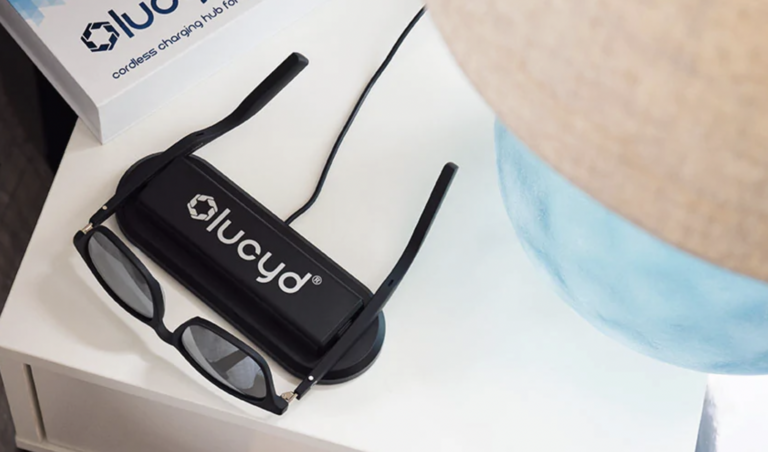
Tekcapital portfolio company Innovative Eyewear has secured promising licensing deals with Nautica, Eddie Bauer & Reebok, which will see Lucyd’s smart eyewear technology distributed through hundreds of leading activewear stores.
The agreements pay testament to not only Innovative Eyewear’s commercial prowess but also the attractiveness of their underlying technology, which provides access to ChatGPT generative AI.
Securing a licensing agreement with Reebok is the latest win for Innovative Eyewear. It can now look forward to its technology being utilised by one of the world’s leading sporting brands.
Innovative Eyewear has carefully selected brands that cover different areas of the sports and lifestyle market.
Reebok will appeal to the global mass market and a younger, trendier audience, while Nautica will cover the more sophisticated leisure consumer.
By securing agreements with leading activewear brands, Innovative Eyewear now has the opportunity for their products to be stocked in hundreds of stores globally and provide consumers with the opportunity to try Nautica, Eddie Bauer & Reebok brand smart eyewear powered by Innovative Eyewear technology.
Future sales
With the licensing agreements only recently inked, investors can look forward to sale figures in Innovative Eyewear’s future earnings releases.
To gauge the potential market opportunity and what future sales could look like, Innovative Eyewear has made comparisons to the smartwatch market.
Research predicts the smartwatch industry is set to reach US$44.91bn in 2023. Innovative Eyewear CEO Harrison Gross feels smart eyewear can mirror smartwatch growth as the adoption of smart eyewear technology accelerates.
Smart eyewear is a number of years behind smartwatches but should smart eyewear become anywhere near as successful as watches, Innovative Eyewear is set to benefit from substantial first-mover advantages.
AIM movers: Biome Technologies contract and poor flows for Falcon Oil & Gas

Biome Technologies (LON: BIOM) has been awarded a £452,000 contract to supply an induction furnace system to a manufacturer of scientific glass products. This is a new application. The installation should be completed in 2024, although some revenues may be recognised in 2023. The share price is 11.8% higher at 142.5p.
Offshore services provider Tekmar Group (LON: TGP) continues to rise on the back of the increased interim revenues announced yesterday. Management believes the company can reach EBITDA breakeven for the full year – based on forecast revenues of £40m. The share price is a further 8.8% rise to 12.375pp.
Sound Energy (LON: SOU) has received court papers confirming the withdrawal of the court case with the Moroccan tax authority. The $2.5m settlement compares with a claim of $23.95m. The share price rose 5% to 1.575p.
Quadrise (LON: QED) says that parts and spares have been delivered to Morocco and it is ready to recommence the demonstration test that was paused in May. The share price increased 2.12% to 1.6825p.
Falcon Oil & Gas (LON: FOG) reports that flow testing at the Amungee NW-2H (A2H) well in the Betaloo sub-basin, Northern Territory, Australia identified a potential skin inhibiting the flow of gas from the shale. The gas flowed at an average of 0.97mmcf/day over 50 days. Management believes this does not reflect the potential. The planned drilling programme will be modified to reflect the additional knowledge. The share price declined 33.5% to 6.65p.
Energy projects developer Oracle Power (LON: ORCP) is raising £363,000 at 0.1p a share. This will finance the development of the company’s joint venture green hydrogen project. Global Investment Strategy has been appointed joint broker. The share price slipped 19.2% to 0.105p.
Alpha Financial Markets Consulting (LON: AFM) exceeded expectations in the year to March 2023, but the chief executive warns that there is increased competition and lengthening sales cycles due to overcapacity in the market. Even so, management remains confident that it can achieve pre-tax profit of £42.6m this year, down from £44m in 2022-23. The share price declined by 17.4% to 412.5p.
Hornby (LON: HRN) swung from an underlying pre-tax profit of £3.2m to a loss of £1.1m. That is before a £2.92m goodwill impairment charge and costs of £910,000 related to Hornby World customer experience. Hornby warned in April that it expected to make a loss. Revenues were lower than previously expected. Management hopes that the operational gearing on growing revenues will help Hornby to move back into profit. The share price fell 11.1% to 20p.
Ex-dividends
Alliance Pharma (LON: APH) is paying a final dividend of 1.18p a share and the share price is 1.15p lower at 53.05p.
Duke Royalty (LON: DUKE) is paying a dividend of 0.7p a share and the share price fell 0.5p to 32.75p.
Flowtech Fluidpower (LON: FLO) is paying a final dividend of 2.1p a share and the share price is unchanged at 105p.
GB Group (LON: GBG) is paying a final dividend of 4p a share and the share price fell 5p to 245.6p.
Gooch & Housego (LON: GHH) is paying an interim dividend of 4.8p a share and the share price is 12p lower at 618p.
Learning Technologies Group (LON: LTG) is paying a final dividend of 1.15p a share and the share price declined 1.55p to 89.65p.
Rurelec (LON: RUR) is paying a special dividend of 0.2p a share and the share price fell 0.175p to 0.625p.
RWS Holdings (LON: RWS) is paying an interim dividend of 2.4p a share and the share price declined 6p to 247.2p.
Tribal (LON: TRB) is paying a final dividend of 0.65p a share and the share price fell 1.45p to 37.5p.
Ocado shares soar on takeover speculation
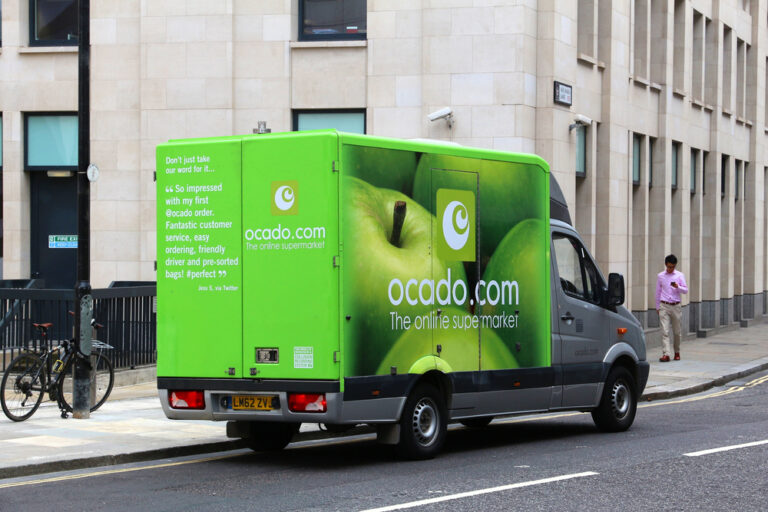
Ocado shares surged on Thursday as takeover speculation built after The Times reported that Amazon could be eyeing the premium food retail and technology company.
Ocado shares were over 20% higher at the time of writing on Thursday.
The company has reported falling average basket sizes, and its premium food delivery offering has struggled after the pandemic’s boost.
However, a potential bidder will be more interested in Ocado’s food distribution technology and solutions business with global operations and a blue-chip client base.
“Bid chatter helped lift web-based food delivery firm Ocado. The shares have been about as flat as an open bottle of lemonade since the pandemic but third parties, including reportedly Amazon, may still see value in the brand, technology and infrastructure,” said AJ Bell head of financial analysis Danni Hewson.
“Ocado’s hopes of becoming an online groceries partner to businesses across the globe has only had limited success and shareholders may be open to a bidder putting them out of their misery.”
Ocado shares were trading at 522p, up 21% shortly before 10 am on Thursday.
Sound Energy shares rise as tax settlement finalised

Sound Energy shares opened higher on Thursday after announcing they had received written confirmation from a Moroccan court that a tax claim against them has been finalised.
Sound Energy announced the withdrawal of all tax claims against it in the final results earlier this year – today’s announcement confirms written acknowledgement by the Moroccan authorities.
In a short statement that offered little detail, Sound Energy said they ‘the court has now confirmed in writing its judgement – with both remaining court cases now formally closed.’
In full-year results issued in May, Sound Energy said:
“The ongoing dispute with the Moroccan authorities over tax continued to be an unhelpful drain on the Company’s time and resources.”
Sound Energy is developing LNG assets in Morocco, including the advanced Tendrara project. Having undergone extensive funding activities this year, Sound hope to deliver its first revenue in early 2024.
FTSE 100 falls as 6% interest rates weighed

The FTSE 100 felt the pain of millions of households across the UK on Wednesday as hotter-than-expected inflation spelt trouble for mortgage holders and highlighted the ongoing pressure on household budgets.
The FTSE 100 was trading down 0.25% to 7,549 at the time of writing.
UK inflation for May came in at 8.7%, much higher than the 8.4% estimated by economists. Higher inflation means the Bank of England will have to maintain its hawkish stance and push on with increasing borrowing costs.
“Markets had been erring on the side of caution when it came to pricing in how quickly UK inflation is falling, but the news that there’s been no change in the headline CPI rate will send something of shiver through even the hardiest spectator,” said Danni Hewson, AJ Bell head of financial analysis.
“Inflation had been expected to fall – at least a bit – but it hasn’t obliged, remaining stubbornly sticky and cementing the prospect of a rate rise tomorrow as well as raising expectation that the hike will be higher than had been previously anticipated.”
Traders are now pricing interest rates as high as 6.2% before the end of the year.
The Bank of England’s commentary released alongside the interest rate decision tomorrow will be pored over for hints of the future rate trajectory. It is a near certainty the Bank of England will hike by 0.25% to 4.75% at midday tomorrow.
Pound weakness
The recent GBP/USD rally appears to have priced in higher interest rates, and traders booked profits as UK economic uncertainty increased.
The weaker pound supported overseas earners and offset some losses in UK domestically facing shares.
The FTSE 100’s top risers included BP, Shell and CRH.
FTSE 100 movers
The FTSE 100 is typically driven by overseas economies such as China, with the UK economy having little impact on its performance. Not so today when the focus was on domestic sectors and the impact of higher rates.
Housebuilder shares were the most obvious victim of today’s inflation data, and the threat of higher mortgage rates sent Persimmon, Taylor Wimpey and Barratt Developments sharply lower.
Berkeley Group Holdings was down over 3% despite releasing upbeat full-year results on Wednesday.
Even banks that benefit from higher interest rates are now being consumed by concerns about the health of their mortgage businesses.
Deterioration in economic conditions may force UK banks to increase provisions for bad debts and eroded profits in the coming quarters.
NatWest was down 3.4%, while Lloyds dipped 1.7%.