Springfield Properties – Scotland’s only quoted housebuilder awaits market recovery while its shares look cheap

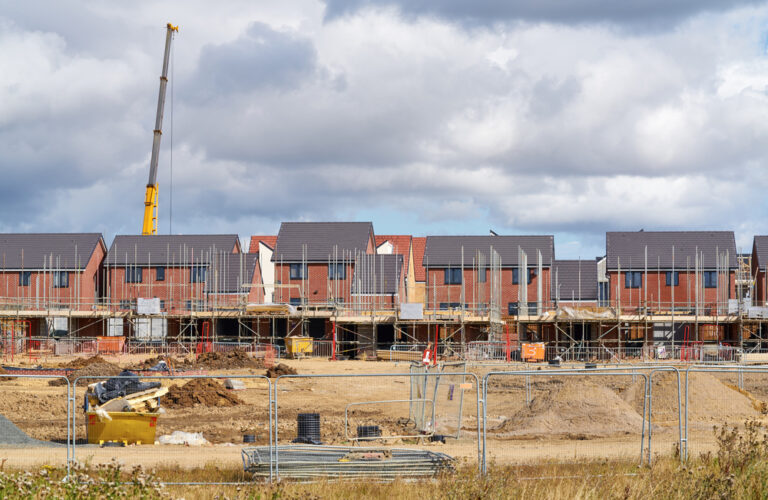
The Springfield Properties (LON:SPR) group is one of the largest homebuilders in Scotland, constructing high quality homes from the highlands to the Scottish Borders. 

The year to end May 2022 saw a record year with 1,242 completions.

However, since last summer times have been somewhat challenging for the company.

From its shares hitting 155p last April, by the middle of last month they had more than halved to just 71p.

The company, which delivers private and affordable housing, issued its first half year Trading Update in mid-December as a prelude to the latest Interims that have just been reported.

That update noted that despite a strong order book and sustained demand as it started the 2023 financial year to end May, the subsequent rise in the general economic pressures and higher interest rates had slowed its reservations down considerably.

Despite expectations of some £350m of revenues for the year, it is expecting that the 2024 year will see a 10% easing.

The six months to end November 2022 reported an 85% rise in first-half revenues to £161.9m, while its adjusted pre-tax profit was 3% higher at £6.6m (£6.4m), leaving earnings 8% lower at 4.68p (5.09p) per share.

CEO Innes Smith stated that:

“This has been a challenging period for the housebuilding industry with significant headwinds having a combined effect, which largely offset the excellent growth that we achieved in private housing. The UK government’s mini-budget in September reduced the confidence of homebuyers and the cost of mortgages increased significantly.

We have taken decisive action in response to these conditions. We’ve paused entering new long-term affordable housing contracts and reduced our fixed cost base. We’ve made a strategic land sale on good terms; reduced land buying activity; and are approaching new site openings with caution. We are also encouraged by the signs that market conditions are improving.

While it is too early to call a recovery, the green shoots we are experiencing and which are being seen across the industry, through increased reservations and visitor levels, are encouraging.”

Analyst’s Opinion – Target Price of 129p

Analyst Greg Poulton, at the group’s brokers Singer Capital Markets, is impressed by the strong land bank and rates the shares as a Buy, looking for 129p against the current 88p.

His estimates for this year to end May are for £340.0m (£257.1m) revenues and £17.0m (£20.8m) adjusted pre-tax profits, with 11.3p (15.3p) earnings and paying a 3.00p (6.20p) dividend per share.

For the 2024 year his figures are £291.7m sales, £20.0m profits, 12.4p earnings and a 5.00p dividend.

Alastair Stewart at Progressive Equity Research is looking for £339.5m sales this year, similarly a £17.0m profit showing 11.4p earnings and a 3.10p dividend.

For the coming year he has pencilled in £291.0m revenues, £20.2m profits, 12.5p earnings and a 5.10p per share dividend.

He too respects Springfield’s land bank, giving it a platform for recovery as well as for short-term land sales.

Conclusion – Scotland’s only quoted housebuilder deserves a premium rating

This £104m group’s shares, at the current 88p, yield a very attractive 5.2%, while they trade on less than 7 times prospective earnings.

A rise back up over 110p could easily occur in 2023.

Finsbury Food Group – higher prices drive revenues while volumes are broadly flat

Go into any food retailer in the UK and it is a fair bet that it is selling products baked by the Finsbury Food Group (LON:FIF).

The bread for your morning toast, ready for butter-spreading or egg-dipping. The candle-filled centrepiece for a memorable celebration. The buns, muffins and other treats that turn teatime into quality time – that is what this group is all about.

And remember it is ‘hot cross buns time’ soon!

A good interim showing

In the group’s first half to the end of December 2022 it increased its sales impressively, up 14.7% at £190.9m, leading to expectations of another £210m in the current six months to end June.

The pre-tax profits at the half-way were £6.1m (5.7m), while earnings were 3.7p (3.2p) and the interim dividend was 0.87p (0.83p) per share.

CEO John Duffy stated that:

“Finsbury has once again delivered a robust performance in the first half to December 2022. We have seen a stable performance in UK retail, ongoing recovery in UK foodservice and continued growth in our Overseas division all despite the challenges of continued significant input cost inflation and falling consumer confidence. 

Looking ahead, we expect to continue to navigate a challenging macro environment as inflationary pressures look set to persist with the short-term outlook remaining difficult to predict. However, Finsbury is now a nimble and adaptable group and I am confident that we remain well placed to continue successfully executing on our strategy.”

The Business – 98 years old

It is one of the leading speciality bakers in the UK, with a product range taking in large premium and celebration cakes, small snacking bites and slices, rolls, muffins, morning pastries, gluten free breads, cakes and morning goods. 

This group supplies to the major multiple retail grocers, ‘out of home eating’ venue operators and other foodservice providers.

It has bakery division sites in East Kilbride, Salisbury, Hamilton, Manchester, Cardiff, Sheffield and Pontypool.

There is also an 85% owned operation in Poland through which it supplies and distributes its own and also third-party products.

At the end of last month, it acquired the Coatbridge, Scotland-based Lees Foods company in an earnings-accretive £5.7m cash deal. 

Two main market segments

In the Bread and Morning Goods market, the company bakes and supplies artisan and speciality bread, buns and rolls, hot-cross buns, muffins, doughnuts, and much more, both pre-packed or for in-store bakeries. 

In the Cake sector the group is renowned for its celebration cakes, round cakes, cake bites, cake bars and seasonal cakes, before adding the Lees Foods range of meringues, teacakes and snowballs.

Analyst Opinion – worth 135p a share

Estimates by analyst Alex Chatterton at Panmure Gordon suggest sales to end June this year of £399.1m, with adjusted pre-tax profits of £16.1m, generating 11.0p in earnings and paying out a 2.6p dividend per share.

For the coming year his figures are going for revenues of £425.7m, while profits could rise to £17.6m, with 11.3p earnings and a 2.6p dividend.

Chatterton has already raised his Target Price twice in 2023, from 127p, to 130p and recently up to 135p a share.

Conclusion – a takeover possibility

This leader in its various markets has in the last year been implementing efficiency improvements which should prove beneficial.

It has a resilient business model and its shares at 99p are on a significantly undervalued rating, while offering a big upside, especially if it succumbs to a takeover.

Marechale Capital gains from takeover of Future Biogas

3

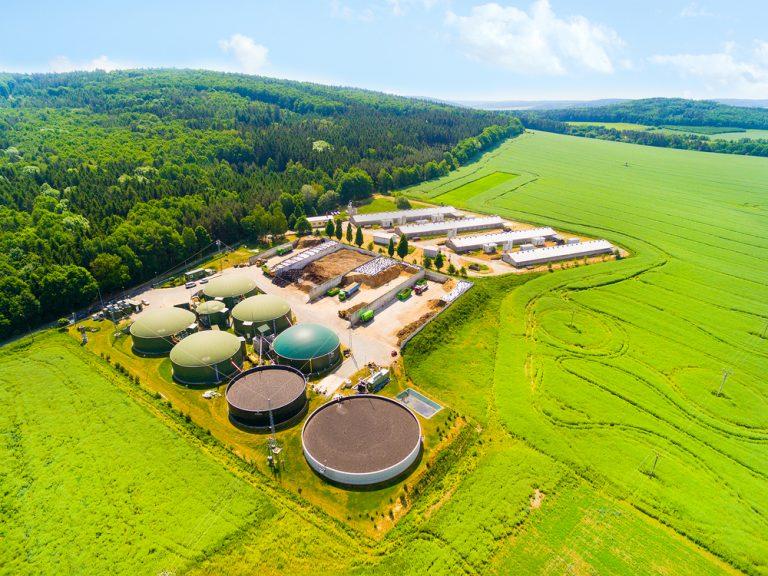
AIM-quoted corporate finance adviser Marechale Capital (LON: MAC) has made a gain on its stake in biogas plants developer and operator Future Biogas Group after it was acquired by 3i Infrastructure (LON: 3IN).

The shares were acquired in 2010-11 for £11,600 after Marechale Capital provided advice. The total amount received was £218,000. However, this is below book value. Pro forma net cash is £417,000.

Listed investment company 3i Infrastructurehas raised £100m via a placing and set aside £28m to acquire Future Biogas. It will combine it with Infinis, an electricity generator from landfill gas, which acquired former AIM company Alkane Energy in 2018. Infinis is also developing battery storage projects.

Future Biogas previously attempted to join AIM, but there was not an appetite for the business when it tried to raise cash. Future Biogas planned to move from developing projects and selling them on to retaining ownership of some of the plants it develops.

In the year to May 2022, revenues fell from £15.8m to £13.8m. Future Biogas had 11 contracts at that time and the average contract length was 11.6 years. The pre-tax profit reduced from £249,000 to £17,000, even after a £205,000 disposal gain. There were additional costs related to the attempted flotation. Capitalised development costs were £1.17m during the period. There was £4.1m in cash at the end of May 2022.

Better prospects for Samarkand

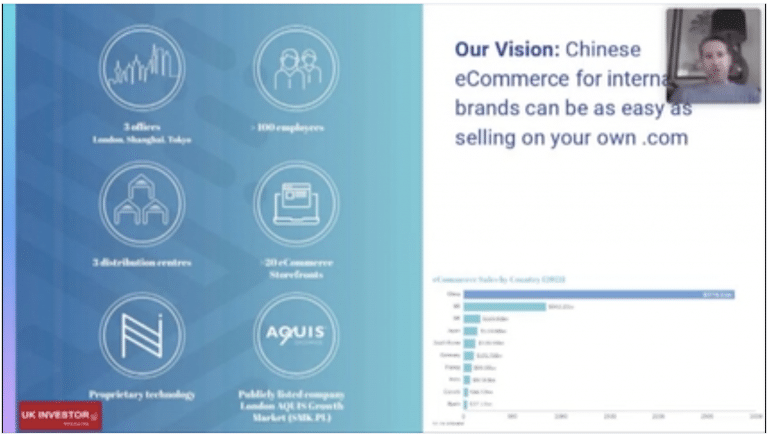
Things are looking up for Aquis-quoted Samarkand (LON: SMK) since the easing of Covid restrictions in China. Although there was a short-term rise in infections, consumer confidence is improving since Chinese New Year. Samarkand could be profitable in the next financial year.

Savings have increased sharply over three years and there is pent up demand. The Chinese government is keen to boost consumption. Partner brands using the company’s Nomad software platform are planning for growth this year and more premium beauty brands have been added.

Samarkand’s own brands are trading well. Napiers beauty and skincare products have been launched in China. Probio7 and fertility brand Zita West are growing.

This year’s figures are likely to be in line with expectations with a full year loss of £4.1m forecast, following a £2.18m loss in the first half. The Samarkand share price fell 2.5p to 42.5p. The March 2021 placing price was 115p.

FTSE 100 treads water with US markets closed, Lloyds results eyed

The FTSE 100 was treading water on Monday with US equity markets closed for the President’s Day holiday providing little new impetus for major repositioning in European stocks.

“Volumes are set to be more muted during the sessions in Europe given that Wall Street is closed for the President’s Day holiday, so traders are likely to be searching around for a bit of a sense of direction today, looking ahead to fresh data out this week,” said Susannah Streeter, head of money and markets, Hargreaves Lansdown.

There was strength in Asian markets overnight after the Chinese central bank kept rates on hold as their economy emerges from a prolonged period of covid restrictions.

 “Asian stocks were higher as China’s central bank kept rates unchanged for a sixth consecutive month – hopes for a continuing recovery in demand from the world’s second largest economy helped support commodity prices,” said AJ Bell investment director Russ Mould.

Higher commodity prices helped provide support for miners sending Rio Tinto 1.2% higher while Anglo American added 1.7%.

Lloyds shares were 1% higher ahead of the release of their full year results on Wednesday. Both NatWest and Barclays had disappointing market reactions to their recent releases with shares falling heavily.

Tesco

Tesco shares were flat after reports it was exploring a potential demerger of their banking unit. A sale of their banking unit would allow for greater focus on their core operations at a critical point for supermarkets in the cost-of-living crisis and continued growth of the discounters, Lidl and Aldi.

“We’ve seen numerous demergers in recent years as companies streamline to have a sharper focus and unlock hidden value in their business. Doing less is more, as it provides management with an opportunity to make small incremental changes to operations and have the core business running like a well-oiled machine,” said Russ Mould.

 “With that backdrop in mind, one should expect to see many companies like Tesco concentrate on what they do best and find someone else to take over activities on the periphery.”

 “Offloading Tesco’s banking arm makes perfect sense. Supermarkets should concentrate on grocery and core essentials that fall under general merchandise, such as frying pans, greetings cards and a small line of toys to keep the kids happy while their parents shop. Things that people can pop into their basket without much thought.”

Tristel back to double digit growth

1

Medical disinfection products supplier Tristel (LON: TSTL) is back to past growth rates with all the regions growing in double digits, helped by price increases. The UK was the fastest growing market.

In the six months to December 2022, revenues were 15% ahead at £17.5m and the growth rate was greater if discontinued products are excluded. Pre-tax profit improved from £2.13m to £3.08m. The tax charge is higher, so earnings growth was slower. The interim dividend is maintained at 2.62p a share. Net cash is £8.42m.

Medical device decontamination sales were one-fifth higher at £14.7m, while cache surface disinfection sales were 13% ahead at £1.8m. Sales of other products fell.

FDA

Progress is being made by AIM-quoted Tristel with the FDA approval for medical device decontamination product DUO ULT. The latest FDA submission will be made before the end of March and the FDA has 75 days to announce its decision. That means that there will be no contribution in the current financial year even if approval is gained.

Tristel is spending £3m on FDA approval. To reflect that it has renegotiated the US distribution agreement with Parker Labs. The FDA approved royalty has been increased to 30% of gross profit, while the existing EPA approved royalty is raised to 20% of revenues.

There are more benefits to come from price increases in the second half. finnCap expects underlying pre-tax profit from £4.5m to £6m. Given the strong start to the year and the second half normally being stronger, that should be relatively easily achievable with potential for an upgrade later in the year. At 330p, the shares are trading on 31 times prospective earnings. The cash pile will continue to build up.

The existing business can continue to grow strongly, but FDA approval for DUO ULT would provide an additional boost, with other products likely to follow. News concerning FDA approval is likely to provide upward momentum for the share price.

AIM movers: Proteome Sciences revenues grow and Goldplat returns from suspension

0

Proteome Sciences (LON: PRM) says 2022 revenues were 53% ahead at £7.8m with particularly strong growth from the reagents business thanks to a milestone payment from Thermo Scientific. Profit is improving. The contract proteome services provider had cash of £4m at the end of 2022, up from £2.4m. The share price jumped 27.2% to 4.77p.

Mosman Oil & Gas (LON: MSMN) has received a sacred site clearance certificate for EP 145 in the Amadeus Basin, Northern Territory, Australia. The prospect could have gas, helium and hydrogen. The share price rose 13% to 0.065p.

Corcel (LON: CRCL) has broadened its strategy to include oil and gas as well as mining. There are also plans for investments in Brazil and other potential transformative acquisitions. A joint venture is being set up for the Asian interests. Ground magnetics have provided drill targets for the Mt Weld rare earths project in Western Australia and an eight-hole drill programme has been designed. Drilling could start by March. The share price increased 9.62% to 0.285p.

Keystone Law (LON: KEYS) says full year profit will be marginally ahead of current expectations of £8.5m. There are a total of 507 fee earners even though economic uncertainty hampered recruitment. The full year results will be published on 25 April. The share price is 8.72% higher at 530p.

Verditek (LON: VDTK) says that the termination of the solar equipment supply agreement with Bradclad takes effect from 3 March. Verditek is trying to recovery cash owed. The share price dived 24.1% to 0.55p.

Inland Homes (LON: INL) has renegotiated banking covenants and the share price jumped on Friday. Some of that gain has been lost with a 19.2% fall to 12.125p this morning. HSBC loan covenants relate to tangible net worth and gearing. They will revert to the original level from the end of June. A waiver of a historic breach of gearing on the Secure Trust loan has been secured and extended to the end of March.

 Tekcapital (LON: TEK) has launched a £2.25m placing at 16p a share. That sparked a 16.1% decline in the share price to 17p. The cash will be invested in investee companies with £600,000 to help MicroSalt build up inventories and £1m to buy autonomous shuttles for driverless vehicle technology developer Guident’s clients. MicroSalt is planning to float on AIM.

Gold recovery company Goldplat (LON: GDP) shares returned from suspension following the publication of accounts for the year to June 2022 and a second quarter update. The share price immediately fell, although it has recovered slightly, but it is still down 11% to 9.125p. The full year figures were as expected with earnings of 2.3p a share. A deal has been secured with DRD Gold in South Africa to treat gold-enriched soil, plus other tailings. Problems with electricity supply in South Africa is the major problem. There are plans to set up a processing facility in Brazil.

The role of trustees in diffusing family conflicts following inheritance

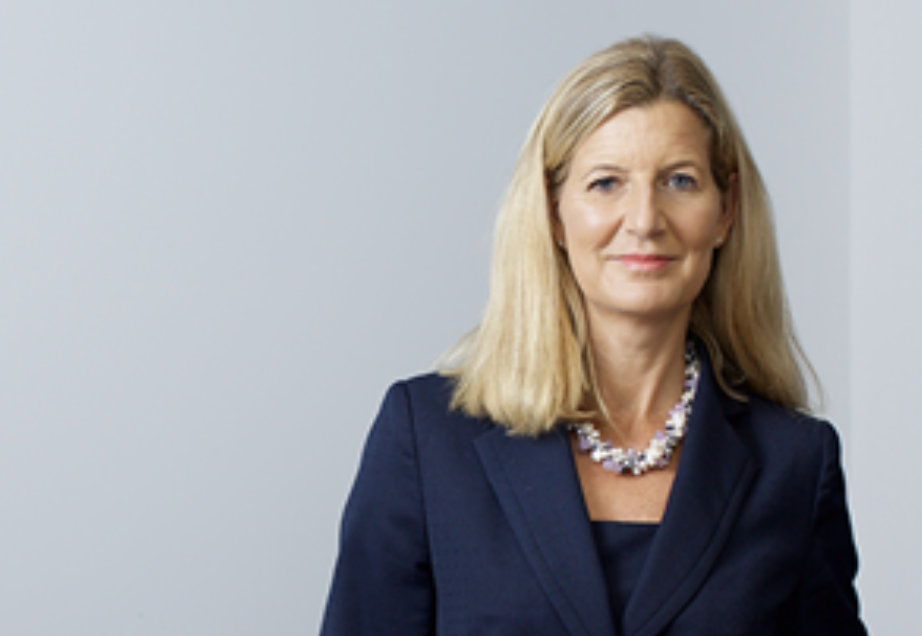
By Julie Kleis, Director of RBC Wealth Management’s Fiduciary Specialist Team in the British Isles

Being a beneficiary of a trust is often a fortunate position to be in. But inheriting wealth can come at a cost. While a beneficiary may suddenly find themselves free of financial concerns and empowered to support passion projects or charitable causes, they may be inheriting more than just money.

Having worked hard to build a future for their family, wealth creators tend to hold strong views on how their assets should be managed, both during their lifetime and after they have passed away. Yet beneficiaries from younger generations may see things differently.

Julie Kleis

For example, beneficiaries may seek to distance themselves from wealth derived from certain industries or even wish to remove association to the wealth altogether. These reactions to wealth can lead to conflict and emotion.

Disharmony among the beneficiaries themselves can also occur. We recently worked with a family where a wealth creator had established a trust to support their grandchildren’s education. There were three children, however only two of the three had children of their own. Following the death of the wealth creator, the third child, who had not received support from the trust in the same way as their siblings approached the family and trustees to seek compensation for their ‘fair share’. 

If such fractures are magnified, families should brace for potentially disastrous consequences, including strained relationships and assets being split and losing value in the process. If the conflict leads to litigation, it’s likely to be damaging and counter-productive, whatever the result.

The key to limiting conflict as a beneficiary is to be open and honest in all communication with the settlor, trustees and other beneficiaries. They should be clear about their goals, values and priorities, and actively listen to others’ points of view.

Trustees play a vital role in managing the conflicting opinions and wishes of beneficiaries. As stewards of the trust’s assets, their goal is to ensure the trust’s wealth is preserved and used for the greater good.

This can mean having difficult conversations. For example, it’s not unusual for the trustees to be asked to take on the sensitive task of telling the wealth creator’s children to sign a prenuptial/postnuptial agreement to prevent the money made during their lifetime becoming embroiled in divorce settlements.

All too often, beneficiaries lack an adequate understanding of what a trust is for and how it works, leading to unrealistic expectations and challenging conversations.

While trustees own the assets and have the ultimate control over what happens to them, they are in fact there to offer beneficiaries advice and support, to encourage their ideas for how to use the wealth, and to help them get what they want from the settlement, as long as it aligns with the principles and direction dictated by the settlor, and the long-term sustainability of the wealth.

A trust is not a legal entity; it’s a relationship. And like any relationship, it requires open and honest communication. By working with trustees openly and honestly, we can find the best way of passing it from generation to generation to benefit the whole family.

F3 Uranium’s pursuit of clean power and shareholder value creation

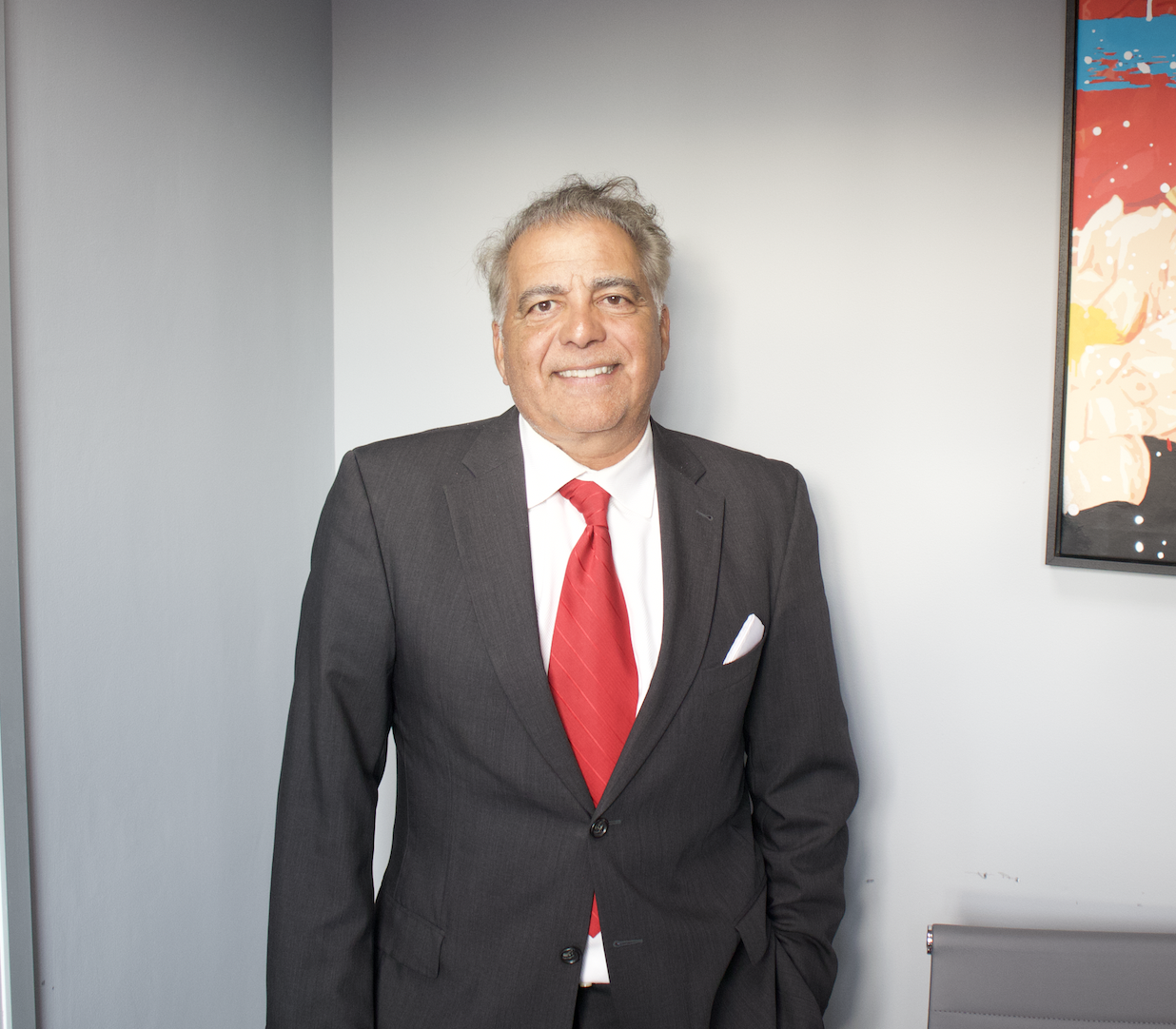
F3 Uranium’s CEO Dev Randhawa’s unerring mission is to deliver growth for his shareholders. 

We recently met with the F3 Uranium CEO in London and enjoyed rigorous discussion about the need to increase nuclear power, uranium market dynamics and F3’s recent Patterson Lake North discovery. Randhawa was particularly chipper when discussing their recent high-grade uranium discovery and the significance of the grades encountered.

Dev Randhawa is a massive proponent of nuclear energy’s ability to help meet the world’s future energy demands and feels his company, F3 Uranium, has the potential to be instrumental in securing the uranium supply to facilitate nuclear power generation.

“I believe we need cheap, clean power; that’s what nuclear power is” – Dev Randhawa

Dev Randhawa, F3 Uranium CEO

Despite his very specific interest in nuclear power, Randhawa is realistic about nuclear energy’s place in a diverse energy generation mix. 

It is now clear no one clean energy source can solely meet the world’s energy demands. However, nuclear provides many benefits over other forms of energy.

The first benefit of nuclear power the F3 Uranium CEO highlights is cost. Dev explains that once a nuclear energy plant is established, input costs are very low and resultant energy is cheap.

The second relates to the reliability of nuclear compared to renewables sources. As demonstrated here in the UK in recent years, although wind and solar inputs costs are zero, there is no guarantee the sun will shine or the wind blows.

F3 Uranium

F3 Uranium is a uranium project generator and exploration company with 16 projects across the Athabasca Basin in Canada. The region is famous for the world’s highest grade uranium discovery, the MacArthur Lake.

F3’s close proximity to premiere uranium producers means they have access to extensive infrastructure and improved project economics. Dev highlights the benefits of operating in an area near uranium processing plants.

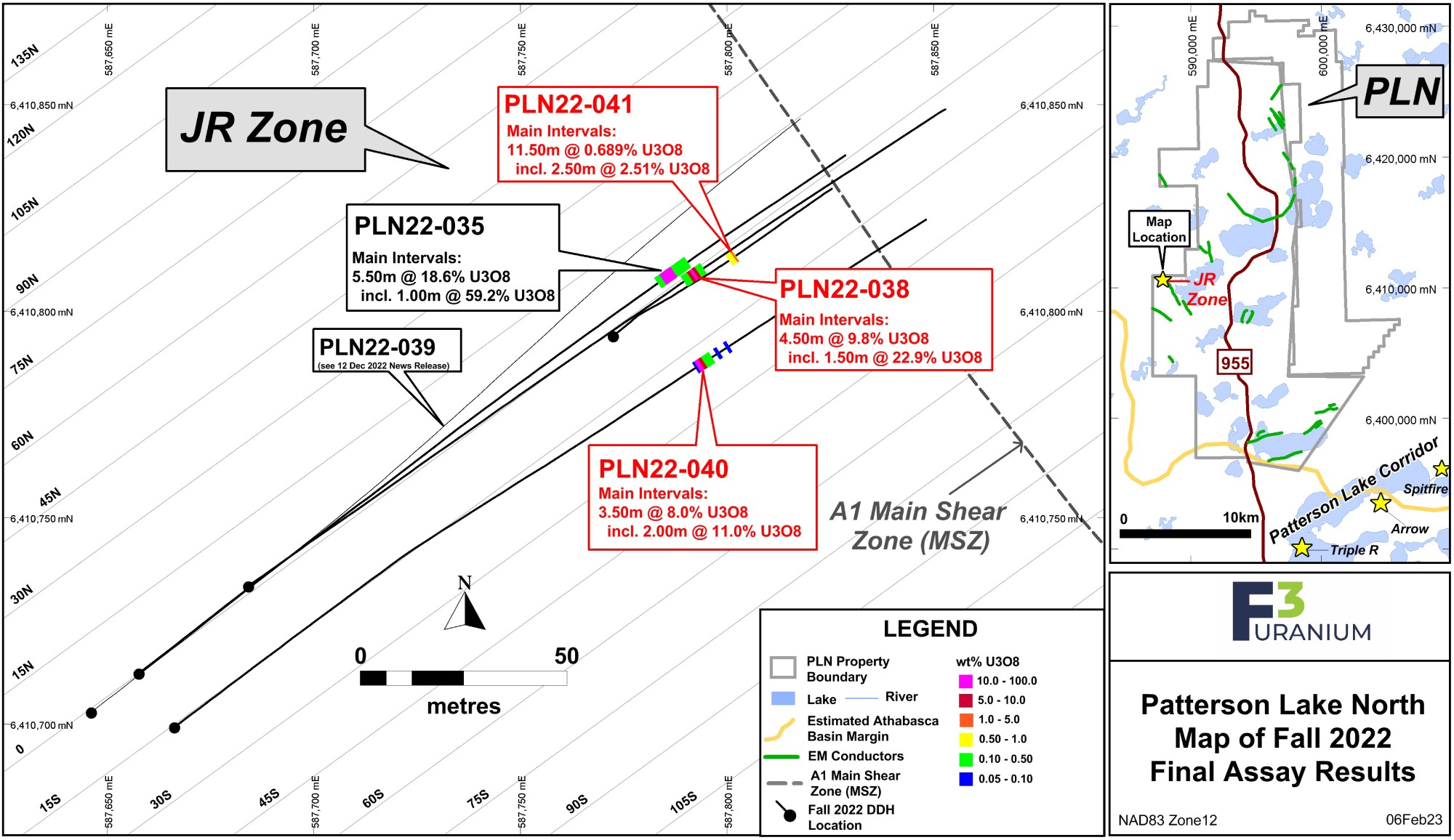
Although all 16 projects have been identified as potential valuation opportunities, the focus is on their Patterson Lake North (PLN) project. The importance of PLN was evident and our conversation with F3 centred on this asset.

In late December 2022, F3 Uranium announced assay results at the PLN project that encountered one continuous 15.0 m interval averaging 6.97% U3O8 including a high-grade 5.5 m interval averaging 18.6% U3O8. In addition, the assay revealed an ultra-high core of 59.2% over 1.0m.

F3 Uranium’s shares soared on the news and Dev detailed why.

The geology in the Athabasca is very different to other uranium-rich region such as Niger or Australia. 

Athabasca uranium deposits are typically concentrated in compact formations and inconsistently located along a corridor. This means finding the deposits in Athabasca is trickier than in other jurisdictions, typified by continuous mineralisation formations.

The value in Athabasca uranium deposits lie not in their size, but their grade.

And the F3 Uranium team has a history of high-grade discoveries.

F3 Uranium Technical Team

Randhawa has ensembled a world-class technical team with recent success of commercially viable uranium discoveries in close proximity to F3’s assets.

F3 Uranium’s technical team was instrumental in the Triple R discovery which has the potential to be one of the lowest cost uranium mines in the world. The current Triple R resource is 2.68mt at 1.94% U3O8.

F3 believe an experienced technical team is crucial for shareholder value creation.

Should the current PLN programme be anywhere near as successful as Triple R, the implications for F3’s shareholders will be profound. It will achieve the growth Dev has set out to achieve. 

“The question is,” Dev says, “is how many beads of uranium we will find. We’re not going to know that until at least 50 holes have been drilled.”

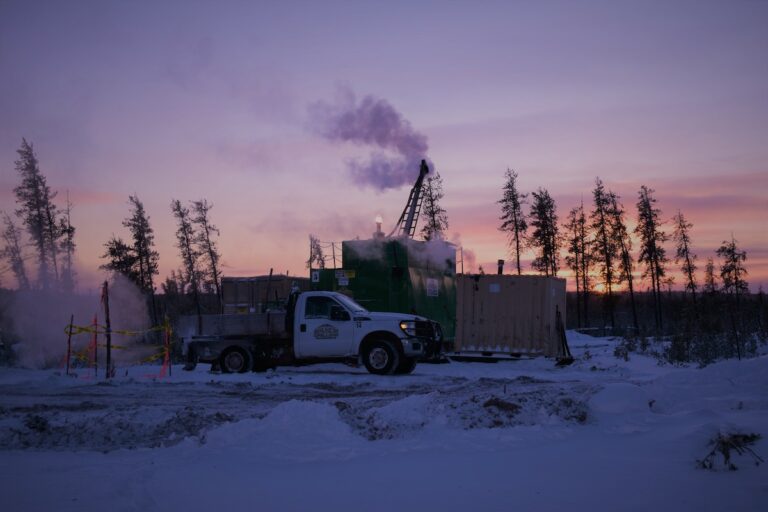
The drill campaign currently being executed by F3 Uranium is an exciting period for the team and their investors.

F3’s share price reacted positively to early results from PLN and have since retraced, possibly providing an entry for investors seeking to embark on the F3 journey.

The presence of high-grade uranium at PLN has proved they have identified a highly prospective area. The next stage is establishing the size of a potential resource. 

We ask the future plans for F3 and his strategy, should PLN prove to be an economically viable uranium producing mine. Dev reminds of us F3’s business model as a project generator but doesn’t rule out a scenario where PLN is developed by F3 beyond the early exploration phase. 

The model dictates once F3 has extracted as a much shareholder value from the PLN project using F3’s internal resources, a partner is brought into to continue the journey towards production.

F3’s management have deep experience inking agreements with Korean and Japanese corporation and will know how to secure value in any PLN partnership.

Crystallising the value in PLN will be a milestone for F3 which would provide the liquidity to turn their attentions to one of their other 15 projects.

Tekcapital secures growth capital for MicroSalt and Guident

Tekcapital has secured £2.25m growth capital to be used to accelerate growth of their portfolio companies, namely MicroSalt and Guident.

The oversubscribed placing will provide MicroSalt with £0.6m to help build commercial inventory as the food technology company prepares for their IPO.

Guident will be allocated £1m to purchase autonomous shuttles for their autonomous vehicle safety technology clients. Guident will also further develop their regenerative shock absorbers. Guident’s regenerative shock absorbers capture irregularities in roads and braking forces to help increase the range of electric vehicles.

Tekcapital will use the remaining funds for working capital.

The placing was completed at 16p with £2.25m raised before expenses.

“We are pleased to announce this oversubscribed offering to facilitate the further good progress of our portfolio companies,” said Dr Clifford Gross, Chief Executive of Tekcapital.

Tekcapital shares had traded as low as 16.70p early on Monday but the dip was bought into and TEK shares traded as high as 18p at the time of writing.