BT Group shares rose 0.3% to 181.6p in early morning trading on Friday, after BT Group announced the Competitions and Markets Authority (CMA) had approved a joint-venture between the company and Warner Bros to create a new sports offering for the UK and Ireland.
The approval is set to allow BT and Warner Bros to complete the formation of the joint-venture over the next several weeks, and for each company to transfer their assets into the new group.
The operation will join BT Sport and Eurosport UK, providing the joint-venture with one of the most expansive portfolios of sports rights across the UK and Ireland market.
“It’s great news that the CMA has approved the new JV that we are forming with Warner Bros. Discovery, combining the very best of BT Sport and Eurosport UK, to create an exciting new offer for live sport programming in the UK,” said BT Consumer Division CEO Marc Allera.
“Today is a huge milestone, as we now look toward day one of the new business, which we hope to be in the coming weeks.”
BT Group added that BT Sport and Eurosport will initially retain their separate brands and product propositions in the market, before the companies are joined together under a single brand in the coming months.
“Combining the capabilities, portfolios and scale of BT Sport and Eurosport UK will be a big win for fans in the UK & Ireland, offering a new destination that will feature all the sport they love in one place,” said Warner Bros Discovery Sports Europe managing director Andrew Georgiou.
“We now look forward to closing the transaction and having the opportunity to further engage all stakeholders in the process of forming and developing the JV.”
BT Group confirmed the board of directors of the joint-venture would be equally represented between the executives of BT Group and Warner Bros, with Marc Allera nominated as the first appointed chairperson by shareholders on a rotating basis, and Andrew Georgiou selected as the new management and delivery leader.
Beauty brands supplier Brand Architekts (LON: BAR) expects an 11% decline in 2021-22 revenues to £14.2m – even with a one month contribution of £800,000 from Innovaderma. The group is loss-making, although there should be cost savings to come from integrating Innovaderma. Net cash is £11.3m. The share price dived 19.1% to 46.5p.
Mattresses retailer eve Sleep (LON: EVE) slumped 13.5% to 0.8p as sales decreased by 17% in the first half. Management says the market fell by 30%. France is holding up better than the UK. Trading is improving, though. There was cash of £1.5m at the end of June 2022 and eve Sleep had drawn down £900,000 of working capital facilities. A small number of expressions of interest in the company are undertaking due diligence.
Credit provider Morses Club (LON: MCL) has fallen a further 8.9% to 4.69p after yesterday’s announcement that the increasing level of customer redress claims means that it is considering a scheme of arrangement.
The merger between Tern (LON: TERN) and Pires Investments (LON: PIRI) is not going ahead because not enough of the latter’s shareholders voted for it. Tern has risen 5.8% to 11.9p, while Pires Investments has fallen 6.3% to 4.1p. Tern wants to generate cash from exiting one or more of its investments as soon as it is feasible. There will not be any new investments until there is a realisation of an investment, although there are likely to be commitments to existing investments that may mean a fundraising will be required.
There is further share price recovery for floorcoverings and tiles manufacturer Victoria (LON: VCP) following Tuesday’s full year results. The share price fell from 440p to 404p on the day, but it has recovered to 481p, up 13.2% today. Victoria is acquisitive, but it also generates organic growth. All parts of the business generated like-for-like growth, including the new US distribution business. That growth is continuing in the first quarter of the new year. Net debt was £406.6m at the end of March 2022, but cash generated from operations will help to finance further acquisitions.
Newcrest Mining can pay $60m to Greatland Gold (LON: GGP) to take up an option to acquire a further 5% stake in the Havieron project. Given the progress that has been made on the project over the past year this is an attractive price, and it is likely to take up the option. The cash will pay off the $50m loan facility from Newcrest and leave money for further investment. Greatland Gold will still own 25% of Havieron. The share price rose 7.5% to 10.8p.
Xtract Resources (LON: XTR) says that the first gold has been poured at the Fair Bride gold asset in Mozambique. The share price rose 15.6% to 3.9p.
Ex-dividends
Hercules Site Services (LON: HERC) is paying an interim dividend of 0.6p a share and the share price is unchanged at 47p.
Volex (LON: VLX) is paying a final dividend of 2.4p a share and the share price rose 4p to 308p.
M Winkworth (LON: WINK) is paying a dividend of 2.7p a share and the share price is unchanged at 172.5p.
Fonix Mobile shares rose 4.5% to 159.9p in late afternoon trading on Thursday on the back of a 16.5% revenue growth to £13.2 million in FY 2022 compared to £11.3 million in FY 2021.
The company announced a 16.3% increase in adjusted EBITA to £10.3 million against £8.8 million in the previous year.
Fonix Mobile further noted revenue and profit growth in line with management expectations, along with continued generation of strong underlying cash flows.
The telecommunications group reported total payment volumes of mobile payments climbed 11% year-on-year to £258.6 million compared to £233.4 million, including a record £35 million in payments over a single month.
The company highlighted continued customer growth across all sectors, with 123 active customers by the end of the year, representing a net increase of 11% from 111 active customers the last year.
It also launched interactive services with an unnamed broadcaster in the Republic of Ireland in the last few weeks of the financial term, contracting the firm directly with all major mobile operators in Ireland, with several clients scheduled to go live in FY 2023.
Fonix Mobile confirmed its three business segments of payments, messaging and managed services each expanded by at least 14% in FY 2022, with the group holding a “robust” pipeline of prospects going into FY 2023.
“We’re hugely proud of our progress over the last year, successfully launching services in new territories and continuing to achieve record levels of profitability,” said Fonix Mobile CEO Rob Weisz.
“We’re particularly delighted with the progress made in the Republic of Ireland to date and whilst a relatively small market, it provides us with an exciting blueprint for establishing a solid international strategy to expand into other new markets.”
“Our key business segments have each grown strongly throughout the year and we have continued to optimise margins further, focusing on growth in more profitable product offerings.”
Intelligent Ultrasound Group shares fell 2% to 14.2p in late afternoon trading on Thursday following a reported 60% anticipated revenue climb to £5.6 million in HY1 2022 compared to £3.6 million in HY1 2021 as a result of strong performance in UK stimulation sales.
The firm commented its stimulation related revenues from its direct sales team across the UK and US were expected to have grown by over 80% to £5.1 million against £2.8 million the year before.
Intelligent Ultrasound Group attributed its strong sales to a high number of one-off orders from an NHS training initiative in Q1.
Meanwhile, sales from the company’s reseller network fell due to the Chinese market closing on the back of Covid-19 restrictions, with revenue from the rest of the world projected to decline by 37% to £500,000 compared to £800,000 the last year.
Intelligent Ultrasound Group said its clinical AI products remained in the early stages of commercialisation, with HY revenue of £300,000 expected to be recognised against £100,000 in HY1 2021.
The group announced on 20 July that GE Healthcare had incorporated its ScanNav real-time AI technology into its new Voluson Expert 22 ultrasound machine, marking the second machine in the Voluson portfolio to incorporate the ScanNav AI software as an option add-on.
The company highlighted that with ScanNav Anatomy Peripheral Nerve Block expected to receive FDA clearance in HY2 2022 and a handheld edition of NeedleTrainer scheduled for launch in September, AI revenue is projected to continue growth in HY2 2022 and FY 2023.
Intelligent Ultrasound Group confirmed cash at bank of £3.5 million on 30 June 2022, against £5 million on 31 December 2021.
“This has been an excellent start to the year. Our simulation products have performed well in the UK and sales of the new clinical AI product range are starting to grow,” said Intelligent Ultrasound Group CEO Stuart Gall.
“The recent announcement that our ScanNav Assist software has now been incorporated on GE Healthcare’s new Voluson Expert 22 ultrasound machine is particularly encouraging.”
“We remain confident that we can meet the market expectations of £10m revenue for FY2022 and build a successful ‘Classroom to Clinic’ ultrasound business in this exciting sector of the market.”
Cambridge Cognition Holdings shares gained 11.2% to 120.1p in late afternoon trading on Thursday after the company announced a 31% revenue growth to £5.9 million in HY1 2022 compared to £4.5 million in HY1 2021.
The brain health digital solutions firm reported a 44% climb in like-for-like sales to £7.2 million in HY1 against £8.6 million the last year.
Cambridge Cognition Holdings mentioned an increase in contracted order book of £1.5 million since the close of last year to £18.6 million.
The group also highlighted a profit in line with management expectations of £20,000 against £100,000 year-on-year.
The company noted continued growth in cash balances to £8.6 million compared to £6.8 million at 31 December 2021.
Cambridge Cognition Holdings said it had a growing pipeline of opportunities for HY2 2022, with trading conditions remaining positive and high levels of company engagement with existing and new clients.
The group reported an expected annual revenue climb, with its present cash position providing the business with a platform to make new investments as opportunities arise.
The FTSE 100 was down 0.3% to 7,240.4 in early afternoon trading on Thursday as the commodities-heavy index fell on miners and consumer goods, marking a downturn after the FTSE 100’s string of good luck last week.
“Overall, the FTSE 100 tried its best to push ahead at the market open, but momentum was quickly lost,” said AJ Bell investment director Russ Mould.
“Miners [and] consumer goods … dragged the market down, which is a shame after the progress made last week among large cap UK stocks.”
Ocado widens loss in HY1
Struggling online retailer Ocado saw its shares fall 3% to 750.9p after a widened interim loss and a decline in revenue was confirmed in its HY1 report.
Revenue in HY1 dropped 4.4% to £1.2 billion compared to £1.3 billion in HY1 2021, along with a pre-tax loss of £211.3 million against £27.9 million the year before.
“The significant increase in cost of living is having a significant impact on customer behaviour and will be an ongoing challenge for the remainder of the year,” said Ocado in a statement.
Oil falls
The price of oil fell as reports suggested lowered demand from US motorists at the height of summer driving season, as the cost of living continued to bite and petrol prices exceeded consumer tolerance.
Information released by the US administration on Wednesday revealed a rise in American gas inventories to 3.5 million, far in excess of the predicted 71,000 uptick.
Meanwhile, the Nord Stream 1 pipeline resumed gas exports from Russia, easing demand fears after warnings from the EU yesterday flagged concerns that Putin would withhold exports in a bid to “blackmail” Europe in response to its efforts against the war in Ukraine.
Benchmark Brent Crude oil was trading at $102 per barrel, while Shell and BP shares fell 1.4% to 2,021.2p and 1.6% to 381.9p, respectively.
Mining stocks slide
Mining stocks continued to drop as pessimism over China’s poor economic performance and recession fears led to increased worries over a lack of commodities demand.
“China is one of Asia’s key growth powerhouses,” AJ Bell financial analyst Danni Hewson told Capital.com.
“We already knew that growth expectations were being pared back, but the latest GDP figure is the sort of pedestrian number one might expect from a developed Western nation.”
“This doesn’t bode well as recession fears grow in many parts of the world, and it could fuel speculation that China’s commodities appetite may wane if economic activity is stalling.”
Anglo American shares fell 0.6% to 2,588.2p after the mining group announced weaker production in HY1, with a 17% fall in copper output to 273,000 tonnes compared to 330,000 tonnes year-on-year due to lower grades from its Los Bronces and El Solado operations.
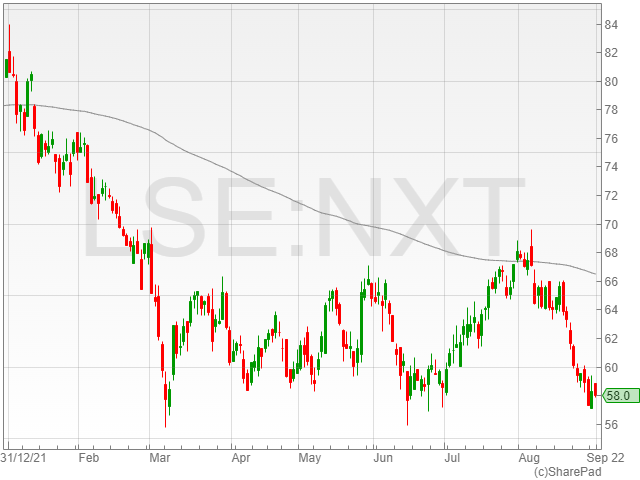
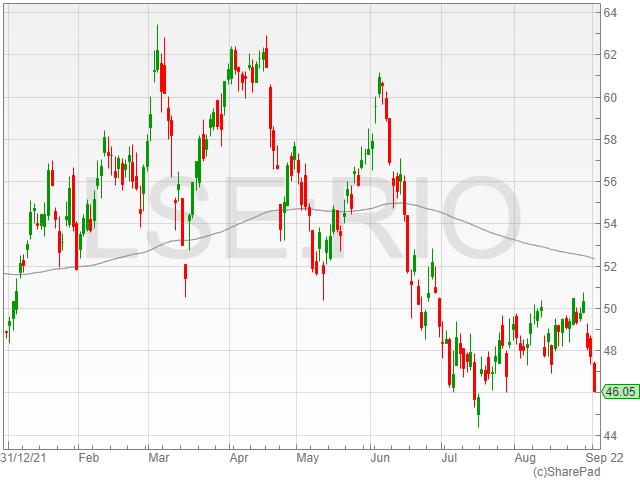
Antofagasta shares dipped 0.1% to 1,047.2p, Endeavor slid 1.5% to 1,574.5p, Fresnillo dropped 3% to 640.7p, Glencore decreased 1.6% to 419.1p and Rio Tinto declined 0.3% to 4,676p.
Howden Joinery Group
Howden Joinery Group shares topped the FTSE 100 with a 3.8% climb to 653.4p following a reported pre-tax profit of 22% to £145 million in HY1 against the previous year.
The company’s revenue grew 16% to £913.1 million compared to £784.9 million, with the firm attributing its successful financial term to good management of economic headwinds and growth across its UK and international depots.
Financial groups rise
3i Group enjoyed a 3.8% climb to 1,242.5p after a successful Q1, including a 6.4% NAV increase to 1,406p and a total NAV return of 6.6%.
The investment group credited the strong performance of its Action holding for its positive Q1, and highlighted several key investments made over the period.
“3i has made a good start to its new financial year. Both portfolios are trading resiliently in the current environment and Action is continuing to grow at an impressive rate,” said 3i CEO Simon Borrows.
“We have already announced a number of new investments this year and executed realisations at significant premiums to their carrying values in recent months, underlining the quality of our portfolio.”
— UK Investor Magazine (@UKInvestorMAG) July 21, 2022
Intermediate Capital Group shares rose 2.8% to 1,456.2p on the back of a positive Q1 trading statement, with fundraising of $4.5 billion and a total AUM growth of 3% to $71.3 billion on a constant currency basis.
“The breadth of ICG’s strategies and our firm-wide focus on downside protection are powerful characteristics of our business, especially in the current environment,” said Intermediate Capital Group CEO Benoît Durteste.
Intermediate Capital Group reaches $4.5bn in fundraising over Q1, AUM increases 3%https://t.co/Fmyth5zPac
— UK Investor Magazine (@UKInvestorMAG) July 21, 2022
Dunelm Group shares gained 5.3% to 870.5p in early afternoon trading on Thursday after the company reported a 16% year-on-year increase in total sales to £1.5 billion in FY 2022.
The homewares retailer said digital sales made up 35% of total sales, representing an 11% slide against last year due to Covid-19 restrictions easing and physical stores reopening.
Dunelm confirmed its FY 2022 sales and pre-tax profits slightly exceeded market expectations, with an anticipated pre-tax profit of £207 million reflecting a strong HY1 after stores reopened, and a positive trading performance in HY2.
The group noted a gross margin rate for the financial year of 51.2%, 0.4% lower than FY 2021 due to high customer participation in the firm’s June 2022 Summer Sale Event.
Dunelm said it expected a gross margin return to a long run average in FY 2023.
“Dunelm is a much bigger and stronger business than before the pandemic, with sales over 40% higher, due in large part to the huge strides we have made to develop our digital capabilities,” said Dunelm CEO Nick Wilkinson.
“Our growth continues to be driven by increasing market share as our customer base further expands.”
Dunelm mentioned its macro-economic outlook remained unpredictable, and warned the cost of living crisis risked cutting into sales and profits in the coming year.
“The macro outlook remains uncertain and we cannot predict exactly how consumers will respond to the increasing pressures on their finances,” said Wilkinson.
“We are currently seeing customers adapt to this environment in their own ways, utilising the breadth of our offer and price points across homewares; value and choice has always been at the very core of Dunelm, and we are intensely focused on continuing to strengthen this for our customers.”
“The business has successfully navigated previous periods of consumer uncertainty. With the inherent strength of our business model and strong operational grip, we have never been more confident about our ability to make the right long-term decisions for all of our stakeholders and to continue to grow our market-leading position.”
Non-executive director appointment
Dunelm also announced the appointment of Alison Brittain as an independent non-executive director and chair designate.
Brittain is set to join the Dunelm board on 7 September 2022, and will succeed Andy Harrison as chair before the end of his nine-year term in September 2023.
The move follows Brittain’s announced resignation as CEO of leisure company Whitbread, which she is expected to leave in early 2023.
“Dunelm is a company I have long admired as a customer and I love that it’s an entrepreneurial, purpose-led business with strong values and lots of ambition,” said Brittain.
“The last two years have reinforced the importance of the home in all of our lives, and I am delighted to be joining a team with such a fabulous track record of focussing on delivering value for customers and a company with fantastic opportunity for future growth.”
“I look forward to working with the Board and building on Andy’s achievements as Chair.”
Frasers Group shares surged 20.6% to 904.5p in late morning trading on Thursday after the group announced a revenue climb of 30.9% to £4.7 billion in FY 2022 against £3.6 billion in FY 2021 in its FY trading update.
Frasers Group highlighted a UK sports retail revenue growth of 31.2% to £2.5 billion compared to £1.9 billion as a result of stores reopening after Covid-19 lockdowns, alongside a 43.6% rise in premium lifestyle revenue to £1 billon from £735.6 million linked to the group’s new FLANNELS stores and maintained online growth.
The company also confirmed a European retail revenue increase of 28.4% to £790.2 million against £615.2 million due to strong growth in Ireland and stores reopening after pandemic lockdowns.
In addition, the firm mentioned a rest of world retail revenue slide of 1.6% to £150.3 million compared to £152.7 million, along with a wholesale and licensing revenue rise of 9.7% to £168.1 million from £153.3 million.
The fashion company reported a pre-tax profit spike to £366.1 million from £8.5 million the last year, alongside a swing back to an adjusted pre-tax profit of £344.8 million compared to a loss of £39.9 million on the back of stores reopening, the launch of new FLANNELS outlets, operating efficiencies and continued growth in the lifestyle premium sector.
Frasers Group confirmed net assets of £1.3 million compared to £1.2 million year-on-year.
The retailer returned £193.2 million to shareholders through its share buyback programme over the period.
The group also noted its successful refinancing of its facility, which currently stands at £980 million.
“I am really proud of the record performance we’ve announced today. It’s clear that our elevation strategy is working and we are building incredible momentum with new store openings, digital capabilities and deeper brand partnerships across all of our divisions,” said Frasers Group CEO Michael Murray.
“We’ve got the right strategy, team and determination to keep driving our business from strength to strength.”
3i Group shares were up 1.8% to 1,219.5p in late morning trading on Thursday following a reported NAV per share growth to 1,406p in Q1 2023 compared to 1,321p in Q4 2022, along with a total return of 6.6% across the financial term.
3i Group announced 90% of its top 20 private equity companies by value increased their earnings to March 2022, with a resilient Q1 from its portfolio groups, including Action, Dynatect, nexeye, Tato and MAIT.
The group confirmed a sales climb for Action of 22% against 2021 and 70% above 2019 of €2,061 million, alongside an EBITDA rise of 29% for year-on-year for the period to €263 million, representing a 115% growth over Q1 2019.
The firm noted the return for Q1 included material reductions in the value of non-discount consumer companies Luqom and GartenHaus.
3i Group also reported the sale of Havea for expected returns of €540 million, representing a 50% uplift on the value announced on 31 March 2022.
The company further drew attention to the completed sale of Q Holding’s QSR division for £190 million.
The group said it signed three new private equity investments over Q1, and announced a fourth investment in July 2022, with all investments scheduled for completion by the end of Q2 2023.
The company recognised a £322 million gain (34p per share) on foreign exchange in Q1, net of hedging, as the Sterling weakened against the US dollar.
“3i has made a good start to its new financial year. Both portfolios are trading resiliently in the current environment and Action is continuing to grow at an impressive rate,” said 3i CEO Simon Borrows.
“We have already announced a number of new investments this year and executed realisations at significant premiums to their carrying values in recent months, underlining the quality of our portfolio.”
“We see broader economic conditions deteriorating over the rest of the year but remain confident in the composition of our portfolio. We continue to focus on actively managing our portfolio and making sensibly priced investments and bolt-on acquisitions. We will also pursue our realisation projects where conditions allow.”
Intermediate Capital Group (ICP) shares increased 0.4% to 1,422.5p in early morning trading on Thursday following a 3% increase in assets under management (AUM) to $71.3 billion over Q1 and a 19% rise over the past 12 months.
The company reported a third-party fee-earning AUM of $58.8 billion, representing a 5% growth over Q1 and a 27% climb over the past year on a constant currency basis.
Intermediate Capital highlighted its Europe VIII fund size, which is currently at €7.8 billion, exceeding its €7 billion aim and accounting for 1.8 times more third-party AUM than its Europe VII fund.
The firm added its fundraising was almost completed, with the final close expected by the end of July 2022.
The group also mentioned the final closes of its Strategic Equity IV with a total fund size of $4.2 billion, and its Asia Pacific IV with a total fund size of $1.1 billion.
“We remained active in the quarter. Fundraising was robust, including holding successful final closes for Strategic Equity IV and Asia Pacific IV,” said Intermediate Capital Group CEO and CIO Benoît Durteste.
“As anticipated, deployment and realisation levels across the market were lower than in previous quarters and in this context we continued to execute a number of transactions across all our asset classes.”
“Our pipeline remains constructive, particularly within direct lending (SDP) where we are seeing a growing set of future deployment opportunities.”
Intermediate Capital confirmed its fund valuations were in-line with 31 March 2022, which the company said reflected its focus on structuring transactions to provide downside protection and strong operational performance of underlying portfolio companies to offset valuation pressures.
“The breadth of ICG’s strategies and our firm-wide focus on downside protection are powerful characteristics of our business, especially in the current environment,” said Durteste.
“We focus on investing in resilient companies with strong market positions and are able to provide them with flexible capital in the form most appropriate to their needs, from full equity buyouts to senior debt.”
“In doing so, we help our clients achieve their investment objectives in private markets through economic cycles.”
The firm noted its balance sheet was in a strong position for the financial term, with a total available liquidity of £1.4 billion at 30 June 2022.