Liontrust Asset Management grows AUMA by £5.1bn on Majedie acquisition

0

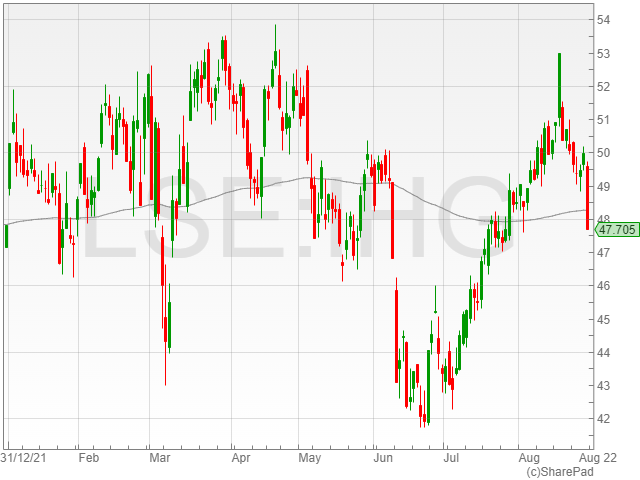
Liontrust Asset Management shares rose 0.5% to 909p in late morning trading on Tuesday after the group reported a 2.1% growth in assets under management and advice (AuMA) to £34.2 billion on 30 June 2022 in its trading update.

The company attributed £5.1 billion in new AuMA to its acquisition of Majedie Asset Management, which it completed on 1 April 2022.

The fund management firm announced net outflows of £541 million against net inflows of £1 billion in the three months to 30 June 2021, with the bulk of its outflows linked to £337 million in UK retail funds and MPS, alongside £266 million from international funds and accounts.

“This continues to be a challenging year for investors especially those who have a bias towards growth stocks. Despite the ongoing war in Ukraine and inflationary pressures, supply chain issues and strains on economic growth, we remain confident about the long-term prospects for our investment teams and their processes, along with the quality companies they hold within their portfolios,” said Liontrust Asset Management CEO John Ions.

“Liontrust has not been immune to this environment in terms of both performance and net flows. We continue to focus on what we do well and what has made Liontrust so successful. At the core of this are the rigorous investment processes, along with the strength of our sales and marketing, client communications and brand.”

Fund Management Changes

Liontrust Asset Management further mentioned changes to its fund management team, including a new global innovation investment team led by James Dowey and Storm Uru, supported by Clare Pleydell-Bouverie.

“We continue to invest in the fund management teams and Liontrust’s expansion over the last few years is giving us the opportunity to develop investment talent,” said Ions.

“This includes the formation of the Global Innovation team that is headed by James Dowey and Storm Uru and who have been joined by Clare Pleydell-Bouverie.”

The global innovation team will reportedly be responsible for managing the Liontrust Global Innovation Fund and the Liontrust Global Dividend Fund,

The firm also noted its Liontrust Income Fund is set to move from the Global Equity team to the Global Fundamental team, and will be managed by Chris Field, with the support of James O’Connor and Dan Ekstein.

The LF Liontrust UK Equity Income Fund has been confirmed under the management of Chris Field, supported by Dan Ekstein.

In addition, the Liontrust US Opportunities Fund has been moved from the Global Equity team to the Global Fundamental team under the management of George Boyd-Bowman.

“The Liontrust Income and US Opportunities funds are moving from the Global Equity team to the Global Fundamental team; the former to be managed by Chris Field, supported by James O’Connor and Dan Ekstein, while George Boyd-Bowman will continue to manage the US fund,” said Ions.

“The excellence of our investment teams, their processes and client service give me great confidence that we will get through the current macro-economic and political environment in a strong position and continue to deliver for our investors and stakeholders.”

Real term wages see record fall as gap between public and private sector pay widens

0

Real term total pay fell by 0.9% and real term regular pay fell by a record 2.8% over the last year, according to the latest figures from the Office of National Statistics (ONS).

Inflation is currently at a 40-year high of 9.1% and set to climb to 11% by October this year, placing UK consumers under the heel of a crushing cost of living crisis.

“Wages are rising, but prices are rising much faster, resulting in a record 2.8% fall in regular pay in real terms,” said AJ Bell head of investment analysis Laith Khalaf.

“With inflation set to rise even further from here, there looks to be little prospect of the salary squeeze abating any time soon, leaving household finances firmly under the cosh.”

Employees saw an average total pay growth (including bonuses) between March to May 2022 of 6.2% and a rise in regular pay (excluding bonuses) of 4.2%.

“The divergence between public and private sector pay also provides some context for the industrial action we are beginning to see emerge in certain sectors,” said Khalaf.

“Growth in total pay, including bonuses, was 6.2% on average across the entire UK workforce. But there is a stark comparison between private sector wages, which rose by 7.2%, and public sector pay, which went up just 1.5%.”

The ONS reported a 0.4% increase in employment to 75.9% over Q2, however the figure is still below pre-Covid levels, while unemployment and economic inactivity levels declined.

The number of full-time workers rose to a record high across the last three months, alongside a climb in part time employees, reflecting a recovery from the fall in employment over the pandemic.

Payrolled employees increased 31,000 in June compared to revised May figures to a record number of 29.6 million.

Meanwhile, the unemployment rate over Q2 fell by 0.1% to 3.8%. However the number of workers unemployed for up to six months grew over the term at the fastest rate since late 2020.

The number of job vacancies between April and June rose to 1,294,000, and the ONS reported the rate of vacancies continued to slow.

“Job vacancies stand at almost 1.3 million, slightly greater than the number of unemployed people. That means if everyone seeking a job could be matched up with a vacancy, ignoring their location and skills, there would still be a shortfall,” said said Khalaf.

“Against such a backdrop it’s no wonder businesses are willing to cough up more to get new staff and keep existing employees on the books. The number of vacancies fell very slightly on the last reading, which means we may have just crested off the back of the peak and could start to see some normalisation of the labour market.”

However, the widening real term pay gap between the public and private sector risks sparking strikes and industrial action, sending tensions flaring.

“But the big concern is that the higher wages paid by the private sector will serve to entrench inflation, while the small pay rises witnessed in the public sector in the face of soaring prices will continue to stoke industrial tensions,” said Khalaf.

Darktrace revenue grows 48%, PREVENT cybersecurity launches

0

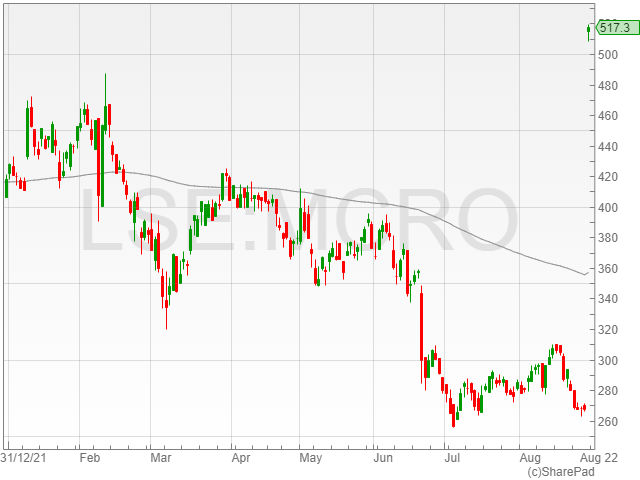
Darktrace shares gained 3.2% to 353.1p in early morning trading on Tuesday after the AI cybersecurity firm reported a 48% growth in revenue in FY 2022 against FY 2021 in its latest trading update.

The company announced a 32% rise in customer numbers of 500, resulting in 7,400 total customers across its base.

Darktrace confirmed a 42% increase in constant currency ARR, with a maintained year-on-year improvement in one-year ARR gross churn and net ARR retention.

The firm said it expected an annual constant currency ARR climb of 31% to 34%.

The group mentioned a free cash flow generated of approximately 95% of its adjusted EBITDA, along with an adjusted EBITDA margin of at least 19.5%.

“We are delighted to report strong operating and financial performance for FY2022, where we saw demand for our products continuing to grow as organisations seek to protect themselves from growing cyber threats,” said Darktrace CEO Poppy Gustafsson.

“We expect this business momentum to continue into FY 2023 as against a turbulent geopolitical background, it’s no surprise that long-term cyber risk is an even higher priority for Chief Information and Security Officers and senior executives.”

Darktrace PREVENT

Darktrace also announced the launch of its PREVENT product family, expanding its product offerings and building on its targeted Cyber AI Loop.

The PREVENT launch is the third out of four product areas in the group’s delivery of its Cyber AI Loop, and has been designed to deliver a proactive system to help organisations pre-empt future cyber attacks.

“In addition to our strong performance announced today, I am thrilled to announce the launch of Darktrace PREVENT, the third product area in our delivery of a Cyber AI Loop, which will provide continuous feedback and a deep interconnected understanding of the enterprise to strengthen an organization’s state of security,” said Gustafsson.

“We’re excited about the value PREVENT will bring to our customers as we continue to pursue our mission of freeing the world from cyber disruption.”

https://twitter.com/Darktrace/status/1549306621595205633

FY 2023 outlook

Darktrace confirmed an expected revenue guidance downgraded by 4% to 5% in FY 2023, alongside a 6% to 7% lower revenue growth.

The cybersecurity group further noted a projected adjusted EBITDA margin between 15% to 18%, and a free cash flow as a percentage of adjusted EBITDA in the range of 10% to 15% below its normal level as a result of one-time tax payments.

4imprint Group shares soar on expected FY $1bn revenue

0

4imprint Group shares soared 10.7% to 2,692.1p in early morning trading on Tuesday following the company’s reported confidence in hitting its $1 billion revenue target for FY 2022 in its HY1 trading update.

The marketing group announced a 14% climb in total order counts across North America in the period against HY1 2019, alongside a 14% rise in average order values, resulting in overall demand revenue growth of 30%.

4imprint Group confirmed its FY 2022 operating profit expectation had also significantly improved, with an estimation of at least $75 million.

The firm commented its results were linked to volume revenue growth, combined with leverage in the business model and further driven by gains in its marketing programme productivity.

Additionally, the company said its gross margins remained steady in the inflationary environment and operational gearing over the cost base.

4imprint Group added that it was aware of the volatile macro-economic environment, and warned that its results going forward could potentially be impacted for the remainder of the financial year.

FTSE 100 rises on oil and commodities rally

0

The FTSE 100 gained on Monday after oil companies and commodities pulled the market higher.

Shell and BP shares gained 2.7% to 2,045p and 3.4% to 386.1p, respectively, as the price of oil rose after talks between the US and Saudi Arabia failed to spark an increase in output supply, with benchmark Brent Crude reaching $105 per barrel.

“Leading the UK market higher were oil stocks Shell and BP … and the big miners,” said AJ Bell financial analyst Danni Hewson.

“Commodities joined the parade, with Brent Crude oil advancing 2.5%.”

Asia-focused stocks rose on positive news from China, as the property market improved after Chinese regulators stepped in to urge lenders to support housing developers after consumers protested uncompleted properties last week.

“In Asia, property stocks moved higher on reports that Chinese regulators were putting pressure on lenders to support real estate developers following mortgage payment protests last week from homeowners upset about unfinished developments,” said Hewson.

The Hang Seng climbed 2.7% to 20,846.1 and the Shanghai SSE rose 1.5% to 3,278.1.

Burberry shares increased 3.5% to 1,642.5p, Prudential rose 3% to 1,008.2p and Scottish Mortgage Investment Trust gained 1.9% to 797.5p.

Meanwhile, positivity in Asia led to an uptick in commodities stocks, as investors found optimism at the prospect of higher levels of consumption in the region.

Anglo American shares increased 2.4% to 2,613.2p, Antofagasta gained 3.4% to 1,026.5p, Croda rose 1.3% to 6,820p, Fresnillo saw an uptick of 1.4% to 654.9p, Glencore climbed 3% to 419.4p and Rio Tinto gained 2.8% to 4,707.5p.

GSK completes Haleon demerger

GSK finally completed its Haleon demerger, with the newly listed Haleon Group enjoying the largest London debut in a decade.

The company started off on slightly wobbly legs, with the shares launching at 330p and currently trading at 320p.

The market value in Monday morning trading was £31 billion, which is markedly below the £50 billion offer rival firm Unilever proposed earlier this year.

Analysts have also cited concerns that the cost of living crisis could see consumers turn to store brand healthcare options rather than name brand products, serving to dent Haleon’s appeal.

“With a market value of approximately £31 billion, investors might be wondering why GSK didn’t accept the much higher bid from Unilever,” said Hewson.

“While Haleon owns some well-known brands including Sensodyne and Advil, that may not be enough to entice a line of buyers for the stock. Shoppers are increasingly going for supermarket own-label products as the cost of living crisis hits, with plenty of cheaper options for toothpaste and headache tablets than those sold by Haleon.”

“That raises the risk of Haleon struggling to deliver meaningful earnings growth in the near-term, which is hardly the best start to life as a standalone business.”

Foxtons to list properties with OnTheMarket

0

OnTheMarket shares rose 2.6% to 88.9p in late afternoon trading after the firm announced London estate agency Foxtons had signed an agreement to advertise its UK residential sales and letting properties on the company’s site.

Foxtons is set to list its properties on OnTheMarket.com, and will reportedly add value to OnTheMarket’s client offerings, according to the property portal group.

“We are delighted to welcome Foxtons to OnTheMarket. We have been working hard to enhance our offer, adding products and services to deliver greater value to agents and consumers,” said OnTheMarket CEO Jason Tebb.

“Being recognised by Foxtons is further proof that our strategy is working and there is more to come as we continue to develop our differentiated, technology-enabled property business.”

Northern Bear warns on rising costs, announces 24% revenue increase

0

Northern Bear shares fell 9.2% to 53.2p in late afternoon trading following a reported cautious outlook on rising costs for construction materials going forward.

The company announced a narrowed pre-tax loss of £879,000 against £1.6 million the year before, alongside a 24% revenue increase to £61.1 million compared to £49.2 million.

Northern Bear highlighted an EBITDA rise to £3.6 million from £2.3 million and an adjusted operating profit of £2.6 million against £1.4 million the last year.

The construction firm noted a net cash position of £2.2 million at year end compared to £2.1 million.

The group confirmed an impairment charge linked to A1 Industrial Trucks goodwill of £2.6 million and a legal claim against Springs Roofing settled for £600,000 in July this year.

“We are pleased to announce strong operating results for the year ended 31 March 2022, despite the ongoing challenges facing our industry,” said Northern Bear non-executive chairman Jeff Baryshnik.

“It is a testament to the executive team and the subsidiary operating teams that FY22 operating results exceed those of the comparable pre-pandemic year ended 31 March 2020.”

Northern Bear chose not to declare a dividend for FY 2022 after two potentially accretive acquisitions did not come to pass. The company said it was exploring options for additional shareholder value.

Tortilla Mexican Grill – showing strong first half sales growth and progress in its expansion strategy

This morning’s Trading Update from Tortilla Mexican Grill (LON:MEX) shows that the expanding restaurants group is still growing at quite a pace.

The UK’s largest fast-casual Mexican foods company has grown significantly from its Islington base in 2007. It floated on AIM in October 2021.

Its aim is to offer its customers freshly made Californian-inspired Mexican cuisine, such as burritos, tacos and salads. There is growing demand for its excellent healthy, value-for-money meals, whose average main dish price is in the £7-£9 price levels. 

The group is now up to 84 sites, 68 of which are in the UK, as well as eight franchised in the United Arab Emirates, and another eight franchised in the UK. 

Some 41% of the group’s own operated sites are located outside the M25.

When it floated last year, the group stated that it had an aim to add another 45 sites within the next five years.

The most recent announcement from the company was in May, when it made the £2.75m acquisition of the eight-site Chilango chain. It is a natural fit with the group’s ambitions.

The incredible economies of scale, with greater buying power and tight central overheads, will keep on kicking in as this phase continues.

Especially if it grows its multi-channel growth opportunities like food-to-go, dine-in and delivery. 

Furthermore, it can rely on its ability to increase prices if its costs drive higher.

The first six months in 2022

Today’s Update for the group’s six months to 3 July showed revenues of £26.9m, which was some 60% better than the comparative period in 2019. 

The group opened six new sites in its first half-year and the cash balance of £3.1m at the period end is considered sufficient to fund the group’s future expansion plans.

The company is on track to open another three new sites in its second half.

Richard Morris, the company’s CEO stated that

“We are pleased to report further strong growth and strategic progress during the first half supported by our strong reputation for great value and our growing UK presence. During the period we sold more than 3.2m burritos and completed the exciting acquisition of Chilango to bolster our leadership position in the UK’s fast-casual Mexican market. Chilango hold leases in several strong London locations and provide a high-quality supplementary food offer”.

“We have continued to outperform the sector according to relevant industry benchmarks and remain confident in the Group’s long-term growth prospects. Our site-roll out continues as planned in line with the target set out at IPO, with further opportunities supported by the favourable rental environment.”

Obviously, the company has been suffering, like one and all, from the hassles of supply and cost inflation, Morris went on to state that

“Whilst the macroeconomic environment remains challenging, we are working hard to mitigate cost pressures as much as we can and are mindful of the impact on the consumer of the cost-of-living crisis. However, we remain very confident that supported by our strong reputation for outstanding value, excellent delivery proposition, and growing UK presence we are well positioned for long term growth.”

Analyst estimates for the full year

Broker’s estimates from Liberum Capital suggest that the full year sales to end December will be around £62.0m (£48.1m). That could give pre-tax profits of £3.9m and earnings of 8.1p per share.

Looking forward to next year, without the benefits of any accretive acquisitions, broker’s analyst Anna Barnfather is looking for £74.5m revenues, profits of £4.3m, and earnings of 8.0p per share.

She is more adventurous with her estimates for the 2024 year, with ££85.4m takings, £5.7m profits and 9.8p earnings.

After the Chilango purchase, Liberum, the group’s NOMAD and broker, upped its Target Price from 222p to 235p for the group’s shares, after this morning’s Update that price objective remains the same, with the shares, now 121.5p being rated as a Buy.

GSK completes Haleon Group demerger, analysts cite cost of living crisis concerns

GSK announced the completion of its Haleon consumer healthcare business demerger on Monday to form the new Haleon Group in the biggest European market listing in a decade.

The Haleon Group’s shares were admitted at 8am today to the Premium Listing segment of the Official List and to trading on the Main Market of the London Stock Exchange.

Haleon shares started trading at 330p with a market value of approximately £31 billion.

“Haleon has so far got off to a mixed start. Trading started at 330p, but the shares had slipped to 326p in the first half hour of the UK market being open. Soon after they jumped to 337p,” said AJ Bell financial analyst Danni Hewson.

https://twitter.com/Haleon_health/status/1548925228738281476

GSK rejected several acquisition offers from Unilever earlier this year, with its largest offer going as high as £50 billion. GSK reportedly turned down the proposal on the basis that it undervalued the company and its growth potential.

“It’s an unusual listing in that Haleon has already been subject to a £50 billion takeover bid before the demerger happened, which came from Unilever,” said Hewson.

“Normally you would expect to see any bid action happen after the listing. That’s because there is often a period of share price weakness in the demerged entity as investors offload stock which they’ve been given for free.”

“With a market value of approximately £31 billion, investors might be wondering why GSK didn’t accept the much higher bid from Unilever.”

The potential concern among analysts is that consumers tend to select store brand pharmaceuticals over name brands in a cost of living crisis, and with inflation currently at 9.1% and set to rise to 11% later this year, the problem looks set to persist.

Investors might be wary that Haleon has chosen to launch in a time when demand for its offerings are at a lower rate than usual.

“While Haleon owns some well-known brands including Sensodyne and Advil, that may not be enough to entice a line of buyers for the stock,” said Hewson.

“Shoppers are increasingly going for supermarket own-label products as the cost of living crisis hits, with plenty of cheaper options for toothpaste and headache tablets than those sold by Haleon.”

“That raises the risk of Haleon struggling to deliver meaningful earnings growth in the near-term, which is hardly the best start to life as a standalone business.”

US Market Launch

GSK added the American Depositary Shares (ADS) representing shares of Haleon would commence “regular way” trading on the New York Stock Exchange at market open on Friday this week.

The company also expect Haleon ADS to start trading on a “when-issued” basis on the NYSE from market open today until Thursday, with each Haleon ADS representing two Haleon ordinary shares.

The general meeting on 6 July saw GSK shareholders approve the consolidation of the group’s shares, with the consolidation scheduled to take place after market close today.

GSK reported the ratio for the share consolidation could not be fixed at the current time, as it will depend on price fluctuations in the market over trading today.

The GSK share capital presently consists of 5,389,096,045 ordinary shares of 25p each, with the total number of voting rights at 5,084,190,095.

AIM movers: Another upgrade for CentralNic and special dividend from Tristel

1

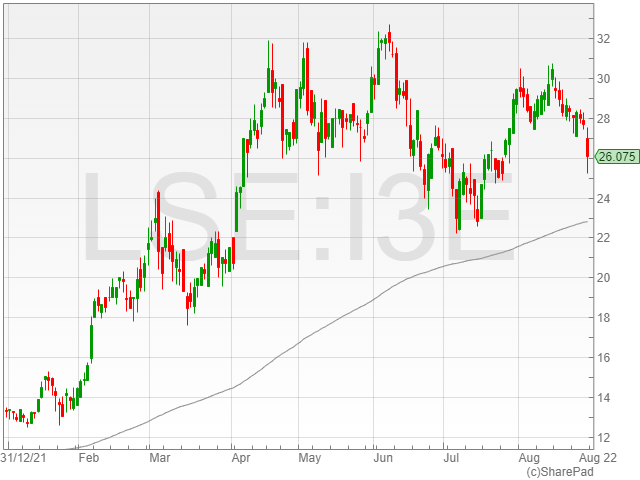
More positive trading news from internet names wholesaler and online marketing provider CentralNic (LON: CNC) has boosted the share price by 14.1% to 129.5p. First half revenues were $335m – pro forma organic growth is 62% – and adjusted EBITDA $38m. Zeus has edged up its 2022 pre-tax profit forecast from $54.2m to $57.2m. That assumes lower second half revenues than in the first half. The additional payment for KeyDrive SA is $1.14m. Net debt could fall to $51.2m by the end of the year. The online marketing activities are gaining market share. The interims will be reported on 30 August. CentralNic has been included in the FTSE UK 50 and FTSE AIM 100.

Plant Health Care (LON: PHC) revenues increased by 60% to $5.6m in the first half. Sales of products in South America more than quadrupled. Plant Health Care is on course to achieve revenues of $10.3m this year. The higher sales are helping to improve margins, but a loss is expected in 2022 before moving into profit in 2023. Plant Health Care shares were 12.3% higher at 10.05p.

Narrowband radio frequency technology provider CyanConnode (LON: CYAN) says that full year revenues increased from £6.4m to £9.3m, which is better than expected. There was £2.4m of cash in the bank. At the end of March, CyanConnode raised £2m at 14p a share. The share price rose 10.6% to 13p.

Disinfection products supplier Tristel (LON: TSTL) announced a special dividend of 3p a share on top of a final dividend of 3.93p a share. Full year revenues are 4% ahead at £28.4m and adjusted pre-tax profit is 12% higher at £4.5m. The second half was stronger as more patient procedures have been undertaken. FDA approval for the Duo ULT could be achieved next year. A 8.03% rise pushed up the share price to 370p.

Great Western Mining (LON: GWMO) says that drilling at the Olympic gold project in Nevada has shown positive indications. Five holes have been drilled on the known OMCO vein. The shares rose 9.26% to 0.1475p.

Rui Sant’ana Afonso has resigned as chief executive of Agriterra (LON: AGTA). Hamish Rudland, who controls the largest investor in the African agriculture company, becomes interim chief executive. The share price fell 16.2% to 4.02p.

There was a fall in the share price of Northern Bear (LON: NTBR) even though it improved its underlying pre-tax profit in the year to March 2022. Revenues rose from £49.2m to £61.1m, while profit jumped from £1.19m to £2.39m. There was a reported loss in both years after substantial impairment charges. Net cash is £2.2m. A strategic review continues. The shares are 5.22% lower at 54.5p.

Semiconductor wafers supplier IQE (LON: IQE) has fallen 5.04% following the announcement of a patent lawsuit against Tower Semiconductors, which IQE claims used its trade secrets to obtain patents.