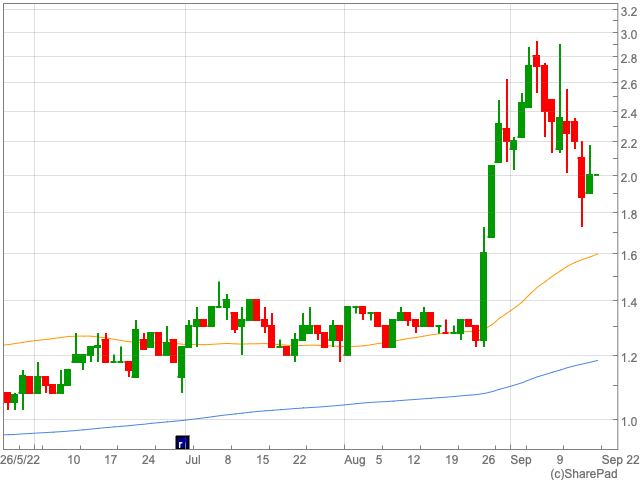
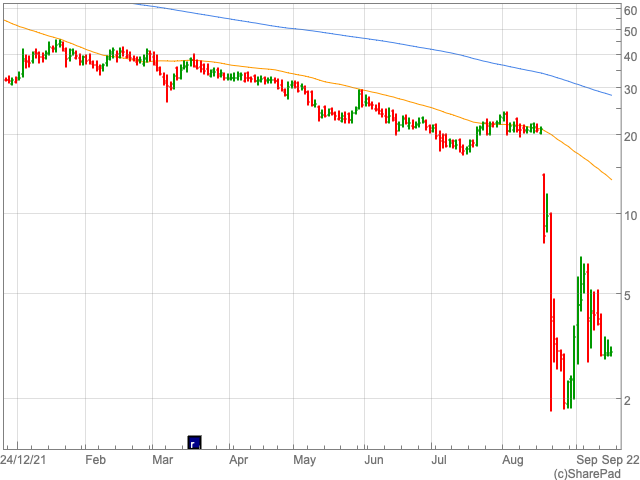
Controlled agricultural environment equipment supplier Light Science Technologies (LON: LST) has progressed with its project with Zenith Nurseries. The cloche lighting system has been developed and proved to be viable and this has generated £51,000 of revenues for the company. A later phase of the project has been brought forward and this has potential revenues of £1.9m. The total contract is worth £13.8m. The related grant has increased to £621,000. The share price recovered 12.5% to 6.75p, but it remains below the October 2021 flotation price of 10p.
Utility services installer Fulcrum Utility Services (LON: FCRM) is the largest riser on the day, up 16.7% to 7.35p, but there are no announcements. Previous share price jumps have been due to buying by the Bayford Group, which has a 29.1% stake. Bayford cannot buy many more shares without going above 30% and triggering a mandatory bid.
John Celaschi has increased his stake in solar technology company Verditek (LON: VDTK) from 8.34% to 10.59%. The share price has risen by 10.5% to 2.1p.
Yesterday’s new admission Aurrigo International (LON: AURR) has risen a further 9.52% to 57.5p. The transport technology products supplier raised £8m at 48p a share when it joined AIM. The cash will be invested in the aviation technology division and to develop new products.
Oriole Resources (LON: ORR) shares have lost some of yesterday’s gains. The share price has fallen 8.3% to 0.22p, but it is well above the 0.155p it was two days ago. Phase 4 drilling results from the 90%-owned Bibeme gold project in Cameroon showed the existence of multiple grade-bearing sub-horizontal veins as well as the previously tested sub-vertical veins.
AfriTin Mining (LON: ATM) has completed a placing and subscription at 5p a share that was announced last night. The share price has fallen 6.4% to 5.1p. The amount raised of $22.8m was higher than initially anticipated. This is part of a funding package for phase 2 expansion at the Uis mine in Namibia. Orion Resource Partners is providing $25m through a royalty deal, convertible loans and shares. The Development Bank of Namibia is proposing a $5.8m lending facility. The cash will help to develop lithium and tantalum opportunities at the mine.
Shares in Empyrean Energy (LON: EME) fell 4.77% to 1.0475p after the oil and gas company reported a higher full year loss. The £8.1m loss included a cyber fraud loss of £1.98m and an impairment of exploration asset of £4.13m.
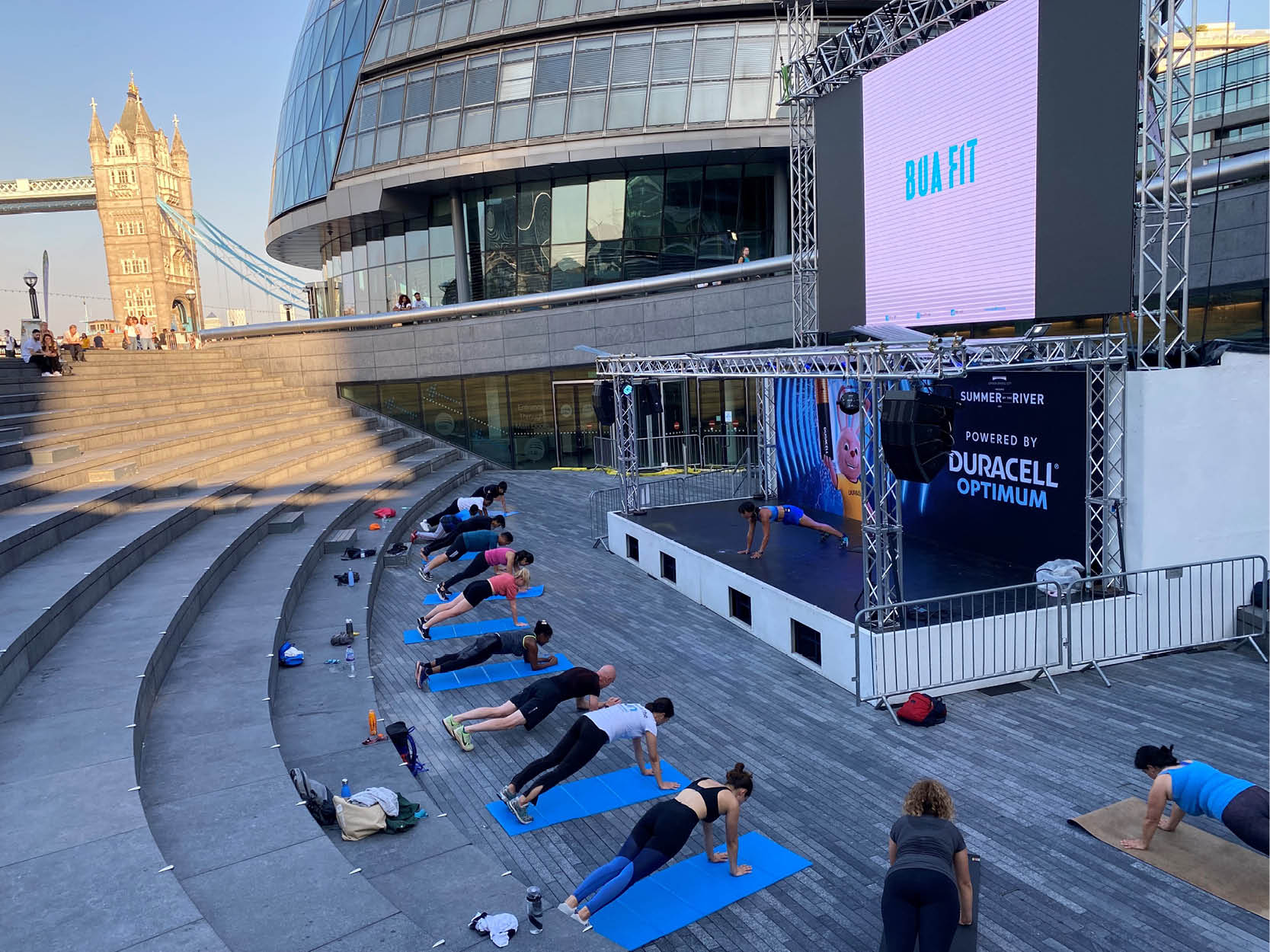
CENTERED, a US wellness platform, acquires British outdoor fitness technology, BUA FIT, to offer its platform of wellness programs to Fortune 500 companies while supporting fitness trainers’ businesses in the US.
CENTRED connects travellers to leading and emerging wellness brands in over 900 cities worldwide. The company utilises a vertically integrated platform with an app, website, physical locations, e-commerce for health and wellness and loyalty programs.
MIAMI, Florida, Brian Chappon, CEO of CENTERED, declared, “BUA’s success in the UK will be reflected in the US in the coming weeks. David has brilliantly executed and crafted an outstanding product to connect trainers to lovers of outdoor and online group classes. I am delighted David has joined our team and BUA will add tremendous value to our user experience at CENTRED.”
Through CENTRED’s partnerships with global credit cards, brands, and aggregators, they have access to over 57 million affluent members worldwide. Their passion lies in driving volume to small businesses while setting a new global standard for wellness. Working with global B2B partners in travel, healthcare, fitness, and beauty tech, CENTRED is uniquely positioned to provide peace of mind to travellers worldwide.
CENTRED Director, Jim Lane – a 20-year alumni of Goldman Sachs & Co – commented, “With BUA, CENTRED can now showcase an array of outdoor fitness experiences worldwide, while also providing a platform for personal trainers to accelerate their growth on a global level.”
LONDON, David Stapleton, CEO and Founder of BUA FIT commented, “Brian and I believe having our companies coming together gives us a much stronger competitive edge and I’m confident we will be a billion-dollar business within four to five years, if not earlier. We wanted to move on the opportunity as our vision and missions are aligned. This strategic acquisition makes us a super strong team and it’s something we’ve been working on all year.”
Stapleton will join the CENTRED Board of Directors. The combined entity will expand BUA’s offering in the United Kingdom, USA, Canada, and Europe. The platform is planning to launch in the US early next year.
BUA FIT is a platform for group outdoor and online fitness. BUA connects fitness professionals to consumers with social technology. The tech recently surpassed 1,000,000 user engagements. The marketplace has a wide variety of talented fitness partners which has helped BUA enter the corporate market and work alongside brands such as Meta, Mubadala Capital and Starbucks.
The marketplace brand means ‘victory’ in Gaelic and is supported by Google for Startups and US venture firm, StartUp Health. The start-up was financed by Stapleton since 2016 and launched in the summer of 2019, outside of a £420,000 investment at early seed stage. To date, the strategy has been sustainable, organic growth to lower risk and achieve product market fit and now has completed well over 5,000 classes with international users.
Centred are keen for BUA’s platform to be rolled out across large towns and cities such as Los Angeles, Austin, San Diego, and Miami. With sunshine all year round, parts of the US are a huge opportunity. There are also potential plans for growth in Sydney, Australia too.
Angus Energy shares have began to build a base around 2p as the market awaits production figures from the Saltfleetby facility.
Angus Energy is an energy transition company with a focus on natural gas and has recently made first gas nominations to Shell via National Grid. The Saltfleetby field was previously the largest on shore gas field in the UK and Angus Energy acquired a 100% interest in 2020 with a view to restart production after it was shutdown in 2017.
Recent developments have seen Angus Energy shares soar and the next catalyst for shares will be production figures expected to be released at the end of the September.
In a recent evaluation, Angus Energy achieved flow rates from well A4 of 4 mmscf/d at approximately 55 bar and well over 4.5 mmscf/d from well B2 at approximately 45 bar which exceeded prior tests in 2017 and 2019.
Having recorded just £27,000 revenue in the six months to 31st March, Angus Energy’s next set of results will be highly anticipated and questions will continue to be asked of the current £53m market cap.
The strength of production from Saltfleetby will be key to the future of Angus Energy which will finds it self in an attractive position given the need for UK sources of gas.
The Pound fell sharply against the dollar and Euro on Friday after UK retail sales missed estimates, implying a deterioration in the health of the UK consumer and economy.
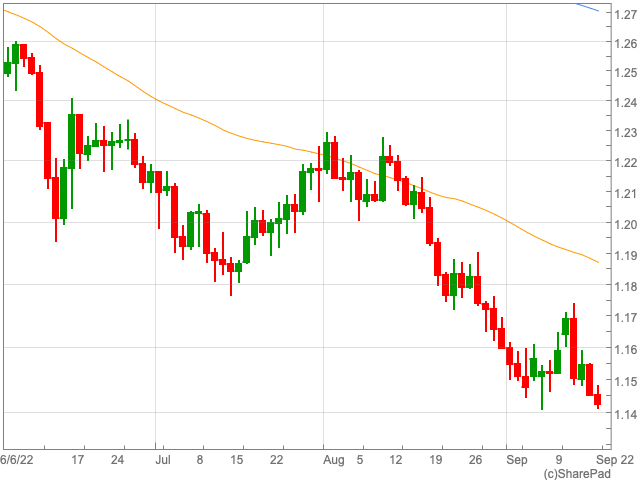
GBP/USD fell 0.6% to 1.1400 and GBP/EUR was down 0.33% at 1.1429. The pound was at the weakest level against the Euro since February 2021 and lowest against the dollar since 1985.
“UK retail sales have seen their biggest decline so far this year, dropping 1.6% compared to a 0.4% increase in July. This is markedly worse than forecasts of a 0.5% fall, and indicates rising prices and the cost of living crisis is stopping consumers from reaching for their purse when it comes to extra spending,” said Sophie Lund-Yates, Lead Equity Analyst at Hargreaves Lansdown.
“There is also the possibility these figures suggest the UK is already in recession.”
If the UK were to be in a recession it wouldn’t be a huge surprise. The Bank of England warned we face a prolonged recession earlier in the summer and we have already experienced monthly GDP contractions this year.
GBP/USD
A strengthening dollar has pummelled GBP/USD this year and pushed down to key support around 1.1400.
Analysts at Credit Suisse highlighted 1.1409/1.1350 as key technical support levels that could signal a move to near parity with the dollar, if broken.
“GBP remains weak on a Trade Weighted basis and we thus continue to look for a break below 1.1409 and then a move to potential trend support at 1.1350, below which would signal a substantial breakdown and open the door to 1.1285 next, ahead of 1.1020/00, which is now our core objective. However, we would not rule out a move all the way to the 1985 lows at 1.0520 if 1.1409/1.1350 breaks.”
As we go into the Autumn and Winter seasons, the population of the UK is fearing the continuing escalation in energy prices.
It is apparently inevitable, despite Government energy price cap controls, that we will all suffer cost pressures.
If you already have your own ‘solar farm’ or a ‘forest of wind-turbines’ then you will not want to know about my penny stock suggestion to build up your capital protection.
But if you do want to know what I am ‘plugging’ now, then take a look at this £68m capitalised group that is scoring well working in the booming oil and gas sector out in the Middle East.
Self-propelled
Established some 45 years ago in Abu Dhabi, Gulf Marine Services (LON:GMS) is today one of the world’s leading providers of advanced self-propelled self-elevating support vessels.
With around 550 employees and operating from its offices in the United Arab Emirates, Saudi Arabia and Qatar, the group’s fleet provides an invaluable service for the oil, gas and renewable energy industries.
It has one of the world’s newest fleets of these vessels, on average no older than 11 years, while they have an expected life-use of up to 40 years.
The versatility of its vessel’s meets the demand of the group’s clients, to provide cost-effective solutions, in a safe and efficient service, while minimising the environmental footprint.
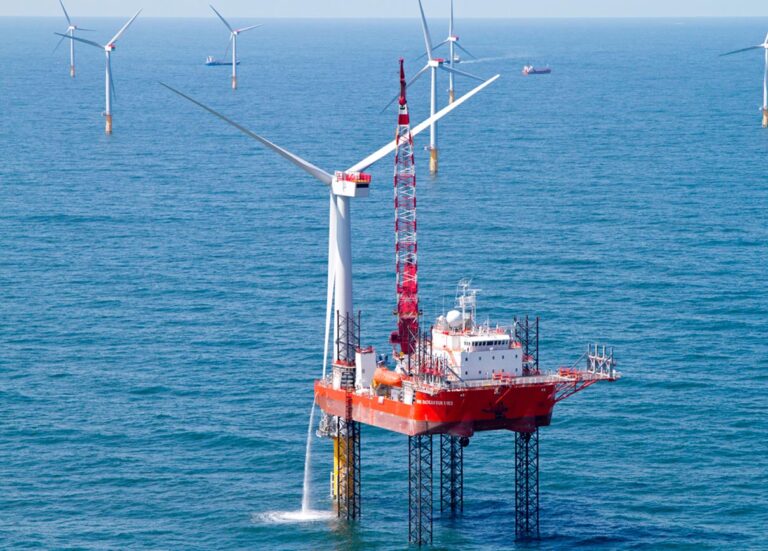
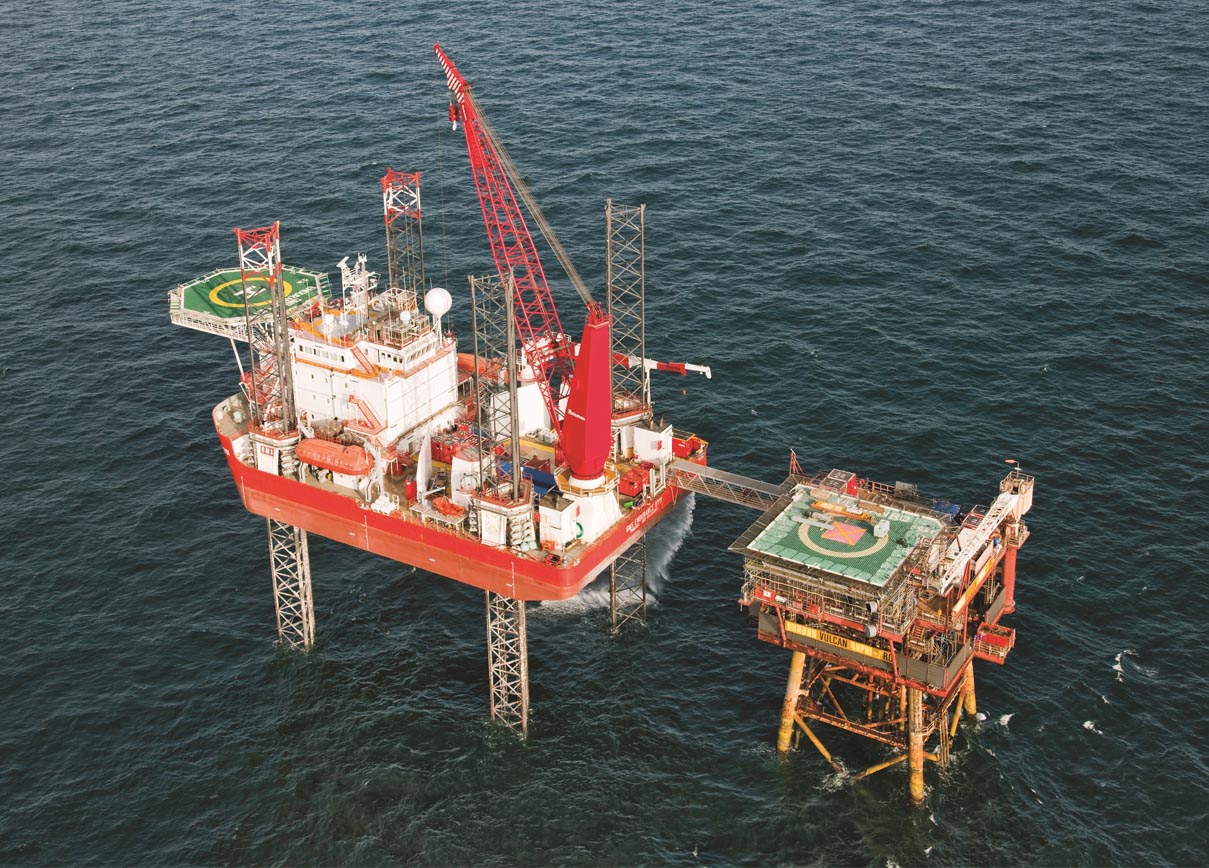
With a current fleet of some 13 self-elevating support vessels, they are used in offshore oil and gas platform refurbishment and maintenance work, on well intervention activities, as well as on offshore wind turbine installation and maintenance duty.
They are also effective for offshore oil and gas platform installation and decommissioning.
Ranging in size – K-Class (Small), S-Class (Mid) and E-Class (Large) – the four-legged vessels are capable of operating in water depths of 45m to 80m, depending upon the leg length.
Four legs are certainly better than the prevalent three-leg vessels which are not considered to be as safe or versatile.
The vessel’s four legs give such structures weather tolerance, location versatility and operational stability.
Being self-propelled means that they do not require tugs or other support vessels to help in moves from one location to elsewhere in a particular field – that time-efficiency is more cost-effective than those vessels without such propulsion.
The very-large desk space creates ability for accommodation facilities for up to 300 people and big crane capacity, sufficient for each client’s requirements.
Top Global Clients
The group has a global clientele, including Aramco, Total, StatOil, ADNOC, Shell, McDermott, Occidental Petroleum, Orsted, Spirit Energy, ABB, Dubai Petroleum, Fugro, Subsea 7, Siemens, Conoco Phillips, Larsen & Toubro, Ithaca Energy, National Petroleum Construction, Hyundai Heavy Industries, Vestas, NT Offshore, Saipem, Cooec, and Heerama amongst many others on its lists.
The Middle East and North Africa region (MENA) continues to be the largest geographical market representing 89% (2020: 88%) of total Group revenue. The remaining 11% (2020: 12%) of revenue was earned from Offshore Windfarms in the renewables market in Europe.
National Oil Companies continued to be the Group’s principal client representing 70% of 2021 total revenue (2020: 68%).
The UAE remains the largest revenue contributor in the MENA region, generating 50% of total revenue last year (2020: 52%). The remainder is split between Saudi Arabia and Qatar at 19% and 20% respectively (2020: 17% and 19%).
Larger Investors
The group has fractionally over 1bn shares in issue.
Mazrui Investments has the biggest holding (25.6%), while other larger holders include Seafox International (15.6%), Castro Investments (4.85%), Qatar Insurance (4.53%), and Horizon Energy (3.14%).
Related Party Transactions
In April 2020 Seafox International announced a possible cash Offer for the group.
Seafox is a leading global offshore jack-up company, providing services to support the oil and gas and renewable industry. It owns and exclusively manages eleven self-elevating jack-up units.
The two groups came to an understanding earlier last year ahead of the reorganisation and fund-raising.
The Group has never had transactions with Seafox International and has agreed with its banks, in its latest agreement signed in March 2021, restrictions on any future transactions with them or their affiliates.
During the last trading year, the Group received catering services totalling $0.5m (2020: nil) on-board one of its vessels provided by the National Catering Company, an affiliate of Mazrui International LLC.
Reorganised and back to profit
Very shortly we should be seeing the group updating shareholders about the first half-year’s trading up to the end of June.
There were indications of higher utilisation rates earlier in the year, which are expected to have continued in the subsequent months. Also, higher day rates could well become evident for the year as a whole to end December.
There will, no doubt, have been continued improvement on the group’s day rates due to demand in the Middle East outstripping supply.
The Executive Chairman, Mansour Al Alami, recently stated that:
“The primary aims of last year included reorganising the Company, to regain the trust of stakeholders and to build a business able to consistently provide value to its shareholders. These aims have been delivered on and we are proud of having made such significant progress in such a short period of time. GMS today is back to profitability, it is back to being on a growth path and continuing to deleverage.”
Leverage decreasing fast
Net bank debt reduced to US$ 371.2m ($ 406.3m). A combination of reduced debt and improved adjusted EBITDA led to a 28% reduction in the net leverage ratio reducing from 8.0 times in 2020 to 5.8 times at the end of 2021. The Group will continue its focus on organically reducing leverage going forward. Its target is now 4.0 times, which is a massive turn around and extremely positive.
The Group is currently operating as ‘a Going Concern’ without any material uncertainties. This is the first time the Group has been operating as ‘a Going Concern’ without any material uncertainties since 2017.
With reduced debt and much improved terms, the Company will be well placed to benefit from the improving market cycle in oil and gas in the Middle East and inrenewables in Europe and the potential for increases in day rates as the market continues to tighten. This will build on the significant progress made to-date, which includes a much-reduced costs base, a strengthening of the order book and far better levels of vessel utilisation.
Analyst Opinion – 20p Target Price
Daniel Slater, at Arden Partners, the group’s corporate broker, rates the shares as a Buy, with a Target Price of 20p a share.
Following last year’s fund raising and corporate reorganisation the net debt figure is accelerating downwards.
He considers that the company’s market is increasingly tightening as customers ramp up activity, which will put upward pressure on GMS vessel utilisation and day rates to the benefit of the group.
For the current year Slater is estimating group sales to rise to $135.3m ($115.1m), while adjusted pre-tax profits will rise to $32.8m ($20.7m).
For the coming year he has pencilled in $143.6m revenues, $39.7m profits, worth 3.1c in earnings per share against an estimated 2.5c this year.
Conclusion – Trading Update Due Soon
The net debt position might well put off many investors, however, looking at the way that leverage ratio has dropped in the last two years, there is a much more positive feeling about that situation.
As far as the group’s business pipeline is going, there are suggestions that a substantial uplift may soon become visible as the boom out in the Middle East increases.
A recent report infers that the area’s oil producers are in line for an extra $1.3trn as higher energy prices continue to flood through. Additional income is anticipated over the next four years as Russia’s war in Ukraine continues to send prices into overdrive.
Bigger oil revenues in the region will drive even higher the demand for new production sources and GMS will be a natural beneficiary as discovery expenditure increases.
We are only a few weeks away from the group declaring its Interim Trading Update.
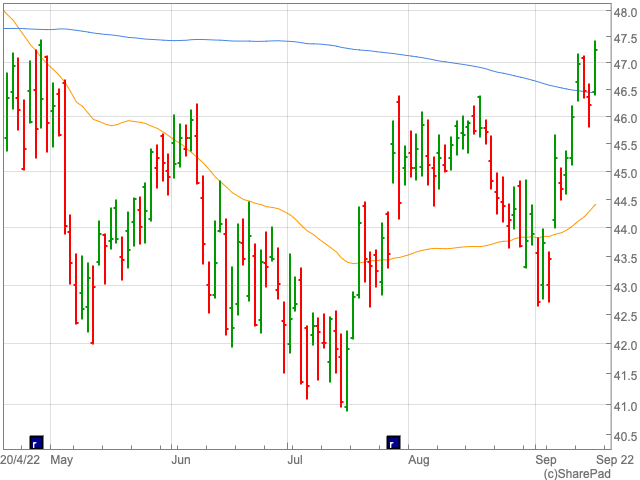
Looking at Arden Partners estimates for this year and next, it occurs to me that this group’s shares are substantially undervalued at the current 6.75p, at which level they are trading on a sterling equivalent of 2.17p earnings for 2022 and 2.69p for 2023, putting them on just 3.11 times and only 2.51 times price-to earnings ratios respectively.
Now that is a very cheap way to participate in the booming energy sector, giving UK investors an interesting way to reduce their own energy expenditure!
The FTSE 100 stage a recover on Thursday as London’s leading index bounced back from a period of selling sparked by a higher than expected US CPI print earlier this week.
The index rose as high as 7,326 on Thursday before falling to trade under 7,300, nonetheless still in positive territory.
Cyclical stocks led the rally with the UK banks among the top risers as investors positioned for higher interest rates in the near term.
“In the UK, the FTSE 100 traded 0.6% higher, with banking stocks leading the way. Lloyds and NatWest were among the biggest risers, no doubt driven by investor expectation of higher interest rates and how that might have a positive impact on the banking sector’s earnings,” said Russ Mould of AJ Bell.
Lloyds shares notably traded at the highest levels since May as investor positioned for higher earnings in the bank. Natwest and Barclays were also gaining and approaching the highest levels for some months.
The FTSE 100’s Housebuilder also found strength following positive announcements from Redrow and MJ Gleeson in recent days. The two sets of data complimented recent updates from Barratt Developments, Persimmon and Taylor Wimpey in as far as the trend of higher house prices were supporting revenues at a time questions were being asked of the strength of the Uk housing market.
MJ Gleeson shares rose 3% on Thursday following a record set of results from the affordable-housing specialist.
“Gleeson Land’s market remained robust throughout the year and the business delivered a strong result. Demand in the South of England for quality sites with sustainable and implementable residential planning permission remains strong and the division is well-placed to drive further sustainable growth,” said Dermot Gleeson, the MJ Gleeson Chairman on Thursday.
Rolls Royce
Rolls Royce were the FTSE 100’s top gainers as the engineering company announced the sale of ITP Aero for €1.8bn. The sale will provide Rolls Royce with a welcome cash injection to help pay down debt and strengthen the balance sheet. Rolls Royce shares were 5.7% higher at the time of writing.
Ex-Dividends
Hikma Pharmaceuticals and Melrose industries were among the FTSE’s fallers as the companies went ex-dividend. Triple Point Social Housing REIT and Murray Income Trust were notable investment trust ex-dividends on Thursday.
Tertiary Minerals (LON: TYM) has signed a technical co-operation agreement with First Quantum Minerals for two copper projects in Zambia – Mukai and Mushima North. Mukai is next door to First Quantum’s Trident project. First Quantum also has interests in the same region as Mushima North. First Quantum will supply historical exploration date for the areas. First Quantum does not have any first right of refusal over the projects. Tertiary Minerals is the biggest mover on the day with a 72.1% gain to 0.185p a share.
Medical imaging technology developer Feedback (LON: FDBK) shares have risen 20.8% to 0.725p ahead of full year results next Tuesday.
Oriole Resources (LON: ORR) says phase 4 drilling results from the 90%-owned Bibeme gold project in Cameroon. This shows the existence of multiple grade-bearing sub-horizontal veins as well as the previously tested sub-vertical veins. Shard Capital have released a broker note. The share price jumped 16.1% to 0.18p.
Croma Security Systems Group (LON: CSSG) has won four new contracts worth a total of £6.1m a year. The largest is a £5m, three year manned guarding contract worth £5m a year and the same client has awarded a £500,000 a year contract for building security. There is another manned guarding contract and one for the ILOQ battery free digital door lock that is opened by smartphone from an education provider. Croma expects to report EBITDA of £1.5m in the year to June 2022. There will be a £100,000 bad debt provision. The share price rose 9.38% to 70p.
Parkmead Group (LON: PMG) has received regulatory approval for the drilling of high impact prospects at the Skerryvore project in the North Sea. Parkmead is the operator and has increased its interest in the licence from 30% to 50%. The share price rose 6.4% to 59.8p. There was negative oil exploration news from Longboat Energy (LON: LBE). The Copernicus exploration well offshore Norway, where Longboat Energy has a 10% interest, was dry. Longboat Energy shares slipped 12.2% to 39.5p. United Oil & Gas (LON: UOG) says that the AJ-14 well on the Abu Sennan licence in Egypt, where it has a 22% working interest, has not established consistent flow rates due to near bole hole formation damage. The testing continues in the Abu Roash-C interval at AJ-14. The share price fell 5.8% to 1.625p.
Sound Energy (LON: SOU) continues to fall after the Moroccan tax claim was upheld by the local taxation committee. The liability is currently estimated at $19.7m. The share price fell by one-fifth yesterday and a further 18.1% to 0.95p today. Sound Energy was one of the largest companies on AIM a few years ago and it is currently capitalised at around £16m, which is similar to the tax liability.
Ex-dividends
AdEPT Technology (LON: ADT) is paying a dividend of 1p a share – the first dividend since 2019 – and the share price is unchanged at 121.5p.
Belvoir Group (LON: BLV) is paying an interim dividend of 4p a share and the share price has fallen 5p to 225p.
Best of the Best (LON: BOTB) is paying a final dividend of 6p a share and the share price is unchanged at 440p.
Colefax Group (LON: CFX) is paying a final dividend of 2.7p a share and the share price is unchanged at 790p.
DSW Capital (LON: DSW) is paying a maiden dividend of 4.22p a share and the share price is unchanged at 115p.
i3 Energy (LON: I3E) is paying a monthly dividend of 0.14p a share and the share price has fallen 0.075p to 24.625p.
Lords Group Trading (LON: LORD) is paying an interim dividend of 0.67p a share and the share price is unchanged at 71.5p.
Midwich Group (LON: MIDW) is paying an interim dividend of 4.5p a share and the share price has risen by 1.5p to 506p.
Restore (LON: RST) is paying an interim dividend of 2.6p a share and the share price is 0.5p higher at 422.5p.
Van Elle Holdings (LON: VANL) is paying a final dividend of 1p a share and the share price has declined by 0.5p to 40.5p.
Vector Capital (LON: VCAP) is paying an interim dividend of 1p a share and the share price rose 0.5p to 55p.
Shell have announced they will be appointing Wael Sawan, head of the group’s integrated gas and renewables division, as their new CEO signally a possible greater focus on renewable energy and clean technology.
Shell have come under pressure from all angles during the cost if living crisis as they enjoy record profits provided by higher energy prices.
Many see this as profit at being earned by Shell at the expense of households facing soaring energy bills. To some extent this is true, but if these profits are to be invested into developing secure renewable sources of power for the future, it will lessen the criticism of the company.
Indeed, Shell have been investing in clean technology for some years but it is not yet recognised clearly in their earnings reports and raises question about the seriousness of their commitments to green energy.
“Ben van Beurden has been at Shell’s helm for almost a decade, so to that end the news of his resignation shouldn’t come as too much of a shock. It’s natural, and arguably right, that leadership gets a fresh pair of eyes at about this time. However, the real news is that it’s Wael Sawan, head of the group’s integrated gas and renewables division, who will be taking the wheel,” said Sophie Lund-Yates, Lead Equity Analyst at Hargreaves Lansdown.
“For a group whose renewable strategy has been somewhat vague, though grand sounding, this is a clear marker that Shell intends to change this. Change won’t happen overnight, but it’s reasonable to think that at least tweaks to the existing renewable strategy could be on the cards.”
Wael is certainly making the right sounds in his first comments as CEO by heavily pointing to energy transition and clean energy.
“I’m looking forward to channelling the pioneering spirit and passion of our incredible people to rise to the immense challenges, and grasp the opportunities presented by the energy transition. We will be disciplined and value focused, as we work with our customers and partners to deliver the reliable, affordable and cleaner energy the world needs,” Wael said.
Cineworld shares have built a base around 3p following the announcement of chapter 11 proceedings earlier in September as they attempt to bring a $5 billion debt pile under control.
The filing for chapter 11 bankruptcy covers a $1.94 billion debtor-in-possession financing facility from existing lenders to ensure the group can continue to restructure the business while operations remain uninterrupted.
Cineworld operate 747 sites and 9,139 screens globally following the ambitious acquisition of Regal Entertainment.
A slow return to the cinemas by an audience adapted to consuming movies during COVID-19 has ravaged the business hoping for a strong bounce back from the pandemic.
In addition, a low number of blockbuster releases meant cinema goers had little impetus to return to the cinemas in a world now dominated by streaming services.
Cineworld reported $1.8bn revenue in 2021, up from $852m in 2020, but this hasn’t been enough to provide the necessary cashflow to support their debt commitments.
Indeed, a growing trend of films to going straight to streaming services such as Netflix, Disney and Amazon Prime has long signalled trouble for cinemas.
However, those cinemas providing and more rounded entertainment and leisure experience such as Everyman have managed to grow by focusing on food offerings in a more intimate setting.
Hilton Foods previously made the strategic decision to position themselves in the vegan and vegetarian markets are reaping the benefits.
Hilton Foods saw vegan and vegetarian volumes grow 40% per annum in the 28 weeks to 17 July 2022 over a three year period total group revenue rose 20.4% to £2,038.7m.
The higher sales volumes were enough to fend of a 30bps drop in operating margin to 2.0% as EBITDA grew 5.7% to £66.6m.
However, the issue for Hilton Foods was not the prior year, but how rising prices would impact profit going forward.
Hilton also warned volumes could suffer as a result of the cost of living crisis causing Hilton Food shares to give up a third of their value in early trade on Thursday.
Food Technology
Hilton Foods noted strong growth in their New Zealand markets as well as the rollout of a prototype food park in Sweden.
Hilton continues to focus on protein markets and are investing in UK cultured meat technology ventures in Cellular Agriculture Ltd.
“In the first half of the year Hilton has further strengthened its position as the international protein partner of choice. We have continued to focus on our strategy of diversification and differentiation, driving a further increase in volumes, sales and operating profit,” said Hilton Foods Chief Executive, Philip Heffer.
“At a time when inflationary headwinds have become more pronounced, we have made further progress in broadening and deepening our protein offer, while expanding our footprint across international markets. At the same time, we have made ongoing investment to ensure we lead in technology and automation, with sustainability central to everything we do.”