FTSE 100 dragged down by commodities groups

0

A softer start to equities trading on Monday saw the FTSE 100 give up 0.4% to 7,165.5 in mid afternoon trade, as the market was dragged down by commodities producers after the scramble to compensate for the impact of Russia’s invasion of Ukraine finally started to die down.

The FTSE 100 has been outperforming alternative markets across international borders on the back of its commodities-heavy stocks, however it appears the charm of these companies is starting to wear thin.

“The FTSE 100’s outperformance compared to other global markets has started to falter as the commodity stocks that helped support its relative strength begin to run out of steam,” said AJ Bell investment director Russ Mould.

“Metals prices had already turned and energy markets are starting to struggle too as attention turns to the pressures on demand now the initial supply shock associated with Russia’s invasion of Ukraine has begun to abate. Miners helped drag the FTSE 100 lower on Monday morning as a result.”

Anglo American shares fell 3.8% to 2,715p, Antofagasta dropped 3.2% to 1,077.2p, Endeavor slid 2.9% to 1,629p, Fresnillo decreased 2.3% to 667.4p, Rio Tinto dipped 1.1% to 4,780p, Croda declined 1.2% to 6,809p and Glencore dropped 1.2% to 426.1p.

The price of benchmark Brent Crude fell to $105 per barrel, marking a far cry from its heights of almost $130 per barrel in mid-March. Shell and BP shares fell 1.6% to 2,010.5p and 1.5% to 380.4p, respectively.

Meanwhile, Dechra Pharmaceuticals shares dropped 1.6% to 3,690p after the veterinary healthcare company reported a slowdown in revenue growth to 14% CER as the impact from Covid-19 started to unwind.

The group made a selection of minor acquisitions over the term, serving to boost its revenues, and the firm predicted a strong outlook for FY 2023.

“The complementary product acquisitions we made during the period strengthen our existing portfolio and are performing in line with initial expectations; there are a number of acquisition opportunities that we are assessing,” said Dechra Pharmaceuticals CEO Ian Page.

“We continue to believe in the ability of our people to execute our strategy and remain confident in our future prospects.”

Across international markets, all eyes are set to turn to China’s GDP figures later this week, as investors will use the new statistics to determine the direction of commodities consumption in the world’s largest consumer. The Hang Seng was down 2.7% to 21,124.2.

“In this context the latest Chinese growth figures will be closely watched, given it is one of the most commodity-hungry economies in the world, with the impact of Covid restrictions in particular focus,” said Mould.

The US Federal Reserve is also primed to release its latest interest rates decision this week, which will set the tone for international markets depending on the direction chair Jerome Powell settles on.

“There will be plenty of clue hunting going on as we await the latest decision from the US Federal Reserve at the end of this month,” said Mould.

“The key question is whether Jerome Powell and his colleagues will double up with another 75 basis points rise or if they’ll ease off to avoid the medicine for rampant inflation proving worse than the disease.”

The NASDAQ pre-open trading was down 0.6% to 12,072.2, the Dow Jones was down 0.3% to 31,206 and the S&P 500 was down 0.5% to 3,882.7.

Uber files reveal company attempted to secretively lobby politicians to reshape transport sector

0

Transport company Uber was caught in the global spotlight last weekend, after 124,000 files leaked to the Guardian revealed the company secretively lobbied politicians to change the structure of the transport industry across international segments.

The files, which were also shared with the International Consortium of Investigative Journalists (ICIJ), displayed messages and emails spanning 40 counties between 2014 to 2017 as Uber started to work its way into the global transport infrastructure and disrupt established taxi services.

Uber were revealed to have bullied their way into the good graces of friendly politicians, in an attempt to dismantle transport regulations which hindered its business model.

Emmanuel Macron was recorded participating in extraordinary measures to break Uber into France’s ‘closed-shop’ taxi industry, and apparently told the firm he had struck a “deal” with politicians in the French cabinet opposed to the group.

The reports also revealed that Uber utilised a ‘kill-switch’ to stop police and officials from gaining access to sensitive information on raids against its offices in at least six different countries.

Six UK ministers were identified as lobbying for Uber at undisclosed meetings, including former Chancellor George Osbourne and Matt Hancock, alongside further discoveries of how Uber lobbied Boris Johnson using its Conservative connections in an attempt to block new transport regulations across London.

There have further been mentions of tax avoidance, which caused one top Uber executive to resign upon questioning.

Former vice-president of the European Commission Neelie Kroes was also pointed out for assisting Uber in its lobbying of a series of Dutch top politicians, including the Prime Minister, and two of Barack Obama’s highest presidential campaign advisors, David Plouffe and Jim Messina, were reported as helping Uber gain access to top US officials.

Uber claimed its previous history did not reflect the company it had become today, and commented the company was a force for good across the international transport industry.

“We have not and will not make excuses for past behaviour that is clearly not in line with our present values. Instead, we ask the public to judge us by what we’ve done over the last five years and what we will do in the years to come,” said Uber senior vice-president of public affairs Jill Hazelbaker.

“Uber is now one of the largest platforms for work in the world and an integral part of everyday life for over 100 million people. We’ve moved from an era of confrontation to one of collaboration, demonstrating a willingness to come to the table and find common ground with former opponents, including labour unions and taxi companies.”

“We are now regulated in more than 10,000 cities around the world, working at all levels of government to improve the lives of those using our platform and the cities we serve.”

Hostmore – a million people can’t be wrong

This morning’s Trading Update for the 26 weeks to 3 July contained no surprises, which in itself is very reassuring.

Market guidance continued

The hospitality group, which takes in ‘Fridays’, the cocktail bar and restaurant brand, ‘63rd+1st‘, and the fast casual dining brand ‘Fridays and Go’ maintained its guidance to the market that it issued in late May.

However, just as an indication of the size of the group’s fast-expanding business, it should be noted that more than one million customers visited the group’s brands last month alone.

And that is sure to be a growing number as the year progresses.

Opening even more

The group is committed to its programme of new openings, the latest being a ‘63rd and 1st’ restaurant on Frederick Street in Edinburgh. That took the group’s estate up to 63 across the UK.

Despite potentially choppy waters, due to the current environment, the group has sufficient balance sheet strength to progress its plans.

Broker has a 125p Target Price

The group’s broker finnCap is looking for sales this year, to end December, of £214.3m and adjusted pre-tax profits of £3.5m, worth 2.3p in earnings per share.

But going forward the broker’s analysts Nigel Parson and Michael Clifton have estimates out for £245.3m sales revenue next year, a trebled profit of £11.3m and 7.2p of earnings, which would see a maiden dividend of some 3.1p per share.

It is against those market predictions that the shares of this group stand out as not only being the cheapest in its sector, but also of excellent value.

Recovery and value play

At the current 34.5p the shares are trading on just 4.8 times prospective earnings and paying a very handsome 8.9% yield next year.

On the first day of trading in its shares the company’s price touched 156p at one stage, that was last November, since when they have drifted right back.

This is a massive recovery play that needs to be followed very closely and enjoyed.

AIM movers: Mpac suffers delays and Cornerstone FS revenue growth

0

Capital equipment manufacturer Mpac Group (LON: MPAC) is the worst performer on AIM today with a 31.6% slump to 260p after it warned that full year profit would be significantly below expectations. Interim revenues are ahead of last year and the order book is also higher. However, difficulties sourcing components and delays to the timing of orders have hampered progress. The longer lead times and inflationary pressures will continue for the rest of the year. The core food and healthcare markets remain resilient, so the long-term outlook is positive. There was cash of £14.5m at the end of 2021, which has enabled investment in inventories. The interims will be published on 8 September.

A positive first half trading statement from international payments services provider Cornerstone FS (LON: CSFS) has triggered a bounce back in the share price. It has jumped 56.7% to 11.75p. First half revenues were 129% higher at £1.9m and three-quarters is direct business. That has helped interim gross margin improve from 38.1% to 61%. A lack of cash remains a problem, though. Management believes that it has enough cash to get to the end of the year. Even so, Cornerstone FS needs to make acquisitions to reach a scale where it can be profitable and that will be difficult at this share price.

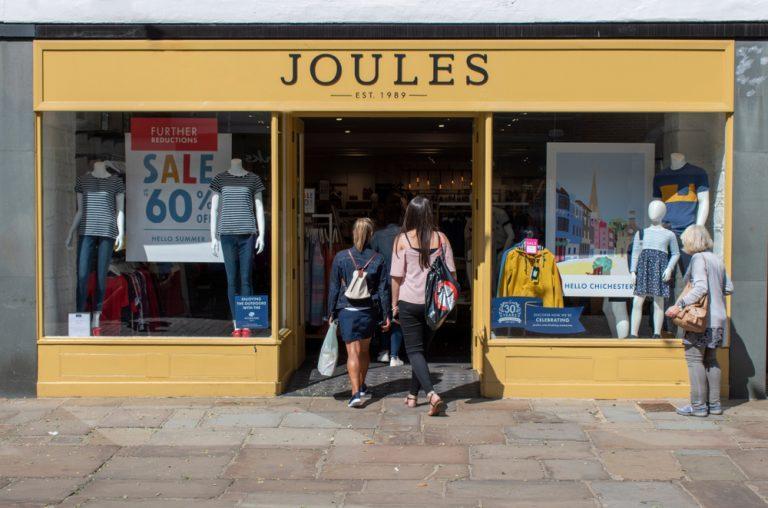
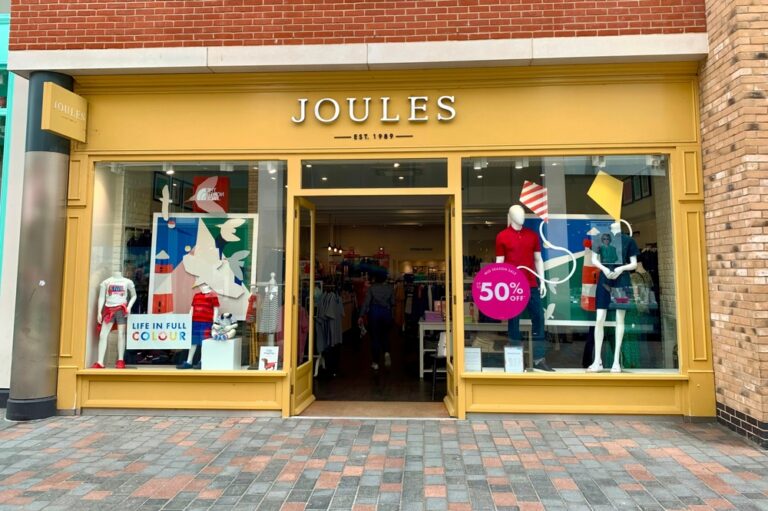
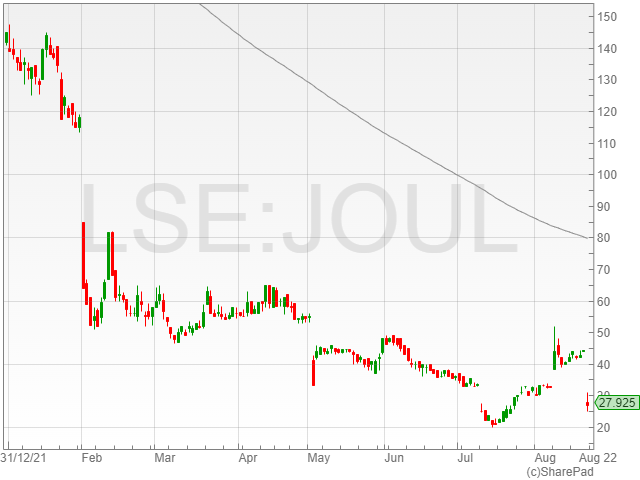
Fears concerning the financial position of fashion retailer Joules (LON: JOUL) have hit the share price, which has slumped 19.7% to 26.625p. The shares have fallen by 81.6% so far this year. This was due to the appointment of KPMG as debt adviser. Net debt was £21.4m at the end of May 2022 and there was headroom of £11.3m. The company is trying to manage its cash so that it gets through the seasonal borrowing peak. Chief executive Nick Jones is leaving the board and a successor is being sought.

Sample results from the Loflin project have sparked a 16% rise in the Lexington Gold (LON: LEX) share price to 2.9p. They confirm shallow, high-grade intercepts of up to 10g/t gold. A JORC resource estimate for the combined Jones-Keystone-Loflin project is expected by the end of July.

Retail and promotions business SpaceandPeople (LON: SAL) says interim revenues jumped from £1.1m to £2.5m. Trading has been improving each month and full year revenues of £5.5m are anticipated. The share price recovered 15% to 115p. Last month there was a share consolidation and the post-consolidation share price was 140p. Oil and gas company San Leon Energy (LON: SLE) has returned from suspension following the deals announced on Friday. The share price fell 9.7% to 36.8p. The series of deals will consolidate the stake in the OML18 project in Nigeria to 44.1%. San Leon will also increase its stake in Energy Link Infrastructure (Malta) Ltd, which is building an oil export pipeline, to 50.6%.

Wizz Air shares drop on €450m reported loss as air travel chaos impacts revenues

0

Wizz Air shares dropped 3.4% to 1,794.6p in late morning trading on Monday following a disappointing slate of results for the budget airline in Q1 2023, including an operating loss of €285 million and a reported loss of €450 million on the back of unrealised FX losses, disruption costs, lower utilisation in Q1 and an adverse pricing environment.

Available seat miles (ASKs) for the term fell 30% compared to Q1 FY 2020, and grew sequentially month-on-month as the bulk of Covid-19 restrictions were eased over March to May 2022.

Revenue per available seat miles (RASK) was down 10% against Q1 FY 2020, with net fares reportedly in line with FY 2020, however load factor was down 9% at 85%.

Wizz Air commented RASK improved month-on-month, with June RASK at minus 1.5% linked to higher net fares compared to a rise of 6% in June 2020.

The budget travel firm further mentioned a 14% climb in ancillary revenues from Q1 2020, with ticket fares down 12% against the term.

Wizz Air confirmed fuel cost for available seat kilometres (CASK) was up 94% against Q1 2020, driven behind an average fuel price of 1,239 USD/mT. The group reported it had recently announced FY 2023 “insurance” hedge coverage levels, which were completed, along with a return to systemic hedging starting from FY 2024.

The company also noted an ex-fuel CASK rise for Q1 of 16% at 2.6 cts against 2.2 cts in FY 2020, of which disruptions drove a 0.2 cts uptick and an increase of approximately 50m EUR.

Wizz Air added that the balance of the ex-fuel CASK increase from FY 2020 was predominantly driven by a 10% lower than historical utilisation over the period as a result of the gradual month-on-month ramp-up.

The budget airline commented its liquidity remained strong, with its cash balance at the close of the term improving to approximately €1.5 billion, with the company continuing to maintain its investment grade rated balance sheet position.

Wizz Air said its outlook for Q2 2023 included an expected material operating profit linked to revenue and pricing momentum improvements, alongside a higher fleet utilisation to assist improvements towards its historical ex-fuel CASK levels as it works to reduce impact from operational disruptions.

The group also reported an expected continued RASK climb on the back of higher fares and improving load factors, resulting in a high-single digit RASK improvement for Q2 2023 from Q2 2020.

Wizz Air confirmed load factors as of July were set to improve over 90% with a strong fare rate and a reduction in industry impact, alongside high consumer demand.

Wizz Air announced an expected 5% reduction in utilisation against the plan outlined in its FY results in a move to reduce the impact of disruptions. It also expected summer ASK growth of approximately 35% against Q2 2020 levels.

Sequoia Economic Infrastructure Income Fund delivers annual dividend

0

Sequoia Economic Infrastructure Income Fund shares were up 0.5% to 87.8p in early morning trading on Monday following its delivery of a 6.25p dividend per ordinary share, in line with its annual target.

The company reported a NAV per ordinary share of 100.5p in FY 2022 against 103.1p in FY 2021, alongside a NAV total return of 3.5% compared to its outperformance in the last year of 13.5%.

Sequoia announced a share price total return of 4.5% from 17.4% year-on-year, with a dividend cash cover of 1.06x compared to 1.04x the year before.

The firm highlighted total net assets of £1.7 billion from £1.8 billion, and an annualised portfolio yield-to-maturity of 8.4% against 9% in the previous year on 31 March 2022.

The group further mentioned an ongoing charges ratio of 0.8%, remaining flat compared to its ratio in FY 2021.

Sequoia commented it had shifted to a more defensive portfolio over the term, with stronger credit ratings and higher ESG scores.

The firm split its portfolio across 76 investments in eight sectors, 29 sub-sectors and 12 mature jurisdictions.

It reported 95% of its investments in private debt, with 50% in floating rate investments in a move to capture short-term rate rises.

Sequoia also noted a short weighted average life of 4.1 years, creating reinvestment opportunities, and a weighted average equity cushion of 33%.

The company said it believed its trend towards a defensive portfolio with a higher credit rating placed it in a strong position to manage a potentially stagflationary economic stage, and confirmed a positive outlook for the company in FY 2023.

“The Company has remained resilient against the backdrop of significant market volatility. We successfully delivered our dividend target of 6.25p per share on a cash covered basis with a small increase in dividend cover, a position we expect to strengthen in the current year given the rising level of interest income we are now experiencing from our well diversified portfolio,” said Sequoia chair Robert Jennings.

“For some time, we have focused on more defensive loans with stronger credit ratings and better ESG metrics, a pattern we expect to hold to for the foreseeable future. We believe our economic infrastructure portfolio is well positioned for a higher interest rate and potential stagflationary environment and we remain confident in the outlook for our Company.”

Dechra Pharmaceuticals revenue growth slows to 14% CER as Covid impact unwinds

0

Dechra Pharmaceuticals shares fell 2.9% to 3,640p in early morning trading on Monday after the group reported a slower revenue growth in HY2 2022 in its trading update, in line with management expectations as the impact of the Covid-19 pandemic on the pharmaceuticals market started to unwind.

Dechra Pharmaceuticals mentioned a 14% rise in company revenue at constant exchange rate (CER) and a 12% increase at actual exchange rate (AER).

The veterinary medicine firm announced a European pharmaceuticals revenue climb of 8% at CER and a 5% uptick at AER, including the contributions from its Tri-Solfen acquisition on 5 February 2021 and Osurnia on 27 July 2020.

Dechra Pharmaceuticals also noted a North American pharmaceuticals growth of 24% at CER and 25% at AER despite a rise in generic competition, with revenue also contributed from its series of product acquisitions over the timeframe.

The group commented its supply chain remained robust, despite the ongoing geopolitical volatility, and its cost base increased as a result of global inflation. However, the company said it was well-placed to proactively manage the rise in expenses.

Dechra Pharmaceuticals further highlighted its six minor product acquisitions for the North American market, alongside the global rights to novel canine lymphoma treatment verdinexor (branded as Laverdia), giving it access to a new niche therapy on the market.

The company also drew attention to its launch of novel therapeutic dog sedative Zenalpha.

“We are delighted that the financial year just ended was another record year for Dechra and in line with expectations, with Group revenue growth slowing to more normal levels as expected in H2 as the impact of the pandemic on our markets unwinds,” said Dechra Pharmaceuticals CEO Ian Page.

“Whilst we expect current macroeconomic uncertainties to continue, the veterinary pharmaceutical market remains resilient and in growth. Our global trading continues to be strong and we continue to outperform the market, particularly in North America.”

“The complementary product acquisitions we made during the period strengthen our existing portfolio and are performing in line with initial expectations; there are a number of acquisition opportunities that we are assessing. We continue to believe in the ability of our people to execute our strategy and remain confident in our future prospects.”

AIM reversal: Fiinu’s open banking opportunity

Immediate Acquisition sold the Immedia in-store broadcasting business and turned itself into a cash shell. New bank Fiinu has reversed into Immediate Acquisition and the company’s name will change to Fiinu Group once registration is accepted at Companies House.
Management is confident that it can attract deposits to enable it to launch its Plugin Overdraft which can be offered to anyone with a bank account. An applicant can be assessed and a decision on whether they are suitable for the overdraft can be made promptly via the company’s app.
There were eleven trades on the first day of trading a...

New standard Listing: Spiritus Mundi diagnoses targets

New cash shell Spiritus Mundi wants to buy a clinical diagnostics business. No formal discussions have begun.
Diagnostics is an area that has gained plenty of publicity in the past three years. There has been a boost to demand from Covid-19 although the peak was passed a long time ago.
The share price ended the week at 6p (5p/7p). There were no trades recorded. The pro forma net assets are just over 2p a share. More cash could be raised if warrants and options are exercised.
The lack of liquidity and premium to net assets mean that it is best to watch progress before considering investing.
===...

Aquis weekly movers: Black Sea Property NAV rise and Chapel Down flat

Black Sea Property (LON: BSP) reported its 2021 figures at the end of the previous week, but the share price did not react until Thursday. There was an increase in NAV from 1.23 cents a share to 1.37 cents a share, helped by revaluation gains and the profit from disposal of a subsidiary. Black Sea Property shares increased from 0.3 cents a share to 0.55 cents a share, making it the best performer on Aquis.  

Valereum (LON: VLRM) reported an increased loss of £1.84m for 2021. There is still £1.43m in cash and net assets were £2.51m at the end of 2021. There was no news about the regulatory approval for the acquisition of the Gibraltar Stock Exchange. The share price rose 8.33% to 26p.

Clean Invest Africa (LON: CIA) says that clan coal business CoalTech has commenced commercial coal production in South Africa. Initial production will be 3,500 tonnes/month and it is expected to double in 2023. That could be enough to eventually generate annual net profit of $1.2m. The first coal pellets should be sold in September. There are tests running in other countries. The shares rose 4.1% to 0.255p.

Invinity Energy Systems (LON: IES) says that the world’s largest hybrid energy storage system, incorporating a 5 MWh Invinity Vanadium Flow battery, was launched at the Energy Superhub Oxford. Jonathan Marren has been appointed as chief development officer, having previously been a non-exec director. The share price edged up 1.11% to 45.5p.

==========

Fallers

Wine maker Chapel Down Group (LON: CDGP) says interim revenues are in line with the same time last year due to the disappointing 2021 harvest. This year’s harvest should be better and full year revenues should be higher. Price increases should help to improve margins. Net cash was £3.76m at the end of June 2022. Net assets are 19.5p a share. Five directors bought shares at between 19.6p and 19.9p a share. The share price fell 9.8% to 19.4p.

Samarkand (LON: SMK) says trading is in line with expectations in the year to March 2022. Revenues are forecast to be £16.5m and the loss estimated to be £8.3m. There was £4m in the bank. Samarkand provides e-commerce technology and services to clients that wish to access the Chinese market. Trading has been hampered by Covid lockdowns. Management says that trading conditions are improving, although 2022-23 revenues are likely to be flat. Margins should improve. The share price fell 9.68% to 70p, compared with the placing price of 115p.

Waste plastic to energy technology company Hydrogen Utopia International (LON: HUI) is extending the term of the 40 million warrants issued at the time of the flotation. The new deadline for conversion at 15p a share is the fourth anniversary of the flotation on 6 January 2026. The share price fell 7.14% to 4.875p, compared with the placing price of 7.5p.

Ecotricity has increased its stake in Good Energy (LON: GOOD) from 26.1% to 27.2%. The share price fell back 5.88% to 245p.

AQRU (LON: AQRU) has appointed First Sentinel as corporate adviser and Tennyson Securities as broker. They are replacing Novum Securities. The decentralised finance-focused incubator has launched AQRU Trend, a high-return strategy optimised for cryptocurrencies designed for small investors to access competitive returns in the crypto market. It is available through the AQRU.io platform. The share price fell 1.79% to 1.375p.

All Star Minerals has not only changed its name to Marula Mining (LON: MARU) on 4 July it has also consolidated 100 shares into one new share. That means that the consolidated price for 1 July was 2.45p. The share price has dipped to 2.41p, although some websites have the share price rising by more than 9,700% because they have not adjusted for the consolidation.