SSE Thermal & Equinor to acquire Triton Power for £341m

0

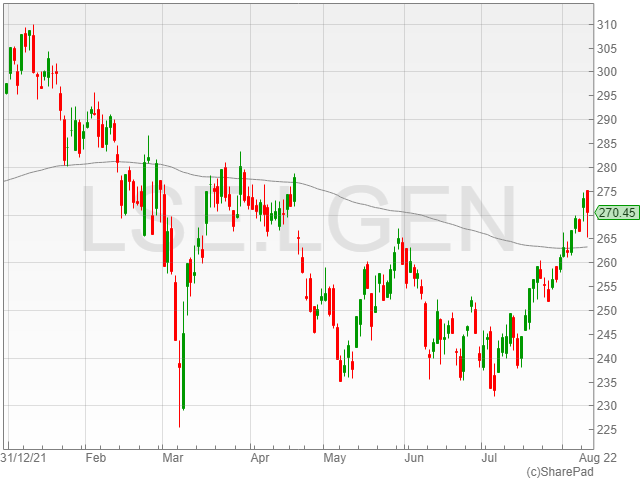
SSE Thermal and Equinor have reportedly agreed to acquire Triton Power from Energy Capital Partners for a consideration of £341 million.

The transaction will see the companies execute the next step in their collaboration to decarbonise the UK’s power system, with SSE Thermal and Equinor set to jointly own and run Triton Power between themselves.

Triton Power currently operates the 1.2 GW combined cycle gas turbine (CCGT) Saltend Power Station located in the Humber region in East Yorkshire.

The power station is a potential primary offtaker to Equinor’s H2H Saltend hydrogen production project, with H2H expected to kick off the wider decarbonisation of the Humber sector as part of the East Coast Cluster, one of the country’s first carbon capture, usage and storage clusters.

https://twitter.com/ssethermal/status/1541686330018742273

Humber is currently the UK’s most carbon-intensive industrial area. The operation aims to partially abate the region by 2027 through blending up to 30% of low-carbon hydrogen. The project will work towards 100% abatement by 2035.

Triton Power’s portfolio also includes the 140 MW open cycle gas turbine (OCGT) Indian Queens Power Station in Cornwall and the decommissioned CCGT Deeside Power Station in north Wales, which provides carbon-free inertia to the system.

The agreement will reportedly see Triton Power used as a platform by the two companies to develop additional low-carbon projects to support the transition to net zero and progress the decarbonisation work already completed by Triton.

The deal is scheduled to close in September, subject to UK National Security Filing and EU Merger Control.

“Flexible energy will be absolutely essential as renewable energy scales up over the coming years, providing vital back-up while protecting security of supply,” said SSE Thermal managing director Catherine Raw.

“But the real prize will be how we decarbonise that flexible energy over the longer term, and we are excited, in particular, by the hydrogen and carbon capture opportunities at Saltend. Together with Equinor, we will explore every avenue to decarbonise Saltend and create new opportunities at other assets so they can play a continued role in a net zero future.”

“We welcome our new colleagues and I look forward to working with them all as they play a critical role over the years ahead.”

Shell shares: is now the time to buy?

1

Shell has seen its already impressive profits rise higher in 2022, with the oil giant reporting a tripled profit intake for Q1 and a higher dividend payout. The price of oil has surged to heights of almost $130 per barrel since the war in Ukraine kicked off in late February, and currently stands at $112 per barrel for benchmark Brent Crude.

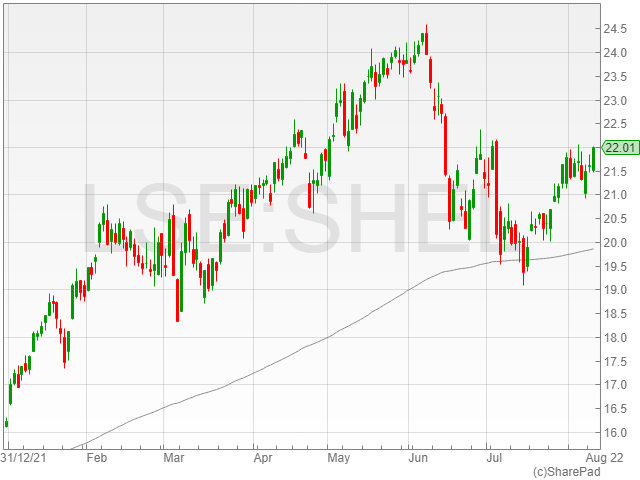
It’s probable that the ongoing conflict will see the price of oil remain high and in turn bolstering Shell’s profits. The Shell share price has been on the rise, and has increased 23.5% in the year-to-date. However, there is an argument that now is a good time to buy Shell shares, with a recent pull back and profits set to likely rise even further.

The energy giant has benefited greatly from western sanctions against Russia, with the sudden scarcity in supply sending its Q1 2022 profits surging to $9.1 billion from $3.9 billion year-on-year.

Shell dividend

Shell paid out a dividend of $0.25 per share for the period. The group is also currently in the middle of an $8.5 billion share buyback programme, with $4 billion completed on 4 May 2022, and the remaining amount scheduled to be bought back in advance of its Q2 2022 results on 28 July.

The company reported its shareholder distributions for HY2 2022 were expected to be in excess of 30% of cash flow from operating activities, which grew 81% to $14.8 billion against $8.1 billion quarter-on-quarter to Q1 2022.

Shell currently has a strong dividend yield of 3.5, and a dividend cover of 2.3, displaying an adequate level of assurance for shareholders that their payouts are secure.

Shell shares valuation

The oil and gas firm also boasts a PE ratio of 12.6 and a forward PE ratio of 5.2, indicating expectations of serious profit growth in the coming months. The stock price has risen in recent months, however it is dramatically undervalued on a historically earning basis.

Meanwhile, the price of oil is not anticipated to return back below the $100 per barrel mark in the near term which will support Shells earnings.

Renewable Energy

Shell are further adapting, slowly, to become a more renewables-focused energy company. The business is first and foremost an oil and gas firm, which not in dispute. However, the group have been taking steps to gradually adapt to a greener model of operations.

Shell has been moving to become a more climate-friendly investment, which is worth noting if ethical investing is something to take into consideration.

Shell has committed to hit net-zero emissions by 2050, in adherence to the Paris Agreement to limit the rise of average global temperatures to 1.5 degrees Celsius.

The firm plans to reduce its emissions from operations, and capture remaining emissions using technology or balancing them with offsets.

So far, Shell has rolled out charging for electric vehicles, alongside hydrogen and electricity generated by solar and wind power.

The company set a goal to reduce absolute emissions by 50% by 2030 against 2016 levels, and reported peak emissions in 2018 which it is committed to reducing until it achieves net zero.

Shell further operates Shell Recharge Solutions, which aims to expand from its network of 10,000 EV charging points across the UK to 100,000 by 2030. The group said 90% of UK drivers would be within a 10-minute drive of a Shell rapid charger by the end of the decade.

In its Q1 2022 results, Shell confirmed several renewable energy developments in its operations. The oil and gas company mentioned it had won bids alongside ScottishPower to develop 5 GW of floating wind power in the UK.

It also started a power-to-hydrogen electrolyser with 20 MW of production capacity, and acquired online energy retailer Powershop Australia in February 2022.

Shell also reported its win of Block OCS-0541 through its Atlantic Shores Offshore Wind joint venture with EDF Renewables North America in the New York Bight offshore wind auction.

In April, Shell signed an agreement with Actis Solenergi Limited to acquire 100% of Solenergi Power Private Limited, along with the Sprng Energy selection of companies based in India.

Shell have seen skyrocketing profits in the year-to-date, and the price of oil is looking set to climb higher as the year goes on, taking Shell’s profits soaring with it. Shell shares are currently undervalued on a historical earnings basis, and the company have made a commitment to transition to net-zero to lessen its burden on the planet which will likely support the Shell share price long into the future.

CareTech recommends Amalfi Bidco £870.3m bid to shareholders

2

CareTech shares soared 21% to 741p in late afternoon trading on Monday after the group reached agreement on a takeover offer for £870.3 million from Amalfi Bidco Limited.

CareTech confirmed it was recommending the offer from Amalfi Bidco to its shareholders, who would receive 750p per company share.

The cash consideration for the entire company’s issued and to be issued shares represents a premium of approximately 28% to the CareTech closing share price on 4 March 2022, the last business day before the offer period commenced.

“On behalf of the CareTech Independent Board, we are pleased to have reached agreement on the terms of a recommended cash offer by Bidco,” said CareTech non-executive director Jamie Cumming.

“We believe that this is in the best interests of our investors and other stakeholders, with the potential to deliver a number of strategic opportunities for the business through private ownership by Bidco.”

“As a consequence of the offer, CareTech’s founders will remain the controlling shareholders of the business. We believe this will allow the existing care-focused culture of the organisation to continue and enable CareTech to continue to deliver high standards of care to its service users.”

FTSE 100 higher on commodities rebound

1

The FTSE 100 was up 0.6% in midday trading on Monday, as mining firms lifted the index higher following commodity price weakness last week as a result of concerns around global growth.

However, the large dividends offered by miners proved attractive after a dip last week, sending commodities stocks soaring to the top of the FTSE 100 in Monday trading.

“On the UK market, the FTSE 100 moved 0.3% higher to 7,228, driven by miners regaining favour with investors after a patchy session last week caused by a retreat in metal prices,” said AJ Bell investment director Russ Mould.

“The market has been concerned in recent weeks about the outlook for the global economy and how recession fears might translate into weaker commodities demand. Names like Rio Tinto lost share price momentum, and in many cases these big miners saw all their year-to-date share price gains wiped out.”

“With big dividends on offer, investors have clearly been hovering over the ‘buy’ button following recent share price weakness and today seems to be the day these mining names are being added to portfolios once again.”

Anglo American shares rose 3.2% to 3,164.5p, Glencore share gained 3% to 459.9p, Rio Tinto shares increased 2.9% to 5,126.5p, Antofagasta shares picked up 2.6% to 1,216p and Fresnillo shares saw an uptick of 1.9% to 802.4p.

Chinese-focused stocks rebound

Meanwhile, Chinese-focused stocks gained as the Hang Seng rose 2.3% to 22,229.5 on the back of easing Covid-19 restrictions.

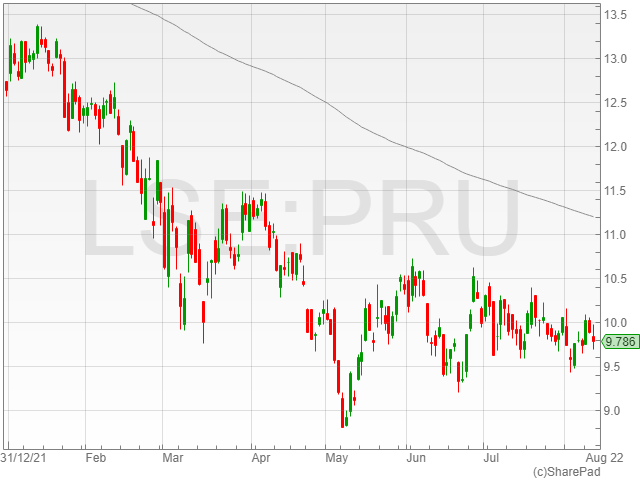
Asia-focused Prudential increased 1.9% to 1,005.2p and Scottish Mortgage Investment Trust rose 2.7% to 752.8p as its portfolio holdings including Tencent and Alibaba climbed.

European Markets

The European markets also enjoyed a strong trading session, with the German DAX rising 0.9% to 13,240.1.

“A good start to the week for European equities bodes well for investors hoping for their portfolios to be repaired after a damaging start to the year,” said Mould.

“Germany’s DAX index jumped … thanks to strength in consumer-facing companies, miners, industrial groups and healthcare names. The top performer for automotive parts specialist Continental while Adidas was also in fashion.”

US markets rise

Across the Atlantic, revised expectations saw US Federal Reserve interest rate projections lower from 4% to 3.5%, providing a wave of relief in the American market.

The NASDAQ was up 0.4% to 12,189.5 in pre-open trading, with the Dow Jones up 0.2% to 31,551 and the S&P 500 up 0.3% to 3,928.

Aim movers: CareTech, Verditek, Inspirit Energy, Caspian Sunrise, Immupharma

0

CareTech Holdings (LON: CTH) is recommending a 750p a share cash offer from a private equity backed management bid vehicle. The share price jumped 20.8% to 739.5p. This values the social care services provider at £870.3m. There is an alternative offer that enables shareholders the choice of taking non-voting shares in the bidder.

Verditek (LON: VDTK) distribution partner Bradclad Group is setting up a joint venture with Norway-based PVC roof membranes manufacturer Protan AB, which will use Verditek lightweight flexible solar panels. There has been 12 months of R&D and testing to perfect lamination of the solar panels to the roofing material. The first order is in England, but Protan will be sending samples to 35 distributors in Europe. The Verditek share price reached an all-time low of 1.3p last Thursday before rising to 1.8p on Friday. There has been a further 38.9% increase to 2.5p today.

Inspirit Energy Holdings (LON: INSP) is the biggest mover on the day rising 47.5% to 0.0435p. The company’s waste heat recovery system, where waste heat exhaust is converted to energy, has completed the first phase of development. The unit has recorded an output of more than 30kW in the first stage build test period. Further enhancements will be made before there are trials. A marine version is also being developed. Inspirit Energy had £348,000 in the bank at the end of 2021, but the company has limited resources to push forward the development of the waste heat recovery system. The market capitalisation is £1.9m.

Oil and gas explorer and producer Arrow Exploration Corp (LON: AXL) shares rose 16.4% to 17p after better than expected results from the well test on the Tapir block on the Llanos Basin of Colombia. The well was drilled to 8,656 feet and encountered six hydrocarbon bearing intervals and was under budget. This is the third well on the block. Arrow Exploration believes that it is still on target to achieve a production rate of 3,000 barrels of oil equivalent per day.

Caspian Sunrise (LON: CASP) shares slumped 14.2% to 4.375p after taking a $12.5m impairment charge. The Kazakhstan-focused oil and gas producer has increased production to 4,050 barrels per day and this could be increased to 5,000 barrels per day.  In 2021, cash generated from operating activities was £7.76m, compared with an outflow in 2020. There have also been disappointing attempts to establish long-term flow rates for deeper structures. On the plus side, Caspian Sunrise says it could pay a dividend in 2022 following the recent capital reduction.

Orosur Mining Inc (LON: OMI) says that the latest drilling at the Anza project in Colombia has shown lower gold anomaly levels, although there are signs of high-grade zinc and copper at depth. However, the existing equipment cannot reach that depth. The share price slipped 8.3% to 8.25p.

ImmuPharma (LON: IMM) says that its US partner Avion Pharmaceuticals is seeking final regulatory guidance from the FDA ahead of the planned phase 3 trial of Lupuzor in Lupus patients. However, there appears to have been little progress since the announcement in May. A study has shown that Lupuzor is safe and well tolerated and been submitted to the FDA. The slow progress may be the reason for the fall in the share price by 5.3% to 5.91p. Avion has exclusive US rights and will fund the phase 3 trial.

AstraZeneca receives recommendations for EU approvals for two breast cancer treatments

AstraZeneca announced it had officially received recommendations for EU approval for its breast cancer treatments Enhertu and Lynparza on Monday.

The pharmaceutical giant reported the recommended approval of its Enhertu treatment for patients with HER2-positive metastatic breast cancer treated with a prior anti-HER2-based regimen, and the use of its Lynparza (olaparib) treatment for patients with germline BRCA-mutated HER-2-negative high-risk early breast cancer.

AstraZeneca confirmed Enhertu had been recommended for approval in the EU as a monotherapy for the treatment of adult patients with unresectable or metastatic HER2-positive breast cancer who had previously received at least one previous anti-HER2-based regimen.

The drug was developed and commercialised by AstraZeneca and Daiichi Sankyo.

The approval recommendation was based off the positive results of the project’s DESTINTY-Breast03 Phase three trial, which indicated a 72% reduction in the risk of disease progression or death compared to trastuzumab emtansine in patients previously treated with trastuzumab and a taxane.

“This recommendation reflects the transformative progression-free survival benefit seen in the DESTINY-Breast03 trial compared to T-DM1, supporting Enhertu as a potential new standard of care and setting a new benchmark in the treatment of HER2-positive metastatic breast cancer,” said AstraZeneca executive vice president of oncology research and development Susan Galbraith.

“If approved by the European Commission, patients in Europe may be able to benefit from this important medicine earlier in the treatment of their disease, improving their chance for better outcomes.”

AstraZeneca’s Lynparza treatment has been recommended for marketing authorisation in the EU for adult patients previously treated with neoadjuvant chemotherapy.

The recommendation was based off results from the company’s OlympiA Phase three trial, which reportedly displayed a reduced risk of breast cancer recurrences, new cancers or death by 42% against a placebo.

The treatment also increased chances of survival overall, with a reduced risk of death by 32% compared to a placebo. The safety of the drug lined up with results in previous trials.

“For patients with high-risk, early-stage breast cancer, the risk of recurrence remains unacceptably high and cancer will return for more than one in four of these patients,” said OlympiA Phase three trial chair Professor Andrew Tutt.

“Today’s recommendation is hopeful news for patients in Europe, as we move closer to setting a potential new standard of care that improves overall survival in patients suitable for treatment with olaparib.”

PZ Cussons expects £590m revenue, trading in line with management expectations

0

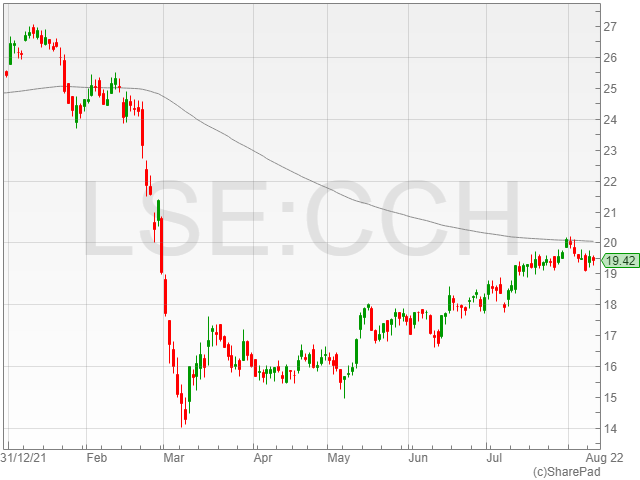
PZ Cussons shares were up 1.1% to 199.6p in early morning trading on Monday after the group reported an expected revenue of approximately £590 million in FY 2022, in line with management expectations.

The company mentioned an anticipated like-for-like revenue growth of 3% and a Q4 like-for-like growth of 7%.

PZ Cussons highlighted that growth continued to be driven by improvements in price/mix, with limited impact on volumes.

The healthcare and hygiene group confirmed its expectations for FY 2022 adjusted pre-tax profits remained unchanged.

The firm noted good revenue momentum in its Must Win Brands, which experienced a 4% rise in Q4. It attributed its growth to an ongoing focus on marketing and execution, alongside a normalisation of supply challenges for US beauty.

PZ Cussons also pointed out its significantly lower rate of decline in Carex on the back of higher demand for its hand hygiene category in the UK as a result of the Covid-19 pandemic.

“As we close our first full financial year under our new strategy, ‘Building brands for life. Today and for future generations’, I am pleased with the significant progress made in returning the business to sustainable, profitable revenue growth,” said PZ Cussons CEO Jonathan Myers.

“With a new team in place, we have re-focused on the core job of building brands and have started to unlock value through dramatically reducing complexity in our business.”

The firm commented its trading was in line with expectations, however it acknowledged the difficulties plaguing the supply chain as well as inflationary worries.

“The trading environment continues to be challenging, with high input cost inflation and pressures on household budgets. We have plans in place to mitigate the impact of this, as we continue to deliver great value for consumers, whilst also investing behind more premium innovations,” said Myers.

“The recent introduction of our new portfolio brand, Cussons Creations, for the value-conscious consumer, alongside the re-launches of Sanctuary Spa and Imperial Leather, are good examples of such initiatives. They have been well received by customers and have allowed us to secure significant distribution gains.”

“We have great brands and great people and, whilst there is more to be done to deliver against our strategy, we remain excited by the long-term opportunities ahead of us.”

Russia defaults on foreign debt for first time in a century

0

Russia has officially defaulted on its foreign debt, marking the first time in a century that the country has failed to complete its payments.

Russia reportedly defaulted on $100 million of coupons on two Eurobonds due in May, after which the country received a 30-day period to make the payments, which expired on Sunday.

Putin’s administration has been walking a razor’s edge since the invasion of Ukraine in late February, however the crippling of Russian access to the West has served to server his government’s capabilities to make good on their debt.

Sources told Reuters that Taiwanese holders of Russian Eurobonds reported not receiving the scheduled interest payments due last month.

The report represents the first time since the Russian revolution in 1917 that the Russia has defaulted on its foreign debt.

Biden’s White House essentially cut Putin’s access to creditors in the West, which meant the government was unable to pay off its debts despite protests that it had the financial resources to settle them.

Russia argued it would pay its debt in roubles, and said it had the cash to pay off its debts, however its foreign currency reserves held abroad remain frozen on account of sanctions.

“It’s a very, very rare thing, where a government that otherwise has the means is forced by an external government into default,” said Loomis Sayles senior sovereign analyst Hassan Malik to Bloomberg. “It’s going to be one of the big watershed defaults in history.”

Russia currently owes approximately $40 billion in foreign bonds, and held around $640 billion in gold reserves and foreign currency before its invasion of Ukraine. The majority of its assets were frozen earlier in the Ukraine conflict.

Companies have already fled from Russia since the start of the war, and western sanctions have served to cripple trade across international borders, so it remains to be seen how the long-term ramifications of this development will impact the Russian government going forward.

The typical risk of a country defaulting would be that states lose confidence in their ability to pay, and block their access to bond-market borrowing until a good amount of confidence is regained in the international lending community. However, Russia has already become a pariah to such a level in the international community that this issue is the least of its concerns.

Poland opportunities for First Property

Property investor and fund manager First Property (LON: FPO) is strengthening its balance sheet so that it has the flexibility to take advantage of opportunities in Poland and the UK.
First Property is set to sell its properties in Romania and its supermarket properties in Poland. That will provide additional cash to reinvest in other properties. The environment is still volatile, but there should be potentially profitable deals surfacing in the future.
Management is optimistic about the prospects in Poland. The economy is continuing to grow, and rental levels are generally linked to Eurozone ...

Manolete Partners set for insolvency boost

Insolvency litigation funder Manolete Partners (LON: MANO) remains profitable, although growth has been hampered by Covid. The increasing level of insolvencies as Government assistance ends will provide more opportunities for Manolete Partners over the long-term.
Manolete Partners specialises in chasing former directors of companies placed in litigation for compensation where there could be some level of wrongdoing. There could be cases relating to companies wrongly claiming Covid financial assistance.
In the year to March 2022, revenues declined from £27.8m to £20.4m. The realised revenues fe...