AIM movers, Filtronic, Actual Experience, Forward Partners, Jadestone Energy, Alien Metals, Plexus

0

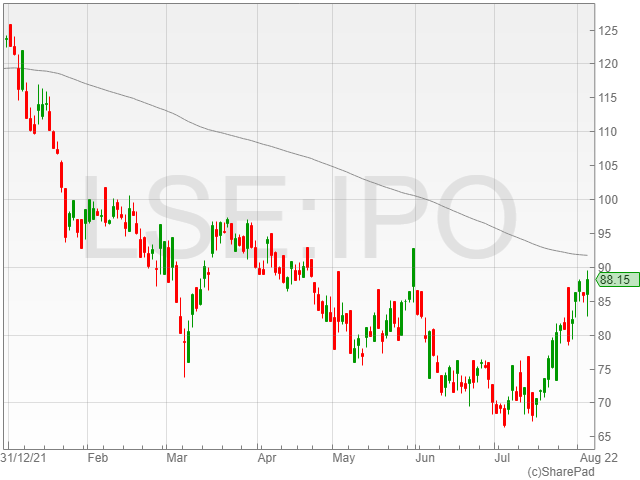
Filtronic (LON: FTC) was more profitable than expected in the year to May 2022 even though revenues were slightly below forecast and the share price rose by one-quarter to 11.25p. finnCap has increased its estimated earnings for the period from 0.2p a share to 0.5p a share. The telecoms components supplier also improved its net cash position from £2.8m to £3.9m.

The improvement was due to sales mix and tight control of overheads and was achieved despite component shortages. Demand for newer products has exceeded expectations and the order book for 5G Xhaul is building up. There is caution abut this year due to component shortages potentially delaying demand from telecoms customers.

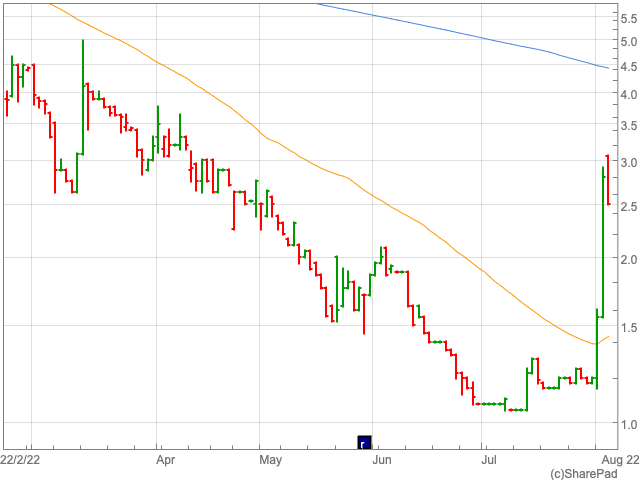
Actual Experience (LON: ACT) shares had a chance to react to news of the loss of a contract that was published late on Friday. The share price halved to 3.75p. The analytics services provider to digital businesses says that due to a change in requirements a channel partner has terminated the contract that generated £200,000 out of group revenues of £1.74m in 2020-21.

Less than one year after joining AIM, investment management company Forward Partners (LON: FWD) says that weak stockmarkets have hit the valuations of technology companies and thereby the valuations of its investments. This means that there is likely to be a mid-to-high teens percentage decline from the interim figure of £108m.

This is the valuation for the 2021 accounts, which have still not been published – they have to be published by 30 Jube or the shares will be suspended. This disappointment led to a 16% decline in the share price to 50p. Forward Partners joined AIM on 19 July 2021 when it raised £36.5m at 100p a share.

Oil and gas producer Jadestone Energy Inc (LON: JSE) shares fell 15.8% to 80pm because of the shutting down of production at the Montara field offshore Australia due to a leak in a crude oil storage tank. The leek has been stopped and the tank will be assessed so that it can be permanently repaired. This could take four weeks and the total cost will be $2m-$3m, although some of this money would have been spent on routine maintenance of the tank. Total 2022 production is expected to be around 15,500 boe/day, which is at the lower end of previous expectations.

Alien Metals (LON: UFO) has completed the acquisition of 100% of the Vivash Gorge iron ore project in the Pilbara region of Western Australia in return for the issue of 7.83 million shares to ASX-listed Zenith Minerals. Further share issues will be made when milestones are achieved, and Zenith will receive a $1/dwt royalty on the ore shipped from the licence area. Alien Metals has other iron ore projects in the same region and there is a defined mineral resource on a neighbouring licence area that abuts the eastern central boundary of the project area.

Oil and gas engineering services provider Plexus (LON: POS) has won an order for plug and abandonment equipment and services from Oceaneering International Services. This could generate revenues of £500,000 in 2023. To put this in perspective, 2021-22 forecast revenues are £2.5m. The share price rose 0.25p to 4p, having previously been at an all-time low.

Energean extends 2022 drilling programme, completes KM-04 well ahead of schedule

Energean shares dipped 2% to 1,186p in late morning trading on Monday after the company reported the extension of its 2022 growth drilling programme by exercising its option to drill two additional wells with Stena Drilling Limited.

The first well is set to target the Hermes prospect at Block 31 and is scheduled to spud in August, targeting the Tamar A sands. Hermes forms one sector of a larger cluster of structures similar to how the Athena discovery is one sector of the Olympus area.

Energean said the target for the second well is still under consideration and is largely contingent on the results from the Hermes well.

Energean also provided an update on the initial results of its KM-04 appraisal well, and announced that the project was completed 15 days ahead of schedule and $9 million below budget at a total expense of $36 million.

The KM-04 well reportedly encountered gas and associated liquids in the previously undrilled fault block between Karish Main and Karish North, alongside gas discovered in the A-sands on the flanks of the Kairsh Main structure, in which the sands were tested and fluid samples were obtained.

In addition, an oil rim was confirmed in the central sector of the field, with thickness located in the lower end of the pre-drill expectation range of 5 to 10 metres against 0 to 100 metres pre-drill.

The company noted that a sample of the oil was obtained for testing, and the group expects to commercialise the oil volumes through the existing well stock.

Energean added that additional analysis would commence to further refine reserve volumes and the liquids-to-gas ratio across the Karish lease, with the Stena IceMAX set to complete the next development well before moving to Hermes in August 2022.

“Operations at the KM-04 appraisal well have been successfully completed ahead of schedule and below budget, meeting the primary objectives set pre-drill,” said Energean CEO Mathios Rigas.

“We confirm today the extension of our 2022 growth drilling campaign, on the back of success at Athena last month. We have exercised our options with Stena to drill a further two wells, commencing with Hermes, in line with our goal to continue to provide competition and security of supply in the local Israel gas and energy markets.”

“The exercise of these options, will help us to reach our target to double our Israel gas resource base in order to also export to the broader region of the Eastern Mediterranean and beyond.”

The dangers of gaps and inaccuracies when filing digital tax returns

The way that we track, report and pay our taxes is changing. Just as more and more of our lives and activities are taking place online, from shopping to banking and work, our tax affairs are also moving into the digital realm. Making Tax Digital (MTD) is the UK Government’s flagship initiative to take tax online and it’s set to affect us all.

What is MTD?

MTD is a fundamental change to the way that the tax system works. HMRC says that MTD is the focus of its ambition to become one of the “most digitally advanced tax administrations in the world”, making our tax system more effective, more efficient and easier for taxpayers of all kinds to get their tax reporting right.

Whether we’re earning money through self-employment, investments, a small business or any other circumstances, it’s important to record and report tax accurately. Beyond any ethical considerations (and many people have mixed feelings about the levels and ultimate destination of their taxes), you could be penalised for providing inaccurate or incomplete information.

When will MTD penalties apply?

The current system of HMRC penalties for errors in tax returns and other documents has been in place for more than a decade now. It was introduced in April 2009 and the scope widened a year later. Taxpayers could be penalised if tax returns or other documents were inaccurate, leading to tax being unpaid, understated, over-claimed or under-assessed.

As the tax system is migrated online under MTD, the penalty system is also changing to keep pace. The penalty system for MTD for VAT was originally supposed to have started by now but was moved back when it became clear that HMRC’s IT systems would not be ready in time. This is now due to start at the beginning of 2023, followed by a similar system for MTD for Income Tax in April 2024 and for all Self-Assessment taxpayers from April 2025.

It’s worth noting that the new penalty system will apply to Self-Assessment taxpayers even if they don’t use MTD.

What are the likely penalties for providing missing or inaccurate information?

One of the biggest differences between the current tax reporting regime and MTD is that you will have a ‘regular obligation’ to provide quarterly updates. Under the new Making Tax Digital penalties, you can receive ‘penalty points’ if you miss your submission deadline. This is similar to the way that speeding fines work. When you reach a certain threshold of points, a £200 penalty is automatically applied. There will also be a new penalty system for late payments.

If you make your submissions on time and they contain inaccuracies, however, this will still be covered by the existing system. Penalties can be applied depending on the reasons for the error and the potential lost revenue to HMRC. If it’s deemed to be due to a lack of care, for example, the penalty will be between 0% and 30% of the extra tax due. If it is seen as deliberate, this can rise to 20% to 70%, and if it is deliberate and concealed, the penalty can range from 30% to 100% of the extra tax due.

easyJet warns customers to expect rebooked flights as unprecedented demand flings passengers into chaos

0

easyJet shares were down 2.7% to 424.8p in early morning trading on Monday following a slate of disruptions to the group’s flights, which sent costs beyond the limits of previous guidance and saw passengers flung into chaos.

easyJet highlighted that the unprecedent surge in customer demand had led to operational issues including air traffic control delays and staff shortages in ground handling and at airports, resulting in delayed departures and flight cancellations.

The company pinned the blame on the tight labour market and mentioned its reduced resilience, reflected in flight caps recently announced at London Gatwick and Amsterdam airport, two of the firm’s largest customer bases.

The group commented it was proactively managing the disruptions by providing customers with advance notice and the potential to rebook onto alternative flights.

easyJet said it expected to rebook the majority of customers on alternative flights, with many on the same day as their original flight bookings.

The firm noted a projected a Q3 capacity of 87% of FY 2019 levels and a Q4 capacity at 90% of FY 2019 levels.

easyJet mentioned a cost impact from the disruption, alongside enhanced resilience the company has been putting in place including wet leased aircraft, crew costs and airport charges.

The group confirmed it would be exceeding its previously provided operating CASK ex fuel guidance, however it added that it believed the summer upset to be a one-off occurrence as it expected all parties to build higher resilience in time for FY 2023 peak periods.

The company noted that booking momentum had continued, with demand for summer travel remaining strong and Q3 currently 86% sold with ticket yields up 2%. Q4 is currently 48% sold and ticket yields up 14%, with its Q4 booking position broadly in line with the same period in FY 2019.

easyJet commented it would keep fine-tuning its schedule in line with industry conditions across summer to deliver results for its customers.

The firm said its medium-term outlook remained attractive, and mentioned it recently won an additional three aircraft worth of slots at Lisbon airport, which are scheduled to become available this winter.

“Delivering a safe and reliable operation for our customers in this challenging environment is easyJet’s highest priority and we are sorry that for some customers we have not been able to deliver the service they have come to expect from us,” said easyJet CEO Johan Lundgren.

“While in recent weeks the action we have taken to build in further resilience has seen us continue to operate up to 1700 flights and carry up to a quarter of a million customers a day, the ongoing challenging operating environment has unfortunately continued to have an impact which has resulted in cancellations.

“Coupled with airport caps, we are taking pre-emptive actions to increase resilience over the balance of summer, including a range of further flight consolidations in the affected airports, giving advance notice to customers and we expect the vast majority to be rebooked on alternative flights within 24 hours. We believe this is the right action for us to take so we can deliver for all of our customers over the peak summer period in this challenging environment.”

Associated British Foods revenue grows 32% on higher prices and Primark stores

0

Associated British Foods shares were up 1.1% to 1,627p in early morning trading on Monday, after the group announced a Q3 revenue growth of 32% to £4 billion as a result of improved trading conditions post-Covid and higher prices offsetting inflation expenses in its Q3 trading update.

Associated British Foods confirmed a 10% revenue increase in its food sector to £2.3 billion, on the back of ongoing price actions to date in order to recover input cost inflation and increases in volume ingredients.

The group noted a 4% climb in grocery revenue to £932 million year-on-year, with sales benefiting from price rises earlier this year and continued pricing action across Q3, and sugar revenue rose 7% to £457 million against the previous year, with sugar demand expected to be in excess of production for FY 2021-2022 and production only slightly higher than last year with a lower crop area offset by a recovery in yields to more normal levels.

The producer highlighted a 10% increase in agriculture sales to £441 million, with higher selling prices serving to offset climbing commodity and energy costs, driving profitability with FY 2021-2022 profits expected to fall broadly in line with FY 2020-2021.

Meanwhile, Associated British Foods confirmed a 24% rise in ingredients revenue to £489 million, with an 81% spike in retail revenue to £1.7 billion linked to all Primark stores reopening over the term compared to last year, when the bulk of stores were closed for business.

The company said Primark was currently on track to deliver a FY adjusted operating profit margin of approximately 10%.

Primark is also preparing to launch its UK trial of Click & Collect services for children’s products in up to 25 stores in the Northwest and with a wider range of products to hit demand. The retailer aims to drive higher footfall and incremental sales in stores and build on enhanced digital capability.

“Inflationary concerns were noticeably absent from Primark owner Associated British Foods’ third quarter results,” said Hargreaves Lansdown equity analyst Laura Hoy.

“The group’s pushing ahead with its digital expansion, trialing a new click-and-collect service in the UK and management sees full year operating margins recovering to around 10% as expected.”

“This was a departure from the cautious note that CEO George Weston struck at the half-year, when he warned about the impact of inflationary headwinds on margins.”

The rising prices appear to have boosted Associated British Foods’ trading over Q3, however as the cost of living crisis bites and inflation speeds towards 11% in autumn, the firm might only get away with hiking its prices for so long before customers stop ringing up new clothes at the tills.

“Management said it would be forced to raise prices on its autumn and winter collections back in April. But bikinis and flip flops are still at the top of the shopping list for holiday-obsessed consumers right now,” said Hoy.

“So the impact of these price hikes on volumes is yet to be determined. The group’s in a good position as we head into tougher economic conditions, with its lower-priced items more appealing to cash-strapped consumers, but a slowdown in consumer spending is sure to hit the entirety of the sector.”

Associated British Foods confirmed its trading was in line with management expectations and stated its outlook for FY 2021-2022 remained unchanged.

FireAngel Safety Technology Group – now is the chance to buy into a company just before it starts to turn a profit

Tomorrow a very interesting small technology company will be holding its AGM. 

The £20.37m capitalised enterprise is now at a very important stage in its development.

Today it announced that it has secured a £3.5m standby credit facility to help it to speed up its component supply chain.

After years of operating losses, the Coventry-based FireAngel Safety Technology Group (LON:FA.) is now on the verge of turning into significant profitability.

At the AGM John Conoley, the group’s Executive Chairman, is sure to be sounding very positive about the company’s current year and its future prospects.

Especially so considering the number of recently announced progressive developments made by the security and protection services company.

It has taken time

FireAngel started in 1998, orginally under its old name of Sprue Aegis, and after a huge amount of product testing and validation work, the business launched the world’s first plug-in smoke alarm. 

The company, which floated on AIM in 2014, changed its name in 2018.

That ground-breaking design was gradually extended to the current comprehensive product range of smoke, carbon monoxide (CO) and wireless products sold under its principal FireAngel brand. 

It sells its products through distributors and retailers to the retail, trade, DIY, fire and rescue service, and utilities markets.

The company’s market leading smoke detectors, carbon monoxide detectors and other home safety products make it one of Europe’s leading suppliers.

Forefront of technology

It is at the forefront of safety-critical connected homes technology, which is very important for housing authorities, landlords and homeowners alike.

Its ranges of smoke, heat and CO alarms feature Smart Radio Frequency (RF) technology enabling all devices to connect wirelessly, significantly removing the time-consuming requirement for wiring, channelling or trunking. 

A feature is that these are the only alarms with proven low-carbon footprints producing on average 95% less carbon dioxide compared with other leading mains-powered alarms.

The group has over 100 registered technology Patents and with others pending.

The group’s brands

It has 6 brands which the company targets at different markets.

FireAngel is the UK’s no 1 retail brand and is the choice of over 90% of the UK’s Fire and Rescue Services.

FireAngel Connected is the solution for landlords preparing UK social housing for the future with remote monitoring, scalable networks and actionable insight and data.

FireAngel Specification offers the option to interlink multiple alarms and create a hybrid network of battery and mains powered devices, the Specification product range is supporting the UK Trade market with adaptable protection.

FireAngel ProConnected gives UK homeowners the ablity to monitor and manage their safety network on the go with easy testing through their mobile device or via Just Ask Alexa!

AngelEye, which was launched in 2012, is a leading brand in smoke and CO alarms in the French DIY market.

And finally, Pace Sensors is FireAngel’s wholly owned subsidiary in Canada. Pace Sensors’ CO sensors are used within all FireAngel, AngelEye and Pace Sensors’ CO detectors.

Being Connected is the future

The ranges allow their connectivity to be upgraded to communicate information outside the property by installing a FireAngel Connect Gateway. 

The system features a patented technology to identify and highlight dangerous patterns of behaviour that increase fire risk. 

It is very hopeful of scoring well as its looks to commercialise the group’s investment in its ‘Connected’ technology.

The group is also working with other significant companies to develop products on their behalf, using the FireAngel technology. 

The Techem Contract

One such deal is that with Techem Energy Services GmbH, a milestone of which was declared in early May.

Techem is one of the leading service providers for ‘green’ and ‘smart’ buildings, for which FireAngel is developing a new generation alarm primarily for the German market.

Boss John Conoley is excited about this important project for Techem – which focuses upon energy efficiency along the real estate value chain, with the German company supporting 12 million properties in 20 countries.

At the beginning of this month the group launched a new German website, at the time Conoley stated that

“Germany continues to be a growing opportunity for FireAngel, with over ten million devices sold into the country to date. Our connected product offering is well respected and fitted by both homeowners and installation and maintenance specialists, and we expect this to continue to develop as we move through the next few years, with the new website playing a crucial role in this growth.”

The site has been designed to offer an enhanced user experience to both professional and end users. It provides key guidance around local legislation and regulations, and details which of FireAngel’s solutions provides the correct, compliant level of protection.

Last week the group announced the second milestone in the development of its Techem contract as it declared that its analogue front end board for its sensing circuits had been developed.

European market holds big potential

In the last trading year to end December 2021 some 68.7% of the group’s £43.5m turnover was through sales into the UK market, while 27.2% went into the Continental European marketplace, with the balance going to the Rest of the World.

It is the group’s aim to become the European market leader selling FireAngel branded products of choice in each of the markets that it serves.

The company, which has well established third-party distributors across Continental Europe, is currently Number 1 in 4 out of its 5 key segments in Europe.

Good professional investor support

With some 181m shares in issue there are some notable institutional holders on the group’s share register.

Largest holder is BRK Brands (UK) with 23.4%, Downing Ventures, with 16.4% of the equity, followed by Canaccord Genuity Wealth with 11.6% and BGF Investment Management holding 10.1%.

Other bigger holders include Killik & Co, KW Investment Management, Hargreaves Lansdown Stockbrokers, Scotia McLeod ITF Euro Credit Investments and Euro Credit Investments.

Two of the group’s directors have useful positions, Nick Rutter, one of the co-founders, has 2.31% and Graham Whitworth holds 2.11%.

Recent Trading and Estimates

Last year the group was a real victim of the Covid-19 hassles and suffered from component shortages across the board.

The year to end December 2021 showed sales up from £39.9m to £43.5m, which helped to significantly reduce its operating losses down from the £5.7m adjusted figure for 2020 to a lower loss of £3.5m.

The shortages led to just 4.3m FireAngel products being sold, the group has sold over 80m units to date.

This year has already started well, with the visibility of its key components coming into proper supply, whilst the demand for the group’s products has been growing at a pace.

There is even a current order backlog of some 1.3m units to work upon.

However, we already know that the company has aimed at a much higher gross margin for the current year, with the target of 30% plus against 23.2% last year.

Conoley has already stated that the group will be EBITDA positive in 2022, so the profits are just around the corner.

Analyst Rob Sanders at the group’s brokers, Shore Capital, has current year estimates of £54.3m sales, leading to an almost miniscule £0.3m loss.

For 2023 he goes for £61.4m sales, £2.8m of profits, and earnings of 1.4p per share.

Going into 2024, when Techem’s new alarm product will be developed and into manufacture, Sanders looks for nearly £70m of sales, a 67% improved profit of £4.7m, which would be worth 2.4p per share in earnings.

The 2025 year should prove to be significantly up on those estimates.

Looking at the shares

Apparently, there is no doubt that this ‘tiddler’ is now firmly on track to evolve as a highly profitable technology company.

We can expect more items of good news to come from the group over the next year or so, in which time I believe that estimates will be upgraded.

The shares were up to 27.2p in April last year, before the shortages became evident.

The lowest level was 10.10p in March this year, before the 2021 results were announced and the series of good news items took them up to 17.20p early last month.

The recent market rout now gives investors the opportunity to get aboard and participate as the group progresses swiftly ahead in sales, profits and share price.

At the current 11.25p the shares look extremely attractive for ‘penny stock’ investors prepared to take a year’s view.

A doubling in price in that period may well get underway after next week’s AGM, so we await a positive Trading Statement from the company.

AIM weekly movers: Xeros Technology set to clean up

1

Xeros Technology Group (LON: XSG) was the best performer this week with a 46.2% gain to 47.5p (46p/49p). Germany-based washing machine pumps and drives manufacturer Hanning has signed a ten-year global licence to manufacture and sell the XFilter washing machine filter technology developed by Xeros. XFilter enables microfibres and microplastics released during washing to be captured and safely disposed of. This type of technology will be required in France from 2025 and other countries are likely to follow suit. Hanning is estimated to supply components for 8.5 million washing machines each year – around one-third of those made in Europe. The royalty is undisclosed, but it could be around £1 per filter.  

Healthcare IT provider EMIS (LON: EMIS) is recommending a 1925p a share cash bid from Optum UK, a subsidiary of UnitedHealth Group Ltd. This values EMIS at £1.24bn and the offer is around 32 times prospective 2022 earnings. The bid is more than one-quarter above the previous share price high last year and the share price rose 35.2% to 1890p. Optum UK already provides healthcare software and services to the NHS. The two management teams believe that the enlarged group will be better positioned to support the NHS.

Lexington Gold (LON: LEX) says that the drill results for Jones-Keystone side of the Jones-Keystone-Loflin project in North and South Carolina have exceeded expectations. There are multiple intersections with gold grades of between 1.37 g/t and 1.69 g/t. The shares rose 23.7% to 2.35p (2.2p/2.5p), which is still below the level it was at the start of the year.

Video games publisher Frontier Developments (LON: FDEV) says 2021-22 revenues are 26% higher at £114m. The share price rose 19.7% to 1374p on the week. New titles did particularly well. Jurassic World Evolution 2 sales were more than 1.3 million units, while Warhammer 40,000: Chaos Gate – Daemonhunters did better than expected. Older games also sold well. There will be a £7m write-down of capitalised development due to lower than expected sales of Elite Dangerous: Odyssey. Excluding that write down, operating profit should exceed £8m. There was £39m in the bank at the end of May 2022. New games launches should ensure further growth in revenues in 2022-23.

==========

Fallers

Subsea cable protection services provider Tekmar Group (LON: TGP) has lost more than three-quarters of its value on the week after it announced that it was seeking a partner or bidder to help it fund opportunities. Interim revenues fell from £13.9m to £13m and Tekmar remains loss making. The order book has improved from £9.7m to £20.1m over the six months to March 2022. Moneta Asset Management has cut its stake from 4.23% to 3.61%.

Shares in US-based video game publisher Devolver Digital Inc (LON: DEVO) more than halved to 62p. Fewer than eight months after joining AIM, Devolver Digital lowered its revenues and profit guidance for this year. Revenues are expected to between $130m and $140m. Zeus has cut its earnings forecast from 7.2 cents a share to 6 cents a share. Sales of new releases, such as Shadow Warrior 3 and Weird West, have been lower than anticipated.

Sensyne Health (LON: SENS) shares have declined 53.3% to 0.35p ahead of the cancellation of trading on AIM on 20 June. This was a requirement of the strategic financing for the business.

Hong Kong-based CCTV technology company UniVision Engineering Ltd (LON: UVEL) has received notice of the termination of a contract with MTR Corporation for the replacement of CCTV systems on Hong Kong railway lines. It is for alleged breach of contract, which UniVision contests. This is effective from 20 June. The shares price fell 52.4% to 0.25p (0.15p/0.35p).

FTSE 100 finishes turbulent week in the red

1

The FTSE 100 closed down 0.4% to 7,014 in Friday trading, as the market continued to lose ground after a week of central bank action.

UK interest rates were hiked to 1.25%, which the market had been pricing in for weeks, however the Bank’s revised inflation estimate of 11% in Q4 this year threw investors for a loop as stocks plummeted on the back of the nauseating report.

“The sun is shining bright, the weekend is here, yet all investors can think about is medicine to calm the motion sickness after one of the most chaotic five days for stocks and shares in a long time,” said AJ Bell investment director Russ Mould.

“Rising inflation, rising interest rates and a rising chance of a recession have all served to turn stomachs in equity-land.”

The markets have been through the wringer, with the current volatility shaking up indexes across the board in the year-to-date.

“Year-to-date that means the FTSE 100 has fallen approximately 6%, the S&P down 24%, and the Nasdaq 33% lower,” said Mould.

“This is a shock to the system for many investors who are relatively new to the game and haven’t seen a proper market correction before.”

The US markets recovered a slight amount of ground, with the S&P 500 up 0.5% to 3,686 and the NASDAQ up 1.4% to 10,796.5.

Meanwhile, European markets recovered slightly, with the German DAX closing up by 0.5% to 13,108.8, the French CAC gaining 0.1% to 5,891.9 and the Italian FTSE MIB rising 0.6% to 21,869.6.

Tesco

Tesco shares were up 0.8% to 251.7p as the supermarket struggled to fight off encroaching competition from Aldi as the cost of living continued to bite.

With inflation speeding towards 11% and food inflation set to hit 15% this summer, Tesco is rapidly finding itself backed into a corner as it struggles to withhold passing on inflationary costs to customers.

“Customers are facing unprecedented increases in the cost of living and it is therefore even more important that we work with our supplier partners to mitigate as much inflation as possible,” said Tesco CEO Ken Murphy.

UK sales fell by 1.5%, however overall group retail sales rose by 2% year-on-year.

“Overall sales figures enjoyed a positive contribution from inflation, but volumes seem to be falling as habits start to shift in the face of challenged household budgets,” said Mould.

“The cost of living crisis is largely out of Tesco’s hands and when it comes to the things it can control it is doing well.”

“The Aldi Price Match and Low Everyday Prices initiative is helping to hold off the challenge of the German discounter and by offering lower prices on lots of products exclusively to Clubcard members it is helping foster loyalty among its customer base.”

Oil Stocks Fall

The price of oil plummeted to $113 per barrel mark for Brent Crude, serving to drag down the oil giants on the market.

The US Federal Reserve’s 0.75% interest rates hike and the Bank of England’s 0.25% hike also hit prospects for the energy majors going forward, as Shell shares dropped 4.6% to 2,044p and BP shares slid 6.1% to 379.4p.

Glencore

Glencore shares fell 0.6% to 461.2p after the mining company reported its operating profits were estimated to exceed its top-range guidance at $3.2 billion for FY 2022.

Aquis weekly movers: Psych Capital back above placing price

Recent Aquis admission Psych Capital (LON: PSY) was the best performing company during the week. The investment company is focused on early-stage psychedelic medicines businesses, and it has subsidiaries that can offer investee companies services, such as marketing and data collection.

Psych Capital raised £810,000 at 5p a share and it ended the first day of trading on 9 June at 4p share, reaching 4.75p at the end of the week. This week the share price recovered to 5.5p (5p/6p). Chris Akers took a 4.96% stake. There were ten trades during the week, and all were on Thursday and Friday.

Valereum (LON: VLRM) announced that it intends to launch a global open marketplace platform for Non-Fungible tokens (NFTs). It has also appointed Z/Yen Group Ltd as strategic adviser to provide a commercial review of the business plans for the Gibraltar Stock Exchange. It will also help to prepare a prospectus for a listing for Valereum on a major stock exchange. The share price 14.3% to 24p (23p/25p).

Quantum technology investment company Quantum Exponential Group (LON: QBIT) shares rose 4.1% to 2.55p (2.3p/2.8p). Quantum Exponential floated last November at 5p a share, although the pro forma NAV at the time was 1.65p a share. Quantum Exponential has made three investments at a total cost of £1.16m since it floated. There are plans to set up a quantum computing focused fund.

A fall in market capitalisation means that Coinsilium Group Ltd (LON: COIN) will move from the Apex segment to the Access segment. However, the share price rose 1.4% on the week to 2.81p (2.74p/2.88p).

==========

Fallers

Investment company Hot Rocks Investments (LON: HRIP) was the worst performer on the week falling by 23.1% to 0.5p (0.4p/0.6p). Not far behind was Goodbody Health Inc (LON: GDBY), which declined 22.9% to 1.35p (1.2p/1.5p), having fallen to 1.15p at one point during the week. Last week, the CBD products supplier and diagnostics testing company said that it was cancelling its quotation on the Canadian Neo exchange and moving its domicile from Canada to Guernsey. The Care Quality Commission has granted registration to the company’s diagnostic and screening activities.

Energy storage technology developer Invinity Energy Services (LON: IES) shares dipped 22.5% to 46.5p(45p/48p). This reflects a general weakness in the share price of cleantech companies.

KR1 (LON: KR1) has put money in a range of blockchain and cryptocurrency investments. The downward trend in many cryptocurrencies has hampered the share price of KR1, which fell 22.1% to 26.5p (25p/28p).

NFT Investments (LON: NFT) slumped 15% to 1.275p (1.25p/1.3p). There is no news from the company, but it has invested some of the cash it raised in cryptocurrencies.

AIM movers: Providence Resources, Directa Plus

0

Oil and gas explorer Providence Resources (LON: PVR) shares slumped 0.5p to 1.8p when it announced a proposed fundraising at a 35% discount to the previous day’s closing price. Providence is raising $1.8m at 1.5p a unit (one ordinary share and one warrant exercisable at 1.5p). The cash will be spent on working capital and fund Providence’s lease undertaking application for Barryroe, which is an offshore field south of Cork. The Ireland government has delayed its decision. There should be cash left to fund an appraisal well at Barryroe. However, the Providence share of the cost of an appraisal well and pre-development studies is $65m after which a final investment decision will be made.

An AGM statement from Directa Plus (LON: DCTA) says that trading has accelerated in the past two months. The share price rose 9p to 106p. The graphite technology commercialisation company has generated revenues of €4.6m by the end of May. Last year’s revenues were €8.6m. There is still a good chance that a large remediation services contract can be won via a tender early in the second half.

Two resolutions were defeated at the annual general meeting. These were the re-election of chairman Sir Peter Middleton to the board and the authority to purchase the company’s own shares. Richard Hickinbotham will become interim chairman