Shell, Barclays and ITV report after the US Fed hikes interest rates 0.75%

1

The FTSE 100 saw one of the busiest days of the year for corporate results today, dipping 0.1% to 7,339.2 as Shell, Barclays, BAE Systems and ITV, among others, all reported.

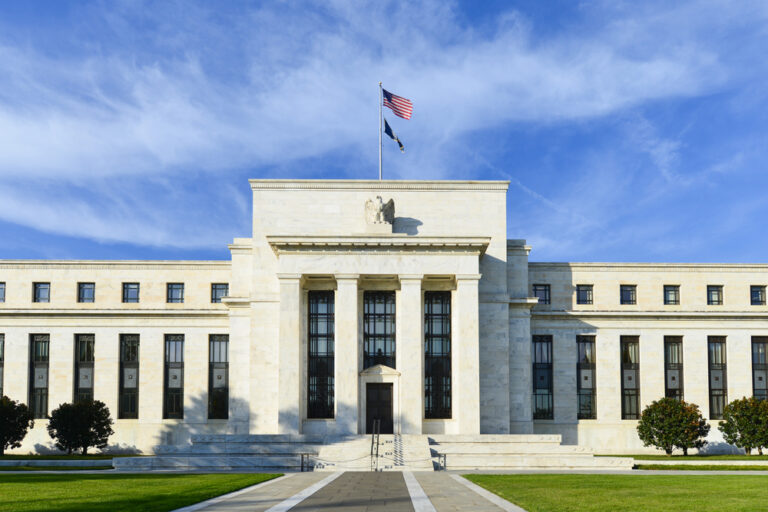
Across the Atlantic, the US Federal Reserve hiked interest rates 0.75%, hitting the level expected by analysts for the last few weeks in a bid to fight soaring 9.1% inflation.

However, US Fed chairman Jerome Powell confirmed certain sectors of economic activity had started to soften, providing markets with hope that the coming interest rate decisions might show reason for optimism.

“On a super Thursday for corporate results the FTSE 100 made solid progress in early trading as the US Federal Reserve helped give global markets a boost overnight,” said AJ Bell investment director Russ Mould.

“It wasn’t so much what the Fed did, since a 75 basis point increase in rates was widely expected, as what it said in noting that some economic data had started to soften.”

“This gave investors at least a hint that it might start to ease its foot off the rate acceleration pedal a touch.”

The Dow Jones dipped 0.1% to 31,124, the S&P 500 fell 0.3% to 4,012.5 and the NASDAQ declined 0.7% to 12,530.5 in pre-open trading.

Anglo American

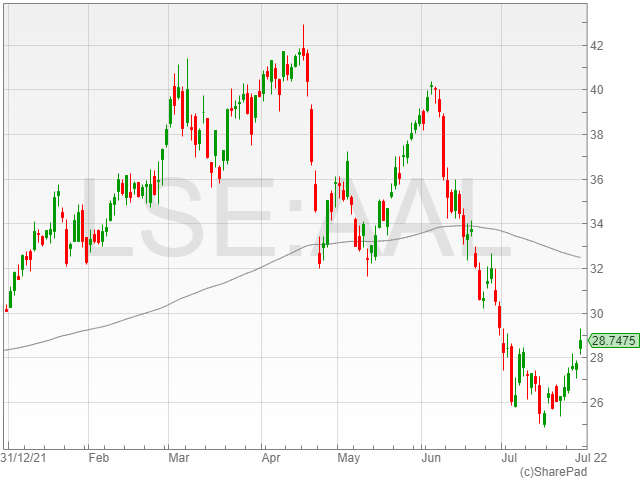
It was a busy day for the top companies on the FTSE 100, with Anglo American shares rising 3.2% to 2,864.2p after the mining giant beat market expectations despite its falling profits and revenues.

Anglo American revenues slid 17% to $18.1 billion in HY1 2022, with an EBITDA drop of 28% to $8.7 billion.

Additionally, the company slashed its dividend by a whopping 47%.

“Mining outfit Anglo American did better than expected. Although, like a high jumper in the early rounds of a competition, it was clearing a low bar as expectations had been successfully managed down by management ahead of time,” said Mould.

Schroders

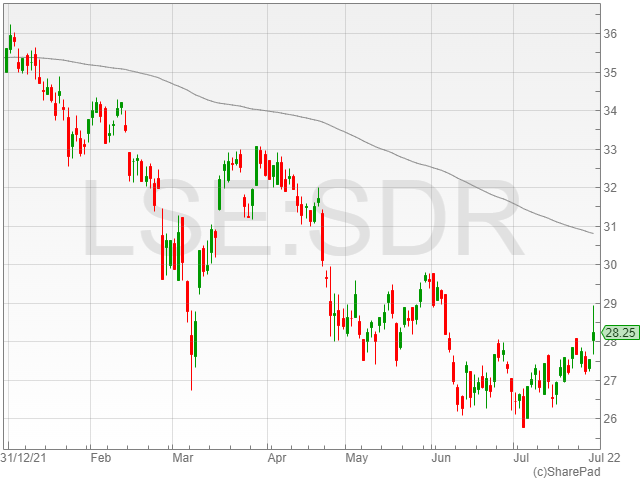
Schroders shares gained 3.9% to 2,837p following a revenue climb to £1.4 billion, however its interim profits declined 16% to £312.8 million.

“Our returns from balance sheet activities were impacted with net losses on financial instruments and other income of GBP35.2 million,” said Schroders in a statement.

The firm attributed its falling profits to market movements related to the war in Ukraine and rising inflation levels.

The company maintained its dividend payment of 37p per share for the term.
Rentokil

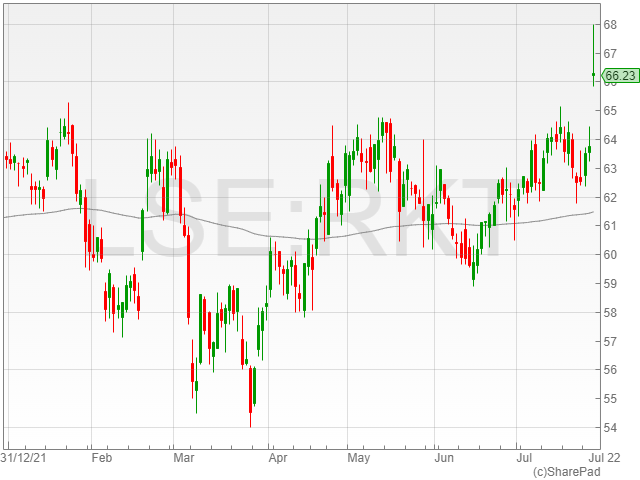
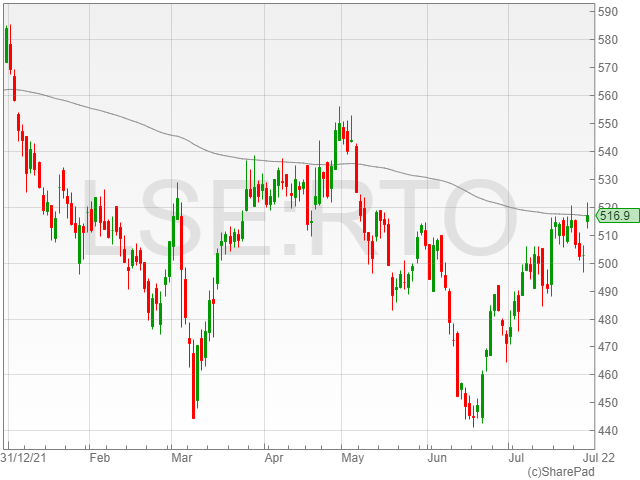
Rentokil shares were up 2.8% to 517p after the firm announced a 7.8% pre-tax profit growth to £161.9 million, and an 8.1% revenue increase to £1.5 billion.

The hygiene group confirmed a HY1 dividend of 2.4p per share, representing a 15% rise year-on-year.

“As a global operation that benefits from highly defensive product and service lines, the company is well placed to navigate macro-economic and geopolitical volatility,” said Rentokil CEO Andy Ransom.

“In the first half, the topline has sustained strong momentum. We’ve been successful in proactively managing cost inflation through pricing to protect margin, while continuing to drive margin improvements through delivery on our strategy.”
Shell

Shell shares gained 1.6% to 2,151.7p as the energy giant reported a shattering $11.5 billion profit in Q2 2022 against its $9.1 billion profit in Q1.

The oil and gas group announced a further $6 billion share buyback, scheduled for completion by Q3 2022.

“Shell’s accelerating its share buybacks after another quarter of bumper profit growth as the energy sector continues to ride high on the supply and demand imbalance caused by the crisis in Ukraine,” said Hargreaves Lansdown equity analyst Laura Hoy.

“Strong oil prices are driving Shell’s bumper performance and the group’s pledged to share more than 30% of the windfall with investors.”

Shell announced a Q2 dividend of 25c per share.

Smith and Nephew

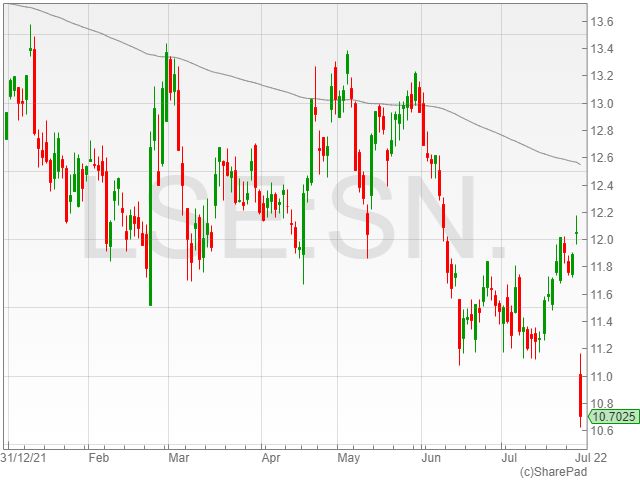
Smith and Nephew shares tumbled 11.4% to 1,066.2p after an 8.5% fall in pre-tax profit to $204 million.

The company also cut its guidance, with an expected trading margin decline to 17.5% from 18.5%, as a result of the “prolonged impact of the inflationary environment and continued external supply challenges.”
Airtel Africa

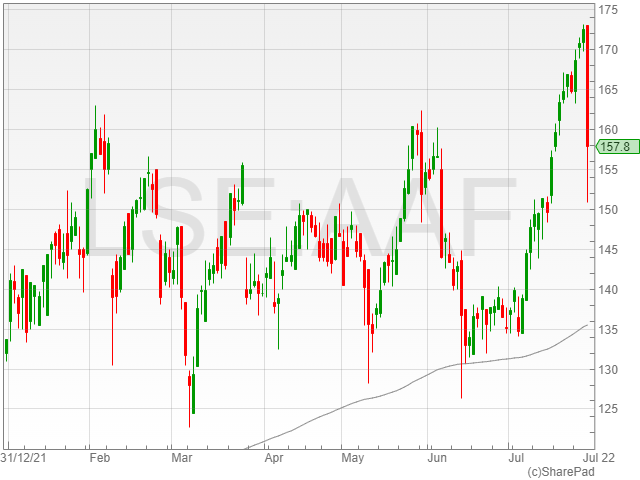
Airtel Africa shares plummeted 8.8% to 155.8p on the back of economic headwinds in its Q1 results, as inflation pressures suppressed margin progress.

Revenue grew 13% to $1.2 billion, while its EBITDA rose 15% to $614 million and margins increasing to 48.8% from 48%.

“As we flagged in our full-year announcement, this quarter we have faced headwinds from outbound voice call barring for customers who had not yet registered their National Identification Numbers in Nigeria and the loss of site sharing revenue in those OpCos where we recently sold towers,” said Airtel Africa CEO Segun Ogunsanya.

“Inflation is also having an impact on our cost base, particularly on energy costs, but our continued efficiency drives have ensured that we have still been able to increase our margins, albeit at a slightly slower rate.”

“We continue to target growth ahead of the market this year and, despite inflationary pressures, our continued focus on cost efficiencies should also support margin resilience.”
Aveva

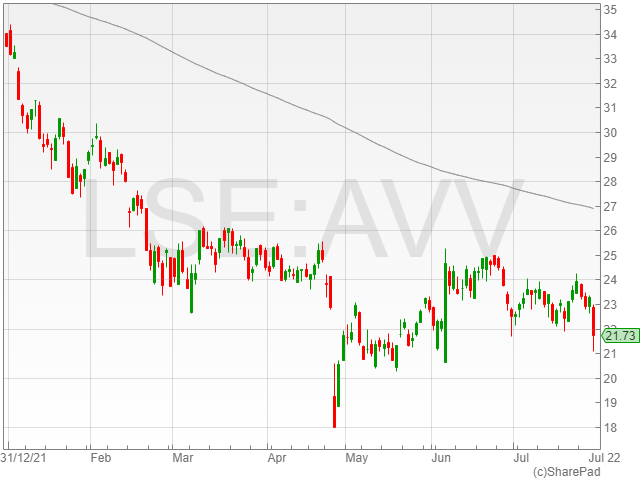
Aveva shares fell 6.5% to 2,177.5p in light of a revenue slide at a mid-single digit rate on the back of a decrease in upfront revenue recognition from perpetual licences.

However, the group’s outlook was positive, with a confirmed expected full year ARR climb of 15% due to strong end markets including energy, with a reliable sales pipeline for the remainder of the financial year.
BT

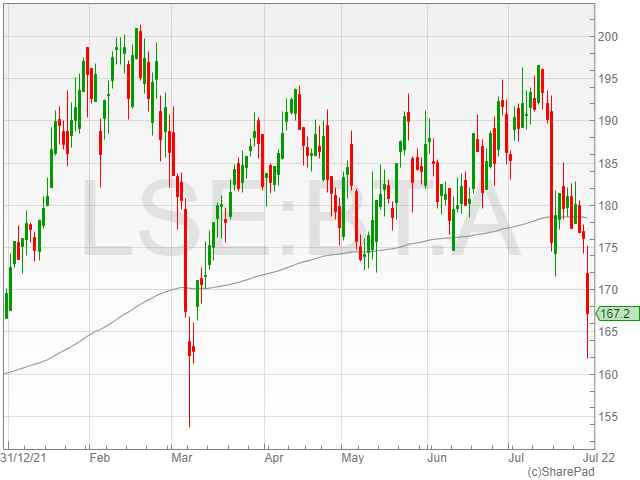
BT shares dropped 5% to 167.4p after a 10% slide in pre-tax profit to £482 million, on the back of increased depreciation offsetting EBITDA growth.

The telecommunications group reported a 1% uptick in revenue to £5.1 billion as a result of improved pricing and trading in its Consumer and Openreach segments.

“BT Group has made a good start to the year; we’re accelerating our network investments and performing well operationally,” said BT CEO Philip Jansen.

“Despite ongoing challenges in our enterprise businesses, we returned to revenue and Ebitda growth in the quarter.”
Centrica

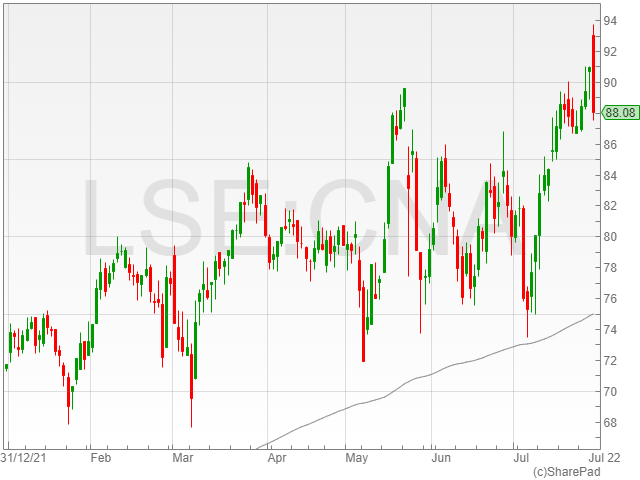
Meanwhile, Centrica shares fell 3.2% to 88p on the back of a HY1 loss of £1.1 billion compared to a profit of £907 year-on-year.

However, the firm saw a revenue climb of 49% to £10.3 billion, which was offset by a 90% surge in the cost of sales to £9 billion from £4.7 billion.

The company issued a dividend payment of 1p per share for the interim term.

“We intend to retain our historic policy of paying roughly a third of the full year dividend as an interim,” said Centrica in a statement.
Barclays

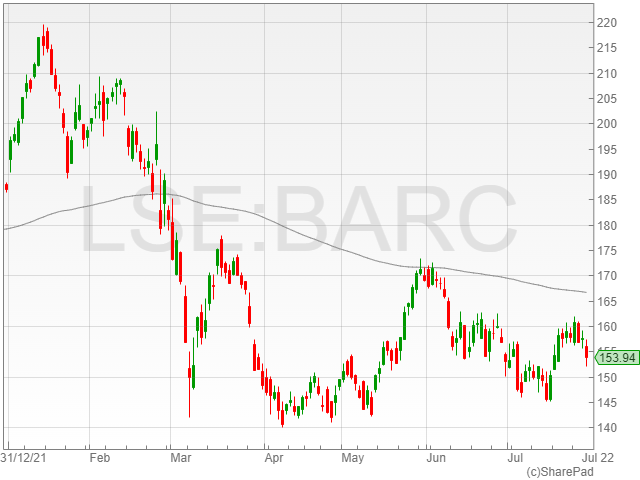
Barclays shares declined 3% to 152.8p as the banking group missed profit expectations with a pre-tax profit of £3.7 billion in HY1.

The firm struggled with the legacy consequences of its over-issuance of US securities earlier this year, which ate £1.5 billion out of its income linked to rescission offer losses, alongside the associated monetary penalty from the SEC.

“Barclays’ numbers were scarred by further damage caused by the structured products debacle in the US,” said Mould.

“The market is pretty unforgiving of banks at the moment. Investors are wary of their exposure to a weakening economic backdrop, despite any benefit they might be getting from rising interest rates.”

“So the last thing banks can afford is self-inflicted damage of the kind Barclays is enduring.”

BAE Systems

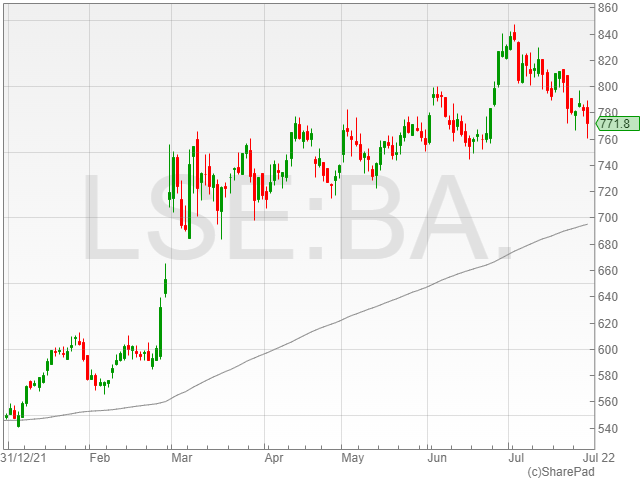
BAE Systems shares dipped 1.3% to 771.4p on the back of its interim profits taking an impact from its ship repair business.

The company’s pre-tax profits declined 32% to £779 million, despite a 4.3% growth in revenue to £9.7 billion after the group’s ship repair sector’s profitability was dented by the Covid-19 pandemic.

However, BAE Systems confirmed an optimistic outlook and reiterated its positive FY guidance.

The firm issued a dividend of 10.4p for the HY1 financial period compared to 9.9p the year before.
AIM movers: AMTE Power chooses Dundee site and ex-dividends

0

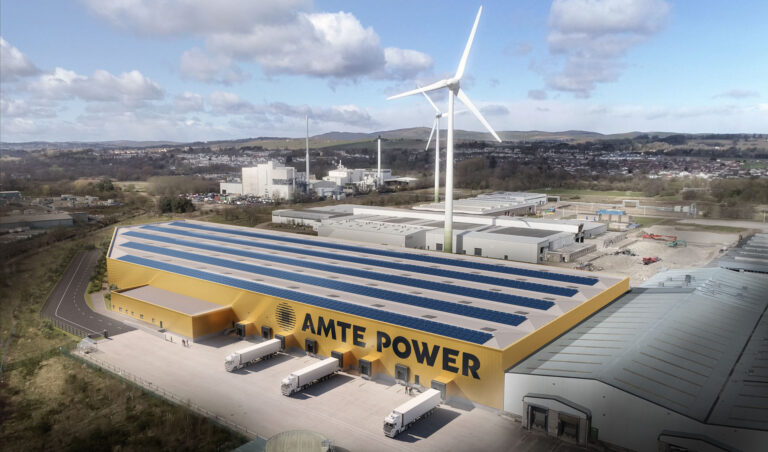
Lithium-ion battery cell technology developer AMTE Power (LON: AMTE) has chosen the site for a new 0.5GWh battery production facility. The share price jumped 32.3% to 86p. The facility will be in Dundee and could open in the third quarter of 2025. At full capacity, the facility could generate annual revenues of more than £200m. Scottish Enterprise and other funding bodies could contribute up to £190m of the cost of the facility. The rest will come from debt and equity. AMTE is developing three different battery cells with automotive battery cells the most advanced. AMTE raised £12.95m at 175p a share when it joined AIM in March 2021.

ATOME Energy (LON: ATOM) has entered into a front-end engineering design (FEED) contract for its proposed hydrogen production facility in Paraguay. The work relates to the adaptation of a substation and should be competed in September. The overall FEED contract still has to be awarded. The share price rose 17.9% to 99p.

Professional services provider Ince (LON: INCE) is raising £7m at 5p a share and taking on an additional £1.6m loan from its bank following the recent acquisition of broker Arden Partners. Ince has been operating at the limit of its debt facilities. There was a cyber attack which management estimates cost £4.9m. An insurance claim has been lodged for this amount, but that could take 12 months to settle. The total bank facilities will be £17m and insurance proceeds would be used to pay off loans. Annual cost savings of up to £5m are being targeted. Revenues are recovering, although Arden had a quieter than expected first half. The placing price is a 58% discount to the previous market price, which fell 52.1% to 5.75p.

Virgin Wines (LON: VINO) reported a 6% dip in full year revenues, although it increased its share of the online wine market from 6.1% to 8.4%. Revenues are still well ahead of levels in 2018-19, suggesting that Covid-related gains are being partially retained. Customer recruitment was up 37% in the fourth quarter. Forecast revenues have been trimmed and pre-tax profit is likely to be flat this year. The share price fell 7.6% to 67p, which is less than one-third of the 197p flotation price in February 2021.

Trackwise Designs (LON: TWD) has confirmed further delays in its electric vehicle contract, although it will receive compensation for these delays. The Stonehouse improved harness technology (IHT) facility will be fully up and running by the end of the year and there are additional contracts that could be won, although most would not reach significant volumes until 2024. Debt remains a concern, particularly in current markets. finnCap expects net debt to reach £14.5m by the end of 2022. Management is confident that it can secure hire purchase and other facilities to cover the additional finance. The uncertainty is likely to remain a drag on the share price, which fell 10.1% to 40p.

Bushveld Minerals Ltd (LON: BMN) says group vanadium production was 4% higher in the first half at 1,641mt, even though second quarter production fell. The full guidance is that production will be at the lower end of the current range of 4,200mt and 4,400mt. Annualised steady state production should reach more than 5,000mt by the end of 2022. First half weighted average production cash cost was 6% higher at $28.32/kg. The share price declined 8.6% to 5.65p.

Ex-dividends

Calnex Solutions (LON: CLX) is paying a final dividend of 0.56p a share and the share price fell 0.5p to 163p.

Quixant (LON: QXT) is paying a final dividend of 2.4p a share and the share price is unchanged at 149.5p.

Tristel (LON: TSTL) is paying a special dividend of 3p a share and the share price has risen 24p to 355p.

Anglo American revenues profits fall, dividend slashed 47%

0

Anglo American shares gained 3.4% to 2,870p in late morning trading on Thursday, despite a HY1 2022 revenue fall of 17% to $18.1 billion from $21.7 billion year-on-year.

The mining giant reported an EBITDA drop of 28% to $8.7 billion compared to $12.1 billion, alongside a mining EBITDA margin decrease to 52% from 61%.

However, the sinking figures exceeded market expectations as Anglo American slightly rose over the pessimistic projections, albeit not by a large amount.

“Mining outfit Anglo American did better than expected. Although, like a high jumper in the early rounds of a competition, it was clearing a low bar as expectations had been successfully managed down by management ahead of time,” said AJ Bell investment director Russ Mould.

The company announced an EPS slide of 28% to $3 against $4.18 the last year.

Meanwhile, Anglo American slashed its dividend a whopping 47% to $1.24 compared to $3.31 the year before.

Barclays profits miss expectations as £1.5bn US securities charges eat into income

0

Barclays shares were down 1.9% to 154.5p in late morning trading on Thursday after profits missed management expectations at a pre-tax profit of £3.7 billion in HY1 2022.

The accidental over-issuance of US securities earlier this year continued to drag the company down, with an attributable profit of £2.5 billion after absorbing charges net of tax of £600 million linked to the incident.

Barclays reported an estimated £1.5 billion total impact of rescission offer losses connected to the event, along with the associated estimated monetary penalty from the SEC.

“Barclays’ numbers were scarred by further damage caused by the structured products debacle in the US,” said AJ Bell investment director Russ Mould.

“The market is pretty unforgiving of banks at the moment. Investors are wary of their exposure to a weakening economic backdrop, despite any benefit they might be getting from rising interest rates. So the last thing banks can afford is self-inflicted damage of the kind Barclays is enduring.”

“The sums involved are large, though far from crippling for a company of Barclays’ size. However, it is the hurt it does to management credibility and the concern it creates over governance standards which are most relevant.”

Barclays reported an income rise of 17% to £13.2 billion compared to the last year, alongside a RoTE of 10.1%.

In addition, the company confirmed growth across all three operating businesses, carried on from Q1 2022.

“The broad-based income growth that we achieved in the first quarter continued across all three operating businesses into the second quarter,” said Barclays CEO C.S. Venkatakrishnan.

“Our performance in the first half shows the resilience and advantage that diversification at all levels brings, both across the bank and within our businesses.”

“It also underlines the value of investment into our three strategic priorities in next generation consumer finance, sustainable growth across the Corporate and Investment Bank (CIB), and the transition to a low-carbon economy.”

Share buyback and dividend

The banking giant announced a 2.25p per share dividend in HY1 2022, and noted its intention to initiate a share buyback of £500 million as a result of its optimistic outlook.

Barclays commented its diversified income streams placed the firm in a decent position for the current economic and market environment, alongside rising interest rates.

“We are alert to the pressure that the rising cost of living will have on our customers and colleagues,” said Venkatakrishnan.

“We have a range of measures in place to help and are looking to do more. With our resilient income growth and balance sheet strength, we can provide that support while distributing excess capital, having announced a half year dividend of 2.25p per share and an intention to initiate a further share buyback of £500m.”

ITV revenue grows 8%, investment in ITVX climbs

1

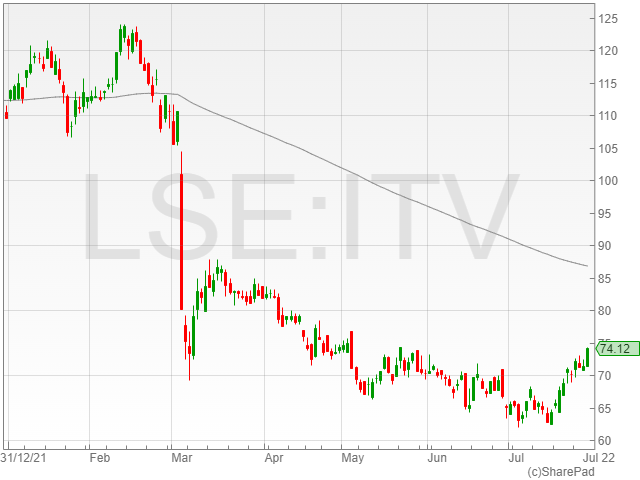
ITV shares rose 2.5% to 73.2p in early morning trading on Thursday following a reported an 8% revenue growth to £1.6 billion, with a 16% total ITV Studios revenue climb to £927.

The entertainment firm announced a 4% uptick in Media and Entertainment revenue to £1 billion, along with a 5% total advertising revenue increase and a 20% rise in digital advertising revenue.

However, its rising revenue was offset by scaled-up investment in ITV’s new ambitious streaming platform ITVX, which is projected to deliver at least £750 million in digital revenues by 2026.

ITV mentioned a group adjusted EBITA of £228 £318 million from £327 million, alongside a pre-tax profit of £219 million against £133 million year-on-year.

“Profitability is being supported by costs cuts, which can’t continue forever. Increased health and safety protocols from Covid are looking pretty permanent, and sets are clunky and expensive places to run at the best of times,” said Hargreaves Lansdown equity analyst Sophie Lund-Yates.

“The ambition is an admirable one, so now the scrutiny turns to one of execution. The division is likely to enjoy growth, but profits are less likely to shoot the lights out.”

The group commented it was “mindful of macroeconomic and geopolitical uncertainty”, and anticipated a total advertising revenue drop of 9% in July and 18% in August from the last year, in line with management expecations.

ITV confirmed the fall reflected the tough comparisons with the year before, when the firm broadcast the Euros.

“While grandiose ideas are churning over in the background, ITV is still reliant on traditional advertising revenue in its broadcast business,” said Lund-Yates.

“Supercharged efforts to boost digital TV is helping here, but old-school real-time TV ads still play a big part.”

“The group’s responsible for smash hits like Love Island and also sees marketing teams queuing up when it broadcasts headline sport. But demand is bumpy at best, that’s unlikely to change.”

The company noted a statutory EPS of 4.8p from 2.4p the year before.

ITV reported a dividend of 1.7p per share for the interim term, and reiterated its commitment to a minimum total dividend of 5p for FY 2022.

Shell profits hit $11.5bn, announces $6bn share buyback programme

0

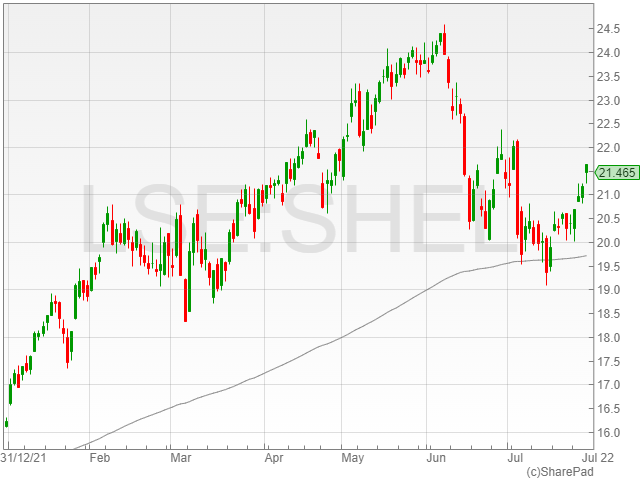
Shell shares rose 1.8% to 2,156.5p in early morning trading on Thursday after the oil giant announced a bumper $11.5 billion profit in Q2 2022, representing a 26% rise against its shattering $9.1 billion intake in Q1 2022.

Shell reported an adjusted EBITDA of $23.1 billion, marking a 22% leap over its $19 billion figure in the prior quarter.

The company attributed its surging income to higher realised prices, higher refining margins and climbing gas and power trading and optimisation results.

However, its skyrocketing intake was partially offset by lower LNG trading and optimisation results.

The energy group’s operating expenses remained almost flat at $9.5 billion compared to $9.4 billion from the last financial term.

Meanwhile, cashflow from operating activities grew 26% to $18.6 billion against $14.8 billion quarter-on-quarter.

The energy firm linked its cashflow to working capital outflow of $4.2 billion, $3.2 billion in tax payments and net derivative outflows of $700 million.

Its working capital outflow was driven by a climb in inventory due to price and volume increases of $6.8 billion, alongside a rise in current receivables, partially offset by an increase in current payables.

Additionally, Shell’s basic EPS shot up to $2.40 against 94c, along with an adjusted EPS of $1.54 compared to $1.20.

Share buyback programme and dividend

Shell confirmed its $8.5 billion share buyback scheme for HY1 2022 was closed on 5 July 2022.

However, the oil and gas firm announced the launch of a $6 billion share buyback programme which is scheduled for completion by Q3 2022.

Shell added that shareholder distributions were expected to remain in excess of 30% of cashflow from operating activities, pending board approval and the current energy sector outlook.

“Shell’s accelerating its share buybacks after another quarter of bumper profit growth as the energy sector continues to ride high on the supply and demand imbalance caused by the crisis in Ukraine,” said Hargreaves Lansdown equity analyst Laura Hoy.

“Strong oil prices are driving Shell’s bumper performance and the group’s pledged to share more than 30% of the windfall with investors.”

The company announced a Q2 dividend of 25c per share.

Tekcapital NAV growth highlights value in share price

Tekcapital, the university technology group, have released half year results and highlighted the current value in the Tekcapital share price, when compared to their portfolio’s net asset value.

Tekcapital has built a portfolio of companies based on university technologies that have the potential to make a positive impact on a large number of people’s lives, including foodtech, smart eyewear, and autonomous vehicles.

The increase in book value of their portfolio companies were again the main component of Tekcapital’s total income which was $8m for the six months to 31st May.

The value of Tekcapital’s portfolio increased by 16% to $74.3m in the period as the group prepares to unlock further value from the portfolio through the IPOs of MicroSalt owner, Salarius, and smart eyewear company Lucyd.

Tekcapital CEO, Cliff Gross, outlined Tekcapital’s portfolio companies in their recent presentation at the July UK Investor Magazine Virtual Conference.

Tekcapital’s Discount to Net Asset Value

Tekcapital’s Net Asset Value per share rose to $0.51, a 6% increase from the $0.48 recorded in November last year. This further highlights the current Tekcapital share price discount to their NAV which stands at 33.2% with the GBP/USD rate at 1.21681 and Tekcapital shares at 28p.

With the prospect of the Salarius IPO on the horizon, investors can look forward to another possible boost to the NAV, should the IPO value the MicroSalt owner at a premium to the $7.0m valuation of their 97.2% stake in Salarius Ltd.

From a operational perspective, the Tekcapital CEO pointed to all of their portfolio companies being revenue generating with MicroSalt securing the first bulk order for their SaltMe™ products and the distribution through 3,000 retail stores in the US. This supports the case for a MicroSalt IPO and will likely help secure higher valuations.

Portfolio Progress

Elsewhere in the portfolio, London-listed oxygen device provider, Belluscura, was awarded a distribution and pricing agreement from the US Defense Logistics Agency. Tekcapital notes the agency is one one of the largest buyers in the world, suggesting we could soon see large orders for the X-PLO2R® portable oxygen device. The X-PLOR devices are designed to assist suffers of Chronic Obstructive Pulmonary Disease (COPD).

Tekcapital’s smart eye wear brand, Lucyd, has filed for an IPO on the NASDAQ and has secured distribution from a number of retailers in the US.

Autonomous vehicle safety company Guident has secured a plethora of agreements to roll out their monitoring and safety technology in trials and the testing of autonomous vehicles across the states.

US Federal Reserve hikes interest rates 0.75% as recession alarms ring

0

The US Federal Reserve hiked interest rates 0.75% on Wednesday, hitting a target range between 2.25% to 2.5% in a bid to tackle soaring inflation.

US inflation reached a record height of 9.1% in June this year, ahead of analyst expectations and sparking renewed fears of a recession.

Meanwhile, some market analysts expect the US to announce its second quarterly economic contraction this week.

Federal Reserve chairman Jerome Powell highlighted the institution would potentially confirm another large interest rates rise at its next meeting if inflation showed insufficient evidence of slowing down.

“While another unusually large increase could be appropriate at our next meeting, that is a decision that will depend on the data we get between now and then,” said Federal Reserve chair Jerome Powell.

“My colleagues and I are acutely aware that high inflation imposes significant hardship, especially on those least able to meet the higher costs of essentials like food, housing, and transportation.”

“We are highly attentive to the risks high inflation poses to both sides of our mandate, and we are strongly committed to returning inflation to our 2 percent objective.”

Consumer confidence has spiralled in recent months as the war in Ukraine and the aftermath of the Covid-19 pandemic cripple supply chains place resources such as wheat and oil under pressure.

“Although prices for some commodities have turned down recently, the earlier surge in prices of crude oil and other commodities that resulted from Russia’s war on Ukraine has boosted prices for gasoline and food, creating additional upward pressure on inflation,” said Powell.

Dollar lower ahead of US Fed interest rates decision

The US Dollar declined from its 20-year record high in advance of the US Federal Reserve’s interest rates decision, which is predicted to see a 0.75% rise in a bid to combat soaring 9.4% inflation across the Atlantic.

According to Reuters, traders are betting on a 0.75% increase with an outside chance of a more extreme move to 1%. Expectations are set for interest rates as high as 3.45 by the end of 2022.

It was the outside bets on extreme rate hikes that drove the Dollar to its 20-year high, at which point it reached parity with the Euro earlier in July.

The Dollar index fell 0.2% to 106.93 at 10:55 GMT. Meanwhile, the Euro gained 0.33% to 1.0149, clawing back some ground from its 1% drop on Tuesday after Russia’s threats to lower gas exports through Nord Stream 1 to 20% saw panic flash across Europe.

FTSE 100 rises on promising earnings from the US and Europe

0

The FTSE 100 gained 0.5% to 7,343.8 in early afternoon trading on Wednesday as upbeat earning from the US and Europe helped improve sentiment.

“The FTSE 100 was higher on Wednesday morning, buoyed by some positive corporate results and news from the US overnight as Microsoft and Alphabet reported numbers which were not as bad as some may have feared,” said AJ Bell investment director Russ Mould.

“US stocks had fallen ahead of the tech giants’ earnings thanks to Walmart’s profit warning. Although Microsoft and Google-owner Alphabet were behind expectations, it turned out to be only modestly so.”

US markets were in optimistic territory ahead of the US Federal Reserve’s interest rates decision, with the Dow Jones climbing 0.4% to 31,869 in pre-open trading, the S&P 500 rising 0.8% to 3,956.5 and the NASDAQ gaining 1.3% to 12,276.2.

“All the focus tonight will be on the US Federal Reserve and whether it does or says anything to upset what remains a rather jittery market,” said Mould.

FTSE 100 companies

In the UK, FTSE 100 companies had a strong midweek showing of results, including Smurfit Kappa, Reckitt Benckiser and Lloyds.

Smurfit Kapa shares soared 4.5% to 2,834p after the group reported a double-digit revenue rise in HY1 2022 and a pre-tax profit growth of 86% to €6.3 billion against €4.6 billion the year before.

“Our strong performance is a result of the many actions we have taken over a number of years,” said Smurfit Kappa CEO Tony Smurfit.

“These actions include significant customer-focused investments to meet growth, providing paper-based packaging in the marketplace and selective acquisitions ensuring security of supply to our customers.”

Reckitt Benkiser shares climbed 4.2% to 6,644p following a swing to a pre-tax profit of £1.6 billion in HY1 2022 from a pre-tax loss of £1.9 billion last year, on the back of lower operating costs.

Meanwhile, net operating expenses fell 60% to £2.2 billion compared to £5.6 billion and revenues rose 4.4% to £6.8 billion against £6.6 billion year-on-year linked to rising demand for US Nutrition products due to the infant formula shortages suffered across the Atlantic.

“A short-term boost from a shortage of baby formula in the US, after a shutdown at a competitor, has undoubtedly contributed to the impressive results but there were other positive signs too,” said Mould.

“Sales of cold and flu remedies did well as Covid becomes endemic in many populations. And, in any case, demand for cleaning products and medicines should remain pretty resilient whatever the economic backdrop.”

However, Mould pointed out that the cost of living crisis might see the company’s branded products take a hit as customers weigh up the justification of branded products at a time when household budgets are shrinking.

“The concern for Reckitt will be that squeezed consumers realise they don’t need to pay a few pounds for a box of Nurofen when they can buy unbranded ibuprofen for a fraction of the cost. Or that supermarket-own bleach can do much the same job of cleaning a toilet as Dettol can,” said Mould.

“This will be a significant test for the business and it will be intriguing to see how it responds in the latter half of the year.”

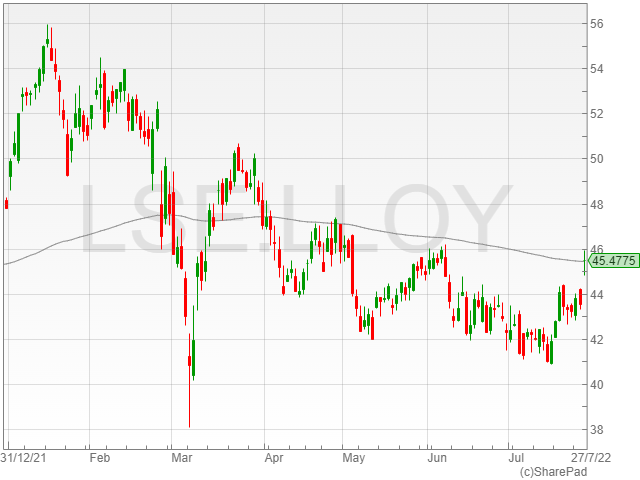
Lloyds shares increased 3.9% to 45.2p as the banking group announced a net income rise of 11% to £8.4 billion for HY1 2022, benefiting from higher interest rates as its mortgage book grew.

However, the company’s pre-tax profit fell 6.4% to £3.6 billion from £3.9 billion year-on-year.

Lloyds reported £377 million set aside to cover a possible rise in loan defaults, reversing a release of £734 million in the previous year.

“Lloyds may have set aside some extra cash to cover the risks associated with bad debts, reflecting a bleaker economic outlook, but on the whole it delivered an excellent set of first half results,” said Mould.

“Lloyds and the other banks have much stronger balance sheets than they did 15 years ago and it still looks well placed to pay out to shareholders through dividends and share buybacks.”

“All Lloyds can do it keep plugging away, making the business more efficient, and hope to see the share price rewarded in time for the progress made.”

In mining results, Rio Tinto shares declined 3.3% to 4,660.2p after the firm decreased its dividend in HY1 2022 to 267c per share, representing a 29% drop.

However, the dividend still marked the company’s second-highest payment on record, despite its otherwise underwhelming financial term.

The group blamed higher operating costs and falling iron demand for its lower returns, with a 10% slide in revenue to $29.7 billion and a pre-tax profit fall of 32% to $12.3 billion.