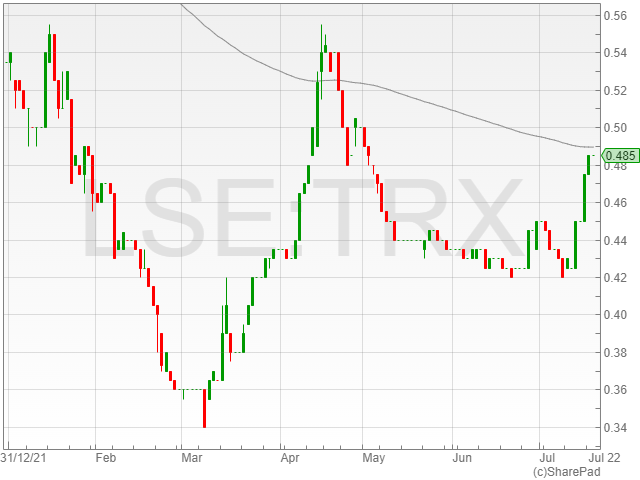
Tissue Regenix Group shares were up 2.4% to 0.5p in late afternoon trading on Tuesday following confirmation of strong trading in line with management expectations in HY1 2022, with a revenue climb of 25% to $11.8 million against HY1 2021.
The company announced its board was confident of meeting its FY 2022 expectations.
Tissue Regenix Group commented its BioRinse sector had continued to grow over the financial term.
The firm also mentioned the commercial reorganisation of its dCELL segment had started to display benefits as it returned to growth over the period.
The group reported its cash position remained sufficient to support its current business growth plans.
“The focus on executing our 4S strategy has resulted in a continued positive trajectory for the Group, despite the lingering impacts of COVID-19 during the first half of 2022,” said Tissue Regenix CEO Daniel Lee.
“We are pleased with the continued growth of our BioRinse business and how our dCELL business has responded to the commercial reorganization.”
“We continue to be optimistic in delivering the financial performance anticipated by our Board for the second half of 2022.”
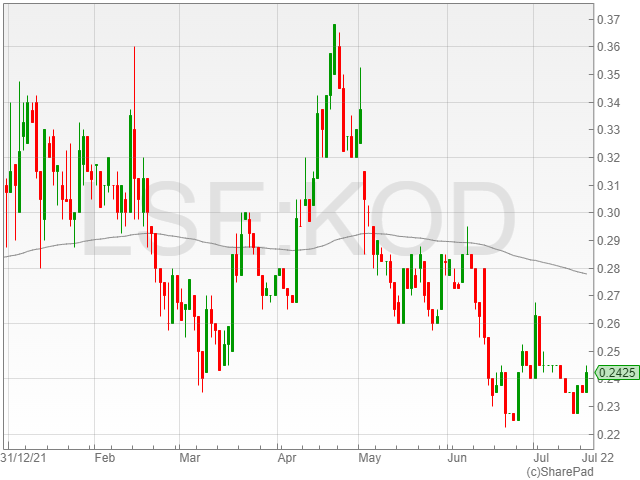
Kodal Minerals shares rose 1.1% to 0.2p in late afternoon trading on Tuesday after the company announced a widened group loss before other comprehensive income of £903,000 in FY 2022 against £623,000 the last year.
The West Africa-focused gold and lithium mining group reported a 370% climb in exploration and evaluation expenditure of £2.5 million compared to £542,000 year-on-year.
Kodal Minerals confirmed a 63% growth in the value of its gold projects in Mali and Cote d’Ivoire to £2.4 million from £1.4 million.
The company also noted a 20% increase in the value of its Bougouni lithium project in Mali to £9 million compared to £7.4 million in the previous year.
The mining firm highlighted a cash balance of £1 million at 31 March 2022 against £2.4 million in FY 2021, rising to a balance of £3.3 million on 8 July after a successful £3 million fundraise, before expenses.
Meanwhile, Kodal Minerals reported positive results from its exploration programmes at its Fatou and Nielle gold projects, with identified wide gold intersections and high-grade gold mineralised areas.
In addition, infill geochemical sampling at its Dakabala project resulted in high-grade surface samples at new discovery zones.
Kodal Minerals also confirmed it had been granted the mining licence for its 100% owned Bougouni lithium project, which the group reported was fully permitted for development and construction.
“We are in the enviable position of owning 100% of the concessions of what I believe will become one of the most significant lithium spodumene producing projects in West Africa, and the first in Mali,” said Kodal Minerals CEO Bernard Aylward.
“The prices of lithium spodumene have risen exponentially as global demand for this critical mineral shows no sign of abating driven by the green agenda and the EV (electric vehicle) revolution.”
“Looking ahead, we will continue to invest in exploration at our gold projects following the excellent results from our reverse core drilling campaign. However, our priority is to de-risk the Bougouni Project, by further reducing expected operating costs whilst advancing discussions with potential partners on funding for construction with the view of bringing the Project into production.”
Capital.com Group CEO Peter Hetherington said today his company’s strategy of focusing on mature, regulated markets is paying off, with the popular trading platform adding just over one million new user accounts during Q2.
The new sign ups mean that Capital.com now boasts just over 6.4 million users on its trading platform, which covers markets ranging from commodities and equities to indices and crypto.
The company’s strategy has led to an acceleration of its growth, with new users being added at a 19% faster rate than in the first quarter of the year.
Hetherington hailed his company’s “spectacular growth trajectory”, saying that the company has been focused on establishing a “greater and bolder” presence in Western Europe and especially the U.K.
The results of Capital.com’s efforts speak for themselves, with European users accounting for 31% of all trade volume on its platform in the last three months. Growth in the U.K. was clearly evident, with transaction volume in that country rising by 18% from the previous quarter.
“This is in line with our goal to expand our global footprint in step with the highest regulatory standards,” Hetherington said in a statement.
Capital.com certainly deserves some credit for its growth rate, which comes at a time when many traders have become wary of an extremely negative bearish sentiment that’s affecting all markets. While the tendency among many investors has been to look towards safer assets, including safe havens such as gold, Capital.com said its platform was a hive of trading activity. Altogether in the quarter, its trading volume reached $255 billion, down just three percent from the first three months of the year.
Although enthusiasm for Capital.com’s platform remains strong, Hetherington said the company is taking steps to protect its users amid the “choppy” market conditions. To that end, it has prioritized the delivery of first class insights, data and analytics to help investors adjust their trading strategies to the current bearish conditions.
“The self-directed investor will be seeking assistance and greater support through education and risk management tools,” Hetherington noted.
That said, Capital.com’s users demonstrated their adaptability in the quarter just gone, with indices and commodities emerging as the most traded assets on its platform, surpassing the once-dominant crypto markets. On indices, a majority of users shifted towards short positions, Capital.com said, indicating a willingness to eke out profits despite the current market downturn.
The FTSE 100 jumped on Tuesday and traded at the highest level since the start of July as investors reacted to mixed corporate news and prepared for earnings from US stocks.
The FTSE 100 bounced back from overnight jitters in US markets as earnings season begins the heat up.
“Speculation that Apple may slow hiring and spending took a bite out of any market momentum overnight and set the tone for a weak start in London on a scorching Tuesday,” said AJ Bell financial analyst Danni Hewson.
“The current second quarter earnings season in the US was always likely to be crunch time for markets as investors looked for signs that the weaker economic outlook was weighing on earnings, which until now have held up reasonably well.”
However, the US markets appeared unperturbed, with the Dow Jones pre-open trading 0.6% higher to 31,243, the S&P 500 up 0.8% to 3,866.7 and the NASDAQ gaining 0.9% to 12,016.2.
UK Real Term Pay Falls
Meanwhile, real term total pay (including bonuses) fell 0.9% and real term regular pay (without bonuses) fell by a record 2.8%.
“Wages are rising, but prices are rising much faster, resulting in a record 2.8% fall in regular pay in real terms,” said AJ Bell head of investment analysis Laith Khalaf.
“With inflation set to rise even further from here, there looks to be little prospect of the salary squeeze abating any time soon, leaving household finances firmly under the cosh.”
Real term wages see record fall as gap between public and private sector pay widenshttps://t.co/YaKiYYDBa8
— UK Investor Magazine (@UKInvestorMAG) July 19, 2022
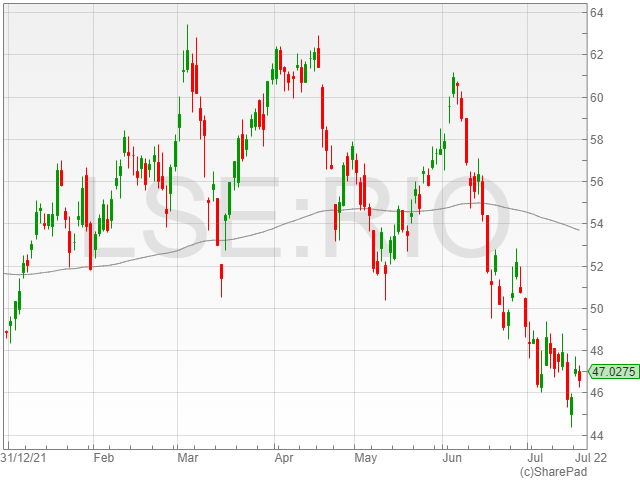
BHP followed mining giant Rio Tinto in its warning on a lowered demand outlook going forward over the next year.
Anglo American shares dipped 0.8% to 2,614.7p, Antofagasta fell 0.2% to 1,034.5p, Croda slid 0.2% to 6,818, Endeavor dropped 0.3% to 1,625, Glencore decreased 0.6% to 417p and Glencore declined 0.6% to 416.9p.
“After last week’s disappointing Chinese growth figures, signs of a continuing rise in Covid cases were the last thing markets wanted to hear,” said Hewson.
“Given China is such a big consumer of commodities, this created a negative backdrop for mining outfit BHP. It has followed peer Rio Tinto in warning of a bleaker outlook for demand, as well as rising costs and struggles with availability of labour.”
“After a strong start to 2022, it seems the miners are starting to find life much, much tougher.”
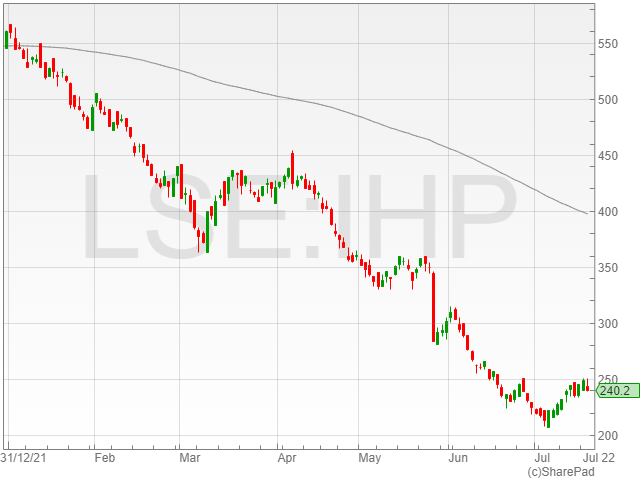
IHP Group shares were down 3.4% to 240.4p in late morning trading on Tuesday following a reported £1.7 billion in gross inflows and £1 billion in net inflows over Q3 2022.
The firm highlighted its gross and net inflows for the financial year remained ahead of the previous year comparative.
IHP Group confirmed an average daily funds under direction of £51.9 billion, which came in lower than Q1 and Q2 due to the negative impact of market movements.
The company mentioned 17,949 clients added to its base in the year-to-date, against 17,942 across the same term in 2021, and 546 newly registered advisors compared to 522 year-on-year.
“I am pleased to report a robust quarter of inflows on to our platform. Net inflows were £1.0bn in spite of a difficult economic and market environment. Outflows remained broadly in line with previous quarters,” said IHP Group CEO Alex Scott.
“The net inflows on to the platform, together with strong and consistent rates of new clients joining the platform (17,949 added to date in FY22, compared to 17,942 for the comparative period in FY21), and newly registered advisers (546 added to date in FY22, compared to 522 for the comparative period in FY21), is testament to the strength of the investment platform offering.”
The group also noted guidance for its previously announced IT and software investment, with 50 development staff set to be recruited in FY 2022 and FY 2023 in a move to enhance its investment platform and back office software.
IHP Group commented its investment would improve its operational efficiencies and cost effective scalability of its investment platform, reducing the number of additional operational staff necessary to serve extra clients and advisers from FY 2025.
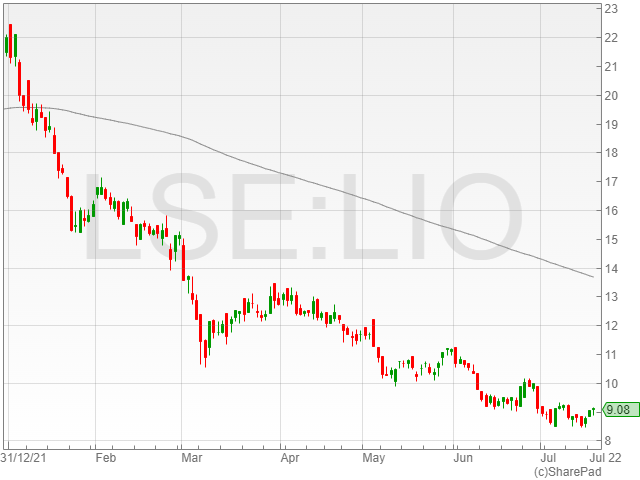
Liontrust Asset Management shares rose 0.5% to 909p in late morning trading on Tuesday after the group reported a 2.1% growth in assets under management and advice (AuMA) to £34.2 billion on 30 June 2022 in its trading update.
The company attributed £5.1 billion in new AuMA to its acquisition of Majedie Asset Management, which it completed on 1 April 2022.
The fund management firm announced net outflows of £541 million against net inflows of £1 billion in the three months to 30 June 2021, with the bulk of its outflows linked to £337 million in UK retail funds and MPS, alongside £266 million from international funds and accounts.
“This continues to be a challenging year for investors especially those who have a bias towards growth stocks. Despite the ongoing war in Ukraine and inflationary pressures, supply chain issues and strains on economic growth, we remain confident about the long-term prospects for our investment teams and their processes, along with the quality companies they hold within their portfolios,” said Liontrust Asset Management CEO John Ions.
“Liontrust has not been immune to this environment in terms of both performance and net flows. We continue to focus on what we do well and what has made Liontrust so successful. At the core of this are the rigorous investment processes, along with the strength of our sales and marketing, client communications and brand.”
Fund Management Changes
Liontrust Asset Management further mentioned changes to its fund management team, including a new global innovation investment team led by James Dowey and Storm Uru, supported by Clare Pleydell-Bouverie.
“We continue to invest in the fund management teams and Liontrust’s expansion over the last few years is giving us the opportunity to develop investment talent,” said Ions.
“This includes the formation of the Global Innovation team that is headed by James Dowey and Storm Uru and who have been joined by Clare Pleydell-Bouverie.”
The global innovation team will reportedly be responsible for managing the Liontrust Global Innovation Fund and the Liontrust Global Dividend Fund,
The firm also noted its Liontrust Income Fund is set to move from the Global Equity team to the Global Fundamental team, and will be managed by Chris Field, with the support of James O’Connor and Dan Ekstein.
The LF Liontrust UK Equity Income Fund has been confirmed under the management of Chris Field, supported by Dan Ekstein.
In addition, the Liontrust US Opportunities Fund has been moved from the Global Equity team to the Global Fundamental team under the management of George Boyd-Bowman.
“The Liontrust Income and US Opportunities funds are moving from the Global Equity team to the Global Fundamental team; the former to be managed by Chris Field, supported by James O’Connor and Dan Ekstein, while George Boyd-Bowman will continue to manage the US fund,” said Ions.
“The excellence of our investment teams, their processes and client service give me great confidence that we will get through the current macro-economic and political environment in a strong position and continue to deliver for our investors and stakeholders.”
Real term total pay fell by 0.9% and real term regular pay fell by a record 2.8% over the last year, according to the latest figures from the Office of National Statistics (ONS).
Inflation is currently at a 40-year high of 9.1% and set to climb to 11% by October this year, placing UK consumers under the heel of a crushing cost of living crisis.
“Wages are rising, but prices are rising much faster, resulting in a record 2.8% fall in regular pay in real terms,” said AJ Bell head of investment analysis Laith Khalaf.
“With inflation set to rise even further from here, there looks to be little prospect of the salary squeeze abating any time soon, leaving household finances firmly under the cosh.”
Employees saw an average total pay growth (including bonuses) between March to May 2022 of 6.2% and a rise in regular pay (excluding bonuses) of 4.2%.
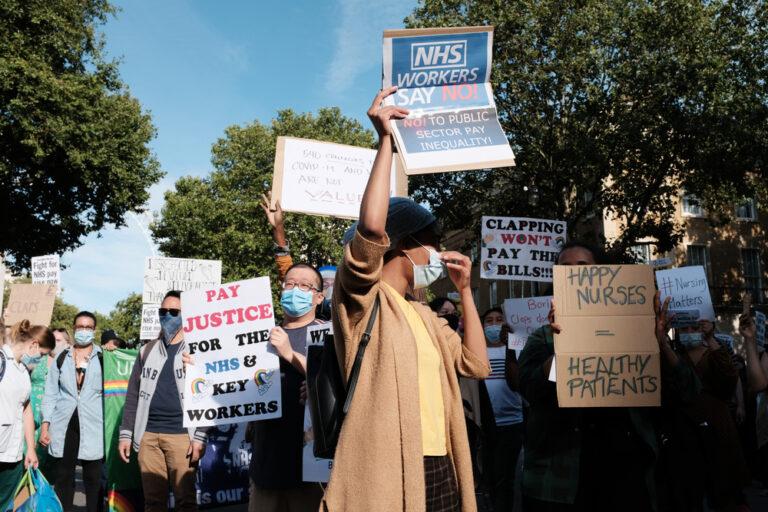
“The divergence between public and private sector pay also provides some context for the industrial action we are beginning to see emerge in certain sectors,” said Khalaf.
“Growth in total pay, including bonuses, was 6.2% on average across the entire UK workforce. But there is a stark comparison between private sector wages, which rose by 7.2%, and public sector pay, which went up just 1.5%.”
The ONS reported a 0.4% increase in employment to 75.9% over Q2, however the figure is still below pre-Covid levels, while unemployment and economic inactivity levels declined.
The number of full-time workers rose to a record high across the last three months, alongside a climb in part time employees, reflecting a recovery from the fall in employment over the pandemic.
Payrolled employees increased 31,000 in June compared to revised May figures to a record number of 29.6 million.
Meanwhile, the unemployment rate over Q2 fell by 0.1% to 3.8%. However the number of workers unemployed for up to six months grew over the term at the fastest rate since late 2020.
There were 1.294 million job vacancies on average across April-June 2022, up by 6,900 on the previous quarter.
— Office for National Statistics (ONS) (@ONS) July 19, 2022
The number of job vacancies between April and June rose to 1,294,000, and the ONS reported the rate of vacancies continued to slow.
“Job vacancies stand at almost 1.3 million, slightly greater than the number of unemployed people. That means if everyone seeking a job could be matched up with a vacancy, ignoring their location and skills, there would still be a shortfall,” said said Khalaf.
“Against such a backdrop it’s no wonder businesses are willing to cough up more to get new staff and keep existing employees on the books. The number of vacancies fell very slightly on the last reading, which means we may have just crested off the back of the peak and could start to see some normalisation of the labour market.”
“But the big concern is that the higher wages paid by the private sector will serve to entrench inflation, while the small pay rises witnessed in the public sector in the face of soaring prices will continue to stoke industrial tensions,” said Khalaf.
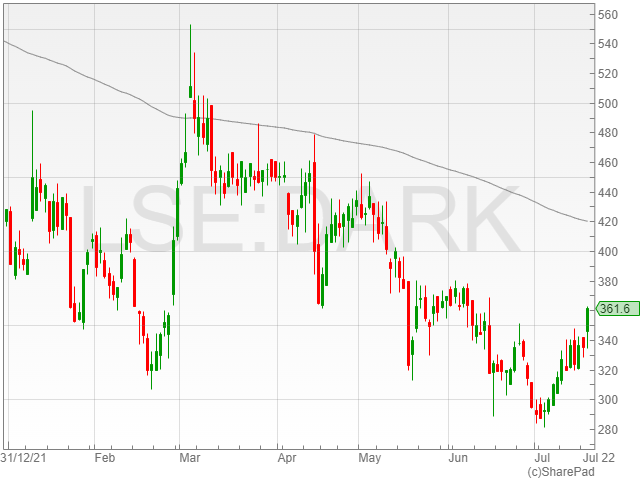
Darktrace shares gained 3.2% to 353.1p in early morning trading on Tuesday after the AI cybersecurity firm reported a 48% growth in revenue in FY 2022 against FY 2021 in its latest trading update.
Darktrace confirmed a 42% increase in constant currency ARR, with a maintained year-on-year improvement in one-year ARR gross churn and net ARR retention.
The firm said it expected an annual constant currency ARR climb of 31% to 34%.
The group mentioned a free cash flow generated of approximately 95% of its adjusted EBITDA, along with an adjusted EBITDA margin of at least 19.5%.
“We are delighted to report strong operating and financial performance for FY2022, where we saw demand for our products continuing to grow as organisations seek to protect themselves from growing cyber threats,” said Darktrace CEO Poppy Gustafsson.
“We expect this business momentum to continue into FY 2023 as against a turbulent geopolitical background, it’s no surprise that long-term cyber risk is an even higher priority for Chief Information and Security Officers and senior executives.”
The PREVENT launch is the third out of four product areas in the group’s delivery of its Cyber AI Loop, and has been designed to deliver a proactive system to help organisations pre-empt future cyber attacks.
“In addition to our strong performance announced today, I am thrilled to announce the launch of Darktrace PREVENT, the third product area in our delivery of a Cyber AI Loop, which will provide continuous feedback and a deep interconnected understanding of the enterprise to strengthen an organization’s state of security,” said Gustafsson.
“We’re excited about the value PREVENT will bring to our customers as we continue to pursue our mission of freeing the world from cyber disruption.”
Darktrace confirmed an expected revenue guidance downgraded by 4% to 5% in FY 2023, alongside a 6% to 7% lower revenue growth.
The cybersecurity group further noted a projected adjusted EBITDA margin between 15% to 18%, and a free cash flow as a percentage of adjusted EBITDA in the range of 10% to 15% below its normal level as a result of one-time tax payments.
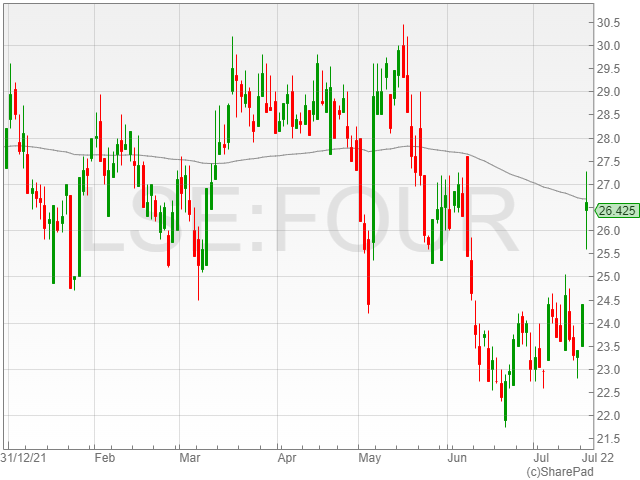
4imprint Group shares soared 10.7% to 2,692.1p in early morning trading on Tuesday following the company’s reported confidence in hitting its $1 billion revenue target for FY 2022 in its HY1 trading update.
The marketing group announced a 14% climb in total order counts across North America in the period against HY1 2019, alongside a 14% rise in average order values, resulting in overall demand revenue growth of 30%.
4imprint Group confirmed its FY 2022 operating profit expectation had also significantly improved, with an estimation of at least $75 million.
The firm commented its results were linked to volume revenue growth, combined with leverage in the business model and further driven by gains in its marketing programme productivity.
Additionally, the company said its gross margins remained steady in the inflationary environment and operational gearing over the cost base.
4imprint Group added that it was aware of the volatile macro-economic environment, and warned that its results going forward could potentially be impacted for the remainder of the financial year.
The FTSE 100 gained on Monday after oil companies and commodities pulled the market higher.
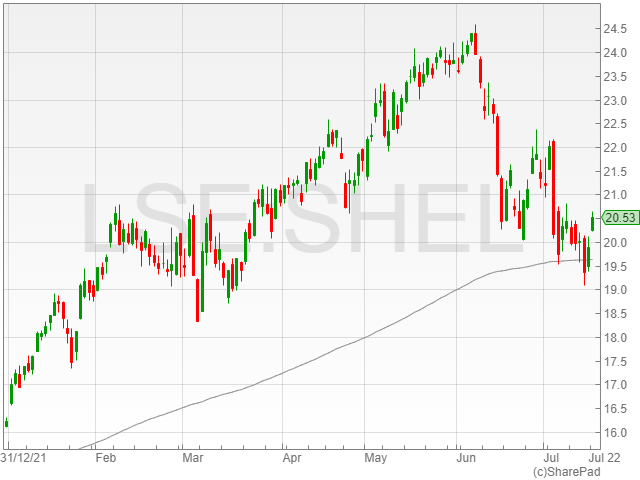
Shell and BP shares gained 2.7% to 2,045p and 3.4% to 386.1p, respectively, as the price of oil rose after talks between the US and Saudi Arabia failed to spark an increase in output supply, with benchmark Brent Crude reaching $105 per barrel.
“Leading the UK market higher were oil stocks Shell and BP … and the big miners,” said AJ Bell financial analyst Danni Hewson.
“Commodities joined the parade, with Brent Crude oil advancing 2.5%.”
Asia-focused stocks rose on positive news from China, as the property market improved after Chinese regulators stepped in to urge lenders to support housing developers after consumers protested uncompleted properties last week.
“In Asia, property stocks moved higher on reports that Chinese regulators were putting pressure on lenders to support real estate developers following mortgage payment protests last week from homeowners upset about unfinished developments,” said Hewson.
The Hang Seng climbed 2.7% to 20,846.1 and the Shanghai SSE rose 1.5% to 3,278.1.
Burberry shares increased 3.5% to 1,642.5p, Prudential rose 3% to 1,008.2p and Scottish Mortgage Investment Trust gained 1.9% to 797.5p.
Meanwhile, positivity in Asia led to an uptick in commodities stocks, as investors found optimism at the prospect of higher levels of consumption in the region.
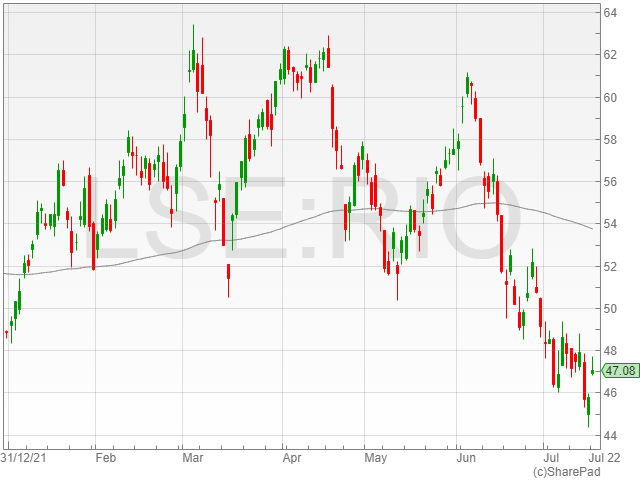
Anglo American shares increased 2.4% to 2,613.2p, Antofagasta gained 3.4% to 1,026.5p, Croda rose 1.3% to 6,820p, Fresnillo saw an uptick of 1.4% to 654.9p, Glencore climbed 3% to 419.4p and Rio Tinto gained 2.8% to 4,707.5p.
GSK completes Haleon demerger
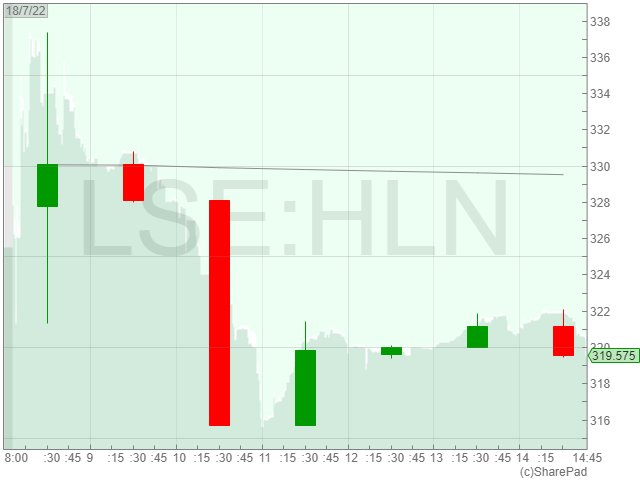
GSK finally completed its Haleon demerger, with the newly listed Haleon Group enjoying the largest London debut in a decade.
The company started off on slightly wobbly legs, with the shares launching at 330p and currently trading at 320p.
Analysts have also cited concerns that the cost of living crisis could see consumers turn to store brand healthcare options rather than name brand products, serving to dent Haleon’s appeal.
GSK completes Haleon Group demerger, analysts cite cost of living crisis concernshttps://t.co/Ey5xuK5sKE
— UK Investor Magazine (@UKInvestorMAG) July 18, 2022
“With a market value of approximately £31 billion, investors might be wondering why GSK didn’t accept the much higher bid from Unilever,” said Hewson.
“While Haleon owns some well-known brands including Sensodyne and Advil, that may not be enough to entice a line of buyers for the stock. Shoppers are increasingly going for supermarket own-label products as the cost of living crisis hits, with plenty of cheaper options for toothpaste and headache tablets than those sold by Haleon.”
“That raises the risk of Haleon struggling to deliver meaningful earnings growth in the near-term, which is hardly the best start to life as a standalone business.”