Helios announces EPS fall of 2.25p, underwriting profits grow to £3.4m YoY

0

Helios shares fell 4% to 166p in late afternoon trading on Friday, after the firm announced a basic loss per share of 0.75p in its FY 2021 from an earnings per share of 1.5p in FY 2020.

Helios swung to a loss of £434,000 compared to a profit of £301,000, however, the investment firm reported a growth in underwriting profits to £3.4 million against £639,000 in the previous year.

Helios confirmed a slight drop in total other income to £2.7 million compared to £2.8 million, with a total comprehensive income of £4.9 million against £4.2 million year-on-year.

The group highlighted an increase in total costs to £6.7 million compared to £3.1 million, on the back of operating expenses and the cost of stop loss protection bought in a move to mitigate the downside from great underwriting losses.

The company reported stop loss costs of £1.8 million compared to £1 million the last year, with operating costs of £3.6 million against £2 million in FY 2021.

The operating costs included the transaction costs from the firm’s 28 acquisitions and the additional operating costs of the LLV’s.

Helios noted that it did not expect the infrastructure required to manage the larger portfolio to materially increase.

“We have successfully navigated a challenging period, with reinsurance mitigating the COVID-19 losses and managing the volatility of the portfolio,” said Helios CEO Nigel Hanbury.

“With the prospect of improving underwriting returns, together with the opportunity to continue to build the capacity portfolio, Helios is well placed to deliver value to shareholders in the future.”

Premier Miton revenue climbs to £43.7m

0

Premier Miton Group shares gained 8.8% to 123p in early afternoon trading on Friday, after the company reported an increase in net revenue to £43.7 million against £38.5 million, on the back of its diversified product offering and disciplined approach to fund management.

The fund management group announced a climb in closing assets under management to £12.8 billion in HY1 2022 compared to £12.6 billion in HY1 2021.

Premier Miton mentioned an adjusted pre-tax profit of £14.6 million compared to £11.9 million year-on-year, with the company presenting a range of funds and investment performance which it used to target the institutional market, alongside its traditional distribution channels in the UK IFA and wealth management sectors.

However, the company confirmed net outflows of £401 million compared to £359 million the previous year.

In addition, the firm noted an 80% rate of funds with above median investment performance since their launch or tenure, against 74% in HY1 2021.

“This is a good set of results given the volatile market environment. Premier Miton is a well-diversified asset manager operating on a stable and sustainable platform with a robust balance sheet and, notwithstanding the more difficult market environment, our business is in good health,” sais Premier Miton CEO Mike O’Shea.

“We are delivering strong investment returns for our fund investors with almost 90% of our funds outperforming over 3 years and 80% since tenure.”

“At times of market stress there are substantial opportunities for genuinely active managers who have the courage of their convictions to run differentiated, long-term, and focused portfolios by taking an agile and positive role in the capital allocation process.”

Premier Miton highlighted the contribution of the Ukrainian war on market volatility, and commented that the long-term prospects for the savings markets remained attracted, with a high level of confidence in the potential and resilience of its business.

The firm also said it aimed to grow its assets under management to over £20 billion in the medium term.

“The outlook for investment markets remains uncertain and, in my view, this is likely to remain the position for some months yet,” said O’Shea.

“Our balance sheet strength and overall health of the business will allow us to focus on delivering superior investment returns for our clients through genuinely active investing during this volatile period.”

“As and when investors decide to commit new capital to investment markets once more, I believe our strong, long term performance record places us in a good position to capture significant market share.”

The investment group proposed an interim dividend of 3.7p per share, remaining flat against its payout in the last year.

Hargreaves Lansdown reports 12-month fixed-rate deal at 2.36%

0

Hargreaves Lansdown has announced a 12-month fixed-rate deal of 2.36% from Kent Reliance on its Active Savings platform.

The company reported that the deal increases up to 2.56% with cash back offer, representing the highest available rate in over five years.

Kent Reliance was also the first to offer rates in excess of 2% in April for more than two years.

Hargreaves Lansdown commented that there were increased short-term rates available too, with nine months at 2.25% with Charter Savings Bank and six months at 1.9% with Kent Reliance.

Charter Savings Bank is also offerings 2.45% for 18 months and 2.8% for 36 months.

“The additional reward for giving up access to your savings is increasing, and for 12-month fixes it now stands at 0.99%,” said Hargreaves Lansdown head of active savings Tom Higham.

“This is the additional interest earned by taking out the top 12-month, over the top easy access (no strings attached) rate. A little over 6 months ago this additional reward for fixing for a year was 0.50%.”

“What this shows is that banks have been relatively quick to pass on rate increases to their fixed-term products but are moving much slower on easy access repricing.”

The firm mentioned that the current cash back offer on Active Savings could increase the best 12-month rate available to 2.56% on a £10,000 deposit, which has not been seen for a long time.

Hargreaves Lansdown highlighted the potential for real-term savings loss for consumers on the back of rising Bank of England interest rates, which stand at 1% and are estimated to grow to 2% by the close of 2022, and rise to 2.5% by the middle of 2023, with the Bank expected to scale them back later in 2023.

The firm warned that consumers should not rely on large banks to offer competitive savings rates, and drew attention to Barclays, which pays 0.01% on its flagship easy access product despite four base rate increases and and a £1 billion share buyback programme amid £2.2 billion in profits for Q1 2022.

“Leaving your savings in your current account or high street bank savings account is now costing you hundreds of pounds per £10,000 of savings,” said Higham.

“Savings platforms like Active Savings offer a convenient and secure way to get the most out of your cash savings. With inflation (CPI) at 9% and forecast to rise still, it’s more important than ever to offset what you can by getting your cash savings working harder.”

Twitter investors file class action against Musk on market manipulation claims

0

Twitter investors have launched a lawsuit against Tesla CEO Elon Musk over his bid to purchase the social media giant for $44 billion.

Investors reportedly lodged complaints linked to legal violations under California law, including “false statements and market manipulation”, which apparently launch Twitter’s San Francisco head offices into “chaos.”

The proposed class action lawsuit was filed by Twitter shareholder William Heresniak at the US District Court for the Northern District of California earlier in the week.

He said he filed the lawsuit “on behalf of himself and all others similarly situated.”

Experts are speculating that Musk might be looking for ways to lower Twitter’s $44 billion price tag, which was agreed with the platform’s board in March this year.

Musk disseminated complaints to his 95 million Twitter followers that the deal could not be completed due to worries over the number of fake accounts, known as ‘bots’, on the site.

However, the lawsuit alleges that Musk knew in advance about the number of bots on the social media platform.

The complaint also noted that the SpaceX founder financially benefitted through delaying the announcement of his significant stake in the firm, alongside his intention to join the company’s board.

Musk reportedly saved $156 million in delaying his announcement that he owned over 5% of the group by 14 March.

He continued to buy up shares until he owned 9.2% of Twitter, before revealing his stake in April 2022.

“By delaying his disclosure of his stake in Twitter, Musk engaged in market manipulation and bought Twitter stock at an artificially low price,” said investors in the class action suit.

Twitter shares are currently trading approximately 27% under Musk’s original $54.20 offer price.

Musk had insinuated in early May that he might attempt to negotiate a lower price for the social media platform.

He commented that rehashing the agreement for a discounted price was “not out of the question” at a tech conference where he was speaking.

Musk has not commented so far on the class action since its filing.

Worldwide Healthcare Trust NAV return tumbles 35.8%

1

Worldwide Healthcare Trust shares were down 0.3% to 3,074.7p in early morning trading on Friday, after the group announced a net asset value (NAV) per share total return loss of 5.8% in FY 2022 compared to a 30% return in FY 2021.

The trust fell 26.2% against the MSCI World Health Care Index benchmark total return of 20.4% across 2022 as a result of the firm’s portfolio manager deciding to pursue a strategy of being underweight in large pharmaceutical companies, and overweight in emerging markets and emerging biotechnology companies.

The company commented that this strategy served it well in 2021, however it became the main driver behind its poorer performance in 2022.

The group said the volatile macro-economic environment had discouraged interest in promising, yet unestablished companies, as investors retreated to firms with a strong “growth-to-value” rotation, and risk-aversion damaged the business sectors in which the firm remained overweight.

It notably drained interest in sectors such as biotechnology, innovative tools and China healthcare.

The company mentioned that waning investment reflected consumer sentiment rather than significant deterioration in business viability, with the trust commenting that it expected the stocks to recover in sufficient time.

Worldwide Healthcare Trust reported a NAV per share of 3,465.2p compared to 3,703p in the last year, with a share price dip to 3,275p from 3,695p year-on-year.

In addition, the firm highlighted a discount of share price to net asset value per share of 5.5% compared to 0.2% the year before.

Worldwide Healthcare Trust also noted a rise in leverage to 10.9% compared to 7.6%, with ongoing charges flat at 0.9% year-on-year.

The company confirmed that its outlook appeared uncertain as a result of the gloomy macroeconomic environment, however it noted the recovery of healthcare and the trust’s reliable fundamentals, with its defensive characteristics highlighted as an attractive quality amidst the current geopolitical uncertainty.

Worldwide Healthcare Trust announced a dividend per share of 26.5p for FY 2022 against 22p in FY 2021.

Likewise Group – the growth continues and the profits start to roll in

The last eighteen months have been positively impactive for the Likewise Group (LIKE.L) the fast-growing UK floor coverings distributor – a period during which it turned into profitability, floated on AIM and subsequently has made two important and strategic acquisitions.

Yesterday morning the £76m capitalised group announced its results for the year to end December 2021, showing a 28% increase in sales to £60.5m and an underlying pre-tax profit of £1.6m against the previous loss of £1.5m.

Apparently, its margins improved from 26.1% to 30.0% due to a much better product and customer mix.

Both profits and assets have seen increases

Not only did the profits increase but so too did its assets – at the year end its property was valued at around £20m, while its cash balance ended at £3m.

By the end of April this year, following the two important acquisitions of Valley Wholesale Carpets in January and then Delta Carpets in April, its net assets had increased from the end year £22.4m to a much healthier £38.7m as at the end of April.

Cautious of cost rises countered by selling price increases

The group has obviously become very wary of the economic impacts of both COVID-19 and now the war in Ukraine, which has increased cost prices.

It has also borne added costs in energy, basic raw materials and freight costs of imported products.

In response, the group has been raising its selling prices, the latest was at the beginning of May.

Acquisitions have added to spread of infrastructure advantages

The recent acquisitions have helped to expand and reorganise its distribution and operational activities much more efficiently

The company has continued to increase its sales revenues and its gross margins on a like-for-like basis. 

With the infrastructure established and further investment in sales and marketing, the group considers that it has the management and the teams in place to outperform market conditions and increase its market share.

The company is extremely acquisitive, as can be seen by its first two purchases in 2022 – so more acquisitions have to be expected over the next couple of years.

Company Boss sounding confident

With this morning’s results announcement CEO Tony Brewer stated that:

“Likewise has achieved a good start to the year with a continuation of the positive sales trend and whilst being aware of inflationary pressures and general consumer sentiment, is currently on target to achieve its objectives for the year.

Likewise is extremely optimistic with regards to the Medium and Long-Term given the business and strong foundations that have been established to date.”

Broker very positive of future growth

Following yesterday morning’s results, the group’s joint-broker Zeus Capital rated 2021 as a ‘transformational year’ and noted that despite the economic headwinds the business has structural growth.

The broker analyses that the company has the potential for growing its annual revenues at a compound annual growth rate of a very impressive 38%.

Analyst Andy Hanson has current year estimates out now for the group sales to increase 90% to £114.9m, while its pre-tax profits could almost treble to £4.2m, with adjusted earnings jumping up to 1.3p (0.8p) and with a first-time dividend of 0.3p per share.

The benefits of the acquisitions will kick through in future years, with Hanson going for £136.6m sales and £6.2m profits for next year, giving earnings of 1.8p and a 0.5p dividend per share.

For the 2024 year he goes for £160.8m sales, £9.1m profits, 2.7p earnings and a 0.7p per share dividend.

That profit progression shows a steep fall in the current and prospective price-to-earnings ratios from 39 times to just 12 times inside three years.

Good news for its shareholders

Zeus Capital is understandably convinced that Likewise is on a strong growth path, highlighting that the group offers the ‘best in class’ in a fragmented market with single dominant player and a management team that has done it before.

Apart from its management, with some 21% of the group’s increased equity, other investment names in its ranks include CRUX Investment Management, Allianz Global Investors, Octopus Investments and AXA Investment Managers. So it is assumed that the progress to date has pleased one and all.

The group’s shares, floated last August at 25p, then subsequently peaked at 52.5p in December, before drifting at around the current 31p. 

At that level, considering the group’s growth path and potential profitability over the next few years, the shares have distinct investment appeal.

The company will be holding its 2021 AGM on 24 June, at which time it would be good to have an Interim Pre-Close Trading Update, otherwise we will have to wait until August time for such news, unless, of course, another acquisition is announced in the meantime.

Yü Group swings to higher revenues on 2021 momentum

0

Yü Group shares were down 2.6% to 202p in late afternoon trading, despite a slate of positive results in its Q1 2022 trading update.

The independent energy company announced a strong start to FY 2022, with its momentum from FY 2021 propelling its revenue growth and profit margins ahead of Q1 2021 levels.

Yü Group reported average monthly bookings at £13 million, representing an 81% year-on-year growth in the four months to 30 April 2022.

The firm commented that it remained focused on delivering profitable and controlled growth, with a strong forward contract book going forward in 2022.

The company further noted the creation of a Metering Services Division, reportedly providing the ability to gain control of a larger segment of the value chain and drive significant value enhancement over the medium term.

Yü Group said it would provide an additional report in its July trading update, covering the term to 30 June 2022.

“I am pleased to report a very strong start to the year. Despite commodity market volatility, we have delivered record revenues for the four months to 30th April 2022, with continued strong momentum,” said Yü Group CEO Bobby Kalar.

“I’m delighted that the Group has acquired the management capability of a smart metering business, which I truly believe to be a game-changer.”

“I look forward to scaling this new capability, combined with the efficiencies from our Digital by Default strategy, to further enhance our growth and profitability.”

Rishi Sunak announces £5bn energy profits levy for cost of living support

0

Rishi Sunak announced a £5 billion “targeted profit levy” on energy companies today, in a move which prompted a sigh of relief from struggling consumers in light of news earlier this week that the energy price cap was set to rise to £2,800 per year in October.

The reported measure comes as part of a £15 billion support package drummed up to support UK citizens as the crushing cost of living soars to record heights, including 40-year high 9% inflation.

Sunak confirmed that a new temporary 25% Energy Profits Levy would be set out for oil and gas companies, reflecting their record profits as a result of skyrocketing oil prices on the back of Russia’s war in Ukraine.

Oil prices soared to heights of $130 per barrel at their peak in mid-March, with the energy giants reaping bumper rewards. Shell tripled its profits in Q1 2022 as consumer bills shot through the roof at the close of winter this year.

“It is … right that those companies making extraordinary profits on the back of record global oil and gas prices contribute towards this,” said Sunak.

“That is why I’m introducing a temporary Energy Profits Levy to help pay for this unprecedented support in a way that promotes investment.”

Additionally, the chancellor scrapped the poorly received £200 loan for energy bills, and replaced it with a £400 sum which would not need to be paid back, available for all consumers across the country.

Millions of households will consequently receive £400 towards their energy costs, with a £650 one-time cheque for the eight million most vulnerable families, a £300 payment for eight million pensioners and £150 million to six million people living with disabilities in the UK.

“We have a collective responsibility to help those who are paying the highest price for the high inflation we face,” said Sunak.

“That is why I’m targeting this significant support to millions of the most vulnerable people in our society.”

“I said we would stand by people and that is what this support does today.”

Shell and BP shrug off the shock

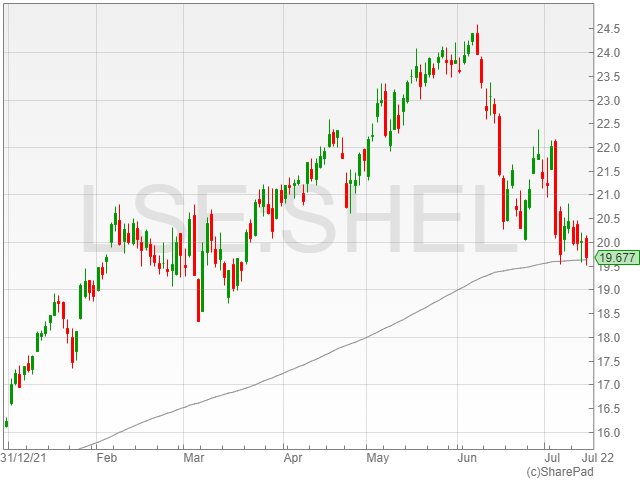
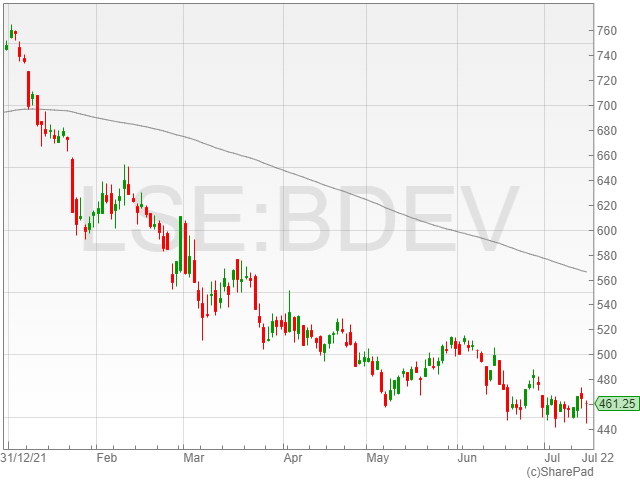
Shell and BP shares brushed the dirt off their shoulders as the energy majors’ shares remained startling buoyant, rising 1.2% to 2,407p and 1.6% to 434.7p, respectively.

Meanwhile, investors appeared satisfied that higher investment in clean energy and UK businesses would bring taxes lower, while accelerating the companies’ environmental diversification.

“[Investors] shrugged off its impact given that it is expected to be a short lived hit,” said Hargreaves Lansdown investment and markets analyst Susannah Streeter.

“It may mean dividends are pushed lower temporarily, but given that tax will reduce if companies invest more, it’s likely to mean an acceleration of investment by BP and Shell, a strategy which will be welcomed by many investors who see environmental progress and not just shareholder pay-outs as crucial for their long term growth prospects.”

Investors further appeared unconcerned about the levy after taking into consideration how low an impact the price tag actually had on the energy giants’ profits for this year.

“A chunk of profit may still be scooped from the oil and gas majors but the levy will still represent just the cream on the top of fat volumes of cash being generated by energy giants due to the higher price of oil,” said Streeter.

“A barrel of Brent crude, the international benchmark, has edged higher to just shy of $115 dollars.”

“It is up by around 50% since the start of the year pushed higher by the outbreak of war in Ukraine.”

FTSE 100 flat, utilities fall on 25% ‘targeted profits levy’

0

The FTSE 100 was flat in early afternoon trading on Thursday, as energy firms reacted to Rishi Sunak’s 25% “targeted profits levy” for oil and gas companies to assist struggling consumers with crushing energy bills across the country.

Utilities plummeted across the market, as United Utilities led the pack with a 4.3% decline to 1,064p following a pre-tax profit fall to £302 million in FY 2022 against £460 million in FY 2021.

The group attributed its slide to its £174 million growth in net finance expenses related to higher inflation on its index-linked debt, which ate into its profits for the total year.

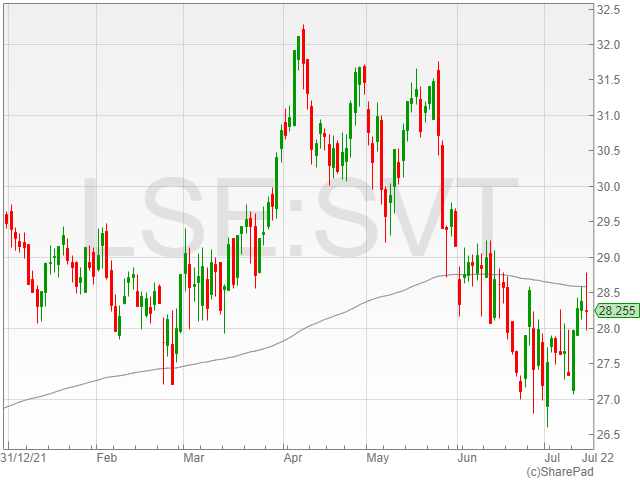
SSE shares experienced a drop of 3.4% to 1,804p, with Severn Trent declining 2.6% to 2,989p and National Grid falling 2.3% to 1,197p.

“A windfall tax is widely expected to fund the package and energy firms were weak again this morning as they awaited the detail of Chancellor Rishi Sunak’s plans with all the relish of a pupil facing a particularly tricky exam,” said AJ Bell investment director Russ Mould.

JD Sports Fashion shares slid 1.7% to 110.1p as a result of executive chair Peter Cowgill’s resignation, with non-executive directors Helen Ashton and Kath Smith set to take the positions of interim non-executive chair and interim CEO, respectively.

The fashion group commented that it chose to “accelerate the separation” of its chair and CEO roles after an ongoing review of its internal governance, a shift which Cowgill apparently opposed prior to his departure.

“Coming just five months after a £5 million fine was issued by the regulator it appears JD is keen to get its ducks in a row and finally address corporate governance concerns by splitting the role of CEO and chair,” said Mould.

“There are reports Cowgill opposed some of these changes and investors must decide whether the apparent governance improvements were worth losing such a successful leader of the business.”

BT Group shares declined 3.1% to 183.9p as the government highlighted a national security probe to investigate Altice UK Sarl’s shareholding in the firm, following the company’s increased stake in the group from 12% to 18%.

The government exercised its powers granted by the National Security and Investment Act 2021 to enable the administration to investigate approaches conducted by overseas companies.

Altice commented that it had no intention to mount a takeover effort, and would be legally bound by its commitment through UK takeover regulations.

BT is an especially sensitive interest, as a result of its Openreach arm, which currently maintains the vast majority of the UK’s broadband network.

Meanwhile, Intermediate Capital Group shares gained 8% to 1,576p after the company announced a 12% rise in pre-tax profit to £568.8 million in its FY 2022, alongside a 36% hike in its dividend to 76p per share against 56p the year before.

“This has been a defining year for ICG both in our market standing and in our growth trajectory,” said Intermediate Capital CEO Benoît Durteste.

https://twitter.com/ICGplc/status/1529730328860008449

Auto Trader shares increased 1.8% to 576.2p after the group reported its best ever results, including a 65% revenue surge to £432.7 million in its FY 2022, and a pre-tax profit leap of 91% to £301 million.

The company bumped its dividend payout by 64% to 8.2p compared to 5p year-on-year, and mentioned a positive growth outlook for the coming year.

“Despite the current high levels of economic uncertainty and industry change, we enter the year with good reason for both confidence and optimism,” said Auto Trader CEO Nathan Coe.

Update: Anexo VW cash potential

It appears I may have been too cautious about the prospects for credit hire and legal services comapny Anexo Group (LON:ANX) after the out of court settlement by VW because of its manipulation of air pollution tests.
I did not want to overstate the potential income that could be generated if the 13,000 Anexo-advised claimants against VW get the equivalent payout that the 91,000 claimants are getting in the case that has been agreed out of court. They are getting £193m, which is just over £2,000 each on average, plus legal fees.
I assumed that Anexo would possibly receive 20%-25% of any payment...