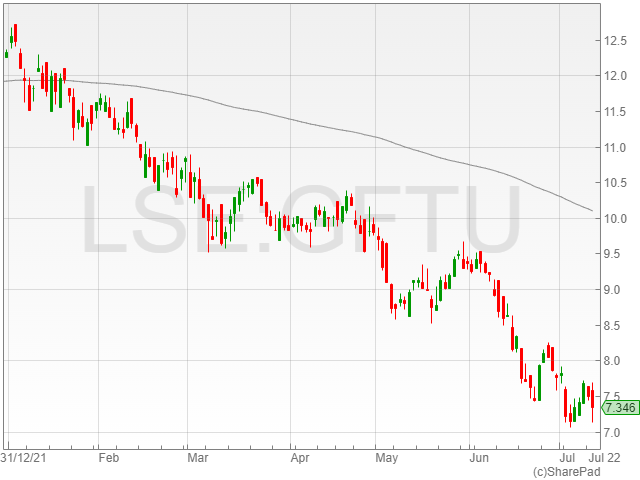
ImmuPharama shares fall on widened £8.2m loss

0

ImmuPharma shares were down 6.4% to 5.5p in early afternoon trading on Wednesday, after the group reported a widened loss to £8.2 million in its FY 2021 results, from a £6.9 million loss in FY 2020.

The lupus-focused group confirmed research and development expenses of £3.7 million against £2.4 million the last year, along with exceptional items of £1.4 million as a result of corporate reorganisation costs.

ImmuPharama commented that it expected cost savings on the back of corporate reorganisation from 2022 of £1.1 million per year in committed overheads cost, representing a decline of approximately 50% including a reduction in costs relating to its board and connected parties of £500,000 per year.

ImmuPharma also mentioned lowered administrative expenses of £1 million from £1.8 million year-on-year.

However, the pharmaceutical company’s cash balance decreased to £1.6 million compared to £5.9 million the previous year.

ImmuPharma also noted a successful subscription and placing, which raised £3.5 million in total.

“We were delighted to secure the successful fundraising in late 2021, as it demonstrated that our corporate repositioning efforts, since the Board changes, were recognised by our existing shareholders and partner, Avion (Alora Pharmaceuticals),” said ImmuPharma CEO Tim McCarthy.

Lupzor and P140

ImmuPharma reported the successful completion of its P140 Pharmokinetic study, with key endpoints met. The P140 was safe and well-tolerated in all doses across all subjects, with discussions currently ongoing with potential partners for Lupzor outside of US key territories.

“With now a fully reviewed and assessed R&D development pipeline, we remain focused on bringing our two late-stage clinical assets, Lupuzor™ and P140 for CIDP closer to the market,” said McCarthy.

“Specifically, on Lupuzor™, our partner Avion, is committed to moving this program into Phase 3 as soon as possible, following final discussions with the FDA and based on the positive readout of the recent PK study.”   

“We are also focused on ensuring earlier stage assets, specifically within anti-infectives, progress, with a key strategy on securing partnering opportunities over the medium term.”

FTSE 100 rises on utilities, telecoms and mining stocks

0

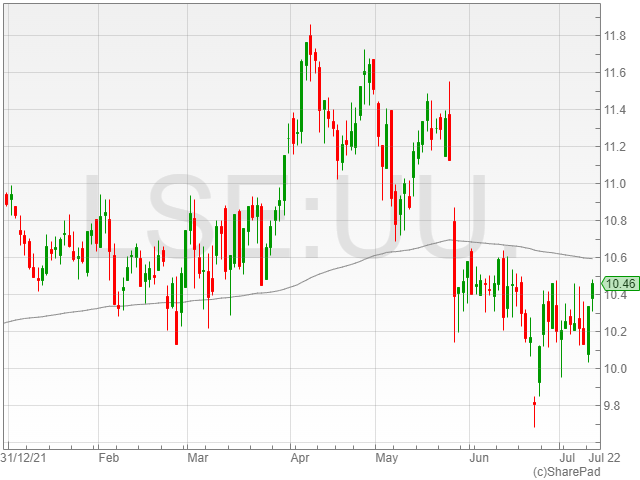
The FTSE 100 was up 0.4% to 7,518.2 in early afternoon trading on Wednesday, following jumps in mining, utilities and telecoms, with analysts pointing out the high dividend payments coaxing investors out of the woodwork.

“The FTSE 100 advanced…led by utilities, telecoms and mining stocks – all generous dividend payers, suggesting that people are continuing to rediscover their love of income investments,” said AJ Bell investment director Russ Mould.

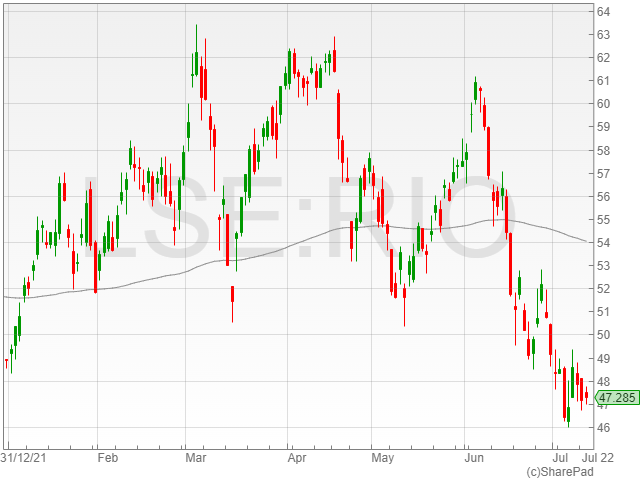
Airtel Africa shares increased 2.7% to 156.8p, with Vodafone shares climbing 1.9% to 131.3p and commodities firms Rio Tinto and Anglo American rising 1.5% to 5,624p and 1.4% to 3,675p, respectively.

Meanwhile, tech stocks battered the US markets, as Snapchat shares fell 43% by close of trading on Tuesday, with the NYSE down 0.3% to 15,290.3 and the NASDAQ sliding 2.3% to 11,264.4.

SSE shares gained 5% to 1,855p after the utilities company reported a 42% climb in revenue to £16.9 billion in its FY 2022 results compared to £11.8 billion in FY 2021, with a 15% increase in operating profit to £1.5 billion.

The firm announced a dividend payout growth of 5.8% to 85.7p against 81p the last year.

https://twitter.com/SSE/status/1529347362111512579

Glencore shares rose 0.2% to 520.4p following a remarkable $1.5 billion fine levelled against the mining company for corruption and bribery charges related to its oil operations across several African countries.

The group indicated that it would plead guilty to all charges, and is set to pay $700 million for US bribery investigations, $485 million for market manipulation investigations and $39.5 million to the Brazilian Federal Prosecutor’s Office, with an additional amount to be paid to the UK.

“We acknowledge the misconduct identified in these investigations and have cooperated with the authorities,” said Glencore CEO Gary Nagle.

“This type of behaviour has no place in Glencore, and the Board, management team and I are very clear about the culture that we want and our commitment to be a responsible and ethical operator wherever we work.”

Prudential shares declined 2.1% to 986.6p on the reported hire of Manulife Financial executive Anil Wadhwani as its new CEO, who is set to take up the position in following the retirement of Mike Wells earlier this year.

Ocado shares tumbled 5.3% to 723.9p, after the retailer halved its growth guidance in light of the UK cost of living crisis, with management expecting “low single digit” annual sales growth.

The struggling company was already failing to keep up with a post-Covid-19 rate of online consumer shopping, and the stock had been circling the drain for some time as lockdown restrictions lifted. Ocado shares have fallen 56.7% year-to-date.

Glencore fined $1.5bn on bribery and market abuse charges

0

Glencore was charged with seven counts of bribery linked to its oil operations by the Serious Fraud Office (SFO) this week, in a revelation which saw the mining giant fined an eye-watering $1.5 billion.

The FTSE 100 company is set to pay $700 million for US bribery investigations, alongside $485 million contributed to market manipulation investigations, with a certain level of reductions pending settlements in other countries.

Glencore confirmed it had further agreed to pay a future amount to the UK, and $39.5 million under a resolution signed with the Brazilian Federal Prosecutor’s Office linked to its investigation into the mining firm.

The charges followed an operation opened by the SFO into the company in June 2019, codenamed Operation Azoth, which investigated the group for allegations of corruption.

The SFO pursued the claims with the assistance of the US, alongside Dutch and Swiss prosecutors.

Glencore reportedly indicated that it would plead guilty to all charges at a hearing at Westminster Magistrates’ Court on Tuesday.

The organisation alleged that agents and employees working for the FTSE 100 miner paid over $25 million in bribes for advanced access to oil, with the knowledge and approval of the group.

The SFO uncovered corruption throughout Glencore’s oil operations in the Ivory Coast, Nigeria, Equatorial Guinea, South Sudan and Cameroon.

“We acknowledge the misconduct identified in these investigations and have cooperated with the authorities,” said Glencore CEO Gary Nagle.

“This type of behaviour has no place in Glencore, and the Board, management team and I are very clear about the culture that we want and our commitment to be a responsible and ethical operator wherever we work.”

Glencore chair Kalidas Madhavpeddi added: “Glencore today is not the company it was when the unacceptable practices behind this misconduct occurred.”

Glencore is scheduled to be sentenced at Southwark Crown Court on Tuesday 21 June.

“This significant investigation, which the Serious Fraud Office has brought to court in less than three years, is the result of our expertise, our tenacity and the strength of our partnership with the US and other jurisdictions,” said SFO director Lisa Osofsky.

“We won’t stop fighting serious fraud, bribery and corruption, and we look forward to the next steps in this major prosecution.”

Pets at Home enjoys record £1.3bn sales, CEO Lyssa McGowan steps up

0

Pets at Home shares gained 8.8% to 305.6p in late morning trading on Wednesday, following record sales of £1.3 billion and a like-for-like rise of 15.8%.

The company confirmed an increase in group customer revenue of 16.5% to £1.6 billion, reflecting market share gains spread throughout all business sectors.

The pet specialist firm reported an underlying pre-tax profit growth of 65.3% to £144.7 million compared to the previous year, ahead of market expectations.

The group reported a free cash flow of £95 million, marking a 40.9% rise year-on-year, including positive cash generation across its First Opinion veterinary practices.

Business Development

Pets at Home confirmed a record VIP number of 7.3 million members, representing an increase from FY 2021 of 18% to 1.1 million.

The firm reported approximately 23,000 weekly registrations per year, marking a 16,000 member rise compared to FY 2019.

The company noted that 27% of VIPs bought items across more than one channel over the year, bringing the proportion up 22% since the last year, boosting the group’s lifetime value interest.

The firm also saw an increase in new client registrations to its First Opinion practices to 1.7 million, with an average of 9,000 new client registrations per week.

Pets at Home noted a 23% uptick in pet care plan subscriptions to 1.5 million, generating approximately £120 million in annualised recurring customer revenue.

“The UK pet market’s grown 4% per year on a compound basis over the past 5 years and continues to look strong as the pandemic fuelled surge in pet ownership doesn’t look to be going anywhere,” said Hargreaves Lansdown equity analyst Matt Britzman.

“Revenue’s outpaced that, growing around 10% over the same period which is testament to the work done at Pets at Home to push the omnichannel experience and sign customers up to the pet care ecosystem with subscription services now generating over £120m in recurring revenue.”

CEO Lyssa McGowan

The company reported a soaring slate of positive results, right in time for new CEO Lyssa McGowan to step up to the plate and steer Pets at Home into its next stage of growth.

“We are well placed to accelerate our growth in market share. The robust backdrop of the UK pet care market, coupled with our clear strategic priorities, proven omnichannel model and strong Executive Team, mean that I hand over leadership of this great business to Lyssa McGowan with the utmost confidence that Pets at Home will continue to create value for all stakeholders in both the near and longer-term,” said Pets at Home CEO Peter Pritchard.

Analysts commented that McGowan had her challenges cut out for her as inflationary pressures rose, however it appeared unlikely that customer demand for the firm’s services and products would be disappearing en mass anytime soon.

“Lyssa McGowan has big shoes to fill. With yet another record year in the books for Pets at Home, the incoming CEO has her work cut out for her,” said Freetrade analyst Gemma Boothroyd.

“Red hot inflation and the growing cost of living mean the UK could continue to feel the heat. [However], Pets at Home has proven it’s not a one hit wonder. The lockdown winner has maintained sustainable revenue growth as we emerge from the pandemic too.”

“Pets at Home’s already proven its services segments are critical for its revenue growth. They’re also how the retailer can prove the value behind its brick and mortar locations, which provide the benefit of up-sell opportunities as well. Services will also protect the firm from international behemoths like Amazon from gobbling up more of the UK retailer’s market share.”

Inflation

Pets at Home assured investors that inflation across its supply chain was being managed proactively, with a projected underlying pre-tax profit of £146 million to £157 million, according to analyst expectations.

Dividend and Share Buyback

The firm mentioned a strong balance sheet, with net cash of £66 million, excluding lease liabilities, and announced a final dividend uptick of 36% to 7.5p, bringing its total dividend to 11.8p per share for FY 2022.

Pets at Home also confirmed the launch of a 12-month share buyback scheme of up to £50 million in the coming year.

“Record new VIP customers mean cash is flowing through Pets at Home … The strong performance and balance sheet with net cash mean investors are being rewarded with a £50m buyback as pet ownership shows little sign of slowing down,” said Britzman.

M&S swings back to profit, warns inflation to impact revenues in FY 2023

0

Marks and Spencer’s shares were up 1.7% in early morning trading on Wednesday, after the company announced a revenue growth to £10.8 billion in its FY 2022 results against £9.1 billion in FY 2021.

The retailer reported a rise in operating profit before adjusting items to £709 million compared to £222.2 million year-on-year, alongside a pre-tax swing back to profit of £391.7 million from a £209.4 million loss the last year.

Marks and Spencer’s confirmed a post-tax profit of £309 million compared to a loss of £201.2 million in 2021, marking an overall return to profit for the group as business recovered on the back of lifted Covid-19 restrictions.

The company noted a free cash flow of £699.2 million from £296.4 million in 2021, with a net debt decline to £2.7 billion compared to £3.2 billion the previous year and a £400,000 net debt excluding lease liabilities from £1.1 billion, which the firm attributed to its recovery of profit, combined with a focus on working capital and tightly controlled capital expenditure.

“For me, what is important about these results is not just the restoration of profit and strong cash flow; it is that they demonstrate that M&S has fundamentally changed,” said Marks and Spencer’s CEO Steve Rowe.

“While there is much more to do, the business has moved beyond proving its relevance and has the opportunity for substantial future growth.”

“It has been my privilege to be the steward and shopkeeper of this fantastic business and extraordinary brand at such an important stage in its history.” 

Online Sales Growth

The firm commented that its international online retail sales grew to £250 million compared to £100 million in the 2019 to 2020 term, as a result of expansion in markets with a store presence and global platforms.

Marks and Spencer’s highlighted a 3.8% uptick in online clothing and home sales, and a 55.6% climb in overall online sales year-on-year. However, the group confirmed an 11.2% slide in store sales on lower performance from legacy high street and city centre stores.

Meanwhile, food sales saw a 10.1% increase due to robust value and quality perception. The firm said growth in its Costa Coffee and Ocado channels reinforced its belief in the long-term potential to expand its food sectors.

Inflation Approaches

However, Marks and Spencer’s commented that significant inflation its supply chain as a result of labour shortages, global supply issues and international borders and customs expenses, which it reportedly expects to increase going into FY 2023.

The company is subsequently planning for an adverse impact on volumes due to price inflation, which is set to squeeze consumer spending and profit growth.

Despite the warning, certain analysts expect that the firm is better positioned than its bargain competitors to weather the inflationary storm ahead, which they credited to its ‘secret weapon’ in its food business.

“M&S produced a tasty set of results. M&S’s food offering continues to deliver for the Group and our experts say it could be their secret weapon against the inflationary pressure set to rattle other supermarkets,” said Third Bridge analyst Ross Hindle.

“M&S’s premium brand positioning means they are less vulnerable to the pressure from discounters and many of the shoppers they do lose will be replaced by new customers trading down from eating out.” 

“Also, the old habits of splitting grocery shopping between multiple supermarkets are back, now the need to do one big weekly shop and return home has dissipated with Covid.”

Russia

The company pulled out of Russia after 17 years on 3 March 2022, in response to the country’s invasion of Ukraine. The exit cost the group a reported £31 million in business disruption and exit costs.

Marks and Spencer’s added that its Ukrainian business had been partially impacted in the war, however it commented that it was currently working with its partner in the state to reopen its outlets at the earliest possible convenience.

Dividend Remains Cut

Marks and Spencer’s mentioned an adjusted earnings per share of 15.7p compared to a loss per share of 10.1p, however the company decided against resuming its dividend payouts in lieu of restoring sustainable profitability and strengthening its balance sheet metrics in line with investment grade.

New AIM admission: EnSilica’s semiconductor designs

EnSilica designs semiconductors for specific purposes, and it has been trading for two decades. EnSilica has successfully managed the current shortage in semiconductors because it has managed to pass on price rises. It is also currently more involved in the design stage, although that will change over the longer-term.
New semiconductor capacity being installed around the world will potentially spark more design work because it is based on newer 12 inch wafer technology.  EnSilica also believes that electronics companies may move towards a vertically integrated model, so they are less expo...

IXICO retains long-term promise

Cenkos upgraded its forecast for medical imaging technology provider IXICO (LON: IXI) following the interim figures, yet the share price fell by nearly 10%. That is because of caution about the next financial year when there is likely to be a return to loss.
IXICO continues to win additional contracts, although they will have more impact in the future.  
Interim revenues fell from £4.9m to £3.9m. That was not a surprise because it was flagged that there would be a decline this year, which was exacerbated by the early closing of a study. Pre-tax profit fell from £635,000 to £201,000.
There...

Ways to Reduce Inheritance Tax in the UK

Many people in the UK seek ways to reduce inheritance tax. There are a few perfectly legal routes you can take to boost the portion of your inheritance that you get to keep. Tax reduction avenues often go unused because people aren’t aware of how they work, so let’s shed some light on some of the ways you can reduce your inheritance tax. 

What is inheritance tax?

When someone dies, the government levies a tax on their property, possessions, and money at set thresholds of value if any of it is to be inherited. For the most part, if everything is left to a spouse or civil partner, or a charity or community the amount of inheritance tax paid can be reduced.

Inheritance tax has two thresholds for liability. Inheritance tax only applies over a certain threshold. If the valuation of an estate (the sum of their money, property, and possessions) comes to below £325,000, the heir won’t be liable to inheritance tax, as long as the value of the estate is reported. This is known as the nil rate band. For giving away a property to step, foster, adopted, or direct children, the threshold can be bumped up to £500,000.

Whenever an estate exceeds these thresholds, a 40 percent taxation comes into play. This is on the value that exceeds the threshold. For example, a £400,000 estate due to be inherited by someone’s children would see £75,000 of that subject to 40 percent tax (i.e., £30,000).

Ways to reduce inheritance tax

Source: Unsplash

Many estates aren’t simply passed over to one person. People often leave a divide of their assets in their will to give away.In this case, one way to reduce liability to inheritance taxon particularly valuable assets, such as shares, is to transfer shares as a gift to your spouse or civil partner. The government won’t apply Capital Gains Tax on shares if they’re gifted(only later when they are sold), so you could invest in shares, gift them, and reduce some liability to inheritance tax by way of doing so. 

You may also want to consider making the most of the reduced inheritance tax rate that comes with giving a certain percentage of the estate to charity. If you leave 10 percent of the net estate to charity, the 40 percent tax rate an estate is liable to is reduced to 36 percent. In addition, the amount of tax owed is calculated based on what is left of the estate after some of it has been donated to charity.

Another great way to reduce inheritance tax liability is through a “whole-of-life” insurance policy. This type of policy enables someone to plan in advance to cover an inheritance tax bill so that heirs to their estate don’t need to foot the bill themselves. It’s a proactive way to make inheritance tax easier on heirs. 

There are always ways to reduce the amount of inheritance tax you owe, as long as estate holders are smart and plan in advance, and heirs are informed about the methods they can use. The key is to remain educated on the topic.           

Calnex revenue rises 23% to £22m on successful product launches

0

Calnex shares were down 3.2% to 161.6p in late afternoon trading on Tuesday, after the company announced a 23% rise in revenue to £22 million in FY 2022 compared to £17.9 million the last year.

The telecommunications solutions group reported a 16% EBITDA rise to £6.3 million against £5.4 million, alongside an adjusted pre-tax pre-tax profit jump of 18% to £5.9 million compared to £5 million.

Calnex attributed its profits growth to strong demand for test instrumentation, with a series of well-received product launches driving customer interest.

The company also mentioned its completed acquisition of iTrinegy Limited in April 2022, marking the group’s move into the Software Defined Networks technology for software application and digital transformation testing market.

“The transition to 5G and growth in cloud computing continues to drive demand for test instrumentation and Calnex is in a strong position to continue benefitting from these market trends,” said Calnex CEO Tommy Cook.

“We have made good progress in executing on our strategy, paving the way for accelerated future growth. The recent acquisition of iTrinegy represents a move into a new adjacent market and we anticipate accelerated sales in the long-term.”

“Furthermore, we have invested in our team and resources, the continued positive response to the new product launches provides optimism with regards to the long-term demand for our offering.”

So far, the company has reportedly navigated semi-conductor shortages across the international supply chain with success, and the group said it remained optimistic for its 2023 business prospects.

The software manufacturer commented that its business continued to benefit from evolutionary trends in the telecoms sector, especially cloud computing and 5G, driving the firm into 2023 with a record order book as a result of strong demand for test equipment.

“Whilst looking to the future with a degree of caution given the continuing component shortage situation, we can take confidence from the ability with which we have managed the situation to date, successfully shipping scheduled orders as planned,” said Cook.

“We move into FY23 with a record order book and look to the future with a strong sense of optimism.”

Calnex confirmed an adjusted EPS drop of 11% to 5.1p against 5.8p and a proposed final dividend of 0.5p per share, bringing the total payout to 0.8p per share over FY 2022.

FTSE 100 falls as windfall tax hit SSE

0

The FTSE 100 was down 0.3% to 7,489.7 in midday trading on Tuesday, as reports, initially by the FT, rolled in that the UK government looked set to impose a windfall tax on £10 billion of excess profits from electricity generators.

The spiking cost of living has spurred calls for the government to intervene and lift some of the pressure from struggling households on the back of rising energy bills, after the energy price cap rose 54% in April and inflation hit a 40-year high of 9%.

However, calls for a windfall tax have been met with comments that the measures might serve to undercut green energy investment in the sector.

“The Government wants to raise money to help households hit by a sharp rise in energy bills,” said AJ Bell investment director Russ Mould.

“While it is right that some support should be given to those most in need during these difficult times, the way in which new funds are raised means the Government runs the risk that energy companies slow down investment in new green projects which could make it harder for the country to hit its net zero emissions targets.”

SSE shares tumbled 8.6% to 1,750p and Harbour Energy fell 3.7% as a investors scrambled from the stock on the back of windfall tax fears.

BP and Shell also suffered a hit from the speculation, as their shares fell 1.5% to 422.1p and 1.1% to 2,359p, respectively.

Meanwhile, an exodus of advertisers from US tech companies saw app developer Snapchat tumble 31% in after-hours trading after its CEO warned of a lowered revenue and profit outlook for June, with Meta dropping 7%, Pintrest sliding 12% and Alphabet dipping 4% across the Atlantic.

Marketing-reliant groups in the UK followed the trend, with ITV shares falling 3.7% to 71.5p and WPP falling 3.6% to 930p.

Barclays shares gained 3.1% to 162.4p as a result of the banking giant’s highly-anticipated £1 billion share buyback scheme, which is set to launch today.

The programme had been delayed due to an over-issuance of US securities earlier this year, which pushed the buyback date from its scheduled launch in March.

The buyback will reportedly cover ordinary shares only, with no American depository receipts, and will be cancelled in a move to lower share capital.