The shares of the McBride Group (LON:MCB) put on 6p yesterday, to close nearly 4% higher at 165p, the highest level since 2018 – so what is going on?
Could it be anticipation of a good set of Interim Results to be announced next Tuesday morning, 24th February?
I featured this group at the end of February 2023, when its shares were just 24p, so the subsequent increase in price, up 680% in those three years, has been more than pleasing.
And I still consider them to be very cheaply rated!
The £291m-capit...
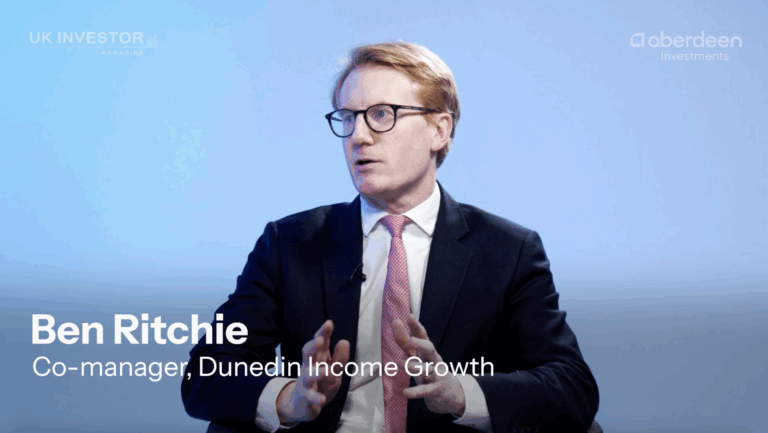
Seeking resilient income and capital growth with Dunedin Income Growth Investment Trust
Jeremy Naylor is joined by Fund Manager Ben Ritchie to discuss Dunedin Income Growth’s differentiated approach to growing a stable income.
The Aberdeen managed Dunedin Income Growth Investment Trust has grown or maintained its dividend for over 40 years and currently yields a benchmark-beating 6.3%.
Ben provides deep insight into their thinking around core portfolio holdings, particularly Tesco for which Ben drills down into their investment thesis and why the retailer earns a place in the fund.
He and Jeremy explore the current environment for the trust’s investment style and look at where managers see opportunity.
NextEnergy Solar Fund NAV falls but dividend maintained
NextEnergy Solar Fund has published its unaudited Net Asset Value and operational update for the quarter ended 31 December 2025, revealing a drop in NAV per share driven by weaker power price forecasts.
But changing hands at 50p on Wednesday, the solar-focused investment trust still trades at a huge discount to NAV, despite falling to 84.9p from 88.8p at 30 September 2025, as third-party consultants have revised down their long-term power price assumptions.
It also trades at a significant discount to the adjusted NAV of 82.9p, which reflects the UK Government’s retrospective change to ROC and FiT inflation indexation and the switch from RPI to CPI.
That adjustment will be reflected in the 31 March 2026 year-end figures.
Total ordinary shareholders’ NAV stood at £488.4m, against a gross asset value of £997m.
Operationally, the quarter was characterised by typical winter softness. UK irradiation came in 9.3% below budget, pushing electricity generation 12.9% under target, excluding grid outages. These seasonal fluctuations are to be expected and will have little long-term impact.
Importantly for investors, there was no change on the dividend front. NESF held its quarterly payout steady at 2.11p per ordinary share, matching the prior year.
The board reconfirmed its full-year dividend target of 8.43p per share for the year ending 31 March 2026, with cover forecast at 1.1x–1.3x by earnings.
“NESF’s portfolio continues to demonstrate its underlying resilience during what has traditionally been a seasonally softer period for solar generation,” said Tony Quinlan, Chairman of NextEnergy Solar Fund.
“Despite lower winter irradiation and the impact of revised power price forecasts on our NAV, the Company remains on track to deliver its full year dividend target of 8.43p per ordinary share.
“The Government’s recent confirmation to shift ROC and FiT inflation indexation from RPI to CPI has introduced an additional headwind; however, with clarity now emerging, we are confident that NESF is well positioned to navigate this transition through the strength of its diversified portfolio and disciplined capital management approach.”
Since inception, the company has returned £431m in dividends to ordinary shareholders, equivalent to 82.6p per share.
NextEnergy Solar Fund yields around 16% at current levels.
AFC Energy receives Environment Agency approval
AFC Energy has received revised approval from the UK Environment Agency to export and sell low-carbon hydrogen produced at its pilot ammonia-cracking plant in Dunsfold, Surrey, thereby accelerating revenue generation by several months.
The revised Research and Development permit reflects the company’s ability to produce ISO 14687 grade D hydrogen at 99.97% purity, in volume, and to demonstrate safety protocols.
The Dunsfold plant can produce up to 300kg of hydrogen per day in its current configuration.
The permit revision also provides operational flexibility, allowing AFC Energy to train operatives on-site at Dunsfold ahead of the plant’s planned relocation, removing a previous scheduling constraint.
AFC Energy is progressing its Joint Venture with Industrial Chemicals Group Ltd (ICL) to establish hydrogen production at ICL’s Port Clarence facility in Middlesbrough, deploying multiple Hy-5 ammonia cracker units, each capable of producing up to 500kg of hydrogen per day.
The JV is engaging with the Environment Agency at both local and national levels to develop an accelerated permitting framework for future Hy-5 deployments across the UK.
Applied Nutrition upgrades outlook after strong first half
Applied Nutrition has delivered a barnstorming first half, with revenues jumping 57% to £74.5 million as the sports nutrition and wellness brand reaps the rewards of its push into mainstream retail.
Revenue, covering the six months to 31 January 2026, comfortably beat management expectations, with EBITDA also coming in ahead. The company has now upgraded its full-year outlook, guiding to approximately £140 million in revenue for FY26, ahead of the updated market consensus.
Applied Nutrition shares were 6% higher at the time of writing.
Much of the momentum stems from a successful diversification into UK high street health retailers, grocers, and discounters. Retail orders and customer stock levels heading into the key January health and fitness season were significantly above expectations, a clear sign the brand is gaining shelf space and consumer traction beyond its traditional channels.
However, the company noted that the first half is likely to be more heavily weighted than in previous years, suggesting possible natural moderation in the second half.
Applied Nutrition listed at 140p in 2024 and is now changing hands at 257p.
FTSE 100 on course for record high as AI-hit stocks rally
After nearly closing at an all-time record high last night, the FTSE 100 extended gains on Tuesday, powered by a recovery in AI-ravaged shares and hopes of an interest rate cut in March.
In a clear demonstration of how the FTSE 100 is not a reflection of the UK economy, London’s leading index rose as traders reacted to news that the UK unemployment rate hit 5.2%.
The Bank of England now looks set to cut interest rates in March as traders priced in two interest rate cuts in 2026 in response to a deterioration in the UK jobs market.
The pound fell against the dollar in response to the UK jobs numbers, which provided support for some of the FTSE 100’s overseas earnings-heavyweights. AstraZeneca, Shell, and GSK were all higher, helping lift the index.
Housebuilders were also in vogue, with Barratt Redrow topping the leaderboard at the time of writing. Housebuilders are in desperate need of a boost, and lower interest rates would be more than welcome by a sector struggling with falling sales.
Gains associated with interest rate hopes were enhanced by a rally in AI-hit stocks such as Experian, RELX, and Pearson that have found their feet after a painful sell-off since the start of the year.
Russ Mould, investment director at AJ Bell, explained: “Driving the UK market higher on Tuesday was a rebound in the plethora of stocks that sold off in recent weeks on fears of AI disruption.
“It was almost as if investors had scouted for the most affected names and bought everything on the list. Relx, Experian, Sage and Autotrader were all in the club and featured in the FTSE 100’s top risers’ list.
“Millions of pounds have been wiped off these names this year thanks to the launch of rival AI services. Investors initially panicked but might now be taking the view that too much bad news is now in the price and these names could have what it takes to fight off AI disruption.”
RELX directors are certainly taking this view, and the CEO and CFO have made encouraging share purchases in recent days.
Elsewhere, Antofagasta kicked off a busy week of FTSE 100 mining updates with blowout 2025 results that revealed the extent of the benefit of higher copper prices.
The group increased revenue by 30% and EBITDA by 52%, rewarding investors with a 106% increase in the full-year dividend.
“It’s a great time to be a mining stock, or indeed an investor in mining stocks,” said Chris Beauchamp, Chief Market Analyst at IG.
“The huge gains in commodity prices are translating into a revenue and profits bonanza for these companies, making them the new must-have for investors in a what is a tremendous resurgence for physical economy stocks after years of tech-driven buying. Much of it is in the price for now, as seen by the muted reaction to Anto’s numbers, but the direction of travel is clear.”
Glencore, Rio Tinto and Anglo American will also report 2025 results later this week.

Debenhams Group to launch funding round as part of turnaround plan
Debenhams Group has confirmed plans for an approximately £35 million equity raise after being forced to respond to market speculation about a possible funding round.
The AIM-listed online fashion platform, formerly known as Boohoo Group, said the proceeds would bolster liquidity and reshape its balance sheet, with the board targeting a net debt-to-adjusted EBITDA ratio of around 2x for the financial year ending February 2027 and below 1x by year-end.
Directors Dan Finley, Mahmud Kamani, and Iain McDonald intend to participate at an issue price of 20p per share, and the company will hit up institutional shareholders in the coming days before formally launching the raise.
Announcing a funding round before it gets underway in earnest isn’t ideal, and news of the round inevitably hit shares on Tuesday. The share price fell by around 10% to trade just above the 20p price proposed for the funding round.
Trading holds up
The funding round comes against a backdrop of improving operational performance and a turnaround plan the company says is ‘going apace’. Whether this will be enough to boost shares post-funding round remains to be seen.
Debenhams used this morning’s announcement to reiterate its guidance of £50 million adjusted EBITDA for the current financial year to February 2026, in line with upgraded forecasts issued in late January.
It expects double-digit EBITDA growth the following year.
The group’s cost-cutting programme has been aggressive. Fixed costs have been brought down to an exit rate of £130 million, from £175 million, with a £100 million target still in sight. All brands are now profitable on an EBITDA basis.
Investors may also be encouraged by the improvement in cash dynamics over FY27. Capital expenditure is set to halve from roughly £16 million to £8 million. Lease costs should fall from £17 million to around £13 million, dropping further to just £6 million once a vacant US property is exited.
There are savings across the board, but investors will need to see signs of stabilisation in the top line to get truly excited about the future.
Antofagasta shares slip as bumper 2025 results confirmed
Antofagasta shares were slightly weaker on Tuesday as traders reacted to the copper miner’s bumper 2025 results.
Results were nothing short of spectacular, and the 2% decline in early Tuesday trading was more a reflection of the stock’s rip-roaring rally over the past year than a sign of disappointment with the numbers.
Antofagasta shares have rallied 98% over the past year.
Investors know it’s sometimes better to travel than to arrive, and Antofagasta’s 2025 journey was powered by higher copper prices, leading to the sharp jump in revenue and EBITDA confirmed today.
Revenue surged 30% to $8.6 billion in 2025, driven by both higher metals prices and increased volumes.
A burgeoning top line led to a whopping 52% increase in EBITDA and an EBITDA margin of 60%.
The group is rewarding investors who haven’t had the easiest ride prior to 2025 with an eye-catching 106% increase in the full-year dividend to 64.6 cents.
“When a miner generates that kind of return, doubling earnings and more than doubling the dividend, investors sit up and take notice,” said Mark Crouch, market analyst for eToro.
“As for Dr Copper, the market’s wily diagnostician, he has finally delivered his verdict. The world needs more copper. Electrification, renewables, AI’s power-hungry data centres, all roads lead back to the red metal. Even after a pause for breath in 2026, prices remain historically elevated. Yet measured against the S&P 500, copper still looks surprisingly undervalued.
“Antofagasta looks beautifully positioned in 2026. Disciplined, cash-generative, and leveraged to a structural demand story that’s only just gathering heat. Barring a global downturn, this cycle has the feel of something deeper. In copper, conviction counts, and right now, Antofagasta has it in abundance.”
Rising UK unemployment sets scene for March interest rate cut
UK unemployment rose to 5.2% in the three months to December 2025 as the impact of Labour’s economic policies hit the jobs market.
The last quarter of 2025 saw UK economic activity flatline as businesses reacted to the uncertainty around the budget and associated tax increases. We now know this led to slower wage growth and higher unemployment.
“UK unemployment has climbed to 5.2%, its highest level in nearly five years, while private-sector wage growth slowed to 3.4% which is the weakest pace since 2020,” said Lale Akoner, global market analyst at eToro.
“It is clear the UK labour market is cooling and inflation pressures from wages are fading.”
Wage inflation is one of the key indicators cited by the Bank of England as a reason to be cautious around interest rate cuts. Nowthat wage growth is slowing alongside rising unemployment, the BoE will have no excuse not to cut interest rates at the upcoming meeting in March.
“And crucially, from the perspective of the Bank of England and the outlook for inflation, this weakness is continuing to pull down on wage growth,” explained Luke Bartholomew, Deputy Chief Economist, at Abderdeen.
“Private sector pay growth in particular has essentially returned to an inflation-target consistent rate, meaning that as and when inflation falls to 2% later this year it is likely to stay there rather than start increasing again. Of course, the inflation data tomorrow could throw a wrench in the works, but for now it seems there is a clear case for a further rate cut at the Bank’s next meeting in March, and we continue to expect rates to fall to 3% later this year.”
Interest rate markets are now pricing two interest rate cuts in 2026.