Netflix shares plummet as competitors eat into subscriber base

Netflix is losing its sparkle as competitors and the increasing cost of living finally seem to have struck a blow to the streaming giant, with shares falling 25.5% on the back of its announced results.

The company reported a considerable slowdown in revenue growth, with a 9.8% rise to $7.9 million compared to 24.2% in the same period last year, following a 16% growth last quarter.

The group expects the trend to continue, with its Q2 growth forecast at 9.7% after Netflix’s first subscriber loss in 10 years of 200,000 paying members in the first quarter. The streaming said they would lose 2 million over the next quarter.

However, a lower than expected content spend brought Netflix below management expectation with an operating income of $2 billion, with an anticipated expense of $1.7 billion in the upcoming quarter.

The company said that it was currently aiming to maintain an operating margin of approximately 20% as it searches for means to spark off revenue growth and tackle the issue of shared passwords.

The firm noted that an estimated 100 million households are using Netflix without paying the subscriber fee due to shared memberships.

“Households around the world may have racked up a record breaking 627m hours watching Netflix’s smash hit Bridgerton, but a lot of those people weren’t paying,” said Hargreaves Lansdown equity analyst Laura Hoy.

“The streaming service has made its way into just about every home with an internet connection and that’s made it much harder to continue growing revenue.”

The issue has been slightly exacerbated by the service’s withdrawal from Russia, bringing a 700,000 member decline along with the 200,000 drop in new paying subscribers for the first quarter.

In other territories, rising prices saw a 600,000 member decline across the US and Canada, with a 400,000 subscriber fall in Latin America.

However, the streaming firm enjoyed a 400,000 member increase across Europe, the Middle East and Africa.

Netflix noted a current level of 221.6 million paying subscribers over the period, however competitors including Disney+ and Amazon are quickly eating into its subscriber base.

“Price increases helped offset pain from a decline in new subscriber numbers—but the group’s looking for a more permanent way to cope with rising demand on the public’s attention,” said Hoy.

The company paid $3.6 billion on content additions during the term, alongside a net debt of $8.6 billion and a free cash flow rise from $692 million to $802 million, due to rising profits.

The group confirmed its planned acquisition of Next Games in addition to its streaming provision, with the deal scheduled for completion in the second half of the year.

“The group spent over $17bn on content last year, and that’s likely to be a minimum for this year’s spend,” said Hoy.

“Protecting profits is high on management’s priorities with an aim to keep margins over 19%, but as revenue growth stagnates, it’s difficult to see how the group will continue to grow its user base without succumbing to eyewatering content costs.”

Rio Tinto shares fall on iron ore decline

3

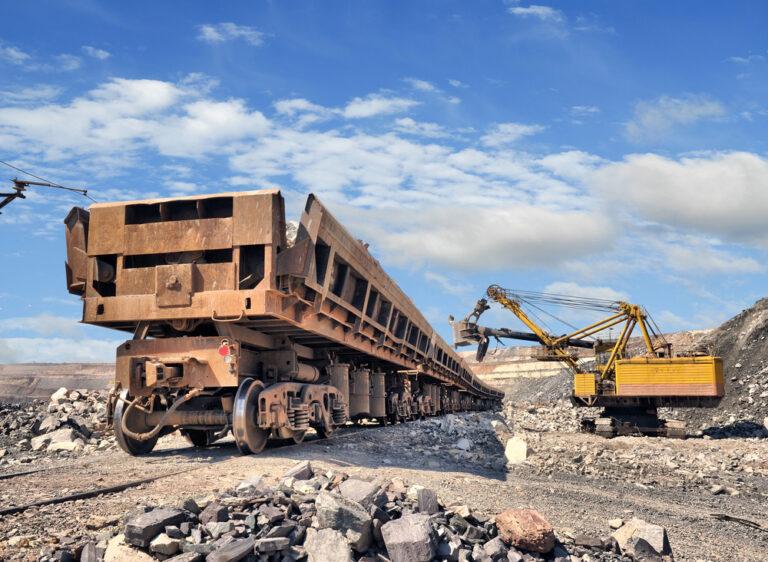
Rio Tinto shares were down 2.7% to 118.3p in early morning trading on Wednesday after the mining giant reported a “challenging” first quarter in 2022.

The company said that it produced 71.7 million tonnes of iron ore from its Pilbara operations, noting a 6% drop compared to the first quarter of 2021, along with an 8% slide in Pilbara shipments to 71.5 tonnes.

Rio Tino assured investors that it expected increased production volumes and improved product mix in the second half, as a result of the Robe Valley wet plant commissioning and its ramp up of Gudaj-Darri.

“Production in the first quarter was challenging as expected, re-emphasising a need to lift our operational performance,” said Rio Tinto CEO Jakob Stausholm.

“We launched seven more deployments of the Rio Tinto Safe Production System, building on the achievements from the previous rollouts.”

“As we ramp up Gudai-Darri, our iron ore business will have greater production capacity and be better placed to produce additional tonnes of Pilbara Blend in the second half.”

The group’s current full year ship guidance reportedly remains unchanged.

The mining firm’s 13.6 tonnes on Bauxite production were in line with the first quarter of last year’s production, and its 0.7 million tonnes of aluminium production was 8% lower than the same period in 2021, due to reduced capacity at its Kitimat smelter in British Columbia following a strike which kicked off in July 2021.

Production is expected to gradually restart at Kitimat from June until the end of this year, with Rio Tinto’s other smelters maintaining a stable performance despite rising cases of Covid-19 among its staff.

The group enjoyed a 4% increase in mined copper production to 125 thousand tonnes and a 3% rise in pellets and concrete production at Iron Ore Company of Canada.

However, the firm also saw a 2% drop in titanium dioxide slag production at 273 thousand tonnes as a result of equipment reliability complications at Rio Tinto Fer et Titane in Canada.

Rio Tinto reported that its Oyu Tolgoi project had seen some welcome progress, highlighting the agreement struck with Turquoise Hill Resources and the Mongolian Government to move the project forward after an uphill battle to kickstart production in the region.

“We made notable progress during the quarter with the commencement of underground mining at Oyu Tolgoi following a comprehensive agreement reached with the Government of Mongolia,” said Stausholm.

The company confirmed that the first sustainable production from the mine could be expected in the first half of 2023.

The firm also noted its non-binding proposal with the Turquoise Hill Board to acquire the 49% of issued and outstanding shares which Rio Tinto does not currently own for a proposed price of $34 per share.

The proposal values Turquoise Hill minority shareholdings at a reported $2.7 billion.

Eckoh renews 5-year contract with Capita

0

A security solutions company, Eckoh announced a 5-year contract renewal with Capita worth £2.1m on Wednesday.

Eckoh is pleased to report that its contract with Capita for a big public sector organisation has been renewed.

The primary goal of Capita’s service to its clients is to maximise the amount of money collected from the general population.

The new contract with Capita is for 5 years and is worth a minimum of £2.1m over that time, making it both longer and more valuable than the prior agreement.

Eckoh has been assisting Capita and its client since 2018, handling all inbound calls to the contact centre, securing telephone and automated payments, and enabling enhanced self-service automation to improve the customer experience and boost the percentage of successfully collected money.

The contract’s renewal and extension demonstrate Capita’s continued faith in Eckoh’s expertise and product solutions, as well as its commitment to providing a superior customer experience.

Capita’s first hurdles included lowering customer service expenses, expanding the number of successful payments, and completely complying with the Payment Card Industry Data Security Standard without sacrificing customer service quality.

Eckoh responded by delivering CallGuard, a proprietary payment technology that secures telephone payments made by contact centre agents, as well as the EckohPAY solution, which offers the same security for payments made within the automated voice system.

Eckoh’s powerful natural language self-service and intelligent call routing technology provide accurate speech recognition so that calls are directed to the correct location the first time, whether it’s an agent or a self-service facility.

These new features allow the client to provide self-service for operations such as changing addresses, making secure payments, updating accounts, and more without requiring an agent. This lowers customer support expenses while giving clients more control over their accounts for Eckoh.

Capita’s whole contact centre has now been de-scoped from the rigours and cost of full Payment Card Industry Data Security Standard compliance, resulting in a considerable increase in revenue collection and enhanced customer satisfaction.

Nik Philpot, Eckoh’s CEO commented, “Capita is a longstanding and highly valued partner, so we’re delighted to be renewing this significant contract for another 5 years, which follows the 6 year contract renewal worth £4m we signed with them for the congestion charge  in 2020.”  

“Eckoh’s comprehensive technology portfolio means we are uniquely placed to provide a full suite of customer engagement solutions that are underpinned by market leading security. We can help organisations to meet today’s contact centre security challenges and support them in delivering on their digital transformation initiatives.”

Eckoh shares rose 3.2% to 47.5p on Wednesday after the company reported a contract renewal for 5 years with Capita.

SSE acquires SGRE renewable energy portfolio for €580m

SSE shares were up 1.6% to 1,815p in early morning trading on Wednesday after the energy company acquired from Siemens Gamesa Renewable Energy’s (SGRE) existing European renewable energy development platform for €580 million.

The portfolio includes a reported 3.9GW of onshore wind developments, with half of the assets located in Spain and the rest situated across France, Italy and Greece.

The agreement is on track for completion by September 2022, and marks the energy giant’s entry into the Southern European market on the back of its existing 4GW of renewable energy assets based in the UK and Ireland.

The company also said that there is scope for up to 1GW of additional co-located opportunities for solar development.

SSE Renewables confirmed that it is currently aiming to have 500MW of renewable energy projects from the SGRE assets operational by March 2026, alongside an additional 500MW in the company’s production pipeline.

The acquisition stands to boost the group’s Net Zero Acceleration Programme (NZAP), and ticks several vital boxes on the company’s target list.

The acquisition is set to bring 4GW of net additions over five years, doubling SSE’s installed renewables capacity to 8GW by 2026, alongside a pipeline consistency of at least 15GW of renewable development.

The portfolio will also bring the firm towards a delivery of at least 1GW in net capacity additions per year over the second half of the decade and triple the company’s installed renewables capacity to over 13GW, with an additional fivefold increase target to 50TWh in renewables output per year by 2031.

“We are delighted to boost the delivery of SSE’s Net Zero Acceleration Programme by expanding our existing renewables business into Southern Europe through this acquisition,” said SSE Renewables managing director Stephen Wheeler.

“Mainland Europe is an exciting growth market for onshore wind, with clear carbon reduction targets and supportive policies, and the expert management team will complement our sector-leading capabilities perfectly.”

“The project portfolio brings some excellent assets and will provide a real springboard for our expansion plans in Europe across wind, solar, batteries and hydrogen.”

Petropavlovsk shares fall 25% as Gazprombank prompts $300m repayment

0

Petropavlovsk released an announcement on Wednesday regarding the repayment of $300m to Gazprombank (GBP) which sent its shares tumbling 25% to 1.57p in early morning trade.

Russian gold miner Petropavlovsk has seen turbulent times especially due to its exposure and association with GPB due to the Russian invasion of Ukraine. GPB is on the UK Sanctions List and has been designated for an asset freeze under the Russia Regulations 2019 which was previously reported.

Following up on Petropavlovsk’s prior announcements, the group has now received warnings from GPB claiming that they must make prompt repayment of approximately $201m including accrued interest under the company’s Committed Term Facility Agreement with GPB.

GBP also said Petropavlovsk has to make a repayment of approximately $87.1m including accrued interest due under the group’s Russian companies’ revolving credit facilities by April 26, 2022.

GPB has also received notice from Joint Stock Company UMMC-INVEST, as successor agent under the Term Loan, that all of its rights under the Term Loan and accompanying finance instruments have been assigned to UMMC-INVEST.

The ramifications of these notices are being discussed with the company’s advisers.

Bunzl sees revenue climb 13% in Q1

0

Bunzl is a specialist international distribution and services group that recorded a 13.2% rise in revenue on Wednesday when the company announced its Q1 2022 results.

The distribution and services group noted the group’s revenue rose 13.2% at constant exchange rates and 12.5% at real exchange rates in Q1 2022 as a result of its ‘diversified and resilient business model’.

At constant currency rates, underlying revenue growth was 11.0%, primarily due to inflation, with a 1.7% revenue decline due to fewer trading days than Q1 2021. At constant exchange rates, acquisitions contributed another 3.2% to growth.

The 11% underlying revenue growth for Bunzl was led by strong momentum in the base business, which provided 17% growth and benefited greatly from inflation.

The predicted drop in sales from the top eight Covid-19 related products, which reduced underlying revenue by 6% due to product deflation compared to Q1 2021, somewhat mitigated the momentum gained from inflation.

Inflation remained notably supportive of our businesses in North America, while inflation and the recovery of the base business drove extremely good growth in the UK, Ireland and Continental Europe compared to the preceding year.

Bunzl’s Outlook for 2022

The group’s recommendations have not changed.

In 2022, the group expects moderate revenue growth at constant currency rates, driven by the impact of recent acquisitions and supported by a slight increase in organic sales.

The further improvement of the core business is projected to be slightly offset by sales of Covid-19-related items returning to normal.

In addition, the company forecasts its operating margin to be slightly higher in 2022 than in previous years.

Bunzl YTD Share Movement

“Our entrepreneurial teams have continued to deliver good growth through a combination of passing on substantial inflation and volume growth, supported by recovering markets and with our performance over the last two years further strengthening our competitive position,” said Frank van Zanten, Chief Executive Officer, Bunzl.

“Our diversified portfolio remains a key determinant of the strength and resilience of our performance.  We continue to focus on delivering our long-term strategic objectives that will drive further compounding growth. Our acquisition pipeline is active and supported by our strong balance sheet.”

Bunzl shares gained 0.26% to 3,075p after the company reported its Q1 results on Wednesday.

Velocys advances sustainable fuels tech

0

Velocys, a sustainable fuels technology business, signed a deal with a European renewable fuels developer on Tuesday to provide preliminary engineering services for a project that is still in the planning stages.

While the revenue for this stage of the project is negligible and the project’s progression to material revenues is yet to be determined, the agreement expands the company’s customer base and demonstrates Velocys’ ability to move its pipeline of potential global customers toward commercial contracts.

While the deal would generate little money, Velocys claims it will “extend” its customer base. This is also in line with Andy Bensley’s goals for the company’s business development division.

British Airways (BA) has agreed to extend the UK Altalto project Joint Development Agreement and the Option Agreement for BA to buy 50% of Altalto Ltd by one year, until March 31, 2023.

The original option was signed on May 12, 2020, and it was extended for the first time on March 30, 2021.

Velocys provides a technology solution to its customers that enables the commercial-scale synthesis of sustainable synthetic fuels from a variety of waste sources, including municipal, commercial, and forestry waste.

The only commercially accessible alternative to fossil aircraft fuels is sustainable aviation fuel or SAF.

President Biden recently emphasised the necessity of sustainable synthetic fuels derived from bio-based feedstocks as part of the US aviation decarbonisation plan.

Increased demand for Velocys technology to ramp up commercial-scale production of sustainable synthetic fuels to speed the global clean energy transition and boost host country fuel independence is growing the company’s customer pipeline.

Velocys

Velocys is a startup that develops sustainable fuels technology and is traded on the London Stock Exchange’s AIM market with “VLS.L” as the ticker symbol.

For 18 years, the company has developed and demonstrated its Fischer-Tropsch technique, which allows for the synthesis of drop-in fuels from a variety of waste sources.

The group is actively working on initiatives in the United States and the United Kingdom to develop fuels that reduce greenhouse gas emissions in aviation and transportation.

Velocys’ revenue derives from licencing its technology and providing technical and project services to its reactors and catalysts based on its unique expertise.

The company focuses on providing end-to-end technology solutions to partners, site owners, and third-party developers globally.

Velocys’ shares were trading down 0.25% to 6p in late afternoon trade on Tuesday.

Kainos Group shares fall despite strong balance sheet and products pipeline

0

Kainos Group shares were down 0.3% to 1,263p in late afternoon trading on Tuesday, despite the company’s strong products pipeline and balance sheet in its latest trading statement.

The group confirmed that its board expected revenue and adjusted profit to fall in line with current projections, and that its international engagements have grown in scale with positive progress across Europe and Canada.

Kainos also said that its Digital Services team continued to deliver high-end transformation programmes to newly acquired and existing clients in the Public, Healthcare and Commercial sectors, driven by strong market demand in the UK.

The company’s Workday Practice platform has reportedly benefited from the expertise of new employees gained through the acquisitions of Cloudator, Une Consulting, Blackline Group and Planalyse.

Kainos added that its Smart Product Suite for Workday has also maintained a promising growth trajectory over the last year of operation.

Kainos has further seen an influx of new clients to its Smart Audit platform since its launch in August last year.

The group currently employs 2,692 people in over 20 counties, representing a rise of 33% year-on-year in company employment.

The company said that it is well-positioned for growth heading into 2022, and remains confident in its strategy for the coming year.

Empyrean Energy raises Jade Prospect chances to 65%

Empyrean Energy shares were up 13.7% to 11.6p in late afternoon trading on Tuesday following reports of elevated methane levels from its Jade Prospect in China, indicating the presence of light oil.

Empyrean Energy subsequently updated its internal Geological Chance of Success to 65% from 41%, with a 47% rise from 35% for its Topaz prospect.

The company confirmed that higher values of methane ranging from 4190ppm to 15440ppm were recorded in the pre-drill interpreted “gas cloud” zone between 1550 metres to 1800 metres measurement difference.

The oil and gas exploration group commented that the results validated its pre-drill interpretation of seismic data encompassing the presence of gas clouds over the Jade prospect, alongside the firm’s Topaz prospect.

Empyrean Energy said that any oil discovered would likely be light oil in the 38-41 API range, in line with discoveries from nearby projects.

The Jade prospect was spudded after its 2 April drilling date was delayed due to bad weather and volatile sea wave conditions on 10 April, however the drilling programme is now reportedly on schedule to deliver results to shareholders on the company’s timeframe.

“The first technical objective of the Jade well has now been drilled,” said Empyrean Energy CEO Tom Kelly in a statement.

“The validation of “gas clouds” through the presence of elevated methane levels in exactly the depth zone we interpreted on the excellent quality seismic data proves that the gas clouds exist and supports the Company’s pre-drill interpretation that the methane is probably coming from light oil in the anticipated reservoir section.”

“This is a major box now ticked, if we are to make a light oil discovery at Jade. The comparisons to nearby CNOOC discovery wells look very compelling. Drilling operations continue to run smoothly and safely, with progress to date right on schedule”.

Rockhopper secures Sea Lion project loan from Navitas

Rockhopper shares fell 4.1% to 9p in early afternoon trading on Tuesday, after the company agreed to assist Navitas’ entry into the North Falkland Basin.

Rockhopper and Navitas are set to partner in the Basin and develop a joint technical and financial deal to facilitate the development of the Sea Lion project to hit first oil on a lower cost, alongside an expedited basis post sanction.

The agreement will see Rockhopper take on 35% of the jointly-held North Falkland Basin petroleum licenses, with Navitas securing 65% through its acquisition of Harbour Energy’s Premier Oil Exploration and Production Limited company.

Navitas has reportedly agreed to loan Rockhopper a sufficient sum of cash to fund the majority of the expenses linked to phase one of the Sea Lion project from Transaction Completion (TC) to Final Investment Decision (FID), with an 8% rate of interest per year, excluding certain expenses such as license costs.

The company confirmed that it would also provide Rockhopper with an interest-free loan to fund two-thirds of Rockhopper’s share of the Sea Lion phase one development costs, pending a positive FID.

Rockhopper said that funds drawn under the loans provided by Navitas would be repaid from 85% of Rockhopper’s working interest share of free cash flow.

The agreement stipulates that failure to acquire a positive FID within five years of the transaction leaves Rockhopper with the option to remove Navitas from the Falklands Island petroleum licenses by repaying the pre-FID loan.

However, if material progress has been made towards a positive FID, the parties can choose to extend the term for an additional 12 months, followed by a final extension of six months to provide extra time to secure the FID.

Navitas confirmed that it would become an operator of the Sea Lion project upon a successful completion.

“We are delighted to have signed definitive documentation to bring Navitas into the North Falkland Basin,” said Rockhopper CEO Samuel Moody.

“Subject to regulatory consents, we believe this marks the start of a new exciting chapter for the Falklands, and for the Sea Lion project in particular. Navitas’ US$1 billion Shenandoah financing in 2021 proved their ability to fund challenging offshore oil and gas developments.”

“Given this, coupled with a more positive oil price environment, we are very excited to have them as new partners and look forward to pushing ahead with Sea Lion, a world class resource.”