Union Jack Oil hits landmark $7m revenue from Wressle project

0

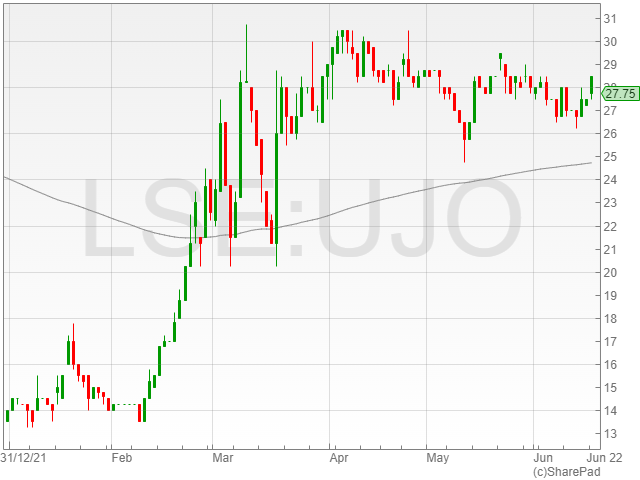
Union Jack Oil shares were up 1% to 27.8p in late afternoon trading on Monday following a reported $7 million in net revenues achieved from the Wressle hydrocarbon development located within licenses PEDL180 and PEDL182 in North Lincolnshire.

Union Jack Oil holds a 40% economic interest in the development, which has a current constrained flow-rate of 750 barrels of oil per day (bopd) with the well in-excess of the prognosed 500 bopd from the Ashover Grit reservoir.

The company reported that the well continued to produce under natural flow with zero water cut, with Union Jack Oil remaining cash flow positive covering all G&A, OPEX and contracted or scheduled CAPEX expenses, including any budgeted drill activities for at least the next year.

The oil and gas firm has cash balances and short term receivables over £8.4 million on 20 June 2022 and confirmed it was also debt free.
Union Jack Oil mentioned an expected maiden profit in the coming unaudited HY results ending 30 June 2022.

“The ongoing excellent operational and financial performance at Wressle continues to bolster the Company’s cash position, balance sheet and income statement,” said Union Jack Oil executive chairman David Bramhill.

“Net revenues from Wressle have now exceeded US$7,000,000 and, as a result of this exceptional performance, plus revenue contributions from the Keddington oilfield, the Fiskerton Airfield oilfield and North Sea Royalties.”

“The Board now expects to report a maiden profit in the forthcoming unaudited half year results ending 30 June 2022”.

Agronomics picks up 47% equity stake in Liberation Labs

Agronomics led the founder’s round of precision fermentation group Liberation Labs through an initial investment of $627,000 for a 47% equity stake, the company announced today.

Agronomics is set to make the investment using its own funds in a bid to address the “pressing need” for full-scale precision fermentation facilities.

The move follows Agronomics’ existing investments in precision fermentation-produced proteins from its portfolio companies including Perfect Day, The EVERY Company, Motif FoodWorks and Geltor. Investment in the precision fermentation sector reportedly hit $1.7 billion in FY 2021.

Agronomics commented that the investment in full-scale production came as more companies looked to commercialise and scale-up their offerings for the consumer market.

The current fermentation facilities were made primarily for pharmaceutical purposes and lack the manufacturing capacity and equipment to produce protein alternatives on a massive consumption scale.

Liberation Labs was founded to tackle the widening gap in fermentation capacity, with companies making alternative proteins such as egg and dairy replacements lacking the resources to scale up production to hit customer demand.

“Liberation Labs will deliver precision fermentation without compromise for its customers, and aims to become the global leader for alternative protein production, by commercialising modern and purpose-built manufacturing facilities at a cost structure that frees the world from the costs of industrialised agriculture,” said Liberation Labs co-founder and CEO Mark Warner.

Agronomics confirmed that Liberation Labs was currently evaluating six geographies to locate its initial fit-for-purpose facility, which is set to have a total fermentation capacity of millions of litres upon completion.

“This is a hugely exciting investment for us, and it is a privilege to help facilitate the first and only precision food fermentation facility,” said Agronomics co-founder and executive director Jim Mellon.

“Existing contract manufacturing capacity will need to be scaled up by 1,000x in the coming decades to facilitate broad based production and adoption of proteins produced via fermentation.”

“Liberation Labs’ solution will set the standard for the precision fermentation industry with cost effective, reliable and strategically situated facilities to meet growing consumer demand across the globe. It is a crucial step in the advancement of cellular agriculture.”

Forward Partners shares tumble on crumbling ventures portfolio

0

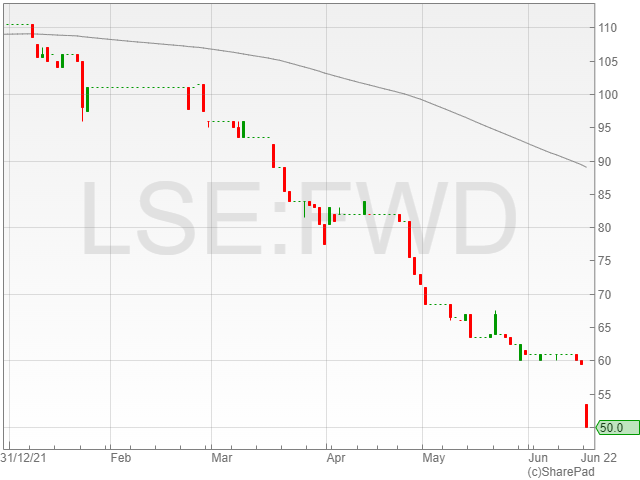
Forward Partners shares tumbled 21% to 47p in late afternoon trading on Monday after the company announced that its previously estimated commercial progress across its venture portfolio reported in its February update had taken a downward slide in the last quarter.

The technology capital firm cited the turmoil in the public markets, with the ratings of fast-growth listed technology stocks being hit particularly hard amidst ongoing geopolitical volatility.

Forward Partners added that it had seen continued downward pressure on valuations and funding rounds which were taking longer to close as investor confidence weakened.

It noted that the delay in funding rounds would result in key portfolio companies moving from being valued with reference to the price of the last round of investment to being valued on a revenue multiples basis, with the multiple calculated from the enterprise values of listed peers, which are trading at far lower values year-on-year.

Forward Partners commented it expected continued downwards pressure on the valuations at which it holds its investments over FY 2022.

The group said that it expected a mid-to-high 20s percent decline in its ventures portfolio for HY1, down on previous market guidance of approximately £117 million for 31 December 2021.

The company reported significant cash reserves of £31 million at the close of FY 2021, which is being managed conservatively with the firm’s existing cost base.

Forward Partners commented that it remained confident in the longer term growth aspects of its portfolio, with good momentum in HY1 2022 including strong performances from portfolio companies Spike, Silico and Gravity Sketch.

SysGroup revenues fall 16% on Covid-19 disruption

0

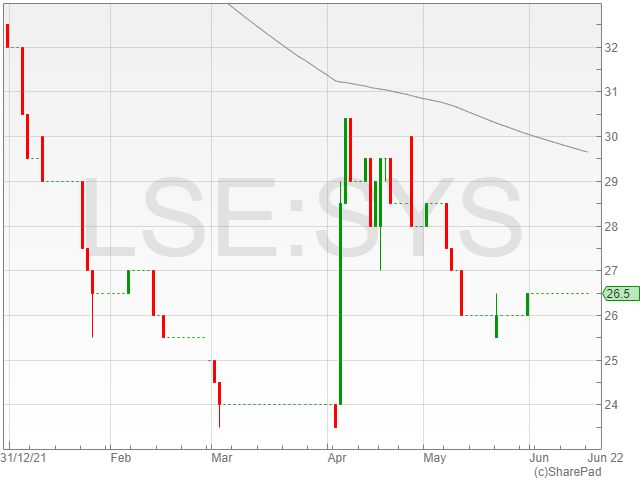
SysGroup shares were down 1.6% to 26p in early afternoon trading following a reported 19% slide in revenue to £14.7 million in FY 2022 against £18.1 million in FY 2021, alongside a gross profit decline of 15% to £8.9 million from £10.5 million as a result of disruption from Covid-19.

SysGroup highlighted an adjusted EBITDA fall of 3% to £2.8 million compared to £2.9 million, along with an adjusted EBITDA rise of 3% to 19% from 16% year-on-year, and noted its performance delivered in line with management expectations.

The company mentioned an adjusted pre tax profit decrease of 2% to £2.04 million from £2.09 million, with a 192% surge in pre-tax profit to £600,000 against £210,000 the year before.

The firm reported a 16% drop in cashflow from operations to £2.4 million compared to £2.9 million and a net cash jump of 59% to £2.9 million compared to £1.8 million.

“The Adjusted EBITDA performance and strong cash generation in a year when turnover was impacted by COVID highlights the strength of our business model. We have invested to drive future growth whilst maintaining prudent financial discipline throughout the business,” said SysGroup CEO Adam Binks.

“Operationally, the Group is ideally placed to take advantage of conditions as they begin to normalise and we have started to see the early green shoots of such a recovery.”

SysGroup mentioned two acquisitions in its post period-end developments, with the purchase of Edinburgh company Truststream Security Solutions, a cyber security solutions firm which provides Sysgroup with a base in Scotland.

The company also bought Independent Network Solutions, which trades as Orchard Computers and additionally enhances the firm’s Southwest presence and complements its South Wales operations.

“The acquisitions of Truststream and Orchard added further customers, expertise and geographical reach and demonstrate our ongoing commitment to be consolidators in this highly fragmented market,” said Binks.

“M&A activity in our sector is picking up and we believe there will be further opportunities that we can take advantage of during the course of this year.”

“With a clear strategy for both organic and inorganic growth, the Board is confident in the future.”

The technology company said it saw initial “green shoots of recovery” in its outlook, with M&A activity and its client pipeline supporting its businesses going forward in FY 2023.

The company noted an adjusted EPS rise of 3% to 3.6p compared to 3.5p and a basic EPS increase of 80% to 0.9p from 0.5p. SysGroup did not declare a dividend for FY 2022.

Alien Metals completes acquisition of Vivash Gorge project from Zenith Minerals

Alien Metals announced its completed acquisition of 100% of the Vivash Gorge iron ore project in Pilbara, western Australia from ASX-listed company Zenith Minerals after satisfying all conditions in the Binding Heads of Agreement.

Alien Metals previously said it considered Vivash Gorge a strategic acquisition to its IOCA portfolio of direct shipping ore (DSO) projects based in Pilbara.

The Vivash Gorge project is located approximately 80 kilometres west of the Tom Price Township in the southern region of the Brockman Syncline, and is accessible through the Nanutarra-Wittenoom road, station tracks and purpose built exploration tracks.

The mining firm added that the addition of Vivash Gorge would bring its portfolio to a total number of three strategically located iron ore projects within the Pilbara sector, with a combined tenement package of 108k each surrounded by the iron ore majors with significant opportunities for further development.

“We are pleased to have completed the acquisition of the Vivash Gorge Iron Ore Project from Zenith Minerals,” said Alien Metals CEO Bill Brodie.

“We thank the team at Zenith for their support in this process and look forward to getting on the ground in the coming quarter.”

“We feel it’s a great fit to our iron ore portfolio which adds further potential to the Company’s growth in the high grade iron ore sector.”

FTSE 100 rebounds as bargain-hunters pick up cyclical stocks

3

The FTSE 100 was 1% higher in Monday trade as the market recovered from last week’s selloff after Bank of England and US Federal Reserve decisions to hike rates.

“Following last week’s brutal session for stocks globally, a 0.2% rise in the FTSE 100 is a good enough reason to be more optimistic about the equities market. Stability often comes before recovery and markets being more composed would suggest investors are no longer panicking,” said AJ Bell investment director Russ Mould.

Stocks rebounded after a dramatic decline, with cyclical sectors such as energy and financials on the move.

Retail companies were surprisingly on the rise despite the continued cost of living crisis as the UK speeds towards 11% inflation in autumn. Next shares were up 0.9% to 5,992p and JD Sports Fashion shares rose 0.4% to 106.8p.

“Fears over a slowdown in consumer spending have hurt shares in retailers and leisure operators in recent weeks, so it was interesting to see many of these stocks among the top risers on Monday,” said Mould.

Meanwhile, IAG shares gained 3.3% to 116.2p despite the slate of cancellations across UK airports as customers flocked to airlines for the summer holidays, and hospitality company Whitbread saw an uptick of 1% to 2,633.5p as the Premier Inn owner enjoyed a rise in holiday demand.

“International Consolidated Airlines … Next and Whitbread were among the FTSE 100 stocks nudging ahead.”

Hargreaves Lansdown senior investment and markets analyst Susannah Streeter added: “British Airways owner IAG is also flying higher … But the overall turbulence affecting the industry is continuing.”

“Capacity problems affecting airlines show little sign of easing any time soon, with fresh cancellations due to baggage handling faults now appearing on screens at Heathrow. [The] headwinds now constraining summer operations will be another delay to long awaited recovery for the industry.’’

Housing stocks fell as the Bank of England’s interest rates hike to 1.25% seemed to finally put a dent in the gravity-defying industry. Barratt Development shares dropped 3.5% to 454.9p, Berkeley Group shares declines 3.5% to 3,754p, Persimmon shares slid 3% to 1,878p and Taylor Wimpey shares dipped 2.5% to 117.8p.

Associated British Foods shares rose 0.5% to 1,618p after the company reported a Q3 revenue growth of 32% to £4 billion on the back of rising prices and Primark stores reopening after the Covid-19 lockdown.

Meanwhile, mining stocks dropped on widespread fears of an economic slowdown, with Anglo American falling 0.7% to 3,321.2p, Antofagasta dipping 0.4% to 1,268.2p, Endeavor dropping 0.6% to 1,783p, Fresnillo sliding 0.7% to 795.7p and Rio Tinto declining 2.1% to 5,068p.

Iron ore prices fell 9% in China overnight and started a route in the miners that spilled over into this morning’s session.

“Uncertainty about the global outlook is also weighing on miners and commodity firms with Rio Tinto, Anglo American, Antofagasta and Glencore among the fallers in early trade on the FTSE 100,” said Streeter.

AIM movers, Filtronic, Actual Experience, Forward Partners, Jadestone Energy, Alien Metals, Plexus

0

Filtronic (LON: FTC) was more profitable than expected in the year to May 2022 even though revenues were slightly below forecast and the share price rose by one-quarter to 11.25p. finnCap has increased its estimated earnings for the period from 0.2p a share to 0.5p a share. The telecoms components supplier also improved its net cash position from £2.8m to £3.9m.

The improvement was due to sales mix and tight control of overheads and was achieved despite component shortages. Demand for newer products has exceeded expectations and the order book for 5G Xhaul is building up. There is caution abut this year due to component shortages potentially delaying demand from telecoms customers.

Actual Experience (LON: ACT) shares had a chance to react to news of the loss of a contract that was published late on Friday. The share price halved to 3.75p. The analytics services provider to digital businesses says that due to a change in requirements a channel partner has terminated the contract that generated £200,000 out of group revenues of £1.74m in 2020-21.

Less than one year after joining AIM, investment management company Forward Partners (LON: FWD) says that weak stockmarkets have hit the valuations of technology companies and thereby the valuations of its investments. This means that there is likely to be a mid-to-high teens percentage decline from the interim figure of £108m.

This is the valuation for the 2021 accounts, which have still not been published – they have to be published by 30 Jube or the shares will be suspended. This disappointment led to a 16% decline in the share price to 50p. Forward Partners joined AIM on 19 July 2021 when it raised £36.5m at 100p a share.

Oil and gas producer Jadestone Energy Inc (LON: JSE) shares fell 15.8% to 80pm because of the shutting down of production at the Montara field offshore Australia due to a leak in a crude oil storage tank. The leek has been stopped and the tank will be assessed so that it can be permanently repaired. This could take four weeks and the total cost will be $2m-$3m, although some of this money would have been spent on routine maintenance of the tank. Total 2022 production is expected to be around 15,500 boe/day, which is at the lower end of previous expectations.

Alien Metals (LON: UFO) has completed the acquisition of 100% of the Vivash Gorge iron ore project in the Pilbara region of Western Australia in return for the issue of 7.83 million shares to ASX-listed Zenith Minerals. Further share issues will be made when milestones are achieved, and Zenith will receive a $1/dwt royalty on the ore shipped from the licence area. Alien Metals has other iron ore projects in the same region and there is a defined mineral resource on a neighbouring licence area that abuts the eastern central boundary of the project area.

Oil and gas engineering services provider Plexus (LON: POS) has won an order for plug and abandonment equipment and services from Oceaneering International Services. This could generate revenues of £500,000 in 2023. To put this in perspective, 2021-22 forecast revenues are £2.5m. The share price rose 0.25p to 4p, having previously been at an all-time low.

Energean extends 2022 drilling programme, completes KM-04 well ahead of schedule

Energean shares dipped 2% to 1,186p in late morning trading on Monday after the company reported the extension of its 2022 growth drilling programme by exercising its option to drill two additional wells with Stena Drilling Limited.

The first well is set to target the Hermes prospect at Block 31 and is scheduled to spud in August, targeting the Tamar A sands. Hermes forms one sector of a larger cluster of structures similar to how the Athena discovery is one sector of the Olympus area.

Energean said the target for the second well is still under consideration and is largely contingent on the results from the Hermes well.

Energean also provided an update on the initial results of its KM-04 appraisal well, and announced that the project was completed 15 days ahead of schedule and $9 million below budget at a total expense of $36 million.

The KM-04 well reportedly encountered gas and associated liquids in the previously undrilled fault block between Karish Main and Karish North, alongside gas discovered in the A-sands on the flanks of the Kairsh Main structure, in which the sands were tested and fluid samples were obtained.

In addition, an oil rim was confirmed in the central sector of the field, with thickness located in the lower end of the pre-drill expectation range of 5 to 10 metres against 0 to 100 metres pre-drill.

The company noted that a sample of the oil was obtained for testing, and the group expects to commercialise the oil volumes through the existing well stock.

Energean added that additional analysis would commence to further refine reserve volumes and the liquids-to-gas ratio across the Karish lease, with the Stena IceMAX set to complete the next development well before moving to Hermes in August 2022.

“Operations at the KM-04 appraisal well have been successfully completed ahead of schedule and below budget, meeting the primary objectives set pre-drill,” said Energean CEO Mathios Rigas.

“We confirm today the extension of our 2022 growth drilling campaign, on the back of success at Athena last month. We have exercised our options with Stena to drill a further two wells, commencing with Hermes, in line with our goal to continue to provide competition and security of supply in the local Israel gas and energy markets.”

“The exercise of these options, will help us to reach our target to double our Israel gas resource base in order to also export to the broader region of the Eastern Mediterranean and beyond.”

The dangers of gaps and inaccuracies when filing digital tax returns

The way that we track, report and pay our taxes is changing. Just as more and more of our lives and activities are taking place online, from shopping to banking and work, our tax affairs are also moving into the digital realm. Making Tax Digital (MTD) is the UK Government’s flagship initiative to take tax online and it’s set to affect us all.

What is MTD?

MTD is a fundamental change to the way that the tax system works. HMRC says that MTD is the focus of its ambition to become one of the “most digitally advanced tax administrations in the world”, making our tax system more effective, more efficient and easier for taxpayers of all kinds to get their tax reporting right.

Whether we’re earning money through self-employment, investments, a small business or any other circumstances, it’s important to record and report tax accurately. Beyond any ethical considerations (and many people have mixed feelings about the levels and ultimate destination of their taxes), you could be penalised for providing inaccurate or incomplete information.

When will MTD penalties apply?

The current system of HMRC penalties for errors in tax returns and other documents has been in place for more than a decade now. It was introduced in April 2009 and the scope widened a year later. Taxpayers could be penalised if tax returns or other documents were inaccurate, leading to tax being unpaid, understated, over-claimed or under-assessed.

As the tax system is migrated online under MTD, the penalty system is also changing to keep pace. The penalty system for MTD for VAT was originally supposed to have started by now but was moved back when it became clear that HMRC’s IT systems would not be ready in time. This is now due to start at the beginning of 2023, followed by a similar system for MTD for Income Tax in April 2024 and for all Self-Assessment taxpayers from April 2025.

It’s worth noting that the new penalty system will apply to Self-Assessment taxpayers even if they don’t use MTD.

What are the likely penalties for providing missing or inaccurate information?

One of the biggest differences between the current tax reporting regime and MTD is that you will have a ‘regular obligation’ to provide quarterly updates. Under the new Making Tax Digital penalties, you can receive ‘penalty points’ if you miss your submission deadline. This is similar to the way that speeding fines work. When you reach a certain threshold of points, a £200 penalty is automatically applied. There will also be a new penalty system for late payments.

If you make your submissions on time and they contain inaccuracies, however, this will still be covered by the existing system. Penalties can be applied depending on the reasons for the error and the potential lost revenue to HMRC. If it’s deemed to be due to a lack of care, for example, the penalty will be between 0% and 30% of the extra tax due. If it is seen as deliberate, this can rise to 20% to 70%, and if it is deliberate and concealed, the penalty can range from 30% to 100% of the extra tax due.

easyJet warns customers to expect rebooked flights as unprecedented demand flings passengers into chaos

0

easyJet shares were down 2.7% to 424.8p in early morning trading on Monday following a slate of disruptions to the group’s flights, which sent costs beyond the limits of previous guidance and saw passengers flung into chaos.

easyJet highlighted that the unprecedent surge in customer demand had led to operational issues including air traffic control delays and staff shortages in ground handling and at airports, resulting in delayed departures and flight cancellations.

The company pinned the blame on the tight labour market and mentioned its reduced resilience, reflected in flight caps recently announced at London Gatwick and Amsterdam airport, two of the firm’s largest customer bases.

The group commented it was proactively managing the disruptions by providing customers with advance notice and the potential to rebook onto alternative flights.

easyJet said it expected to rebook the majority of customers on alternative flights, with many on the same day as their original flight bookings.

The firm noted a projected a Q3 capacity of 87% of FY 2019 levels and a Q4 capacity at 90% of FY 2019 levels.

easyJet mentioned a cost impact from the disruption, alongside enhanced resilience the company has been putting in place including wet leased aircraft, crew costs and airport charges.

The group confirmed it would be exceeding its previously provided operating CASK ex fuel guidance, however it added that it believed the summer upset to be a one-off occurrence as it expected all parties to build higher resilience in time for FY 2023 peak periods.

The company noted that booking momentum had continued, with demand for summer travel remaining strong and Q3 currently 86% sold with ticket yields up 2%. Q4 is currently 48% sold and ticket yields up 14%, with its Q4 booking position broadly in line with the same period in FY 2019.

easyJet commented it would keep fine-tuning its schedule in line with industry conditions across summer to deliver results for its customers.

The firm said its medium-term outlook remained attractive, and mentioned it recently won an additional three aircraft worth of slots at Lisbon airport, which are scheduled to become available this winter.

“Delivering a safe and reliable operation for our customers in this challenging environment is easyJet’s highest priority and we are sorry that for some customers we have not been able to deliver the service they have come to expect from us,” said easyJet CEO Johan Lundgren.

“While in recent weeks the action we have taken to build in further resilience has seen us continue to operate up to 1700 flights and carry up to a quarter of a million customers a day, the ongoing challenging operating environment has unfortunately continued to have an impact which has resulted in cancellations.

“Coupled with airport caps, we are taking pre-emptive actions to increase resilience over the balance of summer, including a range of further flight consolidations in the affected airports, giving advance notice to customers and we expect the vast majority to be rebooked on alternative flights within 24 hours. We believe this is the right action for us to take so we can deliver for all of our customers over the peak summer period in this challenging environment.”