Bitcoin, Ethereum, and the Crypto Outlook with Frederick & Oliver

We were thrilled to welcome to Marc Kimsey, Senior Trader at Frederick & Oliver, to delve into the crypto markets and the Bitcoin and Ethereum outlook.

A period of severe volatility in cryptocurrencies saw Bitcoin retrace nearly 80% from its all time high, which has been a key level of support historically. This level sits around $14,000 while Bitcoin traded briefly beneath $18,000 over the weekend.

Download Frederick & Oliver’s Bitcoin & Ethereum Report

As Bitcoin rebounds above $21,000 at the time of recording, Marc explores both the bear and bull case for cryptocurrencies. We look at Bitcoin’s growing financial infrastructure and the potential for a disorderly market caused by forced selling.

We finish by looking at Frederick & Oliver’s Bitcoin and Ethereum trading offering for professional clients.

Download Frederick & Oliver’s Bitcoin & Ethereum Report

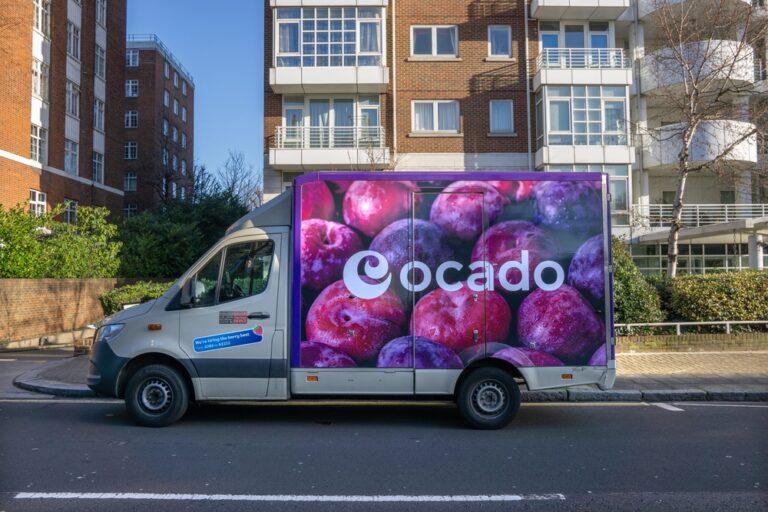
Ocado raises £578m to fund technology business

0

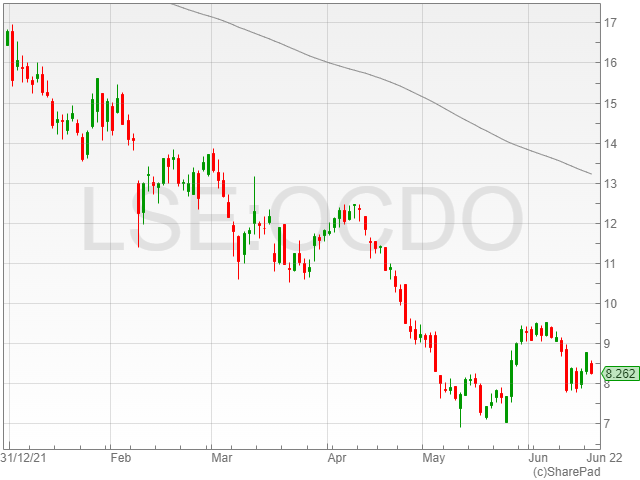
Ocado shares fell 4.7% to 835.6p in late morning trading on Tuesday after the online retailer raised £578 million from placing 72.3 million shares at a 9% discount of 795p to Monday’s closing traded price of 877.6p in a move to fund its technology business.

The company invited investors to subscribe to the fundraise through the PrimaryBid platform for 246,405 shares in total, alongside an additional £3 million raised from management executives including CEO Tim Steiner, who acquired 125,786 new ordinary shares.

Ocado also reported it had agreed a £300 million revolving credit facility as it worked to boost its faltering businesses.

Investors dropped the stock as shareholders divided on Ocado’s plans to enhance its tech sector, while analysts noted the split perspective on the market today.

“Ocado remains a jam tomorrow story, with the company having greased its baking trays by means of winning numerous contracts with third party grocery sellers,” said AJ Bell investment director Russ Mould.

“The next stage is to fill these trays with the right ingredients to support their online grocery operations, and that’s where all the extra money is needed alongside making improvements to its systems.”

“While there remains excitement about the online grocery space, Ocado can’t keep burning through cash indefinitely. At some point soon it will have to start generating profits and making money, as that’s been the missing component with its story so far.”

Ocado has been struggling in a post-pandemic environment, and shareholders are evidently cynical about the retailer’s longer-term prospects and its potential to spin gold from its stack of retail straw.

AIM movers: Morses Club, K3 Capital, James Cropper, Midatech Pharma

0

Digital and home credit provider Morses Club (LON: MCL) says that there is an increase in complaints about its home collected credit division that have been submitted by claims management companies. This could hit the first half trading performance. The share price fell 21.7% to 8.14p and it is less than 5% of its peak in 2019.

The figures for the year to February 2022 have yet to be released and they should be published on 18 August. These results were hit by increasing complaints and were originally expected to be published in May. This led to Paul Smith stepping down as chief executive. The 2021-22 profit forecast was downgraded from £7.5m to £5.6m after the original warning in February. It appears that the current consensus 2022-23 profit forecast of £15.9m. could be sharply downgraded.

Last year was better than expected for business disposals and tax adviser K3 Capital (LON: K3C) and revenues and EBITDA recovered sharply. In the year to May 2022, revenues improved from £47.2m to £67.5m, with 18% organic growth. EBITDA is expected to increase from £15.7m to £19.5m, compared with analyst expectations of £18.3m. Net cash was £12m at the end of May 2022.

The business sales division had a record year and the tax division more than doubled revenues, helped by acquisitions. The restructuring division also grew and there is growing demand for these services as government support comes to an end. The K3 Capital share price has risen 10.6% to 260p.

Paper and specialist fibres maker James Cropper (LON: CRPR) reported a full year, underlying pre-tax profit of £4m. In March, expectations were downgraded from £4.9m to £3.5m because of high gas prices. The paper making business is cyclical and it made an increased loss. The TFP Hydrogen division, which makes products for fuel cells, accounts for around 30% of revenues and its operating profit before group overheads increased from £6.48m to £8.68m.

Group revenues are higher than pre-pandemic levels and James Cropper has reinstated the dividend this year with a 7.5p a share final dividend taking the total to 10p a share. Net debt is £8.6m. The share price recovered 70p to 1035p, but it is still down by one-fifth this year. Midatech Pharma (LON: MTPH) has gained orphan medicinal product designation from the European Medicines Agency for the development programme for MTX110, a potential treatment of specific types of brain tumour. The orphan product designation is designed to encourage the development of treatments for diseases with a smaller number of sufferers. MTX110 is a technology that enables chemotherapy doses to be delivered directly to the site of the tumour. Midatech Pharma shares rose 5.7% to 9.25p.

easyJet announces conditional agreement with Airbus to buy 56 aircraft

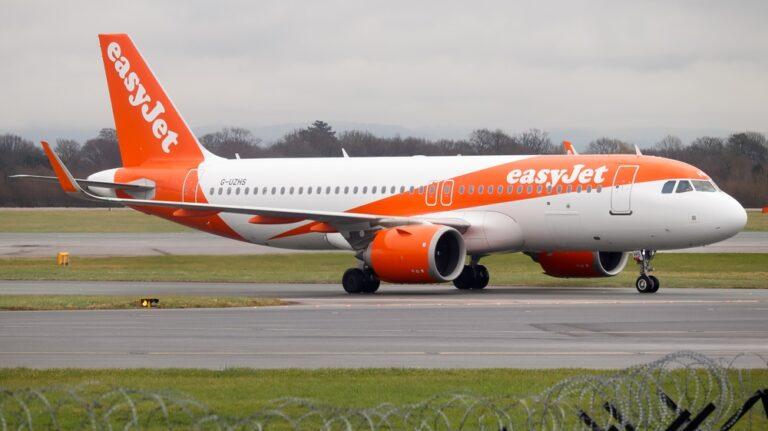
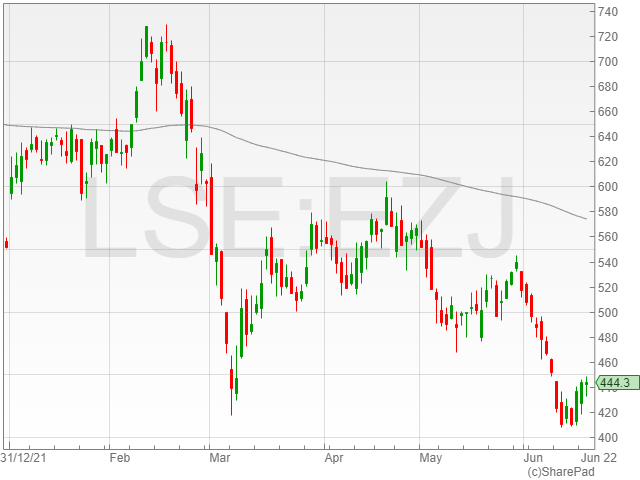
easyJet shares saw an uptick of 0.2% to 444.5p in late morning trading on Tuesday after the budget travel group announced that it had entered into a conditional agreement with Airbus S.A.S. for Airbus to supply 56 A320 neo family aircraft for delivery between FY 2026 and FY 2029.

easyJet also proposed the conversion of 18 A320 neo aircraft scheduled for delivery between FY 2024 and FY 2027 to 18 A321 neo aircraft deliveries.

The group further noted it had entered into conditional arrangements with CFM International S.A. to ensure the commitments provided under the current engine supply engine agreement between easyJet and CFM would cover aircraft under the Airbus Amendment.

The move comes as part of easyJet’s air fleet renewal, as its 156 seat A319s and older A320s which provide 180 to 186 seats are removed from its airline roster to make room for its new 186 seat A320 and 235 seat A321 neo aircraft.

The new aircraft are set to provide up gauging, cost and sustainability improvements to the company, along with the delivery of strategic objectives to build enhanced shareholder returns.

The proposed purchase would complete the company’s 2013 agreement with Airbus, and secure the relatively scarce Airbus delivery slots between FY 2026 and FY 2029 to replace easyJet’s aging technology in its aircraft fleet for far lower than the $6.5 billion prices at 2018 as a result of price concessions tied to the 2013 agreement.

easyJet mentioned the purchase would be financed over several years through its own internal resources, cash flow, sale and leaseback transactions and debt. The group confirmed that it did not expect to ask shareholders to fund any aspect of the proposed purchase.

The fleet purchases are subject to shareholder agreement as a constituted class one transaction, with a circular scheduled to be sent out in due course providing further details and notice of the general meeting where the resolution will be discussed.

“The proposed purchase firms up our orders with Airbus between FY 2026 and FY 2029, continuing the company’s fleet refresh, as the older A319s and A320s leave the airline and new A320 and A321 neo aircraft enter, providing benefits to easyJet through up gauging, cost efficiencies and sustainability enhancements,” said easyJet CEO Johan Lundgren.

“We believe this will support positive returns for the business and the delivery of our strategic objectives.”

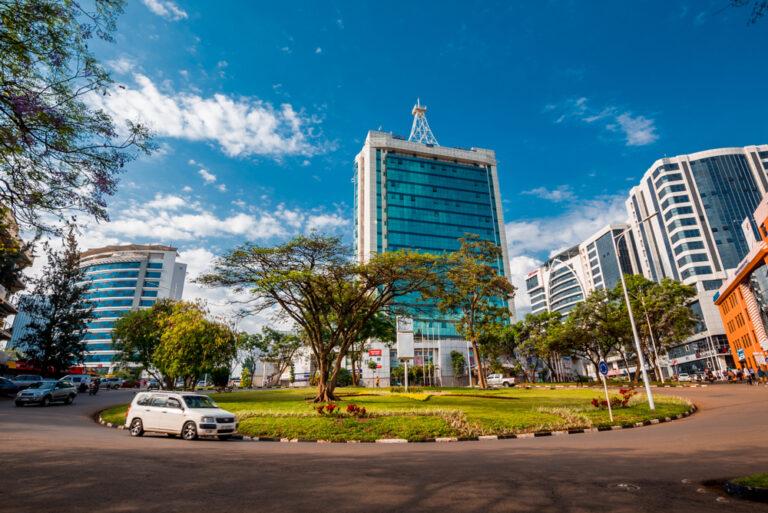
How Kigali International Financial Centre aims to fast-track Rwanda as a preferred financial centre for investments in Africa

By Nick Barigye, Chief Executive Officer of Rwanda Finance Limited

It is no secret that African economies have been among the fastest growing in the world over the last 10 years. African GDP has tripled since 1990 and the continent recorded more than twice the compound annual growth rate (CAGR) compared to Europe and Latin America during 2010 – 2019. 

With huge spikes in VC investment and unparalleled predicted growth within the digital sector, it is clear global investors should be turning their attention to the thriving continent.

Of the world’s fastest growing economies, African countries are frequently listed and Rwanda sits firmly among these countries. 

We are working hard to showcase Rwanda as an attractive destination for international investors and our recently launched IFC is the vehicle through which we plan to do this. Kigali International Financial Centre (KIFC) debuted on the Global Financial Centres Index (GFCI) in September 2021. We are pleased that the GFCI recognised us as one of the most promising financial centres in the coming decade – we were among the top five IFCs in Sub-Saharan Africa.

We have also done some extensive work to address some of the concerns often cited around investing in Africa – in fact, like Singapore and Luxembourg in their respective continents, we are among the highest ranking across several metrics including security, resilience, corruption, cleanliness.  

To further bolster our nation’s position, KIFC aims to develop the financial landscape especially around legality and tax. 

We have a robust compliance framework – 17 laws have been introduced in the last two years, building a legal and regulatory structure for regional and international investors that adheres to the highest international standards. One law, for example, addresses fiscal and non-fiscal incentives for foreign experts who take up residency in Rwanda, to attract expertise and investors in the financial and tech sectors. Our partnerships with organizations like the British International Investment (CDC rebranded to BII) in the UK, which plays an advisory role in this area, has been key to the development of these laws.

Additionally, to incentivise investors, Rwanda has signed double tax avoidance agreements (DTAAs) with ten countries including Luxembourg, Qatar and China which adds to the long list of treaties we have already signed with several states including Jersey, Belgium, and UAE.  Our growing network of DTAAs provides the legal certainty, transparency and reliable international tax framework that is critical for those who want to invest in Rwanda and through KIFC.

All these have attracted great interest from the private sector and institutional investors and it has resulted in the domiciliation of more than $600Million: $350Million FEDA fund, an-African trade and export fund established by AfreximBank supporting and fostering intra-African trade; $250Million Virunga fund between the Qatar Investment Authority and Rwanda Social Security Board; and $10Million Angel Investment SPV, a regional special purpose vehicle registered in Kigali, by a network of African based angel and venture capital investors – Dakar Network of Angel Investors (DNA).

Fintech is a priority for KIFC, and the regulatory sandbox put in place from the National Bank of Rwanda in 2017, hasenabled us to promote fintech innovation by turning Rwanda into a proof-of-concept hub, in turn offering support to the several unicorns that have chosen Kigali as a base for their regional operations. For example, cross-border payments firm Chipper, co-founded by a Ghanaian and Ugandan, has recently been valued at $2.2 billion after a series of investment rounds, and is one of our first investors. It’s an example of a fintech company growing exponentially because of new innovations created for the many Africans underserved by traditional financial methods. We are excited at the huge opportunities such innovations can bring to our country. 

To bolster the shift, we have seen in Rwanda towards green and sustainable financing, KIFC has recently joined the Financial Centres for Sustainability (FC4S) and the Sustainable Stock Exchange. These organisations aim to accelerate the shift to sustainable finance and encourage sustainable investment respectively.  Also, later this year KIFC plans to launch a 10-year Sustainable Finance Roadmap to coincide with COP27.

Alongside this we are extremely pleased that one of our impact investors, Chancen International, recently secured a $21 million investment which will provide student financing for 10,000 young people in Rwanda and South Africa.

These are early achievements and there is so much more to come which will help further our vision as a preferred international financial centre for investments to Africa.

And the wider continental picture is promising, meaning there has never been a better time to invest in Africa. Covid and the ongoing uncertainties have set African economies back and the world in general, and it may be true that these economies are not able to bounce back in the same way bigger markets are predicted to, but the saying ‘necessity is the mother of invention’ is never more true in times of volatility. And it couldn’t be more true for a growing number of African entrepreneurs and established businesses who are seeing the potential to serve unbanked Africans. 

Examples of this include the provisional deal for telecoms giant MTN (South Africa) to open up their mobile payment platform in Nigeria giving them access to up to 40 million Nigerians; and the rise of fintechs providing mobile banking services and digital payments to those who need it most. The opportunities for investment in Africa have not gone unnoticed with big investors. Last year more than $1bn was invested by VC firms in the top African fintech companies.

Additionally, the recent inaugural Financial Times report of Africa’s fastest growing companies and pan-African digital payments firm, MFS’ recent acquisition of US-based Global Technology Partners, are further signals of change on the continent.

All of this combined provides the perfect storm for ongoing global attention and KIFC aims to be at the heart of this. As the year continues KIFC will continue to bolster our international financial services to ensure our nation is an attractive proposition for local, regional, and global investors. Our next step is to showcase our efforts to transform Rwanda into an African-wide financial hub at the Commonwealth Business Forum taking place from 20-26 June, under the umbrella of the Commonwealth Heads of Government Meeting, in Kigali.

Nick Barigye is the Chief Executive Officer of Rwanda Finance Limited, the agency tasked with leading the development of Rwanda as a preferred destination for international investment and cross-border transactions in Africa. RFL is working with key stakeholders to develop and support the Kigali International Financial Centre through investment promotion, policy advocacy and sector upskilling.

Telecom plus revenue rises 12.3% as company aims for 1m new customers by FY 2027

0

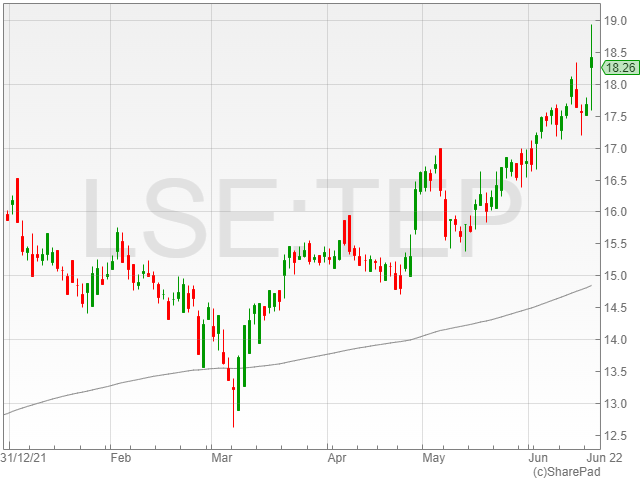
Telecom plus shares gained 2.2% to 1,808p in early morning trading on Tuesday following a reported 12.3% rise in revenue to £967.4 million against £861.2 million year-on-year.

The company noted an adjusted pre-tax profit climb of 10.3% to £61.9 million compared to £56.1 million and a statutory pre-tax profit increase of 8.5% to £47.2 million from £43.5 million.

Telecom announced a 10.8% increase in customers to 729,000, equal to the last five years of growth combined, alongside improved customer retention levels as customers reportedly benefited from higher savings on their UW services.

The group also returned to a rational pricing environment after the permanent energy retail market reset.

The company mentioned continuing strong new customers levels in line with guidance of 20% net growth for the coming year, alongside a new medium-term goal to sign a minimum of 1,000,000 additional customers over the next four to five years.

Telecom added that its adjusted pre-tax profit for FY 2023 was projected to hit approximately £75 million, exceeding market expectations and enabling raised guidance including a dividend leap to at least 65p for the year ahead.

“The business is performing extremely well, delivering record results ahead of expectations. Demand for the long term savings we offer remains high, and underlying organic customer growth is continuing at an annualised rate of around 20% in the new financial year,” said Telecom plus CEO Andrew Lindsay.

“It is now inevitable that energy prices will rise significantly again in October and are likely to remain high for the foreseeable future.” 

“Thanks to our multiservice proposition we expect to continue offering our customers the lowest energy prices in the country this winter, giving every household the opportunity to make significant savings at a time when they need them the most.”

Telecom confirmed an adjusted EPS jump of 10.1% to 63.2p against 57.4p the year before, with a statutory EPS rise of 8.7% to 45.1p compared to 41.5p. The group announced a FY dividend of 57p per share, remaining flat since the previous year.

DS Smith rides Covid recovery wave to 26% revenue growth, passes inflation onto customers

0

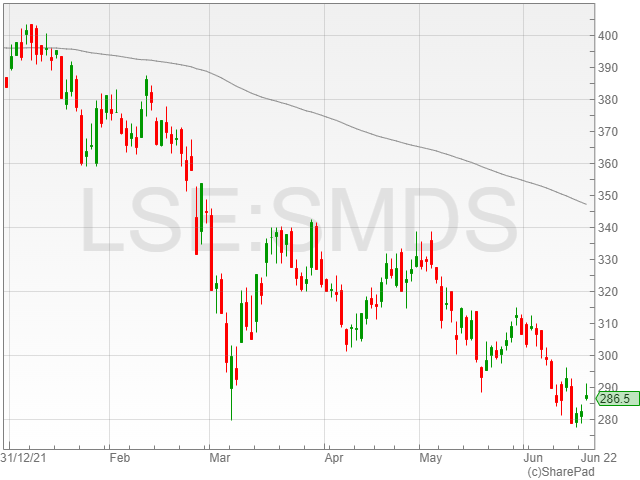
DS Smith shares were up 0.3% to 1,467p in early morning trading on Tuesday after the group reported a 26% increase in revenue to £7.2 billion in FY 2022 as a result of corrugated box volume growth and higher selling prices across the firm.

The company announced an adjusted operating profit rise of 29% to £616 million, with its price recovery serving to offset increased input costs, along with a pre-tax profit leap of 71% to £378 million compared to the last year driven by higher operating profits and a reduction in financing costs.

Smith highlighted a return on sales uptick of 0.1% to 8.5%, falling below its target of 10% to 12% as a result of significant cost inflation limiting annual performance.

The firm delivered a ROACE growth of 2.6% to 10.8% year-on-year, which fell within its target of 12% to 15% within HY2 with a climb to 12.1% on the back of improving returns from recent investments and acquisitions, including its acquisition of Europac in 2019, alongside a higher operating profit.

“We have delivered strong operational, environmental and financial results. The actions we have taken, driven by our strategic focus on our customers and their changing needs, including an ever-increasing focus on sustainability, have resulted in record volume growth,” said DS Smith CEO Miles Roberts.

“This, together with price increases which have offset significant cost inflation, has driven a strong improvement in profitability and high cash generation.”

“We continued to recycle capital out of mature, non-core assets with the disposal of the De Hoop paper mill, whilst reinvesting in new packaging sites that meet customer demand and offer attractive financial returns.”

Smith confirmed an estimated continued recovery in price and cost management to offset inflationary costs, and noted strong early momentum in FY 2023.

The group mentioned it expected corrugated box volume rise in the range of 2% to 4% and a capital expenditure rise to approximately £500 million in customer-led growth opportunities at attractive financial returns.

“The new financial year has started well, building on the momentum from the previous year. Whilst there remains considerable uncertainty about the overall economic environment, our expectations remain unchanged,” said Roberts.

“Strong customer demand reinforces our confidence to invest in the business, with capital expenditure expected to further increase in the current year. We currently expect to see 2-4 per cent growth in our volumes, aided by our focus on resilient end markets, a strong performance in the US and the opening of new sites in regions where demand is buoyant.”

“This growth, combined with the benefits of ongoing pricing momentum and careful management of our cost base gives us confidence for the year ahead and is expected to result in a further substantial improvement in our performance.”

However, analysts warned to keep an eye on Smith’s financials as the cost of living crisis continued to bite.

“DS Smith saw demand for the cardboard boxes it makes continue with strength even though the group passed input cost inflation on to consumers. This is the benefit of DS Smith’s business—from the Amazon boxes lining the streets to the brightly coloured packages lining supermarket shelves, the group has an endless pool of consumers,” said Hargreaves Lansdown equity analyst Laura Hoy.

“The only question mark is whether demand will hold up moving forward. DS Smith’s customers won’t need more boxes if existing ones remain on the shelves, and ecommerce could start to slow  as people rein in their spending.”

“With the cost of living squeeze looming large in the background, this isn’t out of the question. But with a finger in several different industries, DS Smith is well placed to cope with this.”

Smith noted an adjusted EPS climb of 35% to 30.7p and a 24% rise in dividends to 15p per share for FY 2022.

Directors dealings: Continuing share purchases at Alphawave IP

Sutardja Family LLC, an organisation associated with Alphawave IP (LON: AWE) executive director Sehat Sutardja, has been buying shares in the data transmission technology business. The latest is the purchase of 387,668 shares at 139.52p each. The current share price is 141.4p
This £541,000 investment follows share purchases on Monday, Tuesday, Wednesday and Thursday of last week and the Friday before that. They totalled around 1.6 million shares, which were purchased at prices between 144.51p and 159p each. Despite the buying the acquisition price has fallen with every purchase. Back in May, f...

Euromoney one-quarter higher on bid approach

0

Financial information publisher and events organiser Euromoney Institutional Investor (LON: ERM) has received a bid approach at near to its all-time high share price. Back in September 2019, the share price ended the day at 1498p and the possible cash offer is 1461p a share.

The potential bidder is a consortium of Astorg Asset Management and Epiris. The initial approach was at 1175p, and it has been increased four times since then. The share price ended the day 26.1% higher at 1380p. The interim dividend of 6.1p a share will still be paid on 24 June.

The potential offer represents 27 times prospective earnings for the year to September 2022, falling to 22 next year.

The Euromoney board is continuing discussions with the bid consortium. The bid would value Euromoney at £1.6bn. Net cash was £12.5m at the end of March 2022.

Fastmarkets

One of the attractions of the Euromoney business is Fastmarkets, the price reporting and analytics services business. This has extensive data covering minerals, metals, mining, forestry products and some agricultural products. The London Medical Exchange (LME) has adopted Fastmarkets pricing for contracts.

It is important that clear and independent analysis on pricing of commodities is available, particularly in inflationary times. Fastrack revenues grew 17% in the first half compared with 14% for the group, which included a sharp recovery in events revenues.

Ocado seeks £575m for investment

0

Online shopping technology and services provider Ocado (LON:OCDO) is raising £575m via a placing and retail offer via PrimaryBid. The share price will be determined by a bookbuilding process. The cash is required to ensure that the company can fund existing and expected customer commitments in the mid-term and continue to grow.

The share price has risen 41.4p to 872.7p on the day, although the fundraising was not announced.  until 4.52pm. The share price was £16.78 at the beginning of 2022, although it has recovered from its low in May.

Ocado expects the shift to online grocery shopping will continue and it has been accelerating the roll out of the Ocado Solutions Platform globally. This puts it in a strong position and many large grocery retailers have signed up.

Management believes that existing customer commitments provide a path towards revenues of more than £6.3bn and group EBITDA of £750m plus.

Debt

Management has also agreed a £300m revolving credit facility. Peel Hunt had forecast net debt of £1.06m at the end of November 2022, rising to £1.71bn one year later. That was mainly due to £800m of capital investment this year and a further £771m next year.

Ocado needs to continue to invest in technology development to stay one step ahead of competitors. The potential EBITDA mentioned would not be enough to cover the cost of this investment and its funding, however, spending

Ocado is expected to be cash generative after interest payments, but it would not be able to cover the investment it is making in the business. The additional cash will reduce net debt, but it will be substantial given that it will be years before enough cash to cover investment spending.