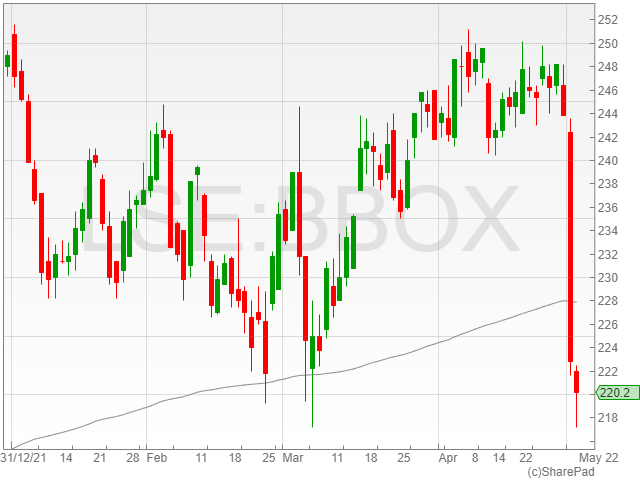
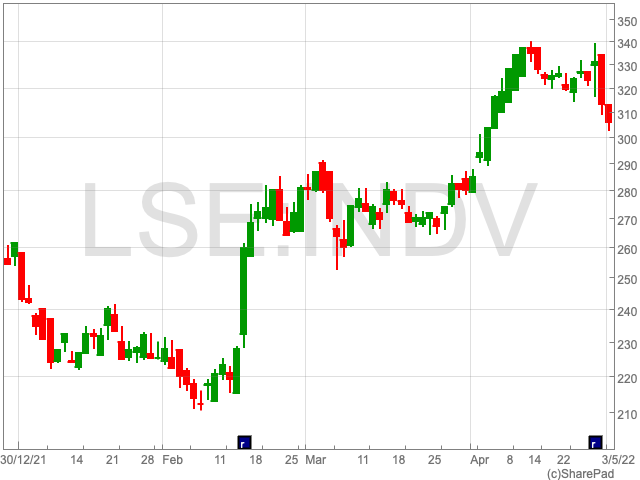
Tritax shares were down 2.2% to 217.8p in early morning trading on Wednesday after the real estate fund manager said complications from cost inflation were impacting the company’s nearer term development pipeline.
The firm reported that it was mitigating some of the cost inflation by its approach to procurement, the use of fixed price construction costs and its ability to capture rental growth.
The company confirmed that low availability and diversified occupier demand had driven growth across its portfolio, with nationwide vacancy rates at 1.6%, spurring occupiers towards commit faster to new build to suit projects and lease speculative buildings under construction.
The group added that its development pipeline included 1.8 million sq ft of construction started, with 56% pre-let, resulting in £6 million of contracted secured rent.
The company currently has 3.1 million sq ft of developments under construction with 1.3 million sq ft pre-let or let, accounting for £8.4 million in contracted rent.
Tritax confirmed that the remaining units held the potential for an additional £15.2 million in contracted rent.
The property fund manager said it remained on-track to deliver an accelerated level of 3-4 million sq ft of development starts across FY 2022 within 6-8% yield on cost target range, with the earnings impact delivered through FY 2023 and FY2024.
The group reported a strong balance sheet, including an extended £50.9 million loan facility with Helaba by three years to a maturity of July 2028, alongside a loan to value in Q1 of 24.2%.
The company added that its current weighted average cost of debt was 2.27%, with 69% fixed and benefiting from an average 6.5 year maturity.
Wetherspoon announced its Q3 trading update on Wednesday where the group reported a 4% decline in like-for-like (LFL) sales, disclosed closures and disposals of pubs and announced the resignation of Su Cacioppo.
Wetherspoon reported a 4% decrease in LFL sales compared to 2019, however, YTD sales fell 6.2% on an LFL basis.
In the group’s interim statements, Wetherspoon indicated that LFL sales had improved to -2.6%. The group also stated that at the end of the quarter LFL sales saw further improvements to -1.6% and in the last 2 weeks, LFL sales were marginally positive.
JD Wetherspoon manages 47 pubs and 57 hotels with LFL sales in the quarter amounting to 3.4% and 5% respectively.
Since January 2022, the group reportedly disposed of 6 pubs and another 5 pubs have been handed off to landlords due to leases expiring.
In the anticipation of upcoming lease end dates, 3 more pubs have been closed. With all the disposals and surrenders the company noted a cash inflow of £6.3m.
Wetherspoon also announced the resignation of its director Su Cacioppo and the appointment of James Ullman on Wednesday.
Tim Martin, Chairman, JD Wetherspoon said, “Since Covid restrictions ended, sales have improved, as previously reported. As many hospitality companies have indicated, there is considerable pressure on costs, especially in respect of labour, food and energy. Repairs are also running at a higher rate than before the pandemic.”
“The company anticipates a continuing slow improvement in sales, in the absence of further restrictions, and anticipates a “break-even” outcome for profits in the current financial year.”
“Since 13 March, the company has returned to profitability and a positive cash flow, and is cautiously optimistic about the prospect of a return to relative normality in FY23.”
Sophie Lund-Yates, Equity Analyst, Hargreaves Lansdown, said, “JD Wetherspoon is edging towards glass half full again. The bigger picture shows overall sales are still down on pre-pandemic levels, but zoom in and you can see that trading in more recent weeks has been marginally positive.”
“This is an especially important development for the Spoons brand, thanks to its need to shift high volumes so it can support cheap price tags. Margin accretion is going to be very hard won, but Tim Martin’s business is hardly one to shy away from a challenge.”
“Exactly how trading is going to shape up from here depends on the extent of the damage to people’s discretionary spending. On one hand, Spoons’ reasonable price point could entice those slipping down the value chain. On the other, the cost-of-living crisis may well serve as a real blow to the group’s core demographic and ultimately drive them away.”
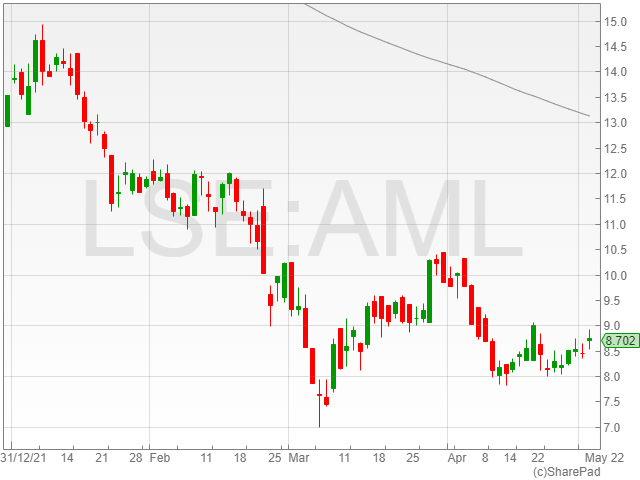
Aston Martin Lagonda Global Holdings shares were up 3.4% to 874.8p in early morning trading on Wednesday following positive results from its Q1 2022 trading update, with an adjusted EBITDA increase of 18% to £24.4 million from £20.7 million year-on-year.
Aston Martin Lagonda attributed the climb in EBITDA to higher priced Specials and costs efficiency benefits sourced from Project Horizon, which were slightly offset by re-investment into brand and new product launches.
The company reported a 4% revenue boost to £232.7 million from £224.4 million as a result of strong pricing dynamics across its core portfolio, along with 14 Aston Martin Valkyrie programme deliveries.
The high-end car group announced a 14% decline in total wholesale volumes to £1.1 billion from £1.3 billion during Q1.
Aston Martin Lagonda confirmed that its results were in line with management expectations, however the group suffered a 164% widening in pre-tax loss to £116 million from £42.2 million over Q1 2021 due to higher depreciation and amortisation.
The firm also recorded an operating loss rise of 212% to £47.7 million from £15.3 million year-on-year.
Aston Martin Lagonda confirmed strong liquidity with cash of £404 million against £419 in December 2021, alongside net debt of £957 million compared to £892 million which includes the £33 million impact of non-cash FX revaluation of dollar denominated debt.
The luxury car company reported that it was on-track to meet its medium-term targets, including 10,000 wholesales, £2 billion in revenue and £500 million in adjusted EBITDA by 2024 to 2025.
The firm commented that it expected an 8% rise in core volumes with a delivered 50% improvement in adjusted EBITDA from the core business.
The group added that it projected higher profitability from the upcoming deliveries of its DBX707 and V12 Vantage vehicles as a result of the pricing power of the brand.
“We continue to make tremendous progress, now operating as an ultra-luxury brand and seeing exceptional demand across our product range with sports cars sold out for the year and DBX orders up 60%,” said Aston Martin Lagonda executive chairman Lawrence Stroll.
“Our most recently announced limited-edition, the V12 Vantage, was fully sold out prior to its official launch in March; and DBX707 is making headlines as the premier ultra-luxury performance SUV on the market, generating strong customer interest.”
“We are poised to deliver good growth in 2022 and remain extremely confident in the medium and long-term prospects as we transform Aston Martin into the world’s most desirable ultra-luxury British performance brand.”
Aston Martin Lagonda confirmed that the company was focused on mitigating the impacts of the ongoing conflict in Ukraine, the Covid-19 pandemic and lockdowns in China as potential disrupting factors to its supply chain and logistics operations, alongside inflation in the cost of raw materials.
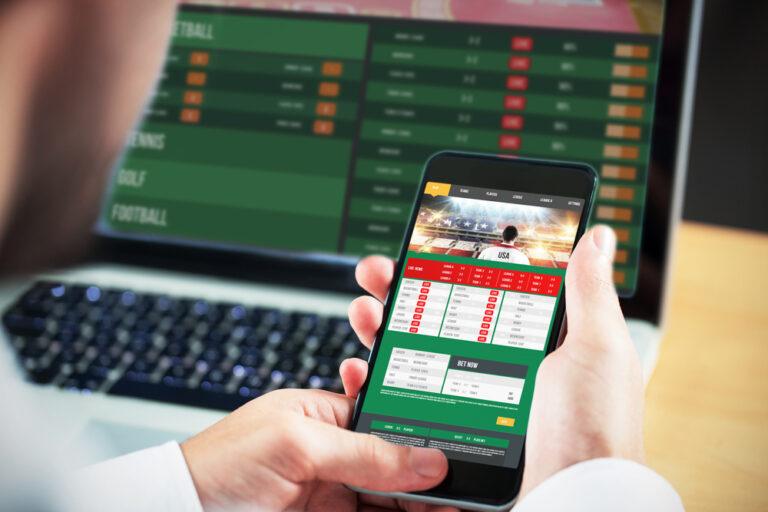
Flutter Entertainment stated that strong US momentum continues, while ex-US performance is in line with market expectations, resulting in revenue growth of 6%, led by ongoing recreational player momentum, with average monthly players up 15%, in its Q1 2022 trading update on Wednesday.
Flutter Entertainment reported group revenue growth of 6% from £1.49bn to £1.57bn in the first quarter of 2022. The revenue growth came from ‘continued strong recreational player momentum’ as average monthly players grew by 15% from 7.67m to 8.85m.
The group’s sports segment generated revenue of £930m, up 5% from 2021, and the gaming segment generated 9% higher revenue from £589m to £636m.
Flutter Entertainments Performance
US
Flutter Entertainment reported a 45% rise in revenue from £288m to £429m under its US division in its first-quarter results. The group noted a 43% rise to 2.36m in average monthly players.
Stakes more than doubled to £5.7bn as a result of the high player momentum.
It added over 1.3m new subscribers in the quarter, and some of its key promotional strategies resulted in decreased market share, particularly during the SuperBowl, similar to the trends seen in Q1 2021.
Sportsbook revenue increased by 89%, with a net revenue margin of 4.1%, down 30 basis points. With a 37% online sports betting market share, Flutter remained the top US sportsbook.
Customer-friendly results cost £98m, or 175 basis points, less than the planned margin in Q1, but structural margin gains produced by the group’s ‘superior’ product proposition drove greater revenue strength to offset the majority of this year-over-year impact.
Customer economics were compelling said Flutter, with cumulative CPAs at $290 and average paybacks in the 12-18 month range.
New York and Louisiana were both successful launches, with New York outperforming expectations and representing the quickest penetration of its daily fantasy sports player base to date allowing Flutter to deliver record customer acquisition figures.
The debut of Connecticut in Q4 and strong cross-sell to SuperBowl and March Madness fans are driving iGaming growth. In Q1, it had a 20% share of the iGaming market.
FanDuel was the most downloaded sportsbook app across all events during the Super Bowl and March Madness which helped consumer engagement.
With FanDuel named the number one casino app in Q1, Flutter Entertainment worked to improve its consumer proposition.
UK & Ireland
Online
Flutter Entertainment reported a 15% growth to 3.63m in average monthly players in its UK & Ireland online division in the first quarter.
The group noted a 20% decline in revenue from £568m to £453m as a result of a 32% decrease in revenue generated from the sports division and a 4% decrease in revenue generated in the gaming division.
However, sports performance compared to 2021 noted a sportsbook net revenue margin of 9.6%, down 100 basis points year over year and due to Covid-related constraints, player engagement peaked in Q1 2021 also did not help the decline in revenue.
With the launch of ‘Buildabet’ and ‘Acca Assist’ in SkyBet, Flutter Entertainment continues to polish its sports product.
Sky Vegas debuted ‘The Vault,’ and the group continues to observe strong recreational player growth, with gaming average monthly players up 9% on a pro forma basis its improved focus on product and efficiency will position the division well for the future said the group.
Retail
During the quarter, Flutter’s retail estate was up and running, as opposed to being entirely closed in Q1 2021.
In 2021, the group generated nothing in revenue, therefore, in Q1 2022, revenue has seen a 100% growth to £65m.
With revenue only 6% lower than Q1 2019, the group’s UK estate has reverted to pre-Covid levels.
Flutter’s Irish estate was 24% lower in Q1 2019 than in Q1 2018, suggesting social apprehension about Covid, and is unlikely to return to pre-Covid levels this year.
Australia
Flutter Entertainment recorded an 8% increase in revenue from £279m to £291m in the first quarter.
Despite a more challenging market climate, Sportsbet’s income increased by 8%, thanks to the relaxation of Covid limitations.
As average monthly player growth accelerated to 10%, its success was driven by player volumes.
An increase in promotional spend was funded by structural gains in margin generated by the in-house pricing capabilities and product mix said Flutter Entertainment which resulted in high player engagement and high customer retention for Covid’s expanded customer base in 2021.
As a result, staking increased by 7%, while net sales margin remained stable at 11.5%.
Flutter Entertainment International
The impact of guided headwinds in the quarter was reflected in a 5% decrease in revenue in the International segment from £351m to £327m.
Without these obstacles, revenue increased by 6%, thanks to solid growth in key areas such as Canada, Brazil, India, Georgia, and Armenia. Flutter continues to improve the customer experience by leveraging the group’s expertise.
Denmark has been given access to the group’s worldwide betting platform and Junglee is bringing the ‘Spin and Go’ poker concept from PokerStars to the Indian rummy market.
Peter Jackson, CEO, Flutter Entertainment said, “Flutter delivered a positive Q1 performance with revenue growth of 6%.”
“The quarter saw us launch our new global sustainability strategy, the Positive Impact Plan, aligning commercial goals with our commitment to support our customers, colleagues and the communities in which we operate.”
“With our enlarged recreational customer base, winning position in the US and ongoing focus on sustainable growth, our business remains well placed for the future.”
“Flutter’s trading update has shown how its bet on the US market is now paying off with the region leading the charge in revenue growth for the company,” commented Susannah Streeter, Senior Investment and Markets Analyst, Hargreaves Lansdown.
“Revenues soared by 45% in the first quarter for the US market helping offset declines elsewhere as Flutter was buffeted by regulatory headwinds affecting the sector.”
“The ease of gambling given the shift to online has rightly shone a spotlight onto financially vulnerable customers.”
The FTSE 250 and AIM were trading down 0.4% and 0.7% to 20,619 and 1015, respectively, as trading slowly resumed after investors return from the long weekend in the UK.
Energean will supply gas to East Hagit for a term of 15 years, with a total contract quantity of up to 12bn cubic feet. The group said the agreement has the potential to generate revenue of up to $2bn over the offtake period.
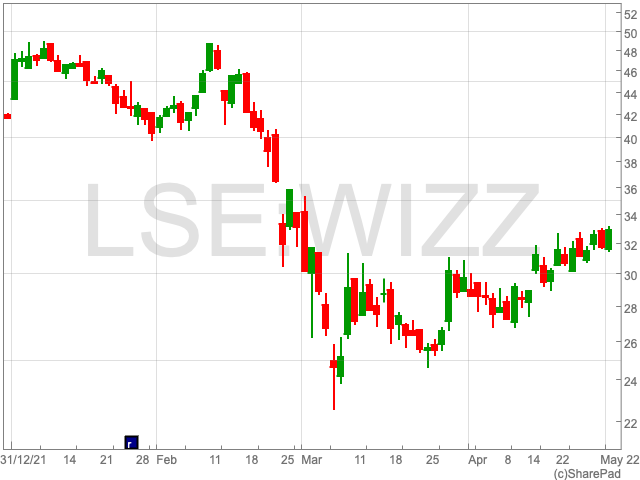
Wizz Air shares were trading up 3.5% to 3,285p after the company reported a 542% increase in passengers carried during April 2022 compared to April 2021, at a load factor of 83.4% in its latest CO2 emission statistics.
Wizz Air also continuously operates amongst the lowest CO2 emissions per passenger/km among all competitor airlines, with 61.8g per passenger/km for the rolling 12 months to 30 April 2022.
In April, CO2 emissions in grams per passenger/km were 24.7% lower compared to 2021, as the group witnessed an improvement in load factors over the same time.
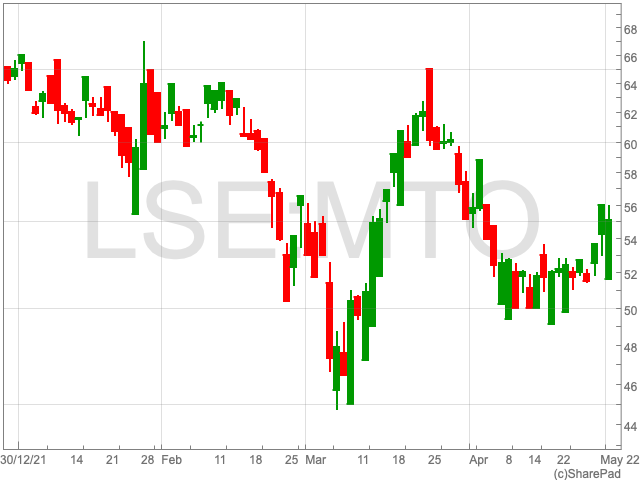
Mitie Group shares increase 1.6% to 55p following the company’s announcement of the acquisition of 8point8 for £10m to broaden its telecoms offering.
The acquisition of 8point8 by Mitie Group covers three companies, 8point8 Support Ltd, as well as its training provider 8point8 Training Ltd, and specialist contract lifting business Vantage Solutions Ltd.
8point8 generated revenue of £18.3m in 2021 and £600,000 in pretax profit. Mitie forecasts revenue for the business to grow “significantly” with the rollout of 5G networks in the next three to five years, and the replacement of Huawei infrastructure.
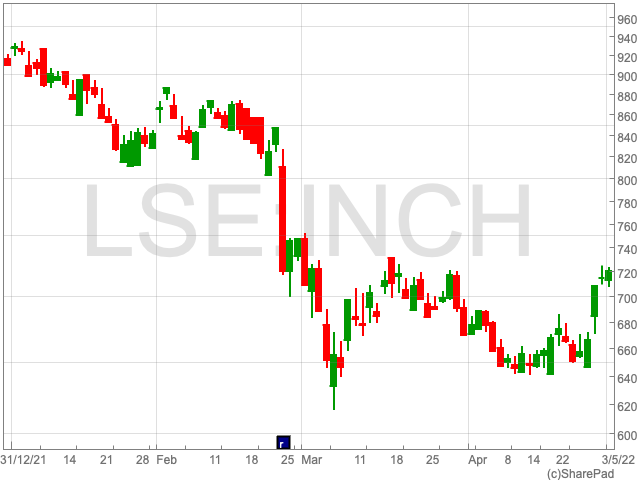
Inchcape shares gained 0.9% to 721p after the company announced the acquisition of ITC Group and Simpson Motors. The businesses are expected to add around £120m of annualised revenue and be accretive to Inchcape’s margins.
Indivior shares were down 2.7% to 304p following the company’s commencement of a share buyback programme for up to $100m by signing a non-discretionary agreement with Stifel Nicolaus Europe concerning the programme.
AIM
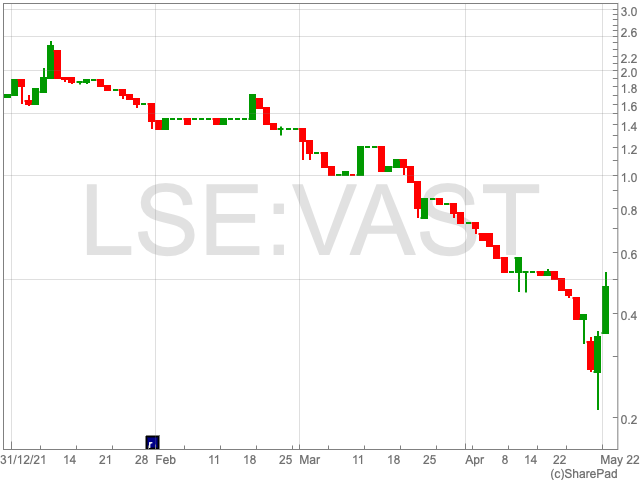
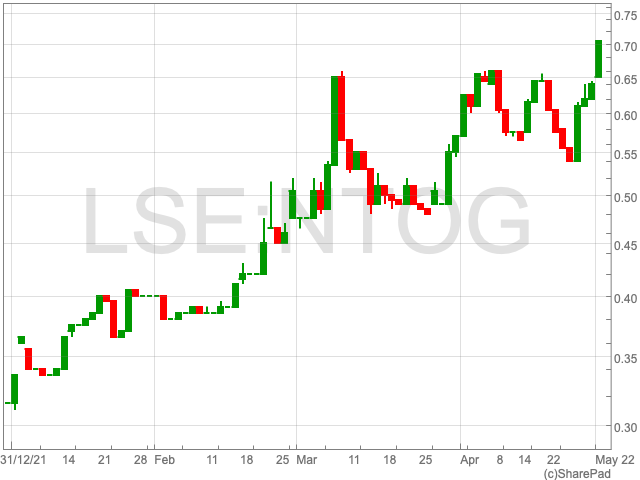
Vast Resources shares soared 40% to 0.48p after the company reported that group revenue increased 236% to £2.28m compared to £970,000 in Q1 2021.
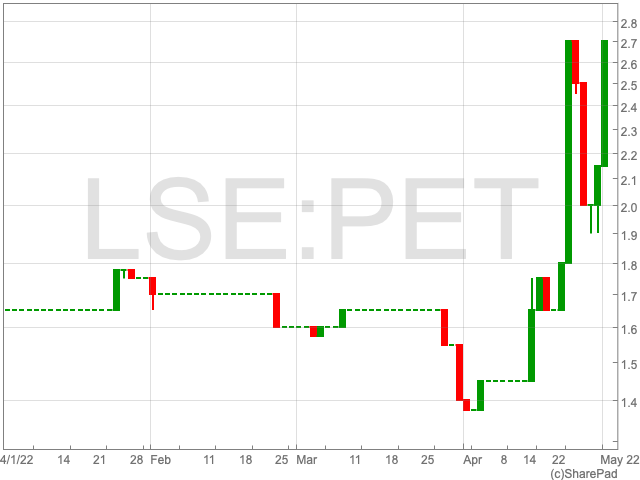
Petrel Resources shares jumped 25% to 2.7p after the group reported that the High Court injunction over the 32.1m shares previously held by the Tamraz Group had been lifted.
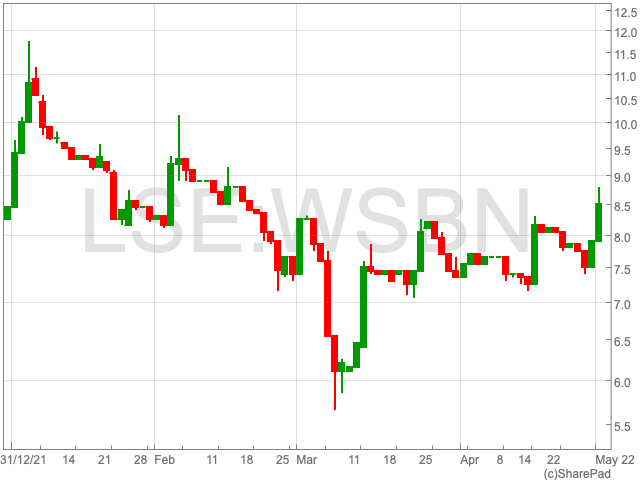
Wishbone Gold shares rose 7.6% to 8.5p after the company said it signed an important contract for the drilling of the company’s Red Setter Gold-Copper Project in the Patersons Range area in Western Australia.
Nostra Terra shares gained 10% to 0.7p following the company’s announcement of the Grant East #1 well, in the Permian Basin, West Texas being spudded on 29th April 2022.
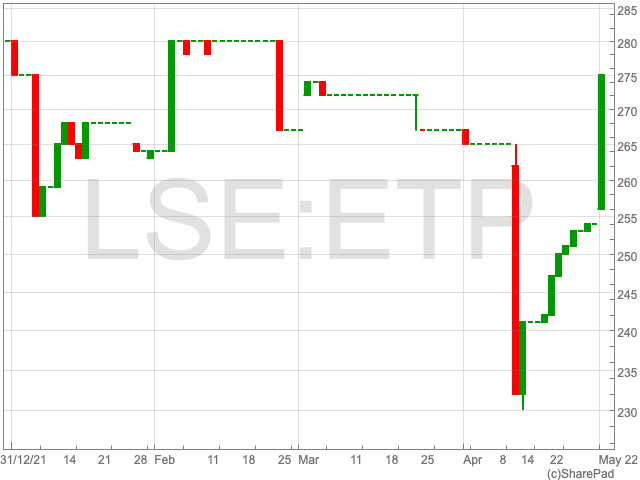
Eneraqua Technologies shares were trading up 8.3% to 275p after the company announced that its ClimateSmart Irrigation solution has been selected by the Department of Horticulture for the State Government of Uttarakhand, India.
The £0.9m contract will see Eneraqua Technologies supply the systems to 340 horticultural farms across the state reducing their carbon emissions and improving water efficiency. This is the first major zero-carbon irrigation initiative of its kind in India.
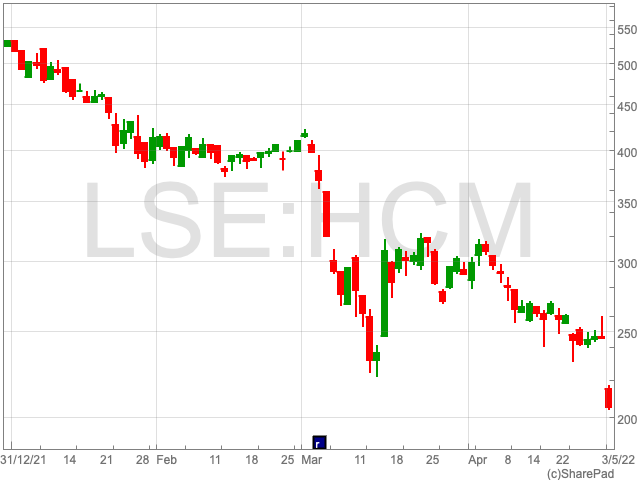
Hutchmed shares lost 16.4% to 205p after the drugmaker said the US FDA had rejected its surufatinib for the treatment of pancreatic neuroendocrine tumours.
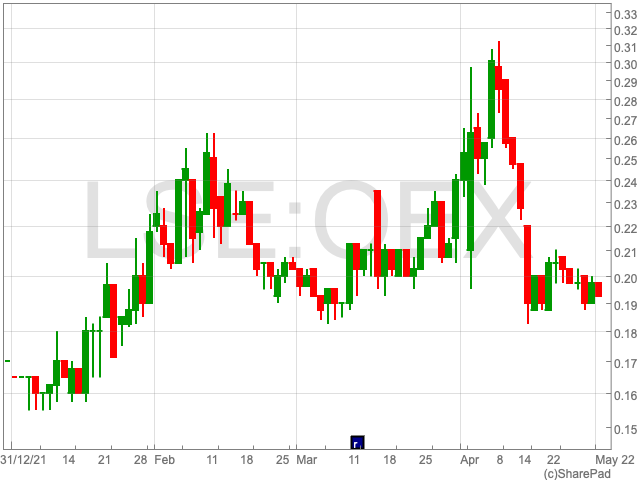
Oilex shares fell 2.5% to 0.19p after the company signed a letter of intent with US oilfield services giant Schlumberger NV for the supply by Schlumberger of hydraulic fracturing services, coiled tubing and nitrogen services and perforation services for the planned re-frac of the Cambay C-77H well in July.
Price Target
Auction Technology Group shares jumped 5.7% to 929p after JPMorgan raised Auction Tech ‘overweight’ from ‘neutral’ and increased its price target to 1,150p from 1,041p.
Currys shares rose 0.16% to 93.5p despite RBC cutting its price target from 105p to 95p.
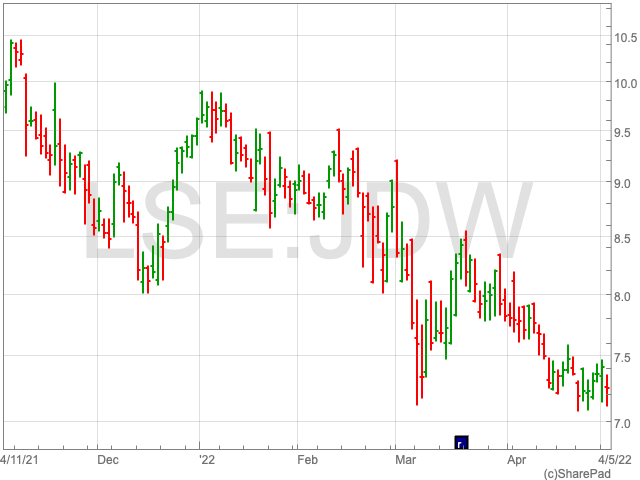
Wetherspoon shares gained 0.2% to 737p after Deutsche Bank initiated JD Wetherspoon with a ‘buy’ rating and a price target of 875p.
Mitchells & Butlers’ shares dropped 0.26% to 227p despite Deutsche Bank initiating Mitchells & Butlers with a ‘buy’ rating and a price target of 270p.
Spectris shares were trading down 0.03% to 2,949p after Barclays cut its price target from 3,980p to 3,650p.
Rotork shares fell 1.4% to 288p after Barclays and SocGen cut the group’s price target to 345p and 315p respectively.
Hill & Smith shares dropped 0.6% to 1,376p after HSBC cut Hill & Smith’s price target to 1,600p from 2,010p.
Lancashire Holdings’ shares gained 0.8% to 427p following Jefferies’ move to raise the group’s price target from 500p to 550p.
The FTSE 100 was sank on Tuesday as London’s markets caught up with our global indices following the Bank holiday.
US indices faced significant volatility on Monday as investors positioned for a potential 50bps hike this week.
Miners and pharma stocks were early losers on Tuesday before selling picked up throughout the FTSE 100.
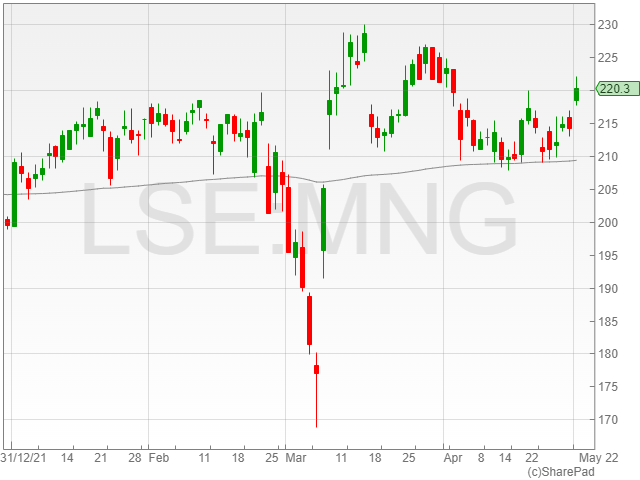
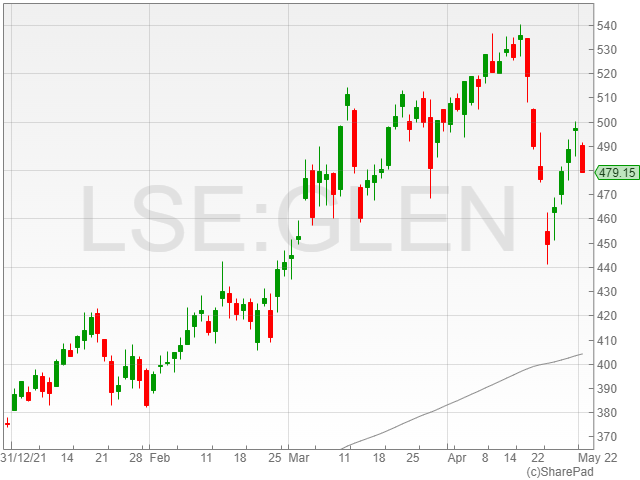
“Metal producers and pharmaceuticals acted as a drag on the index, with the former extending losses seen after the recent quarterly updates from mining sector – most of whom reported operational challenges,” said AJ Bell investment director Russ Mould
Investors also kept a concerned eye on China, as the country’s strict zero-Covid policy sent a wave of uncertainty across the market due to a surge in lockdown fears.
The markets are also awaiting the latest decisions from the Federal Reserve and the Bank of England, with the Fed expected to raise interest rates by 0.5% on Wednesday and an anticipated 0.25% hike to 1% from the Bank of England on Thursday.
“Markets are particularly worried about lockdown in China and how fast US interest rates might go up. Central banks typically raise rates by a quarter percentage point, but the Fed is under pressure to be more aggressive to combat rising inflation,” said Mould.
The increase in interest rates comes at an unwelcome time for consumers already struggling under back-breaking 7% inflation, however the Bank of England is caught between two uncomfortable decisions if it wants to fight the rising inflation in the longer term.
“The market expects a quarter percentage point increase to 1% for UK rates which will prompt a lot of chatter about recession, particularly as consumers are already under a lot of financial pressure from the rising cost of living,” continued Mould.
“There couldn’t be a worse time to push up borrowing costs, but the Bank of England needs to do something to tame inflation and that means raising rates.”
The oil and gas giant confirmed its launch of $2.5 billion share buyback before the release of its Q2 2022 results, alongside a $6.25 billion profit on an underlying replacement cost basis, representing a 54% spike against Q4 2021 and an over 100% surge year-on-year.
The shining results despite the Rosneft hit have prompted renewed discussions of a windfall tax on energy companies to assist consumers with soaring prices on the back of Russia’s invasion of Ukraine.
“The oil giant might have hoped attention would focus on an apparent $20.4 billion loss – created by impairments linked to its exit of interests in Russia – but the strongest underlying profit in a decade of $6.25 billion was more revealing of the impact of surging oil and gas prices on the business,” said Mould.
Analysts added that the exit from Russia might have boosted the company to transform with the changing energy environment, serving to shore up its future prospects.
“The exit from Russia, while bringing with it considerable costs, arguably helps with the transformation of the group and strong cash flow is helping to bring down debt,” said Mould.
The purchased company is focused on private debt and private equity throughout emerging markets, with approximately $3.7 billion in managed assets, and will expand M&G’s global reach alongside its capabilities in impact investing.
“responsAbility brings leading capabilities in impact investment to M&G, which will help us accelerate our ambition to place sustainability at the heart of our investment process,” said M&G investment officer Jack Daniels.
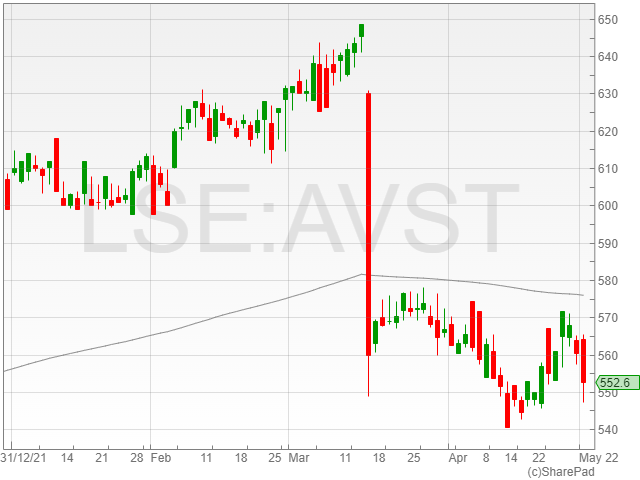
Avast shares decreased 2.3% to 551p on the back of a 0.5% revenue slide, following the sale of its Family Safety department and an EBITDA drop of 4.3% after its suspension of operations in Russia and two new acquisitions to the company.
The EU has said it will deny Russian demands for member states to pay for oil and gas from national energy company Gazprom in roubles.
European commissioner for energy Kadri Simson commented that Moscow’s ultimatum to pay in Russian currency or forfeit the supply of Moscow’s energy exports had been rejected, following a meeting of EU energy ministers on Monday.
The move followed Russia’s decision to cut off the supply of gas to Poland and Bulgaria last week, with Putin threatening to continue the trend throughout Europe.
The EU faces a tricky situation, as the trade bloc imported approximately 155 billion cubic metres of natural gas from Russia in 2021, representing around 45% of EU gas imports and an estimated 40% of its overall gas usage.
There is currently no alternative fuel source which could account for the missing resources from Russia, which has put European member states in an unenviable predicament.
Putin issued decree 172 in March, which laid down orders for purchasers of Russian gas to open two accounts at Russian Gazprombank, and pay euros and dollars into one account, which would be converted into roubles and paid to Gazprom from the second account.
The next payment due to Gazprom is scheduled for 20 May, leaving countries little time to come up with an alternative supply if they want to avoid breaching sanctions.
“Many European energy companies are due to make the next payment to Gazprom in mid-May and are trying to understand better what they should do and we need to give them the clarity that paying in roubles through the conversion mechanism managed by the Russian public authorities and a second dedicated account at Gazprom bank is a violation of the sanctions and cannot be accepted,” said Simson.
Member states are currently bracing themselves for the Putin to cut off the supply of gas, with many warning that hard times were ahead and prices would climb to unpleasant heights.
“We will be harming ourselves, that much is clear. It’s inconceivable that sanctions won’t have consequences for our own economy and for prices in our countries,” said German economic minister Robert Habeck.
“We as Europeans are prepared to bear [the economic stress] in order to help Ukraine. But there’s no way this won’t come at a cost to us.”
Inchcape, the world’s largest automobile distributor, has completed the acquisition of The ITC Group, which owns Interamericana Trading Corporation and Simpson Motors.
With the acquisition, Inchcape increases its worldwide reach by entering the Caribbean, further strengthening its position in the Americas.
With the merger of ITC and Simpson Motors, the group expands its geographic reach with Suzuki, Mercedes-Benz, and Subaru, as well as its OEM partnerships with the inclusion of Chrysler.
ITC expands its Caribbean distribution business to over 30 countries, including Jamaica, Guadeloupe, Trinidad and Tobago, and Martinique.
It sells Suzuki, Mercedes-Benz, and Stellantis vehicles through a network of about 50 dealers, the majority of which are independent.
Simpson Motors is a vertically integrated automotive retailer that operates out of a huge dealership.
The company sells Suzuki, Mercedes-Benz, Stellantis, and Subaru passenger cars, as well as Isuzu, Fuso, JCB, and John Deere commercial vehicles.
Duncan Tait, Group CEO, Inchcape, said, “We welcome the fantastic talent and expertise of ITC and Simpson Motors to the Inchcape family and look forward to building on the exciting opportunity for the group in the Caribbean.”
“The Americas & Africa is our fastest growing region, with the addition of ITC and Simpsons further bolstering our distribution and OEM partnerships as we deliver on our Accelerate strategy.”
“In the 50th anniversary year of our group’s foundation, I am delighted that Inchcape, a global business built on a strong foundation of heritage and values, will take Simpson Motors and ITC into the future,” added Sir Kyffin Simpson, Founder of Simpson Group.
“It is exciting to know that our people will be able to leverage the strength that comes from a regional and international network of partnerships, and that this will open great opportunities for growth and expansion. I would like to wish Inchcape, our dealer partners and all my colleagues at SML and ITC the very best for the future.”
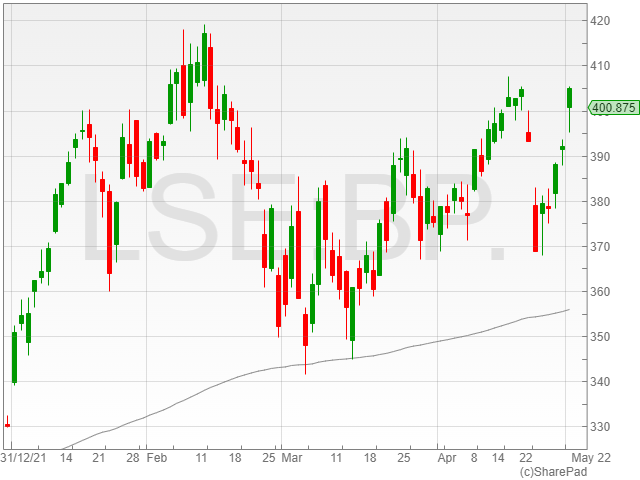
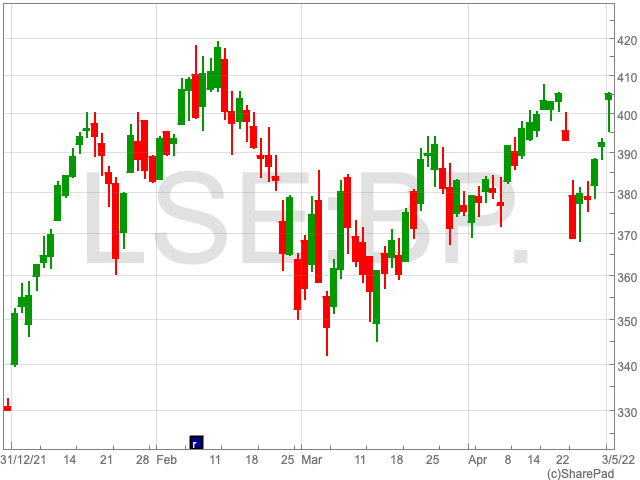
BP shares gained 3% to 403p after the company announced a jump in underlying profits from $4.1bn to $6.2bn, despite reporting a loss of $20.4bn in its Q1 results on Tuesday.
The oil and gas company noted a drop in total revenue to $51.2bn from $52.2bn in Q4 2021, however, net impairment and losses on the sale of businesses and fixed assets increased drastically to $26bn from $1.2bn in the first quarter of 2021.
Net impairment charges for the first quarter of 2022 were $26bn compared to $373m in Q1 2021 and included net impairment charges of $14.4bn for the first quarter of 2022 compared to $220m.
For the first quarter of 2022, there was a net impairment charge of $252m in the gas & low carbon energy division compared to £122m in Q1 2021 for BP.
In the oil production & operations segment, there was a net impairment charge of $624m compared to $99m in the first quarter of 2022.
BP’s decision to quit additional ventures with Rosneft within Russia resulted in impairment charges in the first quarter of 2022. Impairment reversals related to producing assets due to reserve additions counterbalance them.
In the other businesses and corporation segment, a net impairment charge of $13.5bn was recorded in the first quarter of 2022 reversing a $3m charge in 2021 and a loss on sale of businesses and fixed assets of $11.1bn.
BP’s loss attributable to shareholders amounted to $20.4bn primarily due to the decision to exit Rosneft shareholding and the group’s EPS decreased to $104.
For the first quarter, BP announced a dividend of 5.46 cents per ordinary share payable in June 2022.
In the first quarter, BP received $1.2bn in divestment and other proceeds, and it expects to receive total proceeds of $2-3bn in 2022.
In the first quarter of 2021, total divestment and other proceeds were $1.2bn, compared to $4.8bn in 2021 which comprised proceeds from the sale of BP’s Swiss retail operations, the sale of BP’s investment in the Pike oil sands assets, and the receipt of deferred consideration relating to BP’s Alaska business divestiture to Hilcorp in 2020. The sale of a loan note related to the Alaska divestment resulted in $0.2bn in other proceeds in the first quarter.
BP completed $1.6bn in share buybacks in the first quarter, including $0.5bn in January to offset the expected full-year dilution of 2022 vesting of awards under employee share schemes, and $1.1bn in February to progress toward the $1.5bn programmes announced with the fourth quarter 2021 results on February 8. On April 27th, the programme was completed.
BP earned $4.1bn in surplus cash flow in the first quarter and plans to buy back $2.5bn in shares before reporting its second-quarter results.
BP noted a reduction in net debt to $27.5bn at the end of the first quarter and announced a further buyback of $2.5bn shares.
Since the beginning of 2022, BP has announced the start-up of the Herschel Expansion major project in the Gulf of Mexico, signed a final agreement with Eni to form Azule Energy, a new independent joint venture in Angola, and advanced its biofuels strategy by producing sustainable aviation fuel at BP’s Lingen refinery and entering into a long-term strategic offtake and market development agreement with Nuseed.
BP has also continued to advance its electric vehicle charging strategy, launching a strategic partnership with Volkswagen Group and announcing plans to invest £1bn in the UK over the next decade; signed a global strategic convenience partnership with Uber, aiming to make more than 3,000 retail locations available on Uber Eats by 2025; and signed a strategic collaboration agreement with DHL Express to supply sustainable aviation fuel.
Since the beginning of 2022, BP has increased its position in offshore wind with the ScotWind lease option award of 1.45GW net, agreed to form an offshore wind partnership with Marubeni, and advanced its hydrogen strategy by announcing plans to develop H2-Fifty, a 250MW gross green hydrogen plant in Rotterdam, and signing an agreement to form a joint venture with Aberdeen City Council to develop a hydrogen hub.
The first-quarter impairment charge and loss on sale of enterprises and fixed assets are mostly related to bp’s investment in Rosneft as BP exited its 19.75% shareholding in the company.
The loss of considerable control over Rosneft, combined with market effects on Russian assets, resulted in a $13.5bn impairment charge, of which $528m relates to projected earnings in the quarter previous to the loss of major influence.
In addition, $10.4bn in accumulated exchange losses, $651m in a cash flow hedge reserve related to the original acquisition of Rosneft shares, and $59m in BP’s cumulative share of Rosneft’s other comprehensive income were reclassified to the income statement in the quarter for a total of $11.1bn.
From February 27, 2022, BP no longer recognised a share of Rosneft’s net income, output, or reserves due to the change in accounting method.
BP also opted to withdraw its other activities with Rosneft in Russia, which are included in the oil production & operations section.
The fair value of these firms has similarly been assessed to be zero. This decision resulted in a $1bn impairment charge, including $35m in expected earnings for the quarter and $479m in accumulated exchange losses previously charged to equity and transferred to the income statement.
The total pre-tax charge for bp’s investment in Rosneft and other enterprises with Rosneft in Russia in the first quarter of 2022 is $25.5bn.
“BP’s first-quarter results will do nothing to quell talk of a windfall tax on oil and gas companies,” says Russ Mould, Investment Director, AJ Bell.
“The oil giant might have hoped attention would focus on an apparent $20.4 billion loss – created by impairments linked to its exit of interests in Russia – but the strongest underlying profit in a decade of $6.25 billion was more revealing of the impact of surging oil and gas prices on the business.”
“The exit from Russia, while bringing with it considerable costs, arguably helps with the transformation of the group and strong cash flow is helping to bring down debt.
“BP has ambitious plans to become cleaner and greener but today’s update is a reminder that fossil fuels, with all the environmental and geopolitical mess they entail, remain central to the company for now.”
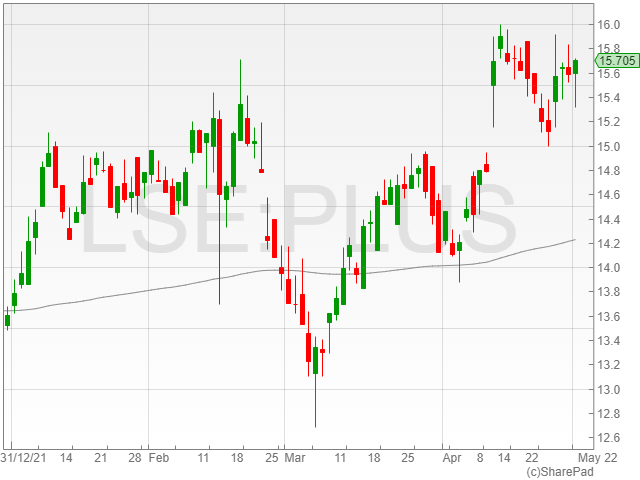
Plus500 shares increased 0.5% to 1,567p in early morning trading on Tuesday, following a positive trading update including a $105 million series of share buyback programmes.
The group confirmed that it had made significant progress against its strategic goals, as it continued to roll out its expansion into a slate of new regions.
Plus500 also noted its intention to invest in new acquisitions to expand the company, alongside its growth in the US, the purchase of Japanese firm EZ Securities and the ongoing development of its Pluss500 invest share-trading platform throughout European markets.
The fintech group said it expected to deliver continued sustainable growth over the medium to long term following its operational and financial momentum.