Sovereign Metals: Natural Titanium Rutile is significantly greener than rutile alternatives

0

Natural rutile mined by Sovereign Metals will reduce carbon emissions by 20 to 33 times from the titanium pigment industry.

Sovereign Metals has found through a comprehensive life cycle assessment study (LCA) using the methods from the 2021 initial Kasiya Scoping Study, that the global warming potential is 0.1 tonnes CO2 for the mining of each tonne of natural rutile at its Kasiya Rutile Project in Malawi.

A global warming potential of 0.1 tonnes CO2 to produce one tonne of natural rutile from Kasiya is 20 to 33 times less than compared to the creation of titania slag and synthetic rutile.

The company found that total greenhouse gas emissions are reduced by 95% to 97% in mining natural rutile compared to ‘alternative titanium feedstocks’ created by a carbon-intensive process of upgrading ilmenite through energy usage.

The carbon footprint of paint made from Sovereign Metals’ natural rutile is estimated to be up to 35% lower than that of ilmenite-upgraded substitutes.

By using natural rutile from Kasiya as a titanium feedstock for the chloride pigment process, Scope 1, 2, and 3 greenhouse gas emissions would be greatly reduced.

Using natural rutile found in Kasiya as titanium metal feedstock could hold the key to manufacturing low-carbon products.

The lowest scope 3 emissions analysed by the LCA indicates that using Sovereign’s natural rutile to make titanium dioxide pigment in the EU has the least global warming potential compared to ilmenite-upgraded substitutes.

Sovereign Metals’ Chair of the ESG Committee, Nigel Jones commented, “Since its discovery, the Kasiya rutile project has been designed to help decarbonise the myriad of uses of titanium pigment in industrial and consumer products.”

“This LCA is another step towards providing a solution to an industry targeting material reduction in its global carbon footprint while wholly encompassing values of sustainability.”

Titanium Alternative’s Carbon Footprint

Natural rutile can generate 96% of TiO2 making it the purest form of titanium dioxide.

Other sources of TiO2 are created by titania slag and synthetic rutile.

Titania slag created by smelting ilmenite in electric furnaces in South Africa generates 85% TiO2.

Synthetic rutile produced from ilmenite using the Becher Process in Australia generates 88-95% TiO2.

Natural rutile concentrate from Kasiya has a global warming potential of 0.1 tonnes CO2 per tonne much lower than titania slag production in South Africa with a global warming potential of 2.0 tonnes CO2 per tonne.

Synthetic rutile production using the Becher process in Australia has a global warming potential of 3.3 tonnes of CO2 per tonne.

Julian Stephens, Managing Director, Sovereign Metals said, “the expanded study now highlights the significant reduction in greenhouse gas emissions the titanium pigment industry could achieve by utilising natural rutile produced at Kasiya.”

“This has direct economic benefits to end users in jurisdictions such as the EU, where industry pays for carbon dioxide emissions via the EU’s Emissions Trading System and the proposed Carbon Border Adjustment Mechanism.”

Sovereign Metals shares jumped 4.5% to 29p in early morning trade following the announcement of natural rutile being a greener process to generate titanium.

Softcat half-year results smash projections with 33% revenue increase

0

Softcat saw its shares increase 7.9% to 1,849.3p in early morning trading on Tuesday after the company released a 33% rise in revenue and a 12.4% increase in operating profit.

The IT firm reported revenue of £770.9 million compared to £577 million in 2020.

Softcat noted increased operating profits of £64.1 million against £57.1 million in 2020, alongside a gross profit of £150.2 million compared to £134.5 million in 2020.

The IT group attributed its successful results to strong growth across key income and profit measures.

Softcat reported that the income drivers have been broad-based, with progress across hardware, software and services, despite Covid-19 related supply chain issues.

The company reported a 12.4% increase to £30,200 in average gross profit per customer, alongside an increase in its customer base.

The company mentioned its operating profit for the half-year term had already exceeded company expectations, and Softcat reportedly predicts the following half-year to outperform preliminary projections into 2022.

Softcat currently has a PE ratio of 35.7 and a forward PE ratio of 35.3, indicating analyst expectations of company growth over the coming year.

“The Company continued to perform well across all areas of the business in the first half,” said Softcat CEO Graeme Watt.

“Transaction numbers grew strongly as we saw more customers emerge from the impacts of the pandemic, and this drove a 12.4% expansion in gross profit per customer.” 

“All customer segments made good progress which included an acceleration in our enterprise business.”

“Various industry data and commentary suggest the overall market has maintained a mid-single digit growth rate which indicates that we have continued to gain share.”

Marks & Spencers shares are ripe for a rebound

0

Marks & Spencers (LON:MKS), like many others, faced the consequences of the pandemic with higher restrictions and fiscally worried consumers and recorded a £17m pre tax loss in 2020.

However, M&S has since enjoyed a rebound in trading and has taken the opportunity to reshape the business and focus on online sales.

The company posted half-year reports last November in which they reported revenue growth of £1bn between 2021 and 2020.

The retail store saw a pre-tax profit of £269m compare to the loss of £17m in 2020. Operating profit for the group increased to £363m from £62m in 2020.

M&S Food sales grew by 10.4% in the half year which contributed to the strong operating profits. Their Christmas update suggests full year earnings could also reveal double digit growth in food.

However, the retailer continues to be dogged by a poor performing clothing business that drags on their overall profitability.

Marks & Spencer shares fell of a cliff following their update Christmas update as investors showed their disappointment around the minimal profit outlook increase.

Reshaping and Restructuring

The company underwent restructuring to curb the risks associated with the pandemic restrictions and improve efficiencies across the business. M&S focused on managing its working capital to create free cash flow and reduce net debt.

M&S saw a reduction in net debt from £3.8m to £3.2m in 2021.

The company’s strategy to increase growth in the business focussed on restructuring, improved product availability and creating strong trade partnerships.

The company opened 3 customer fulfilment centres with Ocado Retail which benefitted them by entering the online grocery market.

Improved Product Availability

Marks & Spencers’ Clothing and Home business helped operating profit with a 17.3% improvement in full-price sales. The company has grown its market share in both online and in-store channels with better-valued products. With improved products, the company has achieved higher retention rates among newer customers, thanks to the Sparks data and customisation programme.

The company had re-launched Jaeger, a digital brand, in October, which showed positive responses in the early stage from customers.

The company also received optimistic results from its store rotation program.

International trade has seen growth in online sales as well as in-store. The company managed to recover from the lockdown in markets like India along with restrictions on the EU border.

Over Christmas, Marks & Spencers reported growth in revenues across all segments, supporting the company’s statements regarding growth targets.

Going Forward

In their Christmas update M&S said their transformation strategy was well underway and pre-tax profit is expected to be £500m over 2022 FY.

The company has also seen a change in leadership to support the transformation.

Valuation

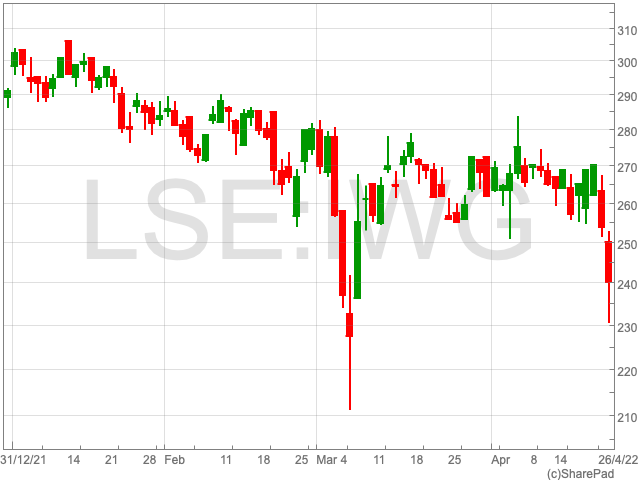
Marks and Spencer is trading at 7.7 times their earnings, the lowest amongst its peers, having sunk over 30% year-to-date.

A poor Christmas trading update, the resignation of their CEO and concerns around the Ocado joint venture have knocked shares.

With increasing fuel prices as a consequence of the war, the joint venture between Ocado and Marks & Spencers the profitability of the operation is at risk. Rising fuel prices are increasing overhead costs while consumers are moving back to retail shopping impacting the demand for online services.

Online has a been a focus for M&S and pressure on the Ocado joint venture will be a blow to the company.

However, with Marks & Spencer shares trading at such a low valuation, there is ample space to rebound back inline with their peers.

Premier Foods shares offer exceedingly good value compared to food producer peers

0

Premier Foods have not been immune to the volatility around the Ukraine crisis and shares dipped, only to be quickly bought into by investors targeting the reliable cashflows from their portfolio of household brands.

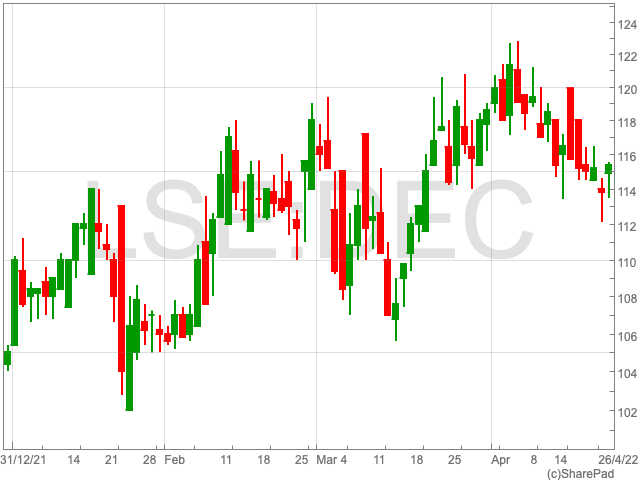
Trading at 111p, Premier Foods currently has a forward PE ratio of 9.7, meaning their shares are undervalued compared to peers given the positive outlook for the company.

The company’s current PE ratio is 10.3, indicating analysts are forecasting their earnings will rise in the coming financial year.

With Premier Foods shares declining from 52-week highs at 127p to trade at 111p, the company presents the best value of the food producer sector, on a price-to-earnings basis.

The FTSE 350 Food Producer sector has a mean Forward PE Earnings multiple of 15x suggesting Premier Foods shares would need to rise by 50% to trade in line with the sector average.

Premier Foods ‘Exceedingly Good’ Outlook

The group has suffered under the impact of Covid-19, with the food producer noting its H1 2022 6.1% decrease in branded revenue as a result of the lapping effect of pandemic-related volumes.

Premier Foods reported a decrease in revenue to £394.1 million against £421.5 million in its H1 results for 2022 and an adjusted pre-tax profit of £46.4 million compared to £47.7 million in 2020.

However, activity picked up in Q3 with Mr Kipling cakes recording their best ever Christmas trading period with group market share growing 90 basis points and sales for the period up 7% on two years ago.

Premier Foods to raised their outlook to an expected trading profit of £145 million and an adjusted pre-tax profit of £125 million for its FY 2022.

With a market cap of just £960m and the multiples outlined above, Premier Foods shares may be worth putting on a watchlist.

FTSE 100 rises on strong commodity-linked shares

The FTSE 100 rose on Monday as rising oil prices helped lift commodity related shares with miners and oil majors among the top risers.

Oil prices have crossed the $110 mark and Brent Crude was trading at $112 per barrel in early morning trade on Monday.

BP and Shell were both up in the region of 3% in early trade on Monday adding a significant number of points to the index.

Oil prices surged as Houthis struck an LNG plant in Saudi Arabia resulting in increased uncertainty regarding the supply of oil.

“The new trading week saw the FTSE 100 rise 0.5% thanks to strength in commodity producers. BP and Shell were among the top risers as oil prices continued to creep back up. Brent Crude traded 4.2% higher at $112 per barrel, dashing all hopes of businesses and consumers that this key driver of inflation was losing momentum,” said Russ Mould, Investment Director, AJ Bell.

Oil prices were also pushed higher as hope faded their would be a ceasefire in Ukraine.

’Optimism is seeping away about progress in talks to achieve a ceasefire in Ukraine and that’s sent the price of oil on the march upwards again amid heightened worries about supply. As Ukraine refuses to surrender to Russian forces in Mariupol despite the devastating siege of city, the chances of a breakthrough in negotiations are fading, with a gulf in position separating the two countries,” said Susannah Streeter, senior investment and markets analyst, Hargreaves Lansdown.

Other top performers included Polymetal, Antofagasta, Glencore and Anglo American which gained 9.7%, 4,1% and 2.6% respectively.

Antofagasta rose as it exited its contentious Pakistani mining project, from which it expects to receive $900 million in 2023.

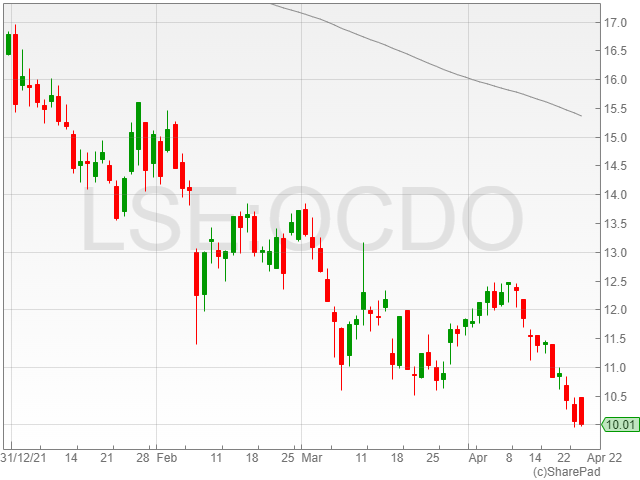
The FTSE 100’s fallers were led by the Ocado Group with a decease of 3.8% to 1,143.2p as loses in Ocado shares racked up after a disappointing update.

The online retailer had been hit with a series of failures in 2021 including a robot fire in its London properties and an evidently poor transition into a post-Covid market.

Pearson’s share price declined 2.7% to 785.4p as the stock continued to lose its shine following the rejection of £7 billion takeover bid from Apollo.

Cadence Minerals: Update on Amapa Iron Ore Project

1

Cadence Minerals’ Amapa Iron Ore Project has an update on the ongoing pre-feasibility study (PFS).

The Amapa Project located in the northeast of Brazil is a mine, processing plant, railway, and port in one vast integrated project.

Previously owned by Anglo American and Cliffs, the project produced around 6.1m tonnes of iron ore concentrate at its peak annually.

The Amapa Iron Ore Project is now owned in a ratio of 73:27 between Indo Sino and Cadence and is currently being pushed through development, into production as quickly as possible.

The PFS is commissioned based on generating 5.3m tonnes each year. Out of which, 4.9m tonnes is expected to be 65% iron ore concentrate with lower carbon footprints. At present, the price per dry tonne is $170.

In 2020, Cadence revised the Mineral Resource Estimate with an increase of 21%. 

The current MRE includes an indicated mineral resource of 176.7m tonnes grading 39.7% Fe and an inferred mineral resource of 8.7m tonnes grading 36.9% Fe, both reported within an optimised pit shell and utilising a cut-off grade of 25% Fe.

According to previous assessments conducted by SRK Consulting, the project’s total capital expenditure will be around $168.8m, with an operational cost of around $24 per dry tonne.

Wardell Armstrong, a mining consultancy firm, has been appointed as the PFS manager. The company is focused on finding areas to reduce cost and capital expenditure associated with mining operations.

The PFS for the Amapa project is on schedule with progress in mining, beneficiation, infrastructure, energy, tailings storage facilities, logistics and sales and marketing.

Amapa Iron Ore Project

The Amapa Project began in 2007 mining 712000 tonnes of iron ore concentrate during its first production run.

With former owners, Anglo America and Cliffs, the project produced 6.1m tonnes of iron ore concentrate product.

Anglo American gained operating profits of $120m and $54m during 2011 and 2012.

Before the sale of Amapa, Anglo American valued the project at $866m.

Kiran Morzaria, Chief Executive Officer, Cadence Mineral stated, “the Amapa Mine has all the attributes of a significant iron ore deposit, and the upgraded MRE of 176.7m tonnes grading 39.7% Fe at the inferred category provides the Cadence board with great confidence in our investment decision.” 

“As we see the world move towards decarbonisation and as manufacturers seek to minimise their carbon footprint, the planned production of a >65% Fe concentrate utilising predominantly renewable energy really does highlight the potential for the Amapa mine, rail and port infrastructure to deliver a lower emission iron ore product to our customers.”

“Completion of the PFS will be an important step towards unlocking the value of this deposit and I look forward to providing progress updates in the coming weeks.”

Cadence Minerals’ shares gained 2.8% to 18.1p following the update on the Amapa Project.

Tullow Oil completes pre-emption of Ghana assets for $118m

1

Tullow Oil reported the completion of its pre-emption of the Deep Water Tano component linked to the sale of Occidental Petroleum’s stake in the Jubilee and TEN fields based in Ghama to Kosmos Energy.

The company noted a cash consideration of $118 million paid on completion which was funded from cash on the balance sheet.

Tullow Oil reported that the transaction takes its equity interests to 38.9% in the Jubilee field and 54.8% in the TEN fields.

The transaction further adds c.5 thousand barrels of oil per day (tbopd) of unhedged daily production, bringing the company’s production to c.4 kbopd on an annualised basis.

Tullow Oil reported that the additional equity is set to increase the oil producer’s capital expenditure forecast by $30 million to $380 million.

The company noted an expected production of $300 million in incremental free cash flow at $75 per barrel of crude oil between 2022 and 2026.

The transaction will further increase Tullow Oil’s net 2P reserves by c.21 million barrels of oil (mmboe), amounting to a 9% gain.

“I am delighted that this important transaction has completed and I am grateful for the continued support of the Government of Ghana and, in particular, the Honourable Minister of Energy whose leadership has been paramount in getting to completion,” said Tullow Oil CEO Rahul Dhir.

“This transaction underscores our confidence in the assets and meets our objectives of value accretion and deleveraging.”

Analysts pointed out that despite the good news, Tullow Oil remained behind its competitors, who were using the current market conditions to build infrastructure in green energy.

“With its finances largely under control, Tullow’s finally able to make some strategic moves,” said Hargreaves Lansdown equity analyst Laura Hoy.

“Hopefully this is the first of many. But the fact remains that Tullow is behind the curve compared to peers, who are using current conditions to shore up clean energy operations.”

“Tullow risks being stuck clawing its way back to profitability while the rest of the industry marches ahead.”

Tullow Oil’s share price increased 5.3% to 50.2p in late morning trading on Monday following the news.

Bigblu Broadband positioned for growth in 2022 following asset disposals

0

Bigblu Broadband saw its share price increase 13.6% to 57.5p in early morning trading on Monday after the company reported a £0.5 million rise in EBITDA and the introduction of a new B class of shares for existing shareholders worth 45p in 2021.

Bigblu Broadband sold off a selection of assets and paid off its outstanding debt.

The broadband group reported its UK and European Satellite operations as sold to Eutelstat S.A. in 2020, followed by the sale of its QCL Holding Limited stake and its holding company for Quickline Communications Limited to investment firm Northleaf Capital Partners in 2021.

The company announced that its results were above market expectations, with an expectation for growth in 2022.

Bigblu Broadband reported a revenue of £27.1 million compared to £23.4 million in 2020.

The group announced an adjusted EBITDA of £4.6 million against £4.1 million in 2020, alongside a reported profit of £27 million.

Bigblu Broadband’s net cash amounted to £5.2 million after the company paid off its complete debt.

The group’s adjusted operating cash inflow amounted to £5.2 million with adjusted free cash inflow of £2.1m due to capital investments of £2.2 million.

Bigblu Broadband introduced a class of B Shares, which it exchanged for cash and delivered a 45p per B Share to existing shareholders.

The company reported strong customer growth in Australia, alongside its regional expansion into New Zealand through a secured Partnership Agreement with Kacific.

Bigblu Broadband further noted a recent distribution agreement with Telenor to provide ultrafast broadband with wireless 5G in Norway for 2022.

The Asimilar Group report soaring £26.7m profits in 2021

0

The Asimiliar Group reported soaring profits in its financial results for 2021, with a pre-tax profit of £26.7 million against £392,329 in 2020.

The tech-focused investment company reported an EPS of 23.2p compared to 0.4p in 2020 and total net assets of $41.5 million compared to £10.6 million in 2020.

Asimiliar Group’s profit was driven by the remeasurement to fair value of investments to the tune of some £25m.

The Asimilar Group credited its growth to increased investment in its existing portfolio companies such as Audioboom, SeeQuestor, Magic Media Works, Gfinity and Sparkedun.

The company announced no change in revenue from £14,000 in 2020.

The company raised an additional £7.3 million in cash through exercising warrants in the company, alongside the sale of its Dev Clever options and warrants.

Asimilar reported its intention to seek the admission of its shares for trading on the Access Segment of the AQSE Growth Market in a bid to improve liquidity in nascent companies, alongside the investment companies investing in them.

The company said it intends to keep trading on the AIM market and is set to continue its investigation into the proposed dual-listing structure.

“I am delighted to present these excellent results for the year in review.  The Board remains very optimistic on the opportunities our portfolio companies are presented with in the coming months and believes several have the potential to make material advances in 2022,” said Asimilar chairman John Taylor.  

“We very much look forward to updating the market with news on a number of fronts.”

The Asimilar Group’s share price increase 1.8% to 28p in early morning trading on Monday.

Photo-Me profit bounces back 202% in post covid recovery

0

The instant service vending equipment company, Photo-Me, reported a pre-tax profit increase of 202% to £28.6m, compared to the loss of £27.8m in 2020 as Covid restrictions eased.

The group’s reported revenue grew 15.1% from £186.3m to £214.4m in 2021 as consumers began emerging from lockdown.

Most markets where Photo-Me functions are operational have been cleared of Covid-19 restrictions.

Asia remained an exception, due to its 4th wave. Asia contributed around £40m to the total reported revenue in 2021.

The largest contributor to the revenue is the photo booth business, which generated £123.2m in 2021 with strong performances from Japan and France. 

The revenue generated from Revolution laundry increased by 26.6% to £44.8m with a 19.1% increase in the number of units in use.

Feed.Me and Print.Me saw revenues of £9.6m and £11.7m in 2021.

EBITDA increased from £41.4m to £65.1m in 2021.

The cash generated from operations saw an increase from 51.8m to £66.1m in 2021 as consumers returned to retail shopping, where the majority of Photo-Me operations are.

The group’s operating profit rose by £55m to £29.3m in 2021 due to Covid recovery, as well as successful restricting.

Capital expenditure was £29.9m in 2021 with the laundry operations costing £16.2m.

The group also acquired Photo Plaza in Japan, Resto’Clock in France, and NRG in Australia for £11.5m. The balance were costs associated with photobooths and equipment.

The company’s net cash position was £34.9m, up 56.5% from 2020.

Over the last year, the group has launched ME Group, which is a brand strategy to emphasize operations diversification whilst also continuing their product innovation.

Photo-Me’s Board recommends a total dividend of 2.89p to be paid on 13 May 2022.

Serge Crasnianski, CEO & Deputy Chairman, Photo-Me said, “despite the ongoing impact of COVID-19, our proven and resilient business model has enabled the group to make progress towards returning to its pre-pandemic performance, across all business areas including photobooths.” 

“This progress was underpinned by our market leading position, our established and long-term partnerships which gives the group good revenue visibility and year-on-year recurring revenue streams.” 

“Reported total revenue and profit before tax for the year were at the upper end of our expectations, having benefitted strongly from the recovery that followed the easing of restrictions across our key markets.” 

“Following the launch of our new corporate brand strategy, ME Group, we are looking forward to the next chapter of our growth as we enter our 60th year.” 

“Our growth strategy is focused on continued innovation and diversification, including the use of the best available technology to commercialize our next generation photobooths, continuing to expand our laundry operations and growing our food vending operations to become a leader in France by the end of next year.”

Photo-Me shares gained 1% to 64.2p in early morning trade on Monday as the group presented their strong financial performance despite the consequences of the pandemic.