Greggs shares sink as profit tumbles in first half

Greggs’ shares were down around 50% from their 2024 peak going into the release of today’s interim results. The baker provided little reason to start buying back into the stock on Tuusday and shares sank another 5% following the release.

Total first-half sales rose 7.0%, driven by like-for-like growth of 2.6% in company-managed shops and 4.8% in franchised outlets.

However, investors will be disappointed to see that operating profit fell 7.1% to £70.4 million, whilst profit before tax dropped 14.3% to £63.5 million. The company maintained its interim dividend at 19.0p per share.

Performance was hindered by reduced foot traffic, weather disruptions, and cost pressures.

Greggs expanded its estate by 31 net new shops, bringing the total to 2,649 outlets, and the company remains on track for 140-150 net openings in 2025, with longer-term potential for over 3,000 UK shops.

The firm said the expansion continues beyond traditional high street locations to increase convenience and customer accessibility. One would expect to see more petrol stations and train stations hosting a Greggs in the coming years. Whether this will provided the much need boost to profitability remains to be seen.

Greggs is also looking beyond its outlets to consumers’ shopping baskets. September 2025 will see Greggs launch its frozen ‘Bake at Home’ range through Tesco, complementing its existing Iceland partnership. Menu innovation focuses on healthier options, including Plenish health shots and Greek-style yoghurt, competitive breakfast and lunch deals, and growth in pizza and iced drinks categories.

“Greggs’ appetite for expansion appears undimmed despite some worrying signs in the latest results,” said Chris Beauchamp, Chief market analyst at IG.

‘Shareholders might wonder whether the continued push to add new lines is really adding much other than complexity, especially when the group remains subject to the vagaries of the British public’s spending habits. We seem well past peak Greggs euphoria, but at 11 times earnings the shares look to have plenty of upside baked in.”

Card Factory snaps up Funky Pigeon from WH Smith

Card Factory has agreed to acquire online personalised card retailer Funky Pigeon from WH Smith for £24 million cash, as the UK’s leading greeting card specialist accelerates its digital transformation.

The deal, which values Funky Pigeon at an enterprise value of £26 million, represents approximately five times Funky Pigeon’s earnings EBITDA.

Card Factory, primarily known for its network of outlets that distribute well-priced cards, is turning its attention online amid the decline of the UK high street. Funky Pigeon is the perfect way to do this.

Funky Pigeon has recorded robust financial performance over recent years, generating average annual revenues of around £32 million and EBITDA of approximately £5 million across the prior two financial years. The Bristol and Guernsey-based business operates the established funkypigeon.com platform, which specialises in personalised cards and attached gifting services.

Card Factory said the acquisition would accelerate the company’s existing digital strategy, providing a crucial platform for online growth in the direct-to-recipient card and attached gifting market.

“By combining Funky Pigeon’s digital platform with our existing omnichannel offer, we intend to leverage our 24 million unique store customers to develop a highly competitive online presence,” the company stated.

The deal positions Card Factory as the second-largest online card and attached gift retailer in the UK market, complementing its extensive nationwide store network of over 1,000 outlets.

Card Factory outlined a two-pronged digital strategy following the acquisition. Firstly, the company aims to serve online customers seeking convenient, great-value personalised cards with attached gift services. Secondly, it plans to extend its store-based party and celebration offerings through an enhanced omnichannel approach.

Over time, Funky Pigeon’s technology platform will become the core digital infrastructure for Card Factory’s UK and Ireland operations, driving operational efficiencies and improving customer experience.

The combined business will utilise both Funky Pigeon’s existing order fulfilment capabilities in Guernsey for personalised cards and Card Factory’s in-house manufacturing and fulfilment facility in Baildon, West Yorkshire, for card and attached gifting orders.

The $1.3 Trillion waste revolution: How autonomous robots are transforming waste management

From landfill surveillance to precision sorting, AI-powered robots are poised to revolutionise waste management—and create a multi-billion-dollar opportunity in the process.

The waste management industry is on the verge of an AI revolution. What was once considered a mundane, labour-intensive business is rapidly evolving into a technology-driven sector worth trillions of dollars globally.

The global waste management market size is estimated at USD 1.28 trillion in 2025 and is projected to reach approximately USD 2.30 trillion by 2034, growing at a CAGR of 6.72% from 2025 to 2034.

At the forefront of this transformation are companies like Coastal Waste & Recycling and technology innovators like Guident, whose autonomous robots are redefining operational efficiency and safety standards. Other exciting innovations include Hiro Robotics’ AI-powered e-waste disassembly systems and Biffa’s AI monitoring technology.

A Market Under Pressure

The numbers tell the story. US municipal solid waste generation is predicted to grow from 2.1 billion tonnes in 2023 to 3.8 billion tonnes by 2050. Traditional waste management methods, heavily reliant on manual labour and antiquated processes, are buckling under this mounting pressure. Labour shortages, safety concerns, and rising operational costs have created a perfect storm that demands technological innovation.

For companies like Coastal Waste & Recycling—a privately owned, Boca Raton, Florida-based waste management company that has annual revenue of $750M and approximately 1K employees—the challenge is particularly prescient. Coastal, itself a young company founded in 2017, has sought to scale quickly since Macquarie purchased a majority stake last year.

The company operates across Florida, Georgia, and South Carolina, serving residential, commercial, industrial, and municipal customers through over forty-three locations and processing nearly two million services each month.

The competitive landscape is dominated by industry giants like Waste Management Inc., Veolia Environment SA, Suez SA, and Republic Services Inc., making operational efficiency a critical differentiator for regional players. The competitive field is moderately fragmented yet consolidating, as illustrated by Waste Management’s USD 7 billion takeover of Stericycle in November 2024.

The Robotic Revolution Begins

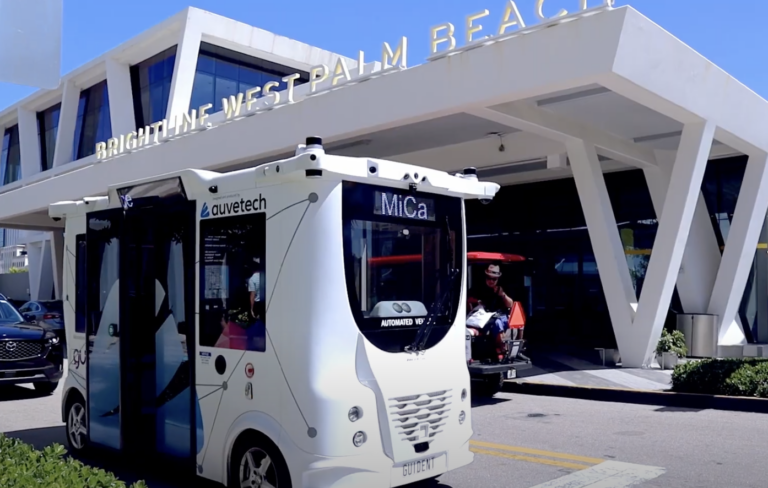
Enter autonomous robotics—a technology that’s transforming waste management from the ground up. The recently announced contract between Coastal Waste & Recycling and Guident represents a microcosm of this broader industry shift. Under this agreement, Guident will deploy its innovative WatchBot solution to Coastal Waste & Recycling operations, delivering cutting-edge technology designed to validate autonomous patrols, conduct AI-driven inspections, and generate real-time safety alerts.

Guident’s WatchBot technology addresses critical operational challenges that have plagued the industry for decades. The WatchBotTM platform will address a variety of critical use cases at Coastal Waste & Recycling facilities, including thermal inspections, truck damage detection, PPE (personal protective equipment) compliance, tank cage checks, and more. These capabilities translate directly into reduced operational costs, improved safety outcomes, and enhanced regulatory compliance—all critical factors in an industry facing increasing scrutiny and regulation.

The broader autonomous waste sorting market tells an even more compelling story. The Waste Sorting Robot Market was valued at USD 7.14 billion in 2024 and is projected to grow from USD 8.82 billion in 2025 to USD 59.34 billion by 2034, representing a staggering 23.60% CAGR during the forecast period. This explosive growth is driven by advances in artificial intelligence, computer vision, and machine learning that enable robots to identify and sort materials with unprecedented accuracy.

The Global Opportunity

The market opportunity for autonomous waste management systems extends far beyond North America. The Asia Pacific waste management market size was exhibited at USD 720 billion in 2024 and is projected to be worth around USD 1,390 billion by 2034, growing at a CAGR of 6.80% from 2025 to 2034. Rapid urbanisation in emerging markets creates massive demand for efficient waste management solutions, while developed markets face pressure to improve recycling rates and reduce environmental impact.

The regulatory environment further amplifies this opportunity. The U.S. EPA’s 2025 mandate that all hazardous-waste exports be tracked through the e-Manifest expands data-compliance revenue. The White House strategy to phase out single-use plastics from federal procurement by 2027 is expected to ripple through supplier contracts. These policy changes create compliance requirements that favour automated, data-driven solutions over manual processes.

European markets present equally compelling opportunities. Europe’s Waste Shipments Regulation, effective May 2024, restricts exports to non-OECD countries and requires end-to-end digital tracking by 2026. Such regulations benefit companies that can offer comprehensive, technology-enabled tracking and sorting capabilities.

Beyond Sorting: The Surveillance Revolution

While waste sorting robots capture most headlines, surveillance and monitoring applications represent an equally significant opportunity. The WatchBot deployment at Coastal Waste & Recycling highlights how autonomous systems can address operational challenges beyond material handling. The cloud platform allows the autonomous surveillance robot to be remotely controlled and planned. It also allows the management of user privilege levels, message notifications, robot diagnostics, and intrusion alerts.

This capability is particularly valuable in an industry where facilities often operate in remote locations with valuable equipment and materials. Fire prevention through thermal monitoring, theft deterrence, and compliance verification creates measurable value propositions that justify investment costs. For a company like Coastal with operations spread across multiple states, centralised monitoring capabilities can dramatically reduce the need for human oversight while improving response times to critical incidents.

Investment Implications and Market Outlook

The confluence of regulatory pressure, operational efficiency demands, and technological capability creates a compelling investment thesis for autonomous waste management systems. The autonomous waste segregation robots market is anticipated to expand from $4.2 billion in 2024 to $11.8 billion by 2034, with a CAGR of 10.5%.

For established waste management companies, the choice is becoming clear: invest in automation or risk competitive disadvantage. Furthermore, the pandemic caused a shortage of manpower, due to which the recycling centres struggled to reprocess the waste and meet the end demands. This paved the way for artificial intelligence-based robots to grow and help mitigate this problem. For example, Italy-based Hiro Robotics’ monitor and TV screen disassembly technology to process 60 – 90 TV screens in an hour. This is far more than a human could reasonably be expected to tackle. They also have technology that can remove 15 screws from e-waste in one minute.

The technology providers serving this market face equally attractive prospects. As AI and robotics capabilities continue advancing, the addressable market expands beyond traditional sorting applications to include inspection, monitoring, and predictive maintenance functions. Companies that can provide integrated solutions—like Guident’s combination of surveillance and operational monitoring—are particularly well-positioned to capture outsized value.

Looking Ahead

The transformation of waste management from a labour-intensive service industry to a technology-driven operation represents one of the most significant industrial shifts of our time. Companies like Coastal Waste & Recycling that embrace autonomous technologies early gain competitive advantages that compound over time through operational data, process refinement, and cost structure improvements. The benefits of adopting Hiro’s e-waste technology are demonstrated by the machines’ impressive operational speed.

For the broader market, the trajectory is clear: the report’s modelling shows that taking waste prevention and management measures could limit net annual costs to USD 270.2 billion by 2050, compared to much higher costs without intervention. Autonomous robotics will play a central role in achieving these efficiency gains.

The waste management industry’s $1.3 trillion revenue base, combined with the explosive growth of autonomous technologies, creates a rare opportunity where societal benefits align with commercial opportunities. As municipal waste generation continues rising and regulatory requirements become more stringent, the companies that master the integration of autonomous systems will define the industry’s future. The revolution has begun—and the early adopters like Costal, Hiro and Guident are positioning themselves to reap significant rewards.

FTSE 100 turns negative as trade deal euphoria fades

The FTSE 100 surged in early trade on Monday after the US and the EU announced a trade deal, removing a significant uncertainty for investors as Trump’s self-imposed August 1 deadline looms. However, sometimes in markets, it’s better to travel than to arrive.

Despite London’s leading index touching an all-time intraday record high in the early minutes of Monday’s session, the rally faded, and the FTSE 100 has turned negative at the time of writing.

After the US struck a deal with Japan and reports broke regarding plans to kick the China tariff deal down the road by another 90 days, the EU deal was the last major trade agreement driving investor concern.

The agreement to settle on 15% tariffs for most EU goods entering the US is a welcome relief for traders who were keen to see a deal done, regardless of the rate, to draw a line under impending trade wars.

The markets can now refocus on company earnings and global growth. But these may not be as rosy as the recent rally suggests.

“Well, it certainly helps to firm up the bull case for equities, which was already a pretty resilient one anyway,” said Michael Brown Senior Research Strategist at Pepperstone, when commenting on the EU/US trade deal.

“Clearly, the direction of travel remains towards a cooler and calmer tone on trade, with deals continuing to be done, and the tail risk of ‘no deal’ outcomes now being priced out.”

Brown continued to highlight a busy week for US corporate earnings, which includes mega-cap technology shares, and may be seen as a risk to equities.

The risks beyond trade negotiations undoubtedly played a factor in the fading rally on Monday as investors prepared for a raft of risk events, including the NFPs on Friday.

In London, GSK and AstraZeneca were the biggest positive contributors to the index in terms of the number of points on Monday, following encouraging updates on drug development.

“AstraZeneca and GSK have been busy advancing their development portfolios, giving investors more reasons to be optimistic about future earnings,” explained Russ Mould, investment director at AJ Bell.

“AstraZeneca’s Imfinzi drug got priority review status for treatment of patients with certain stages of gastric cancer. It expects a decision from the US regulator in the final three months of 2025. GSK struck a deal to develop up to 12 medicines with Hengrui Pharma.

GSK rose 1.2% while AstraZeneca added 0.8%.

It was 50:50 between FTSE 100 gainers and losers on Monday, which was reflected in an index that was trading largely flat to marginally negative at the time of writing.

BT was the FTSE 100’s top faller after a major shareholder reduced their stake in the company. BT shares were down 3%.

Scottish TV hit by decline in advertising and lower programme revenues

0

Scottish TV Group (LON: STVG) has been hit by a downturn in advertising and the commissioning of new programming. This has led to a substantial downgrade in expectations, and the share price has slumped 20.2% to 152.5p.

Total advertising revenues are expected to be 8% lower in the third quarter and 4% lower than the year before. Total advertising revenues could be between £90m and £95m.

The programme production side of the business has suffered from delays, and this means that production volumes are lower, which hits margins as well as revenues. The main problem is in the unscripted area. The drama productions are holding up.

Cost savings are being increased from £1.7m to £2.5m and there could be news of further savings with the interims.

Full year forecasts revenues have been cut from £202m to £173m and underlying operating profit slashed from £18.5m to £11.2m. That means that 2025 pre-tax profit could be £7.8m. Profit should start to recover in 2026.  

Net debt is estimated to be £30m at the end of June 2025. The dividend may be maintained at 11.3p/share, but it would be barely covered by forecast earnings in 2025. The yield would be 6%. Management may believe it is wise to cut the payout.  

The prospective multiple is 14, falling to ten for 2026.

AIM movers: Kooth trading holding up despite US government spending concerns and Kromek receives $5m from Siemens

0

Alien Metals (LON: UFO) has amended last week’s announcement about silver assays from fieldwork at the Elizabeth Hill project, which was based on information released by its partner Errawarra Resources. Within the notable assay results, in one result 0.06% copper was amended to 0.1% copper. Silver assays of up to 490g/t were found in samples. The share price rose 17.3% to 0.1525p, adding to last week’s outperformance.

Late on Friday, Premier African Minerals (LON: PREM) reported positive news concerning the spodumene processing plant at the Zulu lithium and tantalum project. Previous problems have been identified, and operational changes should cure them. The share price recovered 9.8% to 0.028p.

Avacta (LON: AVCT) is selling Coris Bioconcept to 3B BlackBio Dx for an initial payment of £2.15m with an earn-out of up to £615,000. The business was loss-making. Avacta will focus on developing its peptide drug conjugate pipeline. The share price increased 8.65% to 51.5p.

OptiBiotix Health (LON: OPTI) doubled gross revenues to £557,000 in the six months to June 2025, while gross margin improved to 54%. The second half will benefit from a reduction in overheads. Cash was £1.3m at the end of June 2025.  The share price improved 4.35% to 12p.

FALLERS

Active Energy Group (LON: AEG) is updating its digital asset treasury strategy. It proposes to put an equal proportion of its discretionary allocation in Ethereum and Solana. Bitcoin will still be held. The share price dipped 15.8% to 0.16p.

Digital mental health services provider Kooth (LON: KOO) says trading in California is in line with management expectations and there has been a positive impact report. Demand outstrip supply, although US federal cuts to healthcare spending could impact programmes. UK trading is steady. Net cash was £15.1m at the end of June 2025. The US dollar exchange rate will hold back revenues and profit. Kooth has strengthened its management team in the US and Kate Newhouse has taken over as chief executive. The share price declined 9.94% to 163p.

Oracle Power (LON: ORCP) chief executive Naheed Memon has been appointed to Pakistan’s National Hydrogen Working Group. Oracle Power has a green hydrogen project in Sindh province. The share price fell 5.84% to 0.0145p.

Coro Energy (LON: CORO) has completed the placing raising £1.64m 0.5p/share. A retail offer could raise a further £100,000 and closes on 31 July. The general meeting to gain shareholder approval should be held on 14 August. The cash will finance rooftop solar and battery storage projects in Vietnam. There will be a strategic review of wind and solar projects in the Philippines. There will be a further cash injection when the sale of the company’s 15% interest in the Duyung PSC is approved by the Indonesian authorities. The share price slipped 4.76% to 0.5p.

Advanced imaging technology developer Kromek (LON: KMK) has received $5m from Siemens, which is the second instalment of the non-exclusive agreement CZT detectors for SPECT applications, and it follows the delivery of certain milestones. So far, $30m has been received and there are further payments totalling $7.5m due, with the next instalment likely in the year to April 2027. The share price decreased 2.63% to 5.55p.

Gold and EUR/USD fall as EU/US trade deal announced

Gold and EUR/USD fell on Monday as the dollar strengthened following the announcement of the EU/US trade deal.

Gold extended declines as the safe-haven trade lost its appeal and the dollar rallied.

“Gold has experienced three consecutive sessions of decline, shedding nearly $100/oz from its recent peak around $3,440/oz,” said Linh Tran, Market Analyst at XS.com.

“This is a significant correction, reflecting a shift in short-term market sentiment and indicating that the precious metal is currently under pressure from both economic and geopolitical factors.

“One of the key drivers behind this pullback stems from a series of positive signals on the global trade front. The recently announced U.S.–Japan trade agreement has rekindled hopes of easing global trade tensions. More notably, over the past weekend, the United States and the European Union reached a framework trade deal aimed at averting a full-blown trade war, agreeing to impose a 15% tariff on most goods instead of the higher rates previously feared.”

Traders may have been surprised to see EUR/USD fall in the wake of the EU/US trade deal, but the Euro had performed strongly going into the announcements and was due a technical pullback. There is also an element of caution driving trade on Monday, with risk events including the July Non-Farm Payrolls scheduled for this week.

London BTC Company shares in freefall – is the stock primed for a rebound?

It’s been one-way traffic for London BTC Company shares since the firm changed its name from Vinanz, and the CEO said it was ‘doubling down’ on its Bitcoin strategy.

Investors in recent placings and retail offers at 13p and 18.5p are now heavily underwater, with the London BTC Company falling nearly every day since the fundraises.

That said, early investors who participated in fundraises in early June before the company’s shares spiked above 60p would have done very well indeed – should they have sold before the shares tumbled.

Investors should note that the dramatic erosion in value for BTC shareholders has unfolded despite Bitcoin prices reaching all-time highs last week.

With shares now trading at less than a fifth of their recent highs, is the London BTC Company primed for a rebound?

Unlike many London-listed companies jumping on the Bitcoin treasury bandwagon, the London BTC Company actually holds a substantial Bitcoin position, and has a good reason to – it’s a Bitcoin miner. According to the most recent Bitcoin purchase update, the company has 85.97 Bitcoin in its treasury, worth around $10.4m at current prices.

Despite the robust holding, a sizeable premium remains in the company’s shares compared to the underlying value of their crypto treasury. The London BTC Company is trading at around 3x mNAV. This is on the punchy side, although it’s not as high as other London-listed Bitcoin treasury vehicles.

In addition to its treasury, BTC also has underlying Bitcoin mining operations that need to be taken into consideration by investors.

In the 18 months to 28 February, the firm generated £957,473 from mining operations, resulting in a gross profit of £171,709.

The company has since expanded its Bitcoin mining fleet, and Bitcoin prices have increased. As a result, it should be generating more revenue and, consequently, higher gross profits.

However, administration costs (excluding share-based payments) were running at nearly £2m over the 18-month period, so the Bitcoin business mining operation is still likely to be running at a loss, or at best, breakeven. Should operations fail to become cash positive, BTC may be forced to sell Bitcoin to cover running costs – or raise further cash.

It will take a brave investor prepared to lose a substantial proportion of their investment to buy the London BTC Company shares at current levels, but a relief rally isn’t entirely unimaginable.

ConvaTec Group: FTSE 100 medical solutions group’s Interims tomorrow will highlight its ongoing growth

Tomorrow morning, Tuesday 29th July, will see the £5.4bn capitalised ConvaTec Group (LON:CTEC) announce its Interim Results for the half-year to end-June, they may not show any surprises, but they should help to showcase the underrating of its shares.
The Business
It was in the 1960’s that Dr James Chen researched masses of formulations that led to the invention of the first hydrocolloid medical adhesive for use in dental surgery, for which it was granted a patent in 1967.
That technology brought about the group’s first product, the Stomahesive® skin barrier, launched after Convatec was founde...

Wood Group takeover deadline extended, shares remain suspended

The Wood Group takeover saga rolls on. The embattled group has yet to receive a firm offer from Sidara, and Wood Group shares remain suspended due to their failure to publish their annual accounts by the end of 2024.

Wood Group has secured an extension until 25 August for potential acquirer Sidara to make a firm takeover offer, following progress on crucial financing arrangements that underpin the proposed 35p per share deal.

Today’s release comes after the Financial Times reported that Sidara were considering lowering its offer price for Wood Group.

Wood’s board had previously indicated it would be minded to recommend the 35p cash offer to shareholders, subject to full terms and conditions.

In addition to the update on the takeover period, the engineering services company announced that commercial alignment has been reached on headline terms for refinancing its debt facilities, a key prerequisite for the takeover by Dar Al-Handasah Consultants (Sidara).

The proposed refinancing package includes extending Wood’s committed debt facilities to October 2028 and establishing new bonding facilities to meet operational requirements. These arrangements, combined with Wood’s existing facilities and an initial $250 million liquidity injection from Sidara, would benefit from comprehensive security guarantees.

Crucially, the refinancing would convert temporary covenant waivers—previously extended to 31 July—into permanent arrangements. However, not all lenders have engaged with the proposals, meaning Wood may need to implement changes through a Scottish scheme of arrangement, which requires approval from a majority of lenders representing 75% by value.

Should the Sidara offer fail to materialise, commercial terms have been agreed for a shorter-term stability arrangement that would provide Wood with a platform to develop alternative refinancing options.

Wood Group shares remain suspended, but the company said that it continues to work with its auditor on publishing its 2024 accounts, which are required for shares to resume trading.

Given the uncertainty around the Sidara takeover offer, it’s probably a good thing for shareholders that shares remain suspended.