Ibstock cements profit in 2021 results

0

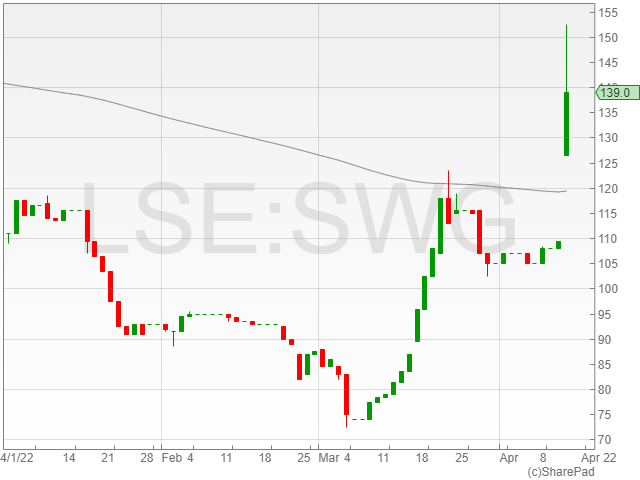
Ibstock saw a share price increase of 4.9% to 161.6p on early Wednesday morning trading, after the building materials company returned to profit in its 2021 results.

Ibstock reported a revenue of £409 million against £316 million in 2020.

The company enjoyed a pre-tax profit of £65 million compared to a loss of £24 million in 2020, alongside an adjusted EBITDA of £103 million against £52 million in 2020.

Ibstock announced a total dividend per share of 7.5p compared to 1.6p in 2020.

The building materials group attributed its strong results to strong demand across the clay and concrete markets, noting an outperformance in the clay division.

The company mentioned its committed investment of £50 million over 2022 in Atlas, Aldridge and Nostell projects and cited its objective to supported medium-term growth objectives.

Ibstock also announced that its path for growth in 2022 will be based on a combination of investment within its core businesses, alongside diversified growth opportunities.

The Group reportedly aims to grow revenues in excess of £600 million by 2026, hit an adjusted EBITDA1 margin above 28% over the medium-term and get revenues outside the clay division to exceed 40% of the overall company.

“Our 2021 results reflect both continued robust demand across our markets and strong operational execution,” said Ibstock CEO Joe Hudson.

“Despite market-wide challenges arising from cost inflation and supply chain pressure, we have delivered a result ahead of the Board’s expectations, and are well positioned for future growth.”

“Whilst we remain mindful of the broader macroeconomic uncertainties, particularly in light of the tragic conflict in Ukraine, we have made a good start to 2022, with a strong demand backdrop.”

“This positive momentum, along with additional brick capacity coming on stream during 2022, provides us with a strong platform to deliver significant further financial and strategic progress.”

Breedon Group to build profit in 2022

0

The Breedon Group saw its share price climb 1.65% to 80.8% in early morning Wednesday trading after the company reported stronger revenue and profit on higher sales volumes.

The company reported a statutory revenue of £1.2 billion against £928.7 million in 2020.

The Group also reported a statutory EBIT of £127.4 compared to £61.6 million in 2020, alongside a pre-tax profit of £114.3 million against £48.1 million in 2020.

The Breedon Group announced a 1.6p dividend per share, after paying no dividend in 2020.

The company mentioned record volumes, revenue and earnings, alongside a strong rebound in like-for-like volumes and revenue.

The Breedon Group also confirmed its Cemex acquisition had been fully integrated and was on track to hit its synergy targets.

The company added that its growth was predicted to be in the single-digit margins for 2022.

The Group reportedly expects to fully recover input and cost increases, despite strong market volatility.

“2021 was a record year for Breedon, said Breedom Group CEO Rob Wood.

“We navigated the second year of the pandemic successfully, supplied our customers with more materials than at any point in our history and fully integrated the Cemex assets.”

“This excellent outcome was achieved at a time of constant change and the response from our colleagues, adjusting to the pandemic and the volatile economic backdrop, has been outstanding.”

“Our experienced leadership team and committed workforce operate a well-invested portfolio of assets with significant opportunities for sustainable growth.”

“The building blocks are in place for our next chapter of growth.”

Manchester United shares trade at lowest level since 2012

Manchester United shares have declined to trade at the lowest levels since 2012 as the market grows impatient with woeful performances on the pitch and a weakening of their finances.

Indeed, the Glaziers may be regretting they didn’t sell more of the club when they cashed in around $19 in late 2021.

The Glazers took advantage of a post-Ronaldo boost in the share price and the Manchester clubs shares have fallen over 35% since then and traded at lows of $12.10 this week.

Manchester United rot runs deep

The pandemic ravaged football clubs’ revenues as gates shut to fans and extended periods of no games at all hit revenues.

However, as many teams are bounce back from the period of disruption, its seems as though Manchester United have become an entirely different club, both on the field, and financially.

There is still delusion among their fans that Manchester United are the biggest club in the world. It is evident by their performances on the pitch this is no longer the case, and a quick look at their finances confirms this.

Earnings outlook

Manchester United break their earnings down into three categories; commercial, match day, and broadcasting.

Not one of these categories has a strong outlook and all have failed to bounce back in the post-pandemic world to the extent investors would like.

Manchester United have consistently seen sponsorship revenue drop off over the past year. In their quarterly Q2 2022 update, sponsorship revenue had declined by 6.9% to £35.2m year-on-year. Q1 2022 saw sponsorship revenue 0.5% drop to £36.2m.

Manchester United recorded an overall reduction 16.8% in commercial revenue in 2021.

They reasoned the destruction in commercial revenue was down to COVID-19 and inability to partake in certain tours.

This may be acceptable for the 2021 FY, but the continued decline in 2022 FY will make difficult reading for shareholders.

You could point to other areas of the business if you wanted to look past this to something more optimistic. But you can’t get away from the fact sponsors aren’t as interested in the club as they once were, and the argument United are the biggest club in the world, is simply for the birds.

Falling broadcast revenue

In their most recent update, the club said broadcast revenue fell by 20.5% to £86.4m. This was attributed to four matches being moved or cancelled in the period.

However, falling broadcast revenue is something shareholders may have to get used to as their chances of qualifying for the Champions League looks all but dead. This will be particularly painful if United miss out on the new enhanced fees level clubs starting from 2024. A long spell out of Europe’s top competition will likely increase the gulf between England’s top teams and Manchester United.

In addition, broadcast merit fees are set to fall for the upcoming season. Merit fees are based on where a Premier League team finishes. This season, Manchester United are set to slide down the league and see their broadcast payments go with them.

Looking forward, investors may be concerned that they also see their facilities payments hit, which are payed when a game is televised.

If United performances on the field are persistently abysmal, the neutral – and maybe even their own fans – will switch them off and the attraction for broadcasters such as Sky and BT to play their games on TV will diminish.

Matchday revenue is starting to bounce back but this could be short lived should results continue to disappoint.

Financial Health

Manchester United fans are furious at the way the Glazers are treating the club, and well they should be.

The club has been racking up substantial debts and all of the club’s retained earnings have evaporated to amount to a deficit of £40.2m as of 31st December 2021.

This isn’t a disaster, but given adjusted basic loss per share accelerated 27.41p in 2021, and Reuters estimates this will deepen further to 35p in 2022, it is likely the club could soon need to raise further finance, if they want to buy their way out of the rut they are in.

Manchester United’s debt stood at £495m at the end of 2021 which is £40m increase over the prior 12 months.

There is an argument the Glazers are trying to improve the club finances by provisioning resources for new players, and the blame lays with the players who seem not to care about the clubs woeful performance.

However, hopes that interim manager, Ralf ‘the godfather of gegenpressing’ Rangnick, will ‘one day’ turn the club’s fortunes around need to become a reality soon, or the Manchester United share price will be facing persistent pressure.

Fresnillo pretax profits rise 10.9% despite staffing problems

1

Fresnillo saw an 11% growth in revenues from $2.4bn to $2.7bn in 2021, with a 9% increase in adjusted revenues and a 20.5% reduction in treatment and refining costs.

Pretax profit increased by 10.9% to $611.5m in 2021 with the rise in silver prices.

Silver production grew 0.1% due to better mining results in Fresnillo and San Julián Veins. However the 16.9% rise in prices of silver had a direct impact on adjusted revenues, which were £2.8bn in 2021.

Staffing problems due to labour reforms and the pandemic stunted expected silver productions. With increased productivity from new equipment and training, along with recruitment campaigns, the staffing problem should be addressed by Q3 of 2022.

Gold production dropped 2.4% to 751,203 Oz due to geotechnical issues like depletion of resources and higher costs associated with the mining.

Fresnillo Projects

A $30m project was commissioned for plant optimisation to enhance the recovery of lead and zinc from the deeper levels of the Fresnillo mine. The mine is now delivering better quality concentrates at a higher rate without as many impurities.

The San Carlos shaft expansion project in Fresnillo is on schedule to be completed in 2022.

Power Grid Problems

Ongoing issues with connecting to the national power grid has caused delays across Fresnilo’s portfolio. The national power grid connection was refused by the government runned electrical company, Comisión Federal de Electricidad (CFE).

Despite Juanicipio power plant completing their construction in 2021, an additional 6 months were added on to the timeline for the mill in order to meet the requirements from Centro Nacional de Control de Energía (CENACE).

Once up and running, the annual silver and gold production expected to average at 11.7 moz and 43.5 koz respectively as a result of operations.

New pyrite plants at Fresnillo mines were completed on schedule however, the plant is yet to produce due to halts from national power grid.

The expansion of the Jarillas shaft to 1,000 metres in Saucito is in progress to be completed by 2025. Access to deeper levels of the mines will save on haulage costs.

At full capacity, a production of 3.5 moz of silver and 13 koz of gold per year on average is expected from total production from the new pyrite plants and Saucito.

Octavio Alvídrez, CEO, Fresnillo said, “we made good progress on our development projects. The new Juanicipio mine was completed at the end of 2021, as planned. However, approval to complete the tie-in to the national power grid was not granted by Comisión Federal de Electricidad, the state-owned electrical company, before year end as expected.”

“The mill commissioning timeline was therefore extended by approximately six months. Juanicipio will be an increasingly major influence in our operations, on average producing 11.7 moz silver and 43.5 koz gold a year for the life of mine. Similar covid-related delays related to energy inspection and new requirements also affected the start-up of the new Pyrites Plant at the Fresnillo mine.”

“Despite the challenges, we delivered a creditable performance. Silver production of 53.1 moz, was marginally below guidance, but flat vs. FY20. Gold production of 751.2 koz, was however ahead of guidance, down 2.4% vs. FY20.”

The total dividend is $0.33 including a final dividend of $0.23 as profits increased.

Fresnillo shares were up 9% to 806p per share with updates of resolving the staffing issue and increased expected productions.

Aquis Exchange to cover 17 markets with inclusion of Czech and Hungarian stocks

0

Aquis Exchange shares rose 1.5% to 450p with the addition of Czech and Hungarian blue-chip stocks.

With the inclusion of Czech and Hungarian shares, the coverage for Aquis Exchange extends to 17 markets.

About 300 new equities will be accessible on the Aquis Exchange UK and Aquis Exchange EU platforms in Q2 of 2022, along with the 13 most liquid Czech and Hungarian companies.

Aquis Exchange has 3 divisions, Aquis Exchange, Aquis Stock Exchange and Aquis Technologies.

Aquis Exchange trades cash equities from across Europe in a lit multilateral trading facility (MTF). Aquis Exchang MTF provides benefits such as lower signalling risk and market impact. The group functions across UK, Switzerland and EU27.

Aquis Stock Exchange (AQSE) is a platform where primary and secondary trading commences through Aquis main market and Aquis growth market. The group’s growth market is divided into Access and Apex. Access lists early stage growth companies whereas, Apex includes more mature businesses.

The group creates and licenses softwares used for the exchange to banks, brokers and investment firms through Aquis Technologies.

Alasdair Haynes, Chief Executive Officer, Aquis Exchange, commented, “our policy has always been to add new markets to our platform as and when there is demand. Member appetite for investing in Czech and Hungarian blue-chip stocks is growing and we are responding to this trend.”

IWG celebrate spiking demand and new merger with The Instant Group

0

IWG saw its share price increase 10.5% to 256.9 in early afternoon trading on Tuesday as it celebrated increases in system-wide revenue on strong demand, hitting its peak in Q4 2021.

The hybrid-working solutions company reported system-wide revenue at £2.4 billion and an adjusted EBITDA of £1 billion.

The Group cited strong momentum from last year set to carry the company into 2022, with IWG reporting its highest ever demand in Q4 2021, surpassing pre-pandemic levels.

IWG did not pay out a dividend for 2021, however, citing the uncertainty of the Covid-19 pandemic and a necessity to protect the company’s liquidity.

The company commented that it intends to restart dividend payments and its share buyback scheme when the Group has reached a point of assured stability.

IWG reported a basic EPS loss of 20.3p against 67.9p in 2020, alongside an EPS loss from continuing operations before adjusting items at 17.2p against 26.4p in 2020.

“2021 has been a year of extraordinary transformation for IWG, for our employees, clients and for the markets we serve,” said IWG CEO Mark Dixon.

“Hybrid working is now an established model and businesses of all sizes are planning for a hybrid future.”

“Our strategy is delivering, and, with a strong start to the year, we look forward to continuing and accelerating the momentum achieved so far in 2022 as businesses of all sizes continue to embrace the hybrid model.”

IWG also reported the merger of its digital and technology assets with The Instant Group.

IWG is set to invest net cash of £270m in order to acquire shares in The Instant Group, and to invest in growth.

The Instant Group management is scheduled to invest an additional £50m into the company.

The new company is anticipated to be spun-out by the close of 2023.

“I am delighted with the merger of IWG’s digital assets with The Instant Group,” said Dixon.

“It’s a fantastic investment behind a world-class management team, positioning IWG to be a market leader in the digital-led future of workplace platforms.”

“This creates a clear path for value creation and will harness the next generation of digital-native workers and the huge market potential of flexible working, building long-term and future-proof growth as the world’s leading supplier of flexible workspace solutions.”

FTSE 100 range bound as commodities surge

The FTSE 100 traded in a range on Tuesday as investors digested the latest economic and market developments resulting from the war in Eastern Europe.

Commodities were once again in focus as oil price resumed a move to the update and Nickel futures were suspended by the London Metal Exchange.

‘’The breath taking rise of commodities is causing a whirlwind of anxiety on financial markets and exchanges, as traders speculate about the knock on effects of the Ukraine conflict,” said Susannah Streeter, senior investment and markets analyst, Hargreaves Lansdown.

“Nickel prices seriously hit nerves today, with trading suspended on the London Metal Exchange, after a record breaking spike in prices. The three month contract crossed the $100,000-a-tonne mark for the first time ever, doubling in value in just hours.”

The FTSE 100 was trading at 6,962, up just 1 point, shortly before midday on Tuesday. The FTSE 100 had traded as low as 6,893, with highs of 7,013 earlier in the session.

“After a Lazarus-like turnaround yesterday the FTSE 100 was back under pressure on Tuesday as the war in Ukraine grinds on and approaches the end of its second week,” says AJ Bell investment director Russ Mould.

Attention was now starting to shift from the initial volatility in oil prices to what it means for the global economy as fuel bills and food costs add to a cost of living crisis which started long before Russia invaded Ukraine.

“Stagflation, an ugly mix of inflation and recession, is the fear stalking the markets right now and the longer the war rages, the more likely this scenario becomes,” Mould said.

Polymetal sinks again

Polymetal shares were down 17% p as the LSE cancelled trades between 8.41am and 9.02am in precious metals mining company after the price spiked over 1,000% in trade that broke stock exchange rules.

Rightmove shares fell 4% to 625p as fears rising inflation rates and increased housing prices will reduce the house buyer activity relied upon by Rightmove.

Evraz was the top riser at 15.1% to 92p, M&G rose by 20% to 198.2p and ITV hit 6.2% at 79.6p in third place.

Evraz continued to see bargain hunters pick up the beaten up stock as the Russian invasion of Ukraine continued to rock the market.

M&G shares enjoyed a surge after it announced its £500 million share buyback offer to its shareholders.

ITV saw a return to favour after its lackluster announcement last week to launch streaming service ITVX, which was met with poor reception due to a percieved oversaturation in the streaming market against established competitors such as Netflix and Disney+.

Wheat prices gain as Ukraine conflict squeezes supply

Wheat prices have soared 6.6% to 422.5p per ounce as the Russian invasion of Ukraine saw 29% of global wheat supplies in the “breadbasket of Europe” put at risk.

The price of the grain has risen to a new record of £281.90 per tonne with expectations prices will move higher as the conflict continues.

Russia is the world’s largest wheat producer and any disruption could to their exports will have a significant impact on supply.

The skyrocketing prices will add further pressure on households as UK inflation rates, which hit 5.5% in January this year and are predicted to rise to 7% for 2022.

An emergency G7 meeting is scheduled to be hosted by Germany on Friday for agriculture ministers to discuss a solution to the spiking prices.

The increase in wheat costs is set to see household staples including pasta, bread and cereal increase to levels already rising due to the Covid-19 pandemic and global supply chain obstacles.

“Nerves of steel will be needed amid the extreme volatility,” said analyst Daniel Briesemann at Commerzbank in Frankfurt.

Nickel price soars and suspended by London Metal Exchange

Nickel added to extreme volatility in commodity prices resulting from the Ukraine crisis as futures were suspended by the LME. Nickel surged 44% overnight in volatile Asian trade.

Nickel prices have risen dramatically this morning, briefly pushing above $100,000 per tonne. The exceptional price rise was driven by a short squeeze on the LME, in which traders with large short positions have hurried to close their positions.

“Nickel prices seriously hit nerves today, with trading suspended on the London Metal Exchange, after a record breaking spike in prices. The three month contract crossed the $100,000-a-tonne mark for the first time ever, doubling in value in just hours,” said Susannah Streeter, senior investment and markets analyst, Hargreaves Lansdown.

Russia accounts for 7-9% of total global Nickel production and the potential for this to be inaccessible when EV demand for Nickel is soaring has a sent waves through the market.

Some analysts have likened the volatility in Nickel to observation in Meme stocks such as GameStop.

“The huge volatility and rapid moves in price during trading in Asia prompted the drastic decision. It seems the meme stock frenzy has now metamorphosed into commodity chaos, as traders have scrambled to try and cover short positions,” said

“Those that had bet against the metal’s rise in value, have now been forced to buy at a much higher price, creating a short squeeze.”

Direct Line Insurance Group reports falling profits on restructuring costs

0

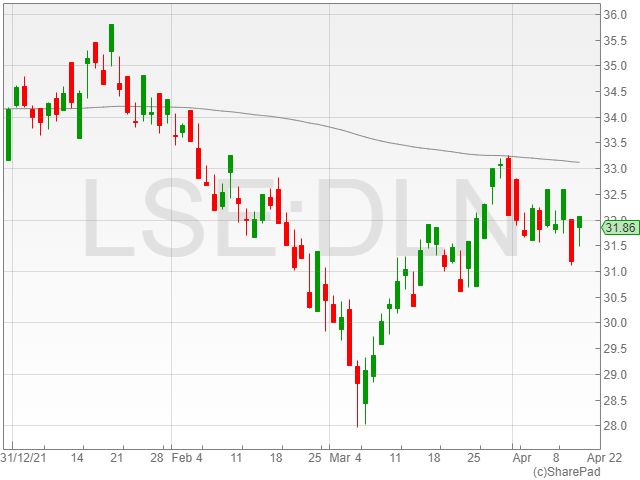
Direct Line Insurance Group saw its share price drop 1% in early morning trading on Tuesday as it released mixed financial results for 2021 with one-off costs offsetting a rise in operating profit.

The company reported an operating profit increase of 11.4% to £581.8 million against £522.1 million in 2020.

Direct Line Insurance further reported a pre-tax profit decrease of 1.2% to £446 million against £451.4 million in 2020.

“Direct Line has had a strong end to the year. Especially considering price reforms and a challenging wider backdrop, the reiteration of targets is no mean feat,” said Sophie Lund-Yates, equity analyst at Hargreaves Lansdown.

“With more people back on the road following lockdown, motor claim frequency crept back up to normal levels in the second half, which isn’t unexpected.”

The company blamed the decline in profit on a £62.1m increase in restructuring and one-time costs reflecting property portfolio restructuring, alongside the purchase of its Bromley office in 2021.

The Group distributed an interim dividend per share of 7.6p against 7.4p in 2020, alongside a final dividend of 15.1p against 14.7p in 2020.

“Operating profit has increased to £582 million, own brands policies grew as our Home, Commercial and Rescue businesses performed strongly, whilst in Motor we steered a smart path through another uncertain period as the market sought to predict the impact of Covid-19,” said Direct Line CEO Peter James.

“2021 has been a year of significant strategic progress – we’ve successfully completed the main elements of our technology build and data capability, both key enablers of future growth.”

“Our new motor platform is improving our competitiveness, we’ve announced a new partnership with Motability Operations that is expected to see over 640,000 customers join us in 2023 and we’ve extended our Home partnership with NatWest Group until 2027.”