Halifax says UK housing prices hit new record high of £278,123

In Halifax’s latest housing price analysis, a record high price of £278,123 in housing prices was established, with a rise of 10.8% over the past year, the fastest annual pace since 2007.

Dating back to January 1983, Halifax House Price Index has been providing data regarding the monthly house price series for the entire UK. A standardised house price is constructed using the statistics, and property price fluctuations on a like-for-like basis including adjustments based on season are examined through that period. The percentage change amount for the year is equated by comparing the same month over the current year to the previous year with the exception of seasonal adjustments.

Month on month growth rose to 0.5%, despite a deceleration at the beginning of the year. As a result, the annual growth rate was 10.8%, the highest level since the annual growth rate of 11.9% in June 2007.

Walid Koudmani, Chief Market Analyst, at financial brokerage XTB comments, “house prices rose at the fastest annual pace since 2007 and reached a new record high according to today’s Halifax HPI report with monthly house price growth rising to +0.5% following a slower start to the year.”

“While the annual rate of growth increased by +10.8% and reached the strongest level since June 2007, the impact on household finances is still expected to weigh on the market this year as rising inflation and increased costs could undermine the post pandemic economic recovery and slow down the housing market significantly as demand becomes severely impacted.”

With the housing prices reaching an average of £278,123 as a result of deficits in supply, and consumers tightening their belts, there are expectations of a slump in the market in the coming year.

Current geopolitical scenarios are impacting oil and gas prices, which will have an impact on inflation in the UK, which is already at a 30 year peak. Along with that, increased bank rates expected in the near future, will also have an impact on the market.

Performance by Region

Amongst the strong performers in the UK, the Welsh region stood out yet again with average property price rising by 13.8% to £207,184. In the southwest of England, growth in housing prices saw a 13.4% increase with the average house price of £293,968. This region also had the strongest quarter growth of 3.5%. Both of these regions have access to more picturesque sites, which gained popularity with buyers during the pandemic in a ‘race for space’.

Norther Ireland saw a 13.1% growth in price to average housing prices of £173,911 in February.

Amongst the weaker regions, Scotland and London both saw a growth of 9.2% and 5.4% respectively. In February, the average property price in Scotland was £193,777.

Russell Galley, Managing Director, Halifax, said, “this was an eighth successive month of house price growth, as the resilience which has typified the market throughout the pandemic shows little sign of easing.”

“Two years on from the start of the pandemic, average property values have now risen by £38,709 (+16%) since February 2020. Over the last 12 months alone house prices have gained on average £27,215. This is the biggest one-year cash rise recorded in over 39 years of index history.”

“Lack of supply continues to underpin rising house prices, with recent industry surveys showing a dearth of new properties being listed, now a long-term trend. This may be a particular issue at the larger end of the property market. Over the past year the average price of detached properties (£43,251, +11%) have risen at a rate more than four times that of flats (£10,462, +7%) in cash terms.”

Housing Activity

Increased sales in UK homes according to HMRC monthly property transactions data, from 101,840 in December 2021 to 106,990 in January 2022 on a seasonally adjusted (SA) basis. Although a 9.9% decrease was seen in the quarterly SA transactions from the August 2021-October 2021 to the November 2021-January 2022 period. Overall decrease of 10.6% in SA transactions from January 2021 to 2022.

Mortgage approvals rose by 4% to 73,992 in January 2022 according to the latest Bank of England numbers. However, on a YoY basis, January 2022 numbers were down 23%.

According to the RICS Residential Market Survey, an consecutive increase in new buyers was observed, with a net balance of 16%. New instructions declined by 8%.

Polymetal and Evraz announce board changes as Russia sanctions cripple operations

Polymetal and Evraz have announced changes to their boards today as sanctions against Russia continue to cripple company operations in the country.

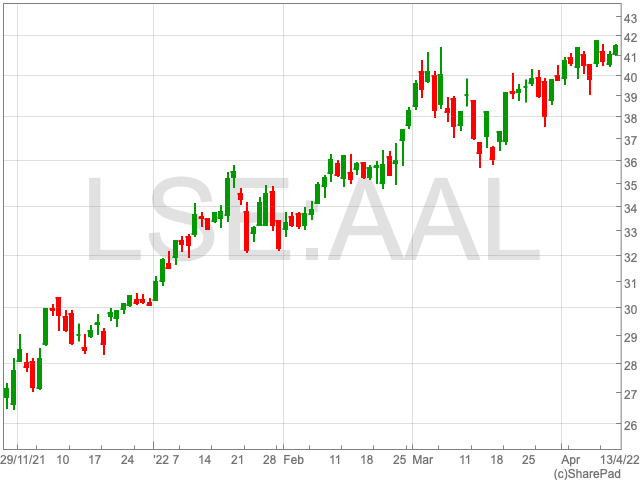
Polymetal saw its share price rise 38% to 235.2p and Evraz saw its share price rise 52.6% to 91.5p as bargain hunters continued to jump on the sinking ship in the hopes of a rebound in the historically well-performing stocks.

Polymetal announced that chairperson Ian Cockerill, alongside Ollie Oliveira, Tracey Kerr, and Italia Boninelli have stepped down from the board of directors.

Victor Flores and Andrea Abt have also stepped down from Polymetal’s board with immediate effect.

The remaining directors at the company include CEO Vitaly Nesis, Konstanin Yanakov and Giacomo Baizini.

Evraz announced that Sandra Stash was stepping down as a non-executive director at the company with immediate effect on 4 March.

The mining company added that Maria Gordon had become a member of the company’s nominations committee with immediate effect.

Analysts at AJ Bell commented that the mass exodos of directors from Russian companies was inevitable, and the crippling sanctions against Russia has essentially seen the stock in those companies hit the point of no return.

“Russian companies trading on the London Stock Exchange continue to lose board members at pace as directors realise the optics of being linked to these businesses are toxic. Polymetal saw six of its board members resign and another director has quit Evraz,” said an AJ Bell analyst.

“As soon as the Institute of Directors, hardly an organisation known for its radicalism, pushed for Britons involved to take the jump this mass exodus was almost an inevitability.”

“However, it will make any future rehabilitation for these stocks, which already looked unlikely, even more difficult.”

Clarkson swings back to profit on shipping activity recovery

0

Clarkson, the shipbroking company, recorded a pre-tax profit of £69.1m in 2021, as opposed to the loss of £16.4m in 2020.

Clarkson shares rose 7.2% to 3,340p on Monday morning as result of the shipping services company bouncing back from their losses as a result of recovery from the pandemic.

Revenues grew by 23% to £443.3m in 2021. Underlying profits before tax also saw a 55% increase with £69.4m in 2021. Growth in all segments contributed to these positive numbers, with strong performances in the group’s broking and financial division.

Laurence Hollingworth, Chair, Clarkson said, “In 2022, we expect the favourable supply/demand dynamics to continue.”

“The supply of new ships continues to be affected by the structural reduction in shipbuilding capacity compared to 2008 whilst the economic recovery from the COVID-19-induced pandemic has strengthened the demand side. We have a very strong forward order book and the outlook for freight rates remains positive.”

The broking division gained from the company’s longer-term plan to expand its global presence in the shipping and offshore segment in the past few years. With reduced ship supply, freight rates had scope to strengthen. The broking segment increased profits from £55.4m in 2020 to £73.6m in 2021, and increased margins to 21.6%.

The financial segment saw a 432% increase in profits, with £2.5m in 2020 to £13.3m in 2021. The margins in 2021 grew to 23.8% as a result of active capital markets.

Andi Case, Chief Executive Officer, Clarkson said, “our record 2021 results are testament to the strategy which we have followed and communicated to stakeholders over recent years.”

“It is with great pride that I reflect on the strength of our people in all sectors, roles and geographies, together comprising the best team in the world of shipping, offshore and renewables.”

“We are positive about the future of the shipping industry. The outlook for Clarksons remains strong and we believe the business will continue to benefit from its market-leading position.”

The dividend for the group has seen growth for 19 consecutive years. The proposed final dividend has increased by 3p to 57p in 2021, totalling 84p for the full year. With a share price 3,362p, Clarkson has a historical yield of 2.4%

HgCapital Trust results boast 44% NAV increase

HgCapital Trust saw its share price drop 5% to 360p in early Monday morning trade, despite the trust reporting an increase in NAV per share to a record of $4.40 and nets assets over £2 billion in 2021.

HgCapital Trust also reported a proposed final dividend of 5p per share and a full year dividend of 7p.

The company noted a revenue growth of 27% and EBITA growth of 30% across its top 20 portfolio investments over the last year.

HgCapital added that its “defensive growth characteristics” of its portfolio would help it to maintain profitability despite the challenges of the Covid-19 pandemic in 2022.

The company is set tot invest in trends in the digitialisation of the business process across its sectors and territories.

HgCapital Trust focuses on businesses that provide services such as insurance, payroll technology and HR solutions. The portfolio includes companies such as Access, Visma and IRIS.

The trust will stay focused on the sale of “business-critical and non-discretionary software and services” for their underlying business customers, as a means to hit highly predictable levels of recurring revenue.

“As I noted in my last review, HGT and its portfolio have coped well with the challenges presented by the COVID-19 pandemic,” said CEO Jim Strang.

“The defensive nature of the businesses within the portfolio and the operational skill of Hg have both contributed to the success of HGT in weathering this challenging period.”

“I am happy to report that our full-year results continue to see the portfolio delivering strong growth and excellent returns.”

Brit Limited bounces back with $247.1 million profit

Brit Limited, part of the Fairfax group, enjoyed strong financial results in its 2021 on strong underwriting peformance.

The company reported a profit on ordinary activities before tax of $247.1 million against a pre-tax loss of $235.5 million in 2020.

Brit Limited further reported gross written premiums of $3,238.8 million against $2,424,2 million in 2020.

The company noted adjusted net tangible assets of $1,740.6 million against $1,436.8 million in 2020.

The firm also reported a capital surplus increase of 81.2% to $617.9 million against $341 million in 2020.

Fairfax owns 86.20% of Brit Limited.

“I am pleased to report a positive 2021 for Brit, with our underwriting performance and investment return delivering a strong overall result,” said interim group CEO Martin Thompson.

“Our clear strategy saw us deliver a combined ratio for the year of 95.7%. This reflected the combination of an excellent attritional ratio, prior year reserve releases and increased income from our third party capital management and MGA businesses.” 

“That we delivered this performance despite exposure to a number of major loss events and the continued impact of COVID-19 was particularly encouraging, demonstrating the increased resilience of our business and our firm focus on disciplined underwriting.”

“As well as delivering a good underwriting result, we grew our written premium by 31.8% to $3,238.3m.”

“This reflects strong, targeted growth in our core direct and reinsurance books, and a very successful first year of trading for Ki.”

Thompson added optimism for the company’s 2022 growth potential.

“Looking ahead to 2022, while uncertainty remains around COVID-19, rising inflation and the potential of increased frequency and severity of major loss events, we remain optimistic.” 

“Ongoing rate rises, continued improvement in our attritional claims ratio and our clear strategy give us confidence that Brit is well placed to respond to the opportunities and challenges ahead.”

CloudCoco shares reaches for the clouds with strong final results

0

CloudCoco shares soared 11.7% to 1.9p on Monday morning with strong results and a jump in EBITDA.

CloudCoco, the IT service and communications solutions company, saw an increase in EBITDA by 185% increasing from £261k in 2020 to £745km in 2021 as a byproduct of the acquisitions of Systems Assurance Limited and More Computers Limited.

Vantage Motor Group, Kings College London and boohoo signed renewed multiyear contracts during the group’s successful year. The contracts were billed in advanced, reflecting the growth of £130k in revenues to £8.1m in 2021. The liabilities also increased with renewed contracts to £1.3m in ’21 from £0.9m in ’20.

The pre-tax loss dropped from £2.9m in 2020 to £2m in 2021. However, to cater to profitability in the future the group has managed to raise £2.1m in fundraising for future acquisition prospects. With acquisitions, the firm expects to increase their services resulting in higher revenues and profitability.

Mark Halpin, Chief Executive Officer, CloudCoco said, “I’m delighted to report on another period of significant progress for CloudCoCo, with our platform now primed for sustainable, long-term growth.”

“FY21 was a landmark year for the Group and we are now a very different proposition in terms of scale and opportunity, which will be reflected in our FY22 financials. With an exceptional team in place, improving market conditions and having demonstrated our ability to overcome challenges as and when they arise, we remain confident in our ability to continue making good progress towards our growth ambitions.”

In Q1 post 2021 results, recurring managed services make up 72% of the sales in Q1 2022 which was only 41% in 2020.

IDE Group Connect and Nimoveri has been successfully acquired from IDE Group Holdings.

“Customer feedback remains exceptionally positive. We have a growing reputation for consistently delivering quality which, coupled with our enhanced service propositions, has allowed the Company to record its most successful sales quarter yet at the start of FY22,” stated Simon Duckworth, Chairman, CloudCoco.

New standard listing: More Acquisitions planned

More Acquisitions is a new cash shell focused on energy transition opportunities. There is no specific type of business that is being targeted but it should get the majority of its revenues from green products so that More Acquisitions can obtain the London Stock Exchange’s Green Economy Mark. A business with significant recurring revenues and international potential would be ideal.  
More Acquisitions has issued all shares at the same price and there was a cap on expenses. This means that the underlying NAV is 0.96p a share. The share price ended the first day at 1.15p (1p/1.3p). There w...

New standard listing: URA’s Zambia prospect

URA Holdings has returned to the London market after more than three years but this time it is the standard list and not AIM. The cash shell has secured the acquisition of Malaika Developments, which has exploration interests in eastern Zambia.
The directors will use their skills to exploit this opportunity and to seek others. The plan would be to develop and then sell them for equity, cash or royalties, or even agree a farm-out deal. The focus will be relatively stable countries in southern and central Africa. Management believes that there are opportunities in Zambia because other companies ...

Standard reversal: Alkemy Capital lithium project

Alkemy Capital Investments has been readmitted to the standard list after it set up a new subsidiary to potentially supply lithium hydroxide monohydrate to battery manufacturers. The new plant could be set up at Teesside in the freeport. The board is assessing the prospects for the project and a feasibility study should be delivered at the end of March.
There is an exclusivity agreement, so the board has time to decide whether the project is going to be commercial. If Alkemy Capital does decide to go ahead it will need to recruit a chief executive and raise more funding.
The shares were readmi...

AstraZeneca shares: is the pharma giant worth consideration?

AstraZeneca was a driving force behind tackling the Covid-19 pandemic with their vaccine roll-out, but is the company’s stock worth considering in 2022?

Despite enjoying a jump in revenue over the past year, AstraZeneca shares are up just 1% year to date.

The company reported strong financial results for 2021 with a revenue increase of 41% to $37,417 million.

AstraZeneca Dividend

AstraZeneca paid out a dividend of $2.87 per share for its 2021 financial year, which was well covered with a dividend cover of 1.9 and provides space for further dividend increases.

AstraZeneca currently has a 2.8% yield, broadly inline the FTSE 100 average.

The pharma producer saw an EPS of $0.08 for 2021, representing a dramatic 97% decrease compared to 2020.

“AstraZeneca continued on its strong growth trajectory in 2021, with industry-leading R&D productivity, five of our medicines crossing new blockbuster thresholds and the acquisition and integration of Alexion,” said AstraZeneca CEO Pascal Soriot.

“We also delivered on our promise of broad and equitable access to our Covid-19 vaccine with 2.5 billion doses released for supply around the world, and we made good progress on reducing our greenhouse gas emissions.”

“Growth was well balanced across our strategic areas of focus, and we saw double-digit growth in all major regions, including Emerging Markets despite some headwinds in China.”

AstraZeneca has also been engaged in deal making this year with a $760 million heart medicine agreement.

AstraZeneca Valuation

AstraZeneca’s historical PE Ratio is 22.5 which is forecast to fall to 17x earnings suggesting analysts are optimistic about the company’s outlook.

However, when compared to FTSE 100 peers GlaxoSmithKline and Hikma, Astra does appear expensive. GlaxoSmithKline and Hikma both have forward PE Ratios of 12.7.

This may pay testament to investor sentiment around AstraZeneca who are the best performing FTSE 100 Pharma so far in 2022 with shares up 1.1%. Glaxo shares are down 6.3%.

With Astra’s strong pipeline of drugs, and the strong sentiment around AstraZeneca leading to a premium when compared to peers, the AstraZeneca share price should be one to watch for an entry on further weakness.