REACT announces new 3-year contract for £0.7m

0

Hygiene and decontamination company, REACT announced a new 3-year contract with a new customer in the education sector to perform ‘regular facilities maintenance cleaning’ on Monday.

The three-year contract begins at the end of May 2022 and has a total value of £0.7m.

The contract contains a mechanism for annual price hikes to account for future increases in labour and material costs.

Fidelis, a part of REACT that specialises in routine facility maintenance cleaning, will complete the contract.

Shaun Doak, Chief Executive Officer, REACT said, “I am delighted for the team winning this prestigious new account.”

“It comes as a result of our growing strength in customer satisfaction and references in the education sector, which would not be possible without the great work performed by our professional operators at the sharp end of the business.”

“This contract builds upon our strategy of increasing recurring revenues in resilient markets such as education and healthcare to complement our ad-hoc and specialist reactive work.”

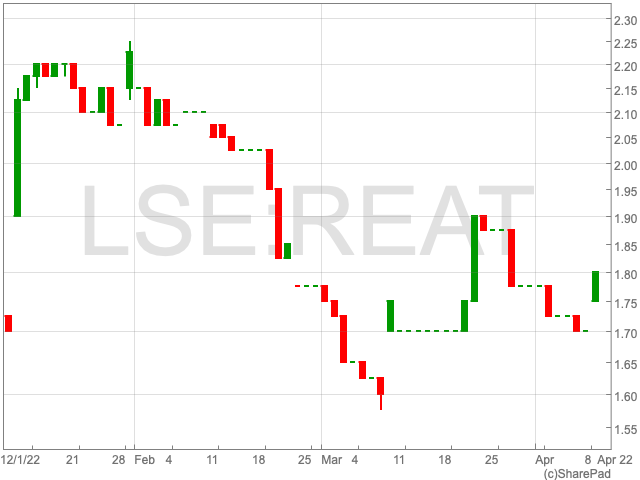
REACT’s shares gained 6% to 1.8p after the company announced a new 3-year contract for £0.7m.

Small & Mid Cap Roundup: Wood Group, Aston Martin, Scancell Holdings, Bluejay Mining

0

The FTSE 250 was down 0.17% to 21,138.7 and the AIM was flat at 1,055.4 on Monday, as London more domestic facing markets suffered after the latest UK GDP figures reported a dismal 0.1% growth in February.

“It’s a difficult time to be an investor given how markets stubbornly refuse to break out into a decent rally. So far this year we’ve had enough ups and downs to make anyone owning shares and bonds travel sick,” said AJ Bell financial analyst Danni Hewson.

“The new trading week got off to another mixed start, with markets initially down across Europe and Asia before some territories managed to make positive progress.”

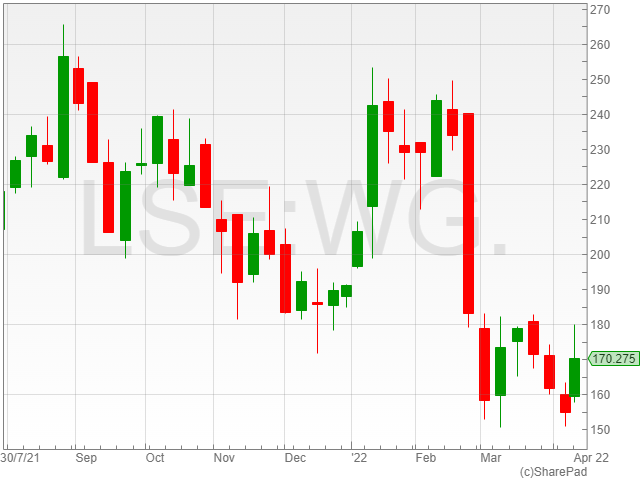
The Wood Group was up 13% to 175p after the company reported a guided revenue of £6.4 billion ahead of its annual results on 20 April.

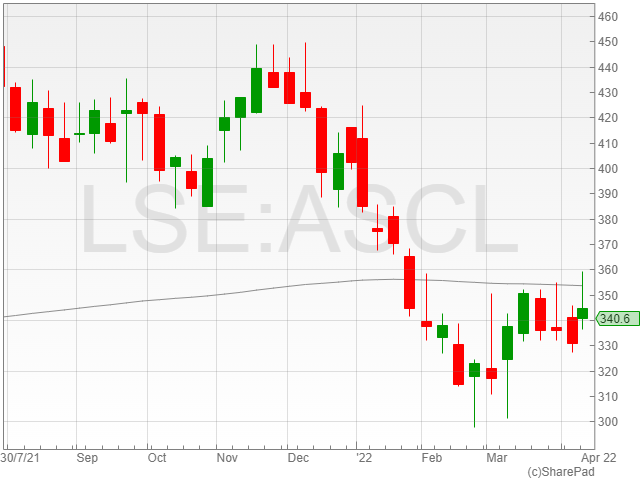
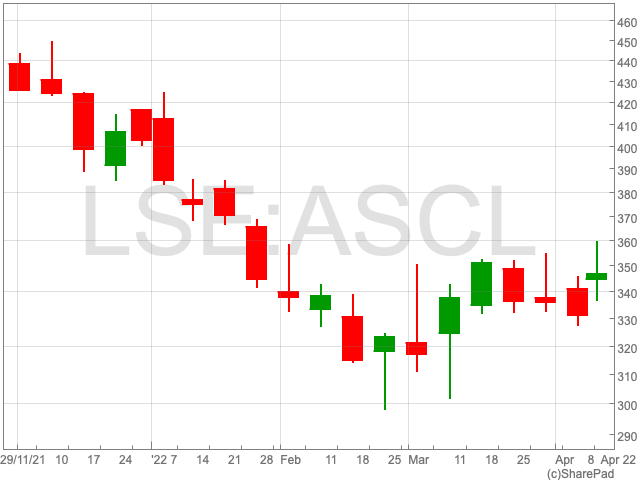
Ascential shares rose 3.8% to 343.7p following a statement that it was discussing “the merits” of separating some of their assets by potentially demerging its digital sector and listing it in the US.

“We are not hugely surprised to note this development given Ascential management’s long-standing commitment to maximising shareholder value and optimising the group’s portfolio of businesses,” said Shore Capital analyst Roddy Davidson.

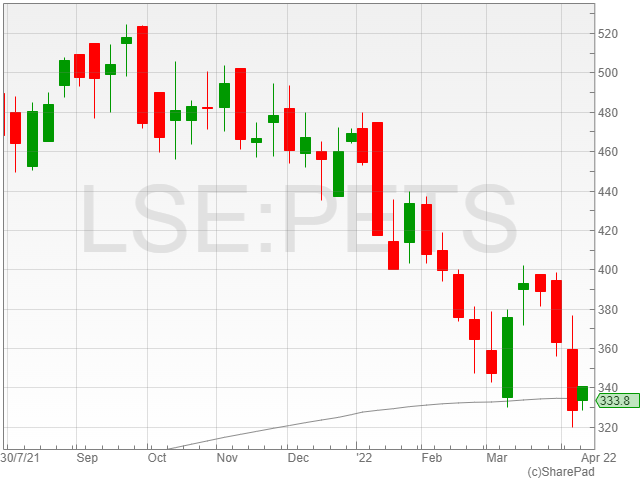
Pets at Home enjoyed a 1.5% rise to 333.7p on the back of Berenberg’s “buy” recommendation of the shares.

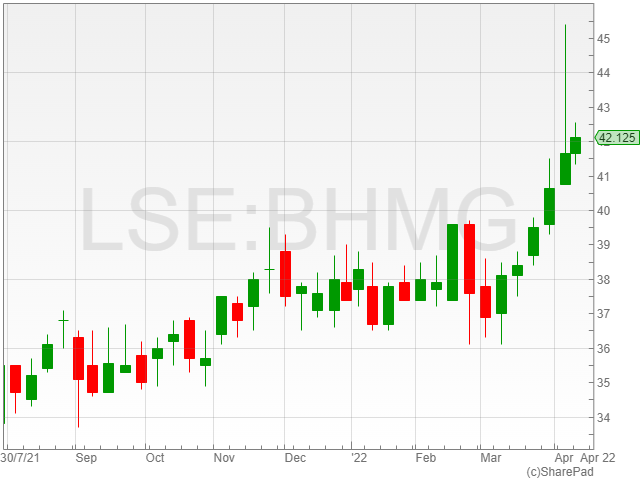
BH Macro Limited shares increase 1.2% to 42,150p after a report from Kepler Trust Intelligence assured investors of the company’s high diversification and impressive track record so far in 2022, noting its NAV performance rise of 5.5% in March alongside its exposure to rising interest rates.

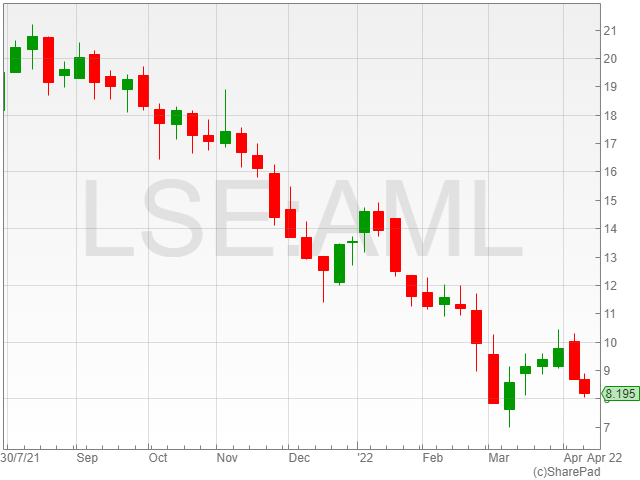
Aston Martin Lagonda Global Holdings fell 6.1% to 816.2p after Goldman Sachs cut the group’s price target to “neutral.”

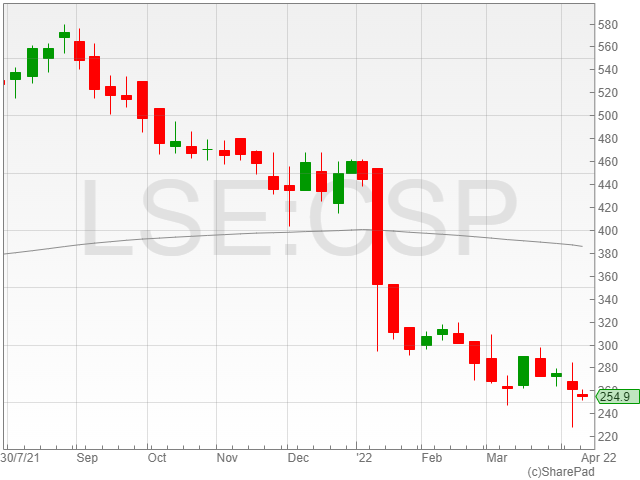
Countryside Properties continued its decline with a 2.4% fall to 254.5p following its selection of “execution-related” failures across its properties and a heads-up warning of the company’s half-year revenue fall of 13%, alongside the group’s 42% drop in adjusted operating profit over the past year reported last week.

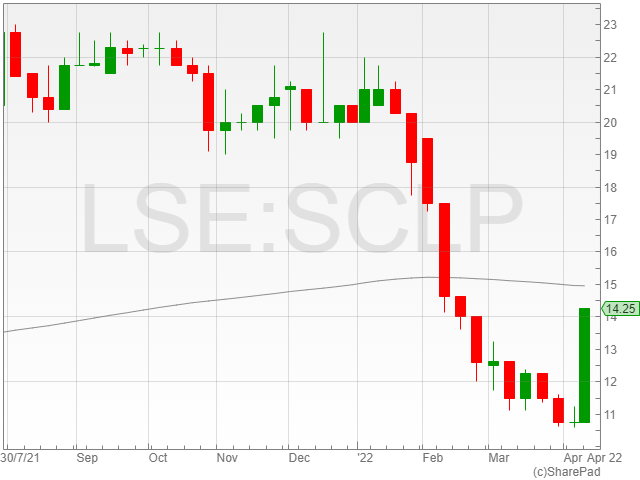
Scancell Holdings shares spiked 27.9% to 13.7p after the firm announced the opening of trial recruitment for its first-in-human clinical trial with its Modi-1 treatment for patients with triple negative breast cancer, ovarian, head, neck and renal cancer.

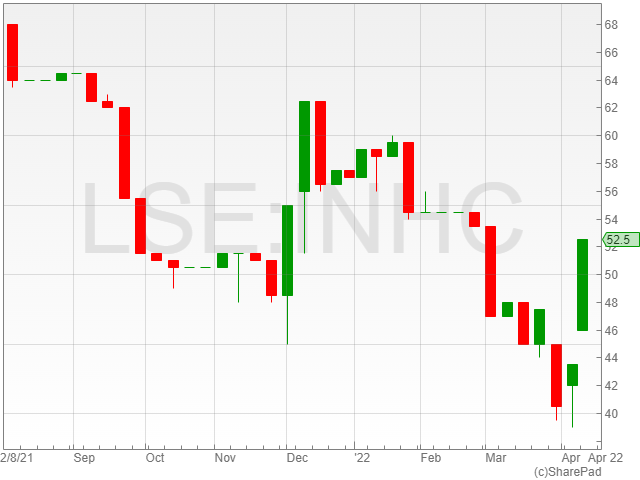
Induction Healthcare shares rose 20.6% to 52.5p following the company’s reported £6.6 million in annual recurring revenues for its Induction Attend Anywhere, after the NHS renewed 94% of its existing contracts with the digital health platform for its remote consultation programme, vastly exceeding management expectations.

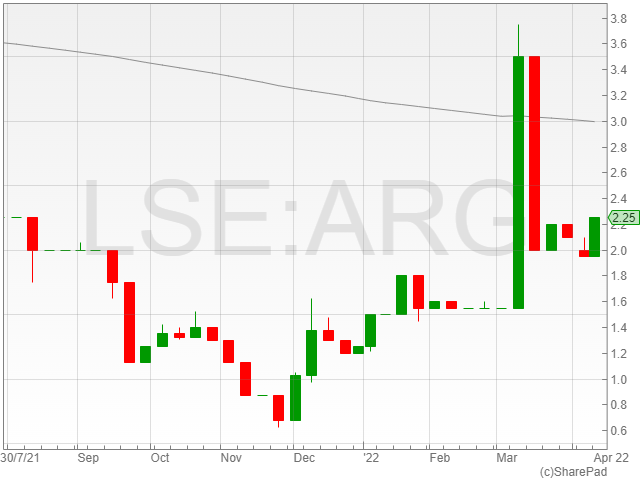
Argos Resources enjoyed a boost of 15.3% to 2.2p after the oil and gas exploration company announced the provision of a second term for its PL001 licence from 1 May to 31 December from the Falkland Islands government.

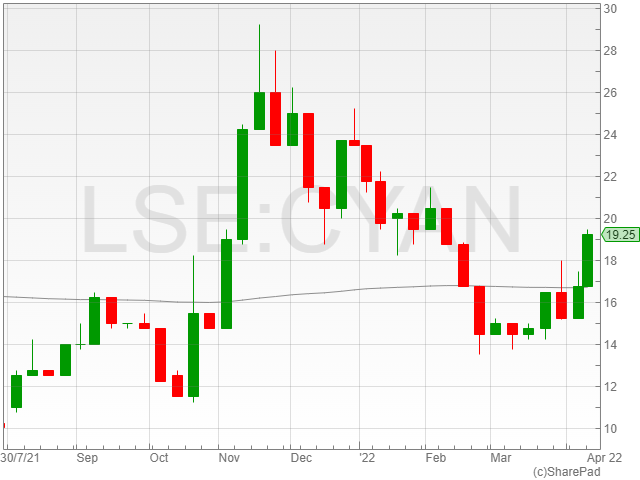
CyanConnode Holdings shares rose 14.9% to 19.2p on the back of a successful multi-million pound contract in the Middle-East and North Africa region (MENA), and a £2 million fundraise which the company is set to use for investment in short-supply inventory components.

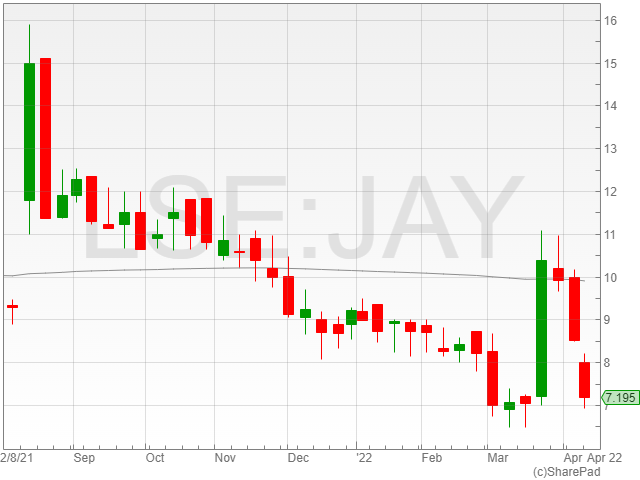
Bluejay Mining shares took a dip of 16% to 7.1p after the group released an update from its Disko-Nuussuaq Field programmes, in which the company opted to double its collection and analysis of modern data for its entire suite of projects and commence diamond drilling in 2023 instead of the original timeframe for 2022.

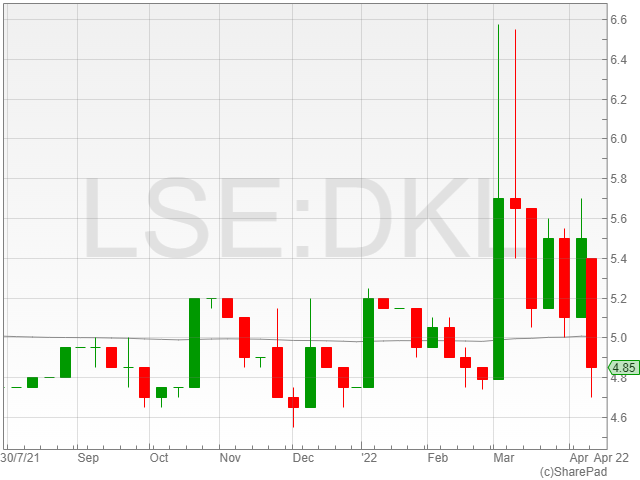
Dekel Agri-Vision shares fell 10.9% to 4.9p following the firm’s March palm oil production and cashew project update, which revealed that the company’s palm oil production was 50.5% lower in March 2021 than it was in March last year due to a seasonal production change across the Cote d’Ivoire, Ghana and Nigeria.

The group’s cashew production was also reported at 15% capacity in the interim period due to Dekel awaiting the arrival of key equipment to commence proper production for the project.

FTSE 100 falls as UK GDP grows 0.1%

1

The FTSE 100 dropped 0.5% to 7,634 on Monday after the UK GDP growth missed economist estimates and grew at just 0.1% in February.

Production costs have skyrocketed as a result of Russia’s invasion of Ukraine and supply chain concerns, with the prices of critical metals and computer chips in the tech industry pounding the manufacturing sector.

For a sense of confidence, the economy turned to the weakening services sector, which increased by 0.2% and helped boost real GDP 1.5% higher than before Covid-19. However, the outcome is not entirely positive for the UK economy.

Markets across Europe were jittery today with French elections, low UK GDP growth and increasing Covid related problems in China hurting stocks from all segments in the FTSE 100.

“It’s a difficult time to be an investor given how markets stubbornly refuse to break out into a decent rally. So far this year we’ve had enough ups and downs to make anyone owning shares and bonds travel sick,” said Danni Hewson, Financial Analyst, AJ Bell.

Tech shares or trusts invested in tech shares like Scottish Mortgage Investment Trust and Ocado were amongst the top fallers on the FTSE 100 on Monday as investors dumped the sector on the prospect of rising interest rates that will “reduce the value of future cash flows” making the tech space “less appealing” suggested Danni Hewson.

With rising rates tightening monetary conditions, tech stocks are losing out to value stocks, which are “offering jam today rather than jam tomorrow.”

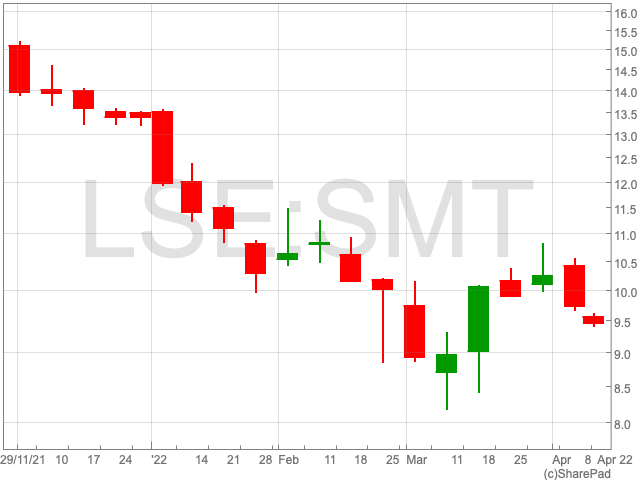
Scottish Mortgage Investment Trust saw shares drop 3% to 945p as the trust has exposure to Chinese tech stocks which are currently under scrutiny with rising supply chain problems and inflation in the country due to another wave of the pandemic.

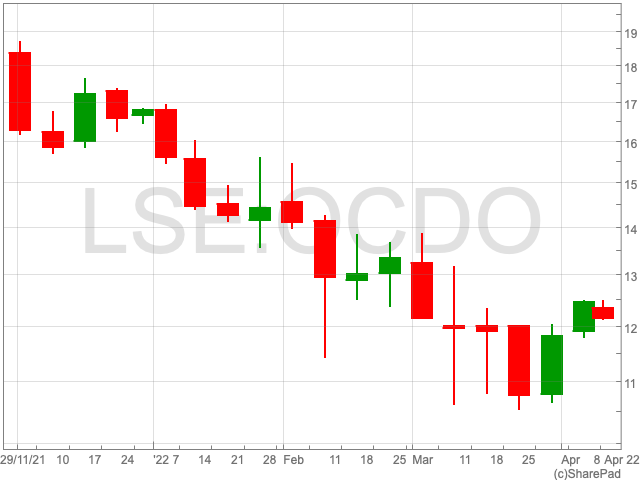
Ocado shares lost 2% to 1,217p as investors withdraw from tech stocks and move to value stocks as rising rates of interest may hurt future cash flow for the company.

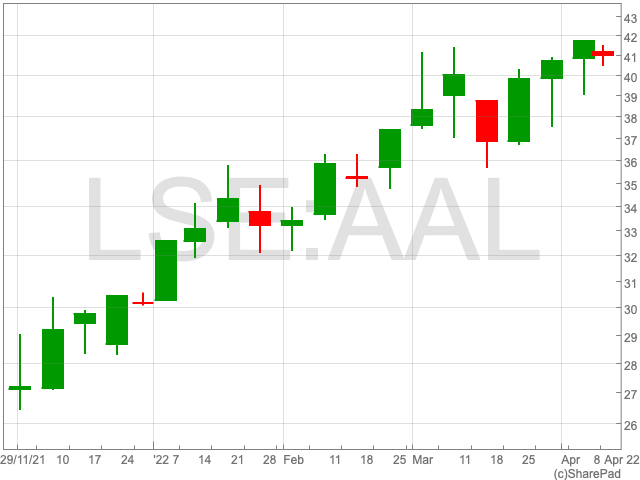
Mining shares were taking a hit on Monday due to China’s metal trade with the world getting impacted by the surge in Covid-19 cases. FTSE 100’s Anglo American, Rio Tinto and Antofagasta shares lost 1.9%, 0.02% and 0.06%.

Goldman Sachs also raised Anglo American, Rio Tinto and Antofagasta’s price targets to 5,300p, 7,300p and 1,900p respectively.

Anglo American Chart for 11-4-22

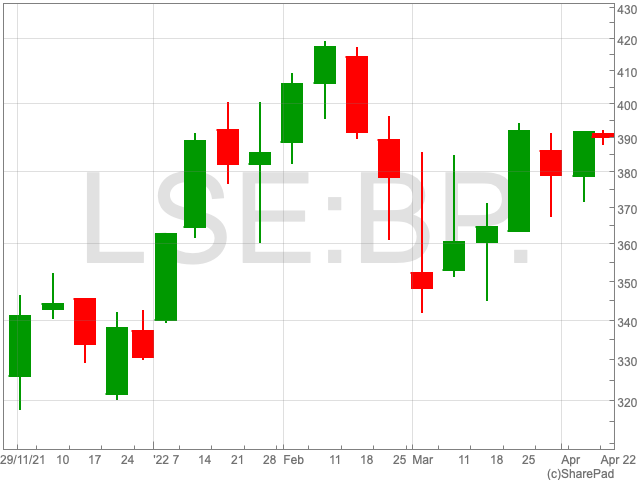
The price of oil decreased 1.5% to $101 a barrel on Monday leading to oil and gas companies such Shell and BP shares losing 0.2% to 2,162p and 391p respectively.

BP Chart for 11-4-22

Hargreaves Lansdown, Halma and Prudential shares dropped between 2%-3% on Monday as investors rotated away from financial stocks.

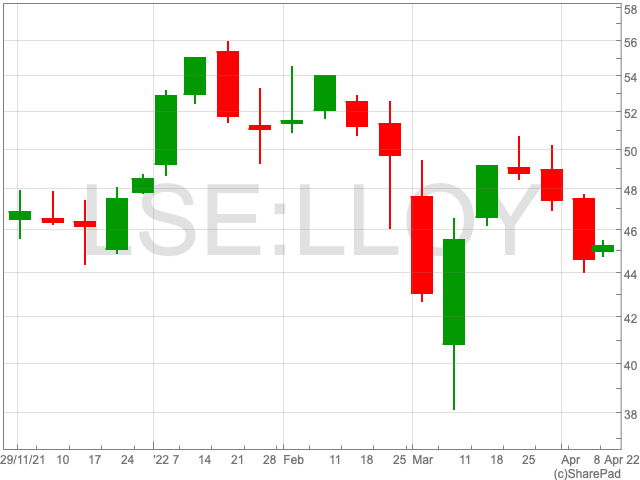
High-street lenders were among the FTSE 100 risers with Lloyds Banking Group leading the sector with shares increasing 1.4% to 45p.

Barclays and Natwest are amongst the banking sector with shares rising 0.9% and 0.7% to 145p and 218p respectively.

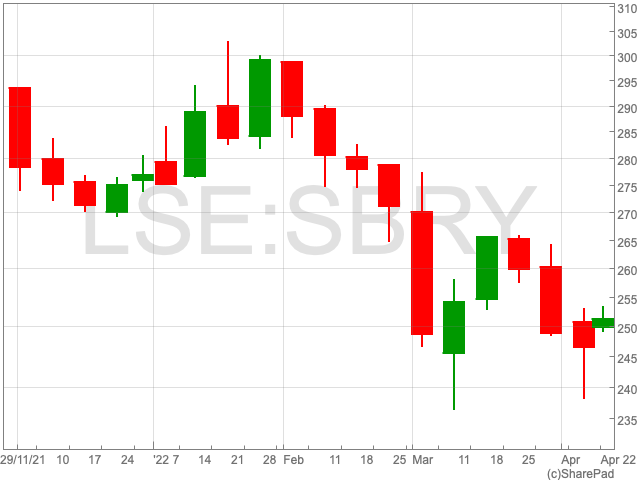
Sainsbury’s shares lifted 1.2% to 250p after Jefferies raised the grocer’s price target by 300p.

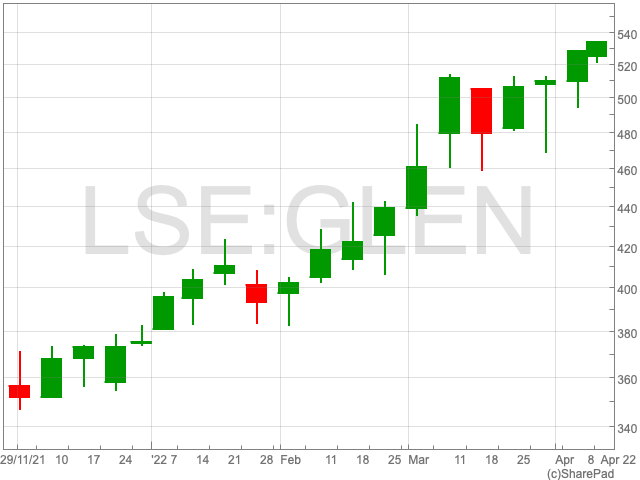
Glencore shares gained 1% to 533p after Goldman Sachs raised Glencore’s price target to 720p from 600p.

Other performers on the FTSE 100 include Vodafone Group, Flutter Entertainment, Airtel Africa, Pearson and BAE Systems whose shares increased between 1.5% and 2%.

Travel stocks have been mixed with consumers looking to travel and holiday as the weather gets better and the pandemic eases over, however, flight cancellations and staffing shortages are holding the shares back from taking off.

As airlines continue to battle with labour shortages, dozens of UK flights were cancelled on Monday, with British Airways cancelling at least 64 domestic or European flights to or from Heathrow.

British Airways, part of the International Consolidated Airlines Group SA, said customers were given advance notice of the cancellations.

Last month, the airline agreed to cut its schedule till the end of May to avoid having to cancel flights on short notice owing to staff shortages. It has concentrated on routes with several daily flights, allowing passengers to choose from a variety of departure times on the same day they bought.

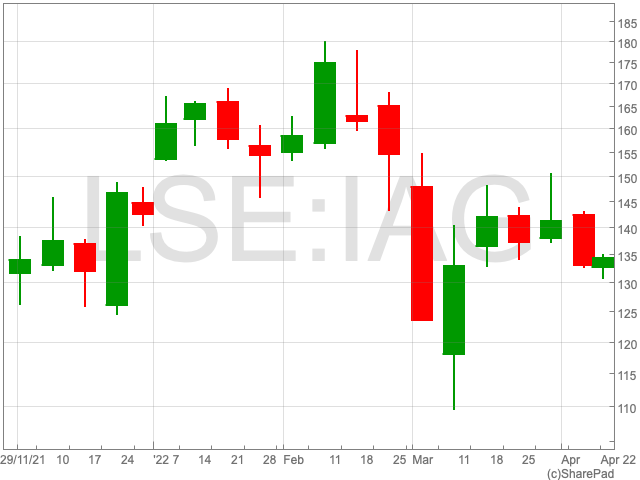
IAG shares rose 0.8% to 134p as the airline company altered its schedules and tried to mitigate any travel risks for its consumers.

Amongst travel and leisure losers were Whitbread and InterContinental whose shares were losing 0.3% and 1% to 2,821p and 4,873p.

Likewise Group: Looking down is its business but its growth potential is certainly looking up

This sub-£100m group has very big ambitions and its experienced management is moving at an impressive pace with its corporate strategy.

The Likewise Group is a UK distributor of both domestic and commercial floor coverings and matting. 

Upon floating last August, the group’s directors stated that they believed that they had an opportunity to build a business of national scale and over time become a strong alternative to the current larger industry competitors within the sector. 

A very big and growing market

Excluding ceramics, the UK floorcoverings market, which is made up of manufacturers, distributors, retailers and installers, is worth some £2bn and is growing at around 3% per annum.

Some 30% of this market is made up by a number of larger players. 

The 70% balance is covered by the national multiples and the regional independent retailers and flooring contractors.

Homes and offices creating demand

The residential sector of the market is expected to increase as new homes are added to meet the ongoing structural demand for housing at around 150,000 new residential dwellings a year. 

Additionally, home improvements, changing consumer tastes and trends along with repair works is expected to create further demand. There is also a very strong replacement requirement.

It is believed that demand in the commercial sector will remain robust over the medium term, especially as new office developments continue to be constructed.

The group’s supplies and sales

Its suppliers are sourced from Holland (25% of sales), Belgium (24%), other countries in Europe (16%), the UK (15%), the Far East (11%), Turkey (6%), India (2.5%) and even Ukraine (just 0.5% previously).

Some 36% of the group sales is made up by carpets, commercial 20%, laminates 14%, mats and runners 10%, domestic vinyl 6%, artificial grass 6%, underlay 4%, luxury vinyl tiles 4% and other such products 1%.

Scale generates opportunity

It is the strategy of this group to consolidate the distribution and retail sections of the market to gain national scale and provide a channel for UK and overseas manufacturers.

To deliver on this strategy, Likewise has declared that it intends to utilise its expertise and industry knowledge to deliver organic growth, operational leverage and execute strategic acquisitions.

Expansion strategy and setting a price marker

But just look at this group’s expansion over the last few years.

From 2019 to the summer of 2021 it had made and integrated some seven acquisitions, that was ahead of going public last August. 

The valuation then was £48.1m, when it raised £10m before float expenses, with its shares priced at 25p each.

In mid-December last year, it made a £30m acquisition of Valley Wholesale Carpets – settled by paying £24m cash, £1m deferred cash and the issue of 5m shares.

If investors took any real notice that last part of the payment put down quite a marker. 

The condition stated with the 5m new shares, was that if the 5m are valued at less than £5m on the second anniversary of the Acquisition Completion, then the shortfall will be settled in cash.

I take that as quite a strong pointer that the group’s management and its financial advisers are happy with setting a two-year target for the shares at 100p or better.

At the time of this deal the group raised £14m by way of issuing new shares to existing investors and institutions at 35p each, which was a 24% discount to the 46p share price on the day before it was announced.

A month later the group declared that the acquisition had been approved and completed. So, could the aim now be 100p a share by mid-January 2024?

Acquisitions continue

Continuing the group’s expansion programme saw it announce another acquisition at the start of this month. 

For £3m it has added the Leeds-based Delta Carpets. Again it was completed with the issue of 0.5m new shares, at the underpinned 100p value upon the second anniversary of completion.

This really is a quite inventive and attractive form of financing through the issue of equity. The balance of the earnings enhancing deal price was in cash. 

Delta distributes to independent retailers in the Midlands, South Wales and the North of England. It boosted the group’s geographical and operational spread.

Number Two player in the marketplace

Its various purchases over the last four years have now helped it to build itself up to be the number two player in the UK flooring market. 

In the year to end December 2020 it had sales of £47.3m.

To the end of 2021 that revenue figure had risen 31% to £62.0m.

Current broker’s estimates suggest £115m this year, £137m next year and £161m in 2024.

But those estimates, obviously, do not take account for any future deals that the Likewise corporate team may put together. 

Geographic expansion widens its coverage

At the current rate of expansion, I believe that the group will fill in its blank coverage areas of the UK by taking over other distribution companies.

So the management’s target of creating a national distribution business, with revenues in excess of £200m could well be beaten within a very short time frame.

From its centres across the country – Leeds, Sudbury, Birmingham, Manchester, Glasgow, Newcastle, and Peckham in the UK, while also having a centre in Meulebeke in Belgium – it can already offer an impressive one-day delivery service.

More sales ability brings added margins

As the expansion happens the pure strategic logistics will really start to fall into place.

Far bigger dealing power when negotiating with its global suppliers, which in turn strengthens operational and financial efficiency, its margins will increase and it will boost its cash flow, while also helping to reduce company debt. 

It will also outperform other players in the sector.

The group management aim is to generate operating margins in excess of 5%, while also implementing a progressive dividend policy.

That is just what a quoted company should do, especially in these current markets.

Growth adds to profits

The current year is already looking promising. 

Alongside details of its latest acquisition, the company reported that it was trading ahead of internal budgets for the first three months of this current year.

It also mentioned that it will be looking to help to cover general supply price rises by introducing a new price list as from the beginning of next month.

For this year its management believes that the group will meet market expectations.

The group’s brokers, Zeus Capital, are bullish about the company. They are not at all concerned by the current high price-to-earnings ratio at some 51 times 2021’s estimated results. They amplify the scalability of the group.

Their estimate for the 2021 figures look for a turn around from £3.6m of losses to £1.6m profit.

For the current year they go for £4.2m profits, worth 1.3p per share in earnings.

Next year the expansion shows through with £6.2m profits, generating 1.8p per share.

For the 2024 trading year the brokers go for £9.1m which would pump in 3p in earnings. 

The group should be reporting its 2021 results next month, at which time we should expect a further trading update,

This real growth deserves a higher price

This really is a growth story – a classic ‘buy to build’ – and it has only been on the market for nine months.

There is a lot more to come from this very expansive group, its shares at just 35p warrant a much higher rating to reflect its growth prospects.


Mercia Asset Management receives additional £6.5m from Faradion sale

0

The regionally focused specialised asset manager, Mercia Asset Management, with £948m in assets under management reported the release of £0.8m in ring-fenced cash profits from the sale of Faradion, as announced on 5 January 2022.

In January, the company confirmed the completion of the sale of Faradion, a sustainable energy storage solution, for a total enterprise value of £100m to Reliance New Energy Solar Limited, a subsidiary of Reliance Industries.

The £0.8m ring-fenced proceeds are in addition to the £5.7m profit announced in January 2022, bringing the total realised profit on the sale to £6.5m over the holding value as of September 30, 2021.

UK 0.1% GDP growth indicates serious trouble for British economy

0

UK GDP rose by 0.1% in February, indicating serious trouble for the nation’s economic prospects moving into the post-Covid era.

A series of knock-on effects from Russia’s invasion of Ukraine and supply chain issues have sent production costs skyrocketing, with the prices of crucial metals and chips in the technology sector hammering the production sector.

The economy subsequently fell back on the weakened services sector for a sense of optimism, which grew by 0.2% and helped increase real GDP to 1.5% above its level before Covid-19. However, the result has not brought entirely good news for the country.

“This is a good sign for the economy but was slightly offset by production, which fell by 0.6% and construction, which fell by 0.1%. While rising inflation continues to be a significant risk, today’s data could provide another sign to the BOE to take further action,” said XTB chief market analyst Walid Koudmani.

AJ Bell financial analyst Danni Hewson. added: “A downbeat production sector means a greater reliance on services for growth and with the cost-of-living crisis only just really baring its teeth there is concern that this month’s anaemic growth might be as good as it gets for a while.”

Analysts blamed bad weather for keeping consumers indoors, with high street proprietors from all walks of business suffering from the customer shortage.

Staff sickness from Covid-19 crippled the workforce, and despite a rise in the travel sector as people sought sunshine and an escape from the storms, chaos hit the major airlines including EasyJet and British Airways as hundreds of flights were cancelled last-minute following a wave of Covid-19 alerts.

“The awful weather was also responsible for one of the month’s bright spots as Brits rushed to finally book their ticket to some sunshine as travel restrictions were put to bed,” said Hewson.

“Travel agents enjoyed a surge in demand, though many of those that did make bookings may have found themselves caught up in the getaway chaos that’s been making headlines over the last couple of weeks.” 

However, small hoteliers and B&Bs enjoyed a surge in business despite the travel disruptions as the UK began to enjoy life after lockdown in the steady return to business as usual for the country.

The slow UK GDP growth in February has proven worrying to financial experts, and the next few months will prove essential to track the UK’s progress moving into the post-Covid age.

Primary Health Properties unveils first net zero carbon direct development

0

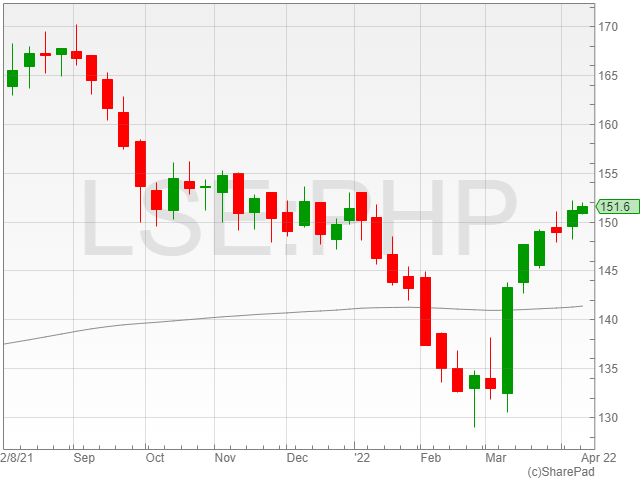
Primary Health Properties shares were up 0.2% to 151.5p in early morning trading on Monday after the company unveiled its first net zero carbon direct development.

The firm announced that it had signed the deal for a brand new purpose-built facility based in Eastergate, West Sussex, for a reported gross development value of £6.7 million.

Building is scheduled to commence on the project imminently, with completion anticipated for Q2 2023.

The deal is set to increase Primary Health Properties’ portfolio to 523 assets, with a contracted rent roll of over £141 million.

Primary Health Properties will apparently be one of the first UK health facilities to achieve a net-zero rating, and will reportedly achieve net-zero carbon by minimising and offsetting embodied carbon in its construction materials and enabling occupiers to run operations in the building with net zero carbon emissions.

The company purports that its building is set to achieve BREEAM Excellent standards and an EPC rating of A, alongside lowered levels of waste and water use with the addition of responsibly sourced and sustainable materials.

The facility has been designed to include general practice healthcare services, physiotherapy, mental and occupational health, social prescribing, care co-ordination, clinical pharmacy and training for GPs, nurses and paramedics once the building is operational.

“We are delighted to have commenced work on one of the UK’s first NZC healthcare buildings,” said Primary Health Properties CEO Harry Hyman.

“Starting work on our first NZC direct development is a significant achievement and demonstrates our strategic commitment to transitioning all our operational, development and asset management activities to NZC by 2030 and to help our occupiers achieve NZC by 2040 as set out in our recently announced NZC Framework.”

“This development is the first in our strong pipeline of £163 million of direct development opportunities providing short-cycle and de-risked development activity, adding high quality assets to the portfolio and capturing attractive development margins.”

Ascential addresses changes to its structure

0

Media and consulting company, Ascential is still exploring the merits of controlled separation of certain group assets according to the company on Monday addressing media speculation about changes to the group’s structure.

Ascential has taken note of recent media speculation about the group’s structure.

Ascential’s Board members examine the best organisational and capital structure for the business regularly to ensure both the successful fulfilment of the group’s plan for the benefit of our customers and the maximisation of shareholder value.

Ascential says that it is still investigating the merits of controlled disposal of some of the group’s assets.

As these conversations are exploratory in nature, the Board may or may not decide to proceed with a controlled separation of these businesses in the future.

However, the Board is committed to open and transparent communication with all of its stakeholders as well as providing additional information as needed.

Ascential shares rebounded on Monday with an increase of 5% to 346p after the company addressed recent media speculations.

Sirius Real Estate reports slate of acquisitions in ‘transformative’ 2021

1

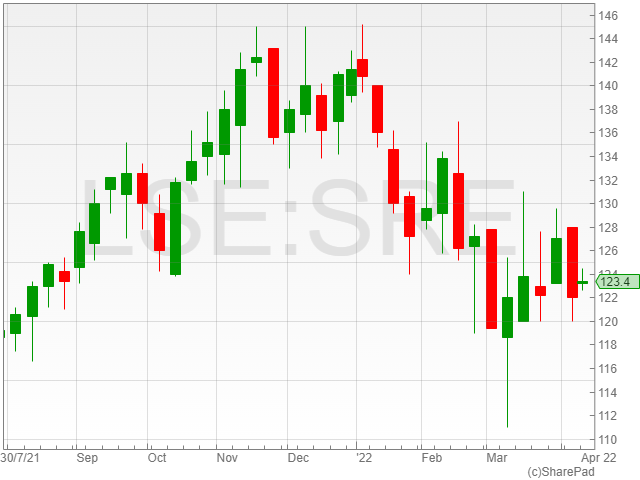
Sirius Real Estate shares were up 1.8% to 123.8p in early morning trading on Monday, following reports of €700 million raised through oversubscribed corporate bond issuances and a selection of successful acquisitions in the company’s pre-close trading update for 2021.

The German group announced a like-for-like rent roll increase of 6.4%, alongside a like-for-like occupancy rise to 87.4% throughout its German portfolio, compared to a total occupancy decline in Germany to 84.2%.

The firm announced corporate bond issuances amounting to €700 million, alongside a cash collection rate of over 98%.

Sirius also reported a free cash balance of €126 million and a total annualised rent roll rise to €167.1 million.

The company finished its financial year with €201.9 million invested or committed to ten acquisitions.

Sirius Real Estate Acquisitions

According to Sirius, these assets are projected to contribute around €8.8 million of net operating income at 62% occupancy, representing an EPRA net initial yield of 4.4%.

Sirius Real Estate’s additional acquisitions included a €900,000 building adjacent to its Potsdam asset and a parcel of land at its asset in Neuruppin for €500,000, providing the company with two asset management footholds for its existing sites going forward.

The company also acquired its Magdeburg asset for €13.75 million and grew its titanium venture with AMA IM Alts with the completion of its Ausburg asset for €79.9 million, which is anticipated to add approximately €1.5 million per year in fees and profits from the venture.

Sirius Real Estate entered the UK market through its acquisition of BizSpace in November 2021 for £245 million, based on an enterprise value of £380 million and representing a 7.1% net operating yield.

The firm reported strong trading since its takeover of the business, with like-for-like annualised rent roll rising by 7.5% from £41.9 million to approximately £45.1 million over the initial 4.5 months of operations.

Sirius further noted an occupancy increase to 90.5% from 88.7%, with the average like-for-like rate per square foot rising 6.5% to £11.69 compared to £10.98 encouraging the group’s advancement into opportunities in UK industrial real estate.

“2021 was a transformative year for Sirius marked by two key firsts which saw the Company access the corporate bond market, successfully raising €700 million through two oversubscribed issuances, and the strategic acquisition of BizSpace, providing us with geographic diversification and an established operating platform in the U.K which is already showing positive momentum in terms of growing rents,” said Sirius Real Estate CEO Andrew Coombs.

“However, it would be remiss not to mention market uncertainty created by current geopolitical events which we continue to monitor closely. In the meantime, our thoughts go to everyone impacted by the situation in the Ukraine and we welcome all steps that lead to a cessation of hostilities and an end to the conflict.”

SDCL Energy Efficiency Income Trust buys 80% equity interest in Sociedade de Iniciativa e Aproveitamentos Florestais

0

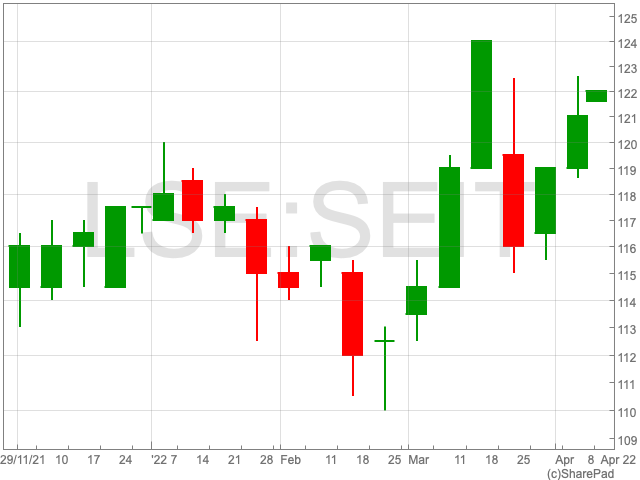
SDCL Energy Efficiency Income Trust (SEEIT) completed the acquisition of 80% equity interest in Sociedade de Iniciativa e Aproveitamentos Florestais – Energia, S.A. (SIAF) in Mangualde, Portugal from Capwatt for around €22m on Monday.

SEEIT announced in early February, the decision to acquire 80% equity interest in SIAF, the highly efficient operational biomass cogeneration plant, which has been acquired earlier today for €22m.

SEEIT has provided SIAF with an added €15 million to partially repay its existing project finance green bond credit.

SIAF creates heat and electricity from biomass that is sourced sustainably.

On a take-or-pay basis, it provides crucial onsite heat to a Sonae Arauco PT (SAPT) industrial plant that manufactures medium-density fibreboard and it generates energy that benefits from the Portuguese Feed-in-Tariff to the grid.

The project is expected to benefit from at least another 23 years of steady, inflation-linked, contracted cashflows with no risk of demand, giving SEEIT good visibility of returns.

SEEIT’s existing cash reserves were used to support the purchase of SIAF’s equity interest. SIAF’s project finance green bond facility will have a remaining balance of roughly €20m.

SEEIT and Capwatt have signed a Heads of Terms to focus on the collaborative development and purchase of energy efficient projects across Iberia, in addition to the project acquisition.

SDCL Energy Efficiency Income Trust was the first publicly traded firm in the United Kingdom to invest solely in energy efficiency.

Its projects are primarily located in the United Kingdom, Europe, and North America, and include a portfolio of cogeneration assets in Spain, a portfolio of commercial and industrial solar and storage projects in the United States, a regulated gas distribution network in Sweden and a district energy system providing essential and efficient utility services on one of the country’s largest business parks.

SDCL Energy Efficiency Income Trust shares gained 0.5% to 121p on Monday following the announcement of completing the acquisition of 80% equity interest in Sociedade de Iniciativa e Aproveitamentos Florestais.