Polymetal confirm continued operations and incoming liquidity in Q2 2022

0

Polymetal saw its share price rise 10.2% to 373.6p in early morning trading on Wednesday following an update to investors regarding the impact of sanctions on the mining group’s operations.
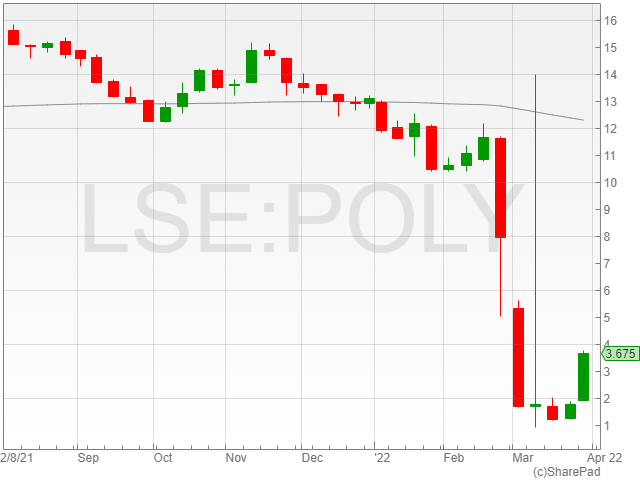
The mining firm has been through an incredibly turbulent period after Russia’s invasion of Ukraine on 24 February 2022, with the group’s spiralling conditions ending with its removal from the FTSE 100 on 21 March 2022.

The company confirmed that targeted sanctions against its operations remained unlikely but not impossible, and that it has planned ahead of any impact proactively.

Polymetal reported a net debt increase to $1.9 billion on 29 March against $1.6 billion in December 2021, which the group attributed to seasonal working capital increase and accelerated procurement.

The firm stated that it has been using Russian banks for shot-term capital financing while it awaits additional liquidity in Q2 2022.

Polymetal reportedly has $0.4 billion in cash and cash equivalents held by non-sanctioned entities alongside $0.5 billion of available undrawn credit lines.

The company confirmed that its operations in Russia and Kazakhstan are currently continuing undisrupted, and its projects in advanced stages of development are reportedly on track to be commissioned on schedule.

Polymetal added that its POX-2 project will experience a 3-6 month slippage due to logistical challenges and its early stage projects will be delayed by a year.

The firm’s Pacific POX project was noted to be suspended indefinitely while the company look for a potential re-site alternative for the venture in Kazakhstan, and its Greenfield exploration budgets are set to be cut 50%, which will predominantly impact its junior joint-ventures.

Polymetal confirmed that its Brownfield explorations schedule and volumes will remain unaffected.

The mining company also added five new directors to its board earlier this month and is scheduled to confirm shareholder approval at its AGM on 25 April.

“It is my opinion that investors, private and institutional, that collectively control over 75% of this company deserve a Board that will lead the company through this turbulent time, preserving and hopefully rebuilding the value of their investment as well as protecting the livelihood of thousands of employees, contractors, suppliers and other stakeholders”, said Riccardo Orcel, Chair of the Board.


Petropavlovsk reports Gazprombank update

Russian gold miner Petropavlovsk delivered an update on early Wednesday regarding debt restructuring with Gazprombank (GBP) following the freezing of its assets after its inclusion on the Russian sanctions lists.

Petropavlovsk had previously disclosed a significant financial commitment to GBP, including a $200m term loan and $86.7m in credit facilities.

Last week, Petropavlovsk brought to light the company’s financial commitments with GBP. The firm said they have a $200m committed term loan with GBP. The group also acknowledged GBP’s involvement with Petropavlovsk’s subsidiaries in Russia, as the bank provides a revolving credit facility of $86.7m.

On 25 March 2022, Petropavlovsk was due to pay interest of $560,000 under the term loan, however, sanctions prevented the company from making the payment.

On March 28 2022, the rouble equivalent of $9.5m became repayable under the RCFs, but was not paid as a result of the sanctions.

The company confirmed that $500 million 8.125% guaranteed notes due 2022 issued by Petropavlovsk 2016, of which $304 million remains outstanding, are scheduled to mature in November 2022.

With current circumstances proving problematic for Petropavlovsk and its financial obligations, the company is in the initial phase of talks with its advisers and GBP regarding a possible restructuring of the group’s debt.

Aquis Exchange quadruples earnings

AIM-quoted European equities exchange operator Aquis Exchange (LON: AQX) has combined its first day on the Aquis Stock Exchange with the announcement of better than expected 2021 results showing quadrupled earnings to 16p a share. The share price rose 19.5p to 507.5p a share.
In 2021, revenues were 42% ahead at £16.2m, while pre-tax profit jumped from £470,000 to £3.22m. Net cash is £14.1m, after spending £1.1m on buying back shares.  
Part of the equities exchange business has moved to Paris since the UK’s exit from the EU. The market share of pan-European trading improved from 4.7% to 5...

S&U dividend surpasses pre-Covid level

Second-hand car finance provider S&U (LON: SUS) was hampered by a lack of second-hand car stock in November and December, but it still generated a record profit in the year to January 2022 thanks to low impairment charges.
Group pre-tax profit improved from £18.1m to £47m and this enabled S&U to increase its total dividend from 90p a share to 126p a share. That is above the 2019-20 dividend of 120p a share and is covered 2.5 times by earnings.
Net borrowings have increased from £98.8m to £113.6m. There are total funding facilities of £180m, which mature at a range of dates between 2024...

XLMedia: Finals Show a Sporting Chance

XLMedia (LSE: XLM) improved to 30p  and a  Mkt Cap of  £81m after reporting its finals to December with Revenues  jumping 18% to $66.5m.  XLMedia is a global digital performance publisher, operating across a variety of vertical markets including online gambling, personal finance and increasingly US  sports. It uses proprietary tools and methodologies to identify and target high value consumers for platform operators. Its Operating profits shot forward from  $0.1m to $3.9m with  a 50% increase in PBT to $10.5m making an EPS of 1.8p to give an  Historic P/E of 17x and despite strong cash flow ca...

Abingdon Health signs MOU with Vatic Health and DeepVerge

0

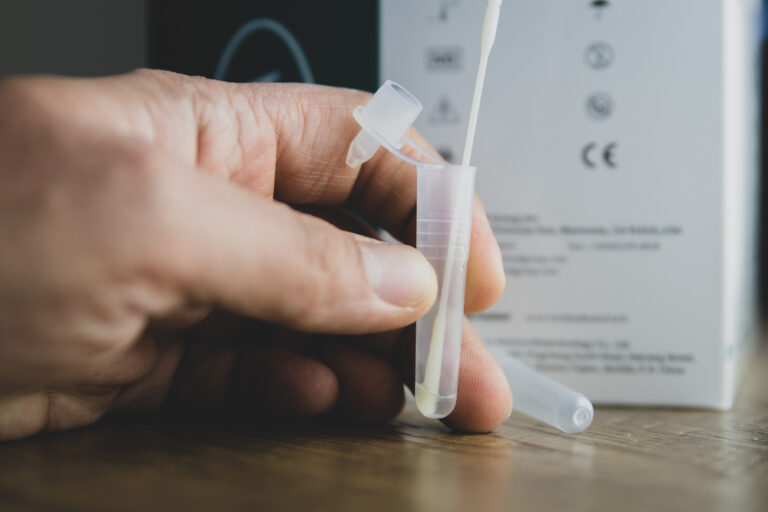
Leading international developer of high quality and effective rapid tests Abingdon Health signed two Memorandums of Understanding (MoU) with Vatic Health and DeepVerge earlier today.

Vatic Health

Abingdon Health has signed a MoU with Vatic Health, a renowned diagnostic technology innovator. The MoU constitutes a commercial partnership between Abingdon and Vatic for the development and production of a range of lateral flow tests in the field of infectious disease, similar to those used in detecting Covid-19.

The initial focus of the MoU will be to create novel influenza lateral flow tests using Vatic’s patented technology platform, which recognises proteins through their surface biological processes.

Following the ratification of the MoU, Abingdon and Vatic intend to enter into a longer-term commercial agreement where both parties will develop infectious diseases lateral flow tests, with Abingdon exclusively manufacturing these tests. Both parties will collaborate on the commercialization of these innovative new products.

Alex Sheppard, Chief Executive Officer, Vatic Health Limited, said, “We are excited to be deepening our collaboration with Abingdon Health and we look forward to extending the use of our proprietary technology from COVID-19 into other areas of unmet need to further address inequalities of access to health information through self-tests.”

DeepVerge

DeepVerge is an ‘environmental and life science group’ that develops and applies artificial intelligence (AI) and internet of things (IoT) technology for the analysis and identification of bacteria, virus and toxins.

Abingdon Health announced the signing of a MoU with DeepVerge on Tuesday which will lead to a commercial agreement for the development and manufacturing.

The MoU was signed to allow DeepVerge and Abingdon’s technology to be integrated in the future.

Abingdon will manufacture the new products, while DeepVerge will commercialise them through its global production, sales, marketing, and distribution channels.

“DeepVerge’s business model is built on collaborating and cooperating with partners such as Abingdon Health who have technologies and large production capacity to deliver solutions to major societal problems such as water contamination and the identification of human biomarkers for a range of health conditions,” said Gerard Brandon, CEO of DeepVerge.

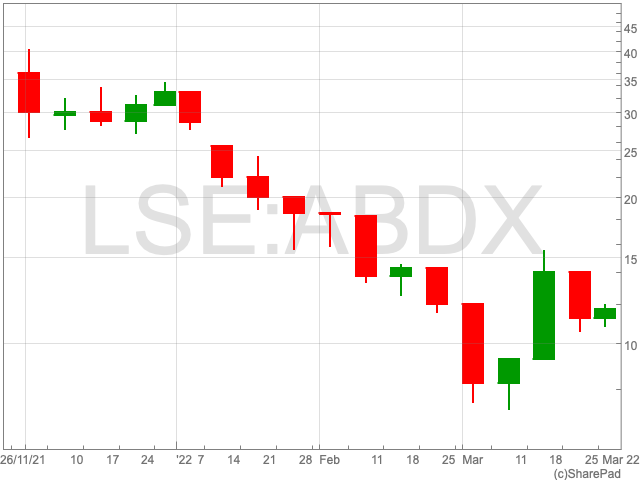
Abingdon Health’s shares lifted 9% to 11.7p following the announcement of 2 MoUs being signed.

Premier African Minerals completes Zulu Lithium DFS funding

0

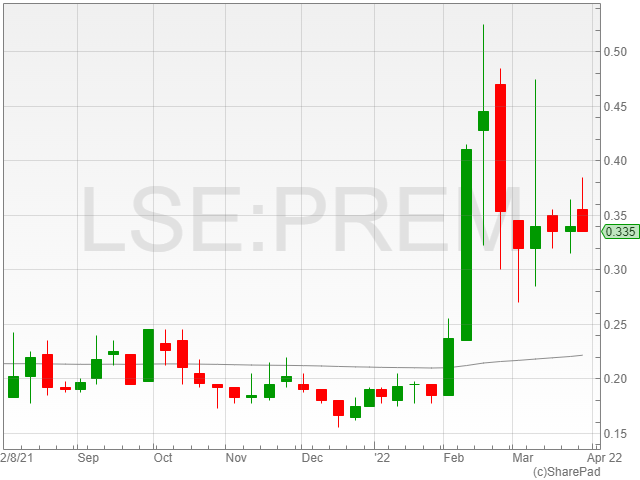
Premier African Minerals saw its share price fall 4.5% to 0.3p in late afternoon trading on Tuesday after the company announced the completion of its Zulu Lithium Definitive Feasibility Study (DFS) funding.

Premier African Minerals reported its subscription agreement with Suzhou TA&A Ultra Clean Technology to raise £12 million prior to expenses at an issue price of 0.4p per new ordinary share in order to continue its Definitive Feasibility Study (DFS) at the company’s Lithium and Tantalum project.

The news followed Premier African Minerals’ announcement regarding the DFS funding on March 8 2022, in which CEO George Roach welcomed the subscription from Suzhou TA&A:

“I am delighted to accept this Subscription from Suzhou TA&A, and particularly that this makes available to Premier a wealth of expertise in this industry whilst aligning future offtake and mine development with Yibin Tianyi Lithium Industry Co. Ltd.”

“[The company] is a major producer of Lithium Hydroxides, financier and take-off partner for the Manono Lithium and Tin project and who have completed long term spodumene off-take agreements with Pilbara Minerals Limited.”

“I look forward to welcoming a new board member who will be nominated by Suzhou TA&A and active involvement from Suzhou TA&A in our DFS, particularly in the area of test work and flow sheet development.”

The company today announced the pending appointment of geologist Dr Luo Wei to its board of directors for Premier African Minerals, Zulu Lithium Mauritius Limited and Zulu Lithium Private Limited.

CEO George Roach commented positively on the outcome of the DFS funding in the reported update.

“I reiterate my welcome to our new shareholders and to Dr Lou Wei, and express my appreciation for the confidence in Premier and Zulu,” said Roach.

“Premier has already taken steps to expedite issues associated with resource definition needed to complete mine optimisation and test work and we will continue to accelerate all aspects of the DFS underway.”

Russia to ‘drastically reduce’ military attacks in Kyiv and Chernihiv

0

Russia’s deputy defence minister announced today that Russia will “drastically reduce” its military attacks around Ukrainian cities Kyiv and Chernihiv.

Financial Times’ journalist Max Seddon reported that Russia’s deputy defence minister said Moscow had chosen to “fundamentally cut back military activity in the direction of Kyiv and Chernihiv” in an attempt to “increase mutual trust for future negotiations to agree and sign a peace deal with Ukraine.”

The update followed negotiations between the embattled states, and comes on the back of several proposed terms including Ukraine adopting a neutral status in return for security guarantees, which would stop the country from joining any military alliances or hosting any military bases.

The negotiations also proposed a 15-year consultation period concerning the status of Crimea, which Russia annexed in 2014.

However, the proposal would only come to pass in the event of a total ceasefire.

“If we manage to consolidate these key provisions, and for us this is the most fundamental, then Ukraine will be in a position to actually fix its current status as a non-bloc and non-nuclear state in the form of permanent neutrality,” said Negotiator Oleksander Chaly in a statement on a Ukrainian television broadcast.

“We will not host foreign military bases on our territory, as well as deploy military contingents on our territory, and we will not enter into military-political alliances.”

“Military exercises on our territory will take place with the consent of the guarantor countries.”

Genedrive hearing loss test issued MIB from NICE

0

Genedrive shares gained 10% to 27.5p on Tuesday after the UK’s National Institute of Clinical Excellence (NICE) issued a new Medtech Innovation Briefing (MIB) on the Genedrive hearing loss test, MT-RNR1.

The near-patient molecular diagnostics company’s price rose despite Gendrive’s reported poor performance in their half-year results earlier today.

Genedrive recently launched its new Genedrive System for Antibiotic Induced Hearing Loss (AIHL). The test will identify the cause of life-long hearing loss through screening for genetic mutation.

The trial for AIHL was CE marked in December 2019 and completed performance trials at Manchester University NHS Trusts in June 2021.

The company deployed the Genedrive MT-RNR1 test in the UK and Ireland earlier this month to Manchester University Hospital Trust for routine use.

Genedrive reported no revenues in H2 2021 compared to £0.4m in 2020 due to delays in product development.

Genedrive saw an operating loss of £2.8m compared to £2.9m in 2020 with effective management of costs leading to a decline in R&D costs from £2.3m to £1.9m. The loss prevailed from the previous year due to the stockpiling of Genedrive96 SARS-COV-2 Kits.

The company incurred a cost of £14k due to interest charged for leasing the business’ principal premises.

The company noted a pre-tax loss of £2.8m in 2021 compared to £671k profits in 2020.

Genedrive is now debt-free and has a cash balance of £6.3m in 2021 compared to £3.8m in 2020, benefitting from £1.2m of R&D tax credit.

The company’s loss per share was 3.3p in 2021 compared to earnings per share of 1.9p in 2020.

David Budd, CEO, Genedrive, said, “We have achieved some key milestones in this period, namely the CE marking of our Genedrive POC COVID-19 test, which was closely followed by a number of distribution agreements with key territories.”

“We have also made significant further progress with our AIHL system, establishing initial installations and generating significant evidence and support to make commercial progress.”

Budd believes the company is “well positioned to deliver on shareholder value” as the company has carefully managed its cash position to continue expanding its portfolio.

Credit card debt soars as cost of living spikes

0

Credit card debt soared by £1.5 billion in February as the cost of living spiked across the UK, along with an additional £400 million in alternative borrowing, including personal loans and store cards.

The figures look grim for households as “awful April” looks set to eat into money which families can no longer afford to spare.

The £1.5 billion rise in credit card debt was noted as equal to the past five months of debt combined, and a dramatic change from the strongest period for pandemic savings which saw UK customers pay off almost £5 billion of credit card debt in just one month.

Consumers also only put aside an estimated £4 billion in savings compared to £7.2 billion in February.

The debt figure is looking set to climb as the cost of living increases over the coming months, bringing bad news for households already squeezed beyond their margins off the back of the Covid-19 pandemic, which has pummelled the economy for two years.

Chancellor Rishi Sunak announced a selection of small measures in his Spring Statement in a bid to help ease the pressure from households. However, his offerings of a £1 billion fund to assist vulnerable households with rising costs and his National Insurance threshold rise to £12,570 a year is unlikely to do a great deal to curb the bite of skyrocketing energy and consumer goods costs.

“The nation is clearly already feeling the effects of the cost of living crunch, with credit card use soaring in February as rising prices push more people into debt,” said AJ Bell head of personal finance Laura Suter.

“It’s worth noting that the Bank of England figures also don’t include any of the Buy Now Pay Later market, which has boomed in recent years and accounts for a big chunk of the credit we all take on.”

“This means that the nation’s debt figure will be much higher in reality, as people choose to defer paying for stuff they can’t afford today.”

“More households are going to have no spare money to put away each month and will have to start eating through their savings as ‘awful April’ hits and the squeeze on all our incomes ramps up.”