The FTSE 100 gained 0.3% to 7,536 on Friday despite a softer than expected US job data release on Friday. The commodity focused FTSE also shook off a falling oil price to finish the week in positive territory.
Warning signs of a recession have been flashing with the US 5-year and 30-year Treasury yields inverting for the first time since 2006. With worries of an approaching downturn, investors would have watched Friday’s US job data closely for insight on the health of the world’s biggest economy.
The Non-Farm Payroll revealed an increase of 431,000 jobs in March, missing estimates but positively impacting the unemployment rate as it almost reached pre-pandemic levels.
“Wage growth exceeding forecasts could cause markets to wobble but equally that might encourage the Fed not to be overly aggressive at its next policy meeting,” commented Mould.
Oil prices bounced back and increased 0.3% to $105 a barrel on Friday, following sharp declines this week on news of Biden’s plan to supply oil from the US Strategic Petroleum Reserve.
FTSE 100 Risers
Reckitt Benckiser shares increased 3.1% to 6,015. Miners Anglo American and Rio Tinto gained 2.9% to 4,087p and 2.1% to 6,211p respectively.
The retail sector seems to be picking up today despite the rise in the cost of living with Next shares were up 1.9% to 6,141p, JD Sports increased 2% to 151p and Kingfisher shares gained 1.6% to 260p.
Unilever shares rose 1.9% to 3,519p as Morgan Stanley cut the company’s recommendation to ‘over-weight’.
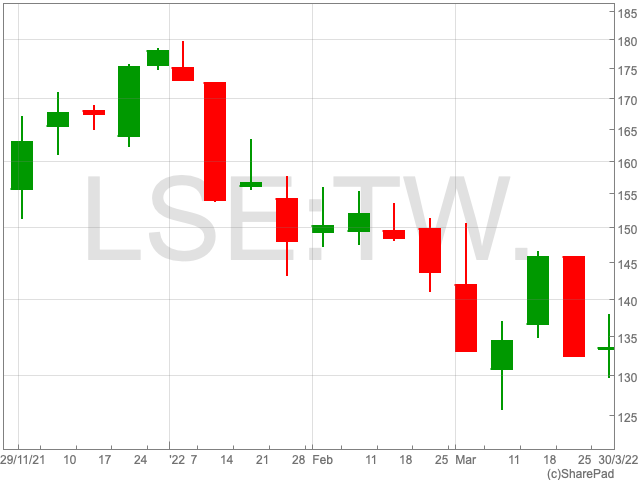
Housebuilding shares had some reprieve on Friday as the sector rebounded from a recent sharp sell off, with Taylor Wimpey leading the sector with gains of 2% to 133p, aside from the exception of Barratt Developments with shares falling 0.1% to 521p.
FTSE 100 Fallers
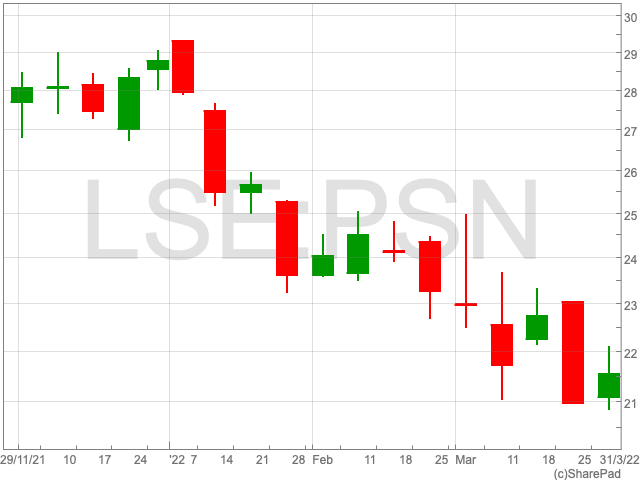
Aviva shares are down 1.6% to 444p as the company announced the successful completion of its £1bn buyback programme for an average of 408p per share.
3i Group shares decreased 0.67% to 1,379p after the company provided an update on its portfolio regarding no investments in listed close-ended investment funds.
Electrocomponent shares were down 4% to 1,040p. Catering providers, Compass Group shares fell 3.1% to 1,598p. Prudential shares lost 1.1% to 1,121p.
Pearson shares fell 0.8% to 743p as it continued to drop after Apollo withdrew its interest in the company.
The FTSE 250 was up 0.2% to 21,218 and the AIM was up 0.2% to 1,044.5 on Friday as a number of positive company updates helping lift London’s small and mid cap indices.
Rebounding retailers such as Currys also helped lift the indices after recent downside in the sector.
The price of oil hit $104 per barrel for Brent Crude after US President Joe Biden announced the released of one million barrels per day from the country’s Strategic Petroleum Reserve, in a bid to knock down the spiking oil price due to Russia’s war in Ukraine.
Energy prices are set to impact households with a 54% rise in the energy price cap announced by Ofgem today. The cap increase is estimated to add £700 per year to the average household energy bill.
FTSE 250 Risers
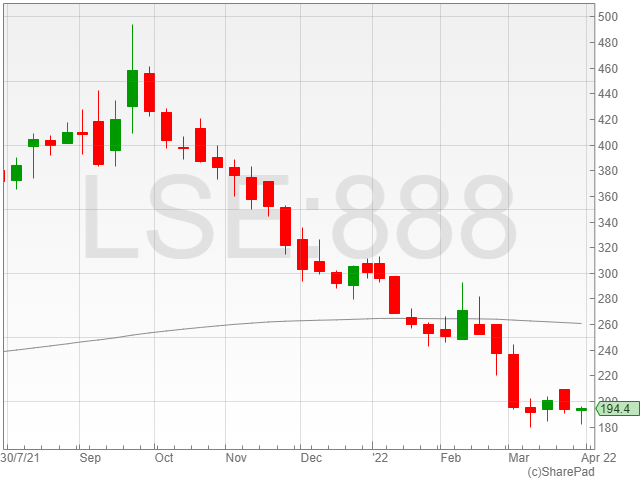
888 Holdings shares rose 5.2% to 194.1p as the company enjoyed the boost from its announced strategic investment to launch the group’s new 888Africa venture across select regions in the continent.
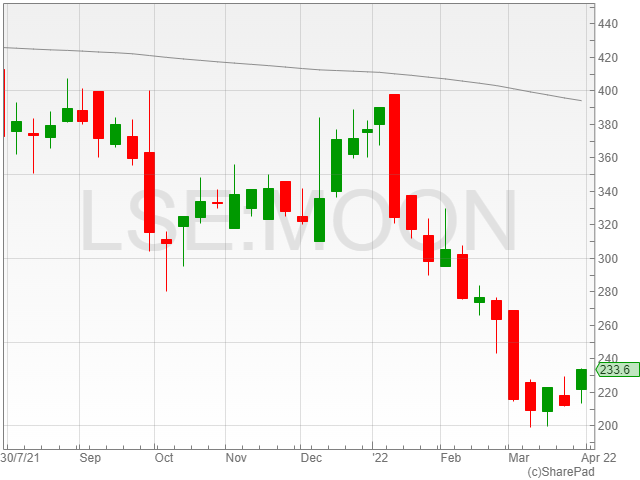
Moonpig shares were up 4% to 233.1p in anticipation of the company’s trading announcement next week, which is projected to report an optimistic £283 million in revenue by analysts.
“The group reported a strong set of half year results, and upgraded revenue targets.”
“However, things are still slowing quite dramatically,” said Hargreaves Lansdown equity analyst Sophie Lund-Yates.
“Next week it will be important to see that Moonpig is on track to reach the £283m in full year revenue that analysts are expecting, although this might be a tall order.”
Ferrexpo shares increased 4.1% to 194.3p in anticipation of its trading update next week, however disruption to the firm’s operations in Ukraine have thrown a spanner in the work for its results.
“We will look to publish our accounts as soon as the situation in Ukraine permits us to do so,” said Ferrexpo CEO Jim North.
FTSE 250 Fallers:
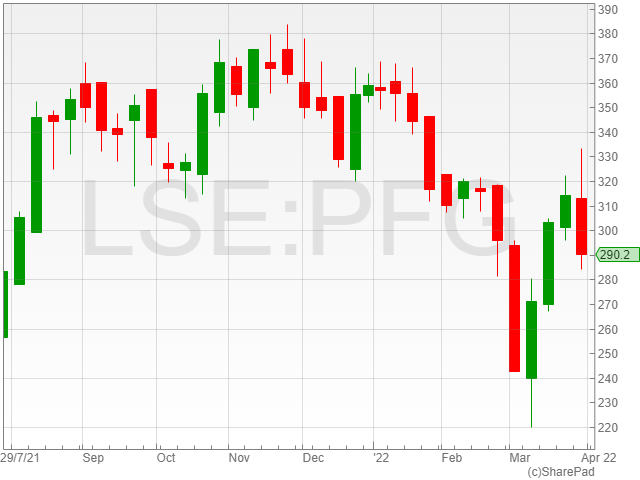
Provident Financial fell 5.1% to 290.9p following the dissipating excitement of its 2021 results, which reported a £173.9 million pre-tax profit increase from £39.5 million in 2020.
Oxford BioMedica shares decreased 4.7% to 642p.
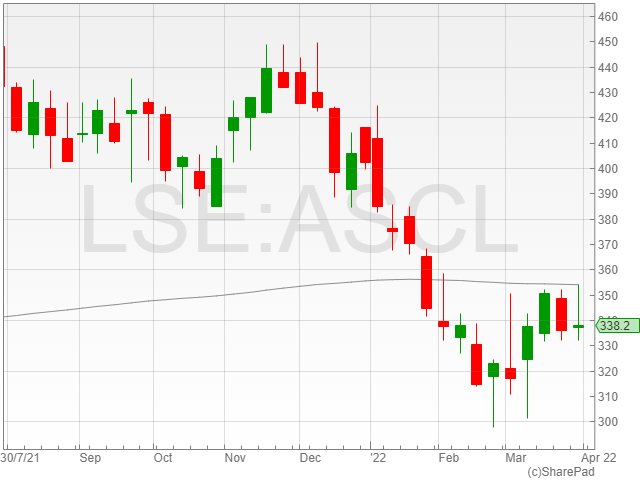
Ascential shares dipped 2.6% to 337.4.
AIM Risers:
Quiz shares were up 44.8% to 15.5p after its trading update reported predictions of a £500,000 profit after devastating losses last year, alongside a projected £78 million company revenue.
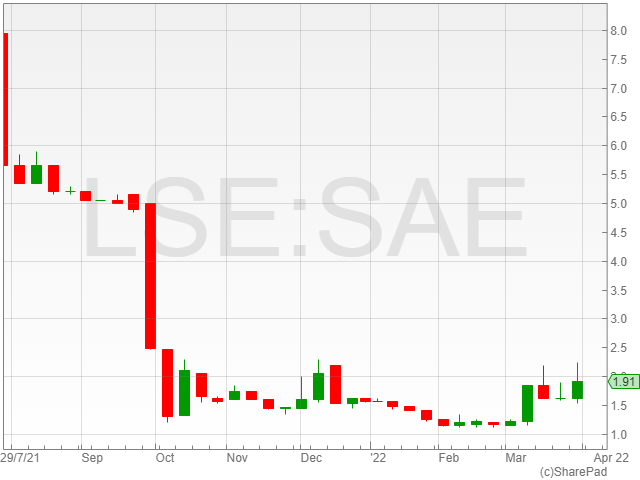
Simec Atlantis Energy rose 23.2% to 1.9p following a £2.5 million loan for its MeyGen tidal stream project from Scottish Enterprise.
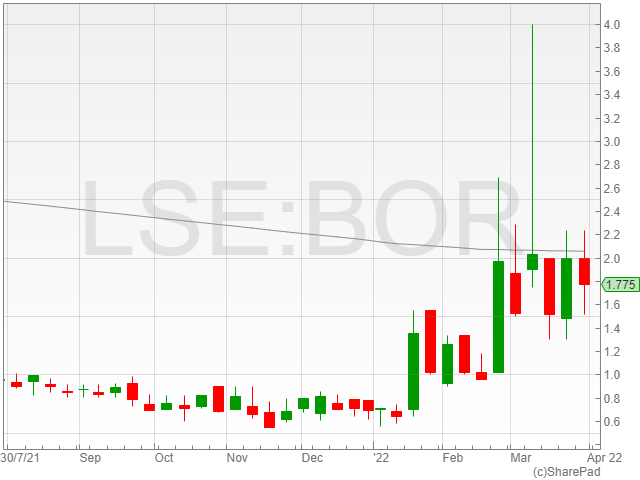
Borders and Southern Petroleum shares increased 17.1% to 1.7p, despite the falling oil prices.
AIM Fallers:
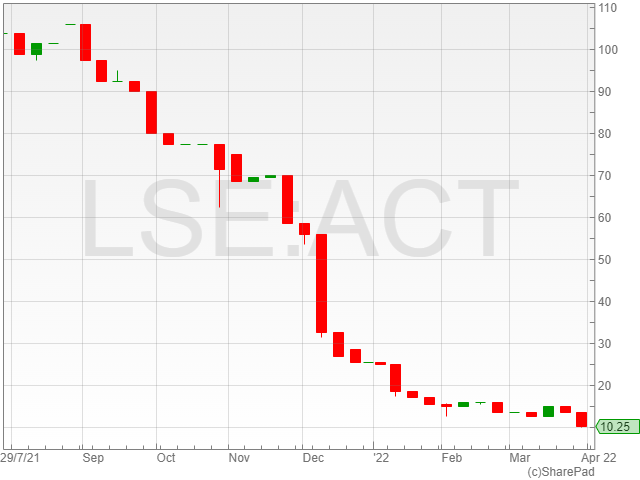
Sustainable work-from-anywhere digital ecosystem company Actual Experience shares fell 14% to 11.4p as the company continued suffer as economies reopened.
UK house prices saw its fastest rise in 17 years in March, with the average house price increasing £33,000 compared to 2021, however, a number of pressures including the cost of living crisis alongside rising interest rates could deal a blow to prices in 2022.
On Thursday, the National Statistics Office announced a growth of 1.3% in the UK’s GDP, with a 6.8% fall in the household saving ratio.
It’s not breaking news that consumer spending and the cost of living are currently being impacted by rising fuel costs and inflation.
With the exception of well-off consumers, buying a home, and keeping up with mortgage payments is becoming more and more difficult. Companies such as Lloyds and Santander are trying to ease the process by introducing competitive mortgage rates, however, if interest rates continue to rise, banks will be forced to increase mortgage rates.
With the cost of living on the rise, paying off mortgages is becoming a struggle for consumers who are tackling problems associated with keeping the heat on and finding cheaper modes of transport for their daily commute. This struggle may hurt buyers’ sentiment and impact activity in the housing market.
If soaring inflation alongside increasing interest rates persists, the housing market may see a slow down in the coming year.
Mike Scott, the chief analyst at estate agency Yopa, said “[the] housing market cannot ignore the wider economy forever” resulting in a slow down but not a “significant fall” in housing prices.
Housebuilding shares
Now question is, what’s going to happen to housebuilding stocks with prices rising all over the place?
To begin with, we have to look at the consideration that margin pressures will prevail when the cost of construction increases for the property builders. With higher costs and flat or decreased revenues, the company will see a decline in profits.
When analysing property builders and their financial health, investors should look out for the strength in the company’s order book, its revenue levels, dividend yield, and factors impacting its operation and outlook for the coming year.
Taylor Wimpey
Taylor Wimpey (TW) saw an increase in revenue to £4.28bn from £2.79bn in 2020, almost reaching pre-pandemic levels of £4.34bn. The company’s pre-tax profit more than doubled from 2020 to £679m in 2021.
Despite a drop in orders from 10,685 to 10,009 in 2021, the group achieved a total of 14,302 projects, including collaborations with joint ventures, which exceeded a total of 9,799 houses in 2020.
Taylor Wimpey also saw a year-on-year increase in net cash from £545m in 2019 to £719m in 2020 and £837m in 2021. The group returned to paying a dividend from nil to 8.2p in 2021, and has a dividend cover of 2.1x. Taylor Wimpey has a forward PE of 6.9x and a ROCE of 16.7. Taylor Wimpey shares lost 24% YTD.
Countryside Properties
Countryside revenues soared 54% to £1.37bn from £892m. The property builder made an operating loss of £5.4m in 2020, however, in 2021, the company returned to profits of £71m.
Countryside held net cash of £41m, which is down from £98m during 2020. The group’s EPS has also increased from a loss of 8p to a profit of 13.8p in 2021. In 2021, Countryside Properties increased output by 33% to 5,385 homes compared to 2020.
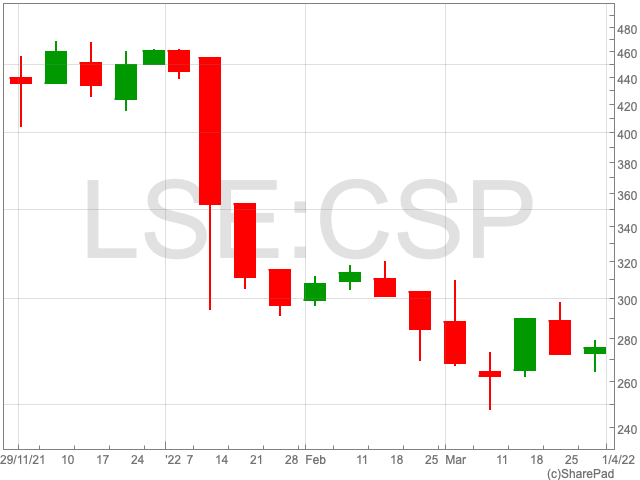
The shares of Countryside Properties lost nearly 40% since January 2022. The group has a P/E ratio of 9.2x and a ROCE of 7.7x.
Persimmon
Persimmon reported total revenue of £3.61bn in 2021, an increase from £3.33bn in 2020, just missing pre-pandemic levels of £3.66bn in 2019.
The company said “disciplined cost control, combined with a positive pricing environment” had a positive impact on profit before tax, as it increased from £783m to £966m in 2021.
Persimmon completed 14,551 houses in 2021 compared to 13,575 with the average new house selling price at £237,078 instead of £230,534 in 2020. The group also reported current forward sales of £2.21bn since January 2022 and said that demand has stayed strong despite the cost of living rising across the globe.
The group proposed a total dividend of 235p for 2021, unchanged from 2020, with intereim dividend of 125p and a final dividend of 110p. The group’s dividend cover is 2x and has a forward P/E of 8.4x with a 25.4x ROCE. The company’s shares dropped 25% YTD.
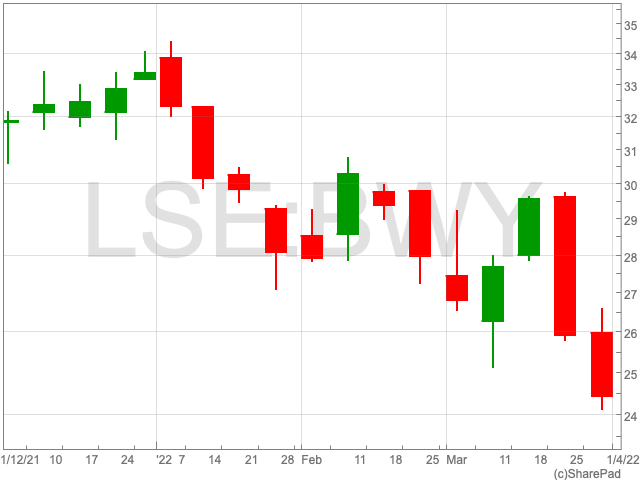
Bellway
Recently, Bellway posted its interim results in which the company reported a 3.5% rise in revenue to £1.78bn in 2022 as a response to strong market conditions.
Bellway had an output of 5,694 houses in 2022 compared to 5,656 in 2021 due to “strong operational delivery” despite production problems. The company also saw a 5.8% rise in the overall reservation rate to 202 per week compared to 191 in 2021.
The company’s profits increased by 8.9% to £327m as opposed to £300m in 2020 as Bellway maintained cost controls and price optimisations. The group noted net cash of £195.8m which will help them invest in opportunities for growth.
Bellway increased its interim dividend to 45p compared to 35p in 2021, and the board anticipated a 3x dividend cover with respect to underlying earnings. However, the company plans to reduce that coverage to 2.5x to assist in obtaining more growth opportunities through investments.
Bellway’s forward P/E ratio is 6.1x and ROCE is 14.5x with a dividend yield of 4.8%. Bellway’s shares dropped 26% since the start of 2022.
In general, it seems that property builders are optimistic about the future with them confident about sales for 2022 and are showing a propensity to invest in additional land. Going forward, I think despite consumer spending taking a hit, and potential market volatility, home building stocks will provide long-term investor value.
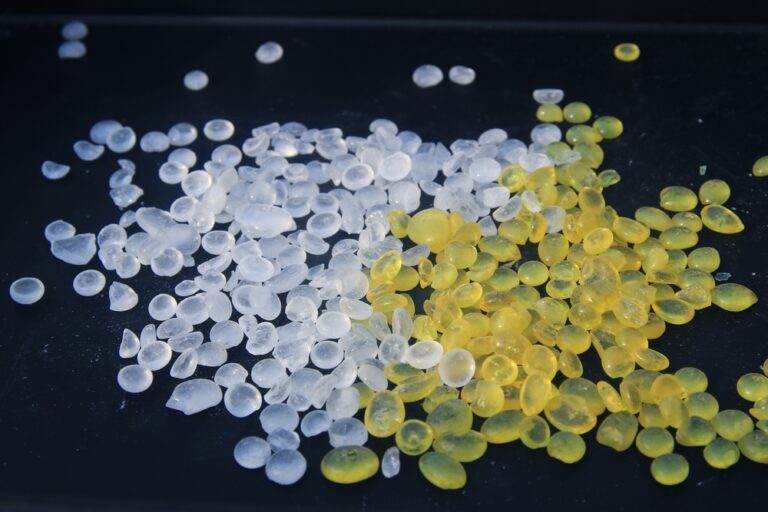
The business will reportedly create a new Adhesive Technologies division for Synthomer, giving the group a leading position in the international adhesive market.
“The business is well-invested, with six manufacturing facilities, a highly skilled and experienced workforce and has a … strong innovation pipeline which will deliver meaningful revenue growth over the next few years,” said Synthomer Chief Executive Calum MacLean in a statement last October.
Synthomer said it expects the new division to bring in an earnings per share in the double-digits within its initial year, alongside annual pre-tax synergies predicted at $23 million at the close of its third year in operation.
The company highlighted its increased exposure to attractive high-end markets with strong gross domestic product (GDP) fundamentals.
The news followed the company’s strategy reported in its 2021 annual results, in which 99% of shareholders voted in favour of raising its borrowing restriction from £1.5 billion to £2 billion in order to accommodate the acquisition, with an extra £200 million equity placing at an Extraordinary General Meeting in December last year.
“Our Adhesive Technologies division adds a very exciting new growth dimension to Synthomer,” said Synthomer CEO Michael Willome.
“Its portfolio takes us into more specialised, more global and higher growth segments and as part of Synthomer, we are confident that we will be able to expand this part of our business significantly.”
“I would like to extend a warm welcome to our new Adhesive Technologies employees around the world.”
“I look forward to working together and realising the value potential that lies ahead.”
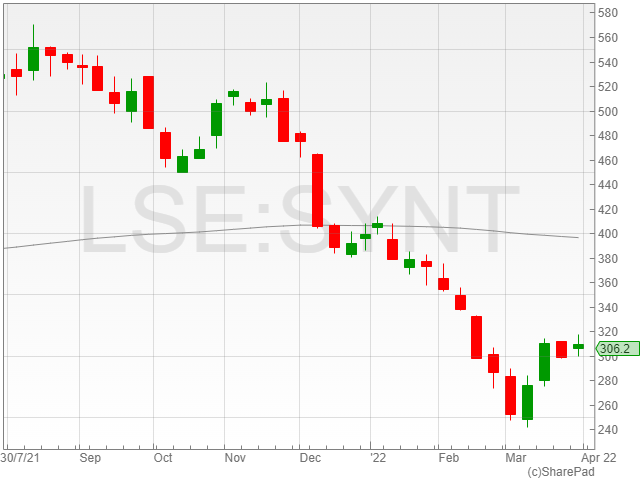
Synthomer shares were up 0.2% to 306.4p in early afternoon trading on Friday after the company made its announcement.
The US added 431,000 Nonfarm Payrolls (NFPs) in March this year, coming below the forecast 490,000 increase projected by the US Bureau of Labour and Statistics.
However, the figure was compensated by a 750,000 result in February, representing a 72,000 surge compared to initial predictions of 678,000.
Unemployment in the US fell to 3.6% in the latest figures from the US Nonfarm Payrolls (NFP) report, amounting to a 0.1% boost against the projected level of 3.7%.
Government payrolls reportedly increased by 5,000, a decline from the 11,000 rise in February, and manufacturing payrolls increased by 38,000 in March, which exceeded the expected figure of 30,000 and matched the 38,000 gain from February, which had initially been predicted at 36,000.
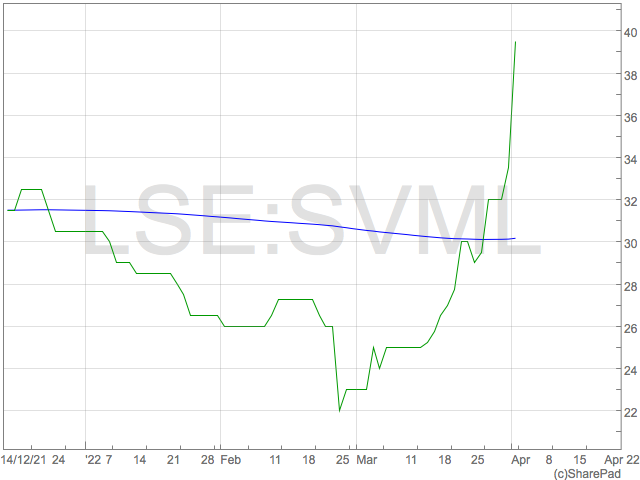
The Sovereign Metal’s share price soared on Friday after the company halted trading in their ASX listing pending an announcement relating to the minerals resource estimate at their Kasiya titanium rutile project.
Sovereign Metals shares were up nearly 20% at 39.9p at the time of writing on Friday.
Sovereign’s shares listed on the ASX have been halted for a short period until an announcement is made to the market regarding the Kasiya resource, or the start of trade on the ASX 5th April. Trading in Sovereign’s AIM listing remains unaffected.
Sovereign Metals shares have gained steadily since their lows in February and with shares trading at 39.9p, the stock is now up 81% since the closing low of 22p.
The Sovereign team highlighted the value of graphite in the supply of renewable energy at the roundtable and how the Kasiya project would produce graphite in a manner that reduces emissions by 80% when compared to graphite production at a mine in China.
“The importance of sustainable supply chains for clean-tech solutions such as lithium-ion battery powered electric vehicles cannot be underestimated,” said Sovereign Metals Chairman Ben Stoikovich.
Evraz announced today that it has cancelled its proposed demerger of PJSC Raspadskaya from the company after sanctions against Russia rendered the decision “technically impossible.”
The proposal was intended to demerger Evraz’s metallurgical coal assets consolidated under PJSC Raspadskaya, and was announced back on 15 December 2021.
The agreement was subject to approval from Evraz’s board of directors, who reportedly voted in favour of the proposal on 11 January 2022 after considering the risks and uncertain variables attached to the process.
Evraz also said that the company’s shares will continue to represent an interest in PJSC Raspadskaya, subject to the restoration of Evraz’s shares listing.
Millions of consumers are set to feel the cold impact of a £700 annual increase in energy costs after the 54% energy price cap rise took effect today.
A predicted 18 million households are bracing for the chilling impact, as prices push the limits of consumer budgets beyond their margins in an already strained period.
The latest price cap is estimated to raise the average household energy bill to £1,971 per year, with an upcoming rise in October this year predicted to send prices spiking to £2,600.
Prepayment consumers are unfortunately set to face a higher price jump of £708, taking their average energy bill this year to approximately £2,017.
The news comes on the back of a 30-year record level of inflation, which is currently at 6.22% and set to peak at over 8% this winter.
The price of oil has also seen massive surges, as countries continue to cut off their supply of oil from the Russia since its invasion of neighbouring state Ukraine.
President Joe Biden announced on Thursday that he would be releasing supplies from the US Strategic Petroleum Reserve, which amounts to an estimated 180 million barrels of oil from the reserve’s stockpile of 568 million barrels.
The US has pledged to release around one million barrels of oil per day in a bid to curb the spiking prices on the back of Russia’s lost resources.
The announcement brought the price of oil plummeting down to $104 per barrel for Brent Crude, after reaching levels beyond $120 in March.
However, the news comes as more of a sticking plaster than an absolutely solution for the surging energy prices.
Following Thursday’s announcement of the Biden Administration considering a 180m barrel release of oil from its Strategic Petroleum Reserve (SPR) in an attempt to reduce fuel costs, President Biden made an announcement of beginning the release of 1m barrels per day for 6 months in May.
President Joe Biden ordered an unprecedented oil release from US reserves in an effort to cut fuel prices, which have been aggravated by Russia’s invasion of Ukraine. He also called upon oil corporations to increase supply to help with his plan to reel in oil prices.
Today, President Biden is announcing a two-part plan to lower gas prices for families by immediately increasing the supply of oil and working towards American energy independence that would reduce demand for oil and bolster our clean energy economy. pic.twitter.com/bXhPSVx0ti
The first part of the plan is to enhance the supply of oil immediately by doing anything they can to stimulate domestic output right now, and using the record SPR release, to aid the demand for higher supply in the months ahead, said the White House.
Domestic output is predicted to rise by one million barrels per day this year and approximately 700,000 barrels per day the next year.
“This is not the time to sit on record profits, it is time to step up for the good of your country,” Biden addressed oil executives as corporations continue with normal oil productions with disregard for rising oil prices.
The oil and gas sector presently owns more than 12 million acres of non-producing federal land, as well as 9,000 underused but already-approved production permits, according to the White House.
As a result, Biden is urging Congress to levy taxes on wells from leases that haven’t been used in years, as well as acres of public land “that they are hoarding without producing.”
President Biden said that the decision to release the oil was made in agreement with western partners, who have also joined the effort to put economic sanctions on Russia in the aftermath of its invasion of Ukraine. In consideration of OPEC+ not ramping up supply, the POTUS hopes for allies to join him with releasing their own reserves which Biden believes will help cut the cost if they released “30 to 50m barrels”.
The proceeds from the oil release will be used by the Department of Energy to refill the SPR in future years.
Oil prices dropped 2% on Friday to $102 per barrel as the POTUS announced the largest release of oil reserves to help cut fuel prices.
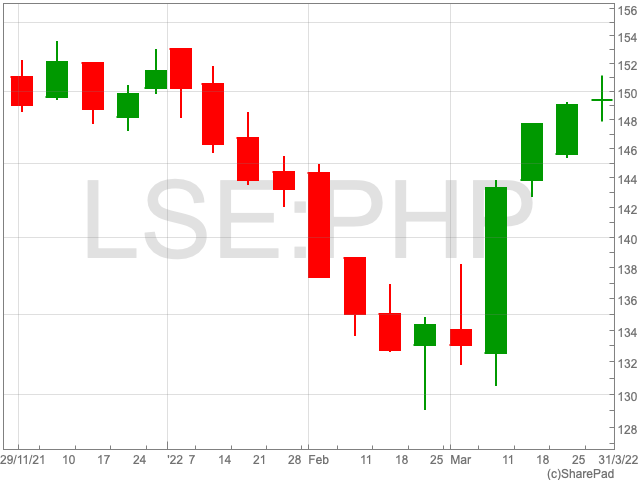
The REIT focussed on healthcare facilities, Primary Health Properties (PHP) shares rose 0.6% to 149p after the company announced an acquisition of a newly refurbished clinical facility in Chertsey, Surrey for £6.95m.
The Surrey and Borders Partnership NHS Foundation Trust has a new 20-year FRI lease on the property, which includes RPI-based rent reviews. From the structure, the Trust will primarily provide drug and alcohol rehabilitation, as well as administrative operations.
This acquisition contributes to WAULT’s overall portfolio. Harry Hyman, CEO of PHP said they have a “strong pipeline of opportunities in the UK and Ireland,” and with this transaction, PHP’s portfolio grows to 522 assets, 20 of which are in Ireland, with a total ‘contracted rent roll’ of £141m.
“We are delighted to be making this acquisition of a healthcare asset that houses services being relocated from the nearby St Peter’s Hospital in line with the NHS’s strategy of moving ancillary services away from hospital settings,” said Hyman.
“Originally constructed in the late 1990s the property has undergone a comprehensive refurbishment, which will also enhance the building’s environmental credentials, to provide clinical accommodation on the ground floor and office space on the upper floors.”