AIM movers: Cohort beats expectations, but Corero Network Security sales forecast reduction

4

Defence company Cohort (LON: CHRT) increased full year revenues by one-third to £270m, while earnings are 27% higher at 54.44p/share. The dividend is 10% higher at 16.3p/share.  Net cash of £5.3m was better than expected. The order book was worth £616.4m at the end of April 2025, which means that 79% of this year’s forecast revenues are covered. There are opportunities from the UK Strategic Defence Review. This year’s earnings will be ahead of expectations. The share price increased 14.2% to 1759p.

Alien Metals (LON: UFO) says joint venture partner West Coast Silver has announced the completion of a 12 hole drilling programme at the Elizabeth Hill silver project in Western Australia. Alien Metals has a 30% free-caried interest. The first drill hole had a significant silver zone and there are also signs of gold. The share price rose 20.6% to 0.1025p.

Capital Metals (LON: CMET) has received the first drill results from the Taprobane minerals project in Sri Lanka. There were exceptional heavy mineral grades with very low slimes content. Grades of over 60% have been confirmed. There will be further new of existing drilling. Capital Metals believes it is near to finalising a $2m investment related to the Ambeon option at 2.75p/share. The share price recovered 14.6% to 3.15p.

Hospital accounting software developer Craneware (LON: CRW) issued a trading statement with 2024-25 revenues 9% higher at $205.7m. Annual recurring revenues rose 7% to $184m. Net revenues retention is 107%. EBITDA increased 12% to more than $65m. Sales are not subject to tariffs. The share price improved 12.2% to 2525p.

FALLERS

Cybersecurity service provider Corero Network Security (LON: CNS) has increased annual recurring revenues by one-quarter to $21.6m because of demand for managed services, but recognised revenues are lower in the first quarter. Canaccord Genuity has cut its 2025 forecast revenues from £28.7m to £24.1m and that would mean the company returning to loss. Software and equipment sales are lower, and visibility of orders is poor. The share price slumped 37.3% to 9.25p.

Beauty products manufacturer Creightons (LON: CRL) increased full year revenues by 2% to £54.1m. The growth came in private label with lower contributions from branded products and contract manufacturing. Underlying pre-tax profit improved from £1.2m to £3.5m due to cost savings. Net cash was £3m at the end of March 2025. The final dividend is raised from 0.45p/share to 0.5p/share. The share price declined 9.3% to 39p.

Transport analytics services provider Cordel (LON: CRDL) says full year revenues were in line with downgraded expectations of £4.8m. Net cash was better than expected at £1.5m. A move into profit is still forecast for this year. The share price slipped 6.9% to 6.75p.

Petro Matad (LON: MATD) raised £156,000 from the retail offer at 0.8p/share. There was up to £500,000 on offer. The share price fell 4.37% to 0.765p.

McBride shares fall on private label growth stagnation

McBride shares fell on Wednesday after the hygiene and cleaning goods firm reported revenue growth of 0.7% for the year to June 2025, with adjusted operating profit expected to meet expectations.

The European manufacturer of private label and contract cleaning products saw total volumes rise 4.3%.

However, the company highlighted a slowdown in private label growth. Private label volumes increased just 1.4%, whilst contract manufacturing surged 48.9% due to new long-term deals.

McBride noted that demand for private label products remains strong, but market share has stabilised at current levels. The company said retailers are increasingly seeking cost reductions to support lower market pricing amid ongoing inflationary pressures.

Slowing private label growth will hamper the outlook for the group, and shares were trading down 12% at the time of writing.

Contract manufacturing proved the standout performer, benefiting from significant new long-term contracts secured in recent periods.

The group continued reducing debt, with net debt falling £26.3m to £105.2m. This represents a net debt cover ratio of 1.2x.

McBride announced plans to reinstate annual dividends for the current financial year, with details to be revealed alongside full-year results on 17 September 2025.

FTSE 100 shakes off hot UK inflation

Mining giants Antofagasta and Rio Tinto helped the FTSE 100 higher on Wednesday as investors digested hotter-than-expected UK inflation and the latest instalment of Trump’s tariff threats.

After trading above 9,000 for the first time in history yesterday morning, the FTSE 100 sold off during the afternoon and finished the session deep in the red.

Despite an overnight wobble in US stocks and UK inflation coming in at 3.6%, London’s leading index was 0.2% higher at the time of writing.

Interest rate futures markets quickly priced in fewer interest rate cuts this year after the latest UK inflation reading, which weighed on UK-centric sectors such as REITs and the housebuilders.

“The spectre of inflation has returned to haunt markets after a period when investors’ attention has largely been centred elsewhere,” said AJ Bell investment analyst Dan Coatsworth.

“UK inflation increasing to an 18-month high in June thanks to higher fuel and food prices will only reinforce concern about inflationary pressures as the market weighs the potential impact on interest rates,” said AJ Bell investment analyst Dan Coatsworth.

Rio Tinto and Antofagasta were among the gainers after the miners released their Q2 production reports. Both rallied in early trade before falling back.

“Rio Tinto delivered a solid Q2 production performance, with standout results in copper and bauxite, and the strongest iron ore production for a second quarter since 2018,” explained Adam Vettese, market analyst for eToro.

“However, despite the headline strength in output, iron ore shipments fell short of expectations and the increasing share of lower-grade SP10 ore raises concerns about price realisations and margin pressure. The reaffirmation of guidance at the low end of the shipment range suggests lingering operational constraints, particularly around logistics and equipment availability, following Q1’s weather disruptions.”

Antofagasta reported a 16.9% increase in copper sales year-to-date.

AstraZeneca offset gains in the miners with a 1.2% loss after a disappointing clinical trial.

“Heavyweight stock AstraZeneca dragged on the index after a late-stage trial on an experimental treatment for a rare condition failed to meet its primary target,” said Coatsworth.

Real Estate Investment Trust Land Securities was the FTSE 100’s top faller with losses of 2%.

An 11% year-on-year rise in Intermediate Capital Group’s AuM sent the stock to the top of the FTSE 100 leaderboard with a 3.5% increase.

Is Barratt Redrow the pick of the housebuilders with shares near multi-year lows?

Barratt Redrow shares are trading near multi-year lows after reporting worse-than-expected completions for FY2025 and warning of historical remedial costs.
Investors baulked at lower-than-expected completions in 2025 and an outlook for 2026 that would mean two years of lost progress.
Barratt Redrow shares were down nearly 10% on the session after releasing their 2025 trading statement, and are trading at the lowest levels since 2022.
Barratts are the worst performing FTSE 100 housebuilder of 2025 - but are they the best buy?
Barratts' total home completions fell by 7.8% to 16,565 from 17,97...

UK inflation jumps to 3.6%

UK inflation increased again in June, piling further pressure on UK households and businesses at a time when the labour market is slowing and interest rates remain at elevated levels.

“CPI came in at 3.6% in June, up from 3.4% in May with core inflation quite a bit higher at 3.7% in June compared with 3.5% in May,” explained Rob Morgan, Chief Investment Analyst at Charles Stanley.

“Perhaps more importantly, annual services inflation stayed at 4.7% despite many forecasting it would fall back. This is a key metric to watch as it is driving the overall headline number and is highly sensitive to employment costs which have recently been on the rise.”

Economists had predicted inflation would rise 3.4% in June.

The primary concern for households, businesses, and equity bulls is that the higher inflation rate alters the trajectory of UK interest rates and hinders the Bank of England’s ability to cut interest rates in the near future.

Interest rate futures markets quickly priced in fewer rate cuts this year as the news broke on Wednesday. The pound rose against the dollar, and the FTSE 100 opened lower.

However, analysts point to upcoming jobs data that may force the BoE’s hand. The UK labour market is showing signs of slowing down, and interest rate setters will be mindful of the need to support the economy to avoid any threats to price stability in the future.

“Today’s CPI data spells more pressure for consumers thanks to the surge in food prices, but the overall picture doesn’t quite spell the end for any further rate cuts,” said Chris Beauchamp, Chief Market Analyst at IG.

“Core goods and services inflation was broadly contained, and the focus shifts now to the job numbers tomorrow to see if there are further signs of weakness that might keep the BoE on course to ease policy in upcoming meetings.”

Exein Secures €70M Series C to combat IoT cyber threats

Rome-based cybersecurity firm Exein has raised €70 million in Series C funding to expand its protection of critical infrastructure against backdoor attacks through connected devices.

Balderton led the round, with new investors Supernova and Lakestar joining existing backers 33N, United Ventures, and Partech.

The funding comes as hackers increasingly target smart devices as entry points into critical systems. One in three cyber attacks on companies now involves connected devices, creating urgent demand for specialised IoT security solutions.

Founded by repeat entrepreneur and cyber intelligence veteran Gianni Cuozzo, Exein has become the world’s largest embedded runtime security provider. The company currently protects over one billion connected devices globally and is experiencing explosive growth of more than 450% year-over-year.

Exein’s AI-enabled platform provides real-time threat detection across critical infrastructure, semiconductors, energy, automotive, healthcare, and robotics sectors. The company has forged strategic partnerships with leading manufacturers, including MediaTek, Supermicro, Kontron, SECO, and AAEON.

The fresh capital will fuel Exein’s global expansion into the US, Japan, Taiwan, and South Korea, while strengthening its European operations. The company is also developing runtime security solutions for AI infrastructure and large language models operating within devices, rather than centralised cloud environments.

“Exein’s extraordinary growth is a testament to the urgent demand to secure devices which are ubiquitous in our everyday lives,” said Gianni Cuozzo, Founder & CEO, of Exein.

“Embedded security at the device level is fundamental, and we are proud to support manufacturers in providing the highest levels of security, offering them confidence in knowing they are compliant with the latest security legislation. I’m extremely proud to be fortifying the foundations of European tech innovation, and to have the trust of our partners and investors as we expand globally and continue our mission of building the digital immune system for the connected world.”

FTSE 100 steady near 9,000 as markets gear up for US earnings

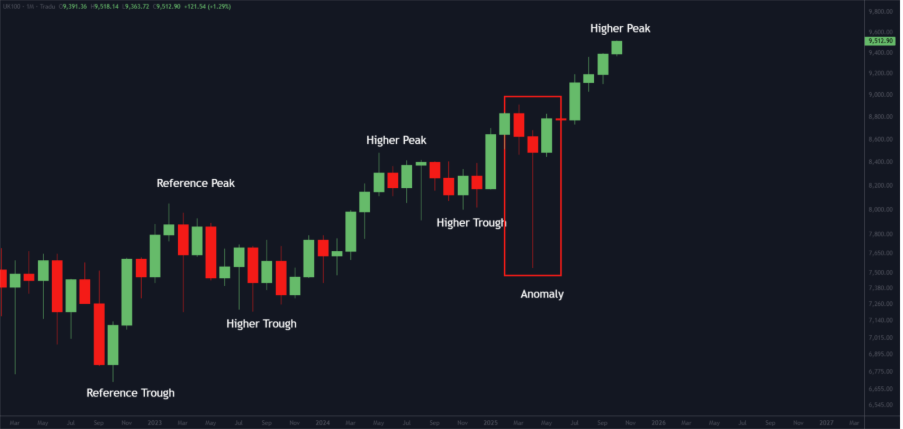
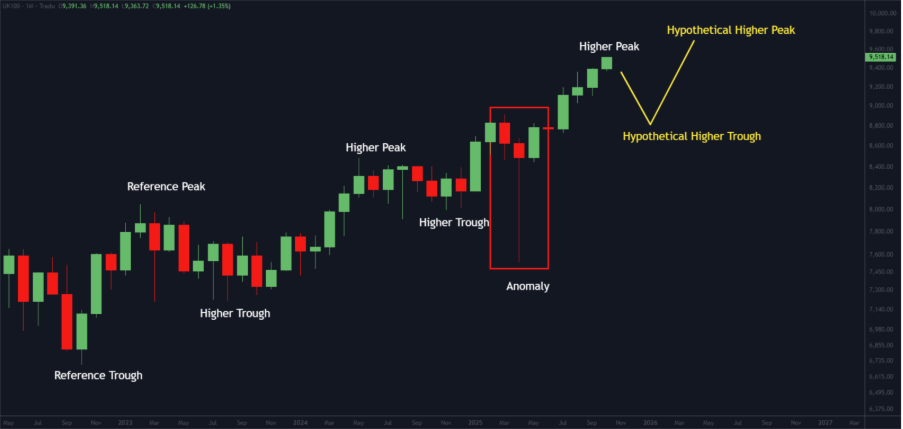
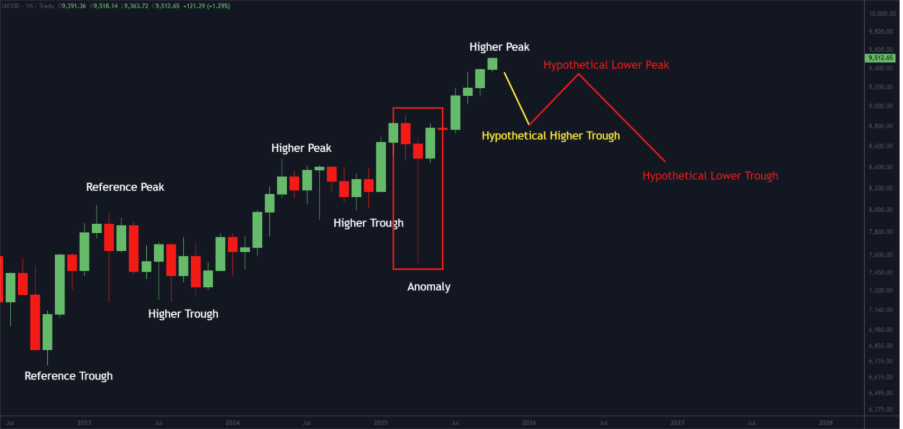
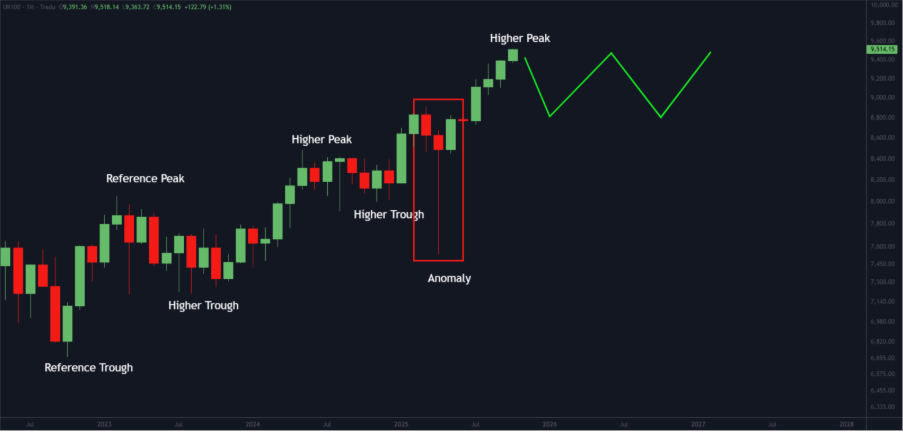
The FTSE 100 remained steady on Tuesday after London’s leading index surpassed 9,000 for the first time in history, underscoring the strength of UK stocks so far in 2025.

Breaching the 9,000 mark is a major milestone for London’s leading shares after spending years in the shadow of US stocks. The UK’s weighting towards natural resources and defensive sectors, such as pharma and utilities, has proved to be a magnet for investors seeking alternatives to US stocks as questions about US exceptionalism begin to creep in.

The UK’s low valuation has been well documented, but this year has seen the first signs of investors making sustained efforts to exploit the good value in UK shares, culminating in record highs above 9,000.

The FTSE 100 was trading at 8,992 at the time of writing.

“It’s party time as the FTSE 100 has smashed through the 9,000 level. This is another big tick in what’s proving to be a momentous year for the UK stock market. It took eight years for the FTSE 100 to go from 7,000 to 8,000, yet only two years to break through 9,000. That suggests the market is shaking its unloved reputation and more investors like what’s on the menu,” explained Dan Coatsworth, investment analyst at AJ Bell.

“Outperforming the main US indices since January is a major achievement for the UK and the FTSE 100 going through 9,000 builds on this success. It should help to convince overseas investors that the UK market isn’t dull and boring.”

Although the FTSE 100’s rally in 2025 has been driven by differences from US markets, gains in US indices did contribute to boosting sentiment on Tuesday, as Nvidia shares soared in the premarket and JP Morgan reported strong results.

It has been rare for US and UK stocks to break record highs simultaneously, but that’s exactly what’s happening this week, with the NASDAQ scaling fresh highs alongside the FTSE 100.

“This surge in U.S. equities futures comes ahead of a series of high-impact economic releases scheduled for this week. Investors appear to be betting on the resilience of the U.S. economy and its corporate sector amid ongoing uncertainty surrounding trade tensions and monetary policy,” said Samer Hasn, Senior Market Analyst at XS.com.

News that Nvidia will be able to ship key AI chips to China sent the stock higher and set US stocks up for more record highs on Tuesday.

In the UK, Experian was the FTSE 100’s top riser after reporting strong Q1 results driven by organic growth. Experian shares were 4% higher at the time of writing.

“We delivered strong Q1 growth and have further advanced our strategic priorities,” said Brian Cassin, Chief Executive Officer, Experian. “Total revenue growth at constant currency was 12%, with organic revenue growth of 8%, sustaining recent strong underlying performance and our financial outlook for the year is unchanged.”

Barratt Redrow’s results weighed on the housebuilders after the group issued a downbeat assessment of the UK property markets alongside an 8% drop in completions. Barratt Redrow shares were down 6% at the time of writing and are trading at the lowest levels since 2023.

“The sector is firmly in the red after a shocking update from Barratt Redrow whose full-year results reveal home completions below expectations,” Dan Coatsworth said.

“It says consumers remain cautious and mortgage rates are not falling as quickly as hoped. The general tone is one of frustration and a lack of confidence in the near term, which has soured sentiment across the housebuilding sector. If one of the biggest housebuilders in the country is flagging headwinds, it doesn’t give much hope to the others.”

AIM movers: Pfizer confirms efficacy of Oxford BioDynamics EpiSwitch and Sosandar write down reduces profit

0

Oxford BioDynamics (LON: OBD) says Pfizer has published information on its use of EpiSwitch biomarkers as a liquid biopsy in evaluating tumours and treatment outcomes for the JAVELIN bladder 100 trial. The EpiSwitch test can determine whether a tumour has high or low immune activity. This confirmation of efficacy will help to grow EpiSwitch sales. The share price jumped 101.9% to 0.525p, the highest level since the beginning of March.

Digital loyalty and promotions platform operator Eagle Eye (LON: EYE) did better than anticipated in the year to June 2025 with revenues 1% higher at £48.2m and EBITDA is 9% ahead at £12.2m. A recent contract loss led to the downgrading of 2025-26 forecasts. Annualised recurring revenue are £32m after that contract loss. New business is being won, and profitability should be rebuilt in 2026-27. A £1m share buyback is planned. The share price recovered 9.52% to 230p.

TV programme producer Zinc Media (LON: ZIN) has secured and due revenues of £35m, so far this year, up from £27m at the same point last year. Simplifying the group structure has reduced annual overheads by £300,000. Net cash was £700,000 at the end of June 2025. The share price improved 6.57% to 73p.

Sold state batterie developer Ilika (LON: IKA) is receiving £1.25m in grants for the manufacturing of the first Goliath A-Sample batteries for the automotive industry. This part of a programme named PRIMED, which will help with the industrialisation of production. The share price rose 7.69% to 42p.

FALLERS

Womenswear retailer Sosandar (LON: SOS) reported a lower than expected underlying pre-tax profit of £200,000 in the year to March 2025, because of stock adjustments. There was a loss in the previous year. Revenues fell from £46.3m to £37.1m as the move to reduce online price promotion activity hit sales but improved margins. Six stores have been opened. The four store in market town are trading well, but the two in shopping centre have not been as successful. Online sales have benefited in the areas where there are stores. No new stores are planned for this year. There is a strong start to this financial year with first quarter revenue 15% ahead. Initial licensing revenues will come through later in the year. Net cash is £7.3m. The share price declined 21.9% to 6.25p.

Data analytic technology developer Cirata (LON: CRTA) increased first half bookings by 58%, but the second quarter figure was down, and the cash outflow is slowing. The annualised cash overhead is being reduced to $12m-$13m. The DevOps assets are being sold for up to $3.5m. The share price decreased 18.3% to 23.7p.

Oil and gas producers Arrow Exploration (LON: AXL) has drilled three wells on the 50%-owned Tapir block in Colombia. These are already producing. Net production is 4.6-4.8mboe/day, so the new production has more than offset declines elsewhere. Cash was $13.5m at the beginning of July. Cash was $6.1m at the end of June 2025. There should be no requirement for a fundraising this year. The share price slipped 7.14% to 16.25p.

Embedded computer products manufacturer Concurrent Technologies (LON: CNC) continues to improve revenues and profit. Interim revenues are 27% higher at £21.3m, while pre-tax profit edges up from £2.3m to £2.4m. The second half has started positively, but there is uncertainty about US demand. The share price fell 11.9% to 174p.

Rolls-Royce shares: will nuclear ambitions drive next leg higher?

Rolls-Royce shares have recorded astronomical gains since their post-pandemic lows, providing investors who dared to buy the stock in the midst of the coronavirus market crash with once-in-a-lifetime returns.

The airline industry’s recovery from the pandemic and Rolls-Royce’s delivery on an ambitious growth strategy have powered shares higher, taking Rolls-Royce shares to lofty valuations that some may argue demand additional growth from the company to justify the current multiples.

Notwithstanding the growth prospects of their core aerospace, defence and power segments, investors will be looking towards Rolls-Royce’s ‘New Markets’ division, which includes the firm’s nuclear Small Modular Reactors (SMR), for a potential source of future growth.

Rolls-Royce is positioning itself at the forefront of a nuclear renaissance, with its Small Modular Reactor (SMR) technology representing what could become the company’s most significant long-term growth driver.

As governments worldwide pledge to triple nuclear capacity by 2050, the British engineering giant’s SMR programme offers the potential for growth that could substantially enhance Rolls-Royce shareholder returns over the coming decades.

The Nuclear Opportunity: A £54 Billion Prize

The numbers surrounding Rolls-Royce’s SMR venture are nothing short of extraordinary. Each SMR power station will generate 470 megawatts of low-carbon energy—equivalent to more than 150 onshore wind turbines—providing stable, affordable, and emission-free power to one million homes for at least 60 years.

This represents more capacity and longevity than any other SMR currently in development.

The economic potential is equally impressive. A fleet of Rolls-Royce SMRs could contribute up to £54 billion to the UK economy between 2025 and 2105, according to the company.

With global demand for nuclear power surging as countries including the United States, Canada, France, Japan, and Sweden commit to ambitious nuclear expansion plans, Rolls-Royce appears uniquely positioned to capture a significant share of this growing market.

First-Mover Advantage: Racing Ahead of Competition

Rolls-Royce SMR has established a commanding lead in the regulatory approval process, sitting up to eighteen months ahead of competitors in European regulatory frameworks. This first-mover advantage became even more pronounced when the company achieved a significant milestone by completing step two of the Generic Design Assessment (GDA) regulatory process in the UK and progressing to the third and final step on 30 July 2024. Crucially, Rolls-Royce is the only company to have reached this milestone, further cementing its competitive advantage.

The company’s nuclear credentials are built upon more than half a century of engineering heritage, developed by a team with an unrivalled track record in nuclear design, regulatory engagement, manufacturing, and assembly. This deep expertise, combined with the regulatory head start, positions Rolls-Royce SMR as the UK’s premier green export technology and a potential world leader in SMR deployment.

Recent New Markets Division Activity

Rolls-Royce has been particularly active in securing strategic partnerships and advancing commercial opportunities. A standout achievement came in September when Rolls-Royce SMR was named as the preferred supplier for SMR construction by the Government of the Czech Republic and the Czech State utility, ČEZ Group. This landmark agreement includes a strategic investment by ČEZ into Rolls-Royce SMR and an exclusive commitment to deploy up to 3GW of electricity capacity in the Czech Republic.

The division’s momentum continues with its shortlisting by Vattenfall as one of two companies potentially selected to deploy a fleet of SMRs in Sweden. This programme forms part of Vattenfall’s strategy to meet rising electricity demand whilst helping Sweden achieve its goal of creating a fossil-free economy by 2045. Additionally, Rolls-Royce SMR is engaged in various selection processes with multiple international counterparts, indicating strong global interest in the technology.

With first power still planned for the early 2030s, contingent upon securing orders from the UK Government’s SMR procurement process, the company is well-positioned to capitalise on the growing nuclear market.

Although SMR’s are still in their early stages, recent activity demonstrates demand for Rolls-Royce products that is likely to pick up in the coming years.

SMR Investment

The development of cutting-edge nuclear technology requires substantial investment. The Rolls-Royce New Markets division reported an underlying operating loss of £177 million in the most recent period, compared to £160 million in the prior year. This £17 million increase reflects planned expenditure to meet crucial development milestones in the SMR programme.

Trading cash flow presented a more significant outflow of £181 million compared to £63 million in the previous year, representing a £118 million increase in cash investment. Whilst these figures may appear concerning to some investors, they should be viewed in the context of the substantial long-term opportunity and the critical importance of maintaining the company’s competitive advantage in this emerging market.

The question investors will have to answer for themselves is whether the anticipation of future contribution to the bottom line from SMRs is enough to support shares and drive them higher as the rollout gathers pace.

Of course, Rolls-Royce isn’t reliant on its nuclear ambitions for growth. Civil Aerospace revenue grew 24% over last year, while Power Systems operating profit surged 40% to account for 20% of group profits. Rolls-Royce has multiple sources of growth, but there is a feeling that the group’s PE Ratio of 33 requires a sharp uptick in profit before long.

Barratt Redrow completions fall in 2025, shares sink despite buy back

Like all FTSE 100 housebuilders, Barratt Redrow had a tough year in 2025. The housing market staggered along, hampered by higher interest rates and economic uncertainty, while investors and housebuilders themselves waited for the Labour government to act on their pledge to boost the housing market.

Barratt investors are still waiting. The housebuilder completed 16,565 homes during the year, down 7.8% from Barratt and Redrow’s combined total of 17,972 in the previous year.

Despite the drop in completions, there are reasons to be optimistic. Net private reservations per active sales outlet climbed to 0.64 per week – a notable improvement from the aggregated performance of 0.55 for both Barratt and Redrow in FY24.

However, the London market proved particularly challenging. Lower than expected completions from international customers and private rental sector investors affected Q4 performance, pushing total completions slightly below the company’s guided range.

The group announced a share buyback, but it wasn’t enough to offset the disappointment around slow completions. Shares were down 8% at the time of writing.

“Barratt’s £100m buyback will please shareholders, but it does little to mask the challenges facing Britain’s biggest housebuilder,” said Mark Crouch, market analyst for eToro.

“As completions for the year missed guidance, management pointed to softer investor and international demand in London, another sign that the capital’s housing market is faltering. The merger with Redrow was pitched as a sector-defining move, yet the market response has been largely indifferent. Strategic logic around scale and land pipeline depth is sound, but synergy alone isn’t enough to lift sentiment.”

Forward sales improvement

Investors will be pleased to see the forward sales position improving during FY25. Total forward sales reached £2.92bn at year-end, representing 9,835 homes. This compared well to the aggregated position of £2.64bn for 9,426 homes in the previous year.

Contractually exchanged homes comprised 67% of the order book, providing visibility for future deliveries. The total average selling price increased to approximately £344,000, with private sales averaging £380,000.

The Redrow acquisition is yielding tangible benefits ahead of schedule. Barratt Redrow has confirmed £69m of cost synergies against its target of at least £100m. Approximately £15m of these synergies contributed to FY25 profits, with a further £45m expected in FY26. The group is well placed for the eventual pick-up in the UK housing market.

Outlook

The slowdown in activity during 2025 was well telegraphed. There were few surprises in today’s numbers, and investors will look to the future for reasons to be optimistic.

For FY26, the company anticipates total home completions between 17,200 and 17,800, including approximately 600 from joint ventures. This would represent a welcome increase on 2025’s completions, but would still lag the combined total of completions in 2024.

“Although demand during the year has been impacted by consumer caution and mortgage rates not falling as quickly as hoped, there remains a long-term structural under-supply of housing in this country,” said David Thomas, Chief Executive of Barratt Redrow.

“Our increased scale, three market-leading brands and strong land pipeline put us in a unique position to rapidly accelerate volume delivery as consumer confidence strengthens and the benefits of planning reform materialise at a local level. We remain confident in our medium-term ambition to deliver 22,000 high-quality homes a year, and in the long-term demand for our high-quality homes.”