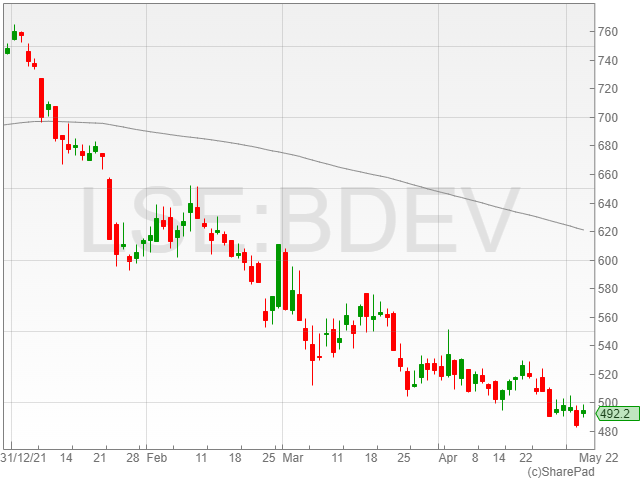
Barratt Developments shares were up 1.2% to 490.4p in late morning trading on Thursday, after the company announced that it was on track to deliver total completions between 18,000 to 18,250 homes in FY2022, including around 750 houses from joint-ventures in line with management expectations.
Barratt confirmed a projected growth of 4% to 6% year-on-year for FY2022 on the back of the building firm’s home completions.
The group noted net private reservations per active outlet for each average week of 0.93 against 0.83 in 2021, alongside good progress throughout its construction activity with 362 equivalent homes built per week against 321 the previous year.
Barratt Developments confirmed a balance sheet with year-end net cash anticipated to come between £1 billion to £1.1 billion.
The housing firm said it was fully forward sold for FY2022, with total forward sales at £4.3 million on 1 May 2022, compared to £3.6 million year-on-year.
The company noted that continuing global events placed its outlook in a degree of uncertainty, due to factors including cost inflation and supply chain issues from the war in Ukraine.
However, Barratt Developments assured investors that it believed the overall strength of the housing market and the group’s operational performance, along with its strong balance sheet, would provide it with sufficient flexibility to respond to any market impacts going into 2022.
“We are seeing strong demand across the country for our high quality, energy efficient homes and our excellent operational teams are working hard to meet this demand,” said Barratt Development CEO David Thomas.
“We expect to deliver full year trading results in line with the Board’s expectations as we remain focused on growing towards our medium-term target of 20,000 homes a year, delivering high quality sustainable developments the country needs, creating jobs and supporting the economy across England, Scotland and Wales.”
“As our business grows, we remain committed to leading our industry in quality, service and sustainability.”
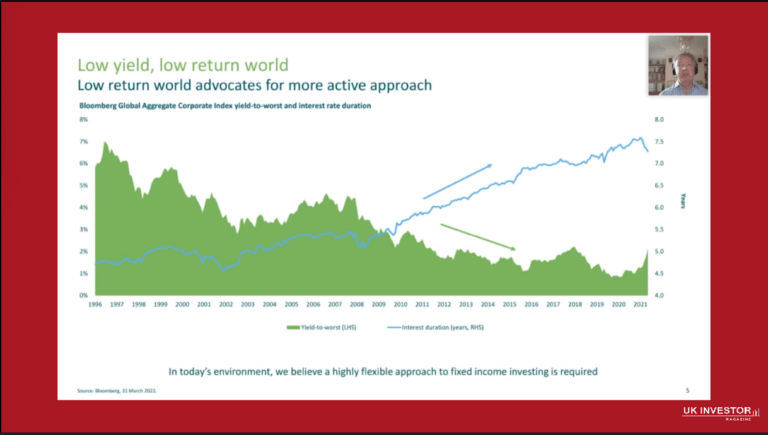
The M&G Credit Income Investment Trust presents at the UK Investor Magazine Investment Conference May 2022.
We were thrilled to host, Adam English, Fund Manager of the M&G Credit Income Investment Trust for a deep dive into fixed income investing in 2022.
The M&G Credit Income Investment Trust aims to generate high-quality, reliable income from a diversified credit portfolio, while seeking to preserve investors’ capital through low net asset value (NAV) volatility. The trust has the flexibility to invest in both public and private debt, which allows individual investors to access potential opportunities normally only available to large institutions.
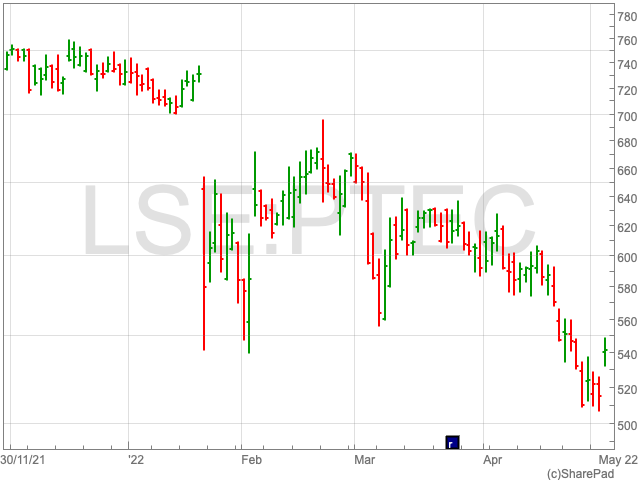
Playtech noted an excellent start to the year with unaudited Adjusted EBITDA greater than €100m in the first quarter of 2022 said the company in an announcement on Thursday, which led shares to rise 5.2% to 541p.
Playtech’s excellent start to the current financial year has continued since the FY 2021 results were disclosed on March 24, 2022, with unaudited Adjusted EBITDA of more than €100m for the first quarter.
The group’s encouraging first-quarter trend has continued into April. Both the B2B and B2C industries have contributed to the outstanding growth.
The same patterns have continued for Snaitech since H2 2021, with a strong start to the year fueled by its internet business, retail rebound, and favourable sports outcomes said Playtech.
B2B performance has been fueled by strong momentum from the Americas, particularly Caliplay in Mexico, as well as solid performance across the board, including Live Casino with several more licenses and games being added.
Following the opening of the Ontario market, Playtech has secured numerous new customers in the US and announced new partnerships in Canada.
Given that we are still early in the year and that the macro background is unpredictable due to the pandemic and the crisis in Ukraine, the Board is remaining careful and vigilant.
The Board is also aware that the current level of business strength cannot be guaranteed to continue for the balance of the year.
However, the company’s recent performance and present business trends have placed Playtech in a strong position, and the Board hopes to be able to provide additional market updates as the year progresses.
Future Opportunities
The TTB investment group has made some headway in discussions about its potential bid for Playtech. However, it is impossible to predict whether or not an offer for the company will be made, or the terms on which such an offer will be made.
Despite the current difficult capital market conditions, Caliplay and Playtech are still exploring the possibility of a transaction that would allow Caliplay to access the US market more quickly.
The escalating conflict in Ukraine sent the price of Brent crude to $110 per barrel, boosting Shell to a quarterly profit of $9.1 billion, its highest on record and triple its previous $3.2 billion profit year-on-year.
Russia Impact
Shell confirmed it took a $3.9 billion charge as a result of suspending its Russia operations.
However, the Russian invasion of Ukraine has driven oil prices to heights in excess of $120 per barrel over the past few months since the conflict began in late February.
“The Cinderella story we’ve seen among the oil majors continued this week as Shell posted record profits thanks to an extremely accommodative environment,” said Hargreaves Lansdown equity analyst Laura Hoy.
“The group’s exit from Russia took a $4bn bite out of the bottom line, but excluding this one-off expense, the group’s been firing on all cylinders as rising prices offset minor volume declines.”
Shell Dividend and Shares Buyback
Shell also announced a dividend of $5.4 billion, amounting to 25c per share for Q1 2022, with an increase of 4% over the dollar dividend for Q4 2021.
The company confirmed that $4 billion of shares had been repurchased under its $8.5 billion share buyback programme for HY1 2022, with the remaining $4.5 billion expected for completion in advance of Shell’s Q2 2022 results.
Windfall Tax Calls and Renewable Energy Growth
Energy company BP also reported skyrocketing profits, despite the $25.5 billion impact from pulling out of its 19.75% stake in Rosneft earlier in the year.
However, it appears that oil and gas companies are scrambling to grow their green energy credentials in an attempt to kick extra tax discussions to the curb.
“Calls for a windfall tax have been rebuffed by claims that the majors will start to clean up their acts, spending some of the excess to build out their renewables divisions,” said Hoy.
“While renewables is just a drop in Shell’s $19bn bucket, it’s likely to become a much larger slice of the pie as the energy transition ramps up.”
“This technology is largely unproven, so oil and gas investors that have become accustomed to generous returns are taking a leap of faith. If the group’s able to build out this part of the business to become a reliable profit driver while oil prices are still high, it would make the transition all the smoother.”
The US Federal Reserve (Fed) announced the steepest increase in interest rates in over 20 years by raising its benchmark interest rate by 0.5 percentage points, in an effort to cool the country’s skyrocketing inflation.
The rise is the greatest since 2000, and it comes after a 0.25% rise in March, the first since December 2018, and more rate hikes are likely.
The Federal Reserve is expected to hike rates seven times in 2022, hitting 2.9% in early 2023, according to the Economist Intelligence Unit.
Officials also expect to reduce their $9tr asset portfolio beginning in June, a strategic decision that will raise borrowing costs even more.
The Fed had addressed the rising inflation in terms of implications that the invasion of Ukraine has on the US economy and further supply chain disruptions due to Covid-related lockdowns in China are not helping.
When the pandemic hit the US in March 2020, rates were cut to near zero, but they were already low, and years of low rates had left the United States and other countries unprepared for a sudden rise in inflation.
The Fed had rejected growing prices as “transitory” until recently, expecting them to fall as economies recovered from the pandemic.
Inflation in the US is at a 40-year high, thanks to the coronavirus’s extraordinary impact on the global economy.
The Consumer Price Index was 8.5% higher in March compared to 2021, owing to higher gas, housing, and food prices.
The rising costs of basic goods and services are now outpacing typical pay increases and the Fed’s approach is already having an influence on the economy as a whole.
Mortgage rates have risen over 2% since the beginning of the year which is the quickest in decades. As a result, several hot real estate markets have begun to cool down.
Stock market selloffs have been triggered by the impact of tighter monetary policy as well said the Guardian.
Jerome Powell, Fed chair, said, “Inflation is much too high, and we understand the hardship it is causing. We are moving expeditiously to bring it back down.”
“Some of us are old enough to have lived through high inflation and many aren’t. But it’s very unpleasant. If you are a normal economic person, then you probably don’t have that much extra to spend, and it’s immediately hitting your spending on groceries, on gasoline, on energy, things like that. We understand the pain involved.”
Powell stated that the economy remained robust and that he was optimistic that the Fed could act without causing a recession, but he also stated that the Fed will engage aggressively to combat inflation.
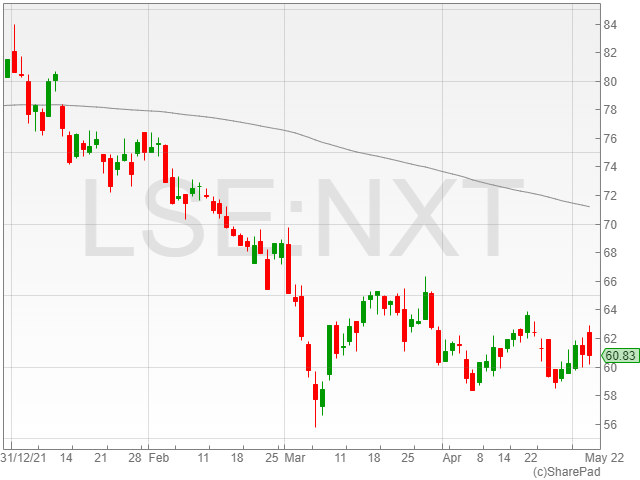
Next shares were up 0.7% to 6,132p in early morning trading on Thursday following the fashion group’s Q1 2022 trading update, which reported a giant leap of 285% in retail growth.
Next announced a 21.3% increase in total product full price sales, in line with the company’s guidance for the period, and an 11% decrease in online sales year-on-year.
The retailer confirmed that it would be maintaining its full year pre-tax profit guidance at £850 million, representing a 3.3% uptick from the previous year, alongside an earnings per share rise of 5% to 557.3p.
“What NEXT haven’t said today is more important than what they have. Markets were concerned that the group would be struggling with costs and availability of product, putting margins under pressure, even before customers struggled with the squeeze on their own incomes”, said Hargreaves Lansdown select fund manager Steve Clayton.
“Instead, the company have reiterated their guidance from March, suggesting that their cost controls are succeeding.”
Next reported a total online sales growth of 47% across the last three years, and a 21% boost in total product full price sales over the period.
Excluding online sales from Russia and Ukraine following the firm’s closure of its websites in the regions, overseas sales declined 7%, with a reported 60% growth against 2019.
The retail group mentioned expected guidance of 0.8% growth in full price sales throughout Q2-Q4 2022-2023 in the central guidance range, with a lower projection of a 2.9% drop and an upper guidance estimate of 4.6% growth.
“[The] year is unfolding as the group had planned and whilst back in March NEXT management were throwing caveats around like confetti, so great were the uncertainties, come May they are no longer stressing the downside risks,” said Clayton.
Next: Cause for optimism
Next also reported 1.6 million shares repurchased at 6,552p per share under its buyback scheme, amounting to £107.5 million, which reduced the number of shares issued by 1.2% since the group’s financial year close at the end of January 2022.
“The company have continued to buy back shares, spending £107m so far this year, which will help to boost earnings per share growth.”
The fashion group reported a strong slate of results, which should help them survive the cold bite of inflation and lowered consumer shopping as the difficult year ahead threatens to uproot the less essential expenses in the market.
“NEXT’s strength of cash flows leaves them far better placed than most retailers to continue prospering even when times get tough. And they certainly are tough right now,” said Clayton.
“The group’s digital strengths served them well through the pandemic and will help them prosper in the future. NEXT remains the retailer best placed to continue to thrive, both on the high street and online.”
BAE Systems noted £21.3bn in sales during 2021 and expects the group’s sales to grow 2-4% in 2022.
The defence company reported an underlying EBIT of £2.2bn and an underlying EPS of 47.8p last year, and now the group is expecting 4-6% growth for both EBIT and EPS.
For 2022, the group predicts a Free Cash Flow of greater than £1bn and assumes that the cumulative Free Cash Flow between 2022 and 2024 of more than £4bn.
All of the guidance predicted by BAE Systems is based on an exchange rate where £1 is equivalent to $1.38.
If the present dollar rate holds, earnings will be hampered, with EPS sensitivity of about 1p for every 5 cent change.
The group is continuing to mitigate the main financial implications following the group’s recommendations.
BAE Systems expects a solid year of order intake, and order flow has been positive thus far, particularly on its long-term programmes.
The majority of the orders they have received have a long cycle, which will help the group meet its growth targets in the next years and there is a pipeline of opportunities across all industries to strengthen the growth prospects.
The forecast for spending in the United States is optimistic for BAE Systems. On March 9, the bill for the Fiscal Year 2022 Omnibus Appropriations was signed into law.
Many of its essential programmes, such as combat vehicles, the F-35 and other electronic warfare programmes are funded in this $743bn budget for FY22.
The President’s request for $773bn for the Department of Defense in Fiscal Year 2023 is well-matched with the present US National Defense Strategy readiness and modernization priorities of the US military services.
The Defence Command Paper in the United Kingdom reaffirmed pledges to large long-term programmes in sophisticated warships, submarines, and combat aircraft design and manufacturing, providing for long-term investment in these critical sovereign capabilities as well as substantial support for the cyber domain.
BAE Systems can support its UK customer’s objectives, and the opportunity pipeline is positive, with domestic, export, and collaborative potential highlighted.
Europe
In Europe, Germany’s large increase in defence spending is critical for long-term defence funding.
Other countries are growing or are projected to increase their defence budgets in response to the threat environment, and NATO countries are moving closer to, if not already at, their 2% GDP pledges.
Through BAE Systems’ positions on the Eurofighter Typhoon, the group’s participation in MBDA, its BAE Systems Hägglunds and Bofors companies in Sweden, and through US Foreign Military Sales, the group remain well positioned in the region.
Rest of the World
In the Middle East, BAE expects defence and security to remain a top concern due to its long-standing connections with governments and companies, as well as prolonged regional volatility and the nature of the group’s long-term contracts.
Renewals of existing long-term support contracts are progressing as planned, and BAE Systems continue to pursue several opportunities with current clients.
Through its Australian business, which is already expected to grow significantly owing to the group’s contracted roles and through export prospects from its UK, US, and Australian businesses to the area, BAE Systems’ portfolio is well-positioned to profit from increased defence spending in the Asia Pacific.
The Board of BAE said that the 2021 final dividend of 15.2p will be paid with shareholder approval on 1 June 2022 and the group’s interim results are expected in July.
Allegra Dawes, Senior Analyst at Third Bridge, said, “BAE reconfirmed their guidance for 2022 despite supply chain and logistical challenges. The company projects sales growth between 2-4% and earnings growth between 4-6% compared to 2021.”
“Defence spending across BAE’s key geographies is set to increase in coming years which will provide positive momentum for current and future program development.”
Regarding the Russi-Ukraine war, Dawes thinks that it is “unlikely to have a dramatic impact on demand for BAE systems” and added that their experts do not foresee “major capital investment any time soon.”
Dawes also said that Third Bridge’s experts predict “more countries committing to meet NATO’s defence spending target of 2% of GDP,” however, those countries, such as the United Kingdom would want to keep those capabilities within their borders.
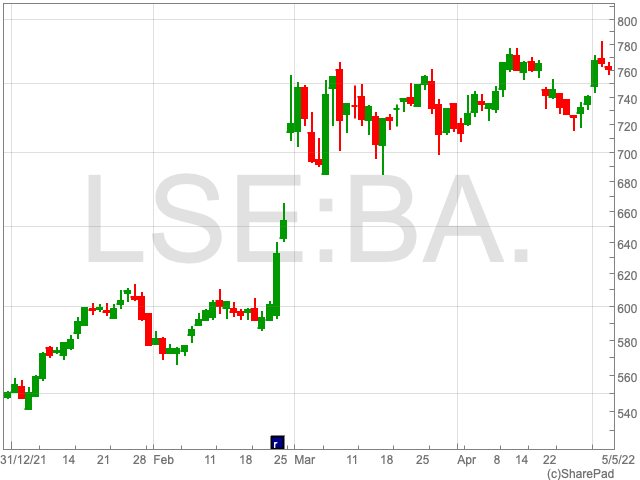
BAE Systems’ shares have fallen 0.65% to 760p despite the company stating unchanged guidance for 2022 in their latest trading update.
MIGO Opportunities Trust present at the UK Investor Magazine Investment Trust Conference May 2022.
We were delighted to welcome managers Nick Greenwood and Charlotte Cuthbertson to discuss their ‘trust of trusts’.
MIGO Opportunities Trust plc (MIGO) is a closed-end investment company, specialising in deep value opportunities and special situations within the Investment Trust universe. The Trust seeks to exploit pricing inefficiencies in overlooked and unloved closed-ended funds often found in the darker corners of the Investment Trust market.
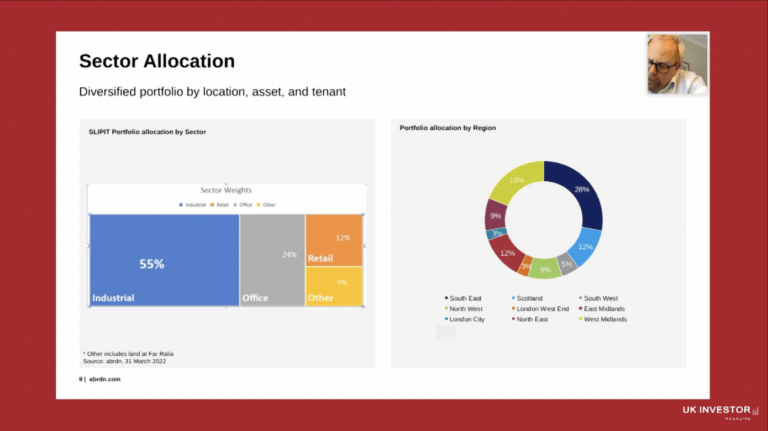
The UK Investor Magazine thoroughly enjoyed hosting Abrdn’s Standard Life Investments Property Income Trust, and manager Jason Baggaley, at our Investment Trust Conference May 2022.
Standard Life Investments Property Income (SLI) aims to generate an attractive level of income, along with the prospect of both income and capital growth, by investing in a diversified portfolio of UK commercial property assets, primarily in three principal commercial property sectors: industrial, office and retail.
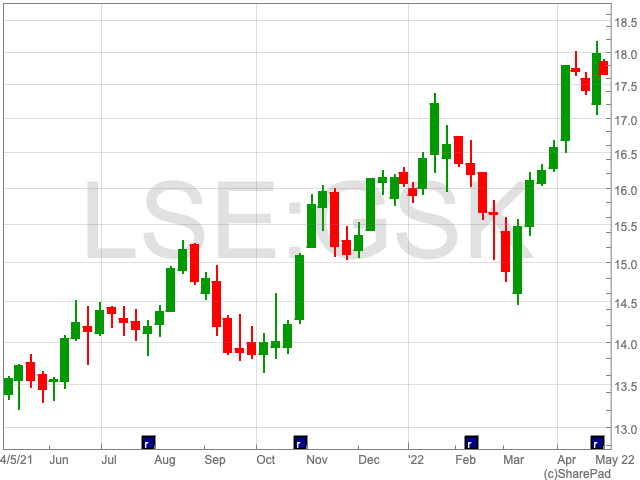
GlaxoSmithKline shares were at a peak of 1,846p just before the pandemic began in January 2020, since then GSK had followed a downtrend up until March 2021.
Economies around the world faced a slowdown in March 2021, which would explain the drop in GlaxoSmithKline shares as well. However, since then the GSK share price has been in uptrend.
GlaxoSmithKline’s CEO did say in their FY21 results that 2022 will be a “landmark year” for GSK but will it cross the 1,900p mark?
Specialty Medicines brought in £3.1bn, accounting for nearly half of the £7bn contributions from Commercial Operations. The category grew by 98%, to sustain an increase across all therapy areas, including Xevudy sales. GlaxoSmithKline received £1.3bn on the sale of Xevudy.
Vaccine turnover increased by 36% to £1.66bn, led by Shingrix which is a shingles vaccine for adults aged 50 and over, in the US and Europe, reflecting robust performance and the advantage of a favourable comparative in Q1 2021, when sales were hit by COVID-19-related disruptions in numerous markets and decreased Centers for Disease Control purchases.
Thanks to Trelegy’s growth in all regions, the antibiotics market’s recovery, and the benefit of a favourable prior period returns and rebates adjustment, which helped to offset the impact of generic competition in the US, Europe, and Japan, GlaxoSmithKline’s General Medicines generated £2.34bn, up 2%.
Consumer Healthcare accounted for the remaining £2.6bn of the group’s revenue, which increased by 14%.
According to the company’s demerging plans, GSK consumer healthcare will become Haleon in July, leaving a biopharma-focused ‘New GSK.’ The separation has been planned since early 2020.
At Haleon, you’ll find Sensodyne toothpaste, Panadol and Advil pain medications, and Centrum vitamins.
GlaxoSmithKline’s total operating profit increased by 65% to £2.8bn in Q1 2021, compared to £1.69bn in Q1 2021, which included a £924m upfront payment from Gilead.
GlaxoSmithKline will propose a quarterly dividend of 14p, down from 19p in the first quarter of 2021.
GSK expects to pay a 27p dividend in the first half of the year under its new dividend policy, with 22p going to the new GSK and 5p to consumer healthcare, which will soon be Haleon.
Outlook
In terms of the forecast for the remaining firm without the consumer health division, the new GlaxoSmithKline expects sales to expand by 5% to 7% at constant exchange rates in 2022, and adjusted operating profit to grow by 12% to 14% at constant currency, compared to 2021.
GSK stated that the company intends to continue delivering on its strategic priorities.
GlaxoSmithKline expects sales of Specialty Medicines to climb 10% at constant currency this year, while sales of General Medicines show a modest dip, assuming global economies and healthcare systems return to normalcy as the year unfolds.
This was “primarily reflecting increased generalisation” of established Respiratory medications, according to GlaxoSmithKline. Sales of vaccines are likely to climb in the low teens for the entire year.
Covid-19 solutions will generate similar sales in 2021, “but at a substantially reduced profit contribution due to the increased proportion of lower margin Xevudy sales,” according to the pharmaceutical company.
Emma Walmsley, Chief Executive Officer, GSK said, “We have delivered strong first quarter results in this landmark year for GSK, as we separate Consumer Healthcare and start a new period of sustained growth.”
“Our results reflect further good momentum across specialty medicines and vaccines, including the return to strong sales growth for Shingrix and continuing pipeline progress. We also continue to see very good momentum in Consumer Healthcare, demonstrating strong potential of this business ahead of its proposed demerger in July, to become Haleon.”
“This is going to be a landmark year for GSK, with a step-change in growth expected and multiple R&D catalysts, including milestones on up to 7 key late-stage pipeline assets,” said Walmsley after GSK’s FY 21 results.
Glaxo Latest News
In late February, GlaxoSmithKline and Sanofi SA planned to provide data for both the booster and phase three efficacy trials which will be used to support regulatory applications for Covid-19.
In the group’s final analysis of the VAT02 booster, the study revealed that it can raise antibodies 18-to-30-fold across vaccine platforms, including mRNA and adenovirus vaccines.
In addition, two doses of the Sanofi-GSK vaccination in seronegative people exhibited 100% effectiveness against severe Covid-19 illness and hospitalisation in the VAT08 phase three primary series trial.
GlaxoSmithKline and Sanofi’s vaccine has a 75% efficacy rate against moderate or severe Covid-19, and a 58% efficacy rate against any symptomatic Covid-19, which is in line with existing vaccination efficacy expectations, including variations of concern.
Numerous regulatory bodies, including the US Food and Drug Administration and the European Medicines Agency, are currently in discussions with GlaxoSmithKline and Sanofi.
“The evolving epidemiology of Covid-19 demonstrates the need for a variety of vaccines. Our adjuvanted protein-based vaccine candidate uses a well-established approach that has been applied widely to prevent infection with other viruses including pandemic flu. We are confident that this vaccine can play an important role as we continue to address this pandemic and prepare for the post-pandemic period,” said Roger Connor, President of GSK Vaccines.
GlaxoSmithKline at the end of March announced its commencement of clinical development of its second-generation Covid-19 vaccine candidate, CV2CoV, along with CureVac NV, a German biopharmaceutical company.
The company said that dosage has been administered to the first participant in a phase one study of the candidate.
The trial will enrol up to 210 adults and will be conducted at clinical sites across the United States to assess the safety, reactogenicity, and immunogenicity of CV2CoV at doses ranging from 2 to 20 micrograms.
The phase one study’s findings are expected in the second half of 2022.
CV2CoV showed faster induction of greater antibody titers, better immunological memory induction, and superior protective efficacy in preclinical research released in November compared to CureVac’s first-generation vaccine candidate, CVnCoV.
Later in March, the US FDA said the emergency use authorisation fact sheet was updated for Sotrovimab which is an experimental Covid-19 neutralising monoclonal antibody.
The FDA assessed that the sotrovimab 500mg dose is unlikely to be effective against the Omicron BA.2 strain, according to GlaxoSmithKline.
GlaxoSmithKline and Vir Biotechnology are putting together a package of evidence to support a higher Sotrovimab dose for the Omicron BA.2 sub-variant, which they will share with regulatory and health authorities around the world for discussion.
Sotrovimab has been given a marketing licence in the European Union as well as a conditional marketing authorization in the United Kingdom and is approved for emergency use in the United States.
Moving into April, GSK announced the acquisition of Sierra Oncology for £1.5bn which complements its commercial and medical expertise in haematology. It will also support the development of its portfolio of new speciality medicines and vaccines.
The group’s application for the review of kidney disease drug daprodustat was accepted by the FDA later in the same month. The drug is used on patients for the treatment of anaemia of chronic kidney disease.
GlaxoSmithKline Pipeline
GlaxoSmithKline partnered up to develop COVID-19 therapeutics and vaccines which have evolved to multiple remedies being in various stages of development, along with two products approved for use.
The monoclonal antibodies are generated by cloning an antibody that has been exposed to a certain virus in a lab which enables the production of numerous antibodies that will target the virus.
Monoclonal antibodies act in a similar way to the human immune system and could be a useful tool for people who don’t have a robust natural immune response to a virus.
The FDA granted GlaxoSmithKline Emergency Use Authorization for the first of these monoclonal antibodies in May 2021 and the European Commission approved the same monoclonal antibody for use in the European Union in December 2021.
The second antibody developed in conjunction with Vir is also being studied as a therapy option. A phase 1/2 trial is now being conducted in patients with mild to moderate COVID-19.
This deal expands on GSK and CureVac’s existing collaboration to produce up to five mRNA-based vaccines and monoclonal antibodies and CureVac has also received a £130 million equity investment from GlaxoSmithKline.
Apart from Covid medication, GlaxoSmithKline has hundreds of treatments on the market and is in the phase of the study to combat problems from dermatology, respiratory, and bacterial infections whilst also providing preventative vaccines for problems such as hepatitis, tetanus, meningitis and more.
Xevudy is a Covid-19 antibody medication developed by GSK in collaboration with Vir Biotechnology, a San Francisco-based immunology business, however, it is no longer allowed for Covid-treatment in any US region due to the surge of the Omicron BA.2 sub-variant.
GlaxoSmithKline Share Valuation
GlaxoSmithKline shares peaked at 1,846p in January 2020 and reached its lowest point in 2 years at 1,330p in May 2021 over the last 2 years.
GlaxoSmithKline has a lower forward P/E ratio of 14.8x compared to a trailing P/E ratio of 15.9x, suggesting analysts see GSK’s earnings rising in the next year.
Glaxo’s earnings multiples suggest significant value compared to peer AstraZeneca with a trailing P/E of 25.3x and forward P/E of 19.9x.
Glaxo has a good ROCE of 11.1x compared to Astra’s negative reading.
GlaxoSmithKline can cover its dividend by 1.4x with a yield of 4.5%, which gives investors an indication of expected dividend increases in the future. In GSK’s situation, we can see with a cover of 1.4x, greater dividend payouts in the future are possible, but don’t expect fireworks.
However, the dividend yield is way above themarket average meaning the company is good choice for income investors.
In terms of GSK’s broker ratings, Deutsche Bank raised GSK shares to a ‘hold’ and altered its price target from 1,500p to 1,600p. Barclays raised its price target to 1,800p from 1,775p and JPMorgan raised GlaxoSmithKline to a ‘neutral’ rating and increased its target for Glaxo shares to 1,900p from 1,740p.