Aquis Exchange to cover 17 markets with inclusion of Czech and Hungarian stocks

0

Aquis Exchange shares rose 1.5% to 450p with the addition of Czech and Hungarian blue-chip stocks.

With the inclusion of Czech and Hungarian shares, the coverage for Aquis Exchange extends to 17 markets.

About 300 new equities will be accessible on the Aquis Exchange UK and Aquis Exchange EU platforms in Q2 of 2022, along with the 13 most liquid Czech and Hungarian companies.

Aquis Exchange has 3 divisions, Aquis Exchange, Aquis Stock Exchange and Aquis Technologies.

Aquis Exchange trades cash equities from across Europe in a lit multilateral trading facility (MTF). Aquis Exchang MTF provides benefits such as lower signalling risk and market impact. The group functions across UK, Switzerland and EU27.

Aquis Stock Exchange (AQSE) is a platform where primary and secondary trading commences through Aquis main market and Aquis growth market. The group’s growth market is divided into Access and Apex. Access lists early stage growth companies whereas, Apex includes more mature businesses.

The group creates and licenses softwares used for the exchange to banks, brokers and investment firms through Aquis Technologies.

Alasdair Haynes, Chief Executive Officer, Aquis Exchange, commented, “our policy has always been to add new markets to our platform as and when there is demand. Member appetite for investing in Czech and Hungarian blue-chip stocks is growing and we are responding to this trend.”

IWG celebrate spiking demand and new merger with The Instant Group

0

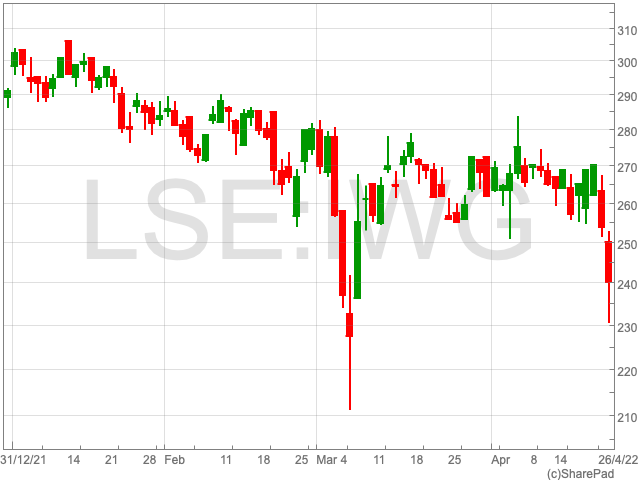
IWG saw its share price increase 10.5% to 256.9 in early afternoon trading on Tuesday as it celebrated increases in system-wide revenue on strong demand, hitting its peak in Q4 2021.

The hybrid-working solutions company reported system-wide revenue at £2.4 billion and an adjusted EBITDA of £1 billion.

The Group cited strong momentum from last year set to carry the company into 2022, with IWG reporting its highest ever demand in Q4 2021, surpassing pre-pandemic levels.

IWG did not pay out a dividend for 2021, however, citing the uncertainty of the Covid-19 pandemic and a necessity to protect the company’s liquidity.

The company commented that it intends to restart dividend payments and its share buyback scheme when the Group has reached a point of assured stability.

IWG reported a basic EPS loss of 20.3p against 67.9p in 2020, alongside an EPS loss from continuing operations before adjusting items at 17.2p against 26.4p in 2020.

“2021 has been a year of extraordinary transformation for IWG, for our employees, clients and for the markets we serve,” said IWG CEO Mark Dixon.

“Hybrid working is now an established model and businesses of all sizes are planning for a hybrid future.”

“Our strategy is delivering, and, with a strong start to the year, we look forward to continuing and accelerating the momentum achieved so far in 2022 as businesses of all sizes continue to embrace the hybrid model.”

IWG also reported the merger of its digital and technology assets with The Instant Group.

IWG is set to invest net cash of £270m in order to acquire shares in The Instant Group, and to invest in growth.

The Instant Group management is scheduled to invest an additional £50m into the company.

The new company is anticipated to be spun-out by the close of 2023.

“I am delighted with the merger of IWG’s digital assets with The Instant Group,” said Dixon.

“It’s a fantastic investment behind a world-class management team, positioning IWG to be a market leader in the digital-led future of workplace platforms.”

“This creates a clear path for value creation and will harness the next generation of digital-native workers and the huge market potential of flexible working, building long-term and future-proof growth as the world’s leading supplier of flexible workspace solutions.”

FTSE 100 range bound as commodities surge

The FTSE 100 traded in a range on Tuesday as investors digested the latest economic and market developments resulting from the war in Eastern Europe.

Commodities were once again in focus as oil price resumed a move to the update and Nickel futures were suspended by the London Metal Exchange.

‘’The breath taking rise of commodities is causing a whirlwind of anxiety on financial markets and exchanges, as traders speculate about the knock on effects of the Ukraine conflict,” said Susannah Streeter, senior investment and markets analyst, Hargreaves Lansdown.

“Nickel prices seriously hit nerves today, with trading suspended on the London Metal Exchange, after a record breaking spike in prices. The three month contract crossed the $100,000-a-tonne mark for the first time ever, doubling in value in just hours.”

The FTSE 100 was trading at 6,962, up just 1 point, shortly before midday on Tuesday. The FTSE 100 had traded as low as 6,893, with highs of 7,013 earlier in the session.

“After a Lazarus-like turnaround yesterday the FTSE 100 was back under pressure on Tuesday as the war in Ukraine grinds on and approaches the end of its second week,” says AJ Bell investment director Russ Mould.

Attention was now starting to shift from the initial volatility in oil prices to what it means for the global economy as fuel bills and food costs add to a cost of living crisis which started long before Russia invaded Ukraine.

“Stagflation, an ugly mix of inflation and recession, is the fear stalking the markets right now and the longer the war rages, the more likely this scenario becomes,” Mould said.

Polymetal sinks again

Polymetal shares were down 17% p as the LSE cancelled trades between 8.41am and 9.02am in precious metals mining company after the price spiked over 1,000% in trade that broke stock exchange rules.

Rightmove shares fell 4% to 625p as fears rising inflation rates and increased housing prices will reduce the house buyer activity relied upon by Rightmove.

Evraz was the top riser at 15.1% to 92p, M&G rose by 20% to 198.2p and ITV hit 6.2% at 79.6p in third place.

Evraz continued to see bargain hunters pick up the beaten up stock as the Russian invasion of Ukraine continued to rock the market.

M&G shares enjoyed a surge after it announced its £500 million share buyback offer to its shareholders.

ITV saw a return to favour after its lackluster announcement last week to launch streaming service ITVX, which was met with poor reception due to a percieved oversaturation in the streaming market against established competitors such as Netflix and Disney+.

Wheat prices gain as Ukraine conflict squeezes supply

Wheat prices have soared 6.6% to 422.5p per ounce as the Russian invasion of Ukraine saw 29% of global wheat supplies in the “breadbasket of Europe” put at risk.

The price of the grain has risen to a new record of £281.90 per tonne with expectations prices will move higher as the conflict continues.

Russia is the world’s largest wheat producer and any disruption could to their exports will have a significant impact on supply.

The skyrocketing prices will add further pressure on households as UK inflation rates, which hit 5.5% in January this year and are predicted to rise to 7% for 2022.

An emergency G7 meeting is scheduled to be hosted by Germany on Friday for agriculture ministers to discuss a solution to the spiking prices.

The increase in wheat costs is set to see household staples including pasta, bread and cereal increase to levels already rising due to the Covid-19 pandemic and global supply chain obstacles.

“Nerves of steel will be needed amid the extreme volatility,” said analyst Daniel Briesemann at Commerzbank in Frankfurt.

Nickel price soars and suspended by London Metal Exchange

Nickel added to extreme volatility in commodity prices resulting from the Ukraine crisis as futures were suspended by the LME. Nickel surged 44% overnight in volatile Asian trade.

Nickel prices have risen dramatically this morning, briefly pushing above $100,000 per tonne. The exceptional price rise was driven by a short squeeze on the LME, in which traders with large short positions have hurried to close their positions.

“Nickel prices seriously hit nerves today, with trading suspended on the London Metal Exchange, after a record breaking spike in prices. The three month contract crossed the $100,000-a-tonne mark for the first time ever, doubling in value in just hours,” said Susannah Streeter, senior investment and markets analyst, Hargreaves Lansdown.

Russia accounts for 7-9% of total global Nickel production and the potential for this to be inaccessible when EV demand for Nickel is soaring has a sent waves through the market.

Some analysts have likened the volatility in Nickel to observation in Meme stocks such as GameStop.

“The huge volatility and rapid moves in price during trading in Asia prompted the drastic decision. It seems the meme stock frenzy has now metamorphosed into commodity chaos, as traders have scrambled to try and cover short positions,” said

“Those that had bet against the metal’s rise in value, have now been forced to buy at a much higher price, creating a short squeeze.”

Direct Line Insurance Group reports falling profits on restructuring costs

0

Direct Line Insurance Group saw its share price drop 1% in early morning trading on Tuesday as it released mixed financial results for 2021 with one-off costs offsetting a rise in operating profit.

The company reported an operating profit increase of 11.4% to £581.8 million against £522.1 million in 2020.

Direct Line Insurance further reported a pre-tax profit decrease of 1.2% to £446 million against £451.4 million in 2020.

“Direct Line has had a strong end to the year. Especially considering price reforms and a challenging wider backdrop, the reiteration of targets is no mean feat,” said Sophie Lund-Yates, equity analyst at Hargreaves Lansdown.

“With more people back on the road following lockdown, motor claim frequency crept back up to normal levels in the second half, which isn’t unexpected.”

The company blamed the decline in profit on a £62.1m increase in restructuring and one-time costs reflecting property portfolio restructuring, alongside the purchase of its Bromley office in 2021.

The Group distributed an interim dividend per share of 7.6p against 7.4p in 2020, alongside a final dividend of 15.1p against 14.7p in 2020.

“Operating profit has increased to £582 million, own brands policies grew as our Home, Commercial and Rescue businesses performed strongly, whilst in Motor we steered a smart path through another uncertain period as the market sought to predict the impact of Covid-19,” said Direct Line CEO Peter James.

“2021 has been a year of significant strategic progress – we’ve successfully completed the main elements of our technology build and data capability, both key enablers of future growth.”

“Our new motor platform is improving our competitiveness, we’ve announced a new partnership with Motability Operations that is expected to see over 640,000 customers join us in 2023 and we’ve extended our Home partnership with NatWest Group until 2027.”

Capricorn Energy swings back to profit in 2021

0

Capricorn Energy saw its share price fall 2.1% to 208.2p in early morning trading on Tuesday after it reported production of 36,500 boepd and $57.1m revenue in 2021.

The oil producer saw a $1 billion return to shareholders over 2021 and 2022, following a tax dispute with the Indian government which ended with a tax refund to the company in 2021.

Capricorn reported further profit following its procuring of Shell’s Egypt operations in 2021.

The company also reported a $895 million post-tax profit after its devastating $394 million loss in 2020.

Capricorn reported an operating loss of $131 million, however, a slight deterioration in its 2020 loss of $130 million.

“2021 was a transformational year for Capricorn; we continued to successfully reshape our portfolio and achieved a positive resolution of our Indian tax dispute,” said Simon Thomson, Chief Executive at Capricorn Energy.

“We acquired an attractive portfolio of low breakeven oil and gas production in Egypt, where we are already delivering production growth and emission reductions, and which has significant further opportunities for value creation.”

“We also retain the balance sheet capacity to further expand the production base through value-accretive acquisitions.”

“We look forward to continuing to deliver our strategic aims in 2022 with a strong commitment to safety, social responsibility and our pathway to net zero carbon emissions by 2040.”

Greggs sees LFL sales drop and warns of challenging 2022 ahead

0

Greggs saw its share price fall 9.1% in early morning Tuesday trading after the company said it saw like-for-like sales drop and warned on rising costs.

The company reported a pre-tax profit of £145.6 million against a £13.7 million loss in 2020.

Greggs further announced a total sales increase of 5.3% to £1.2 billion as they opened new stores. However, sales fell like-for-like 3.3% on a same store basis.

The food producer reported a diluted earnings per share of 114.3p against a 12.9p loss, alongside a final dividend of 42p per share recommended, resulting in a total ordinary dividend of 57p against the lack of dividend from 2020.

Greggs opened 131 shops in 2021 and closed 28 stores. It currently has a total of 2,181 shops trading from 1 January.

The company is scheduled to open 150 stores in 2022 and reportedly aims to reach 3,000 outlets in time.

“We have started 2022 well, helped by the easing of restrictions,” said Greggs CEO Roger Whiteside. 

“Cost pressures are currently more significant than our initial expectations and, as ever, we will work to mitigate the impact of this on customers, however given this dynamic we do not currently expect material profit progression in the year ahead.”

Analysts have warned that rising inflation and labour shortages will result in a more difficult 2022 for the fast food chain.

“Supply chain issues, cost increases, and labour shortages all pose significant and persistent risks for Greggs,” said Third Bridge analyst Ross Hindle.

“Greggs has had to trim its range due to ingredient shortages, now labour shortages might stunt Greggs’ growth ambitions.”

“Investors will be studying how Greggs manages its cost increases, which could turn out to be double-digit, in order to protect its margins in the months ahead.”

M&G shares fly 13% as investment group exceeds targets on capital generation

0

M&G generated £2.8bn, exceeding the investment management firm’s goals for capital generation, resulting in a share buyback of £500m.

M&G shares were trading up 13.8% to 202.9p on Tuesday morning after news of shares buyback.

Adjusted operating profit before tax dropped by £67m to £721 in 2021 as a result of reduced benefits from changes in lifespan estimates. Retail and savings segment contributed £660m to that figure whereas the corporate centre took away £254m.

Mergers and Demergers

Targets for mergers have reached fruition ahead of schedule with capital generation targets met, and investor cost reduction of £145 million were realised a year ahead of schedule.

IFA Sandringham Financial Partners was acquired by M&G Wealth in early 2022. Highlights of their acquisitions include a stake in Moneyfarm, a digital wealth platform and the buyout of TCF Investment, model portfolio services provider.

A controlling stake of 90% in responsAbility, an impact investing firm, has been agreed upon for M&G to continue growth in their sustainable investing capacity. The remaining 10% will be acquired in due course.

The group plans to expand into Italy with Future+. Future+ is a European version of M&G’s UK PruFund proposition.

John Foley, Chief Executive Officer, M&G said, “it has been another year of robust operational and financial performance, as we have delivered on all our demerger commitments including total capital generation of £2.8 billion over two years, well ahead of our original target.”

“In light of this performance and our strong capital generation we are able to announce today £500 million to be returned to shareholders by way of a buy-back programme, expected to start shortly. Together with dividends paid, we will have returned £1.8 billion of capital to shareholders, equivalent to 32% of M&G’s market value at demerger. Alongside this, we have achieved our annual shareholder cost savings target of £145 million one year ahead of schedule.”

The second interim dividend amounts to 12.2p, in line with M&G’s ‘stable or increasing’ dividends policy.

Dominos delivers piping hot post-tax profits

0

Dominos saw a 97% increase in statutory profit after tax, going from £38.6m in 2020 to £78.3m 2021, as the pizza chain recovers from the pandemic.

Domino’s top line saw an 11% growth to £560.8m. Underlying profit before tax is £113.9m, up 12.5% from 2020 as a result of strong underlying trading.

Recovery from the pandemic, saw a 5.5% growth in order sales in 2021. Collection orders are still recovering but delivery performed well. Digital channel sales contributed to 91.2% of system sales. Average delivery time was around 25 minutes sustaining the group’s service standards.

Franchisee Resolution and Ventures

In an attempt to speed up long and short term growth, Dominos are set out to tap into their franchisees to help drive new stores and boost marketing.

Investment of £20m has been spread over 3 years to make developments in their e-commerce app development and in-store innovations. Marketing investments have grown too, in order to promote new national campaigns.

Franchisee’s have committed to increase the sales through creating a schedule for new stores, resulting in 45 new stores each year for the next 3 years, out of which 30 have already opened for this years quota. In contrast to previous years, a commitment on participating in the upcoming promotional deals has also been agreed upon. The franchisees have agreed to trial and test new technology and innovations for the benefits of the group.

Investments of £6.6m for 46% shares with an association who is operating 22 stores in Northern Ireland to enable future growth plans of the franchisee. The group has exited from directly operated international markets to focus on the UK and Ireland markets.

The group has opened their 3rd supply chain centre in Cambuslang, Scotland.

Net debt has increased 16.2% to £199.7m as the company paid dividends of £56m and share buybacks of £80m. The proposed final dividend for 2021 is 6.8p bringing the total dividend to 9.8p. The dividend yield is 2.9% which is fairly decent compared to the FTSE 250 average.

“There were two major milestones in the year. First, the launch of our new strategy, which is already delivering outstanding results and a better experience for our customers.”

“Secondly, the resolution with our franchisees which has unlocked further potential within the system. Our franchisees are world class operators and the whole team is already embracing a new era of collaboration, with the system working together more closely than ever before,” said Dominic Paul, Chief Executive Officer, Dominos.

Domino’s shares sunk over 5% in early trade on Tuesday morning, before shares recovered to trade just 1% down at the time of writing.