The top FTSE 100 risers thus far in 2022

0

With geopolitical concerns and recovery from the pandemic, 2022 is already been an eventful year for FTSE 100 firms. The markets have reflected the impact of a series of event and as a consequence, the following are ranked as the top performers of the FTSE 100 from December 31, 2021.

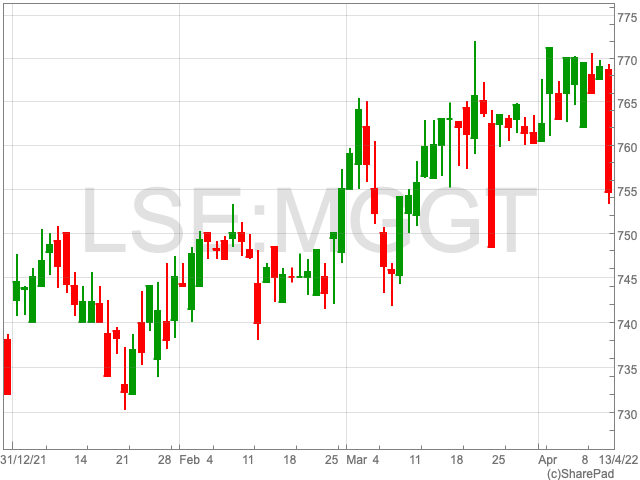
Pearson +34%

Pearson, the education publisher, has seen rise of 34% since the beginning of 2022. The shares saw a sharp increase on March 11 to 766.6p with Pearson rejecting the bid offer from Apollo. Pearson shares have since continued the rally and are the FTSE 100’s top riser in 2022.

The group reported a £0.03bn increase in revenues in their latest financial reports while recording a loss of nearly £150mn pounds in pretax profits. However, the group announced a share-buyback program of £350m in 2022.

The forward P/E ratio is 19 which is lower than the trailing P/E of 22 pointing to a strong earnings outlook.

The dividend cover is 1.7 which shows that the company enough to pay the dividend yield of 2.7%, and even increase payouts.

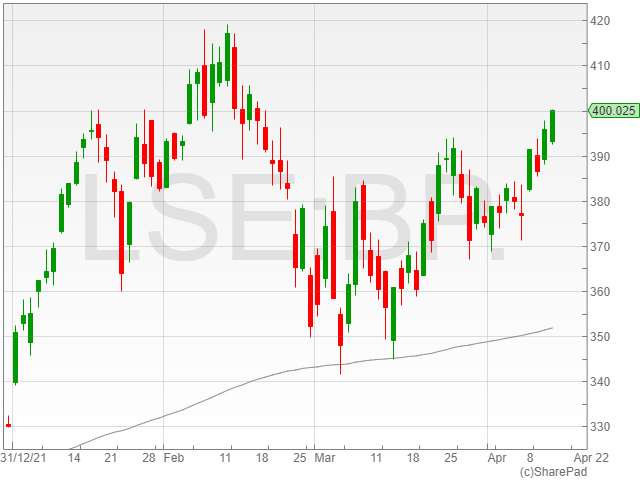
BAE Systems +31.3%

BAE Systems has recently been making headlines with their acquisition of Bohemia Interactive to develop their military training simulation.

Investors are expecting the arms dealers will have a good year as a consequence of rising geopolitical tensions. In late February, the weapon makers reported revenue increase of £448m to £21.3bn with volume of orders exceeding expectations. The company also increased their dividends by 6%.

BAE Systems shares are up 31.3% since the beginning of this year. BAE Systems shares shot up on two major occasions which were the release of their annual reports and the acquisition of Bohemia.

The forward P/E ratio is 14.4, marginally below the FTSE 100 average 14.8. The dividend yield is 3.5%, covered 1.9x.

BAE Systems has a ROCE of 11.6.

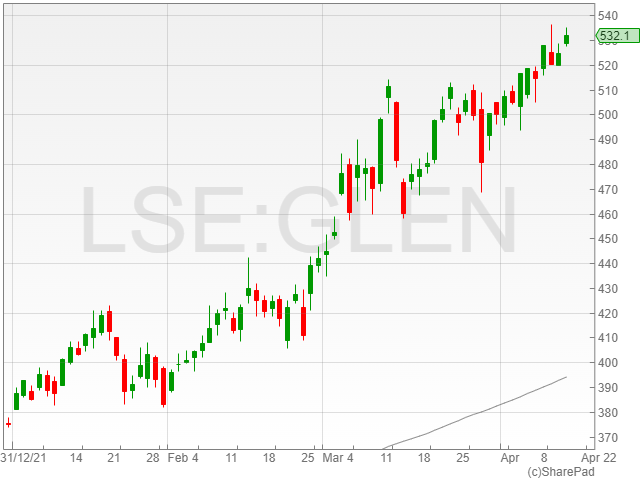
Glencore +23%

Glencore, one of the world’s biggest commodity traders, has seen a 23% rise in share price since the start of 2022. The shares were trading at 461p on Tuesday afternoon.

With rising tensions between Russia and Ukraine, sanctions including the export of metals and energy, have driven commodity prices higher. As commodity prices rise, investors have flocked to mining shares making them some of the best performers of 2022.

Glencore mines copper, cobalt, zinc, nickel and ferroalloys.

The forward P/E ratio is 6.3 which is half that of the trailing P/E of 12. This means that the company’s market capital is not increasing as fast as the forecasted profits, resulting in a disconnect which may be attractive to investors.

The dividend yield is 4.1% and has a dividend coverage of 2 demonstrating the capability to finance their payouts to shareholders.

However Glencore’s ROCE is 16.8, the lowest of the FTSE 100 miners, suggesting their peers are more efficiently producing earnings.

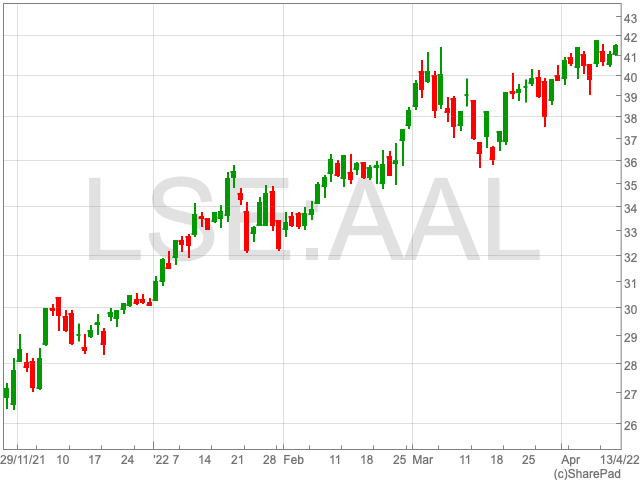
Anglo American +20%

Anglo American shares have increased 20% over 2022 so far. The shares were trading at 3,655p on Tuesday afternoon.

Anglo American is another miner which is raking in the profits from rising commodity prices. Increase in prices of copper and platinum is also one of the many commodities facing volatility from the war in Ukraine and is likely to play into Anglo’s next earnings update.

The mining group also saw surge in their share price with the announcement of a dividend hike. EBITDA saw an 111% jump to $20.6bn in 2021 which was more than double that of 2020. The company announced a bumper dividend payout of $1.18 per share for final dividends amounting to $2.1bn.

The forward P/E ratio is to 8.1 compared to a trailing P/E ratio of 7.

The company’s dividend yield is 6% with 2.4 coverage with supporting a progressive dividend policy.

Anglo’s ROCE is 32, towards the upper end of mining sector’s average.

Shell +16.9%

Shell shares have shot up 16.9% since December 31, 2021 as the oil ban enforced on Russia resulted in upside pressure on oil prices, benefitting oil companies such as Shell.

The company’s ROCE is 8.6, below peer BP who has a ROCE of 10.3.

The forward P/E ratio is 6.3 and Shell yields 3.6% with a 2.3 cover.

The top FTSE 100 fallers for 2022 so far

0

The recent market volatility has seen several prominent FTSE 100 companies take a blow, with the Russian assault on Ukraine impacting Russian-based firms including Polymetal and Evraz in particular.

Coca-Cola, Scottish Mortgage Investments and JD Sports have been hit by supply chain disruption linked to war in Ukraine and the Covid-19 pandemic, alongside concerns that the rising cost of energy will take a sizeable chunk out of consumer spending budgets across 2022.

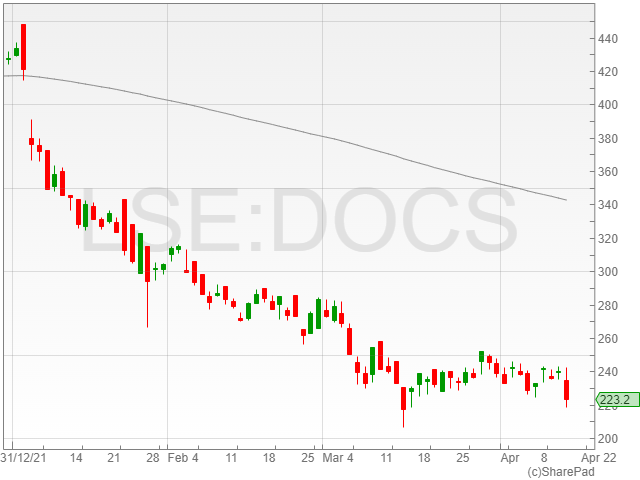
JD Sports -34%

JD Sports suffered a share price decrease of 34% since the beginning of 2022.

The increasing price of energy has seen concerns that consumers will spend less on non-essential retail purchases, as higher energy and fuel expenses eat into customer budgets.

The company was also fined £4.3 million for a violation of Competition and Markets Authority (CMA) rules, sharing confidential information in meetings concerning a merger with Footasylum in 2019 which the CMA was investigating in 2022.

The sporting goods company currently has a dividend yield of 0.2%. The retail group has a PE ratio of 22.6 and a forward PE ratio of 12.4.

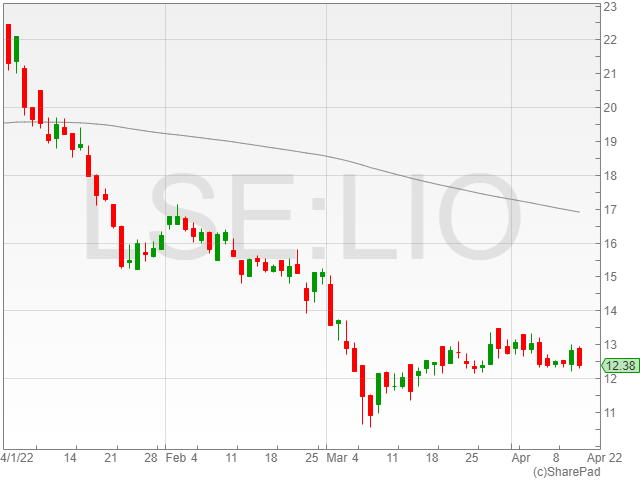
Scottish Mortgage Investment Trust -34.3%

Scottish Mortgage Investment Trust shares have a decline of 34.3% in the early stages of 2022.

The trust has its holdings split between a selection of tech stocks, including Tesla, Tencent, Nvidia and Alibaba accounting of 23.3% of its portfolio.

China’s Covid-19 lockdown of tech production hub Shenzhen, combined with concerns China will provide assistance to Russia, has dragged tech companies, and Scottish Mortgages shares with them.

With persistently his inflation, the US Fed is scheduled to increase its interest rates on a number of occasion this year which has rocked the US tech sector so far in 2022.

The Scottish Mortgage Investment Trust currently yields 0.4%.

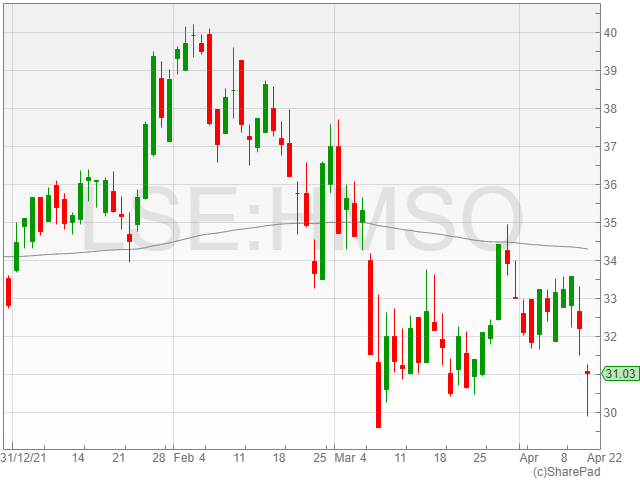
Coca-Cola HBC -37.2%

Coca-Cola HBC has seen its share price take a hit of 37.2% thus far in 2022.

The drinks producer’s stock fell after it withdrew from its Russian operations and shut down its Ukraine plant, which collectively accounted for 20% of the company’s 2021 production.

The shock to the company’s earnings outlook has caused the group’s shares to take a steep dive as investors prepare for the fallout in their next trading update.

Coca-Cola HBC yields of 3.3% which was 2.6x, as their last set of results. This will likely change if earnings are particularly heavily hit.

The FMCG giant has a current PE ratio of 12.3 and a forward PE ratio of 14.

Evraz -86.3%

Evraz has been severely impacted by the Russian war on Ukraine, with its shares tanking 86.3% since the start of 2022.

The company is scheduled for removal from the FTSE 100 on 21 March, due to the extreme destruction of its stock.

The company was paying a dividend but investors shouldn’t hold their breath waiting for another pay out.

Polymetal -90.1%

Polymetal is the worst performer on the FTSE 100 so far in 2022 as the Ukrainian conflict rocked the Russia-focused Gold miner.

The precious metals mining group has experienced an extreme share price dive of 90.1% since the start of 2022.

The company is in the same boat as Evraz, and is scheduled for removal from the FTSE 100 on 21 March.

FTSE 100 falls on China-Russia alliance tensions

The FTSE 100 fell 0.8% to 7,127 during late morning trading on Wednesday as fears ramped up over China’s role in the Russia-Ukraine conflict.

Miners and oil companies are amongst the top fallers of the FTSE 100 today as concerns rose around the impact on demand for commodities of China were to be dragged into the conflict by supplying Russia with aid and face sanctions from the West.

The combined impact of China’s potential assistance to Russia in the war, alongside the country’s Covid-19 lockdown in Shenzhen saw analysts point towards trouble for mining companies.

“Ongoing uncertainty over whether China will provide military assistance to Russia also weighed on sentiment, with the Shanghai SE index down nearly 5% and the Hang Seng falling nearly 6%,” said Russ Mould, investment director at AJ Bell.

“Disruption to the Chinese economy is not good news for commodity producers which have relied on the region to buy their metals and minerals for the past few decades.”

“Heightened concerns explain why miners had a bad day on the market – and if they’re falling, you can be almost certain that the resources-heavy FTSE 100 will be dragged down.” 

Polymetal, Glencore, Rio Tinto, Antofagasta shares are all trading down 17%, 3.9%, 3.7% and 2.6% respectively.

China exposure

Standard Chartered fell 4.4% to 469p, as its ties to China saw its value pulled down in the spiralling Asian markets.

Oil is down 8% to $98 per barrel, also a consequence of the rising COVID-19 cases in China as the country is one of the largest importers of Brent Crude. BP and Shell were down 1.7% and 0.9% respectively and were a major drag on the FTSE 100 in terms of the numbers of points take off the index.

Various utilities providers were amongst the top gainers on the FTSE 100 as the cost of living is expected to increase in the UK as a outcome of the Russia-Ukraine war and investors repositioned into defensive sectors.

Consumer staples giant Reckitt Benckiser Group rose 2.2% to 5,823p.

Informa saw an increase of 2.2% to 562.7p after a jump from £1.6 billion to £1.8 billion in revenue.

The FTSE 100 top riser was Pearson climbing 7.8% to 820p as it continued its rally after it recently declined a 854.2p cash offer bid from asset management company Apollo.

Sovereign Metals’ mineralised footprint increased by 28% in ‘spectacular’ Titanium Rutile results

0

Sovereign Metals has announced a ‘spectacular’ 28% extension of the mineralised envelope for the Kasiya Natural Rutile project in Malawi.

The total footprint is now 165km2 with presence of high-grade rutile in a single deposit within Kasiya and Nsaru.

Natural rutile is used in the production of titanium which has many end applications from welding to paint.

The results from the drill established Kasiya’s global significance with the region being ‘the largest undeveloped natural rutile project in the world and first major rutile discovery in over half a century.’

The Kasiya and Nsaru deposits have combined to form a high-grade body of near surface rutile and graphite mineralisation which will now be known as the ‘Kasiya-Nsaru’ rutile deposit.

Highest Rutile Discoveries in Nsaru and east of Kasiya

The latest results have found the highest grade rutile to date in Nsaru and an extension east of Kasiya.

  • 11m @ 1.34% inc. 2m @ 3.00% rutile
  • 8m @ 1.36% inc. 2m @ 2.66% rutile
  • 12m @ 1.46% inc. 4m @ 2.42% rutile
  • 12m @ 1.27% inc. 3m @ 2.16% rutile
  • 7m @ 1.84% inc. 4m @ 2.71% rutile
  • 13m @ 1.48% inc. 5m @ 2.23% rutile

In all the drilled holes, rough flake graphite is found in close contact with rutile mineralisation. Throughout the mineralised area, graphite grades average around 1% TGC.

The upcoming JORC Mineral Resource Estimate update will include the significant new blocks of mineralisation and extensions in the footprint.

The scoping study which should be completed by Q2 2022, is being updated to included the growth in mineralisation footprint and increase in both production rates and mine life.

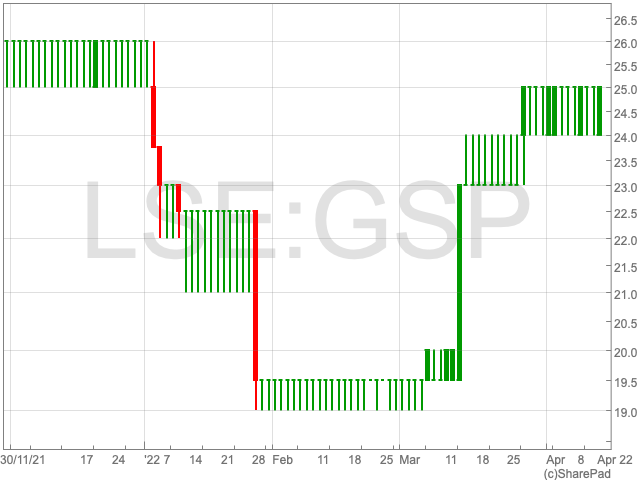
Sovereign metal shares were trading up 3.2% to 25.8p as investors cheers the high grade rutile deposit results.

Sovereign Metals confirms Kasiya project potential in half year report

1

Sovereign Metals saw an increase in share price of 3.2% to 25.8p in late morning trading on Tuesday after the mining company reported strong potential for its Kasiya mine in its half-year report.

The group is currently aiming to develop a sustainable natural rutile and graphite large-scale operation in Malawi with offtake destined for the global market.

The company’s results confirmed its Kasiya mine as a globally significant rutile project.

Kasiya is reportedly the largest underdeveloped rutile deposit in the world, and has been earmarked for a low-carbon operation powered by 100% hydro and solar renewable energy.

The group predicted the project could yield a multi-decade mining operation and provide a stable rutile source, while contributing to Malawi’s economy.

Sovereign Metals reported an estimated Life of Mine (LoM) total revenue for its Kasiya Rutile project of $6.2 billion, alongside an annual average LoM revenue of $251 million.

The company added that the price of rutile of welding tends to attract “significant premiums to bulk rutile prices in the titanium pigment sector.”

The mining group chose not to pay a dividend for the half-year period, and did not pay a dividend over 2020.

Brent oil price falls to $101 per barrel

The price of brent crude oil fell 6% to $101 per barrel in early morning trading on Tuesday.

The sharp dive comes as the impact of China’s lockdown on Shenzhen sent Asian markets into a spiral, with the Hang Seng plummeting 5% overnight as a result of fears around a COVID outbreak and China’s involvement in the Ukraine crisis.

The blow to the market served as a reminder that the Covid-19 pandemic is not yet over, and the prospect of future lockdowns might still arise across the UK in time.

Diplomatic talks between Russia and Ukraine have also served to ease supply fears, with optimism on the rise that the two countries might find a solution to the conflict.

The news follows the commodity’s rapid climb to $139 per barrel on 6 March, as Russia’s assault on Ukraine pushed the UK to cut ties with Putin’s resources and seek alternative supplies for oil reserves.

Analysts highlighted the impact of the news, with John Kilduff, partner at Again Capital telling CNBC: “We have a demand scare for the first time in a while.”

“The Covid lockdown in China has spooked the market.”

UK Unemployment rate falls to pre-pandemic levels

0

The UK unemployment rate has dropped to the lowest level since January 2020 as the labour market continued to recovery from the pandemic.

However, a increase of 3.2% in wages is still not keeping up with the increase of 5.5% inn inflation meaning households will continue to be squeezed, despite an improving jobs market.

Danni Hewson, financial analyst, AJ Bell commented, “it doesn’t matter that a record number of people are now on UK payrolls or that there is still a record number of job vacancies, people in work are feeling the pinch and it’s going to get worse.”

“It’s not because wages aren’t rising, how could they not in such a tight labour market, it’s just that the cost of simply living is getting more and more expensive.”

“If inflation was hovering around the Bank of England’s 2% target, then 3.8% wage growth would be considered a pretty decent number but with prices creeping up just about everywhere it will feel to workers like their pay has taken something of a haircut.” 

The Office for National Statistics reported an increase of 275,000 UK workers on payrolls between January and February, exceeding pre-pandemic levels. The total number of employed UK workers have reached 29.7m.

Chancellor Rishi Sunak said, “Thanks to the unprecedented economic support we’ve provided, we’ve now seen a year of falling unemployment and a stronger jobs market bounce back than so many predicted.”

“I am confident that our labour market is in a good position to deal with the current global challenges, with payrolled employee numbers above pre-pandemic levels in every nation and region and redundancies at record lows.”

“We know people are concerned about the rising cost of living so alongside continuing to help people find great jobs – we’re providing direct support worth more than £20 billion this financial year and next.”

Close Brothers cuts it close with marginal increases in financials

0

The merchant banking group, Close Brothers, saw operating profits increase 1% to £128.9m in H1 2022 and reported adjusted operating profits as £129.8m.

The marginal growth came from increased incomes from the banking division and asset management division of 12% and 14% respectively despite being held back by the Winterflood drop in income.

Adrian Sainsbury, group Chief Executive Officer, stated, “we delivered a good performance in the first half of the 2022 financial year, with strong income growth in the Banking division and positive momentum in Asset Management, while Winterflood saw reduced trading opportunities following the exceptional highs experienced during the Covid-19 period.”

The banking division saw an increase of 26% in adjusted operating profit to £120.2m in H1 2022 with demand in their lending business increasing.

The adjusted operating profit increased 18% to £14.5m in H1 2022 in the asset management division with an annualised net inflows of 8% due to increased customer activity.

Loan book growth saw an 8.2% increase with an annualised net interest margin of 7.9%.

Excluding the Novitas’ loan book, their annualised bad debt ratio is 0.2%, however with Novitas included, the bad debt ratio is 1.1%.

Despite the 3.4% decrease in property repayments, asset finance increased by 4.2%, motor finance saw a 4% increase and invoice finance increased by 3.6%, contributing to £7.5bn of the £8.8bn in H1 2022 to the closing loan book and operating lease assets.

Winterflood saw a decrease in business with economies reopening and lockdown retail traders returning to the office. Winterflood operating profits saw a massive decrease from £34.2m in H1 2021 to £8.8m in H1 2022.

The ROE for the firm is 12.2% and CET1 ratio is 15.1%.

The interim dividend increased from 18p to 22p in H1 2022 with the firm recovering to the state prior to the pandemic.

“We are pleased to declare an interim dividend of 22.0p, returning to the pre-pandemic level and reflecting the group’s strong underlying performance and continued confidence in our business model,” said Sainsbury.

“Looking ahead, we are mindful of the highly uncertain external environment, including the impact of increasing geopolitical tensions and rising inflation on our customers and wider financial market conditions.”

“Nevertheless, we remain well placed to continue delivering on our long track record of profitability and disciplined growth.”

Close Brothers shares were trading down 6.6% to 1,128p in broad market sell off on Tuesday.

Virgin Wines’ glass half full with 23% increase in subscription based revenues

0

Virgin Wines, UK’s largest B2C online wine seller, reported a total revenue of £40.6m in H1 2022, just £20,000 more than H1 2021.

The revenue generated from the subscription model of the wine distributors saw an increase of 23% from last year to £26.3m in H1 2022.

The increase in revenue resulted from a 7% subscriber increase to 158,000 during H1 2022 in WineBank and Wine Plan.

The company’s active customer base saw a 9% rise to 185,000 in that period.

The 12 month rolling new customer conversion increased to 56.2% from 51.3% in H1 2021.

The wine company is set out to start BeerSave and SpiritSave subscription schemes in Q2 2022 based on the success of WineBank.

The group aims to generate revenues from their commercial channels with collaborations with big companies in the gifting arena like Moonpig, Virginia Haywood and Arena Flowers.

The company’s EBITDA decreased from £4.5m to £3.7m in H1 2022 from increased operating costs and investments to acquires new clients. Each client acquired cost £13.62 on average.

Pre-tax profit reduced to £3.2m in H1 2022, a loss of £0.2m from H1 2021.

The firm’s net cash increased from £8.4m to £13.6m in H1 2022 is excluding customer deposits from the WineBank subscribers.

Currently, the firm is not paying out an interim dividend.

Jay Wright, Chief Executive Officer, Virgin Wines, said, “as expected, the trading environment has evolved considerably over recent months, and given strong prior year comparatives, we have worked hard to maintain encouraging growth from our core sales channels, whilst maintaining strict discipline around our customer acquisition and our cost control.”

“This result demonstrates the strength of the underlying business model, our discipline in acquiring good quality customers, the reliability of future subscription revenues from a highly engaged customer base and the ability to generate free cashflow as well as our award-winning consumer propositions, the quality of our wines and our outstanding customer service.”

“The second half of the year has started well. We continue to make progress with our strategic initiatives and remain in line with management expectations.”

TP ICAP Group reports £105m profit decline in 2021

0

The TP ICAP Group’s share price fell 6.3% to 122.7p in early morning trading on Tuesday after the company released a significant drop in profit for its 2021 results.

The company reported a revenue of £1,865 million compared to £1,794 million in 2020.

The financial services firm noted a pre-tax profit of £24 million against £129 million in 2020, representing a significant drop.

“Our performance naturally reflects the unusually quiet secondary markets that we experienced in 2021, particularly in the first half of the year. However, as market conditions started to improve in the second half, TP ICAP recovered most of the ground and grew overall market share. We continued to deliver double-digit revenue growth in Data & Analytics.

“We took pre-emptive action to mitigate margin pressure, including greater operational efficiency, and delivered significant overall cost savings of £31 million,” said TP ICAP Group CEO Nicolas Breteau.

“These measures helped to partly offset the impact of market conditions which shifted activity to lower margin asset classes within Global Broking.”

“We are targeting a further £38m of incremental savings from 2022 to 2024.”

The company announced a total dividend per share of 9.5p compared to 6p in 2020.

The Group’s financial highlights included its 8% growth in light of “subdued secondary markets” and disruption due to Covid-19, alongside its programme to save £35 million of annualised costs successfully delivering £19 million of incremental savings over 2021.

The TP ICAP Group was careful to note that it had no immediate predictions for its outlook due to its uncertainty around future market activity.

“Market volatility has continued at more elevated levels in 2022, with the return of inflation and geopolitical uncertainty driving higher volumes across many of our markets.”

“Our revenue in the year to date until 11 March 2022 was approximately 16% higher than the corresponding period in 2021, in constant currency, or 4% higher excluding Liquidnet.”

“While it is too early to judge whether this activity will be sustained, we believe the results of our many actions will show through in improved performance across the group in 2022 and beyond.”