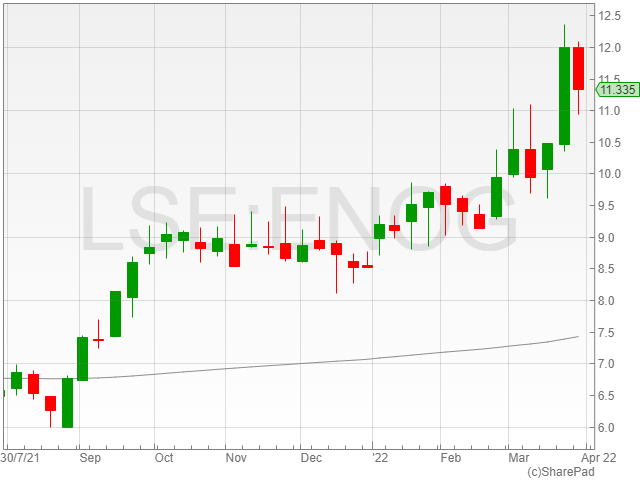
Trident Royalties have secured the acquisition of a new royalty over the Sonora Lithium project located in Mexico owned by Bacanora Lithium. Trident says they now have ‘exceptional lithium exposure’ through their portfolio of royalties.
The royalty will provide Trident Royalties with a 1.5% gross royalty of the mine which is the advanced development stages and in stage 1 of production will be worth US$14.4 million per annum in royalty revenue to Trident, if Lithium remained at current spot prices of $55,000 per tonne.
Stage 2 is expected to provide Trident with US$28.9 million per annum in revenue.
Studies of the Sonora mine found an open pit Mineral Reserve of 4.5Mt LCE and interestingly, the Feasibility Study published by Bacanora in 2018 forecasts an initial mine life of 19 years but utilises only around 770kt of the LCE reserve, meaning there is scope for production well past 19 years.
Trident Royalties also owns a royalty over the Thacker Pass Lithium project in North America.
“Like Thacker Pass – over which Trident holds an existing Gross Revenue Royalty – Sonora is a globally significant lithium asset which is anticipated to be the next meaningful North American lithium mine, with early construction works already underway and first production anticipated for the second half of 2023. With the potential to have both the Sonora and Thacker Pass royalties in the Trident portfolio, shareholders in Trident would have exceptional lithium exposure covering Tier 1 assets, both targeting very near-term production, and therefore cash flows to Trident, in 2023 (assuming completion occurs) and 2024 respectively,” said Adam Davidson, Chief Executive Officer and Executive Director of Trident.
“I want to highlight that this transaction showcases Trident’s creative energy and ability to work collaboratively with counterparties. Working jointly with the Estate’s advisors, Trident has structured a transaction that secures the right to acquire a Tier 1 royalty while avoiding exposure to any associated litigation risk. By the time Trident’s full acquisition consideration is paid, construction at Sonora should be well advanced and cash flow imminent, with revenue visibility long into the future.”
Trident Royalties shares rose 2.5% to trade at 40.5p and near the stock’s all time highs.
Foxtons profits are at the upper end of expectations for the end of 2021.
Full-year revenues were up 42% on the year previously and reached £133m. Adjusted operating profit for the year is expected to hit £7m.
“Looking at the year ahead, the group expects a further improvement in adjusted operating profit… increasing rental levels in the London residential market and the implementation of improved digital marketing capabilities,” said Foxtons in a statement.
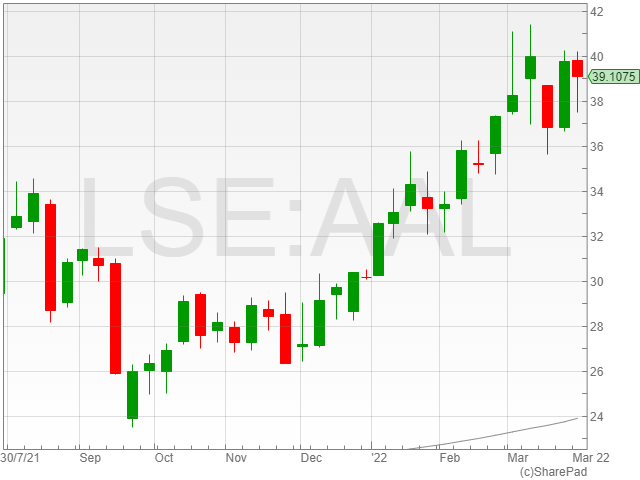
Shares were up 0.20 pence, or 0.5%, at 40.55 pence this morning at 0829 GMT.
Diageo sales jumped by 15% in the second half of 2021.
The group, who owns brands including Smirnoff vodka and Tanqueray gin, saw profits jump by 22.5% as consumers are buying more alcohol as they stay at home.
“The positive price/mix benefit was primarily driven by mix, reflecting the strong growth of premium plus brands, particularly in scotch, tequila and Chinese white spirits, as well as the continued recovery of the on-trade channel in Europe and North America and the partial recovery of Travel Retail,” said the group in a statement.
“There was also a price benefit, primarily from price increases in Latin America and Caribbean, Africa and North America.”
Richard Flood, an investment manager at Brewin Dolphin, commented on the results: “Diageo has produced a great set of results with a strong increase in sales, margin, and profits over the past six months.
“The continuing shift by consumers to spirits consumption has benefited the company, as this is a sector of the drinks market that it dominates.
“Diageo has been able to successfully navigate the challenges of Covid with its strong presence in both the off-trade, as well as the pubs sector – or on-trade – which is expected to recover further as Covid fades, leaving Diageo well positioned for the future.”
EasyJet was affected over the Christmas period as the Omicron variant affected travel.
Passenger load fell to 67% in December from 80% in November. However, bookings have increased due to the government’s announcement that tests are no longer necessary.
“Booking volumes jumped in the UK following the welcome reduction of travel restrictions announced on 5 January, which have been sustained and then given a further boost from the UK Government’s decision earlier this week to remove all testing requirements. We believe testing for travel across our network should soon become a thing of the past,” said chief executive Johan Lundgren.
“We see a strong summer ahead, with pent up demand that will see easyJet returning to near 2019 levels of capacity with UK beach and leisure routes performing particularly well.”
Jonathan Sullivan, the managing director in Accenture’s Travel Industry, said: “Because leisure travel is notoriously seasonal, the key differentiator in airlines’ long-term survival will be the ability to offer and deliver more services and products that tempt and delight customers.”
“While that sounds simple, the industry must overcome the obstacle of its dated underlying systems. Modern digital systems are essential to digitally sell and manage a broader variety of add-on services, including from third parties. These systems also need to gracefully cope with the reality that travel plans may be changed or rescheduled at short notice.”
Green investment continues to gain popularity and attract increased attention from investors and academics. According to a FTSE Russel report, the green economy is represented by more than 3,000 global listed companies, a US$4 trillion market cap opportunity‒an equivalent of over 5% of the total listed equity. Nonetheless, there are multiple green investment products, including the green bonds, aggregation, and securitization vehicles. For example, since 2008, the World Bank Group has provided over $14 billion in green bonds whose profits are utilised to bankroll low-carbon projects. Green investment products can fund gaps and help meet climate commitments. Investors can exploit these green investments products to generate proceeds and promote a low-carbon economy. Below a summary of three types of investments:
Green Bonds
The green bond market mobilises the private sector bankrolling for climate-friendly investments. The green bond process encompasses five key areas: determining the issuer’s criteria or definitions for “green,” selecting eligible projects, earmarking and allocating profits, monitoring and reporting on impact, and ensuring transparency and compliance. For example, the issuer engages with investors and employs internal and external input to assess the projects eligible for financing through green bonds. In September 2021, the European Commission adopted an independently evaluated Green Bond framework. Consequently, it took a step towards issuing €250 billion green bonds, representing 30% of NextGenerationEU’s total issuance.
Green bonds represent the investment vehicle of choice for the private and public sectors to bankroll projects with ecological benefits, including clean power, energy-efficient buildings, and low-carbon transport. Banks issue the majority of green bonds; however, companies in other sectors are issuing their bonds, including big brands in the innovation, utilities, automotive, and consumer products industries. By ensuring that green bonds are designed well, and that appropriate due diligence is in place, issuers and investors can limit risks likely to undermine green bonds’ financial attractiveness.
Green Infrastructure Investment Openings
Green infrastructure presents a global investment opportunity, with an approximated $100 trillion worth of compatible climate infrastructure demanded between now and 2030 to meet the Paris Agreement emissions reduction targets, according to BCG and GFMA reports. Green finance includes infrastructure investment, low-carbon transport, sustainable waste management, sustainable water management, and renewable energy, which could bridge infrastructure gaps. . The positive ecological and economic benefits associated with green infrastructure underline the targeted increase in green investments in 2022. Adaptive and resilient infrastructure provision is an integral part of the global response to the future climate emergency.
The water infrastructure is one of the critical infrastructure investment products in most need of investments, including facilities related to rural and urban sanitization and hygiene. Accordingly, openings exist for investors to enter and contribute to closing the bankrolling gap. Other investment pathways exist in the construction, ownership, and refinancing of new infrastructure categories. These green infrastructure investment openings can reinforce the transition and shift to a low-carbon economy.
Green Power Investments
Green energy remains a hot topic globally concerned with climate change. Power generation without reliance on fossil fuel for electricity generation is attracting increased consideration. Among the top renewable energy include water, wind, and solar. Green power investment has many options in different domains, including solar, tidal, hydro, and wind, among others. Investors can focus on these areas to promote sustainability while still generating proceeds. This market has a considerable gap with the potential to create returns coupled with promoting socioeconomic and ecological sustainability. Investors can also lose money by investing in green power investments. Power is vital in running operations in many sectors, as well as households, which underlines the benefits of investing in green power.
Water Stocks
Water remains one of the most significant natural resources. Presently, there is a substantial fear the world will run out of freshwater because of climate change. A report by the European Environment Agency indicates that 20 European nations depend on other countries for over 10% of their water resources. In the United States, cities from Los Angeles to Miami are concerned regarding water scarcity as climate change depletes water resources.Consequently, these issues could create interest in exploring investments in water stocks, including collecting, purifying, and distributing water. Currently, there are multiple exchange-traded fund offerings, including First Trust Water ETF, Zacks Global Water Index, Invesco Global Water Portfolio ETF, and Invesco S&P Global Water Index ETF, among others. Besides, water has been a go-to resource for renewable energy for many years. Today, projects, including China’s massive Three George Dan, can supply electricity to around 80 million households. The International Renewable Energy Agency (IRENA) underlines hydropower as the most inexpensive electricity generation technique. Presently, there are limited pure-play stocks in the hydro business, meaning a large market or investment gap in this domain exists.
Green Hydrogen Production
Green hydrogen includes hydrogen generated through water electrolysis, with the electricity utilised in the process sourced from renewable sources, such as solar, tidal, and wind. It is indispensable in the energy transition, but its generation is expensive. However, investments into technology companies looking to make the process more efficient can be researched further. The energy shift considerably demands hydrogen as a clean energy source. Nonetheless, much is still in the development stage, meaning the high risk for investors exists.
How to open a trading account to trade Green Energy Stocks and More
How to start trading? There are some simple steps you can take to trade global green energy stocks and more from the UK:
4. Research stocks to buy (using the analysis section)
5. Place the trade
Spread betting and CFD trading carry a high level of risk to your capital and can result in loss of your deposits. CFDs are complex instruments and come with a high risk of losing money rapidly due to leverage. Please note that 69% of our retail investor accounts lose money when trading CFDs. You should consider whether you understand how CFDs work and whether you can afford to take the high risk of losing money.
The information provided within this communication has been prepared by London Capital Group Limited (LCG) and is intended for informative purposes only. It is not intended for investment, or commercial advice or an offer or solicitation for the purchase or sale of any financial instrument. Any opinions, news, research, analysis, prices, other information or links to third-party contained within this communication is provided as general market commentary and does not constitute investment advice and is not intended for any form of commercial use. LCG shall not accept liability for any loss, damager including, but without limitation, to any loss or profit which may arise directly or indirectly from use of or reliance on such information.
The information in this article is not directed at residents of EU as well as Australia, Belgium, Canada, New Zealand, Singapore or the United States, and is not intended for distribution to, or use by, any person in any country or jurisdiction where such distribution or use would be contrary to local law or regulation.
London Capital Group (LCG) is a company registered in England and Wales under registered number: 3218125. LCG is authorised and regulated by the Financial Conduct Authority (FCA) under the firm reference number of: 182110. The registered address for LCG is: 80 Cheapside, London EC2V 6EE.
The FTSE 100 surged on Wednesday as travel shares led the market higher on hopes the industry could bounce back to near normal levels this summer.
Travel shares crashed on the announcement of the Omicron variant, but as cases fall and the variant proves to be less severe than first thought, the risk premium in travel shares is being removed in sharp moves to the upside.
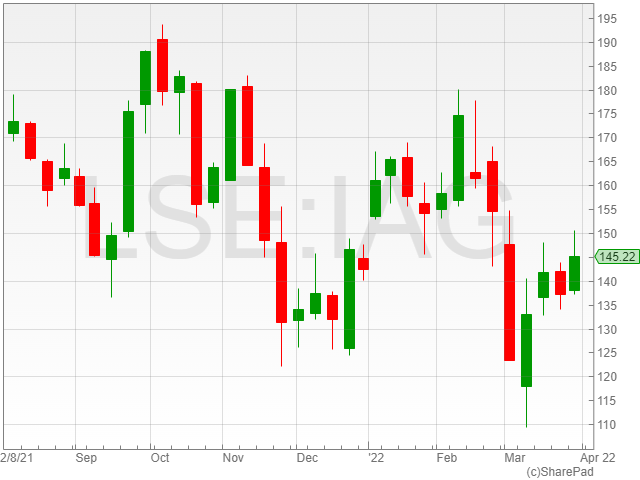
IAG was the FTSE 100 top riser up 7%. Hot on the airline’s heels was Intercontinental Hotels rising 4.5%.
FTSE 100 rally
Although travel shares led the FTSE 100, the rally was broad with most industry sectors rising on the day.
The FTSE 100 has avoided the volatility evident in US markets this week and has highlighted the differences in the composition of the indices.
“For years this under-representation for tech held the FTSE 100 back, now the dominance of relatively cheap tobacco, resources and banking stocks is playing in its favour. For the year to date it is up slightly while the Nasdaq in the US is down double digits,” said AJ Bell investment director Russ Mould.
“How long this trend continues remains to be seen.”
The FTSE 100 is up 1.5% so far in 2022 compared to declines of 8.4% and 13.5% for the S&P 500 and NASDAQ respectively.
Fresnillo
Fresnillo was firmly at the bottom of the FTSE 100 having crash 12% after the silver-focused precious metals miner said they missed silver production.
The company did exceed gold production guidance but this did little to stop investors fleeing the stock. Fresnillio recorded silver production of 53.1 moz in the full year and 751.2 koz of gold.
“Given the challenges presented by both the continued effect of the pandemic and more recent Government labour reform initiatives, as well as certain operational issues, we have delivered a creditable performance during the year, with silver production marginally short of guidance, but gold production exceeding expectations,” said Octavio Alvídrez, Chief Executive Officer at the miner.
Alan Green joins the UK Investor Magazine Podcast for a discussion around global markets and UK equities.
Global equity markets have had a rollercoaster of a week with fears over a Russian invasion of Ukraine and the impact of interest rates caused significant levels of volatility in markets.
There is a clear division opening up in global markets with the FTSE 100 rising 1.5% year to date whilst the S&P 500 has shed 8.4% and the NASDAQ 13.5%.
We look at what the composition of the FTSE 100 means, and if it could outperform US indices after years of underperformance in 2022.
FTSE 250 Pets at Home rose 4.5% after the group released 8.7% increase in like-for-like sales and said profit was going to exceed prior expectations.
We also look at the latest developments at Blencowe Resources, Echo Energy and Tertiary Minerals.
Blencowe Resources operate the Orom-Cross Graphite Project in Uganda and have recently updated the market with a works programme.
Zoo Digital, the AIM-listed video streaming and production company, said on Wednesday it was increasing its guidance for the year as demand from major studios ramped up.
The group said the resumption of video productions by major media companies was resulting in a growing market for ZOO’s services and Zoo have also moved into to new area of business adding to their sales.
Zoo Digital said revenues for the full year are now expected to be at least $57 million, a 44% increase on the prior year.
Zoo Digital shares surged on the news, rising over 8% to trade at 141p in midmorning trade on Wednesday.
Stuart Green, Chief Executive Officer
“We continue to see strong revenue growth as we extend our order pipeline across all service lines. As major media companies expand their streaming platforms internationally the global spend on film and TV programming continues to rise. This content must be localised for regional audiences,” said Stuart Green, Zoo Digital Chief Executive Officer.
“With these favourable dynamics at play, ZOO’s technology-enabled end-to-end service offering positions it well to continue to grow and take a greater share of an expanding market.”
Software revenues at Sage Group are up 13% to £336m whilst recurring revenue growth was up by 8% to £429m. Total Group revenue jumped by 5% to £458m.
In North America, revenues increased by £174m whilst in Northern Europe, revenues increased by 7% to £102m.
Jonathan Howell, the chief financial officer of the group, said: “Sage has made a strong start to the year, accelerating growth in line with expectations.
“Sage Business Cloud has performed particularly well, driven by continued growth in both cloud native and cloud connected solutions, as we execute on our strategy to be the trusted network for small and mid-sized businesses.”
“Accordingly, we reiterate our guidance for the full year, as set out in our FY21 results announcement,” he added.
Last week, Sage completed the acquisition of Brightpearl.