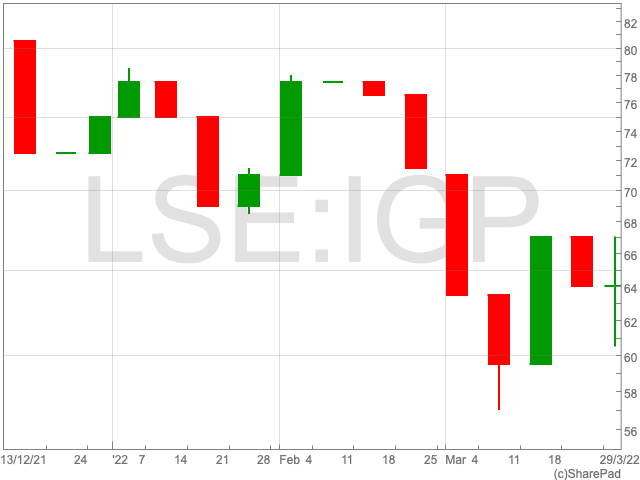
Cybersecurity company specialising in digital identities, derived credentials and access control, Intercede received an order of $3.4m from the US Federal Government.
As a result, the order will be recognised as annual recurring revenue for the new financial year ending March 31 2023.
A trading ppdate will be published as soon as possible after the company’s financial year ends on March 31 2022, in accordance with standard procedure.
Intercede shares increased 5.8% to 64p after receiving the large order from the US Federal Government.
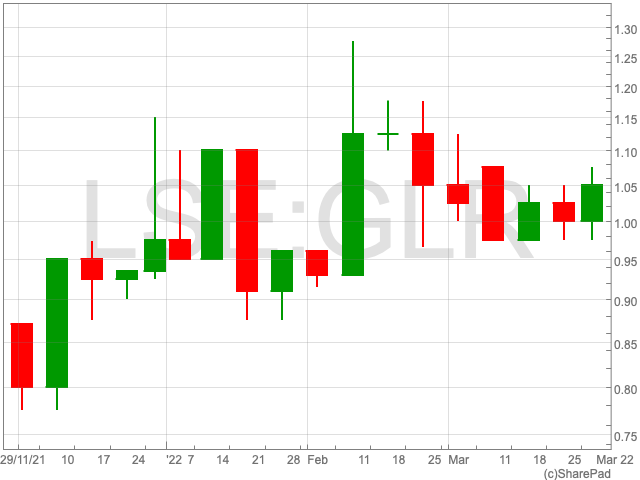
Through Galagen Proprietary Limited, Galileo Resources owns a 29% direct and a 4.99% indirect stake in Glenover. The ‘Glenover share sale agreement’ entitles the company to an additional £5.33 million.
The consideration for the sale will be paid in a mix of cash and Afrimat shares.
Half of the sale shares consideration will be split into Afrimat shares and South African dollars, at the discretion of Afrimats shareholders. The remainder will be split into Afrimat shares and cash at the discretion of the sellers.
Colin Bird, Chairman and CEO of Galileo Resources has sacrificed the bonuses of 1.5% of the gross proceeds of the Glenover Agreements that were given to him by Glenover whilst he was director of Glenover and these amounts will be added to the transaction awards already disclosed.
“I am pleased that the Company has received confirmation that all conditions to acquire the Vermiculate Mining Right have been met and £523K is now due to the Company. This is a further favourable step in the progressive sale of the Glenover Asset. The funds will be employed in releasing value from our lithium project in Zimbabwe and Copper-Gold projects in Southern Africa,” said Colin Bird.
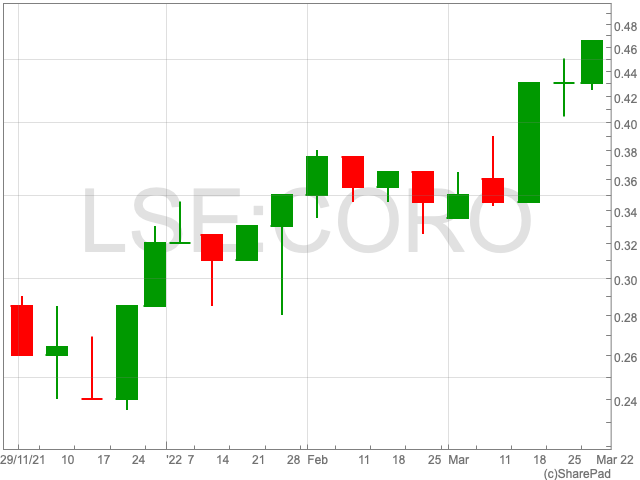
The South East Asian energy company Coro Energy’s shares flew 5.6% to 0.47p on Wednesday following the company’s annoucement of resuming gas production at Sillaro.
Coro Energy is committed to spearheading the transition to a low-carbon economy in the South East Asia region.
As stated earlier, Coro Energy said they expect to produce over of €5m annually in free cash flow from its Italian portfolio with Sillaro producing gas. The European gas market and current gas prices play in Coro’s favour.
The UK Investor Magazine Podcast is joined by Alan Green for a discussion around UK equities and key market themes
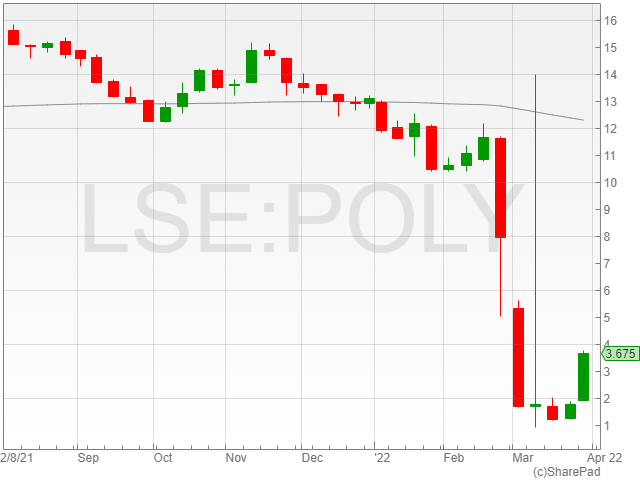
Polymetal is recovering from a near 90% decimation of their share price as the Ukraine conflict started. We look at today’s corporate update and what it could mean for the company, and the Polymetal share price.
Gfinity is trading at 2.8x historical 12-month sales, after reporting £3.3m revenue for the most recent 6 month period. Comparing this valuation to peer Guild Esports suggests there is a potential discount in Gfinity.
Cadence Minerals have secured the sale of a Lithium asset which will provide Cadence with roughly £3m. This doesn’t mark a move away from Lithium, rather a realignment of their portfolio.
We also discuss SpectrumX who are currently preparing for an IPO in London.
Recession fears were triggered after the yield on two-year US government bonds exceeded that of a ten-year note, causing an inverted yield curve which has historically signalled an incoming recession.
An inverted yield curve is a rare occurrence, with the last one recorded with US Treasuries in 2019.
The typical pattern show that investors look for a higher return and a consequently higher yield on long-term bonds compared to shorter-term bonds to compensate for the bigger risks in the transaction.
However, once the opposite happens, it has tended to signal danger of an approaching recession. The notion is not far-fetched, in light of the spiking cost of living in everything from food to fuel as inflation skyrockets to 6.2% across the UK.
UK retailers and operators have already felt the foreboding strain on consumers spending, and with the small measures given by Rishi Sunak’s Spring Statement unlikely to make a substantial impact, harder times for households are no doubt ahead.
Analysts noted the domino effect from the growing economic pressure and warned of difficulties in the coming months.
“Central banks have already started the typical course of action when you have high inflation, namely putting up interest rates,” said AJ Bell investment director Russ Mould.
“They will need to walk a careful path, not being too aggressive with the pace and scale of rate rises so that it chokes off the economy.”
“Despite a healthy jobs market and resilient consumer spending of late, stock markets have already been pricing in an economic hit later this year.”
“For example, just look at the sharp decline year to date in UK consumer-facing stocks such as retailers and restaurant operators.”
“It doesn’t much to realise that more expensive energy, food and fuel bills will eventually cause consumers to think twice before spending money.”
The conditions for the agreement entails obtaining the required regulatory approval and completing the due diligence.
The payments from the Australian buyer will be broken into parts, with partial payment on completion of the sale and the remainder on achieving ‘key performance milestones’.
The buyer will also be investing a minimum of A$4m over 3 years from the completion of the sale on the exploration of the Litchfield lithium prospect in Northern Australia.
Consideration on completion of the sale
The consideration will be broken down in part payments, with 4 installments payble only on achieving key milestones.
Once a JORC resource of at least 12m tonnes of lithium oxide is proven at Litchfield, the first 3 milestone payments will be payable. Cadence will receive A$2.52m from the total of the first 3 payments.
The fourth milestone payment of A$945,000 to Cadence is due when a thorough feasibility study on Litchfield is completed.
Using a stated pricing mechanism, the buyer can potentially pay the milestone payments in equity.
Cadence CEO Kiran Morzaria commented, “Recent exploration and sampling work at the Litchfield project and the project’s proximity to Core Lithium’s assets have led us to believe that Litchfield has considerable potential to host lithium mineralisation.”
“In addition to this, the other lithium assets held by LT and LS provides the buyer with several attractive targets to explore and develop.”
“For Cadence, this transaction is, we believe, an excellent balance of risk and reward. Firstly it provides an initial consideration that more than covers our book investment.”
“Secondly, by partly paying the consideration in shares in the buyer and cash payment on milestones we are exposed to the exploration upside. Lastly, given the commitment of at least A$ 4 million to explore the primary assets, this mitigates dilution to Cadence shareholders.”
LT and LS own two prospective exploration licences and one exploration application in Australia, as well as seven exploration licence applications in Argentina, through their subsidiaries to target hard rock lithium deposits.
The Litchfield lithium project, which is contiguous to Core Lithium’s strategic Finniss Lithium Project and has JORC compliant ore reserves of 7.4m tonnes at 1.3% Li2O, is the most significant of the deposits.
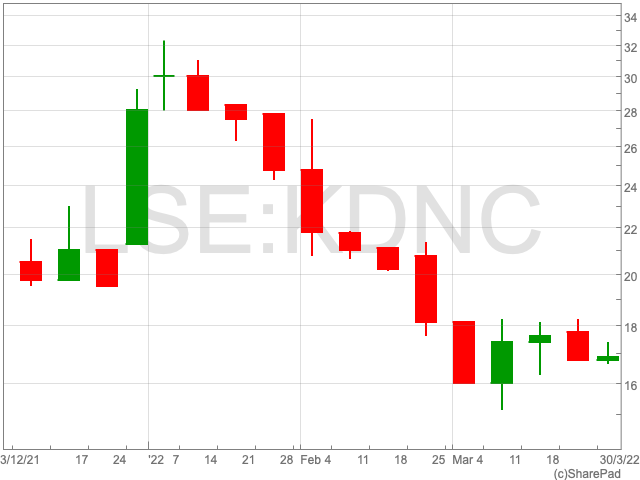
Cadence Minerals’ shares increased by 1.5% to 16.8p after the news of the conditional agreement for the sale of its stake in LT and LS.
Ebiquity shares plummeted over 7% in early morning trading on Wednesday after the company announced its planned acquisition of US-based media audit specialist Media Management for $8 million, alongside its final results.
The company noted a deepening statutory operating loss of £5.1 million compared to £2.9 million in 2020 following the accrual for the post-date remuneration, payable in 2023, for the acquisition of Digital Decisions in 2020.
Ebiquity reported a 13% rise in revenue to £63.1 million and a pre-tax profit increase to £4.1 million compared to a loss of £1.3 million in 2020.
The media investment analysis company further announced an underlying earnings per share (EPS) of 2.7p against a loss of 1.9p in 2020.
The firm attributed its rising revenue to a higher margin to £3.7 million from its Digital Media Solutions.
Ebiquity said it currently expects continued growth in Digital Media Solutions supported by its product launches in 2021 and additional services scheduled for 2022.
Ebiquity confirmed that trading is currently in line with the Board’s expectations and expects continued momentum moving forward in 2022.
“I am pleased with our progress in 2021, both in terms of revenue growth and importantly, a return to profit after a challenging 2020, said Ebiquity CEO Nick Waters.
“We won new mandates from major clients including Unilever, Stellantis, Daimler and Ferrero, and managed 6 of the top 10 largest global and multi-national agency selection processes by billings.”
“In terms of geographic performance, Asia Pacific grew the fastest, while North America regained momentum with strong growth. Benefiting from the ever-increasing rise in digital advertising spend, Digital Media Solutions exceeded our expectations, with strong revenue and margin improvements.”
“Looking at 2022, we expect further good revenue growth as well as margin enhancement.”
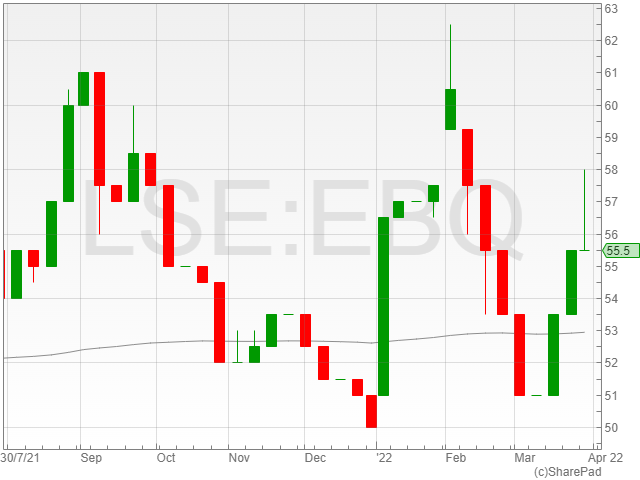
The Ebiquity share price was down 7.2% to 53.8p at the time of writing.
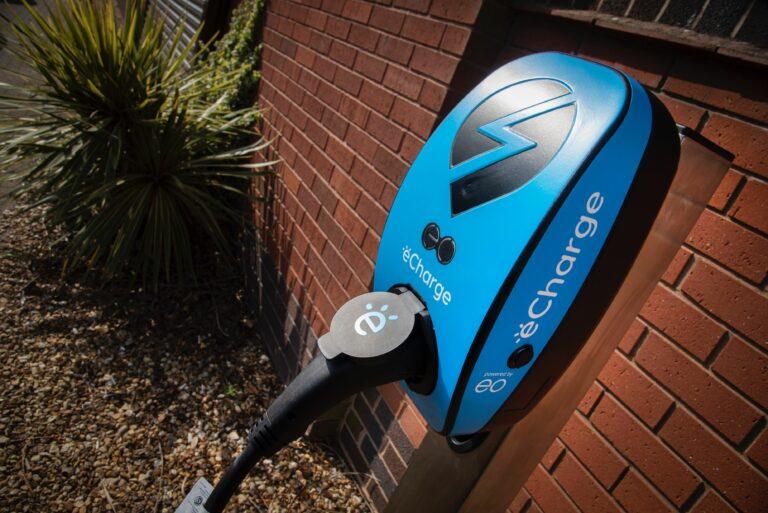
eEnergy has signed an exclusive partnership with EO Charging to launch eCharge, a service aimed at creating the ‘UK’s largest public-sector charging network’.
Digital energy services company Energy entered into an exclusive partnership with electric vehicle (EV) tech solutions provider, EO Charging to create eCharge, a new service that will install at least 50,000 EV chargers by 2030. The joint venture is aimed at using eCharge to create the UK’s largest public-sector charging network.
The parties have agreed to collaborate in order to introduce and develop EV charging opportunities in the education sector, with EO serving as the equipment supplier and eEnergy serving as the project charge point operator, both working towards the goal of strengthening their relationship through customer cross-referrals.
eCharge
eCharge reportedly aims to make EV charging accessible to thousands of drivers and businesses battling with the energy price crisis, by combining EV charging with clean energy procurement, energy management and high-impact energy efficiency solutions with no initial payment.
Neil Campbell will be Managing Director of eCharge, who previously held the same role with price comparison site MoneyExpert.
eEnergy
According to the company, over 600 schools and 2,000 other companies in the UK already use eEnergy’s energy-saving technologies. eCharge will just be an extension of the vast services Energy already provides to the education and public sector.
The education industry is a huge untapped market that can assist the UK’s move to low-carbon transportation more quickly. The UK has 32,000 educational institutions with roughly 3.4m people as staff or students in the education sector.
eEnergy will reportedly install EO manufactured chargers in the public sector to help the Government’s 2030 target of 145,000 extra charge points in the UK, coinciding with the imposition of a ban on new internal combustion engines.
Harvey Sinclair, CEO, eEnergysaid, “The government has rightly set ambitious net zero targets, and EVs will play a fundamental role in this strategy. However, ensuring everyone has access to reliable charging, especially for those who cannot plug in at home, poses considerable challenges.”
“Like many employers, schools face a growing demand for EV chargers just as energy costs reach record highs. Our ambitious rollout will make life easier for teachers and other drivers by offering an affordable and accessible alternative and gives eEnergy an exciting new product category in a high growth market. “
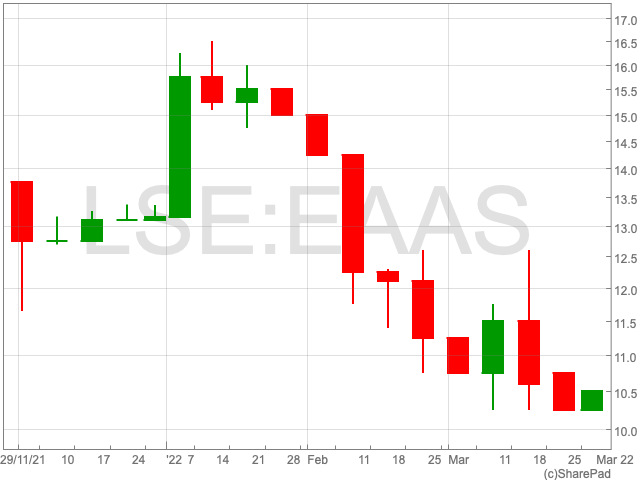
eEnergy shares gained 2.4% to 10.5p following the news of its new joint venture with EO Charging.
Polymetal saw its share price rise 10.2% to 373.6p in early morning trading on Wednesday following an update to investors regarding the impact of sanctions on the mining group’s operations.
The mining firm has been through an incredibly turbulent period after Russia’s invasion of Ukraine on 24 February 2022, with the group’s spiralling conditions ending with its removal from the FTSE 100 on 21 March 2022.
The company confirmed that targeted sanctions against its operations remained unlikely but not impossible, and that it has planned ahead of any impact proactively.
Polymetal reported a net debt increase to $1.9 billion on 29 March against $1.6 billion in December 2021, which the group attributed to seasonal working capital increase and accelerated procurement.
The firm stated that it has been using Russian banks for shot-term capital financing while it awaits additional liquidity in Q2 2022.
Polymetal reportedly has $0.4 billion in cash and cash equivalents held by non-sanctioned entities alongside $0.5 billion of available undrawn credit lines.
The company confirmed that its operations in Russia and Kazakhstan are currently continuing undisrupted, and its projects in advanced stages of development are reportedly on track to be commissioned on schedule.
Polymetal added that its POX-2 project will experience a 3-6 month slippage due to logistical challenges and its early stage projects will be delayed by a year.
The firm’s Pacific POX project was noted to be suspended indefinitely while the company look for a potential re-site alternative for the venture in Kazakhstan, and its Greenfield exploration budgets are set to be cut 50%, which will predominantly impact its junior joint-ventures.
Polymetal confirmed that its Brownfield explorations schedule and volumes will remain unaffected.
The mining company also added five new directors to its board earlier this month and is scheduled to confirm shareholder approval at its AGM on 25 April.
“It is my opinion that investors, private and institutional, that collectively control over 75% of this company deserve a Board that will lead the company through this turbulent time, preserving and hopefully rebuilding the value of their investment as well as protecting the livelihood of thousands of employees, contractors, suppliers and other stakeholders”, said Riccardo Orcel, Chair of the Board.
Russian gold minerPetropavlovsk delivered an update on early Wednesday regarding debt restructuring with Gazprombank (GBP) following the freezing of its assets after its inclusion on the Russian sanctions lists.
Petropavlovsk had previously disclosed a significant financial commitment to GBP, including a $200m term loan and $86.7m in credit facilities.
Last week, Petropavlovsk brought to light the company’s financial commitments with GBP. The firm said they have a $200m committed term loan with GBP. The group also acknowledged GBP’s involvement with Petropavlovsk’s subsidiaries in Russia, as the bank provides a revolving credit facility of $86.7m.
On 25 March 2022, Petropavlovsk was due to pay interest of $560,000 under the term loan, however, sanctions prevented the company from making the payment.
On March 28 2022, the rouble equivalent of $9.5m became repayable under the RCFs, but was not paid as a result of the sanctions.
The company confirmed that $500 million 8.125% guaranteed notes due 2022 issued by Petropavlovsk 2016, of which $304 million remains outstanding, are scheduled to mature in November 2022.
With current circumstances proving problematic for Petropavlovsk and its financial obligations, the company is in the initial phase of talks with its advisers and GBP regarding a possible restructuring of the group’s debt.