FTSE 100 ends the week on a sour note

0

The FTSE 100 is down by 0.36% on Friday morning to 7,053 points with healthcare being the only sector in fashion, thanks to positive news on a cancer drug from AstraZeneca.

Miners were weak as investors started worrying about the potential fall-out should Evergrande go bust. Commodities demand could tumble if the Chinese property market experiences a crash.

“Markets flashed red across Europe and Asia on Friday as uncertainties remained over the future of troubled Chinese property developer Evergrande, with no news on whether it had made its latest bond interest payment,” says Russ Mould, investment director at AJ Bell.

Consistent and rising inflation could mean that central banks have to act soon to get the situation under control which means interest rate hikes sooner rather than later.

“However, there is a bleak winter ahead given pressure on energy prices, supply chain problems and a sharp hike in the cost of living,” Mould added.

“All these factors threaten economic growth, so central banks have a fine line to tread – raise rates too quickly and the economy could falter, but don’t act and risk inflation racing away.

FTSE 100 Top Movers

Rolls-Royce (2.95%), AstraZeneca (2.08%) and IAG (1%) are the top risers during the morning session on Monday.

Rentokil Initial (-2.69%), Croda international (-2.34%) and Bunzl (-2.28%) make up the bottom three on the FTSE 100.
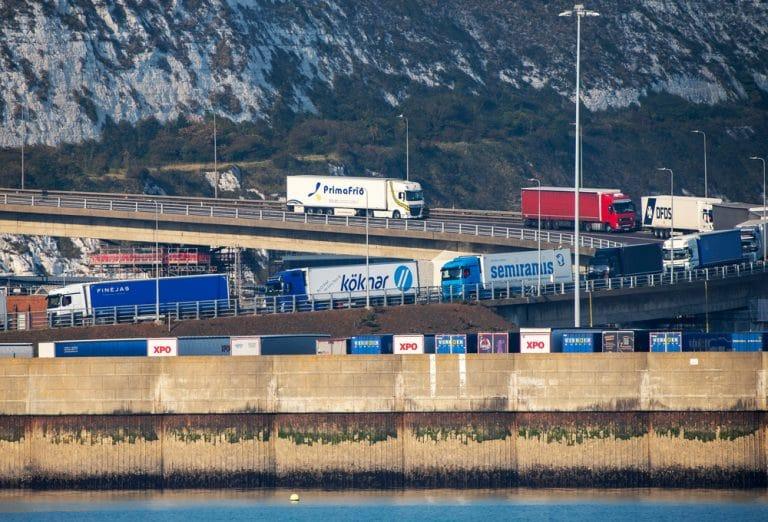
Port of Dover blocked by climate protestors

0

Protestors are same group which disrupted M25 last week

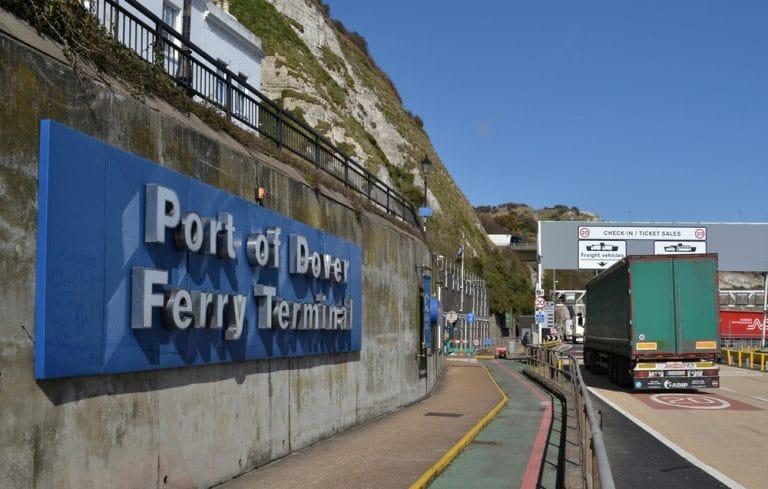
Protestors from Insulate Britain have blocked the Port of Dover, Europe’s busiest ferry port, in an effort to get their message across about their environmental concerns.

It is the same group that caused various issues on the M25 over the past two weeks, where they were told they could be imprisoned if they were to do it again.

The group, an offshoot of Extinction Rebellion, is demanding that the UK vows to fund insulation of all social housing in the UK by 2025. As well, it would like to see a national plan written into law for a low carbon retrofit of all homes by 2030.

A spokesperson for the group commented: “We are blocking Dover this morning to highlight that fuel poverty is killing people in Dover and across the UK.”

“We need a Churchillian response: we must tell the truth about the urgent horror of the climate emergency.”

“Change at the necessary speed and scale requires economic disruption. We wish it wasn’t true, but it is. It’s why the 2000 fuel protests got a u-turn in policy and gave (Tony) Blair his biggest challenge as prime minister.”

The UK Government has told officials to seek an injunction against the group after their antics on the M25.

UK pledges to deal with HGV driver shortages amid fuel and supply chain issues

0

One possibility is relaxing immigration rules

Pressure is growing on the UK government to do something about the lack of lorry drivers which is causing disruption to supply chinas, including fuel, across the UK.

One proposal for ministers is to ease immigration rules.

This emergency measure could help provide some of the 100,000 drivers needed to fix the issue.

Grant Shapps provided the government’s perspective on Sky News this morning, saying that he will not take any options off the table.

However, an issue remains over testing drivers, in addition to the problem being something that has persisted for years.

Shapps was asked if the government would add lorry drivers to a list of shortage occupations, meaning drivers from abroad could receive special visas to allow them to work in the UK.

“We’re absolutely not ruling anything out at all. We want to see this problem resolved, but we also want to see it resolved in the long term,” said Shapps.

“I’ll look at everything, and we’ll move heaven and earth to do whatever we can to make sure that shortages are alleviated with HGV drivers.”

“But we need to look at the things that are going to make a difference, and the big problem is the testing of drivers.”

Peel Hunt raises £112mln in IPO ahead AIM listing

0

Peel Hunt valued at £280m

Peel Hunt, the London-based broker, confirmed it has raised £112m ahead of its debut on the AIM market.

Of the money raised, £40m will be invested back into the business in order to aid its continued growth.

The rest will be kept by shareholders who are selling, seemingly to deal with tax related issues as a result of the corporate restructuring.

Peel Hunt‘s shares were placed with investors at 228p a piece, meaning the company’s total valuation is £280m.

Chief executive Steve Fine commented: “We have been delighted with the positive reception to our IPO, with strong support from institutional investors, as well as retail investors who were able to participate through intermediaries using our REX technology platform.”

“This is testament to the high-quality business we have built over the past decade, which puts us in prime position to take advantage of numerous opportunities ahead and continue our strong growth momentum.”

Evergrande misses deadline as concerns rise

0

The Chinese government is yet to comment

Evergrande, the second-largest property developer in China, has moved closer to the possibility of defaulting on Friday as it failed to meet a payment deadline.

This signals that the company is in a deeply troubling situation and investors are now fearful.

Evergrande owes more than $300bn and appears to have run out of cash. Investors are now concerned about the consequences on the Chinese financial system and around the world.

A specific deadline where Evergrande was supposed to pay $83.5m in bond interest has been and gone, with little comment from the developer.

Bondholders have received no communication nor have they been paid, Reuters reported.

Evergrande will now enter into a grace period of 30 days. If it fails to make payment then it will default.

“These are periods of eerie silence as no-one wants to take massive risks at this stage,” said Howe Chung Wan, head of Asia fixed income at Principal Global Investors in Singapore.

“There’s no precedent to this at the size of Evergrande … we have to see in the next ten days or so, before China goes into holiday, how this is going to play out.”

Central banks in China have made efforts to stimulate the banking system. However, there has been no comment by officials, or state media, regarding an update on the situation.

Gold dips but broad upward trend remains

Gold historically a safe haven in times of inflation and uncertainty

Gold dipped on Thursday as the Fed gave an indication it could rise interest rates, while positive news emerged regarding Evergrande in China.

Spot gold is down to $1,751.03 at the time of writing, as are US gold futures.

The dollar is down by 0.52% against a basket of currencies as Jerome Powell hinted that tapering may soon be on the menu.

“Until something more concrete happens in terms of direction for the dollar, gold will be impacted more by the level of risk appetite or risk aversion,” said Powell.

Generally speaking, a weaker dollar is good for gold’s appeal, as it is considered a hedge against inflation and political instability.

“Higher rates usually do impact gold negatively, (but)investors will almost have a foot in gold’s door as a precaution given the continuing bubble in the equities and bond market,” said Vincent Tie, sales manager at Singapore dealer, Silver Bullion.

However, while gold has not been having the best of times over the past few months, over a longer period it has been on an upwards trajectory.

Gold could face pressure in the short-term, said domestic brokerage Geojit, who thinks major rallies are seen only a close above $1815.

Tesco issues warning over panic buying during Christmas period

0

Tesco struggling to hire HGV drivers despite improving pay

Tesco has issued a warning to the government, suggesting that there could be shortages across the country leading to empty shelves as a result of a shortage in HGV drivers.

“Our concern is that the pictures of empty shelves will get 10 times worse by Christmas and then we’ll get panic buying,” Andrew Woolfenden, Tesco’s head of distribution and fulfilment in the UK, told a Cabinet Office meeting.

This is despite Tesco improving its remuneration packages for drivers, offering bonuses worth £1,000.

The FTSE 100 company is facing a surplus of 800 drivers, according to Woolfenden, confirming that Tesco had struggled to hire new drivers over recent months.

“There won’t be the same level of choice as there has been in the past,” the Co-op chief executive, Steve Murrells, said, as he warned of oncoming price increases and supply issues.

Murrells believes shoppers will be able to get what they need, but said that some product lines would be limited.

A Tesco spokesperson added: “We have good availability, with deliveries arriving at our stores and distribution centres across the UK every day. While the industry-wide shortage of HGV drivers has led to some distribution challenges, we’re working hard to address these and to plan for the months ahead, so that customers can get everything they need.”

The Tesco share price is down by 0.41% on Thursday.

Could food prices be the cause of inflation?

0

Food prices concerning for consumers, investors and central bankers

There is an air of concern both on the part of consumers, investors and central banks about the possibility of oncoming inflation and supply chain issues.

The Bank of England on Thursday suggested it is worried about the prospect of additional inflation, predicted that prices will climb above 4% over the coming months.

A specific area of concern for all parties is the cost of food.

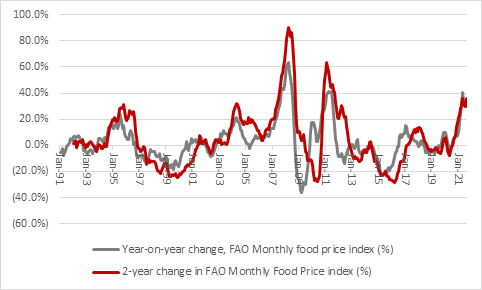
“The United Nations’ FAO Food Price Index therefore requires attention,” says AJ Bell Investment Director Russ Mould.

The benchmark, which spans key agricultural materials such as cereals, vegetable oils, meat, dairy products and sugar, is up 33% year-on-year. That is the fastest rate since 2011.

Source: Food and Agricultural Organisation (FAO) of the United Nations

On investors’ minds now will be whether or not food prices will be the cause of sustained inflation and if this will impact consumers’ spending levels.

“Central bankers will be watching, in case inflation forces their hand and requires a tightening of monetary policy in the form of a tapering of Quantitative Easing and higher interest rates,” says Mould.

“No doubt central bankers, to defend their view that the current spike in inflation is ‘transitory,’ will be keen to point out some of the factors involved in the food price surge. These could range from include global shipping and port bottlenecks, to a shortage of truck drivers to bad weather in countries such as Brazil, where drought and then unseasonal frost is badly affecting supply of oranges and coffee to the global market.”

In many cases, the best solution for high prices is high prices. It can choke off demand or encourage additional supply. “The latter may happen in time, if the weather helps, but it is not easy for people to stop eating, as they need their daily calorific intake,” says Mould.

Bank of England warns of winter inflation but will not raise rates just yet

0

BoE says inflation could climb above 4% in coming months

The Bank of England has suggested it is worried about the prospect of additional inflation.

The UK central bank today predicted that prices will climb above 4% over the coming months, but added that increased rates are not yet a priority as they would come down in 2022.

The Monetary Policy Committee voted unanimously to keep its rate at 0.1% this month, adding that it was content with the economy’s recovery from the pandemic to the point it will now weigh up the possibility of ending emergency interest levels.

However, the committee suggested that rates will not be raised immediately.

On the other hand, it said the recent information on possible inflation had “strengthened [the] case” for “modest tightening of monetary policy”.

Hinesh Patel, portfolio manager at Quilter Investors, commented: “The Bank of England, in its policy decision today, clearly expects the inflation rate to be higher than previously feared. While they reiterate it will be transitory, it will no doubt be of major concern.”

“Ultimately what is flowing through the system right now is “bad inflation”, that is price rises are hitting the most vulnerable households, alongside the impacts of furlough on unemployment uncertainty. This uncertainty is likely to continue with the end of the furlough scheme coinciding with the structural shift in skillsets in the employment market.”

Patel has little faith that any of the issues can be solved by monetary policy and as such the BoE should be well within its rights to start tightening its stimulus policy. “Unfortunately if it does not it risks doing even more damage on the social divide through ever increasing wealth inequality,” he said.

“With the ECB and Federal Reserve both announcing that they intend to begin the tapering and unwind their financial support, there is a risk that not acting in the same timeline will force UK sterling down even further – exacerbating the inflationary shock further with even higher import prices.”

What does falling life expectancy rates mean for state pensions?

0

Life expectancy at birth fell bit different rates across the regions of the UK

Average life expectancy at birth dropped by 7.8 weeks in England and 11 weeks in Scotland between 2018 and 2020, according to data from the Office for National Statistics (ONS).

The pandemic appears to be the reason for the sharp fall, which has seen “significant reductions” in life expectancy in comparison to the 2015-2017 period.

There was a fall in life expectancy across the majority of areas in England, although not by the same amount in each region.

Large drops in male life expectancy at birth were seen in the North East (16.7 weeks) and Yorkshire and The Humber (8.8 weeks).

For women, life expectancy was down in the West Midlands (9.9 weeks) but up significantly in the South West (17.7 weeks).

Tom Selby, head of retirement policy at AJ Bell, comments: “After decades of near constant improvements in UK life expectancy, the COVID pandemic has – for the time being at least – dramatically reduced how long most of us might expect to live on average.”

“These life expectancy falls have not been spread equally across the country, however. In fact, while males born in the North East have experienced a staggering 16.7 week fall in average life expectancy, males born in the South West have actually seen a 5.7 week life expectancy improvement.”

The figures have led to questions being raised over what the implications are for state pensions.

“These significant reductions in average life expectancy will inevitably heap pressure on the Government to rethink the planned hike in the state pension age from 66 to 67 in 2028,” says Selby.

The vast differences in life expectancy in different parts of the UK could reignite the debate around the flexibility of the state pension system.

“The current framework means you cannot access the state pension until you hit state pension age, meaning those with lower average life expectancy can expect to receive less from the state in retirement on average. One idea often floated is to allow people to access their state pension early but at a reduced rate. This could help certain groups who might expect to live less long, although care would need to be taken not to heap more complexity onto what is already a complicated system.”

“Given the catastrophic impact COVID has had on all of our lives – and in particular to life expectancy – it makes sense to begin this debate now. State pension age changes have been planned for a long time and were designed to reflect longer-term improvements in life expectancy.”