Royal Mail trials unique electric vehicles to deliver parcels

0

Royal Mail says EVs will be trialled in cities across the UK

Royal Mail has begun trials of its new micro electric vehicles as it steps up its efforts to reduce its emissions.

Two purpose-built vehicles will by trialled for the next six months delivering letters and small parcels in Crewe, Edinburgh Liverpool, London and Swindon.

The EVs have no tailpipe CO2e emissions and a range of between 70-90 miles in a single charge, which is through a standard three-pin plug.

Royal Mail has also used drones to deliver Covid testing kits and low-emmision tyres in an effort to be more environmentally friendly.

Simon Thompson, Royal Mail’s chief executive, said: “It’s really exciting to see these micro electric vehicles making their way into our daily deliveries.”

“We’re committed to keep on reducing our environmental impact and we intend to leave no stone unturned in trialling new technologies and new ways of delivering to help us do that.”

“As our fantastic posties make most deliveries on foot, this already means we have the lowest reported CO2e per parcel of major UK delivery companies.”

“From drones to electric vehicles, fuel-efficient tyres to bio-CNG trucks, we’ll keep on innovating to reduce our environmental impact even further.”
BP share price: CEO sets out strategy

0

BP’s balancing act between moving away from the oil industry and securing its long-term future is an area UK Investor Magazine has covered for a long time. This has included analysing the various angles from which pressure is building on BP, from investors to regulators, to divest away from fossil fuels and into clean energy.

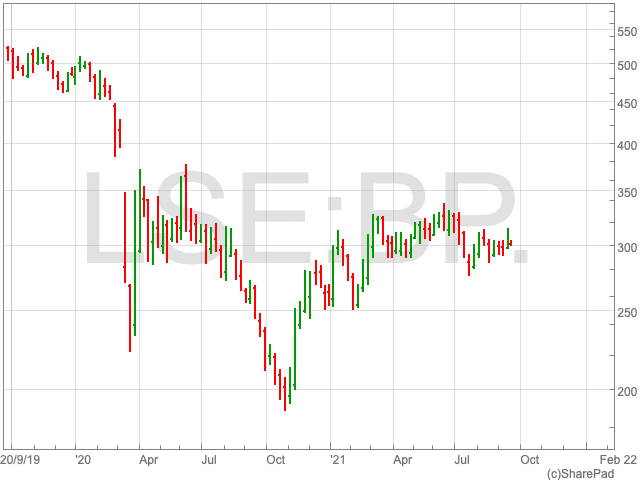
Since the company’s current CEO Barney Looney took office the BP share price is down by nearly 40%. It is the worst performing UK oil major in that period of time. However, what Looney has done, is to develop a coherent strategy for the future.

It seems the more that time passes, the more pressure is ramped up. The UN panel on climate change warned in a recent report that rising temperatures could begin to spiral out of control.

Barney Looney, is of the view that the FTSE 100 company is able to make the transition ahead of its rivals. So far, BP has announced that it will intentionally cut oil production, while it will continue to increase its capacity to generate electricity from renewable sources.

Looney intends to sell $25bn in fossil-fuel assets by 2025, having already sold legacy projects worth about $15bn.

However, Reuters reported that the oil giant is losing tens of millions of dollars from two of its key investments in renewable energy. BP’s UK-based EV charging company, bp pulse, lost a combined $30.8m between 2018 and 2019. While Lightsource, a solar energy company BP has a 50% stake in, lost a combined $81.8m over the same period.

BP does not anticipate these businesses will make a profit until at least 2025. And the losses will not deter Looney’s spending on renewable energy. The CEO’s goal is to increase yearly investment to $5bn by 2030, a substantial increase on current levels.

UK tech sector due for another record year of investment

There are now over 105 unicorns in the UK

The UK tech sector is set for another year of record investment in 2021.

Following an influx of £13.5bn worth of venture capital during the first half of the year, the UK now has 105 ‘unicorns’, otherwise known as a business valued at over $1bn.

Out of the 105, 20 reaches unicorn status in the first half of 2021, including Tractable, Depop and Zego.

To highlight the rate of growth, between 1990 and 2014, 20 unicorns were created.

The £13.5bn investment record is thanks to a number of “mega fundraising rounds” by UK tech companies, including £578m raised by challenger bank Revolut, £289m by cyber security platform Snyk, and £1bn by car sales platform Cinch, among others.

Ion Fratiloiu, Head of Sales at Yobota, said: “These latest figures reflect the resilience of the UK’s tech industry, even in the face of huge uncertainty. It is promising, yet unsurprising, to see that fintechs make up 11 of the 20 businesses that reached unicorn status in the first six months of 2021. Indeed, the UK now finds itself at the cutting edge of fintech innovation, having gone from strength to strength in recent years.”

“The accelerated move to digital during the pandemic has naturally created new opportunities for investment and growth over the past 18 months. At the same time, customers’ changing habits have encouraged businesses to explore their capabilities and implement new features to adapt to growing trends – Monzo and Revolut’s recent move into the buy now, pay later (BNPL) space is just one prime example of this.”

“Ambitious tech businesses across the UK will certainly play an important role in helping to rebuild the economy, and we will no doubt continue to see these companies breaking many more funding records in the years to come.”

FTSE 100 sinks to lowest levels since July

0

The FTSE 100 started this week in the same way it ended the last one one as the index drops firmly below 7,000 to its lowest level since July.

The UK index is down by 1.27% on Monday morning, dragged down by the mining sector.

“There’s plenty for the market to fret about and those arguing the markets were looking frothy are seeing some of that froth disappear as a brewing crisis in China, surging gas prices in Europe and concerns about stagflation combine to sink stocks,” said Russ Mould, investment director at AJ Bell.

“The ‘don’t panic’ message from the Government on energy prices is starting to sound worryingly like Corporal Jones from Dad’s Army as the UK faces a whirlwind whipped up by low levels of energy storage, huge global demand for LNG and Vladimir Putin’s machinations as the amount of gas pumped from Russia is constrained.”

There is fear is that in adding to inflationary pressures, it could threaten the UK’s recovery from the pandemic.

“More significant from the perspective of world markets is the concerning situation with huge Chinese property developer Evergrande which appears to be teetering on the precipice with concerns about contagion from the situation infecting the wider economy in China.”

“This is particularly bad news for miners. Any downturn in China would have significant implications for commodities demand given its status as the world’s largest consumer of many minerals and metals. The situation also has uncomfortable echoes of 2015 when fears about Chinese debt prompted a big and broad-based market correction.”

FTSE 100 Top Movers

AstraZeneca (3.03%), Sainsburys (2.11%) and Polymetal International (2.01%) are leading the way on the FTSE 100 at the beginning of the week.

Trailing the pack is Prudential (-7.33%) along with miners Anglo American (-6.83%) and Glencore (-4.63%).

SSE rules out breakup

0

SSE to release results in November

SSE, the utility company, has confirmed it has not reached a decision to break up despite pressure from activist hedge fund Elliott Management.

“Following recent reshaping of the group, SSE’s clear strategic focus is on renewables and regulated electricity networks, supported by carefully chosen businesses,” SSE said.

“The board remains fully focused on strategic choices which will drive shareholder value from the wealth of net zero opportunities the company is creating.”

Until now, there has been speculation that SSE’s three parts – the thermal power stations, the transmission grid and the renewables – as Elliot Management has acquired a stake.

The FTSE 100 energy firm confirmed on Monday that it will give an update on its strategy in the half-year results in November.

SSE will not spilt into three despite its focus being on renewables, particularly wind, as Britain strives to be net-zero.

“We have been making excellent progress with our clear net zero-aligned strategy, centred on electricity networks, renewables and other carefully chosen businesses that help provide the low-carbon electricity infrastructure that government and wider society requires,” said chief executive Alistair Phillips-Davies.

“SSE is the UK’s national low-carbon energy champion, delivering for both our shareholders and society and we look forward to updating investors on our plans to accelerate growth and create value in due course.”

Evergrande share prices drops to 11-year low as risk of default nears

0

Regulators warn of the risks to the nation’s wider financial system

The Evergrande share price has dived by nearly 20% on Monday, reaching its lowest point in over 11 years.

Investors are increasingly showing concern over the businesses’ future prospects as the deadline of its debt obligations fast approaches.

At midday, shares in Evergrande were as low as HK$2.06, its lowest since May 2010.

China‘s second-largest property developer has been trying to figure out a way to pay its numerous lenders, investors and suppliers, as regulators have warned of the risks to the nation’s wider financial system if is not able to meet its $305bn liabilities.

Hong Kong’s stock market dipped on Monday and even spread to Europe as the growing liquidity crisis at Evergrande appears to be spreading to other sectors.

Property firms in China and Hong Kong were among those seeing the biggest falls.

Hong Kong’s Hang Seng index was down by 3.5%, meaning the benchmark is down by almost 12% this year.

“Evergrande is just the tip of the iceberg,” said Louis Tse, managing director at Wealthy Securities, a Hong Kong-based brokerage.

“That affects the banks as well — if you have lower property prices what happens to their mortgages?” Tse said. “It has a chain effect.”

Marley on course for premium listing

Rooftiles manufacturer Marley is returning to the London market. A registration document has been published ahead of a premium listing.
Marley, which has been trading for nearly a century, was previously listed and acquired by building materials supplier Etex in 1999. It was merged with Eternit. In 2019, Inflexion acquired the business. Marley has diversified into roof-integrated solar panels through the purchase of Viridian.  
Marley is the largest manufacturer of roofing tiles in Britain, and it accounts for more than one-fifth of the market. It has eight production and distribution fac...

Duke Royalty starts to invest cash pile

Duke Royalty (LON: DUKE) has produced record results and once it invests the cash raised earlier this year the income should increase significantly. That means that dividends will rise as well.
Duke provides capital to a range of businesses. In return Duke gets a royalty stream that can generate cash flow to pay dividends.
The royalty deal can last for up to 40 years and the initial yield is 12%-14% of capital. Due diligence is done on the business to ensure that this can be paid out of cash flow. The company can buy back the royalty after three years by paying the initial principal plus a 20%...

Will the Lloyds share price reach pre-pandemic levels?

0

Lloyds Share Price

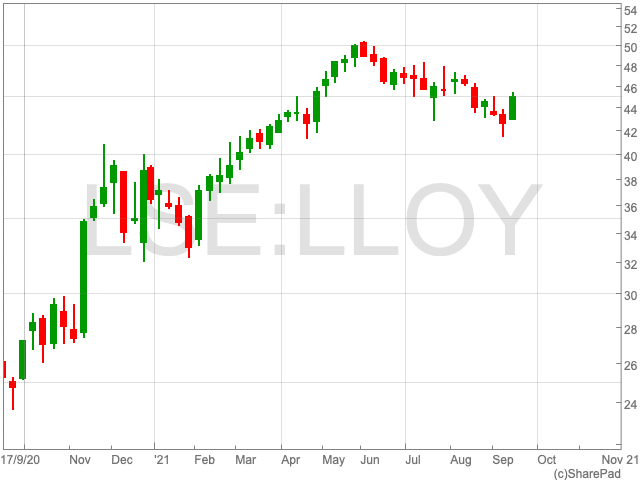
Heading into June the Lloyds share price (LON:LLOY) was in a good place, approaching its level from before the pandemic. However, having reached a high of 50p per share, it is come down over recent weeks, and now sits at 44.9p, with its future outlook looking uncertain.

It is a far cry away from years gone by, for example, in February 2019, when the Lloyds share price was above 60p and investors received a bumper dividend. While then, shareholders would have been smiling, now it may not be so. This calls into question the long-term credentials of the major UK bank.

Having said that, one analyst sees potential for Lloyds to get back to its level in early 2019.

Analyst’s View

Out of all the UK banks, Lloyds is the most deserving of an upgrade, according to UBS.

UBS has given Lloyds a ‘buy’ recommendation and said it is the standout option in the sector.

“We expect strong deposit growth; rebounding consumer credit; and rising interest rates to lead to substantial growth in UK net interest income in the next two years which is not captured in consensus nor current valuations,” analyst Robert Noble said in a note.

The note comes as authorities in the UK consider updating banking rules, which could involve easing restrictions on the sector.

Glencore share price: Morgan Stanley analyst gives bullish rating

0

Glencore Share Price

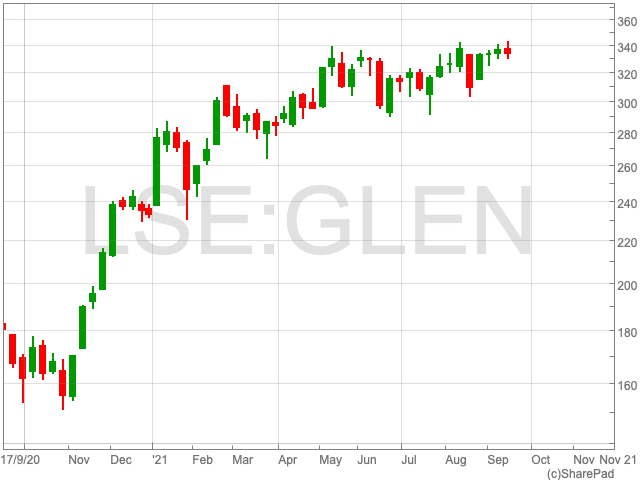
The Glencore share price has performed outstandingly well over the past year, adding 80.43% in that time period. It is even separated itself from other miners in the FTSE 100 with the size of its gains.

The mining giant has pledged to making a generous payouts while its new CEO is putting the company on the path to a low-carbon energy future.

While this is certainly the medium to long-term plan, the Glencore share price could receive a welcomed boost in the short-term, according to an analyst from Morgan Stanley.

Analyst’s View

Coal is somewhat of a taboo in the world of investing. Companies, it seemed, were gradually transitioning away from using the commodity as it becomes unpallatable and unprofitable. However, Morgan Stanley, having analysed Glencore, feels record coal prices could lead the mining company to “outsized returns”.

An analyst at the investment bank is of the view that Glencore will continue to perform well thanks to favourable economic conditions despite issues surrounding coal.

“In spite of thermal coal’s medium-term demand headwinds, current record prices are evidence that ‘commodities of the past’ can have sharp up-cycles and generate record margins, absent meaningful supply growth,” the analyst said.

“Current supply constraints look likely to persist through first half 2022 with demand remaining robust on winter restocking in key markets.”

“Our commodities team sees upside risks to their estimates and expects tightness into 2022. This is enabling coal producers to generate significant profit margins.”

Morgan Stanley gave Glencore an ‘overweight’ rating, along with a price target of 360p. This suggests an 8.4% increase in the current value of 332p.