Sainsbury’s could be next to receive interest from private equity groups

Apollo is taking an “exploratory” view of Sainsbury’s

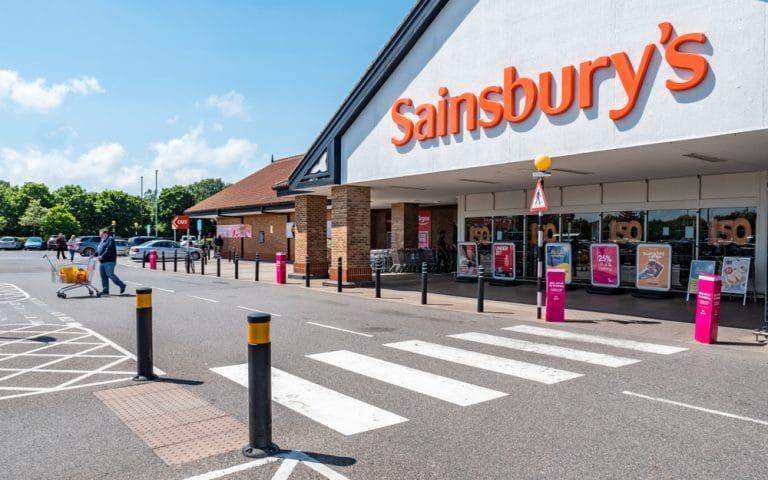
Sainsbury’s could be the next supermarket on the hit-list of private equity companies as competition intensifies to takeover Morrisons, highlighting the industry’s appeal to investors.

A week ago the Morrisons board approved a bid by Clayton, Dubilier & Rice (CD&R) to takeover the supermarket chain with an offer of £7bn.

In addition to Morrisons, the case is being made that Sainsbury’s is a suitable proposition for buyers.

The Sunday Times reported that Apollo is taking an “exploratory” view of the company with the view to making an offer.

Only last year Apollo made an effort to buy Asda, however the private equity firm ended up being outbid.

It is again on the lookout to buy, while remaining fixated on the supermarket industry.

Apollo has previously hinted at a possible involvement in Fortress’s deal to take-over Morrisons which would make the Sainsbury’s deal less likely.

As of now, neither Sainsbury’s nor Apollo have made any comments.

The Sainsbury’s share price is up by 11.17% on Monday morning.

PayPal to allow users to buy and sell crypto

Paypal’s move could be a catalyst for mainstream adoption

PayPal, as of this week, will allow its UK-based customers to buy, sell and hold bitcoin and other cryptocurrencies, the company confirmed on Monday.

It is the first time PayPal has expanded such services beyond the US and the move has been tipped as a catalyst for additional mainstream adoption of cryptoassets.

The financial firm, with over 400k active accounts across the world, is one of the largest companies to offer access to crypto.

PayPal allowed its US customers to buy and sell crypto earlier in the year, in addition to being able to shop at millions of merchants on its network.

“We are committed to continue working closely with regulators in the UK, and around the world, to offer our support— and meaningfully contribute to shaping the role digital currencies will play in the future of global finance and commerce,” Jose Fernandez da Ponte, vice president and general manager for blockchain, crypto and digital currencies at PayPal, said in a statement.

PayPal users can begin investing in crypto with as little as £1 or $1, however, there are limits in place on the maximum investment amount.

For example, in the UK, investors won’t be able to purchase more than £15,000 of crypto in a week.

The volatility and lack of regulation around the industry has been seen as an obstacle to their adoption by large payment companies such as PayPal.

The price of bitcoin surged above $50,000 overnight, bringing it to its highest level since May.

Expectations are building across the industry that bitcoin could be in for another bull-run to new all-time-highs and beyond.

EasyJet confirms Stephen Hester as new chair

0

Hester has previously worked at RBS and British Land

EasyJet confirmed on Monday that it has appointed Stephen Hester for its chair as the airline looks to bounce back from the devastating impact of the coronavirus pandemic.

Hester is one of the most experienced chief executives in the City, having worked at the helm of Royal Bank of Scotland and British Land.

On the first day of December he will exceed John Barton, who has held the position for close to nine years.

EasyJet’s recent story has revolved around adapting to UK travel rules as the Delta variant of Covid-19 keeps a full recovery from taking place.

“I am delighted that Stephen has been appointed as the next chair of easyJet,” Barton said.

“His significant and varied experience leading major international businesses in regulated industries, coupled with his outstanding strategic thinking will serve the airline well as it leads the recovery in the post-pandemic era, complementing and adding to the skills of the existing board and leadership team.”

What’s The Reason Behind The Latest CryptoCurrency Rally?

The crypto industry appears to have regained its momentum in recent weeks as most of the coins/tokens continue to march higher – posting mostly green days right across the board. While Bitcoin is still far from its all-time high of $64,800 set in April, investors still have plenty of reasons to be optimistic about the final quarter of 2021. 

At the time of writing, the entire crypto industry is valued at just shy of $2 trillionafter enjoying a healthy recovery from the severe drop we saw between May and July. But what is the main driving force behind the latest cryptocurrency rally, and what can we expect from Bitcoin and the altcoins in the coming weeks and months? Let’s take a closer look at some of the factors that could be at play.

The $2 trillion mark

For many investors, the $2 trillion mark is a significant milestone for the overall validity and authenticity of the crypto industry as a whole. In the past week, we finally tipped over the $2 trillion point for the second time in history, which is a considerable achievement considering the humble roots of Bitcoin and the other digital currencies that make up the top charts.

With this in mind, both retail and institutional investors seem to share the same bullish sentiment looking towards the future, especially after Bitcoin managed to hold steady and regain its composure after the threat of another bear market loomed large. 

It’s safe to say that confidence is building in crypto once more, and as global stocks continue to slide, the appeal of digital currency increases even more. If you’re thinking about getting into the market and increasing your exposure to digital assets such as Bitcoin, Ethereum, and Dogecoin, then click hereto find out the best way to go about it. 

Safe haven asset away from inflation

Another reason for Bitcoin’s rise is the growing inflation of the US dollar. As you know, the coronavirus hit most countries very hard, but the USA was one of the worst affected, particularly during the early stages of the outbreak. To compensate for the mass lockdowns, the US government had to turn to quantitative easing measures in order to keep the economy moving. Unfortunately, somebody will have to foot the bill eventually as all of the printed money must be accounted for one way or another. 

This has many people concerned about the inevitable diminishing of the dollar’s purchasing power and a rise in inflation, which means that holding USD will likely be a losing game in the coming years. Rather than watching their money dwindle, individuals are looking for safe havens where they may invest their money to protect themselves and their net worth. As it turns out, many people have moved their money out of the dollar and into Bitcoin and other cryptocurrencies, resulting in a tremendous spike in demand and a price increase.

Adoption as a means of payment

Amid all of the speculation, it’s easy to forget that Bitcoin and most other cryptocurrencies possess real-world applications that provide many benefits over some of the more traditional ways of doing business. One of the primary use cases for cryptocurrency is as a payment method since they offer peer-to-peer transactions digitally without the need for any physical cash (from anywhere across the globe).

Now, many of the major retailers in the world accept Bitcoin and other cryptocurrencies as a means of payment, such as:

  • Microsoft
  • PayPal
  • Tesla
  • Overstock
  • Starbucks
  • Home Depot

As time goes on and more people turn to Bitcoin as a means of payment, its global audience increases, and demand rises.

The rising cost of production

For Bitcoin, the mining difficulty rises in conjunction with the size of the mining network, increasing the marginal cost of producing a Bitcoin. For those of you that aren’t aware, Bitcoin mining consumes a lot of electricity, which has an actual cost that miners must pay in their local currency. 

Because Bitcoin’s protocol requires that one block be discovered every ten minutes on average, greater hashing power directed towards mining does not improve the rate of new supply; instead, it increases the difficulty of mining. According to research, the price of a bitcoin has mirrored its marginal cost of production quite closely. As a result, the price grows in tandem with the cost of production. That is, at least, how the theory goes anyway. 

Amazon speculation 

Last but not least, there has been a lot of hype recently over the possibility that Amazon may finally begin accepting cryptocurrencyas payment for products and services on their website. While this may not seem like big news at first (especially after you consider the fact that many other huge retailers already accept BTC as a means of payment), it’s worth stopping just to take stock of just how giant Amazon has become over recent years.

After the Covid-19 pandemic saw a massive uptick in demand for Amazon, its profit increased by a whopping 84% over the past 12 months, making it the 5th largest company in the world. Net revenue from sales was reported to be a whopping $386 billion, according to Statista

If the global mega-retailer does decide to accept BTC and another cryptocurrency for payments, then there will be an incredible increase in demand for digital currencies. This huge surge in demand will almost certainly cause a significant spike in price, and it could be a catalyst for many other businesses following suit and accepting crypto as a payment method. This would truly open the floodgates for Bitcoin and would likely signify a key milestone for the widespread adoption of digital currencies. 

Director dealings: New boss backs RWS

New RWS (LON: RWS) chief executive Ian El-Mokadem has been buying shares in the patent translation services provider since the announcement of his appointment at the beginning of June. His latest purchase is 10,000 shares at 616.8p each.
He acquired an initial 40,000 shares at 582.5p each and then bought a further 10,000 shares at 564p each. He owns a total of 60,000 shares, which have cost more than £350,000.
Ian El-Mokadem has a base salary of £600,000 and a potential annual bonus of up to 150%.
Business
RWS increased interim revenues from £169.7m to £326.4m, although excluding acquisitions ...

UK gold miners fall back in 2021 as yellow metal underwhelms

Since gold reached a record high of more than $2,000 per ounce a year ago, it is down 14%

London-listed gold miners have made substantial losses in their market value so far this year as the US dollar is approaching new highs.

Year-to-date, a number of the UK’s best known gold miners, including Shanta Gold (-26.14%), Greatland Gold (-54.7%) and Centamin (-26.93%), have posted disappointing results.

Since it reached a record of more than $2,000 per ounce a year ago, the precious metal has given away 14%.

There are a number of macro factors at play when speculating on why gold has failed to perform. Firstly, the strength of the dollar puts off international buyers for cost reasons. Second, bond yields are higher than they were last year. Thirdly, gold offers no passive income stream. Finally, the stock market has been booming.

“People are afraid of higher rates,” Robert Minter, director of investment strategy at Aberdeen Standard Investments, told the Financial Times. “This is ‘sell everything, throw the baby out with the bathwater’. Gold is going to be a constant opportunity for us any time it drops like this.”

Investors are increasingly voicing their concerns around inflation, while gold is historically seen as a hedge against it.

This caused Palantir, the data mining company co-founded by technologist Peter Thiel, to buy $50m in gold bars in response to what is deems to be an uncertain economic outlook, combined with a lack of desire to keep money stored in cash.

“During August 2021, the Company purchased $50.7 million in 100-ounce gold bars,” Palantir said in the Aug. 12 earnings statement for its fiscal second quarter. “Such purchase will initially be kept in a secure third-party facility located in the northeastern United States and the Company is able to take physical possession of the gold bars stored at the facility at any time with reasonable notice.”

As economies continue to recover across the world, supported to varying degree by government policies, gold may soon be tested for its ability to store value during hard times.

London-listed gold miners may stand to do very well or see their fate sealed as the world becomes more digital.

Helium One share price surges for second consecutive day on update from Tanzania

0

Helium One Share Price

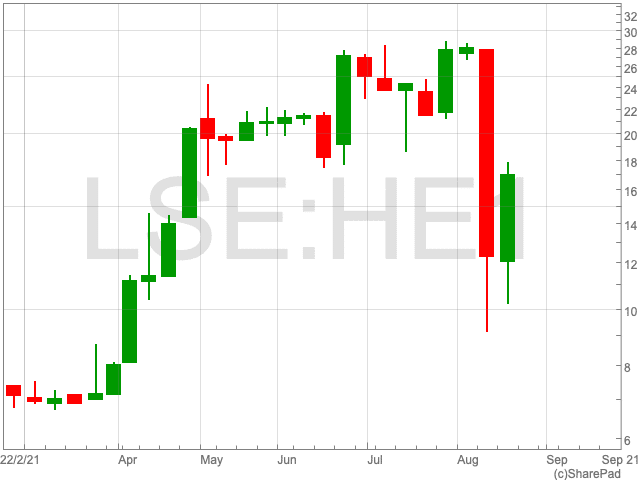
The Helium One share price (LON:HE1) is up by 17% at the time of writing on Friday. The move up follows massive gains on Thursday in which the high-grade helium producer added 27% to its stock value on the back of an update. Despite two consecutive outstanding days for the Helium One share price, over the last month, it remains down by 23.74%. The downturn, which came just over a week ago, came after the company released underwhelming results. Therefore, the gains over the past couple of days, can maybe marked down as a recovery, but investors will be curious about the direction of the Helium One share price moving forward.

Rukwa Project in Tanzania

Helium One confirmed the commencement of drilling operations at the Tai-2 exploration well at the Rukwa Project in Tanzania. The AIM-listed company commenced exploration drilling at Tai-2, the second exploration well targeting the Tai prospect. The exploration well targets prospective Lake Bed stratigraphy, which was identified but not fully evaluated in Tai-1. Tai-2 is located ~20m from Tai-1 and utilises the same drill pad, saving time and money in relocation compared to mobilising from one site to another, the company said.

David Minchin, chief executive officer, commented: “Having proven a working helium system with Tai-1, Helium One have substantially de-risked the Rukwa basin. Demonstration of seal and reservoir, as well as helium shows at multiple stratigraphic levels, indicates a working system in which free helium gas is waiting to be discovered. Helium One maintains 100% ownership of licences at Rukwa covering approximately 3,500km2 in what must now be considered the world’s premier basin for helium exploration.

“We are delighted to have started drilling activity at Tai-2, testing shallower targets that were not fully evaluated in Tai-1.  Tai-2 is approximately 20m from Tai-1, is on the same drill pad and uses the same infrastructure, therefore saving time and money by drilling here rather than moving on to a new location.

“We are excited to continue with our 2021 exploration campaign with drilling at Tai-2,” Minchin added.

Government inheritance tax receipts rise to £2.1bn between April and July

0

There has been a spike in demand for advice in IHT planning in the past year

The government bought in £2bn in inheritance tax (IHT) between April and July.

Compared to the same period of time in 2020, it is an increase of £0.5bn.

HM Revenue & Customs confirmed it received in the region of £575m in July 2021. It is the highest amount received in a single month in recent years.

The government department suggested that the figure could have been higher as there were more wealth transfers taking place during the pandemic.

Inheritance tax receipts are expected to keep going up after the chancellor‘s decision earlier in the year to freeze the nil rate band until 2026.

Commenting on HMRC data showing IHT receipts for April 2021 to July 2021 were £2.1bn, £0.5bn higher than in the same period a year earlier, Andrew Aldridge, Partner at Deepbridge Capital, said: “Today’s data from HMRC showing an increasing uptake in receipts for inheritance tax highlights how easy it is for individuals and couples to generate a potentially large inheritance tax bill when they die, despite not being what they may perceive as ‘wealthy’.”

“Despite the Openwork Partnership, one of the UK’s largest networks of financial advisers, report a 38% spike in demand for advice on IHT planning in the past year, with more than one in ten clients wanting to discuss it, these latest figures clearly show that many are still not seeking proper financial planning which can make it possible to pass on more of their wealth to their family.”

“According to research undertaken in conjunction with the Deepbridge Estate Planning Service, the most commonly used IHT planning tool is gifting, considered for most or every client by 94% of financial advisers, followed by Business Relief, considered by 78% of advisers, ahead of trusts (73%) and life policies (67%). The research also showed 76% of IFAs believe that their use of Business Relief propositions will increase over the next two years, with less than 2% saying they saw their use of the tax break decreasing,” Aldridge added.

FTSE 100 sees slight dip on Friday following yesterday’s sell-off

0

After heavy losses on Thursday, there was only a modest drop in the FTSE 100 this morning, down 0.18% to 7,046 points.

“UK stocks held the line despite further weakness in Asia overnight, with retailers enjoying some strength despite signs that some of the pent up consumer spending had leaked from the high street to hospitality in July as restaurants and leisure facilities reopened,” says AJ Bell financial analyst Danni Hewson.

Public borrowing was revealed to be lower as the UK Government’s life support measures for the economy are gradually dialled back.

“Markets may struggle for direction until the latter part of next week given a dearth of corporate and economic updates with the Jackson Hole summit kicking off next Thursday and giving central bankers and other economic decision makers a chance to outline their plans for the next phase of the pandemic recovery,” Hewson added.

FTSE 100 Top Movers

Sainsbury (1.76%), Burberry (1.66%) and JD Sports (1.34%) are the top risers on the UK index on the last day of the week.

At the bottom end on Friday, Antofagasta (-2.62%), Diageo (-1.86%) and Compass Group (-1.77%) have made the biggest losses so far today.

Government borrowing falls in July as UK economy appears to be on track

0

Borrowing remains high when compared to the long-term pre-pandemic level

Government borrowing was down in July as the continued reopening of the economy improved tax revenues, according to the Office for National Statistics.

The budget deficit grew by £10.4bn in July, around half of the £20.5bn seen during the same month in 2020.

Borrowing remains high, at 10.8% of national income, when compared to the long-term average of 2.5% from before the crisis.

The recovery from the pandemic has seen tax receipts rise by £9.5bn in the year to July to £70bn.

Tax received from self-employed workers was particularly high last month as a result of the government’s tax deferral schemes.

Borrowing ended up at £78bn between April and July and continues to be under the Office for Budget Responsibility’s forecasts by about 25%. Economists said that total borrowing for the year would be at £175.3bn, down from £298bn last year.

Rishi Sunak, the chancellor, said: “Our recovery from the pandemic is well under way, boosted by the huge amount of support government has provided. But the last 18 months have had a huge impact on our economy and public finances and many risks remain. We are committed to keeping the public finances on a sustainable footing.”

“The numbers are going the right way; looking at money coming in since the start of the financial year almost every box is in the black. Corporation tax take is up 15%, Fuel duty nearly 50% and tax from self-assessment up a whopping 148%,” said Danni Hewson, AJ Bell financial analyst.

“The economic engine is purring, but keeping it ticking over during lockdowns and restrictions has taken its toll and the road ahead is unlikely to be pothole free. Any chancellor will have to become adept at tightrope walking for years to come. Lean too far, spend too little and there is a real danger that parts of the economy that have been pummelled the most will struggle. Tip the other way and the country might not get back in shape quickly enough to deal with the next big shock.”