The best cities to invest in property in the UK

1

According to the insurer Aviva, 10% of UK adults between 35 and 45 years of age have made plans to buy an investment property within the next year.

However, rising house prices over recent months mean it has become increasingly expensive to be a landlord.

This also means it is more and more challenging to make a profit in certain regions once all costs and expenses are accounted for.

Investors may be better of researching the best areas across the UK in terms of property values and return on investment (ROI) if they want to become landlords, and make money.

New research has revealed the best cities in the UK to invest in property, with some areas offering up to £6,000 profit and nearly 3% ROI.

Coulters Property have compared average house prices and mortgage repayments with the average monthly rental prices, to determine the annual profits and ROI to reveal the best areas in the UK for property investment.

Top 10 UK cities with the best ROI for landlords

RankCityProfits Per Year (£)% ROI
1Preston £5,2562.98%
2Coventry £6,0332.74%
3Glasgow £4,8362.67%
4Swansea £4,4782.54%
5Dundee £3,9652.47%
6Manchester £5,0152.14%
7Paisley£2,7462.12%
8Leeds£4,3391.90%
9York£5,4051.85%
10Stoke-on-Trent£2,4811.73%

In the top spot, the Lancashire city of Preston offers the best return on investment. The average home sells for £176,378 while the average rental price is £981 PCM. This gives landlords a profit of £438 per month and £5,256 per year, giving an ROI of 2.98%.

Coming in second, Coventry offers an average ROI of 2.74% followed closely by Glasgow with an average ROI of 2.67%.

Scotland ranks very well in the top ten, with three Scottish areas appearing. Glasgow, Dundee and Paisley all offer an excellent return on investment for landlords.

Years ago, London was the front and centre of property portfolios, however, with prices in the capital so inflated, investors could be advised to look elsewhere.

Oriole Resources share price rises on update from Senegal

0

Oriole Resources Share Price

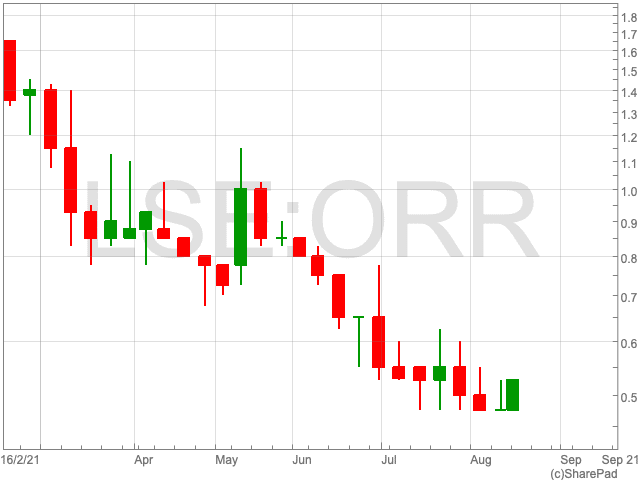
The Oriole Resources share price (LON:ORR) is up by 9.98% on Monday as the gold and base metals explorer received some positive news from its project in Senegal. The bounce follows what has been a challenging past six months for the company which has seen the value of its stocks fall by 62.69% in that period of time. However, that is having taken into account a spike in February. Since the beginning of the year, the Oriole share price is up 8.16% at the time of writing.

Drilling Results

Drilling results from the Senala project in Senegal came as welcomed news to Oriole Resources and its investors today.

A key highlight was that the gold explorer intersected up to 70 metres grading 1.46 grammes per tonne of gold from Faré and 10.00 metres grading 1.69 grammes per tonne of gold from Madina Bafé.

Results for 38 holes from the RC programme at Faré have also been received and the AIM-listed company is currently undertaking its usual validation checks ahead of their release.

Oriole Resources CEO, Tim Livesey, said: “We are delighted to see the results from the latest exploration programmes carried out at the Senala licence by our partner IAMGOLD.”

“At Faré, results from the two diamond holes drilled to test the main Faré South anomaly support previous drilling carried out by our own team between 2013 and 2014. We hope that the information from these two confirmatory diamond intersections will take us one step closer to developing a maiden resource at Faré South which, based on the wide zones of near-surface gold mineralisation, we believe would lend itself well to open pit mining. Of note, this mineralisation is open at depth.”

“At Faré North and Faré Far South, there are two additional anomalies within the c.6.5km Faré trend, we look forward to sharing the results of the recent RC drilling programme shortly. These RC holes were targeting evidence of gold mineralisation identified previously by our own field work and by IAMGOLD’s air core drilling in 2020.”

“Continued positive results from Faré reconfirms our belief that this prospect, with its three distinct, yet neighbouring zones of mineralisation, has the opportunity to host a stand-alone resource and ultimately the potential to host a mine development.”

Oriole Resources

Oriole Resources is an AIM-listed exploration company, operating West Africa. It is focused on early-stage exploration in Cameroon (Bibemi, Wapouzé and Central Cameroon projects) and the more advanced Senala gold project in Senegal, where IAMGOLD has the option to spend US$8 million to earn a 70% interest.

The firm also has several interests and royalties in companies operating throughout Africa and Turkey that could deliver future cash flow, and it continues to assess new opportunities in both regions.

What should DIY investors look for when picking stocks?

0

The number of DIY investors is on the rise as the internet provides information and opportunity aplenty for those seeking to grow their wealth. Information on businesses is as accessible as ever, and for those willing to put the hours in, success on the stock market is attainable for budding investors. This article, with insight from Laith Khalaf, head of investment analysis at AJ Bell, will examine some of the useful metrics and resources investors should be focused on when it comes to choosing where to put their money.

“Probably the biggest store of valuable information for investors lies in the results and reports presented by companies to the stock market. Institutional investors have no special treatment compared to private investors here,” said Khalaf.

The results are delivered to the market as a whole at the same time, and for UK stocks can be found on the London Stock Exchange website at 7am each day, or on companies’ investor relations websites.

The reports can be lengthy, however, and so it is important to know what to look out for.

Earnings Per Share

A key figure to look out for when a company releases its results is Earnings Per Share (EPS). EPS tells investors what profits the company is making for each share they hold.

“First, consider how it compares with prior periods to see if earnings are heading in the right direction, taking into account any one-off boosts or dents in profits that aren’t repeatable. The Chief Executive’s commentary which goes along with the results should alert you to such factors, particularly the ‘outlook’, which looks ahead to the following year,” said Khalaf.

“Second, divide the share price by the Earnings Per Share figure to derive the Price Earnings ratio, which is a measure of how expensive the shares are compared to the profits the company generates.”

Dividends

The dividend is another key figure in the reports and accounts for investors to mull. This is especially true for those seeking to gain passive income from their investments.

“It’s worth comparing the dividend per share to the earnings per share and considering how big a proportion of profits are being paid out as dividends,” said Khalaf.

“If it’s a high percentage, it may be a sign that dividend growth is likely to be limited, or in extreme cases that the dividend is unsustainable.”

Additionally, there are companies which prefer to reinvest profits over paying dividends. Major tech firms such as Amazon and Alphabet are known for this approach.

Profit Margins

Profit margins ultimately determine a company’s performance. A low profit margin suggests there is little room for error, while a higher profit margin means a company may be better to prepared to deal with any unexpected disruptions.

“Bear in mind some industries simply have low margins, for instance supermarkets and construction. While it may be less of an issue for the former as consumer demand for groceries is relatively stable, construction projects can often run late or over budget, wiping out profits and leading to losses – precisely what happened to Carillion before it collapsed,” according to Khalaf.

Debt

Investors should concern themselves with how much debt a company is carrying. When it comes to annual results, net debt is the key figure. “Again you can compare with previous periods to see if it’s heading in the wrong direction, which could be a warning sign,” said Khalaf.

Broker Forecasts and Ratings

Even if you are willing to put the time and effort in, it is still worth knowing what analysts’ opinions are on your investments. However, while analysts provide useful insights, they “tend to focus heavily on the next twelve months, whereas investors should be thinking about becoming an owner of a company for five to ten years or more”. It is important to use analysts’ insights to supplement your actions rather than to fully guide them.

Diversification

Diversification can help one manage their risk and lower the volatility of a portfolio. If all the companies you select are in the same country, or in the same industry, then your portfolio will be extremely vulnerable to a downturn in those areas. “If you’re going to be an active stock investor, you have to accept that you will get some things wrong, so protecting your portfolio from your own mistakes should always be a key consideration,” said Khalaf. Selecting diversified funds alongside your stock picks can allow investors to get the best of both worlds.


BHP looks set to sell-off its petroleum assets

0

BHP confirms talks with Woodside

BHP confirmed it has commenced talks over the potential merger of its petroleum division with Woodside as the company looks to mark its exit from the oil and gas industry.

The FTSE 100 company said Woodside is one of many options on the table as it reviews its approach towards its petroleum business.

“While discussions between the parties are currently progressing, no agreement has been reached on any such transaction,” said BHP. “A further announcement will be made as and when appropriate.”

Woodside has a market value of $15bn, while analysts have estimated that BHP’s oil and gas unit is worth in the region of $13bn.

BHP’s decision to analyse its operations comes as major miners are coming under pressure to eliminate, or at least reduce, their exposure to fossil fuels.

However, “Mr Henry and the board have a tricky balancing act if they are to strike the right balance between shareholder satisfaction and shareholder value,” says AJ Bell Investment Director Russ Mould.

Management may also be taking the view that now is a good time to sell, after a rebound in the oil price from 2020’s lows, as the global economy and travel begin to regain some sort of traction.

“The board will also want to avoid the risk that they are left with ‘stranded’ assets, should long-term demand for oil and gas tail off more quickly than anticipated, and take further hits to the valuation of those assets on its balance sheet,” said Mould.

BHP has already sold its shale oil and gas fields in the USA to BP for $10.5 billion and committed to withdrawing from the production of thermal coal.

“BHP has six main product areas. They are iron ore, copper, petroleum, coal (both metallurgical and energy), nickel and potash but on the basis of the company’s mix of adjusted operating profit from the first half iron ore and copper are the materials that really count,” says Mould.

By exiting the oil business BHP could free up funds to increase its exposure in areas like battery metals and copper where demand from the ‘green’ economy is likely to be particularly robust.

Some investors may nevertheless be worried that BHP is selling at a bad time, owing to the uncertain economic outlook, forecasts in some quarters of $100-a-barrel oil in 2022, and the substantial number of oil and gas assets that are potentially up for sale. There is therefore the danger that BHP destroys shareholder value by selling too cheaply, especially if oil and gas fields prove to have a longer lifespan that many expect or hope.

The BHP share price is down by 1.83% during the morning session on Monday.

Resources sell-off sinks FTSE 100 on back of weak data from China

0

It’s a downbeat start to trading on Monday with the FTSE 100, down by 0.82% to 7,159.70, giving up some of last week’s gains.

“The oil and mining sectors helped drag down the index as BHP confirmed it was in talks over an exit from its petroleum division,” says AJ Bell investment director Russ Mould.

The commodities-related sell-off also followed weak data from China where retail sales slumped – raising questions over demand from the resources-hungry nation.

“The aerospace and defence sector was in focus thanks to the latest M&A news as Meggitt sanctioned a takeover deal from Parker Hannifin while Cobham and Ultra Electronics agreed terms on a merger,” said Mould.

“The downside for UK investors is yet another part of the market is being hollowed out, reducing the breadth and diversity on offer from London-listed shares.”

FTSE 100 Top Movers

London Stock Exchange (0.71%), Ocado Group (0.62%) and British Land (0.52%) are the three companies at the top of the index in which only a handful is in the green on Monday.

At the other end, Burberry (-2.98%), Glencore (-2.37%) and JD Sports (-2.27%) make up the bottom three on the FTSE 100.

Rival preparing to better Fortress bid for Morrisons

Sources say that 280p will be the appropriate level for an offer by Clayton Dubilier & Rice

Clayton Dubilier & Rice, the American private equity firm, is preparing to bid for Morrisons this week as the company will look to usurp Fortress.

Having made a bid earlier in the process, Clayton Dubilier & Rice will now need to raise its offer by at least 20% to beat its rival.

Less than two weeks ago, Fortress improved its offer by £400m, raising its bid to 272p, as leading Morrisons shareholders hinted that their previous offer was too low.

The Times reported that Clayton Dubilier & Rice will need to offer at least 275p, while some with better knowledge of the deal have suggested that 280p would be a more appropriate offer.

The board delayed their vote on Fortress’s offer in order to allow Clayton Dubilier & Rice to put forward their proposal.

Morrisons consists of just under 500 stores and over 110,000 employees across the UK.

Morrisons first existed as a market stall in Bradford in 1899 owned by William Morrison. His son then took over the company and opened the first supermarket in the 1960s.

The Morrisons share price is uppitiest by 0.21% during the morning session on Monday.

Oil prices down on negative economic data from China

Oil prices fall by over 1% on Monday morning

Oil prices were down by over 1% during the morning session on Monday as negative economic data emerged from China highlighting the impact of the coronavirus pandemic on the economy.

Brent crude was down 1.21% at $69.40 a barrel by 0857 GMT, while West Texas Intermediate fell by 1.28% to $67.16 per barrel.

Growth in retail sales and factory output slowed well down in July in China, failing to meet expectations as new outbreaks of Covid-19 interrupted business.

“Oil futures weakness … is likely triggered by weaker-than-expected growth data from China, which is a major consumer of oil,” said Kelvin Wong, market analyst at CMC Markets in Singapore. “All in all, the global peak growth narrative has been intensified.”

The International Energy Agency said last week that raised demand for crude oil switched back in July and it now expects demand for the commodity to rise at a slower rate for the remainder of 2021. This is down to the prevalence of the Delta variant of the coronavirus.

The news raises question marks over the near-term outlook for oil after Joe Biden called on OPEC and its allies to raise its levels of output in a bid to keep rising fuel prices under control, as inflation in America reaches its highest yearly growth rate in 13 years.

Some analysts remain bullish on the commodity despite some recent bad news.

Bank of America commodities strategist Francisco Blanch is making the case of $100 per barrel oil in 2022 as supply will begin to fall.

“First, there is plenty of pent up mobility demand after an 18 month lockdown. Second, mass transit will lag, boosting private car usage for a prolonged period of time. Third, pre-pandemic studies show more remote work could result in more miles driven, as work-from-home turns into work-from-car. On the supply side, we expect government policy pressure in the U.S. and around the world to curb capex over coming quarters to meet Paris goals. Secondly, investors have become more vocal against energy sector spending for both financial and ESG reasons. Third, judicial pressures are rising to limit carbon dioxide emissions. In short, demand is poised to bounce back and supply may not fully keep up, placing OPEC in control of the oil market in 2022,” said Blanch.

£40m Nearer to the LIGHT

Advanced Oncotherapy (LON: AVO), recently announcedits largest single fund raise as this incredible six-year journey nears the end of the product development stage. AVO was a shell with a technology development agreement from Cern in Geneva. (Makers of the largest and fastest particle accelerator, the hydron collider). AVO’s seized its opportunity to collaborate with Cern’s 10,000 scientists to develop a new system to deliver proton beam therapy, which is a prohibitively expensive, but established effective cancer treatment.
AVO’s new ‘Linear’, LIGHT (Linac for Image Guided Hadron Thera...

Tip: Right on track

Software companies do not always succeed in commercialising their technology however good it might be. A decision is then required on whether to continue or change direction. One AIM company that made the decision to take a new direction has been winning new contracts in international markets.
The company’s original banking technology initially won customers, but it did not progress as management wanted. The AIM quotation had a value, but it would not be fully utilised with the business as it was
The directors decided to find another technology business that might benefit from the expertise of...

New Aquis admission: Yooma Wellness talks up acquisition pipeline

Yooma Wellness Inc has a dual quotation on the Canadian Securities Exchange and obtaining the Aquis quotation is part of the stated strategy to become the largest CBD business in the world. Acquisitions have been made this year and at least three more are lined up.
There are more potential targets and the cash raised in the placing is not going to fund all the acquisitions if they come to fruition. More cash is likely to be raised because of the ambitious plans of the management.
The placing price was a 14% discount to the Canadian Securities Exchange. There are no trades reported on Aquis for...