A new survey from the CBI has found that shoppers might face the biggest price rises in over 30 years amid widespread shortages.
“Christmas seems to have come early for retailers, with clothing and department stores in particular seeing a big upward swing in sales volumes in November,” said Ben Jones, CBI economist.
“Overall, retailers are becoming more optimistic, with both employment growth and investment intentions picking up strongly. Cost pressures remain a very real concern, however,” he added.
Businesses are also increasing prices as the cost of production is also rising.
Samuel Tombs, chief UK economist at Pantheon Macroeconomics, commented: “Looking ahead, higher CPI inflation, coupled with the withdrawal of government support at the end of the third quarter, will weigh on real disposable incomes.”
The French government has uninvited Priti Patel to a meeting with European interior ministers.
The move was made after Boris Johnson reportedly asked France to “take back” the people who have crossed the Channel.
The news is following the death of 27 people whose boat was capsized when crossing from France to the UK.
A French interior ministry source told POLITICO: “We find the open letter from the British prime minister unacceptable … Thus, Priti Patel is not invited anymore to the ministers’ meeting.”
The French interior ministry said in a statement: “We consider Boris Johnson’s public letter unacceptable and in opposition with discussions between counterparts.”
The meeting will go ahead without Priti Patel. France, Belgium, The Netherlands, Germany and the EU commission will continue without the UK.
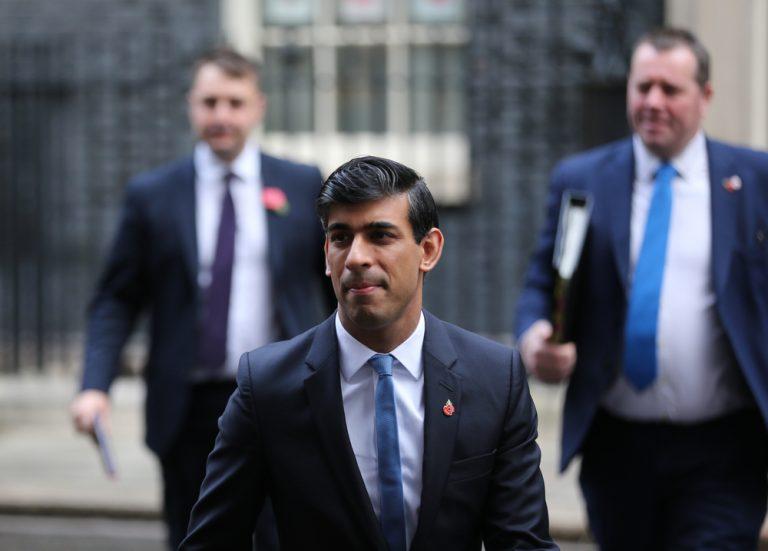
A report has found that Rishi Sunkak’s Kickstart scheme is not delivering value for money.
The scheme, which gets young people who are on universal credit into placements for 16- to 24-year-olds, has found to be flawed by the National Audit Office (NAO).
“At the start of the pandemic, DWP acted quickly to set up Kickstart to help young people into work when youth unemployment was predicted to rise significantly,” said Gareth Davies, the head of the NAO.
“However, DWP has limited assurance that Kickstart is having the positive impact intended. It does not know whether the jobs created are of high quality or whether they would have existed without the scheme.”
“It could also do more to ensure the scheme is targeted at those who need it the most.”
Frances O’Grady, general secretary of the TUC, commented and said that the scheme still had an important part to play. She said: “The government should now work more closely with unions on the next phase so that we can give young workers a voice in improving the scheme.”
The woes of parcel and freight delivery company DX (LON: DX.) could prove a wake up call for other quoted companies when it comes to environmental, social and governance (ESG) issues. A lack of attention to corporate governance problems has hit DX and its share price.
ESG information and reporting has been gaining momentum in the past few years and this year it appears that investors are taking even more interest. More regulation is being introduced. This means that a company’s board needs to take these things seriously.
According to DX, “The Company's Audit & Risk Committee has recently r...
Vivo Energy shares jumped some 20% on Thursday as the group confirmed a cash offer from Vitol has been accepted.
Vivo Energy distributes fuel for Shell and Engen across Africa but has had a far from fruitful time since being listed on the London Stock Exchange.
At the time of it’s IPO, Vivo was the largest African company IPO in London for a decade but failed to live up to the hype with shares spending most of the time since below the flotation price.
Their largest shareholder Vitol has quite clearly had enough and decided its time to take the business private through BidCo, and company indirectly owned by Vitol.
The of price of 139p per Vivo Share represented a 24.6% premium to the 111p closing price 24th November.
“The three and a half-year history of African service station operator Vivo Energy on the London market seems to have come and gone without anyone really noticing,” said Russ Mould, investment director at AJ Bell.
“It is probably in everyone’s best interest that its top shareholder, oil trader Vitol, has emerged with a premium-priced bid.
“While the offer is pitched materially above the current share price, the valuation is substantially below where Vivo was valued when it first listed.
“The Vivo story, running the distribution and marketing of Shell and Engen petroleum products across Africa, just never really gained traction.
“Perhaps it was the focus on Africa which had investors on their guard, as there have been relatively few success stories on the UK stock market to emerge from the continent to date, or maybe Vivo’s patchy profit performance itself was to blame.
“Net income was lower in the first half of this year than it was in the first half of 2018 suggesting that, for all the roll-out of new facilities, the company was struggling to get anywhere fast.”
Lloyd share price has enjoyed a stellar year of performance as the bank bounces back from the pandemic-induced market volatility and economic strife.
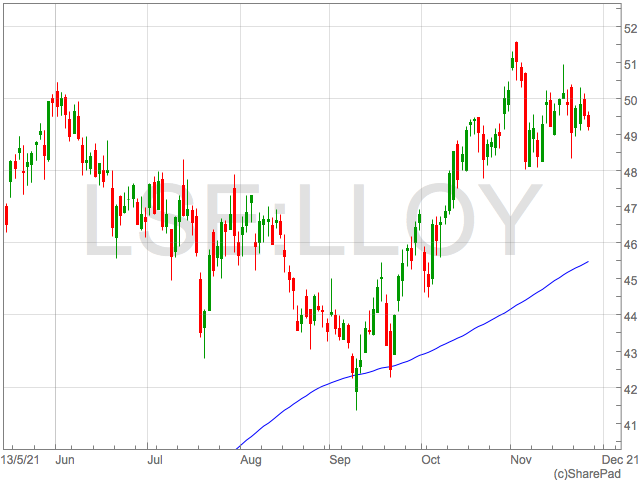
Lloyds shares are up roughly 35% YTD at 49p, having dipped from their 52-week highs around 51.5p. However, this is still some way off their pre-pandemic highs and bulls could view the recent dip as an opportunity to pick share up.
If you are bullish on the Lloyds share price, here’s three reasons you may want to buy Lloyds shares now.
Futures traders have priced in a hiking cycle starting with the first increase in December continuing to a 1% Bank Rate by June next year.
Soaring inflation has left the Bank Of England with little choice but to hike rates given a robust UK employment market, an economic indicator the BoE said they were keen to see improve before moving on rates.
Lloyds is the UK’s largest mortgage lender and enjoyed the benefits of their market position in Q3 as profits rose to £2 billion for the quarter. This is largely driven by strength in their mortgage business that rose by £2.7 billion in the last quarter and totalled £15.3 billion.
As the UK’s largest lender, ongoing resilience in the UK housing market will support further Lloyds earnings growth by continually increasing their open mortgage book and keeping a lid of defaults.
Despite government support through Stamp Duty reductions ending some months ago, house prices have remained strong, although mortgage applications has trended down throughout the year.
Lloyds share price technicals
Lloyds shares have began the form a series of higher lows over the past month which are consistent with the key features of an uptrend.
In the very short term, the Lloyds has formed a base around 49p which will be crucial to whether Lloyds shares can revisit recent highs around 51.5p.
Assuming this level is held, a move through 50.4p will open up a test of the 52-week high, which once broken will see little resistance to the Lloyds share price as it moves towards the pre-pandemic trading range 60p-64p.
New data from Nationwide Building Society has found that first-time buyers need to have 5.5 times their typical annual earnings to get on the property ladder, this number increasing to 9 times in London.
“In the third quarter of this year, the UK first-time buyer house price-to-earnings ratio stood at 5.5, above the previous high of 5.4 in 2007, and well above the long-run average of 3.8,” said Andrew Harvey, senior economist at Nationwide.
“While there continues to be a significant gap between the least affordable and most affordable regions across the UK, this has remained broadly stable over the last year. London continues to have the highest house price to earnings ratio at 9.0, although this is still below its record high of 10.2 in 2016.”
“In 2019/20, around a third of first-time buyers had some help raising a deposit, either in the form of a gift or loan from family or a friend or through inheritance – up from 27% 25 years ago.”
For many people looking to buy their first house, being reliant on financial support from family members is essential.
Fund manager MJ Hudson has posted a £5.3m pre-tax loss in the year to June, which is slightly less than last year’s loss of £7.3m.
This is despite a strong demand for private equity and ESG products.
“There is growth in private equity and other alternative funds assets under management, as investors seek higher returns and yield,” said Matthew Hudson, chief executive.
“Re-focus on regulation and governance, especially benefitting our market-leading ESG business, that helps clients deal with increased regulation and improve transparency.”
Mitchells & Butlers has announced its more recent financial report.
The group, which owns All Bar One, Harvester and Toby Carvery, found revenues to fall from £1.47bn to £1.06bn.
The group has also posted a loss, which has been reduced from last year’s loss of £123m to £42m. Sales at the group have stayed below pre-pandemic levels.
“Despite the inevitable challenges faced by our business over the past year we are now well positioned to regain the momentum previously built as we come out of the pandemic,” said chief executive Phil Urban.
“The trading environment remains challenging and cost headwinds continue to put pressure on the sector.”
Analysts also highlighted the difficulties Mitchells had experienced during the pandemic and disappointing activity since restrictions have lifted.
“The past few years have been difficult for Mitchells & Butlers, but it finallyreturned to profitability during its second half period. However, it does look like the business is running very hard just to achieve the smallest gains,” said Russ Mould, investment director at AJ Bell.
“On a full year basis, the results are ugly reading as more than £1 billion went through its tills but it still lost money as the period included the lockdowns that started in November 2020 and January 2021.
“It is now making some progress on sales growth, but the amount is tiny, and the outlook is far from favourable.”
“Pub and restaurant operators traditionally thrive in December from Christmas parties. Nervousness on behalf of many companies could see reduced staff party volumes this festive season, particularly as Covid rates are shooting up. Managers won’t want to risk employees getting ill and a lot of people still feel uneasy about mixing in a crowded room.”
Attractive opportunities for the year ahead
The next twelve months could be a challenging time for investors as inflation is rising and the authorities will probably have to tighten monetary policy to keep it under control. If this were to happen it could undermine the more expensive growth-oriented parts of the market and give new impetus to the rotation in favour of value, but nothing is certain.
It is a difficult scenario to forecast, so it is essential that you maintain a balanced portfolio that reflects your objectives and attitudes to risk. With this in mind, the following could be worth...