Revenues at Wise soared 33% to £256.3m in the first half of the year.
The money transferring service has seen a growth of people using its quick services to transfer money, 40% of transfers were instant in the past three months.
Over the past three months, Wise said that 3.9 million customers transferred over £34bn, which is a 44% increase.
“Each quarter we strive to make progress on this mission. Over the first half of this year we’ve improved our products and engineered away substantial points of friction in the payments process, enabling us to sustainably lower prices while continuing to invest in growing the business for the long term,” said Kristo Käärmann, Co-founder and Chief Executive Officer.
“So a virtuous circle of investment continues, and our service gets faster, better and cheaper than ever for our personal and business customers. Whilst we have made significant progress, millions of people and businesses continue to be overcharged and poorly served by banks and other payment providers.”
Marston’s has reported a 22% fall in revenue £402m amid Covid disruptions.
However, the pub group has said that trading is back on track since lockdown measures have eased.
Like-for-like sales have jumped 102% since July, which is when most measures eased. The group is still in loss though and posted a pre-tax loss of £17.1m. This is compared to the £388.7m loss a year prior.
“While there are still some challenges to navigate over the months ahead, we believe the worst of the pandemic is now behind us and Marston’s has emerged a stronger, more focused business which is in great shape,” said chief executive, Andrew Andrea.
Commercial property investor Circle Property (LON: CRC) is reducing its borrowings through disposals and it is raising the dividend. This could help the discount to the net asset value narrow.
In the six months to September 2021, rental and other income fell from £4.93m to £4.22m, although expenses also declined. Pre-tax profit before property gains was £1.29m, down from £1.8m. There was a small net gain in property values, compared to a large loss on revaluation last year.
There was one disposal during the period, and this raised £3.96m. Loan-to-value was around 40%. The interim dividend was ...
Hambro Perks Acquisition Company Ltd was set up earlier this year to acquire a technology-enabled business. An attractive market, innovative product or service, scalability and strong management will be important in any target. Longer-term, the strategy is to make the company a global leader in its chosen sector.
The attraction for investors is that the shell will enable them to get exposure to a fast-growing technology business that is currently privately owned. Management has the expertise to help a business to come to the public markets.
Hambro Perks Acquisition Company Ltd could raise up t...
Aquila Services Group (LON: AQSG) are Affordable Housing (AH) consultants and are unchanged at 26p after reporting its results for the six months to end September. Affordable Housing (AH) creates the possibility of living in a home for people who cannot afford to rent or buy. The provision of affordable housing is a key element of the Government’s housing plan to tackle homelessness and provide aspiring homeowners with a step onto the housing ladder.
The interims showed a 42% recovery in PBT to £247k with a 38% increase in Turnover to £4.8m the strong cash flow allowed a 20% increase in ...
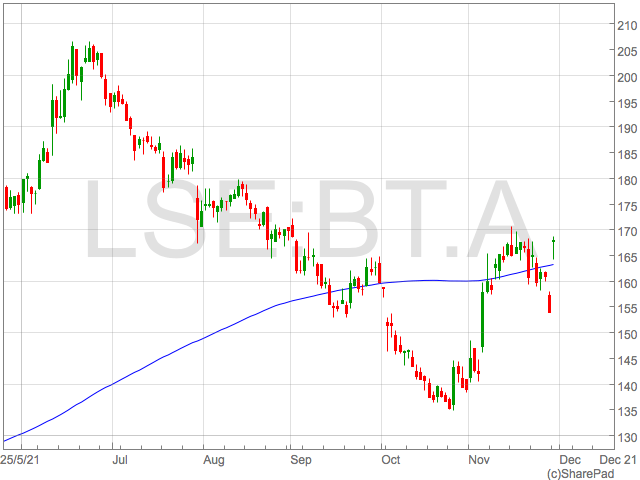
The BT share price rose as high as 167.3p one Monday morning, before easing back as the session progressed.
BT showed signs of turning a corner earlier this month as they released half year results highlighting the impact of cost savings on profitability.
Adjusted earning per share rose 7% to 10.2p and adjusted profit after tax also rose 7% to £1,014m.
The jump in profitability came even though revenue rose just 1% to £10.3bn. It is these steady revenues that are the attraction to Reliance as BT is still dogged by pension liabilities.
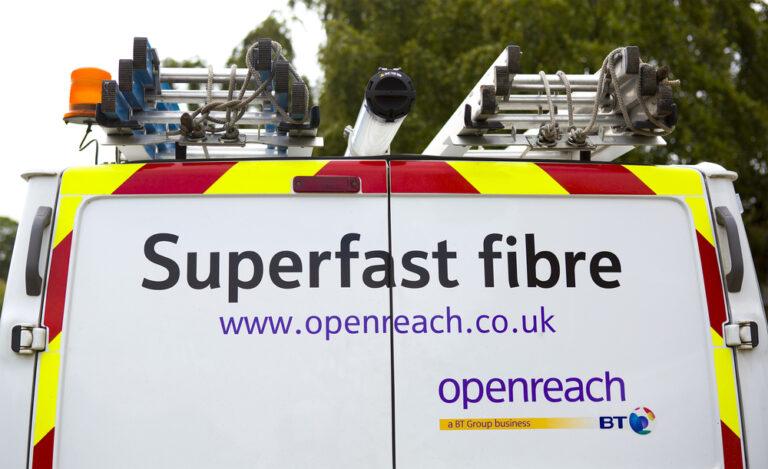
Reliance have recently been outbid by a PE group for the Dutch T-Mobile unit and Reliance are reportedly eyeing BT’s Openreach roll out after BT ruling out a joint venture.
“It says something about the shifting dynamics of the global economy that an Indian firm like conglomerate Reliance Industries could be about to launch a bid for control of British telecoms giant BT,” said Russ Mould, investment director at AJ Bell.
“The reports come after a private equity bid for Telecom Italia which suggested the whole sector was in play.”
“Telecoms stocks have been as unloved as a cold caller on Christmas Day, and this is reflected in depressed valuations.”
“Reliance itself was outbid on a deal for control of a Dutch unit of T-Mobile as recently as September, and it may have rivals for its apparent interest in BT. French billionaire Patrik Drahi, the founder of Altice, has been steadily building up a position in BT and Deutsche Telekom already has a sizeable stake.
“It will be interesting in this context to see if this rumoured move by Reliance flushes out other parties and dials up a bidding war for BT.”
“You can understand why BT might attract interest. Despite its substantial pension liabilities and debts and iffy track record, it has a near monopoly position in the UK’s broadband network. And, for all its recent woes, BT has the capacity to generate substantial cash flows.”
European equities rebounded on Monday following panic-induced selling on Friday after the discovery of a new coronavirus variant Omnicron.
The FTSE 100 rose by 0.68% to 7,089 in early trade on Monday.
The German DAX was up 0.45% at 15,325 and the French CAC 0.9% higher.
“The anxiety attack on the financial markets shows signs of alleviating, as investors pause for breath and spot signs of optimism while scientists race to establish the severity of the new variant. The FTSE 100 opened up 1% in early trading, recovering some of Friday’s dramatic losses and the FTSE 250 was 1.5% higher,” said Susannah Streeter, senior investment and markets analyst Hargreaves Lansdown.
The rebound in markets can also be attributed to comments from South African doctors around how those infected with Omicron were reacting. Early reports suggest that Omicron isn’t more severe than Delta as first feared, although it will take time to properly assess patients on a large scale.
“There are reports from doctors in South Africa that Omicron infections don’t seem more severe and the World Health Organisation’s appeal for caution also appears to have calmed some nerves. It has observed that although there appears to be increasing rates of hospitalisation, that may be due to higher numbers being infected rather than due to its specific strain,” Streeter said.
BT led a broad rally in London-Listed shares on Monday with most industry sectors rising, particularly those with exposure to commodities and those heavily hit last Friday.
A price range of between 150p and 170p has been set for Recycling Technologies Group. The PrimaryBid offer is due to close on 2 December and the final pricing will be announced on 9 December with dealings likely to commence on AIM one week later.
Recycling Technologies Group wants to raise up to £40m, so the potential market capitalisation will be between £102m and £111m. The offer could be increased by up to 15% if there is sufficient demand. There could also be existing shares offered.
Recycling Technologies has developed a modular machine called the RT7000, which can process hard to recycle...
In his role as Lead Fund Manager at Octopus, Chris overseas a team dedicated to building UK equity portfolios designed to provide investors with an attractive yield.
It is immediately apparent that Octopus are doing things differently. The Multi Cap nature of their income fund, the Octopus UK Multi Cap Income Fund, alludes to a strategy producing one of the best performances among their UK Income peers.
The team at Octopus have built an income fund that encompasses a broad range of companies that other managers in the space overlook. These being shares with a market cap of £100m-£1bn, paying a dividend and providing significant opportunity for growth.
The portfolio utilises a core/satellite approach to investing that builds income and growth satellites around a selection of core holdings Octopus believes can grow earnings and dividends ahead of the market.
The strategy has helped Octopus return a 29.3% performance over the past year, alongside a very respectable 4.1% yield.
The FTSE 100 was a major casualty on Friday in the wake of the discovery of a new COVID-19 variant in Africa.
In what should have been a day focused on the sales figures of Black Friday, all eyes were on global markets and the severe selling which earned the name ‘Red Friday’.
“Forget Black Friday; today has been renamed Red Friday after the colour of share price screens as stocks slump globally on fears over a new Covid strain,” said Russ Mould, investment director at AJ Bell.
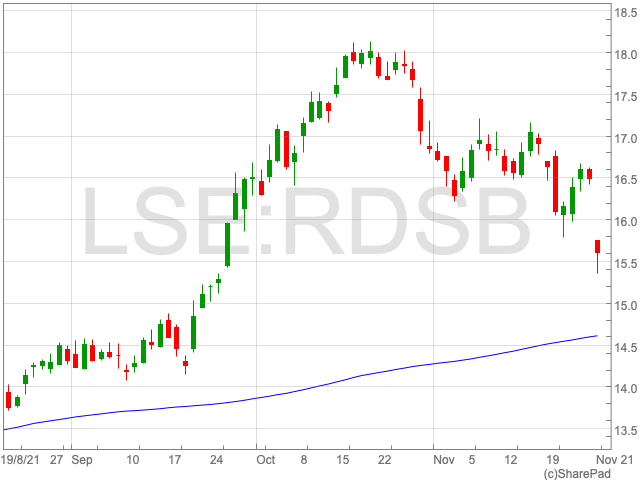
Shell and BP were down 4.8% and 5.9% respectively in early trade as oil prices dropped over 6%.
“The drop in the oil price the market’s way of saying it is worried about a reduction in economic activity, something which also explains the slump in metal prices,” Mould highlighted.
“Markets are clearly speculating that a rapid spread of a more brutal Covid strain could once again derail the global economy. Banking stocks were also weak as they are closely tied to economic activity.”
“The flipside of falling commodity prices is that a weaker oil price should provide some relief in terms of inflationary pressures. That may cause central banks to be more cautious towards raising rates in the near-term, however it does depend on whether the new Covid strain causes significant disruption or can be contained as best as possible in a rapid manner.”
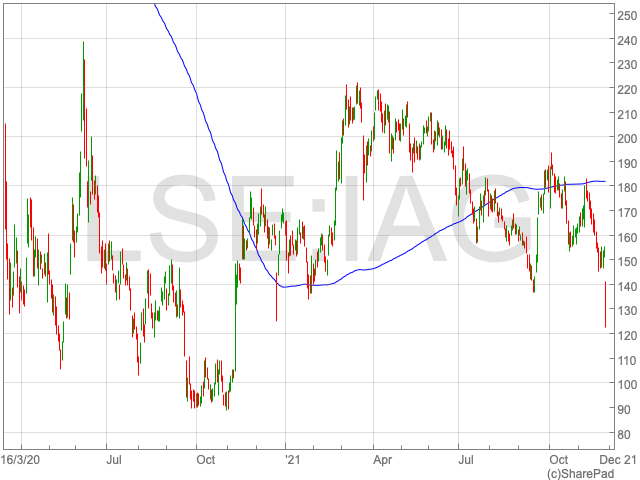
Travel shares were heavily hit as the uncertainty about how disruptive the strain could be smashed airlines. London-listed IAG was down as much as 20% before recovering.
“Headlines calling it the ‘worst ever variant’ have caused investors to panic and dump shares in travel-related stocks for fear that we’re going to see tough travel restrictions once again,” said Mould
“Wizz Air and British Airways owner International Consolidated Airlines both fell by approximately 18% in early trading, followed by a 14% drop in EasyJet and a 9% decline in Jet2.
“This is the worst possible news for airline operators as they were just starting to see a pick-up in trading, helped by people becoming more comfortable about travelling on a plane and routes like US/UK reopening.
“These companies have been under significant financial stress and will want to avoid having to go back to shareholders yet again to ask for more money to help see them through bad times, should we get new widespread travel restrictions.”
A bout of extreme turbulence has rocked airlines with the emergence of a new mutant covid strain spooking investors. Shares in British Airways owner IAG were down by 16% in early trade, easyJet down 13% and Ryanair down 10%. FTSE 100 slides 3.3% as the storm engulfs markets.
“With Europe still battling with the surge of a fourth wave of the virus, there are now fears that the highly mutated Covid strain discovered in states in Southern Africa will prompt fresh shutdowns around the world in an attempt to stop its spread, leading to another drag on recovery,” said Susannah Streeter, senior investment and markets analyst, Hargreaves Lansdown.
The FTSE 100 was trading down 2.7% at 7,104 just after 10am in London.